According to Greenery Inside, Cordyline plants thrive in bright, indirect light, moist but well-drained soil, and temperatures between 65-80°F (18-27°C). Water when the top inch of soil dries out, avoid fluoridated water to prevent leaf-tip burn, and maintain humidity above 50% for vibrant, colorful foliage.
Cordyline is frequently mistaken for Dracaena, though it’s distinguished by fleshy, tuberous roots rather than fibrous ones. Outdoor varieties like Cordyline australis tolerate brief dips near freezing, while tropical types such as C. fruticosa are strictly frost-tender. The plant is mildly toxic to cats and dogs if ingested, and propagates readily from stem sections known as “ti logs.”
By Greenery Inside | Plant Care & Gardening Expert
Last Updated: August 2026
Quick Summary
- Cordylines thrive in bright indirect light, well-draining soil, and moderate watering that allows the soil to partially dry between waterings.
- Most varieties grow at a moderate rate and typically reach 3–10 feet tall depending on species, climate, and growing conditions.
- Cordylines can be grown indoors or outdoors, but most varieties require protection from frost and prolonged freezing temperatures.
- Yellow leaves, trunk rot, and declining growth are most commonly caused by overwatering, poor drainage, or prolonged cold stress.
What Is a Cordyline Plant?
A cordyline is an evergreen ornamental foliage plant belonging to the genus Cordyline within the Asparagaceae family. Native to Australia, New Zealand, Southeast Asia, and many Pacific islands, these plants are grown primarily for their colorful strap-like leaves rather than their flowers.
For readers interested in the botanical classification and natural distribution of the genus, the Wikipedia article on Cordyline provides a helpful overview of its species and taxonomy.
Although many gardeners refer to all varieties simply as “cordyline,” different species have different growth habits and climate preferences. Some develop into small tree-like specimens outdoors, while others remain compact enough for containers and indoor spaces.
Cordylines are valued because they:
- Produce year-round colorful foliage.
- Adapt well to containers and garden beds.
- Offer a tropical appearance with relatively simple care.
- Grow successfully indoors in cooler climates.
- Create strong architectural interest in landscapes.
Their upright form makes them excellent focal plants in patios, tropical gardens, entryways, and modern landscape designs.
From our experience at Greenery Inside, healthy cordylines respond best when their care closely matches their native environment: warm temperatures, bright filtered light, and freely draining soil. These three factors influence nearly every aspect of successful growth.
Cordyline Varieties (Red Cordyline, Australis, Fruticosa)
Several species are commonly cultivated, each offering unique colors, sizes, and landscape uses.
| Variety | Characteristics | Best Use |
| Cordyline australis | Tall tree-form with green, bronze, or variegated leaves | Outdoor landscapes |
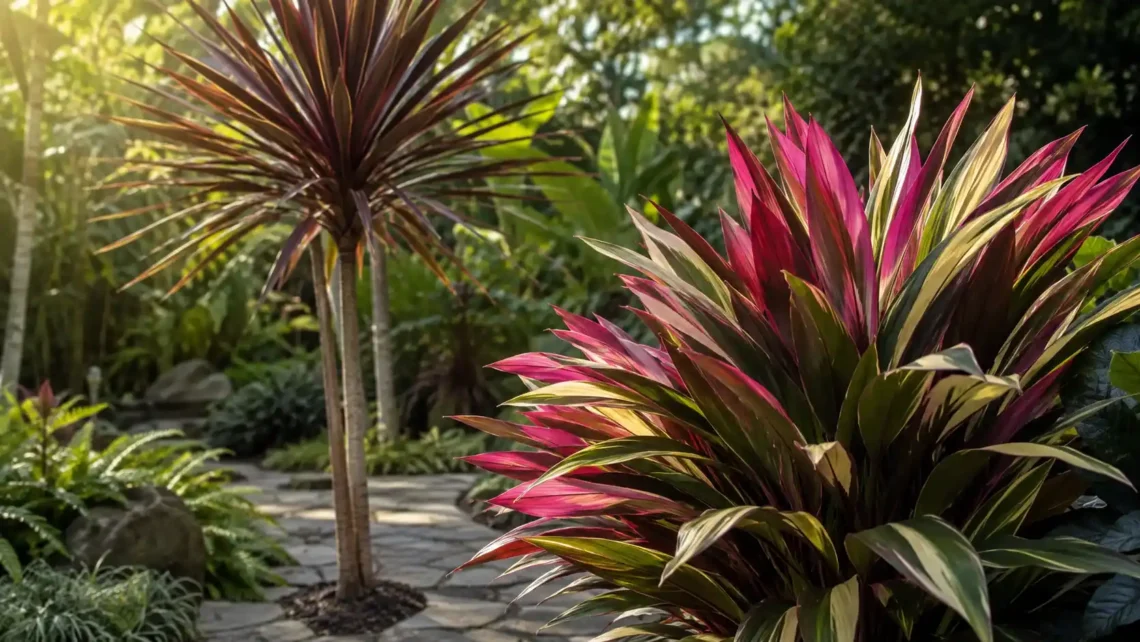
| Cordyline fruticosa (Ti Plant) | Broad colorful foliage in red, pink, purple, or green | Indoor plants and tropical gardens |
| Red Cordyline | Burgundy or crimson foliage with striking ornamental appeal | Containers and accent planting |
| Variegated Cordyline | Green leaves edged with cream, yellow, or pink | Bright indoor spaces and decorative borders |
Among these, Cordyline australis is considerably more cold tolerant than Cordyline fruticosa. Gardeners in cooler climates often grow C. fruticosa indoors, while C. australis can remain outdoors year-round in suitable USDA Hardiness Zones 8–11.
Indoor vs Outdoor Cordyline Care
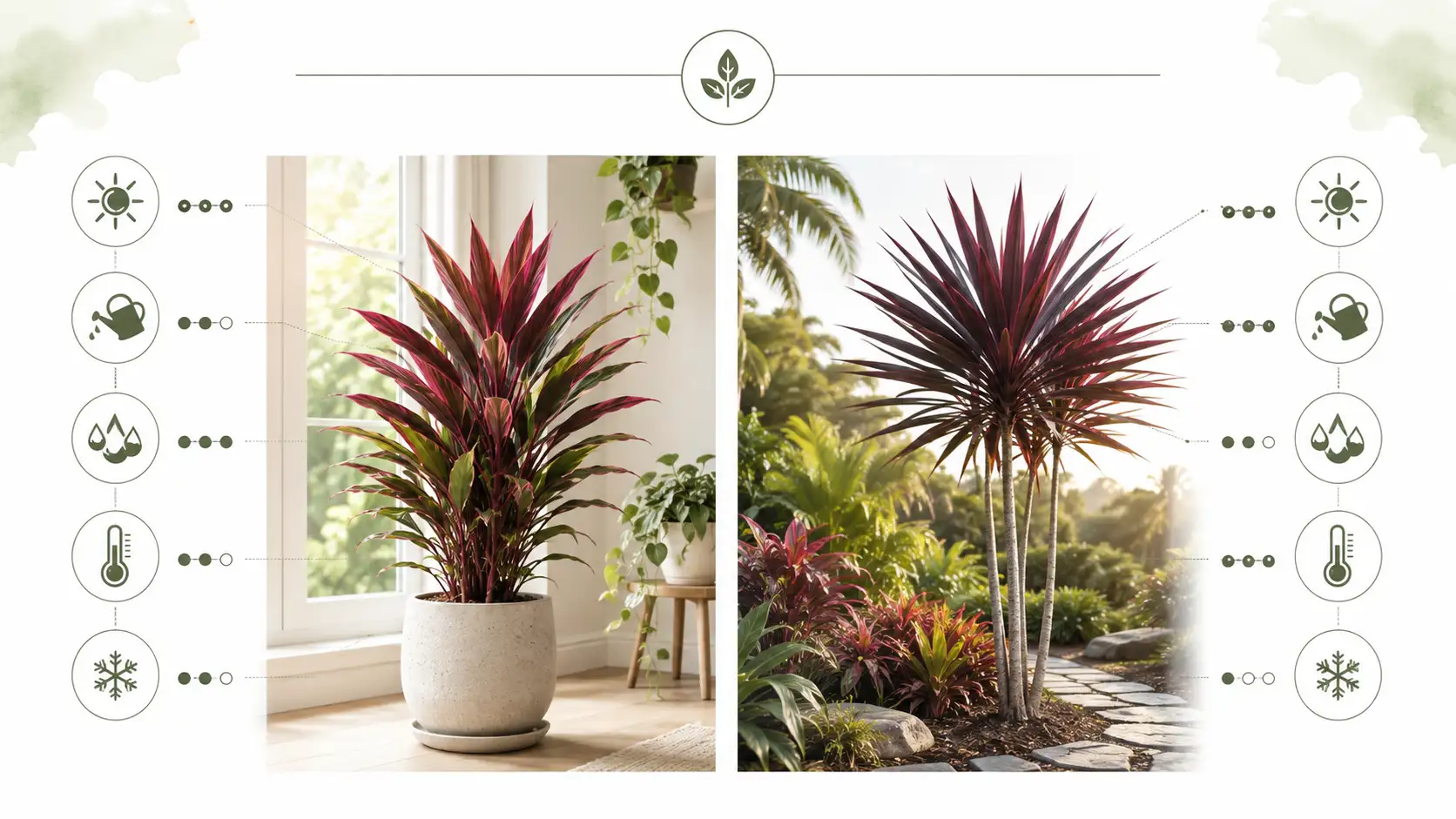
Cordylines can be grown successfully both indoors and outdoors. The best location depends primarily on your local climate rather than the plant itself. If you’re building an indoor plant collection, our Guide to House Plants explains how to choose the right species, create suitable growing conditions, and care for common tropical foliage plants throughout the year.
In tropical and subtropical regions, cordylines flourish outdoors throughout the year. In colder climates where freezing temperatures occur, they are commonly grown as houseplants or moved indoors before winter.
Growing Cordyline Indoors
Indoor cordylines perform best in bright rooms with filtered sunlight. While they tolerate moderate light, stronger indirect light helps maintain vibrant foliage colors and compact growth.
For healthy indoor growth:
- Place near an east- or north-facing window.
- Protect from intense afternoon sun through glass.
- Maintain temperatures between 60°F and 80°F (16–27°C).
- Keep humidity moderate to high.
- Rotate the plant every few weeks for even growth.
- Avoid positioning near heating vents or cold drafts.
Indoor plants generally require less water during winter because growth naturally slows. For another rewarding indoor foliage plant with different watering and light preferences, explore our Hoya Carnosa Compacta Care: Complete Hindu Rope Guide.
At Greenery Inside, we’ve found that one of the most common indoor mistakes is placing colorful cordylines in dark corners. The plant may survive, but leaf color gradually fades and growth becomes weak and stretched.
Growing Cordyline Outdoors
Outdoor cordylines perform best where temperatures remain warm for most of the year.
Ideal outdoor conditions include:
- Morning sun with afternoon shade in hot climates.
- Full sun in cooler coastal regions for Cordyline australis.
- Sheltered locations protected from strong winds.
- Well-drained soil that never remains soggy.
- Protection from prolonged frost and freezing temperatures.
Outdoor specimens typically become larger and more vigorous because their root systems have greater space to expand.
As of the 2026 growing season, many professional growers continue recommending mulch around outdoor cordylines to regulate soil temperature, conserve moisture, and reduce winter root stress—especially in regions with occasional cold snaps.
Indoor vs Outdoor Care Comparison
| Care Factor | Indoor Cordyline | Outdoor Cordyline |
| Light | Bright indirect light | Morning sun or full sun depending on climate |
| Watering | Water when top 1–2 inches of soil are dry | Water deeply, allowing soil to partially dry |
| Temperature | 60–80°F (16–27°C) | Best in USDA Zones 8–12, depending on species |
| Humidity | Moderate to high | Natural outdoor humidity is usually sufficient |
| Winter Risk | Minimal indoors | Frost protection often required |
| Growth Size | Usually smaller | Can reach full mature height |
How to Water a Cordyline (Without Overwatering)
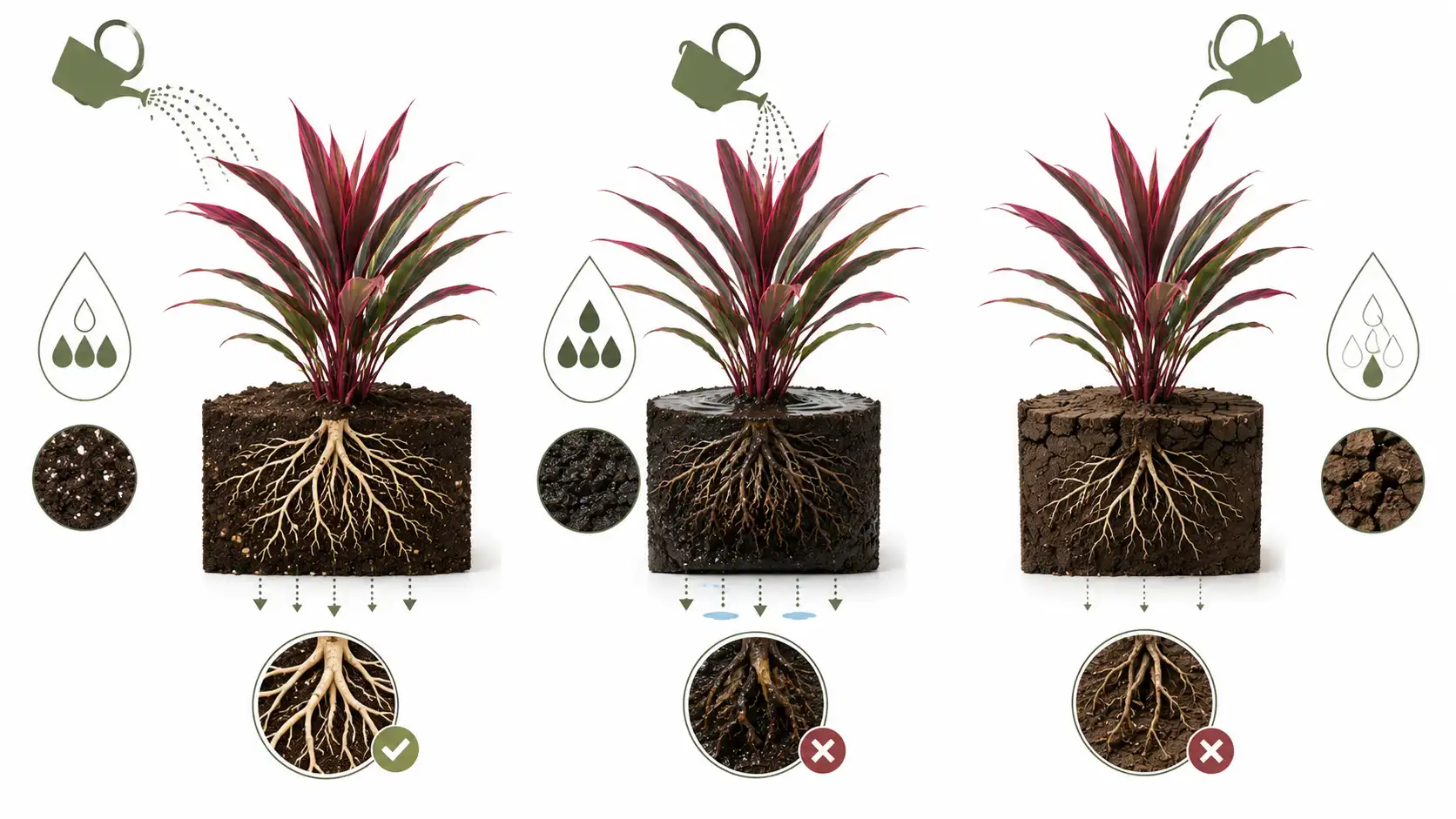
Proper watering is the single most important aspect of successful cordyline plant care. These plants prefer evenly moist soil but are highly sensitive to waterlogged conditions. Consistently wet soil deprives roots of oxygen, leading to root rot, trunk decay, and eventual plant decline.
Instead of watering on a fixed schedule, check the soil first. Water thoroughly only when the top 1–2 inches (2.5–5 cm) feel dry to the touch. During active growth in spring and summer, watering is generally more frequent, while autumn and winter require less.
Signs of Overwatering
- Yellowing lower leaves
- Soft or mushy trunk base
- Persistent wet soil
- Wilting despite moist soil
- Unpleasant odor from the potting mix
- Black or brown roots
Signs of Underwatering
- Dry, crispy leaf tips
- Curling or drooping leaves
- Slow growth
- Dry soil pulling away from the sides of the pot
- Premature leaf drop
Greenery Inside Tip: Rather than watering by the calendar, insert your finger into the soil. If the upper layer still feels moist, wait another day or two. This simple habit prevents the majority of watering-related problems we see in cordylines.
Light, Soil, and Fertilizer Requirements
Healthy cordyline plant care depends on balancing three essential growing conditions: adequate light, freely draining soil, and appropriate fertilization. When these needs are met, cordylines develop vibrant foliage, sturdy stems, and consistent growth. Poor lighting, compacted soil, or excessive fertilizer often lead to weak growth and leaf discoloration.
Best Fertilizer for Cordylines
Cordylines are moderate feeders and benefit from regular nutrients during their active growing season. A balanced fertilizer supports healthy roots, strong stems, and vibrant leaf color without encouraging weak, overly soft growth.
Plants with dramatic foliage, such as Alocasia Silver Dragon, also benefit from bright indirect light and well-draining soil, making them excellent companions in tropical indoor collections. Learn more in our Alocasia Silver Dragon Care: Complete Growing Guide.
For most home gardens:
- Apply a balanced slow-release fertilizer (such as 10-10-10 or 14-14-14) in early spring.
- Feed container-grown plants every 4–6 weeks during spring and summer using a balanced liquid fertilizer at half strength.
- Stop fertilizing in late autumn and winter when growth naturally slows.
- Always water the soil before applying liquid fertilizer to avoid root burn.
Excess fertilizer can be just as harmful as too little. Too much nitrogen often causes lush but weak growth that is more susceptible to pests and environmental stress.
From our experience growing cordylines at Greenery Inside, consistent but moderate feeding produces better long-term results than frequent heavy fertilization. Healthy foliage color comes from balanced care rather than excessive nutrients.
Soil and Drainage Needs
Cordylines grow best in fertile, well-draining soil that retains some moisture without becoming waterlogged. Good drainage is essential because standing water quickly deprives roots of oxygen, increasing the risk of fungal diseases and root rot.
An ideal growing mix contains:
- High-quality potting soil or loamy garden soil
- Organic compost for improved fertility
- Perlite, pumice, or coarse sand to improve drainage
- Organic matter that helps retain moderate moisture
A slightly acidic to neutral soil pH of 6.0–6.5 generally provides the best nutrient availability.
Do cordylines like mulch?
Yes. Organic mulch is highly beneficial for outdoor cordylines. A 2–3 inch (5–7.5 cm) layer of bark chips, compost, or shredded leaves helps:
- Maintain consistent soil moisture
- Reduce weed growth
- Protect roots from temperature fluctuations
- Improve soil structure as it decomposes
Keep mulch a few inches away from the trunk to prevent excessive moisture around the stem, which can encourage rot.
Cordyline Growth Rate and Mature Size
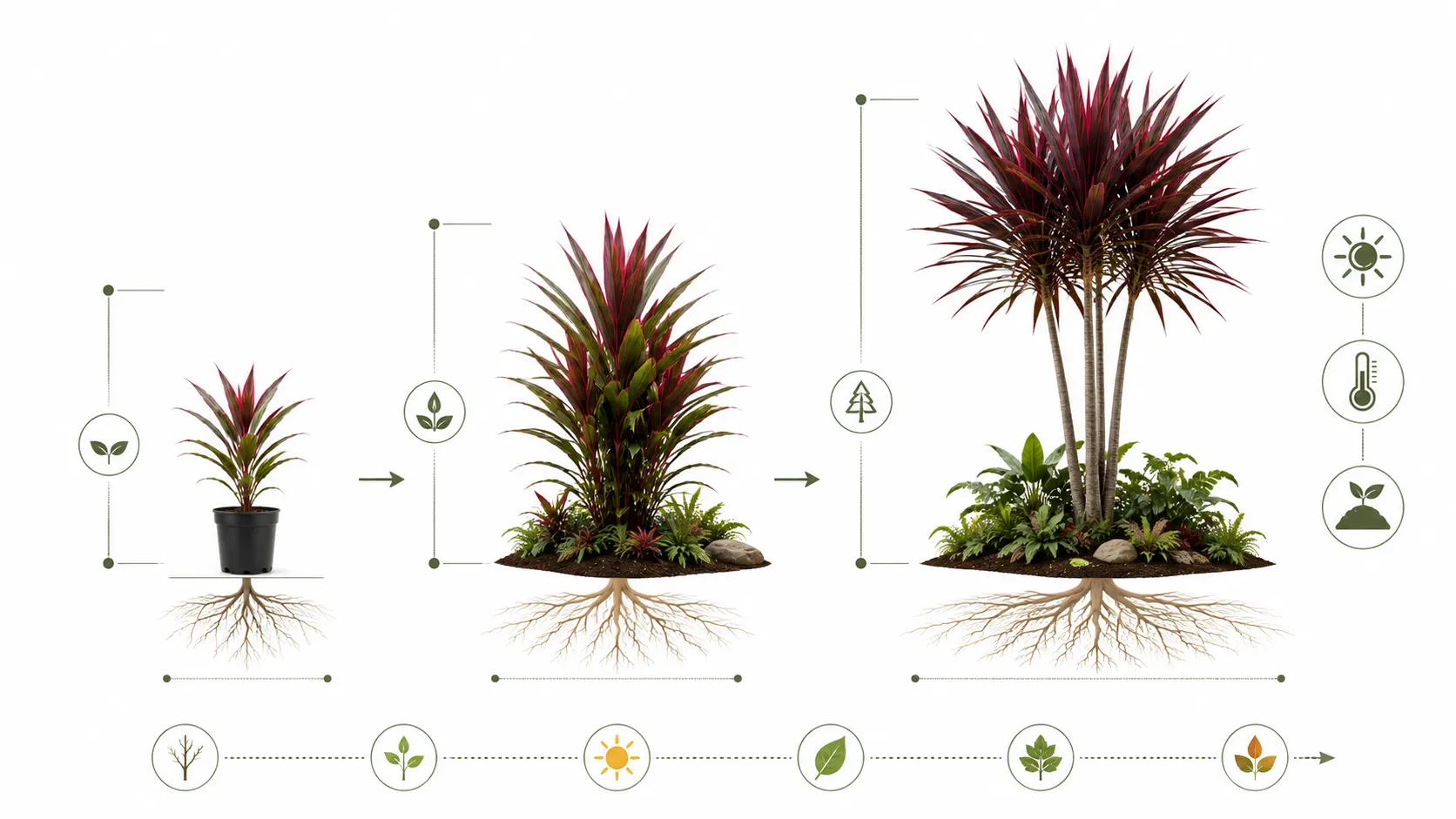
Cordylines have a moderate growth rate under favorable conditions. Most healthy plants produce steady new foliage during spring and summer, while growth slows considerably during cooler months.
Growth speed depends on several environmental factors, including:
- Light intensity
- Soil fertility
- Temperature
- Water availability
- Variety
- Root space
Plants grown outdoors in warm climates generally grow faster than those kept indoors. If you’re interested in comparing the growth habits of tropical foliage plants, see our Philodendron Billietiae Growth Rate: Care, Size & Tips guide for another striking ornamental species.
Plant Size
Mature size varies significantly between species and growing conditions.
| Variety | Indoor Height | Outdoor Height | Mature Width |
| Cordyline fruticosa | 3–6 ft | 6–10 ft | 3–5 ft |
| Cordyline australis | 4–8 ft | 10–20+ ft | 4–8 ft |
| Compact cultivars | 2–4 ft | 3–6 ft | 2–4 ft |
Container-grown cordylines usually remain smaller because their root systems are naturally restricted. Outdoor specimens planted in the ground often reach their full genetic potential.
Growth Rate
Most cordylines grow between 8 and 24 inches (20–60 cm) per year, depending on the variety and environmental conditions.
Growth is fastest when plants receive:
- Bright light
- Warm temperatures between 65–85°F (18–29°C)
- Regular watering with proper drainage
- Balanced fertilization
- Adequate root space
Growth naturally slows during autumn and winter, especially in cooler climates or indoors where daylight hours decrease.
Greenery Inside Tip: If your cordyline suddenly stops growing during winter, don’t assume something is wrong. Seasonal slowdowns are normal. Wait until spring before increasing fertilizer or repotting.
Pots or Ground — Where Should You Plant a Cordyline?
Cordylines perform well both in containers and in the ground. The better choice depends on your climate, available space, and whether you need to move the plant during winter.
Container growing offers flexibility, while planting in the ground allows maximum growth.
Pot Growing
Growing cordylines in pots is ideal if:
- Winters are cold.
- You have limited garden space.
- You want decorative patio or balcony plants.
- You prefer moving plants indoors during frost.
Choose a container with drainage holes and one that is only slightly larger than the current root ball. Oversized pots retain excess moisture, increasing the risk of root rot.
In-Ground Growing
Plant directly in the landscape if:
- You live in suitable USDA hardiness zones.
- Soil drains freely.
- The planting site receives appropriate sunlight.
- Frost is uncommon or mild.
In-ground plants generally require less frequent watering once established and often develop stronger root systems.
Do cordylines do well in pots?
Yes. They adapt exceptionally well to containers, provided excess water drains freely.
Do cordylines like to be root bound?
Not permanently. While they tolerate being slightly root bound, severely crowded roots reduce water uptake and slow growth. Repot once roots begin circling heavily inside the container or emerge through drainage holes.
When should I repot my cordyline?
The best time is early spring, just before active growth begins. Choose a new pot only 1–2 inches (2.5–5 cm) wider than the previous container.
Pot Growing vs In-Ground Growing
| Feature | Pots | Ground |
| Root Space | Limited | Unlimited |
| Growth Rate | Moderate | Faster |
| Winter Protection | Easy to move indoors | Requires frost protection outdoors |
| Watering Frequency | More frequent | Less frequent once established |
| Mature Size | Smaller | Larger |
| Mobility | High | Permanent |
Pruning and Shaping Cordyline (How to Make It Bushy)
Pruning helps maintain an attractive appearance, remove damaged growth, and encourage branching in certain varieties.
Many gardeners wonder how to make a cordyline bushier. Cutting back the main stem encourages dormant buds below the cut to develop into multiple new shoots, resulting in a fuller plant over time.
How to Prune a Cordyline
Follow these simple steps:
- Wait until spring or early summer.
- Sterilize pruning tools before cutting.
- Remove dead, damaged, or yellowing leaves.
- Cut stems just above a healthy node if reducing height.
- Remove flower stalks after blooming if desired.
- Water lightly after pruning and allow new growth to develop naturally.
Can you trim cordyline leaves?
Yes. Brown tips or damaged leaves can be trimmed with clean scissors. Remove only the damaged portions or entire leaves if they are completely dead.
Avoid removing too many healthy leaves at once because foliage supplies the energy needed for future growth.
Greenery Inside Tip: We recommend removing older lower leaves gradually rather than stripping the trunk all at once. This keeps the plant looking natural while allowing it to continue photosynthesizing efficiently.
Cordyline Flowering — What It Means
Cordylines produce flowers once they reach sufficient maturity, although flowering is less common indoors than outdoors.
Small fragrant flowers develop on branching clusters that emerge above the foliage. Depending on the species, flowers may be white, cream, pale lavender, or light pink.
How often does a cordyline flower?
Healthy outdoor plants may flower every year once mature, usually during late spring or summer. Indoor plants rarely flower because environmental conditions differ from their natural habitat.
What does it mean when a cordyline flowers?
Flowering is generally a positive sign that the plant is mature, healthy, and growing under favorable conditions. It does not indicate that the plant is dying or nearing the end of its life.
After flowering, many varieties produce decorative berries that attract birds in suitable climates.
For Cordyline australis, flowering often becomes more consistent as the trunk matures and branches develop. While attractive, flowers are secondary to the colorful foliage that makes cordylines popular in gardens and containers.
Cordyline Care in Winter and Cold Protection
Winter care is essential for maintaining healthy cordylines, especially in regions where temperatures approach or fall below freezing. While some species, such as Cordyline australis, tolerate light frost better than tropical varieties, prolonged cold can damage leaves, stems, and roots.
If you live outside your variety’s recommended USDA hardiness zone, protecting the plant before the first frost significantly improves its chances of surviving winter.
Can Cordyline Stay Outside in Winter?
It depends on the species and your local climate.
- Cordyline australis generally tolerates light frosts and is suitable for USDA Zones 8–11.
- Cordyline fruticosa (Ti Plant) prefers USDA Zones 10–12 and should be protected whenever temperatures drop below about 50°F (10°C).
- Young plants are more vulnerable to cold than mature, established specimens.
If severe freezes are expected, container-grown plants should be moved indoors or into a sheltered greenhouse.
Winter Protection Tips
Follow these practices to reduce cold damage:
- Apply a 2–4 inch (5–10 cm) layer of organic mulch around the root zone.
- Cover outdoor plants with frost cloth during freezing nights.
- Move container plants indoors before the first hard frost.
- Reduce watering because growth slows during winter.
- Avoid fertilizing until active spring growth resumes.
- Remove damaged leaves only after the danger of frost has passed.
Greenery Inside Tip: We recommend waiting until spring before pruning frost-damaged leaves. Even damaged foliage can help protect the growing point from additional cold exposure during winter.
As of the 2026 growing season, horticultural professionals continue recommending preventative frost protection rather than waiting for visible damage. Preparing plants before freezing temperatures arrive is far more effective than attempting to repair severe cold injury afterward.
Common Cordyline Problems and How to Fix Them
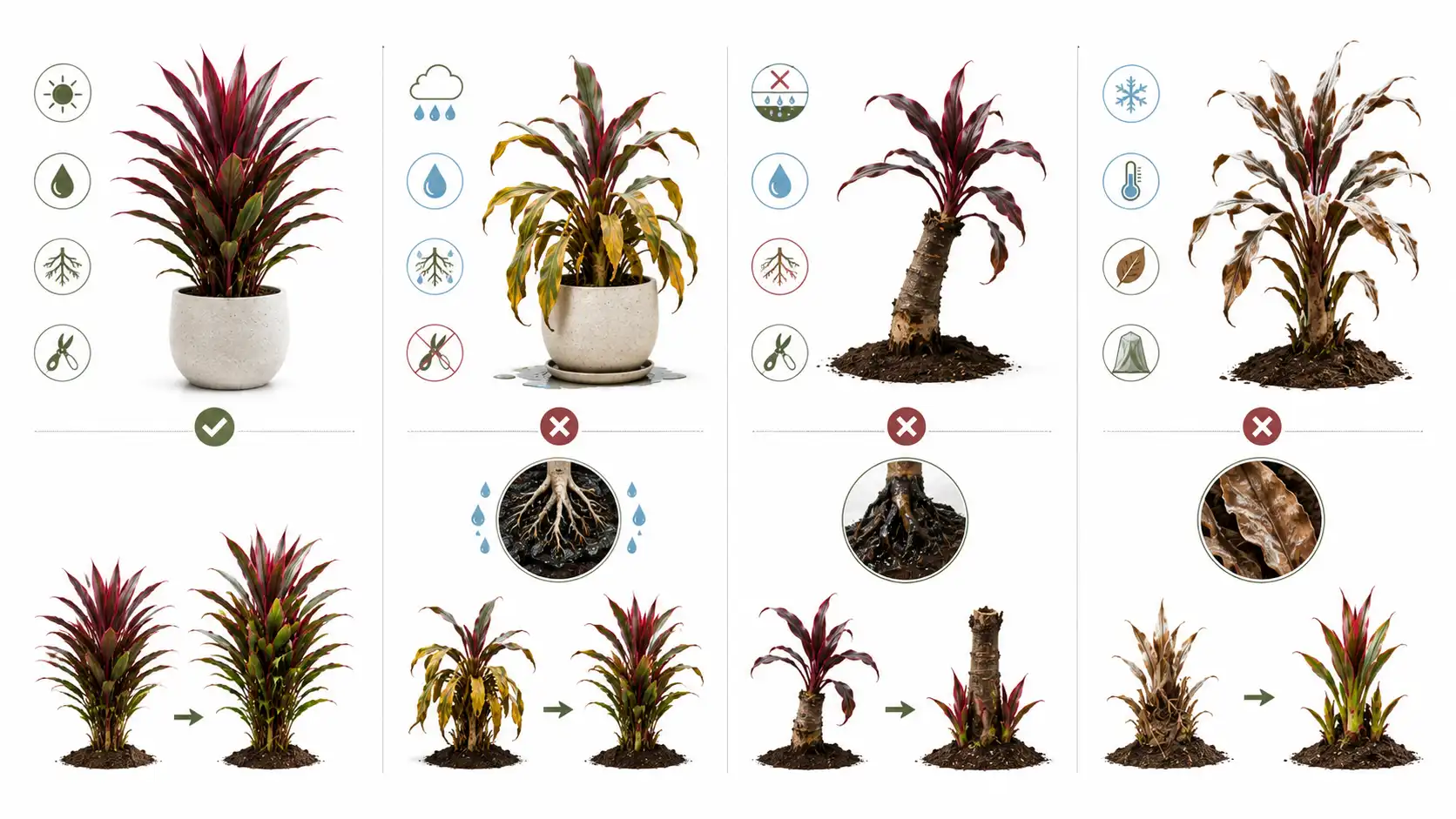
Most cordyline problems are preventable. In our experience at Greenery Inside, incorrect watering, poor drainage, and environmental stress account for the vast majority of unhealthy plants.
Learning to identify symptoms early allows you to correct problems before permanent damage occurs.
Yellowing or Dying Leaves
Yellow or dying leaves usually indicate environmental stress rather than disease.
Common causes
- Overwatering
- Underwatering
- Natural aging of older leaves
- Sudden temperature changes
- Poor lighting
- Nutrient deficiencies
How to fix it
- Check soil moisture before watering.
- Remove fully dead leaves using clean pruners.
- Improve drainage if soil stays wet.
- Increase light if growth is weak and stretched.
- Feed during the growing season if nutrient deficiency is suspected.
How to prevent it
- Water only when the top layer of soil dries.
- Maintain consistent temperatures.
- Grow in well-draining soil.
- Avoid moving the plant frequently between very different environments.
Lower leaves naturally yellow and fall as cordylines mature. This is normal and not a cause for concern unless yellowing spreads rapidly throughout the plant.
Rotting Trunk / Root Rot
A soft trunk or rotting roots almost always indicate excessive moisture around the root system.
Common causes
- Poor drainage
- Overwatering
- Pots without drainage holes
- Heavy clay soil
- Standing water around the roots
How to fix it
- Remove the plant from the pot or inspect the root zone.
- Trim black, mushy roots using sterilized tools.
- Repot into fresh, well-draining soil.
- Reduce watering until healthy growth resumes.
- Improve drainage before replanting outdoors.
If trunk rot extends well above the soil line, recovery becomes more difficult. Early intervention offers the best chance of saving the plant.
How to prevent it
- Never allow pots to sit in standing water.
- Use containers with drainage holes.
- Incorporate perlite or coarse sand into potting mixes.
- Check soil moisture before watering.
Slow or Stalled Growth
A cordyline that stops producing new leaves is usually responding to environmental conditions rather than suffering from disease.
Possible causes
- Winter dormancy
- Insufficient light
- Root-bound containers
- Nutrient deficiency
- Cool temperatures
- Compacted soil
How to encourage new growth
- Move the plant to brighter indirect light.
- Repot if roots completely fill the container.
- Resume balanced fertilization during spring.
- Maintain warm temperatures.
- Water consistently without overwatering.
Healthy growth normally resumes once favorable conditions return.
What Kills Cordyline Plants Naturally
Several environmental conditions can eventually kill even mature cordylines if left uncorrected.
The most common causes include:
- Severe frost
- Root rot caused by saturated soil
- Extended drought
- Chronic overwatering
- Poor drainage
- Repeated freeze-thaw cycles
- Serious trunk damage
- Long-term neglect
Fortunately, most of these problems are preventable through proper watering, suitable placement, and seasonal protection.
How to Revive a Dying Cordyline
Many cordylines that appear beyond saving can recover if the underlying problem is identified early.
If your plant is declining, work through the following troubleshooting steps instead of making multiple changes at once.
Step 1: Check Soil Moisture
Feel the soil several inches below the surface.
- Very wet soil suggests overwatering.
- Extremely dry soil indicates underwatering.
Correct watering before making any other adjustments.
Step 2: Inspect the Roots
Carefully remove the plant from its container.
Healthy roots are:
- Firm
- White or cream colored
- Odor-free
Rotting roots are:
- Brown or black
- Soft
- Slimy
- Foul smelling
Remove damaged roots before repotting.
Step 3: Evaluate Light Conditions
If leaves become pale, stretched, or sparse, move the plant to brighter indirect light.
Avoid sudden exposure to intense afternoon sun, which may scorch weakened foliage.
Step 4: Remove Damaged Growth
Trim away:
- Dead leaves
- Broken stems
- Completely rotten tissue
Leave healthy green growth intact whenever possible.
Step 5: Repot if Necessary
Repot only when:
- Soil remains waterlogged.
- Roots are badly damaged.
- Drainage is poor.
- The container has become overcrowded.
Use fresh, well-draining growing media.
Step 6: Be Patient
Recovery often takes several weeks or even months.
Avoid overwatering or excessive fertilizing while waiting for new shoots to appear.
Greenery Inside Tip: We’ve seen many cordylines recover from severe stress after their watering routine was corrected. Resist the temptation to “help” the plant with extra fertilizer during recovery—healthy roots must develop first.
Transplanting and Propagating Cordyline
Cordylines transplant surprisingly well when moved during their active growing season.
Can You Dig Up and Replant a Cordyline?
Yes. Established plants can usually be transplanted successfully if enough of the root system is preserved.
For best results:
- Transplant during spring or early summer.
- Water thoroughly the day before digging.
- Dig a generous root ball.
- Replant immediately.
- Water deeply after planting.
- Apply mulch to reduce moisture loss.
Some temporary leaf drooping is normal while roots become established.
How to Propagate Cordyline
Cordylines are commonly propagated by stem cuttings.
The basic process includes:
- Selecting a healthy stem.
- Cutting into sections with at least one growing node.
- Planting in moist, well-draining propagation media.
- Keeping warm and lightly moist.
- Waiting for new shoots and roots to develop.
Certain species also produce basal shoots (often called pups) that can be carefully separated and replanted once they have developed their own roots.
Propagation is an excellent way to rejuvenate older plants while creating healthy new specimens.
Cordyline Lifespan and What a Healthy Plant Looks Like
With proper care, cordylines are long-lived ornamental plants.
Many landscape specimens survive for several decades, while indoor plants commonly thrive for 10–20 years or more when provided with suitable growing conditions.
A healthy cordyline typically shows the following characteristics:
- Upright, sturdy stems
- Bright, vibrant foliage with good coloration
- Regular production of new leaves during the growing season
- Firm trunk without soft or dark areas
- Healthy white root system
- Even, symmetrical growth
Mature plants naturally lose older lower leaves over time, creating the characteristic trunk seen in many established cordylines. This is a normal part of development and should not be confused with disease.
Healthy plants also recover more quickly from pruning, transplanting, and seasonal environmental changes than stressed specimens.
Conclusion
Successful cordyline plant care comes down to providing the right balance of light, water, soil, and seasonal protection. Whether you grow a colorful Cordyline fruticosa indoors or a striking Cordyline australis outdoors, these plants reward consistent care with vibrant foliage and long-lasting beauty.
Most common problems—including yellowing leaves, root rot, slow growth, and winter damage—can be prevented by avoiding overwatering, ensuring excellent drainage, and protecting plants from prolonged frost. By understanding your cordyline’s natural growing habits and adjusting care throughout the year, you can enjoy a healthy, attractive plant for many years to come.
Frequently Asked Questions
1. Is a cordyline plant indoor or outdoor?
Cordylines can be grown both indoors and outdoors. The best location depends on the species and your climate. Cordyline fruticosa is commonly grown as a houseplant in cooler regions, while Cordyline australis is often planted outdoors in suitable USDA hardiness zones.
2. How do I bring my cordyline back to life?
Start by identifying the underlying cause. Check soil moisture, inspect the roots for rot, improve drainage if necessary, move the plant to appropriate light, remove damaged foliage, and avoid fertilizing until healthy new growth appears.
3. Are cordylines best in pots or ground?
Both methods work well. Containers are ideal in colder climates because plants can be moved indoors during winter, while in-ground planting allows faster growth and larger mature size in warm regions.
4. What is the lifespan of a cordyline?
With proper care, indoor cordylines commonly live for 10–20 years, while healthy outdoor specimens can thrive for several decades, particularly Cordyline australis.
5. What kills cordyline plants naturally?
The most common causes include severe frost, prolonged waterlogged soil leading to root rot, extended drought, poor drainage, and repeated exposure to freezing temperatures.
6. How often does a cordyline flower?
Mature outdoor cordylines may flower annually during late spring or summer under favorable conditions. Indoor plants rarely flower because they typically do not receive the same environmental cues as outdoor specimens.