Introduction
The fairy floss tree is one of Australia’s most attractive compact flowering trees, prized for its masses of vivid pink blossoms, evergreen foliage, and manageable size. Botanically known as Corymbia ficifolia ‘Fairy Floss’, this ornamental cultivar was developed from the famous red flowering gum to provide gardeners with a smaller tree suitable for residential landscapes. Often referred to as the pink flowering gum, pink flowering gum tree, pink gum tree, gum tree with pink flowers, or fairy floss gum tree, it combines spectacular seasonal blooms with impressive drought tolerance. Its long flowering display, wildlife-friendly nectar, and adaptability have made it a popular feature tree throughout Australian gardens and increasingly in suitable climates around the world.
By Greenery Inside | Plant Care & Gardening Expert
Experience Note: In our experience growing flowering gums, ‘Fairy Floss’ performs best when planted in a sunny, open position with excellent drainage. Trees established under these conditions consistently produce denser flowering and healthier canopies than those planted in shaded or poorly drained locations.
This tree is a great example of how modern landscapes use Australian native garden trees for structure, resilience, and seasonal colour, especially in water-wise garden design.
Quick Summary
- Fairy Floss Tree is a compact cultivar of Corymbia ficifolia celebrated for abundant bright pink flowers.
- Its dwarf growth habit makes it ideal for small gardens, urban landscapes, streetscapes, and feature planting.
- Full sun, well-drained soil, and occasional deep watering encourage vigorous growth and reliable flowering.
- The nectar-rich blooms attract birds, bees, butterflies, and other beneficial pollinators.
- With excellent drought tolerance and relatively low maintenance, it is one of Australia’s most popular ornamental native trees.
What Is the Fairy Floss Tree?
The Fairy Floss Tree is a compact ornamental flowering gum selected for its vibrant pink blossoms, dense rounded canopy, and smaller mature size. It belongs to the Australian myrtle family (Myrtaceae) and is valued as a landscape tree for residential gardens where traditional flowering gums may become too large.
Unlike many standard flowering gums, this cultivar offers exceptional ornamental value without requiring extensive space. Its colorful flowers, evergreen foliage, and adaptability make it suitable for both modern and traditional garden designs.
Botanical Classification
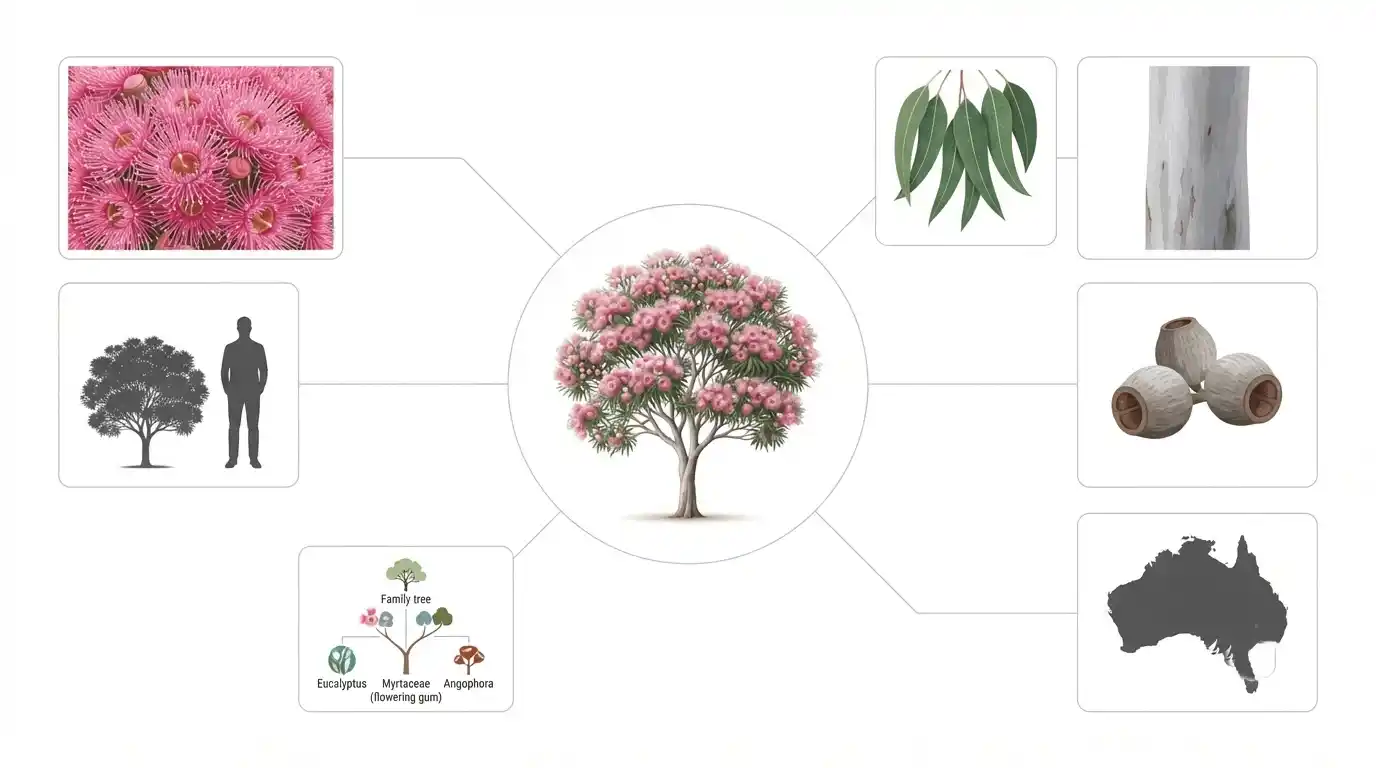
Corymbia ficifolia ‘Fairy Floss’ is a cultivated selection of Corymbia ficifolia, a species native to southwestern Western Australia. Although flowering gums were historically classified within the genus Eucalyptus, botanical research placed this group into the genus Corymbia, reflecting differences in flower, bark, and fruit characteristics.
Botanical Classification
| Classification | Details |
| Scientific Name | Corymbia ficifolia ‘Fairy Floss’ |
| Family | Myrtaceae |
| Genus | Corymbia |
| Plant Type | Evergreen ornamental tree |
| Native Origin | Cultivar derived from an Australian native species |
| Growth Habit | Compact dwarf flowering gum |
The cultivar was specifically selected to maintain the spectacular flowering of its parent species while remaining considerably smaller, making it easier to incorporate into suburban landscapes.
Because of its naturally compact growth, it is widely regarded as a dwarf flowering gum, requiring far less space than standard flowering gum varieties while retaining exceptional ornamental performance.
Its compact habit also makes maintenance simpler, with less frequent pruning and easier long-term management.
Common Names and Plant Identity
The Fairy Floss Tree is marketed under several common names, which often causes confusion among gardeners. Despite the different names, they usually refer to the same ornamental cultivar.
Common names include:
- Fairy Floss Tree
- Pink flowering gum
- Pink flowering gum tree
- Pink gum tree
- Fairy Floss flowering gum
- Flowering gum Fairy Floss
- Corymbia Fairy Floss
- Eucalyptus Fairy Floss
- Eucalyptus ficifolia Fairy Floss
- Gum tree with pink flowers
The names eucalyptus fairy floss and eucalyptus ficifolia fairy floss remain common in nurseries because the species was formerly classified within the genus Eucalyptus. However, the currently accepted botanical name is Corymbia ficifolia ‘Fairy Floss’.
Understanding this naming history helps gardeners correctly identify the plant when purchasing from nurseries, reading gardening references, or comparing flowering gum cultivars.
Key Features and Appearance
The Fairy Floss Tree is admired for combining vibrant flowering with attractive evergreen foliage and a naturally rounded shape. Its ornamental characteristics provide visual interest throughout the year rather than only during flowering season.
Flowers
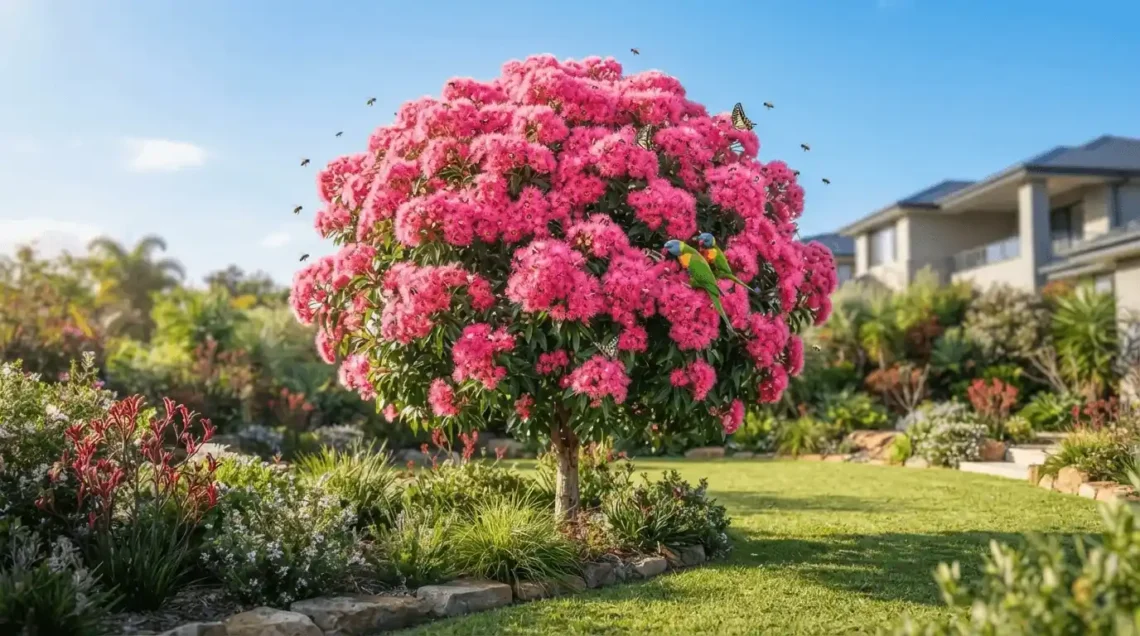
The flowers are the defining feature of the Fairy Floss Tree. During the flowering season, the canopy becomes covered with dense clusters of fluffy pink blossoms that create an eye-catching display visible from considerable distances.
Each fairy floss flower is made up primarily of long, colorful stamens that produce the soft, fluffy appearance characteristic of flowering gums. The blooms range from bright rose pink to rich deep pink, often described as pink fairy floss because of their vibrant, cloud-like appearance.
Flower characteristics include:
- Brilliant bright pink flower clusters
- Fluffy brush-like blossoms
- Heavy seasonal flowering
- Rich nectar production
- Long-lasting ornamental display
- Strong attraction for wildlife
The nectar-rich flowers attract numerous beneficial visitors, including:
- Honeyeaters
- Rainbow lorikeets
- Native bees
- Honeybees
- Butterflies
- Other nectar-feeding insects
Flowering generally occurs from late spring through summer, although timing varies according to local climate, rainfall, and seasonal temperatures.
Experience Note: Greenery Inside recommends avoiding excessive nitrogen fertiliser before flowering season. Trees receiving balanced nutrition with adequate sunlight generally produce significantly more blossoms than heavily fertilised trees focused on leafy growth.
Leaves, Bark and Canopy
Even outside flowering season, the Fairy Floss Tree remains highly ornamental.
Its evergreen foliage consists of glossy green leaves that provide year-round colour and contrast beautifully with the vivid pink flowers.
Key foliage and structural characteristics include:
- Evergreen foliage
- Narrow lance-shaped leaves
- Attractive glossy green colour
- Dense rounded canopy
- Smooth grey to pale cream bark
- Strong branching structure
As the tree matures, the canopy develops into a naturally rounded shape requiring minimal shaping. The smooth bark provides additional ornamental interest during winter when flowering has finished.
Its balanced canopy makes the tree particularly suitable for:
- Feature planting
- Small front gardens
- Streetscapes
- Residential landscapes
- Native garden designs
The combination of bark texture, evergreen foliage, and spectacular flowering ensures year-round landscape value.
Why Gardeners Choose This Cultivar
Gardeners frequently choose Corymbia ficifolia ‘Fairy Floss’ because it offers the beauty of traditional flowering gums in a much smaller package.
Major advantages include:
- Compact size suitable for smaller gardens
- Heavy flowering with vibrant pink blooms
- Excellent heat tolerance
- High drought resistance after establishment
- Bird-friendly nectar production
- Ideal for urban gardens and residential landscapes
- Evergreen ornamental foliage
- Relatively low maintenance requirements
- Attractive year-round appearance
- Long lifespan when properly maintained
Its versatility allows it to function equally well as a lawn specimen, feature tree, wildlife tree, or ornamental street planting.
Fairy Floss Tree Height and Mature Size
One of the biggest reasons for the popularity of the Fairy Floss Tree is its compact mature size. Unlike standard flowering gums that may become very large, this cultivar remains suitable for most suburban gardens.
| Feature | Typical Range |
| Mature Height | 4–6 metres (13–20 feet) |
| Mature Width | 3–5 metres (10–16 feet) |
| Growth Habit | Dense, rounded, compact canopy |
| Suitable Garden Size | Small to medium residential gardens |
The exact fairy floss tree height depends on several environmental factors, including climate, soil quality, irrigation, and maintenance.
Trees grown under ideal conditions typically develop a broad rounded canopy while maintaining a manageable overall size.
Pruning can influence both height and spread, although excessive pruning is generally unnecessary because the cultivar naturally develops an attractive form.
Compared with standard Corymbia ficifolia, Fairy Floss typically remains significantly shorter while producing equally impressive floral displays.
Factors Affecting Mature Size
- Soil fertility
- Available root space
- Annual rainfall
- Sunlight exposure
- Climate
- Pruning practices
- Overall tree health
Trees planted in unrestricted garden beds generally achieve their best natural shape.
Experience Note: We have found that allowing young Fairy Floss Trees to establish their natural branch structure during the first few years results in stronger frameworks and more balanced canopies than frequent early pruning.
Growth Rate
The Fairy Floss Tree has a moderate growth rate, making it relatively quick to establish without becoming difficult to manage.
Most young trees focus on developing strong root systems during the first one to three years after planting. Once established, annual growth becomes more vigorous, especially in warm climates with full sun and well-drained soil.
Flowering often begins while the tree is still young, although the most spectacular displays usually occur after several years of healthy growth and canopy development.
Factors That Influence Growth Rate
| Factor | Effect on Growth |
| Full sunlight | Encourages vigorous growth and abundant flowering |
| Well-drained soil | Supports healthy root development |
| Moderate watering | Promotes steady establishment |
| Good soil fertility | Improves foliage and flower production |
| Warm climate | Extends the growing season |
| Poor drainage | Slows growth and increases disease risk |
Although relatively drought tolerant once established, newly planted trees benefit from regular deep watering during dry periods to encourage deep root development.
As of 2026, many Australian growers continue to recommend deep, infrequent watering rather than frequent shallow irrigation, as this promotes stronger root systems and improves long-term drought resilience.
How to Grow and Care for a Fairy Floss Tree
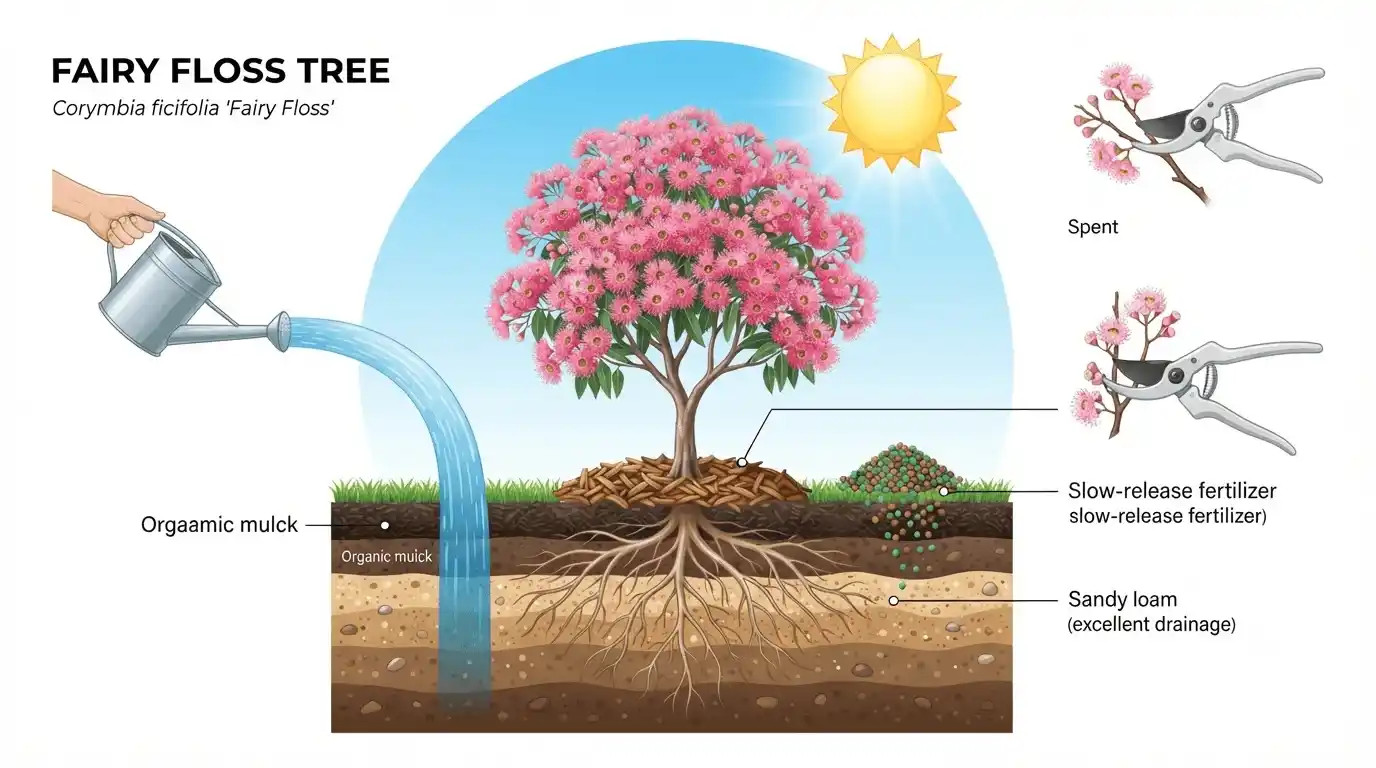
Growing a Fairy Floss Tree (Corymbia ficifolia ‘Fairy Floss’) successfully depends on providing conditions similar to its Australian native habitat. Full sun, free-draining soil, and proper watering during establishment are the keys to producing a healthy tree with abundant pink blooms. Once established, this dwarf flowering gum requires relatively little maintenance compared to many ornamental trees.
Experience Note: At Greenery Inside, we’ve found that gardeners who focus on good site selection before planting experience fewer long-term problems than those who rely on corrective pruning or fertilisers later. Choosing a sunny, well-drained location from the beginning makes the biggest difference.
Sunlight Requirements
The Fairy Floss Tree performs best in full sun and should receive at least 6–8 hours of direct sunlight daily. Sunlight is essential for healthy foliage, sturdy branch development, and prolific flowering.
Trees grown in insufficient light often develop:
- Fewer flower buds
- Sparse canopies
- Weak or elongated branches
- Reduced drought tolerance
- Slower overall growth
For the best display of bright pink blossoms, avoid planting near large trees or buildings that create prolonged shade.
Soil Preferences
Well-drained soil is one of the most important requirements for long-term success.
Ideal soil conditions include:
- Sandy loam
- Loamy soil
- Gravelly soil
- Slightly acidic to neutral pH (approximately 6.0–7.5)
The tree tolerates poorer soils better than waterlogged ones. Heavy clay soils should be improved before planting by incorporating coarse sand, gravel, or organic matter to enhance drainage.
Avoid planting where water remains around the roots after rainfall, as prolonged saturation can lead to root decline.
Watering Needs
Although mature Fairy Floss Trees are drought tolerant, newly planted specimens require regular watering while establishing.
A general watering schedule is:
| Tree Stage | Watering Recommendation |
| Newly planted | Deep watering 1–2 times per week |
| First growing season | Water when the topsoil begins to dry |
| Established trees | Deep watering during prolonged dry periods |
| Mature trees | Usually rely on natural rainfall except during drought |
Deep watering encourages roots to grow downward rather than remaining close to the soil surface, increasing drought resilience.
Avoid frequent shallow watering, which promotes weak root systems.
Fertilizing
Fairy Floss Trees are not heavy feeders.
Apply a balanced, slow-release fertiliser formulated for Australian native plants in early spring if the soil is nutrient deficient.
Avoid excessive nitrogen because it encourages leafy growth at the expense of flowering.
Suitable fertilising practices include:
- Apply once annually in spring if needed.
- Water thoroughly after application.
- Keep fertiliser away from the trunk.
- Follow the manufacturer’s recommended rate.
Healthy trees growing in fertile garden soil often require little or no supplemental fertiliser.
Mulching
Mulch helps regulate soil temperature, retain moisture, and suppress weeds.
Apply a 5–8 cm (2–3 inch) layer of organic mulch such as:
- Shredded bark
- Wood chips
- Leaf mulch
- Composted garden mulch
Keep mulch 10–15 cm (4–6 inches) away from the trunk to prevent excess moisture around the bark, which can encourage disease.
Refresh mulch annually as it decomposes.
Pruning and Maintenance
The Fairy Floss Tree naturally develops an attractive rounded canopy and generally requires only light pruning.
Routine maintenance includes:
- Removing dead branches
- Eliminating damaged limbs
- Pruning crossing branches
- Light canopy shaping if necessary
The best time to prune is after flowering.
Avoid heavy pruning immediately before the flowering season, as this may remove developing flower buds and reduce blooming.
Seasonal maintenance tips include:
- Inspect for damaged branches after storms.
- Remove suckers if they develop.
- Check mulch depth each spring.
- Water deeply during extended drought.
- Monitor young trees during their first two summers.
Proper long-term care allows the tree to remain healthy and highly ornamental for decades.
Where Does the Fairy Floss Tree Grow Best?
The Fairy Floss Tree grows best in regions with warm summers, abundant sunshine, and well-drained soils. It is highly adaptable across many parts of Australia and performs well in other Mediterranean and temperate climates with similar conditions.
Ideal growing environments include:
- Coastal regions
- Urban gardens
- Residential landscapes
- Native gardens
- Streetscapes
- Public parks
- Feature planting
- Larger courtyards
Its compact size makes it especially suitable where standard flowering gums would become too large.
Climate
The tree performs best in:
- Warm temperate climates
- Mediterranean climates
- Mild subtropical regions
- Areas with low summer humidity
Extended cold or severe frost can damage young growth.
Frost Tolerance
Established trees tolerate light frosts, but young plants benefit from protection during their first few winters.
If frost is common:
- Plant in a sheltered position.
- Apply mulch around the root zone.
- Protect young trees with frost cloth during severe cold events.
Coastal Planting
One reason the Fairy Floss Tree is widely planted throughout Australia is its moderate tolerance to coastal conditions.
It generally handles:
- Salt-laden breezes
- Sandy soils
- Wind exposure
However, extremely exposed beachfront locations may still reduce flowering and foliage quality.
Urban Gardens
The tree is particularly well suited to modern residential gardens because it offers:
- Compact growth
- Limited root spread compared with larger gums
- Minimal pruning requirements
- High ornamental value
- Wildlife benefits
It works well near patios, driveways, and open lawns when sufficient space is provided for mature growth.
Feature Trees
As a specimen tree, Fairy Floss creates a striking focal point during flowering.
Popular locations include:
- Front gardens
- Lawn centres
- Courtyard landscapes
- Native garden displays
- Entryways
- Public landscape projects
Its rounded canopy provides attractive structure throughout the year.
Street Planting
Many councils and landscape designers favour Fairy Floss because of its manageable size and vibrant seasonal display.
Advantages for streetscapes include:
- Compact mature dimensions
- Excellent visual impact
- Bird-attracting flowers
- Lower maintenance than larger gum species
Growing in Containers
Young Fairy Floss Trees can be grown in large containers for several years.
Choose:
- A large, well-drained pot
- Premium native plant potting mix
- Full sun exposure
As the tree matures, transplanting into the ground is recommended to allow proper root development and long-term health.
Environmental Limitations
Although adaptable, Fairy Floss performs poorly when exposed to:
- Waterlogged soils
- Deep shade
- Continual heavy frost
- Poor drainage
- Severely compacted soil
Selecting the right planting site greatly reduces future maintenance problems.
Fairy Floss Tree vs Other Flowering Gum Cultivars
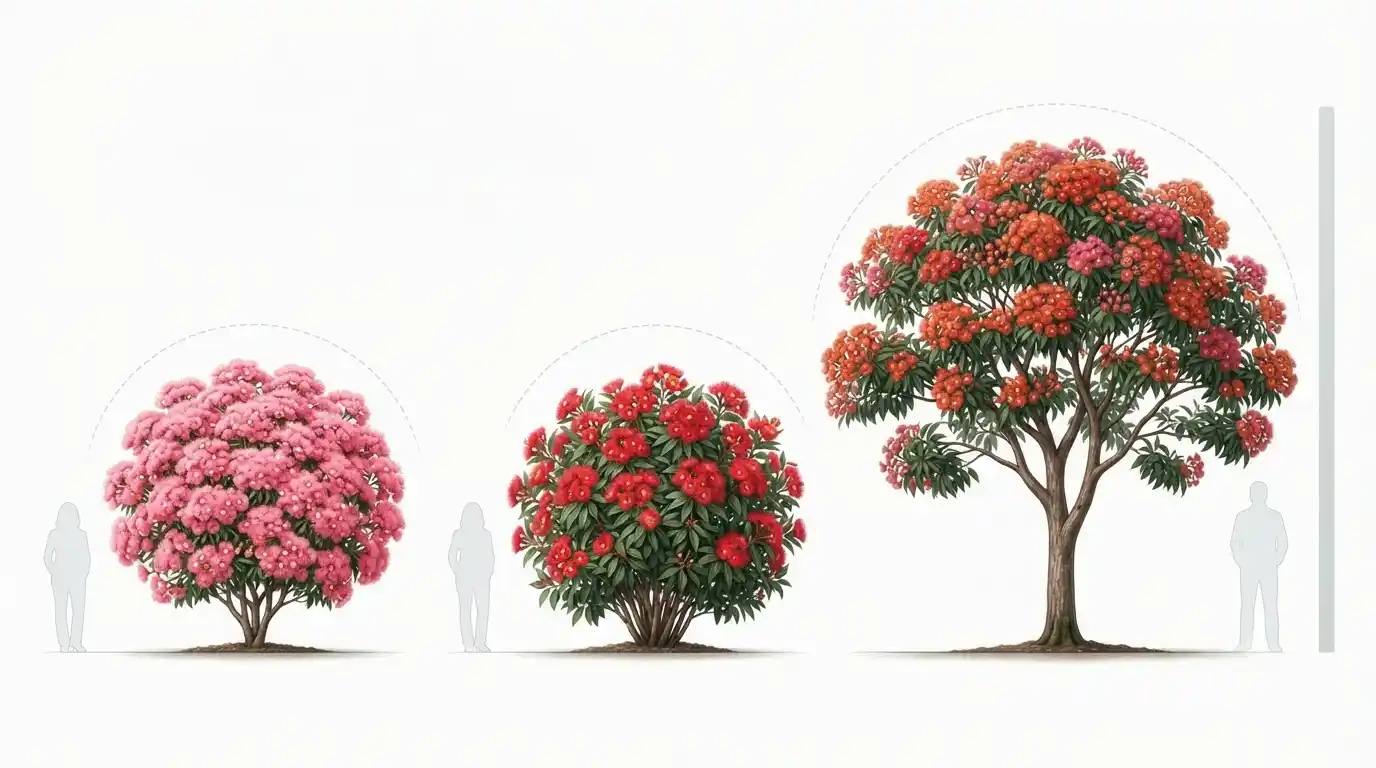
Many gardeners compare Fairy Floss with other flowering gum cultivars before selecting the best tree for their landscape. While all belong to the Corymbia ficifolia group, each cultivar differs in mature size, flower colour, and landscape use.
Comparison Table
| Feature | Fairy Floss | Mini Red | Standard Corymbia ficifolia |
| Mature Height | 4–6 m | 3–5 m | 8–15 m |
| Flower Colour | Bright pink | Bright red | Red, orange, pink, or scarlet depending on selection |
| Growth Habit | Compact rounded | Compact dense | Large spreading tree |
| Best Landscape Use | Small gardens, feature planting | Courtyards, compact gardens | Large gardens, parks |
| Maintenance | Low | Low | Moderate |
Fairy Floss
The Fairy Floss cultivar is known for:
- Bright pink flowers
- Rounded canopy
- Excellent ornamental value
- Moderate growth
- Small residential gardens
Mini Red
Corymbia Mini Red, also marketed as Mini Red flowering gum, flowering gum Mini Red, or Corymbia ficifolia Mini Red, is another compact cultivar developed for urban landscapes.
It differs from Fairy Floss by producing:
- Rich red flowers
- Slightly denser branching
- Similar mature size
- Comparable drought tolerance
Gardeners seeking red blooms often choose Mini Red, while those wanting softer pink floral displays prefer Fairy Floss.
Standard Corymbia ficifolia
The standard flowering gum grows significantly larger.
Compared with Fairy Floss, it typically offers:
- Taller mature height
- Wider canopy
- Greater shade
- More space requirements
Large properties, parks, and rural landscapes generally suit standard forms better than suburban gardens.
Overall, both Fairy Floss and Mini Red belong to the group commonly referred to as dwarf Corymbia cultivars because of their compact growth habits.
Fairy Floss Tree vs Fairy Floss Plant: Understanding the Difference
Many gardeners mistakenly assume that the Fairy Floss Tree and the Fairy Floss Plant are the same species. They are entirely different plants belonging to different botanical families.
Comparison Table
| Characteristic | Fairy Floss Tree | Fairy Floss Plant |
| Scientific Name | Corymbia ficifolia ‘Fairy Floss’ | Eremophila maculata ‘Fairy Floss’ (commonly marketed) |
| Plant Type | Evergreen ornamental tree | Flowering shrub |
| Botanical Family | Myrtaceae | Scrophulariaceae |
| Mature Size | 4–6 m | Approximately 1–2 m |
| Flower Type | Large fluffy pink blossoms | Tubular pink-purple flowers |
| Best Use | Shade tree, feature tree | Shrub borders, native gardens |
Fairy Floss Tree
The Fairy Floss Tree is:
- An evergreen ornamental tree
- A flowering gum cultivar
- Suitable for feature planting
- Bird attracting
- Long lived
- Ideal for small to medium landscapes
Fairy Floss Plant
The Fairy Floss Plant usually refers to Eremophila Fairy Floss, derived from Eremophila maculata selections.
Unlike the flowering gum, this plant is:
- A compact flowering shrub
- Much smaller in size
- Produces tubular flowers instead of fluffy blossoms
- Commonly used in low-maintenance native gardens
- Attractive to nectar-feeding birds
Although both plants feature attractive pink flowers and Australian origins, they differ significantly in growth habit, botanical classification, and landscape application. Understanding this distinction helps gardeners choose the right plant for the available space and intended garden design.
Common Problems and How to Fix Them
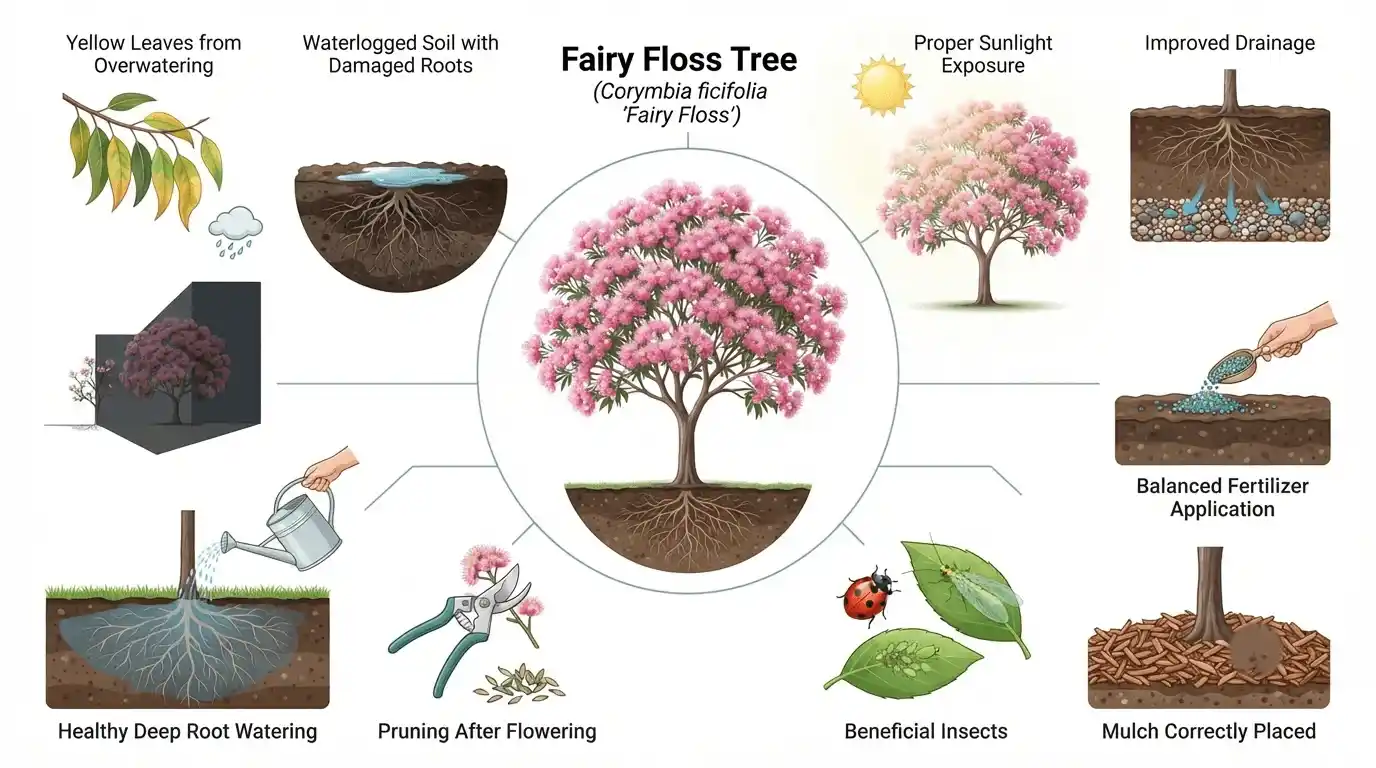
The Fairy Floss Tree (Corymbia ficifolia ‘Fairy Floss’) is generally a hardy, low-maintenance ornamental tree. However, like most flowering gums, it can develop problems if grown under unsuitable conditions. Identifying issues early and correcting the underlying cause helps maintain healthy growth and abundant flowering.
Poor Flowering
Poor flowering is one of the most common concerns among gardeners. In most cases, the problem is related to growing conditions rather than the tree itself.
Common causes:
- Insufficient sunlight
- Excess nitrogen fertilizer
- Heavy pruning before flowering
- Young tree not yet fully mature
- Drought stress during bud development
How to fix it:
- Plant or maintain the tree in full sun.
- Use a balanced fertilizer formulated for Australian native plants.
- Prune only after flowering has finished.
- Water deeply during prolonged dry periods.
- Be patient with younger trees, as flowering often improves with maturity.
Yellowing Leaves
Yellow leaves usually indicate environmental stress or nutrient imbalance.
Possible causes:
- Poor drainage
- Overwatering
- Nutrient deficiencies
- Root damage
- Compacted soil
Solutions:
- Improve soil drainage.
- Reduce watering frequency if the soil remains wet.
- Apply a suitable native plant fertilizer when needed.
- Check for root disturbance around the base of the tree.
- Avoid heavy foot traffic over the root zone.
Slow Growth
A Fairy Floss Tree naturally has a moderate growth rate, but unusually slow development often points to environmental limitations.
Possible causes:
- Limited sunlight
- Poor soil fertility
- Restricted root space
- Water stress
- Extended cold weather
Solutions:
- Ensure at least 6–8 hours of direct sunlight daily.
- Improve soil with compost where appropriate.
- Water deeply during establishment.
- Avoid planting where roots are confined by hard surfaces.
- Protect young trees from severe frost.
Pest Issues
The Fairy Floss Tree is relatively resistant to serious pests, but occasional infestations can occur.
Common pests include:
- Psyllids
- Scale insects
- Aphids
- Leaf-chewing caterpillars
Management options:
- Inspect foliage regularly.
- Remove heavily affected branches.
- Encourage beneficial insects such as ladybirds and lacewings.
- Use horticultural oil or insecticidal soap only when necessary and according to label directions.
Healthy trees are generally less susceptible to pest problems than stressed specimens.
Root Stress
Healthy roots are essential for vigorous growth and flowering.
Signs of root stress include:
- Wilting despite adequate watering
- Yellow foliage
- Sparse canopy
- Dieback of branch tips
- Reduced flowering
Common causes:
- Waterlogged soil
- Soil compaction
- Construction damage
- Poor drainage
- Root disturbance
Prevention:
- Plant in free-draining soil.
- Avoid digging near established roots.
- Maintain an organic mulch layer.
- Water deeply but infrequently.
- Avoid excessive irrigation.
Beginner-Friendly Troubleshooting Guide
| Problem | Likely Cause | Recommended Solution |
| Few flowers | Shade or excessive nitrogen | Increase sunlight and reduce nitrogen fertilizer |
| Yellow leaves | Poor drainage or overwatering | Improve drainage and adjust watering |
| Slow growth | Low sunlight or poor soil | Improve site conditions and fertilize if needed |
| Pest damage | Aphids, psyllids, or scale | Monitor regularly and treat early if required |
| Wilting | Root stress | Check drainage and inspect root zone |
Experience Note: In our experience, the majority of Fairy Floss Tree problems stem from excessive watering rather than drought. Once established, these trees typically perform better with occasional deep watering than with frequent light irrigation.
Common Mistakes When Growing a Fairy Floss Tree
Although the Fairy Floss Tree is easy to grow, several common mistakes can reduce its health, flowering performance, and longevity.
Avoid these frequent errors:
- Planting in shade: Insufficient sunlight leads to fewer flowers and weaker growth.
- Overwatering: Constantly wet soil can damage roots and increase the risk of disease.
- Planting in heavy clay soil: Poor drainage restricts root development and may cause root rot.
- Using excessive fertilizer: Too much nitrogen encourages leafy growth while reducing flowering.
- Pruning at the wrong time: Heavy pruning before flowering removes developing flower buds.
- Planting too close to buildings or other trees: Crowded conditions restrict canopy development and reduce airflow.
Additional practical tips include:
- Choose the planting location carefully before planting.
- Leave adequate space for the mature canopy.
- Avoid disturbing established roots.
- Refresh mulch annually without piling it against the trunk.
- Monitor young trees more closely during their first two summers.
These simple practices help prevent many of the problems commonly encountered by beginner gardeners.
Landscaping Ideas for Fairy Floss Trees
The Fairy Floss Tree is one of the most versatile Australian ornamental trees. Its compact size, evergreen foliage, and brilliant pink flowers allow it to complement a wide variety of landscape styles.
Feature Planting
A single Fairy Floss Tree creates a dramatic focal point when planted in an open lawn or central garden bed. During flowering, its vivid pink canopy becomes the dominant visual feature of the landscape.
Native Gardens
Because it is derived from an Australian native species, the tree blends naturally with other native plants such as:
- Grevilleas
- Callistemons
- Banksias
- Westringias
- Lomandras
These combinations create attractive, water-wise landscapes that support local wildlife.
Wildlife Gardens
The nectar-rich flowers attract:
- Honeyeaters
- Rainbow lorikeets
- Native bees
- Butterflies
- Other beneficial pollinators
Including Fairy Floss in a wildlife-friendly garden increases biodiversity while providing seasonal colour.
Streetscapes
Its manageable size makes Fairy Floss suitable for:
- Residential streets
- Council plantings
- Community parks
- School landscapes
The compact canopy requires less maintenance than many larger flowering gum species while still delivering excellent ornamental value.
Modern Landscapes
The naturally rounded form complements contemporary garden designs featuring:
- Clean lines
- Decorative gravel
- Native grasses
- Architectural shrubs
- Minimalist planting schemes
Cottage Gardens
The soft pink flowers also suit informal cottage-style gardens, where they pair beautifully with flowering perennials and ornamental shrubs.
The Fairy Floss Tree is also commonly grouped with other small feature trees Australia selections and drought-tolerant species that are widely used in low-maintenance native garden designs.
Pollinator-Friendly Gardens
As pollinator-friendly gardening continues to gain popularity, Fairy Floss remains an excellent choice because it provides a reliable nectar source during its flowering season.
Landscaping Ideas
- Plant as a lawn specimen tree.
- Use as an entry feature near driveways or pathways.
- Incorporate into a mixed native border.
- Create a small backyard focal point.
- Plant near outdoor entertaining areas for seasonal colour.
- Combine with drought-tolerant Australian natives for a cohesive landscape.
Why the Fairy Floss Tree Is Popular in Australian Gardens
The Fairy Floss Tree has become one of Australia’s favourite ornamental native trees because it combines spectacular flowering with practical garden performance.
Its popularity is driven by several key characteristics.
Compact Size
Unlike many traditional flowering gums, Fairy Floss remains small enough for suburban gardens while still producing an impressive floral display.
Outstanding Ornamental Value
The brilliant pink flower clusters create a striking visual feature from late spring into summer. Even outside the flowering season, the evergreen foliage and smooth bark maintain year-round appeal.
Australian Native Origin
Derived from Corymbia ficifolia, the Fairy Floss Tree is well adapted to Australian growing conditions, making it a dependable choice for many regions.
Excellent Drought Tolerance
Once established, the tree tolerates dry periods remarkably well, making it suitable for water-wise gardens and regions experiencing seasonal drought.
As of 2026, many horticultural experts continue to recommend drought-tolerant native trees like Fairy Floss for sustainable residential landscaping where water conservation is a priority.
Low Maintenance
Its naturally rounded canopy requires only occasional pruning, while its hardy nature minimizes routine care requirements.
Bird Attraction
The nectar-rich flowers provide food for numerous native birds and beneficial insects, increasing biodiversity within home gardens.
Ideal for Residential Landscapes
Fairy Floss is particularly well suited for:
- Small backyards
- Front gardens
- Courtyards
- Streetscapes
- Native gardens
- Feature planting
- Wildlife gardens
Its combination of manageable size and spectacular flowering makes it one of the most versatile ornamental gum trees available.
Conclusion
The Fairy Floss Tree (Corymbia ficifolia ‘Fairy Floss’) is an outstanding choice for gardeners seeking a compact ornamental tree with exceptional seasonal colour. Its vibrant pink blossoms, evergreen foliage, rounded canopy, and manageable mature size make it ideal for small to medium landscapes where larger flowering gums may be unsuitable.
With full sun, well-drained soil, and thoughtful watering during establishment, this dwarf flowering gum rewards gardeners with reliable flowering, excellent drought tolerance, and long-term landscape value. It also supports birds and pollinators, making it an environmentally beneficial addition to native and wildlife-friendly gardens.
Whether used as a feature tree, street planting, or focal point in a residential landscape, the Fairy Floss Tree combines beauty, resilience, and low-maintenance performance. For gardeners looking to enjoy the charm of a pink flowering gum without the size of a standard flowering gum, Corymbia ficifolia ‘Fairy Floss’ remains one of the best ornamental Australian native trees available.
Frequently Asked Questions
How tall does a Fairy Floss Tree grow?
A mature Fairy Floss Tree typically reaches 4–6 metres (13–20 feet) in height with a spread of approximately 3–5 metres (10–16 feet). Growth varies depending on climate, soil quality, sunlight, and overall care.
Is the Fairy Floss Tree a eucalyptus?
Not technically. The accepted botanical name is Corymbia ficifolia ‘Fairy Floss’, which belongs to the genus Corymbia. It was previously classified within the genus Eucalyptus, so older references may still use names such as “Eucalyptus Fairy Floss” or “Eucalyptus ficifolia Fairy Floss.”
Is Corymbia ficifolia ‘Fairy Floss’ suitable for small gardens?
Yes. Its naturally compact growth habit makes it an excellent choice for small gardens, courtyards, front yards, and urban landscapes where larger flowering gums would require too much space.
How often should a Fairy Floss Tree be watered?
Newly planted trees should be watered deeply once or twice each week during establishment, depending on weather conditions. Once established, Fairy Floss Trees usually require only occasional deep watering during prolonged dry periods.
When does a pink flowering gum tree bloom?
Most Fairy Floss Trees flower from late spring through summer, although the exact timing depends on local climate and seasonal weather. Mature trees typically produce heavier flowering displays than young specimens.
Does the Fairy Floss Tree attract birds and pollinators?
Yes. The nectar-rich pink flowers attract honeyeaters, lorikeets, native bees, butterflies, and many other beneficial pollinators, making the tree an excellent addition to wildlife-friendly gardens.
What is the difference between Fairy Floss and Mini Red flowering gums?
The primary difference is flower colour. Fairy Floss produces bright pink blossoms, while Mini Red produces vivid red flowers. Both are compact Corymbia ficifolia cultivars with similar growth habits and care requirements, making them well suited to smaller landscapes.
Can a Fairy Floss Tree tolerate drought?
Yes. Once established, the Fairy Floss Tree is highly drought tolerant. Deep, occasional watering during extended dry periods is generally sufficient to maintain healthy growth and encourage consistent flowering.