Introduction
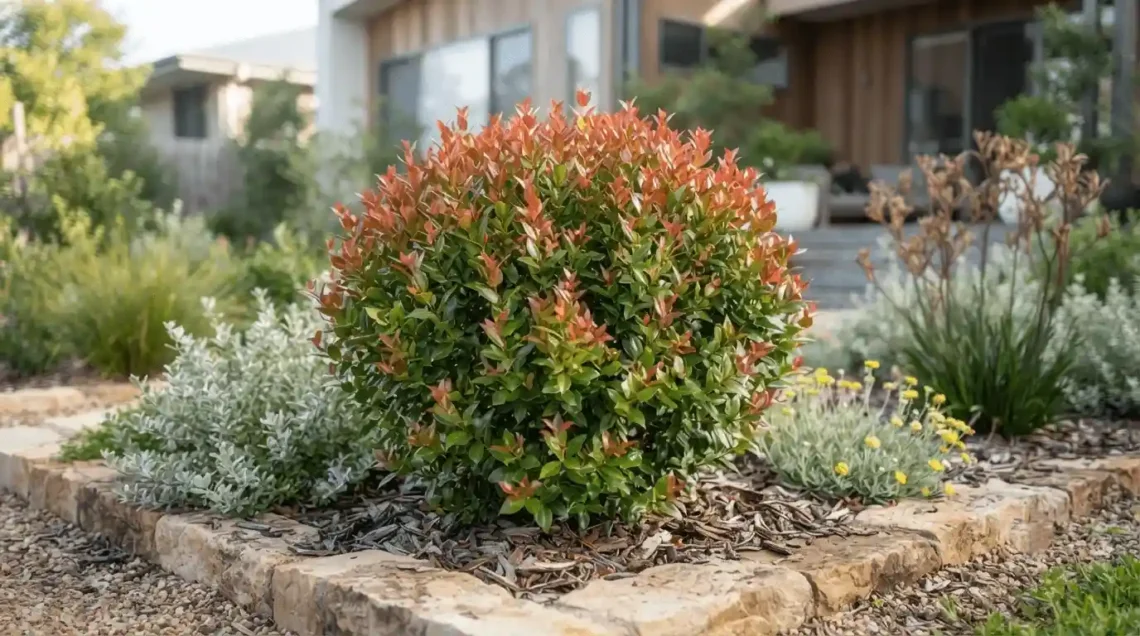
Austromyrtus Copper Tops is a compact Australian native shrub admired for its brilliant copper-red new foliage, dense evergreen growth, and versatility in modern landscapes. Closely associated with Austromyrtus dulcis and selected ornamental cultivars, this attractive shrub has become a favorite for low hedges, borders, foundation plantings, and feature gardens. It is commonly referred to as Copper Tops, Copper Tops plant, Copper Top plant, or Coppertops, although these names describe the same ornamental selection rather than different species. With its manageable size, year-round foliage, and low-maintenance nature, Austromyrtus Copper Tops offers an excellent choice for gardeners seeking colorful native plants that perform well in a wide range of Australian growing conditions.
By Greenery Inside | Plant Care & Gardening Expert
Quick Summary
- Austromyrtus Copper Tops is an Australian native shrub valued for its vibrant copper-colored new growth and evergreen foliage.
- It performs exceptionally well as a compact hedge, border plant, feature shrub, or container specimen.
- Regular pruning promotes dense branching and encourages fresh copper-colored foliage.
- Well-drained soil, moderate watering, and full sun to partial shade support healthy year-round growth.
- Its compact habit and adaptability make it suitable for contemporary, coastal, and native gardens.
What Is Austromyrtus Copper Tops?
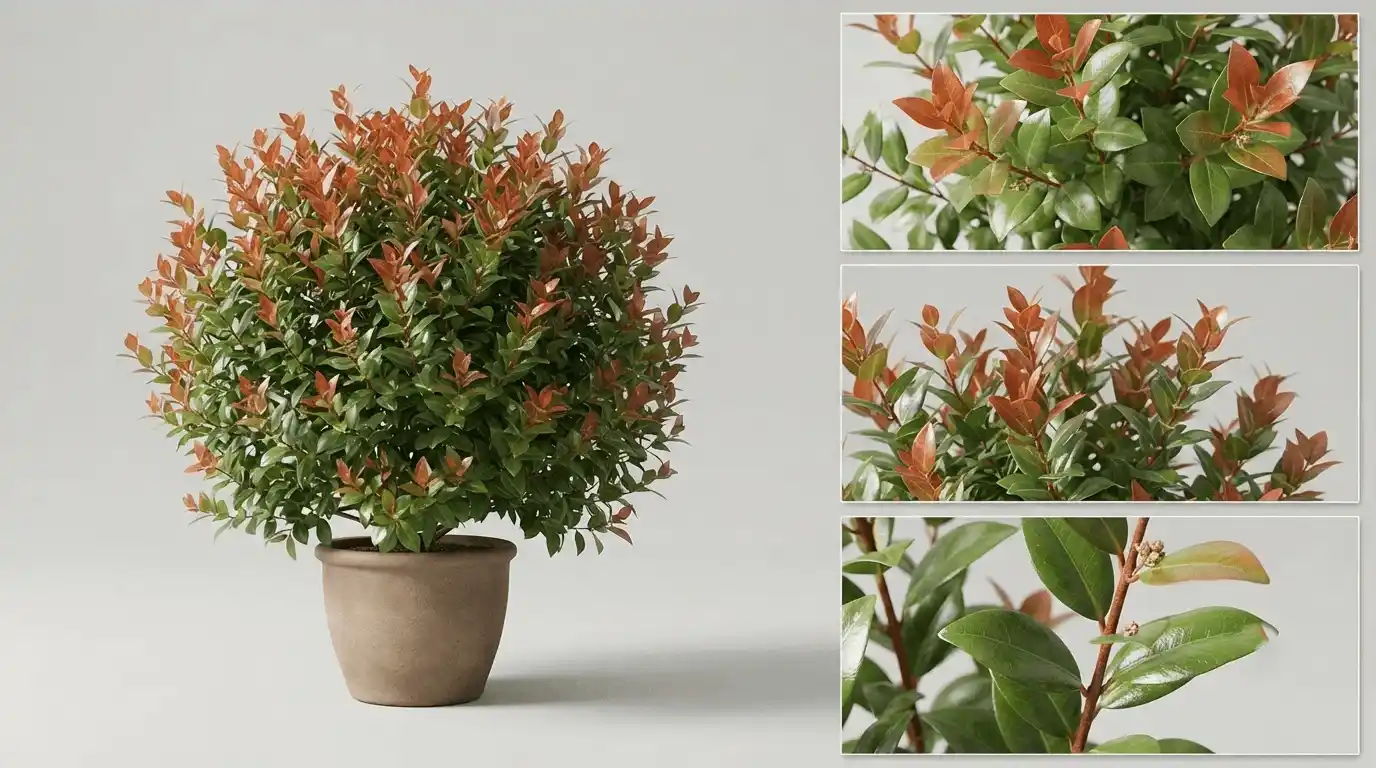
Austromyrtus Copper Tops is a cultivated form of an Australian native shrub grown primarily for its colorful new foliage and naturally compact growth habit. It combines ornamental appeal with the toughness expected from many Australian native plants, making it suitable for residential landscapes, commercial plantings, and low-maintenance gardens. It belongs to the Myrtaceae family, a large group of flowering plants that includes many well-known Australian natives and ornamental shrubs.
Austromyrtus Copper Tops is often featured in broader Australian planting designs and works especially well in structured native landscapes such as modern garden systems and mixed shrub designs like Australian Native Garden Trees, along with low-maintenance hedging styles such as Best Hedging Trees, and contemporary landscape layouts featured in Modern Australian Native Garden.
Botanical Classification and Origin
Austromyrtus Copper Tops belongs to the Myrtaceae family, the same botanical family that includes lilly pillies, bottlebrushes, tea trees, and eucalyptus.
Its classification is generally understood as:
- Family: Myrtaceae
- Genus: Austromyrtus
- Species: Austromyrtus dulcis
- Cultivar: Copper Tops
Austromyrtus dulcis is native to eastern Australia, where it naturally grows in coastal forests, sandy woodlands, and heathland environments. The species is also widely known as the Midyim Berry because it produces small edible berries under suitable growing conditions.
Copper Tops has been selected primarily for its ornamental qualities rather than fruit production. Its vibrant young foliage, dense branching, and compact habit make it especially desirable for decorative landscapes.
In our experience growing Australian native shrubs, Copper Tops performs particularly well when planted in locations that receive good airflow and free-draining soil, closely resembling its natural habitat.
Why Is It Called Copper Tops?
The name Copper Tops comes from the shrub’s striking flush of new leaves, which emerge in shades of bright copper, bronze, and reddish-orange before gradually maturing into glossy green foliage.
This continuous cycle of colorful new growth creates visual interest throughout much of the growing season, especially after pruning.
Depending on the nursery or region, gardeners may encounter several common names, including:
- Copper Tops
- Copper Tops plant
- Copper Top
- Copper Top plant
- Coppertops
Although the names vary slightly, they generally refer to the same ornamental cultivar or closely related selections valued for their distinctive copper-colored foliage.
The intensity of the copper color depends on several environmental factors, including sunlight exposure, temperature, and the amount of fresh new growth being produced.
Key Features of Austromyrtus Copper Tops
Austromyrtus Copper Tops combines ornamental beauty with practical landscape performance. Its compact size and colorful foliage make it one of the more versatile Australian native shrubs for modern gardens.
Key characteristics include:
- Evergreen foliage that provides year-round structure.
- Brilliant copper-colored new growth that creates seasonal contrast.
- Naturally compact growth habit requiring minimal maintenance.
- Dense branching ideal for hedging and screening.
- Excellent adaptability to many Australian climates.
- Strong suitability for native landscapes and low-water gardens.
- Consistent ornamental appearance throughout the year.
- Responsive to pruning, producing repeated flushes of colorful new foliage.
Greenery Inside recommends using Copper Tops where seasonal foliage color is desired without relying solely on flowering plants. The changing leaf colors provide long-lasting visual interest while requiring relatively little maintenance.
Austromyrtus Copper Tops Size and Growth Habit
Austromyrtus Copper Tops is valued for its manageable size, making it suitable for smaller residential gardens as well as larger landscape projects.
Mature Height and Width
The typical Austromyrtus Copper Tops height ranges between 1 and 2 meters (3–6.5 feet), depending on cultivar selection, pruning practices, climate, and growing conditions.
Its mature spread usually reaches:
- Width: approximately 1 to 1.5 meters
- Rounded to naturally mounded shape
- Dense branching from the base upward
Regular pruning can maintain a more compact appearance, while unpruned plants develop a softer, rounded form.
The relatively modest Austromyrtus Copper Tops size makes it suitable for:
- Low formal hedges
- Garden borders
- Foundation planting
- Courtyard gardens
- Container growing
- Native landscape designs
Unlike larger screening shrubs, Copper Tops provides structure without overwhelming smaller spaces.
Growth Rate
Austromyrtus Copper Tops has a moderate growth rate.
Under favorable conditions, young plants establish steadily during their first two years before developing a fuller canopy.
Growth speed depends on several factors:
- Consistent soil moisture
- Well-drained growing conditions
- Adequate sunlight
- Balanced fertilization
- Climate suitability
- Regular pruning
Light pruning stimulates multiple growing points, encouraging denser branching and producing fresh copper-colored foliage.
As of the current growing season, many Australian growers continue to recommend frequent light trimming rather than infrequent heavy pruning because it promotes healthier growth while preserving the shrub’s natural shape.
Where Does Austromyrtus Copper Tops Grow Best?
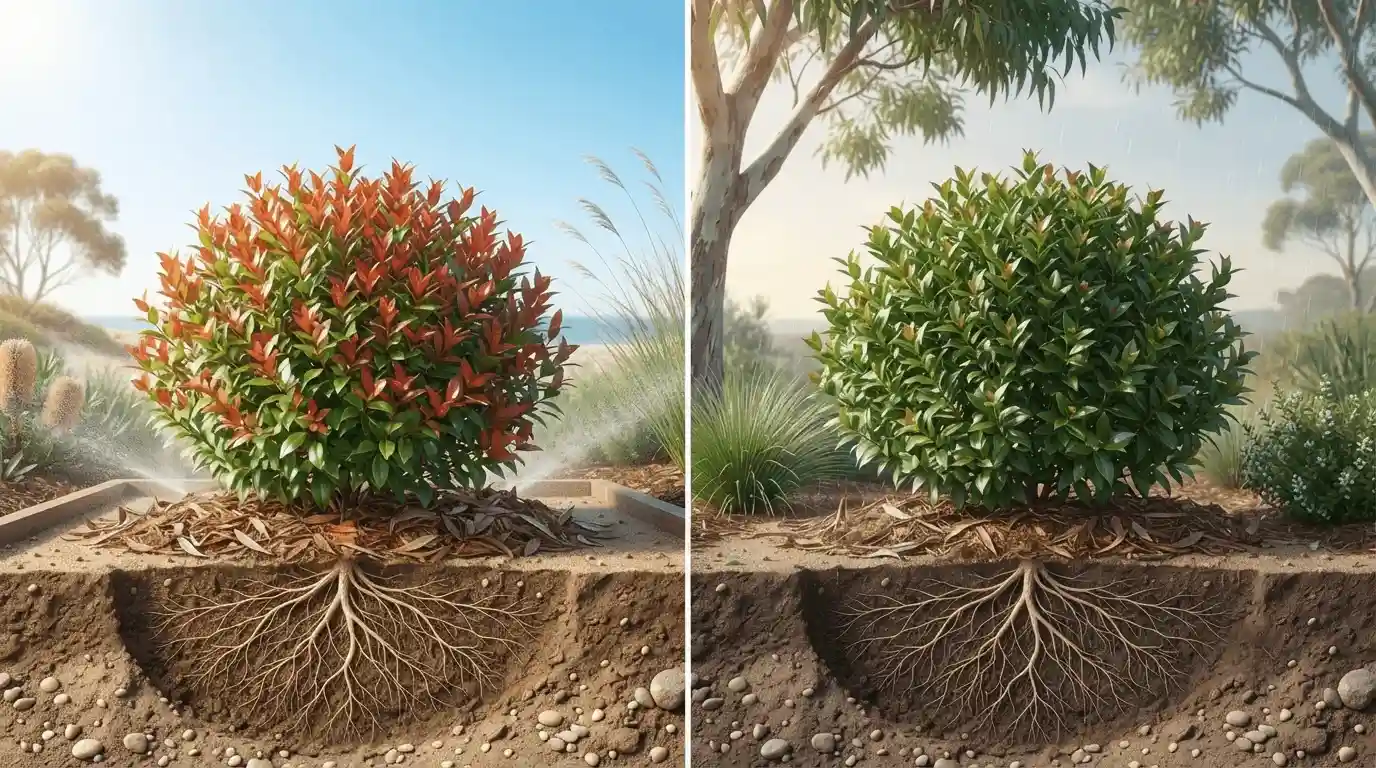
Austromyrtus Copper Tops performs best when its growing conditions resemble its native Australian environment. Proper site selection contributes significantly to foliage color, plant health, and long-term performance.
Light Requirements
Austromyrtus Copper Tops grows well in:
- Full sun
- Partial shade
Full sun generally produces:
- Brighter copper-colored new growth
- Denser branching
- Improved compactness
- Better overall vigor
Partial shade is also suitable, particularly in regions with extremely hot summers. However, excessive shade may reduce the intensity of the copper foliage and encourage more open growth.
For the best ornamental display, aim for at least six hours of direct sunlight daily.
Soil Preferences
Healthy growth depends heavily on good soil drainage.
Ideal soil conditions include:
- Well-drained sandy or loamy soil
- Organic matter incorporated before planting
- Moderate moisture retention without waterlogging
- Slightly acidic to neutral pH
- Good soil aeration
Avoid heavy clay soils that remain wet for extended periods, as poor drainage increases the likelihood of root diseases.
Improving soil with compost before planting enhances both drainage and long-term root development.
Climate and Hardiness
Austromyrtus Copper Tops adapts well to a wide range of Australian climates.
It performs particularly well in:
- Coastal gardens
- Temperate regions
- Humid environments
- Areas with moderate seasonal rainfall
- Sheltered urban landscapes
Once established, it demonstrates good tolerance to short periods of dry weather, although prolonged drought reduces growth and foliage quality.
The shrub tolerates light frosts better as it matures, but newly planted specimens benefit from temporary frost protection during their first winter.
In hotter inland climates, occasional deep watering during extended dry periods helps maintain healthy foliage and encourages continued production of attractive copper-colored new growth.
Austromyrtus Copper Tops Care Guide
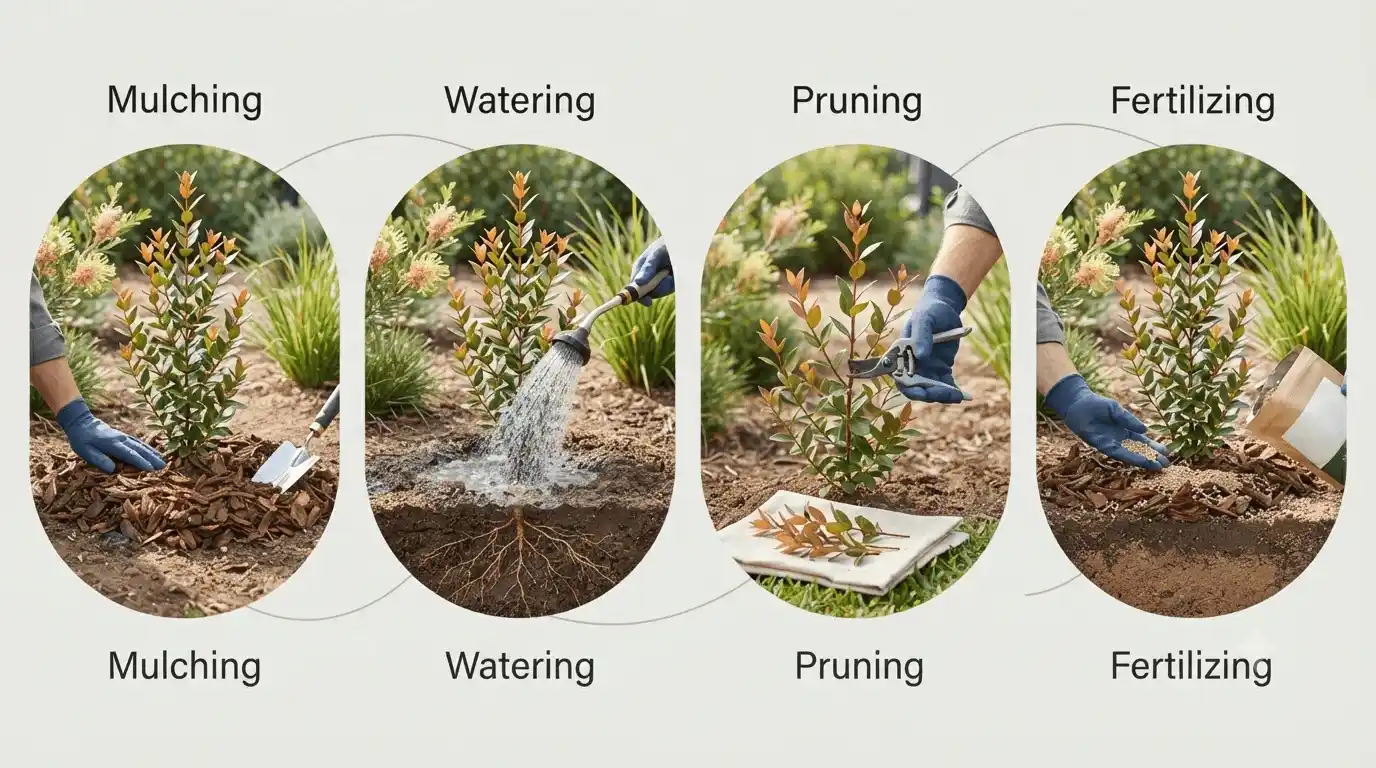
Austromyrtus Copper Tops is considered a low-maintenance Australian native shrub, but proper care helps it develop dense foliage, vibrant copper-colored new growth, and a healthy root system. Consistent watering, suitable fertilization, regular pruning, and mulching are the key factors that keep the plant attractive throughout the year. Copper Tops also performs well in pots and small garden spaces, making it suitable for compact urban gardens and decorative container planting, as explained in Guide to House Plants, Growing Trees in Pots, and Best Hedging Trees.
Watering Requirements
Austromyrtus Copper Tops prefers evenly moist soil while it becomes established. Once mature, it tolerates short dry periods better than many ornamental shrubs, although prolonged drought can reduce foliage quality and slow growth.
For newly planted shrubs:
- Water deeply 2–3 times per week during the first several weeks.
- Gradually reduce watering as roots establish.
- Keep the soil moist but never waterlogged.
For established plants:
- Water deeply during extended dry periods.
- Allow the top layer of soil to dry slightly between watering.
- Increase watering during unusually hot weather.
Although the plant shows moderate drought tolerance, consistent moisture encourages stronger growth and brighter copper-colored foliage.
In our experience growing native shrubs, deep watering less frequently encourages deeper root development than frequent shallow watering.
Fertilizing
Austromyrtus Copper Tops generally requires only light feeding.
Because it belongs to a group of Australian native plants, excessive fertilizer can stimulate overly soft growth and reduce the intensity of new foliage color.
For best results:
- Apply a slow-release fertilizer formulated for Australian native plants.
- Feed once in early spring.
- A light second application may be beneficial in early autumn if growth is slow.
- Avoid high-phosphorus fertilizers unless soil testing indicates they are suitable.
Balanced nutrition supports healthy leaf production without encouraging excessive, weak growth.
Pruning and Shaping
Pruning is one of the simplest ways to maintain the compact appearance that makes Austromyrtus Copper Tops so popular.
Regular trimming offers several benefits:
- Encourages dense branching.
- Produces repeated flushes of copper-colored new foliage.
- Maintains a neat hedge.
- Removes damaged or crowded stems.
- Improves airflow through the plant.
For hedges, light trimming several times during the active growing season produces a fuller appearance than heavy annual pruning.
The best times to prune are:
- Late winter to early spring.
- After major flushes of growth.
- Light maintenance trimming throughout spring and summer.
Greenery Inside recommends avoiding severe pruning during periods of extreme heat or immediately before expected frosts, as this may stress young shoots.
Mulching
Mulching provides multiple long-term benefits for Austromyrtus Copper Tops.
Apply a 5–8 cm (2–3 inch) layer of organic mulch around the base while keeping it clear of the trunk.
Benefits include:
- Conserves soil moisture.
- Suppresses weed growth.
- Protects surface roots from temperature extremes.
- Improves soil structure as mulch decomposes.
- Reduces watering frequency during summer.
Organic mulches such as bark chips, composted leaf litter, or shredded wood are excellent choices for Australian native gardens.
Landscape Uses for Copper Tops Plant
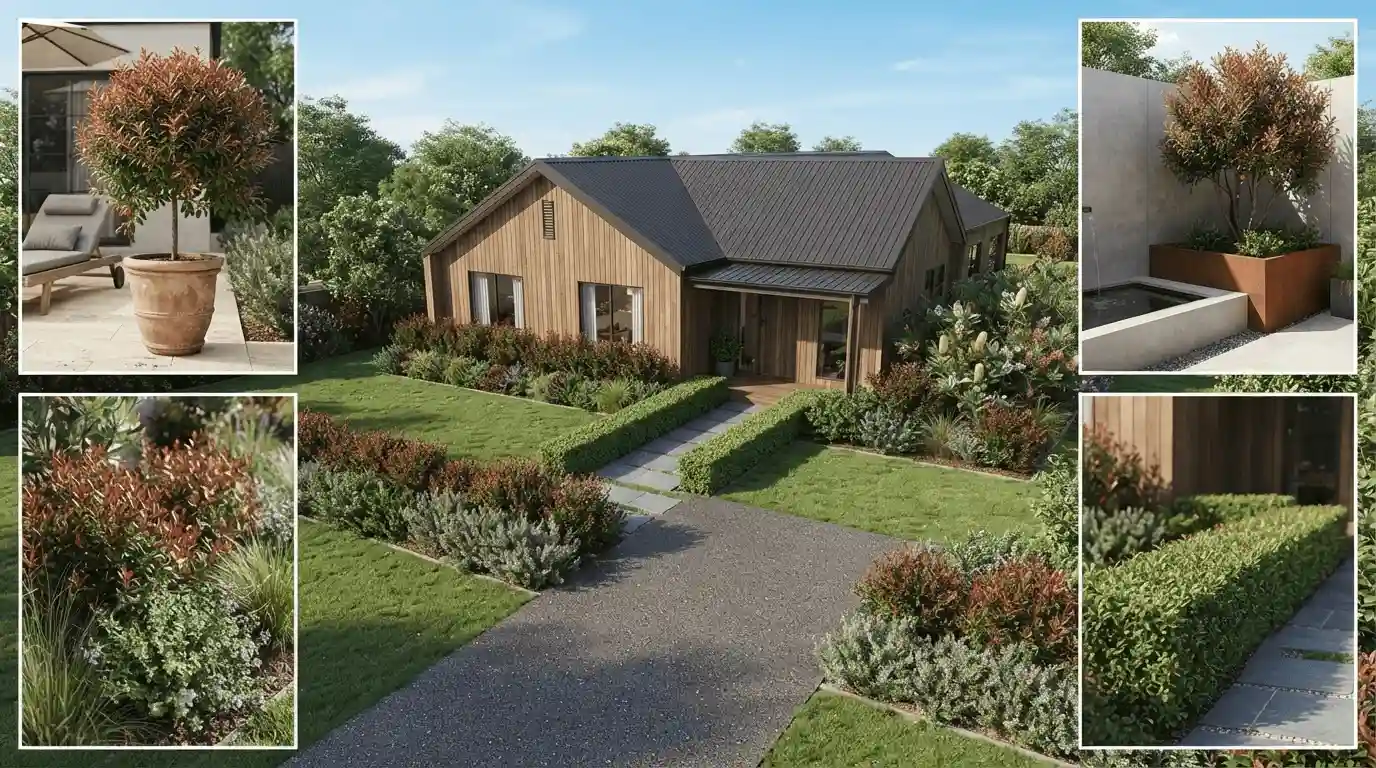
The Copper Tops plant is valued not only for its colorful foliage but also for its versatility in landscape design. Its compact habit allows it to fit into both formal and naturalistic gardens without requiring constant maintenance. In Australian landscape design, Copper Tops is frequently combined with other low-maintenance shrubs and is widely used in structured hedging systems, container plantings, and compact garden layouts such as Best Hedging Trees, Tall Narrow Shrubs Australia, and decorative container setups explained in Growing Trees in Pots.
Popular landscape applications include:
- Low formal hedges
- Garden borders
- Foundation planting
- Native gardens
- Contemporary landscape designs
- Wildlife-friendly gardens
- Courtyard plantings
- Feature shrubs
- Container growing on patios and balconies
Its dense branching provides year-round structure, while the fresh copper-colored foliage creates seasonal contrast against green shrubs and flowering perennials.
In modern landscape designs, Copper Tops pairs well with ornamental grasses, lomandras, westringias, dianellas, and other Australian native plants.
Ideal Planting Situations
Austromyrtus Copper Tops performs particularly well in:
- Along pathways
- Front garden borders
- Around outdoor entertaining areas
- Courtyard gardens
- Coastal landscapes
- Native planting schemes
- Low-maintenance residential gardens
- Commercial landscape projects
- Mixed shrub borders
- Decorative containers
Because of its naturally rounded shape, it also works well as an informal feature shrub without frequent trimming.
Table: Austromyrtus Copper Tops Growing Requirements
| Feature | Recommendation |
| Sunlight | Full sun to partial shade |
| Water | Regular watering during establishment; moderate once mature |
| Soil | Well-drained sandy or loamy soil enriched with organic matter |
| Mature Height | Approximately 1–2 m (3–6.5 ft) |
| Mature Width | Approximately 1–1.5 m (3–5 ft) |
| Growth Rate | Moderate |
| Pruning | Light trimming throughout the growing season to encourage dense growth |
| Best Landscape Uses | Hedges, borders, native gardens, foundation planting, containers, feature shrub |
Austromyrtus Copper Tops vs Similar Plants
Although Austromyrtus Copper Tops is sometimes confused with other ornamental shrubs, each plant has distinct characteristics, growth habits, and landscape uses.
Austromyrtus Copper Tops vs Austromyrtus Blush
Both Copper Tops and Austromyrtus Blush are attractive Australian native shrubs developed for ornamental foliage, but they differ in appearance and growth characteristics.
| Feature | Copper Tops | Austromyrtus Blush / Austromyrtus Blushing Beauty |
| New foliage | Bright copper-red | Soft pink to blush tones |
| Mature foliage | Glossy green | Deep green |
| Growth habit | Compact and rounded | Compact with softer branching |
| Best use | Formal hedges, borders | Feature planting, mixed shrub beds |
| Maintenance | Regular light pruning | Light pruning to maintain shape |
Both cultivars perform well in similar growing conditions, although gardeners often choose Copper Tops when they prefer stronger copper-colored foliage throughout the growing season.
Austromyrtus Copper Tops vs Midyim Berry
Because Copper Tops originates from Austromyrtus dulcis, it is often associated with the Midyim berry.
The Midyim berry is also known as:
- Midgen berry
- Midyim berry bush
- Midyim berry plant
- Midyim berry Austromyrtus dulcis
Although they share the same species background, their primary purposes differ.
| Feature | Copper Tops | Midyim Berry |
| Primary value | Ornamental foliage | Edible berries and native food |
| New growth | Bright copper-red | Green with less dramatic coloration |
| Fruit production | Usually limited | Reliable berry production |
| Landscape role | Decorative shrub and hedge | Edible native garden |
| Maintenance | Regular shaping | Minimal pruning for fruit production |
If the goal is ornamental landscaping, Copper Tops is generally preferred. Gardeners interested in bush tucker and edible landscaping often choose the traditional Midyim berry plant.
Austromyrtus Copper Tops vs Viburnum Coppertop
Copper Tops is frequently confused with Viburnum Coppertop, but these are entirely different plants belonging to separate botanical families.
Other common names include:
- Viburnum Copper Tops
- Coppertop Viburnum
- Viburnum Coppertop hedge
- Viburnum Coppertop Australia
| Feature | Austromyrtus Copper Tops | Viburnum Coppertop |
| Botanical family | Myrtaceae | Adoxaceae |
| Origin | Australia | Cultivated Viburnum selection |
| New foliage | Copper-red | Bronze to reddish |
| Mature size | Compact | Usually larger |
| Hedge suitability | Excellent for low hedges | Better for taller screens |
| Maintenance | Moderate | Moderate to frequent trimming |
While both shrubs produce colorful young foliage, Copper Tops is typically chosen for compact native gardens, whereas Viburnum Coppertop is more commonly used for taller privacy hedges.
Are There Different Austromyrtus Copper Tops Varieties?
Several nursery selections and closely related cultivars are marketed under the Copper Tops name, which can sometimes create confusion for gardeners.
Most cultivated forms are derived from Austromyrtus dulcis, although references to related species occasionally appear in nursery catalogs.
Names that gardeners may encounter include:
- Austromyrtus Copper Tops
- Austromyrtus dulcis Copper Tops
- Austromyrtus tenuifolia
- Austromyrtus tenuifolia Copper Tops
- Austromyrtus dulcis tenuifolia Copper Tops
In many cases, these names reflect nursery branding, regional naming practices, or horticultural selections rather than completely distinct species.
Differences among cultivated selections may include:
- Mature plant size.
- Growth density.
- Leaf size.
- Intensity of copper-colored new growth.
- Branching habit.
- Overall landscape suitability.
When purchasing, it is advisable to review the plant label carefully and buy from reputable nurseries to ensure the selected cultivar matches the intended landscape purpose.
As of recent horticultural recommendations, growers continue to favor compact cultivars that naturally maintain dense branching with minimal pruning, making them especially suitable for modern residential gardens.
Common Problems and How to Fix Them
Austromyrtus Copper Tops is generally a resilient shrub, but improper growing conditions can affect its appearance and health. Identifying problems early helps maintain vigorous growth and vibrant copper-colored foliage.
Leaves Losing Copper Color
The most common reason Copper Tops loses its signature copper flush is insufficient light. Nutrient imbalance and seasonal changes can also reduce foliage color.
Possible causes:
- Too much shade
- Excessive nitrogen fertilizer
- Natural aging of leaves
- Slow growth during cooler seasons
How to fix it:
- Move container plants to a sunnier location if possible.
- Prune lightly to encourage fresh growth.
- Use a balanced fertilizer designed for Australian native plants.
- Avoid overfeeding with high-nitrogen fertilizers.
Fresh copper-colored leaves naturally fade to green as they mature, so this color change is a normal part of the plant’s growth cycle.
Poor Growth
Slow or weak growth usually indicates that one or more growing conditions need improvement.
Common causes include:
- Poor soil drainage
- Water stress
- Nutrient deficiencies
- Root competition from nearby trees or shrubs
- Inadequate sunlight
Solutions:
- Improve drainage with organic matter before planting.
- Water deeply during prolonged dry periods.
- Feed lightly in spring using a native plant fertilizer.
- Reduce competition by providing adequate spacing.
- Ensure the plant receives at least six hours of sunlight for best performance.
Pest and Disease Issues
Although relatively resistant to serious problems, Austromyrtus Copper Tops may occasionally be affected by pests or diseases.
| Problem | Cause | Treatment | Prevention |
| Scale insects | Sap-feeding insects | Remove manually or use horticultural oil | Inspect plants regularly |
| Psyllids | Leaf-feeding insects | Remove affected growth if necessary | Encourage beneficial insects |
| Fungal leaf diseases | Poor airflow and excessive moisture | Remove infected leaves and improve air circulation | Avoid overhead watering |
| Root rot | Poor drainage and waterlogged soil | Improve drainage and reduce watering | Plant only in well-drained soil |
Regular inspections help identify issues before they become severe. Healthy, well-maintained plants are naturally more resistant to pests and diseases.
Common Growing Mistakes to Avoid
Many problems with Austromyrtus Copper Tops can be prevented by avoiding a few common mistakes.
- Planting in poorly drained or waterlogged soil.
- Overwatering established shrubs.
- Applying excessive fertilizer, especially high-phosphorus products.
- Growing plants in deep shade.
- Delaying pruning for several years instead of performing light, regular trimming.
- Planting shrubs too closely together, reducing airflow.
- Allowing mulch to touch the base of the stem.
- Ignoring prolonged drought during hot summers.
In our experience, gardeners achieve the best long-term results by choosing the correct planting location from the beginning rather than trying to correct unsuitable growing conditions later.
Seasonal Care Tips
Seasonal maintenance helps Austromyrtus Copper Tops remain healthy and colorful throughout the year.
Spring and Summer Care
Spring and summer are the plant’s most active growing seasons.
Recommended tasks include:
- Apply a slow-release native plant fertilizer in early spring.
- Water regularly during prolonged dry weather.
- Prune lightly after new growth flushes.
- Monitor for insect activity.
- Remove damaged or crossing branches.
As of the current growing season, many Australian growers continue to recommend frequent light pruning rather than severe trimming because it promotes denser growth and repeated copper-colored foliage.
Autumn and Winter Care
Growth naturally slows during cooler months.
During autumn and winter:
- Reduce watering frequency.
- Refresh mulch before winter if needed.
- Protect young plants from heavy frost.
- Avoid heavy pruning until late winter or early spring.
- Continue monitoring overall plant health.
Established plants generally tolerate light frosts better than newly planted shrubs.
Conclusion
Austromyrtus Copper Tops is an outstanding Australian native shrub that combines ornamental beauty with practical garden performance. Its compact growth, evergreen foliage, and vibrant copper-colored new leaves make it an excellent choice for hedges, borders, foundation plantings, containers, and contemporary landscapes.
With well-drained soil, regular but moderate watering, occasional feeding, and light seasonal pruning, this attractive shrub remains healthy and colorful throughout the year. Whether grown as a standalone feature or incorporated into a native garden, Austromyrtus Copper Tops offers lasting visual appeal while requiring relatively little maintenance.
Choosing a sunny location, avoiding waterlogged soil, and following a consistent care routine will help gardeners enjoy dense growth and brilliant copper foliage for many years.
Frequently Asked Questions
How tall does Austromyrtus Copper Tops grow?
Austromyrtus Copper Tops typically grows between 1 and 2 meters (3–6.5 feet) tall with a spread of approximately 1 to 1.5 meters. Regular pruning can keep it smaller for hedges or formal gardens.
Is Austromyrtus Copper Tops suitable for hedges?
Yes. Its naturally dense branching, compact growth habit, and excellent response to pruning make it one of the best Australian native shrubs for low hedges, borders, and screening in residential landscapes.
Does Copper Tops produce edible berries?
Because Copper Tops is associated with Austromyrtus dulcis, it may produce small berries under suitable conditions. However, it is primarily cultivated for its ornamental foliage rather than fruit production. Gardeners interested in edible harvests generally choose traditional Midyim Berry selections.
How often should Copper Tops be pruned?
Light pruning two to four times during the active growing season helps maintain a compact shape and encourages repeated flushes of attractive copper-colored new foliage. Heavy annual pruning is usually unnecessary.
Does Austromyrtus Copper Tops grow in full shade?
No. While it tolerates partial shade, full shade often results in reduced growth, less dense branching, and diminished copper foliage color. Full sun to partial shade provides the best overall performance.
Is Copper Tops drought tolerant once established?
Yes. Established plants tolerate short dry periods reasonably well, but occasional deep watering during extended drought improves growth, foliage quality, and overall plant health.
What’s the difference between Austromyrtus Copper Tops and Midyim Berry?
Both originate from Austromyrtus dulcis, but they are grown for different purposes. Copper Tops is selected for its vibrant copper-colored ornamental foliage and compact habit, while Midyim Berry is primarily valued for producing edible native berries and supporting bush tucker gardens.