Introduction
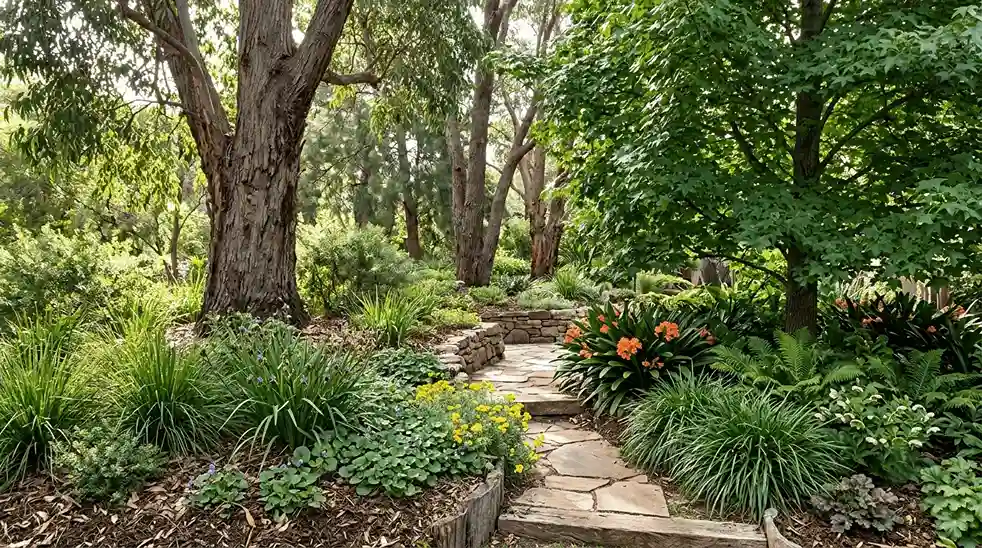
Choosing what to plant under trees Australia requires more than simply selecting plants labelled as shade tolerant. Every tree creates its own growing environment based on canopy density, root competition, soil moisture, and seasonal light patterns. Mature trees often reduce available water, intercept rainfall, and create varying levels of shade throughout the year, making plant selection more complex than in an ordinary garden bed. Suitable plants for under trees in Australia include native groundcovers, compact shrubs, strappy-leaved plants, grasses, ferns, and other low-maintenance shade-loving species that match the site’s conditions. This guide explains how to assess those conditions and choose plants for evergreen trees, deciduous trees, eucalyptus, fruit trees, pines, and other common Australian garden trees.
By Greenery Inside | Plant Care & Gardening Expert
Quick Summary
- Choose plants according to available light, soil moisture, root competition, and growing space rather than selecting plants simply because they tolerate shade.
- Australian native groundcovers, strappy-leaved plants, compact shrubs, and suitable ferns are often reliable choices beneath established trees.
- Deciduous trees allow additional winter sunlight, while evergreen trees usually create year-round shade and stronger competition for moisture.
- Avoid deep digging, raising soil around tree trunks, or planting species that require constant irrigation directly over major tree roots.
Why Is It Difficult to Grow Plants Under Trees?
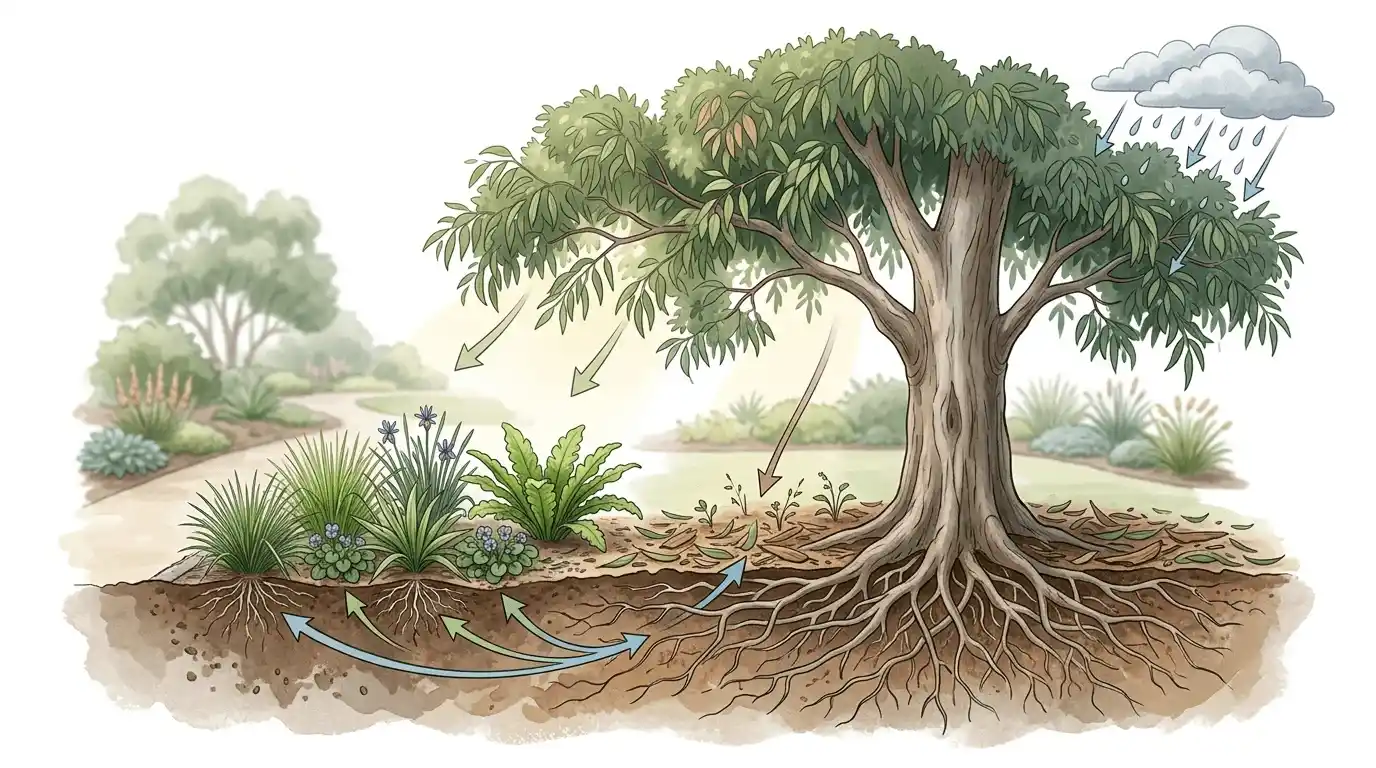
Growing plants beneath established trees is challenging because the environment under a canopy differs significantly from an ordinary shaded garden bed. Tree canopies influence light availability, rainfall distribution, soil moisture, and nutrient availability, while mature root systems compete aggressively for water and growing space. Successful underplanting depends on understanding these conditions before selecting suitable species.
Greenery Inside has found that many planting failures occur because gardeners choose attractive shade plants without first evaluating the actual conditions beneath the tree. Matching plants to the site’s microclimate consistently produces healthier and longer-lasting plantings.
Shade Changes Throughout the Day and Year
Shade beneath trees is constantly changing. The amount of sunlight reaching the ground depends on canopy height, branch density, tree orientation, surrounding structures, and whether the tree is evergreen or deciduous.
Different light conditions commonly include:
- Full shade – Little or no direct sunlight reaches the ground.
- Dappled shade – Sunlight filters through leaves for short periods throughout the day.
- Morning sun with afternoon shade – Plants receive gentle morning light before becoming shaded later in the day.
- Winter sun beneath deciduous trees – Leaf drop allows additional sunlight during cooler months.
- Full sun around open tree canopies – Outer canopy edges often receive considerably more light than areas close to the trunk.
Many shade tolerant plants, garden plants for shade, and other shade-loving plants perform best in dappled or bright shade rather than permanent deep shade. Before planting, observe the site during the morning, midday, and afternoon to understand how sunlight changes throughout the year.
As of the 2026 growing season, Australian horticultural recommendations continue to emphasise evaluating actual light exposure rather than relying solely on plant labels, particularly beneath mature deciduous trees where seasonal conditions change dramatically.
Tree Roots Compete for Water, Nutrients, and Space
Mature tree roots are highly efficient at absorbing water and nutrients, making it difficult for newly planted groundcovers and shrubs to establish. Surface-feeding roots often occupy the same soil layer needed by smaller ornamental plants.
The soil beneath different tree species behaves differently. For example:
- Eucalyptus and gum trees commonly create dry, competitive growing conditions.
- Pine trees often produce dense surface root systems beneath heavy needle litter.
- Birch and magnolia trees frequently develop shallow roots close to the soil surface.
- Fruit trees require ongoing irrigation and fertilisation, influencing the types of companion plants that can be grown beneath them.
Plants that grow successfully under trees usually have shallow, adaptable root systems, moderate water requirements, and the ability to establish without disturbing major structural roots.
In our experience growing Australian native landscapes, smaller nursery plants establish more successfully beneath mature trees than large advanced specimens because they require less root disturbance during planting.
Tree Canopies and Leaf Litter Affect the Soil
Tree canopies influence the soil in several ways beyond simply creating shade. Dense foliage intercepts rainfall, reducing the amount of water that reaches the ground, while accumulated leaves, bark, and needles gradually change soil structure and organic matter levels.
Common influences include:
- Reduced rainfall reaching the soil surface.
- Dry soil beneath dense evergreen canopies.
- Seasonal accumulation of leaves, bark, or pine needles.
- Localised soil compaction from foot traffic.
- Gradual variation in soil pH depending on surrounding vegetation.
Contrary to common gardening myths, not every eucalyptus or pine tree creates unsuitable soil for underplanting. Soil conditions vary considerably between locations, making simple soil testing far more reliable than assumptions based solely on tree species.
Greenery Inside recommends assessing drainage, moisture retention, and soil texture before selecting plants, as these factors often influence long-term success more than canopy shade alone.
How to Choose Plants for Under Trees in Australia
Choosing the right plants for under trees requires evaluating the growing conditions beneath the individual tree rather than selecting plants simply because they are labelled as shade tolerant. Light availability, soil moisture, root competition, climate, and mature plant size all influence long-term success. Whether you are choosing plants for under trees, planning under planting trees, or redesigning a garden under mature canopies, matching plants to the site’s actual conditions produces healthier and lower-maintenance landscapes.
Greenery Inside recommends observing the planting area over several days before purchasing plants. Small differences in sunlight, drainage, or root density often determine whether a plant thrives or struggles.
Assess the Available Light
Light conditions beneath trees vary considerably depending on canopy structure, surrounding buildings, and the season. Even within a single tree, the light level near the trunk may differ greatly from the brighter outer canopy.
When assessing light:
- Observe the site during the morning, midday, and afternoon.
- Note areas receiving filtered or dappled sunlight.
- Identify permanently shaded locations close to the trunk.
- Reassess beneath deciduous trees during both summer and winter after leaf fall.
- Treat brighter canopy edges separately from deeply shaded interior areas.
Many plants advertised as shade tolerant actually perform best in dappled shade or bright filtered light. Flowering plants generally require more usable light than foliage plants, while dense evergreen shade often limits flowering performance.
Check Soil Moisture and Drainage
Moisture availability beneath trees often differs from nearby garden beds because mature roots absorb water quickly and dense canopies intercept rainfall.
Before selecting plants, determine whether the area:
- Remains consistently moist.
- Dries rapidly after rain.
- Becomes waterlogged during wet periods.
- Receives supplementary irrigation.
- Is protected from rainfall by dense foliage.
Plants requiring frequent watering often struggle beneath established drought-tolerant trees because their irrigation needs may conflict with the tree’s natural growing conditions. In many Australian gardens, low-water plants provide a more reliable solution beneath mature native trees.
Greenery Inside has found that checking soil moisture several centimetres below the surface provides a far more accurate indication than relying on the appearance of dry mulch alone.
Consider Mature Height and Width
Successful underplanting depends on selecting plants that remain proportionate to the available space throughout their life.
When evaluating plant size:
- Choose species that will not obstruct pathways.
- Avoid plants that eventually press against the trunk.
- Allow room for spreading groundcovers.
- Consider whether suckering species may spread beyond the intended area.
- Position compact shrubs toward the outer canopy rather than immediately beside the trunk.
Smaller plants generally integrate more naturally beneath mature trees while reducing future maintenance requirements. Careful spacing also improves airflow and reduces unnecessary competition between neighbouring plants.
Match Plants to the Local Australian Climate
Australia’s climates vary from tropical and subtropical regions to temperate, Mediterranean, semi-arid, and cool mountain environments. A plant that performs well beneath trees in one region may struggle in another despite receiving similar shade.
Before planting, consider:
- Frost frequency.
- Summer temperatures.
- Humidity levels.
- Coastal salt exposure.
- Average annual rainfall.
- Local soil type.
Gardeners searching for shade-loving plants Sydney or shade loving plants NSW should remember that coastal Sydney experiences milder winters and higher humidity than inland New South Wales. Similar regional differences exist throughout Australia, making climate-specific plant selection essential.
Selecting plants adapted to local environmental conditions generally results in stronger growth, reduced irrigation requirements, and improved long-term performance.
Plant-Selection Table
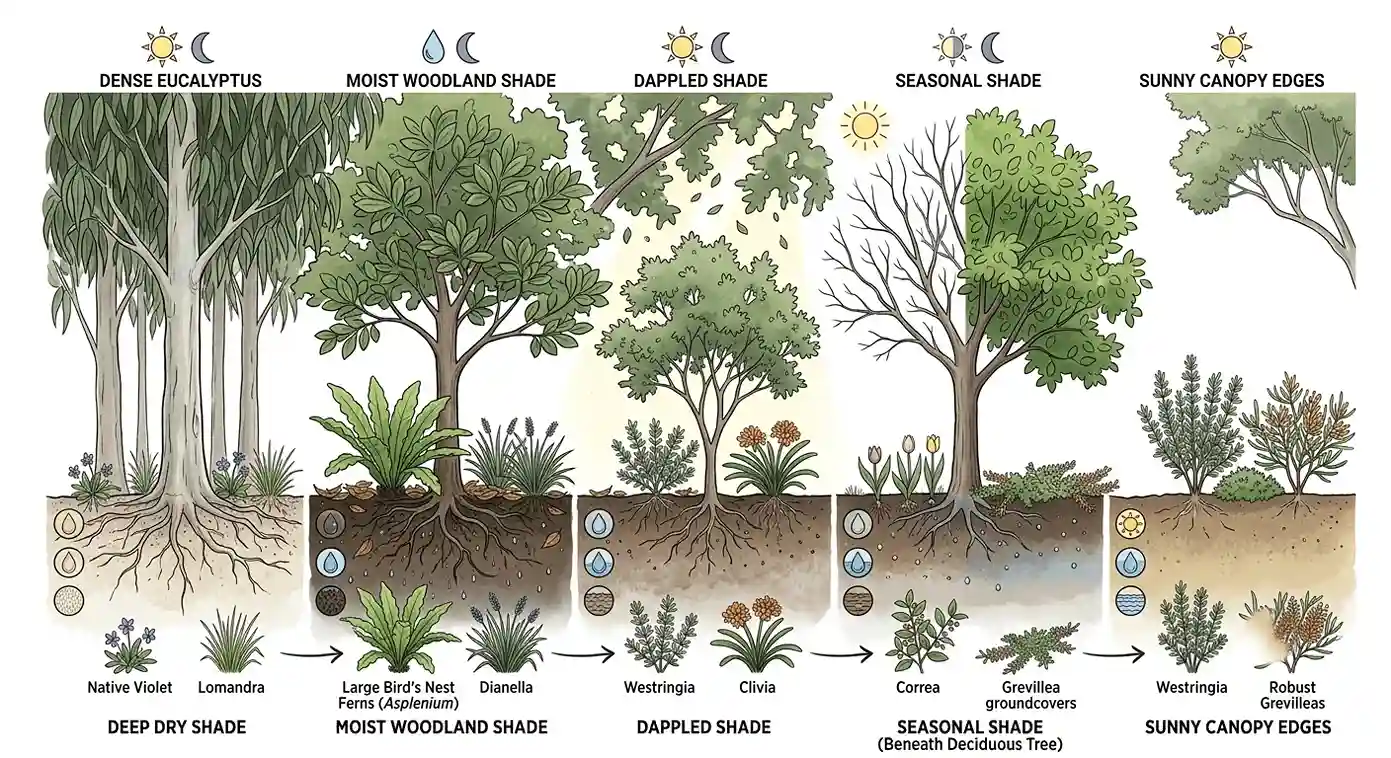
| Growing condition | Suitable plant form | Useful characteristics | Examples to consider |
| Deep, dry shade | Tough groundcovers and strappy plants | Low water demand and root tolerance | Native violet, lomandra, dianella |
| Moist shade | Ferns and woodland groundcovers | Consistent moisture and filtered light | Bird’s nest fern, native violet |
| Dappled shade | Groundcovers, grasses, and small shrubs | Adaptable to changing light | Correa, dianella, clivia |
| Deciduous-tree shade | Plants tolerant of seasonal sun | Handle summer shade and winter light | Hellebores, violets, hardy bulbs |
| Sunny canopy edge | Drought-tolerant groundcovers and shrubs | Tolerate heat and brighter light | Grevillea groundcovers, westringia |
Best Australian Native Plants for Under Trees
Australian native plants often perform well beneath trees because many have evolved under similar woodland conditions. However, native status alone does not guarantee success. Plants must still be matched to available light, moisture, soil type, and root competition. If your garden receives very little direct sunlight, these recommendations pair well with our guide to shade-loving Australian natives, which covers additional species for difficult shaded locations.
Suitable Australian native plants for shade include groundcovers, clumping foliage plants, grasses, ferns, and compact shrubs. Using both botanical and common names also helps gardeners accurately identify suitable species for their region.
Native Groundcovers for Shaded Areas
Groundcovers provide one of the most practical solutions beneath established trees because they stabilise soil, reduce weeds, and require relatively little maintenance once established.
Reliable Australian native groundcovers include:
Native Violet (Viola hederacea)
- Low-growing spreading groundcover.
- Thrives in moist dappled shade.
- Produces small purple and white flowers.
- Suitable around visible surface roots.
Kidney Weed (Dichondra repens)
- Soft creeping groundcover.
- Forms a living green carpet.
- Prefers moderate moisture.
- Tolerates light foot traffic once established.
Weeping Grass (Microlaena stipoides)
- Native grass suitable for shaded gardens.
- Adaptable to varying soil types.
- Handles filtered light well.
- Useful beneath open woodland canopies.
Basket Grass (Oplismenus species)
- Attractive woodland groundcover.
- Performs best in moist sheltered shade.
- Creates natural-looking understorey planting.
Running Postman (Kennedia prostrata)
- Trailing native groundcover.
- Best suited to brighter canopy edges.
- Produces distinctive red flowers.
- Requires more sunlight than deep-shade species.
These plants also work well as eucalyptus ground cover where moisture conditions remain suitable and competition from tree roots is not excessive.
Strappy-Leaved Native Plants
Clumping, strappy-leaved natives are among the most dependable choices for Australian gardens because their fibrous root systems adapt well to growing beneath established trees. If you’re considering Dianella for planting beneath trees, our guide to Dianella Little Rev explains one of the most compact and reliable cultivars for Australian landscapes.
Popular options include:
Dianella (Flax Lily)
- Evergreen clumping foliage.
- Blue flowers followed by ornamental berries.
- Tolerates dappled shade and moderate dry conditions.
- Excellent for borders and mass planting.
Lomandra
- Tough Australian native.
- Highly drought tolerant.
- Suitable beneath many open-canopy trees.
- Requires minimal ongoing maintenance.
Libertia
- Compact clumping habit.
- Attractive sword-shaped foliage.
- Performs well in bright shade with reliable drainage.
Arthropodium species
- Native perennial with grassy foliage.
- Produces delicate seasonal flowers.
- Prefers filtered light and moderate soil moisture.
These plants require little pruning, establish gradually, and provide year-round structure, making them valuable for low-maintenance underplanting schemes.
Native Ferns for Moist or Sheltered Shade
Ferns are excellent choices where humidity remains consistently high and the soil retains adequate moisture. They are less suitable beneath trees that create extremely dry shade. For even more woodland species suited to low-light gardens, see our complete guide to native plants that grow in shade.
Recommended native ferns include:
- Bird’s nest fern (Asplenium australasicum)
- Rough tree fern (Cyathea australis)
- Gristle fern (Blechnum cartilagineum)
- Kangaroo fern (Microsorum diversifolium)
These species perform best in sheltered gardens protected from drying winds and intense afternoon sun. Beneath large eucalyptus trees with extensive root competition, additional irrigation may still be required during establishment.
Greenery Inside recommends planting ferns during cooler months when soil moisture is naturally higher, allowing roots to establish before summer arrives.
Compact Native Shrubs for Canopy Edges
Compact native shrubs can add structure, seasonal flowers, and habitat value beneath trees, but they generally perform best around the outer canopy where they receive more light and face less root competition. Most flowering shrubs require at least filtered or bright shade to maintain healthy growth and regular blooming.
Suitable compact native shrubs include:
Correa (Correa species)
- Evergreen Australian native shrub.
- Produces tubular flowers that attract nectar-feeding birds.
- Performs well in dappled shade and sheltered positions.
- Suitable for planting around canopy edges.
Dwarf Westringia (Westringia fruticosa cultivars)
- Dense evergreen foliage.
- Highly drought tolerant once established.
- Thrives in bright shade or partial sun.
- Excellent for low-maintenance borders.
Shade-Tolerant Grevilleas
- Many compact grevillea cultivars tolerate filtered light.
- Provide nectar-rich flowers for birds and pollinators.
- Require good drainage.
- Best planted where several hours of indirect light are available.
Compact Native Mint Bush (Prostanthera species)
- Aromatic foliage.
- Attractive seasonal flowers.
- Prefers sheltered locations with filtered sunlight.
- Benefits from light pruning after flowering.
Low-Growing Banksia Cultivars
- Suitable for brighter canopy edges.
- Require excellent drainage.
- Flower well where light levels remain reasonably high.
- Less suitable for permanent deep shade.
Although these shrubs are considered shade tolerant Australian natives, most produce better flowering displays in dappled light than beneath dense evergreen canopies. Positioning them away from major structural roots also reduces establishment stress and simplifies maintenance.
Low-Maintenance Shade Plants for Australian Gardens
Low-maintenance shade plants are ideal beneath trees because they require less frequent watering, pruning, and replacement after establishment. However, a plant’s maintenance level depends not only on its species but also on how well it matches the surrounding conditions.
Plants constantly exposed to unsuitable moisture levels, excessive root competition, or inadequate light often become high-maintenance regardless of their reputation. Selecting the right plant for the right location remains the most effective strategy for reducing ongoing care.
Greenery Inside has found that repeating a small number of dependable species throughout an underplanting design usually creates a healthier, more cohesive landscape than combining many different plants with conflicting growing requirements.
Reliable Evergreen Plants for Under Trees
Evergreen foliage plants provide year-round colour and ground coverage while requiring relatively little seasonal attention.
Clivia (Clivia miniata)
- Evergreen clumping perennial.
- Thrives in deep to dappled shade.
- Produces bright orange, yellow, or cream flowers during the flowering season.
- Prefers moderate moisture and good drainage.
Liriope (Liriope muscari)
- Compact grass-like foliage.
- Excellent edging plant.
- Handles full shade to filtered light.
- Forms dense clumps with minimal maintenance.
Mondo Grass (Ophiopogon japonicus)
- Slow-growing evergreen groundcover.
- Suitable for restricted spaces.
- Tolerates dense shade.
- Useful between exposed roots and along pathways.
Cast-Iron Plant (Aspidistra elatior)
- Exceptionally tolerant of low light.
- Handles dry shade once established.
- Broad glossy foliage creates bold texture.
- Requires very little pruning or maintenance.
Renga Renga Lily (Arthropodium cirratum)
- Evergreen strappy foliage.
- White seasonal flowers.
- Performs well in coastal gardens and bright shade.
- Requires well-drained soil.
Selected Lomandra and Dianella Cultivars
- Australian natives with excellent drought tolerance.
- Fibrous root systems adapt well beneath trees.
- Suitable for mass planting.
- Maintain attractive foliage throughout the year.
Comparison of Reliable Evergreen Shade Plants
| Plant | Native Status | Best Light | Drought Tolerance | Mature Height | Best Use |
| Clivia | Introduced | Deep to dappled shade | Moderate | 40–60 cm | Woodland-style planting |
| Liriope | Introduced | Full shade to dappled shade | Moderate | 30–45 cm | Borders and edging |
| Mondo Grass | Introduced | Full shade | Moderate | 10–20 cm | Groundcover and pathways |
| Cast-Iron Plant | Introduced | Deep shade | High once established | 50–80 cm | Dense shade beneath trees |
| Lomandra | Australian native | Bright shade | High | 40–100 cm | Dry underplanting |
| Dianella | Australian native | Dappled shade | Moderate | 40–80 cm | Mass planting and borders |
| Renga Renga Lily | Introduced | Bright shade | Moderate | 40–60 cm | Coastal and sheltered gardens |
These plants provide dependable foliage throughout the year and generally require only occasional cleaning of old leaves and seasonal mulching to maintain their appearance.
Small Plants for Restricted Root Zones
Restricted root zones are common beneath mature trees where large structural roots occupy much of the soil surface. In these areas, compact plants establish more successfully because they require smaller planting holes and cause less disturbance to the existing root system.
Suitable small plants include:
- Native violet (Viola hederacea)
- Kidney weed (Dichondra repens)
- Mondo grass (Ophiopogon japonicus)
- Dwarf liriope cultivars
- Compact dianella cultivars
- Small lomandra selections
- Basket grass (Oplismenus species)
Using tube stock or small nursery plants allows roots to establish gradually around existing tree roots rather than forcing large root balls into confined spaces.
Greenery Inside recommends spacing plants according to their mature spread instead of planting densely at installation. Although newly planted beds may initially appear sparse, adequate spacing improves airflow, reduces competition, and creates healthier long-term growth.
Comparison Table: Native and Introduced Shade Plants
| Plant Group | Native Status | Best Light | Moisture Needs | Maintenance Level | Best Use |
| Native Violet | Australian native | Dappled to full shade | Moderate | Low | Soft groundcover |
| Dianella | Australian native | Dappled shade | Low to moderate | Low | Clumps and borders |
| Lomandra | Australian native | Bright shade | Low | Low | Dry underplanting |
| Clivia | Introduced | Deep to dappled shade | Low to moderate | Low | Evergreen foliage |
| Liriope | Introduced | Full to dappled shade | Moderate | Low | Edging and mass planting |
| Ferns | Native and introduced | Moist shade | Moderate to high | Moderate | Sheltered woodland effect |
What to Plant Under Deciduous Trees in Australia
Plants growing beneath deciduous trees experience changing conditions throughout the year. During summer, the leafy canopy creates welcome shade, while winter leaf fall allows considerably more sunlight to reach the ground. Suitable plants for under deciduous trees Australia must tolerate both seasonal shade and periods of increased winter light.
This seasonal cycle creates opportunities for woodland-style planting that would not perform beneath evergreen trees. However, root competition remains an important factor, particularly beneath mature deciduous specimens with extensive surface roots.
Plants That Tolerate Seasonal Light Changes
Several plant groups adapt well to the changing light conditions created by deciduous trees.
Recommended options include:
- Hellebores
- Native violet (Viola hederacea)
- Hardy woodland bulbs
- Clivia
- Liriope
- Dianella
These plants benefit from additional winter sunlight while remaining capable of growing through the shaded summer months. Spring bulbs are particularly valuable because they complete much of their active growth before the canopy reaches full leaf.
Even beneath deciduous trees, newly planted specimens require careful watering during their first growing season, especially where mature tree roots rapidly absorb available soil moisture.
Deciduous Trees Versus Evergreen Trees
Understanding the difference between deciduous and evergreen trees is essential when selecting underplanting species. Deciduous trees provide seasonal changes in light and moisture, while evergreen trees usually create more stable but often harsher growing conditions beneath their canopies.
| Condition | Deciduous Trees | Evergreen Trees |
| Seasonal light | More winter sunlight after leaf fall | Consistent year-round shade |
| Soil moisture | May improve during winter | Often remains dry beneath the canopy |
| Suitable planting | Bulbs, woodland plants, adaptable groundcovers | Dry-shade groundcovers and tough foliage plants |
| Main challenge | Changing sun exposure | Persistent shade and moisture competition |
Because deciduous trees allow additional sunlight during winter, gardeners can successfully grow woodland bulbs and seasonal flowering plants that would struggle beneath dense evergreen canopies. Evergreen trees generally favour hardy foliage plants capable of tolerating dry shade throughout the year.
What to Plant Under Different Types of Trees
Different tree species create different growing environments. Canopy density, root systems, irrigation practices, leaf litter, and seasonal growth all influence which plants establish successfully beneath them. Rather than relying on a single universal planting list, it is more effective to match underplanting to the characteristics of each tree.
Under Gum and Peppermint Trees
Established eucalyptus and peppermint trees commonly create one of the most challenging environments for underplanting. Their extensive root systems compete strongly for water, while dense canopies often reduce rainfall reaching the soil.
Suitable choices include:
- Lomandra
- Dianella
- Native violet where moisture is adequate
- Hardy native grasses
- Weeping grass (Microlaena stipoides)
- Drought-tolerant Australian groundcovers
Many local woodland species have naturally evolved alongside eucalyptus forests and are well adapted to dry shade and seasonal moisture fluctuations.
Avoid:
- Moisture-loving ferns in dry locations.
- Plants requiring frequent irrigation.
- Deep cultivation through structural roots.
- Building raised beds over exposed roots.
Greenery Inside recommends leaving exposed gum tree roots undisturbed and planting only within naturally open pockets of soil.
Under Pine Trees
Pine trees often produce dense shade combined with heavy needle litter and relatively dry soil. While many gardeners assume pine trees always create highly acidic conditions, soil pH varies considerably depending on the site and should be tested before making planting decisions.
Suitable plants include:
- Clivia
- Liriope
- Mondo grass
- Cast-iron plant
- Bird’s nest fern in moist sheltered areas
- Tough evergreen groundcovers
Pine needle mulch may naturally improve moisture retention, but dense root systems can still limit water availability during extended dry periods.
Greenery Inside recommends checking both soil moisture and drainage beneath pine trees before planting, rather than assuming all pine sites have identical growing conditions.
Under Citrus, Apple, and Other Fruit Trees
Fruit trees require a different approach because gardeners must maintain easy access for harvesting, fertilising, pruning, and pest monitoring. Underplanting should complement tree management rather than interfere with it.
Suitable companion plants include:
- Shallow-rooted herbs
- Pollinator-attracting flowers
- Living mulches
- Low-growing native groundcovers
- Small clumping grasses
When planting beneath fruit trees:
- Leave space around the trunk.
- Maintain access for collecting fallen fruit.
- Avoid dense planting that traps moisture against the trunk.
- Select plants with moderate water requirements compatible with fruit tree irrigation.
Highly competitive groundcovers should generally be avoided immediately around young fruit trees because they may compete for moisture and nutrients during establishment.
Under Magnolia and Silver Birch Trees
Magnolia and silver birch trees often develop shallow surface roots that make digging difficult. Successful planting depends on fitting small plants into natural gaps rather than forcing large planting holes through established roots.
For magnolia trees, suitable plants include:
- Clivia
- Liriope
- Cast-iron plant
- Shade-tolerant ferns where moisture allows
For silver birch trees, consider:
- Native violet
- Dianella
- Hellebores
- Woodland bulbs
- Kidney weed
Magnolias frequently create denser evergreen shade, whereas silver birches provide changing seasonal light after autumn leaf fall. This difference allows a wider range of seasonal woodland plants beneath mature birches.
Under Olive and Frangipani Trees
Olive and frangipani trees usually create relatively open canopies compared with many evergreen trees. The combination of bright filtered light, seasonal leaf drop, and dry soil suits a different range of underplanting species.
Suitable options include:
- Drought-tolerant native groundcovers
- Native grasses
- Low-growing succulents where appropriate
- Hardy herbs
- Flowering perennials suited to bright shade
- Compact drought-tolerant foliage plants
These trees generally require less moisture beneath the canopy than woodland environments, making water-wise planting particularly important in Mediterranean and warm temperate regions.
Allow adequate space for seasonal leaf fall beneath frangipani trees, and avoid excessive irrigation beneath established olives unless required by companion plantings.
Tree-Specific Quick-Reference Table
| Tree Type | Typical Condition Underneath | Suitable Plant Characteristics | Main Caution |
| Eucalyptus or peppermint | Dry shade and heavy root competition | Drought-tolerant native groundcovers | Avoid digging through major roots |
| Pine | Dense shade and needle litter | Tough evergreen shade plants | Test soil rather than assuming acidity |
| Citrus | Bright shade with regular care | Shallow-rooted herbs and flowers | Maintain feeding and harvesting access |
| Apple or deciduous fruit tree | Summer shade and winter sun | Seasonal woodland plants and living mulch | Avoid competition close to the trunk |
| Magnolia | Dense shade and surface roots | Small shade-loving plants | Do not damage shallow roots |
| Silver birch | Dappled seasonal shade | Small adaptable groundcovers | Soil may dry rapidly |
| Olive | Dry, relatively bright shade | Drought-tolerant plants | Avoid excessive irrigation |
| Frangipani | Winter sun and summer shade | Heat-tolerant groundcovers | Allow for seasonal leaf drop |
How to Plant Under a Tree Without Damaging Its Roots
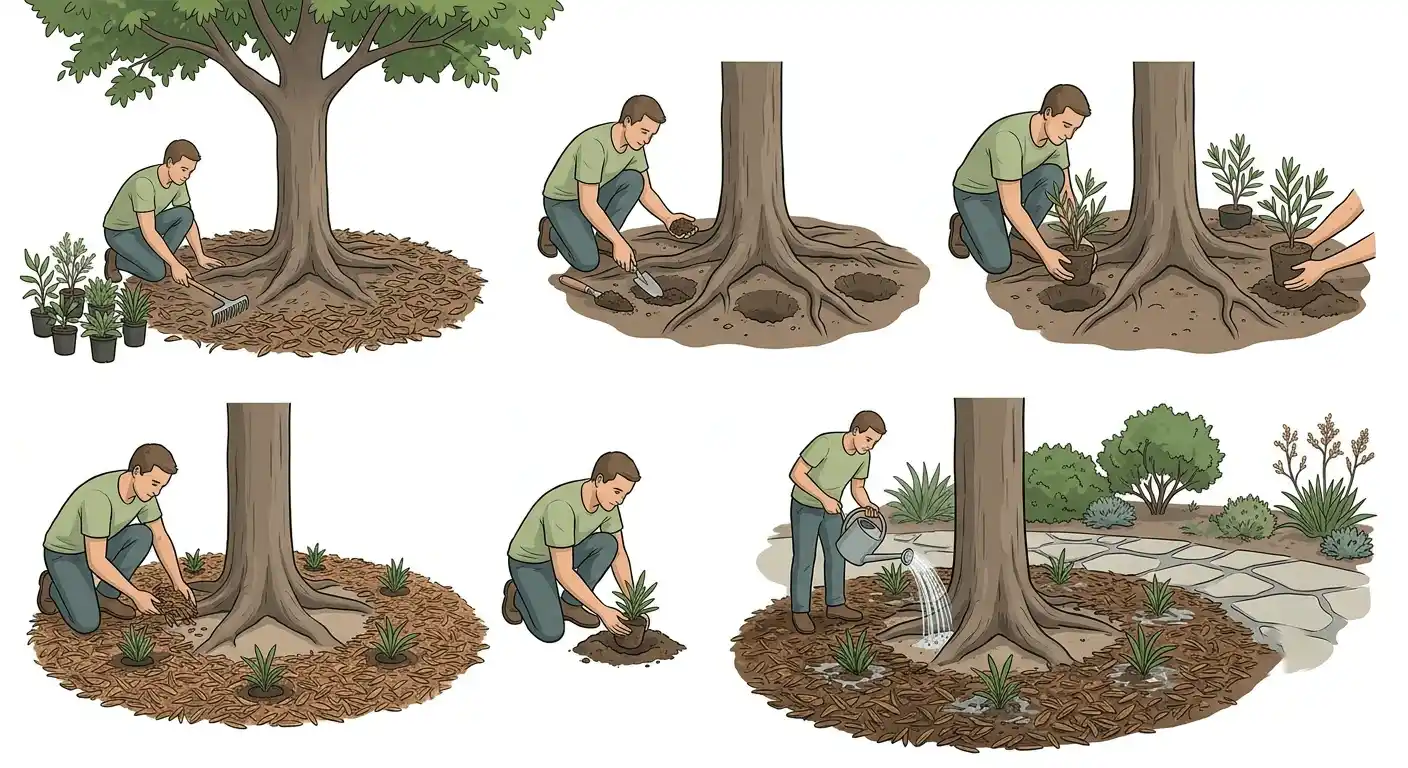
Planting beneath an established tree should always prioritise the long-term health of the tree. The goal is to establish compatible plants while preserving structural roots, maintaining soil oxygen, and avoiding unnecessary disturbance.
Greenery Inside recommends treating mature tree roots as permanent landscape features rather than obstacles to remove. Working around the existing root system almost always produces healthier results for both the tree and the new planting.
Map Major Surface Roots Before Digging
Before planting:
- Remove loose leaf litter carefully.
- Identify visible structural roots.
- Locate natural soil pockets between roots.
- Use small hand tools instead of rotary tillers.
- Avoid deep cultivation.
Small hand-dug planting holes reduce damage to fine feeder roots and preserve soil structure around larger structural roots.
Start With Small Nursery Plants
Tube stock and small nursery plants usually establish more successfully beneath mature trees because they require smaller planting holes and adapt more quickly to root competition.
Best practices include:
- Choose healthy young plants.
- Avoid oversized root balls.
- Plant into naturally open soil spaces.
- Space plants according to their mature spread.
- Allow gradual infill instead of immediate dense coverage.
Although larger plants provide instant impact, they frequently experience greater transplant stress beneath established trees because of restricted rooting space.
Improve Soil Without Raising the Trunk Level
Improving the soil beneath a mature tree should be done carefully to avoid damaging the existing root system. While adding organic matter can benefit newly installed plants, excessive soil buildup around the base of the tree may reduce oxygen availability and increase the risk of bark decay.
When preparing the planting area:
- Add compost only where it can be incorporated into individual planting holes.
- Improve small planting pockets rather than the entire root zone.
- Avoid burying the natural root flare at the base of the trunk.
- Do not construct raised beds over established roots.
- Apply a breathable organic mulch after planting while keeping it clear of the trunk.
Greenery Inside recommends using coarse organic mulch such as aged bark or leaf mulch to conserve moisture and suppress weeds without sealing the soil surface. Maintaining the original soil level around the trunk is one of the most important practices for protecting long-term tree health.
Water Plants During Establishment
Newly planted groundcovers and shrubs require consistent watering while their root systems establish, even when they are considered drought tolerant.
For best results:
- Water each new plant directly at its root ball.
- Water deeply but less frequently to encourage deeper root growth.
- Monitor soil moisture during hot, windy weather.
- Reduce watering gradually as plants become established.
- Adjust irrigation according to the needs of the existing tree.
Most shade-tolerant plants become more resilient after their first summer, but prolonged dry periods may still require supplementary watering, particularly beneath mature trees with extensive feeder roots.
Greenery Inside has observed that targeted watering around individual plants is more efficient than repeatedly soaking the entire area beneath a mature canopy.
Landscaping Ideas Around Tree Roots
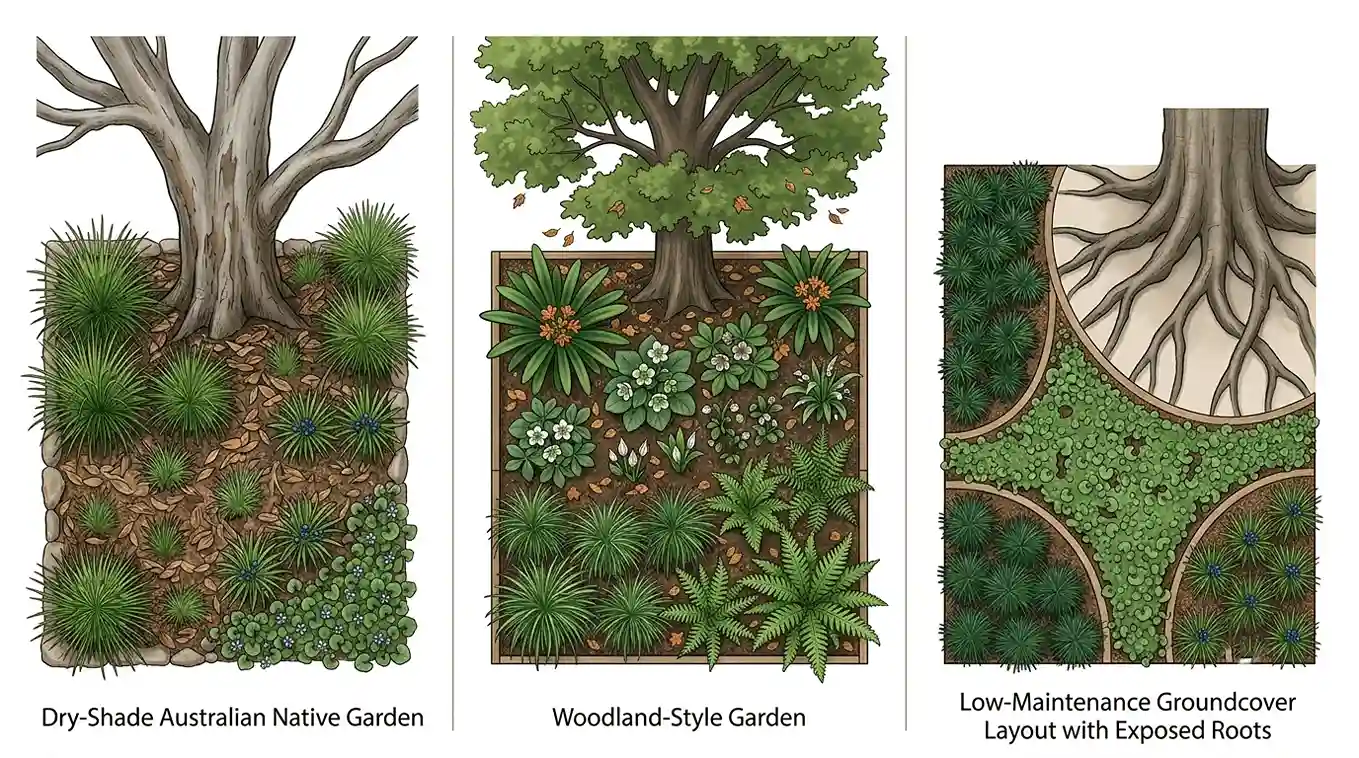
Successful landscaping around trees works with visible roots rather than attempting to hide or bury them. Thoughtful planting layouts can reduce mowing, protect the root zone, improve soil stability, and create an attractive transition between the tree and surrounding garden.
Instead of creating a perfectly circular planting ring, design planting areas that follow the natural shape of the canopy and existing root system.
Natural Woodland-Style Planting
A woodland-inspired design creates a natural appearance while respecting the conditions beneath mature trees.
Combine:
- Spreading native groundcovers.
- Clumping foliage plants.
- Natural leaf litter.
- Decorative logs or weathered timber.
- Light organic mulch.
Arrange plants in irregular groups rather than formal rows to imitate natural woodland patterns. Where suitable, prioritise locally native species that already occur beneath trees in your region.
Low-Maintenance Foliage Garden
Foliage-focused planting provides year-round interest while requiring minimal seasonal maintenance.
Reliable combinations include:
- Lomandra
- Dianella
- Clivia
- Liriope
- Mondo grass
- Cast-iron plant
- Suitable native ferns in moist shade
Using repeated groups of the same species creates a cohesive design and simplifies future maintenance. Position taller clumping plants around the outer canopy while allowing lower-growing groundcovers to spread naturally between exposed roots.
Mulch-and-Groundcover Combination
Not every area beneath a tree needs to be planted. In locations where structural roots dominate the surface, mulch alone may be the healthiest option for the tree.
An effective approach includes:
- Leaving heavily rooted areas covered with mulch.
- Planting only where natural soil pockets exist.
- Creating curved planting beds rather than rigid circles.
- Maintaining open space around the trunk.
- Allowing groundcovers to soften the transition between mulch and lawn.
This approach reduces unnecessary digging while still producing an attractive landscape.
Visual Layout Block
Dry-Shade Native Garden Beneath a Eucalyptus
Design a naturalistic planting scheme using drought-tolerant Australian natives beneath an established eucalyptus. Position lomandra and dianella in loose groups near the outer canopy, with native violet and weeping grass filling suitable soil pockets closer to the trunk. Retain natural leaf litter beneath the canopy and finish with coarse organic mulch between planting groups.
Seasonal Woodland Bed Beneath a Deciduous Tree
Create layered planting beneath a deciduous tree using hellebores, woodland bulbs, native violet, clivia, and liriope. Allow spring bulbs to emerge before the canopy fully develops in summer. Position larger foliage plants toward brighter canopy edges while maintaining open areas around major surface roots.
Low-Maintenance Groundcover Layout Around Exposed Roots
Arrange compact groundcovers between visible roots while leaving congested root zones mulched. Use repeating groups of mondo grass, kidney weed, native violet, and dwarf dianella to create a simple, easy-to-maintain planting design. Avoid covering exposed structural roots with additional soil.
Seasonal and Regional Considerations
Shade conditions vary significantly across Australia because regional climates influence rainfall, humidity, temperature, and plant growth patterns. Selecting plants according to both seasonal conditions and local climate greatly improves long-term performance.
Planting Under Trees in Winter
Winter is often one of the best times to establish new plants beneath trees in many Australian regions. Cooler temperatures reduce moisture stress, allowing roots to develop before summer heat arrives.
Benefits of winter planting include:
- Reduced evaporation.
- Improved root establishment.
- Increased natural rainfall in many regions.
- Better access to winter sunlight beneath deciduous trees.
However, gardeners should also consider:
- Frost risk in cooler regions.
- Cold, waterlogged soils.
- Reduced growth of subtropical species.
- Delayed establishment where soil temperatures remain very low.
As of the 2026 gardening season, many Australian growers continue to recommend autumn and winter planting for drought-tolerant natives, provided drainage remains good and severe frost is avoided.
Shade Plants for Sydney and New South Wales
Sydney and New South Wales include diverse growing environments ranging from humid coastal suburbs to cool tablelands and inland districts. Plants suitable for one location may not perform equally well elsewhere.
When selecting shade-loving plants for Sydney or shade-loving plants NSW, consider:
- Local rainfall patterns.
- Coastal humidity.
- Summer heat.
- Frost frequency.
- Soil texture and drainage.
Suitable plants commonly include:
- Native violet.
- Lomandra.
- Dianella.
- Clivia.
- Liriope.
- Kangaroo fern in sheltered gardens.
- Correa in bright filtered shade.
Rather than relying solely on state-wide recommendations, match each plant to the specific conditions within your own garden.
Full-Shade Versus Bright-Shade Native Plants
Many Australian native plants described as shade tolerant actually perform best in filtered or dappled light rather than permanent deep shade.
Native plants suited to full shade may include:
- Native violet (Viola hederacea)
- Basket grass (Oplismenus species)
- Kangaroo fern
- Bird’s nest fern where moisture remains high
Native plants better suited to bright shade include:
- Dianella
- Lomandra
- Correa
- Shade-tolerant grevilleas
- Compact westringia
Understanding this difference helps gardeners avoid placing flowering shrubs into locations where insufficient light limits growth and flowering.
Greenery Inside recommends reserving the brightest canopy edges for flowering native shrubs while using foliage plants and groundcovers closer to the trunk where light levels remain consistently low.
Common Problems When Growing Plants Under Trees
Even carefully selected shade plants can struggle if they are planted into unsuitable conditions. Most failures result from root competition, incorrect moisture levels, or mismatched light conditions rather than poor plant quality.
Identifying the cause early allows gardeners to correct problems before permanent damage occurs.
New Plants Wilt or Fail to Establish
Likely causes
- Strong root competition.
- Dry soil.
- Insufficient watering during establishment.
- Planting during extreme summer heat.
How to fix it
- Water the individual root ball deeply.
- Apply suitable organic mulch.
- Provide temporary shade if heat is extreme.
- Monitor moisture more frequently during establishment.
How to prevent it
- Plant during autumn or winter where appropriate.
- Use healthy tube stock or small nursery plants.
- Select species suited to dry shade when necessary.
Leaves Turn Yellow or Growth Becomes Weak
Likely causes
- Excess moisture.
- Poor drainage.
- Nutrient deficiency.
- Shade levels that are deeper than the plant can tolerate.
How to fix it
- Check soil moisture before watering again.
- Improve drainage where possible.
- Apply appropriate fertiliser if deficiencies are confirmed.
- Relocate light-demanding plants to brighter canopy edges.
How to prevent it
- Match each plant to the correct combination of light, drainage, and soil moisture before planting.
Plants Grow Toward the Canopy Edge
Plants naturally grow toward available light. If newly planted groundcovers or shrubs consistently lean toward the outer canopy, the location near the trunk is likely receiving insufficient usable light for that species.
Likely cause
- Inadequate light beneath the dense canopy.
How to fix it
- Replace struggling plants with foliage species that tolerate deeper shade.
- Move flowering plants to brighter canopy edges where filtered sunlight is available.
- Prune only if the tree can be safely thinned according to accepted arboricultural practices. Never remove branches simply to increase light without considering the health of the tree.
How to prevent it
- Observe seasonal light patterns before planting.
- Select plants based on actual light conditions rather than assuming all shade is the same.
- Reserve the darkest areas beneath the canopy for plants that naturally grow in woodland environments.
Tree Roots Are Damaged During Bed Preparation
Damage to structural roots can reduce tree stability, slow growth, and increase susceptibility to pests and disease. Most root injuries occur during excessive digging or when attempting to convert the area beneath a mature tree into a conventional garden bed.
Likely cause
- Deep cultivation.
- Trenching.
- Mechanical edging.
- Installing oversized plants that require large planting holes.
How to fix it
- Stop digging immediately if large roots are exposed or damaged.
- Keep damaged roots moist while the area is stabilised.
- Consult a qualified arborist if major structural roots have been cut.
How to prevent it
- Use shallow hand tools.
- Plant only in natural soil pockets.
- Install small nursery plants rather than advanced specimens.
- Leave heavily rooted areas mulched if suitable planting spaces are unavailable.
Greenery Inside recommends treating major tree roots as permanent landscape features that should be worked around rather than removed.
Mulch or Soil Builds Up Against the Trunk
One of the most common landscaping mistakes is piling mulch or soil directly against the trunk. Excess material can trap moisture, restrict oxygen movement, and encourage bark decay around the root flare.
Likely risk
- Moisture trapped against the trunk.
- Fungal disease.
- Bark deterioration.
- Reduced oxygen reaching surface roots.
How to fix it
- Pull mulch or soil away from the trunk.
- Expose the natural root flare.
- Restore the original soil level where practical.
How to prevent it
- Leave a clear gap around the trunk when mulching.
- Never build raised planting beds over established roots.
- Replenish mulch in thin layers rather than allowing it to accumulate over time.
Beginner Mistakes to Avoid When Planting Under Trees
Many planting failures occur because gardeners attempt to treat the area beneath a tree like an ordinary garden bed. Understanding the limitations created by roots, shade, and moisture competition leads to healthier plants and longer-lasting landscapes.
Avoid these common mistakes:
- Assuming all shade-loving plants tolerate dry shade.
- Digging through major structural roots to create planting beds.
- Installing advanced plants with oversized root balls.
- Adding deep layers of topsoil over existing roots.
- Placing irrigation directly against the tree trunk.
- Planting moisture-loving ferns beneath drought-tolerant gum trees.
- Ignoring the future growth of both the tree canopy and root system.
- Installing dense groundcovers beneath fruit trees where fallen fruit must be collected regularly.
- Expecting flowering plants to bloom well in permanent deep shade.
Greenery Inside has found that gardeners who begin with a small number of carefully selected plants usually achieve better long-term results than those attempting to fill every available space immediately.
When Should You Avoid Planting Directly Under a Tree?
Although many trees can be successfully underplanted, some situations make planting impractical or potentially harmful. In these cases, mulch, stepping stones, or limited planting often provide a better solution than forcing vegetation into unsuitable conditions.
Avoid or minimise planting when:
- Large structural roots occupy most of the soil surface.
- The tree is young and still establishing.
- The tree is stressed, declining, or has been recently transplanted.
- The site receives almost no usable light.
- Regular irrigation would conflict with the water requirements of the tree.
- Soil would need to be raised significantly above the existing root system.
- Digging could destabilise or damage important roots.
Where planting is not advisable, a carefully mulched root zone with occasional feature stones or seating can still create an attractive landscape while protecting the health of the tree.
Conclusion
Choosing what to plant under trees Australia begins with understanding the unique conditions created beneath each tree. Shade levels, root competition, soil moisture, local climate, and tree species all influence which plants will establish successfully. There is no single planting list suitable for every situation, making careful site assessment the most important step before planting.
Hardy Australian native groundcovers, strappy-leaved plants such as lomandra and dianella, compact shrubs positioned around canopy edges, and carefully selected evergreen shade plants generally provide the most reliable results in Australian gardens. Matching plants to the available light and moisture allows them to establish with less maintenance while protecting the health of the existing tree.
Successful underplanting works with the landscape rather than against it. By respecting exposed roots, avoiding unnecessary digging, using appropriately sized nursery plants, and selecting species suited to the site’s microclimate, gardeners can create attractive, sustainable planting beneath mature trees that continues to improve over time.
Frequently Asked Questions
What are the easiest plants to grow under trees in Australia?
Some of the easiest plants include native violet, lomandra, dianella, liriope, mondo grass, clivia, and suitable native grasses. The best choice depends on the amount of shade, available soil moisture, and the level of root competition beneath the tree.
Which Australian native plants grow well in full shade?
Native violet (Viola hederacea), basket grass (Oplismenus species), kangaroo fern, bird’s nest fern in moist conditions, and some woodland groundcovers perform well in full shade. However, extremely dark conditions beneath dense evergreen canopies may still limit plant growth.
What can I plant under a large eucalyptus tree?
Large eucalyptus trees usually create dry shade with strong root competition. Suitable plants include lomandra, dianella, native violet where moisture is available, weeping grass, and other drought-tolerant Australian woodland groundcovers adapted to growing beneath gums.
Can I plant directly between exposed tree roots?
Yes, provided planting holes fit naturally between the roots without cutting or damaging them. Use small nursery plants or tube stock, avoid forcing large root balls into confined spaces, and never remove major structural roots.
What grows under trees where the soil stays very dry?
Dry-shade conditions suit drought-tolerant groundcovers, lomandra, dianella, hardy native grasses, cast-iron plant, and other low-water foliage plants. In areas where root competition is extreme, organic mulch may be a better option than planting.
Are ferns suitable for planting under every tree?
No. Ferns require consistent moisture and adequate humidity. They generally perform well in sheltered, moist shade but often struggle beneath dry eucalyptus, pine, olive, or other trees that create highly competitive, low-moisture conditions.
What can I plant under a tree that receives winter sun?
Deciduous trees provide extra winter light that benefits hellebores, woodland bulbs, native violet, clivia, liriope, dianella, and other plants capable of tolerating seasonal changes in sunlight while also coping with summer shade.
Should I add topsoil before planting beneath a mature tree?
Deep layers of topsoil should not be added beneath mature trees because they can bury the root flare and reduce oxygen around important roots. Instead, improve only individual planting holes where necessary, maintain the existing soil level, and apply organic mulch while keeping it away from the trunk.