Introduction
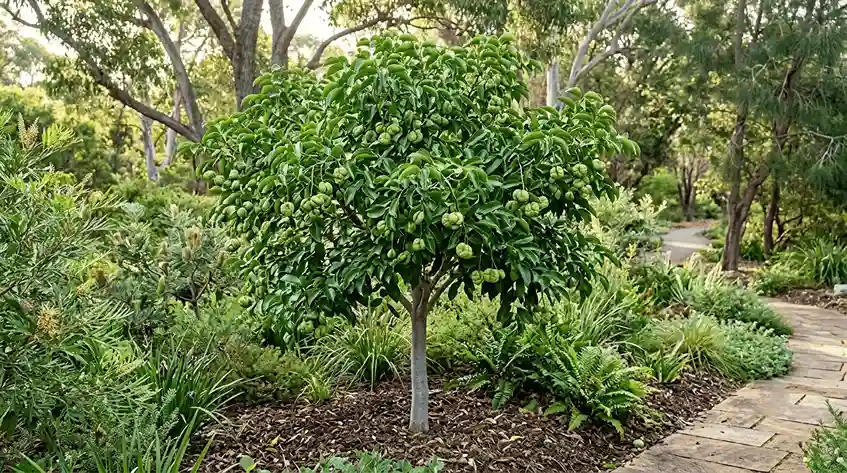
The cheese tree (Glochidion ferdinandi) is a hardy Australian native valued for its glossy foliage and distinctive segmented fruit. Found across eastern Australia, including cheese tree NSW habitats, it usually grows with minimal care. However, environmental stress, poor planting practices, pests, and unsuitable soil can lead to various cheese tree problems. This guide explains how to identify early warning signs, understand their causes, and keep healthy Glochidion trees thriving in Australian gardens.
Quick Summary
- Cheese trees are hardy but dislike poor drainage and prolonged stress.
- Leaf colour, canopy density, and root health reveal most problems early.
- Correct watering, healthy soil, and good planting locations prevent many issues.
- Understanding the tree’s natural rainforest habitat improves long-term success.
What Is a Cheese Tree (Glochidion ferdinandi)?
Botanical identification
The Glochidion ferdinandi cheese tree is an evergreen rainforest species native to eastern Australia. It has glossy green leaves, smooth bark, small flowers, and segmented fruit resembling miniature cheese wheels.
Natural habitat and growing conditions
In cheese tree Australia and cheese tree NSW, it naturally grows in warm, moist forests with fertile, well-drained soil. It prefers full sun to partial shade and consistent moisture without becoming waterlogged. If you’re planning a landscape with native species, our complete guide to Australian Native Garden Trees explores many other Australian trees suited to different climates and garden sizes.
How to Recognize Common Cheese Tree Problems
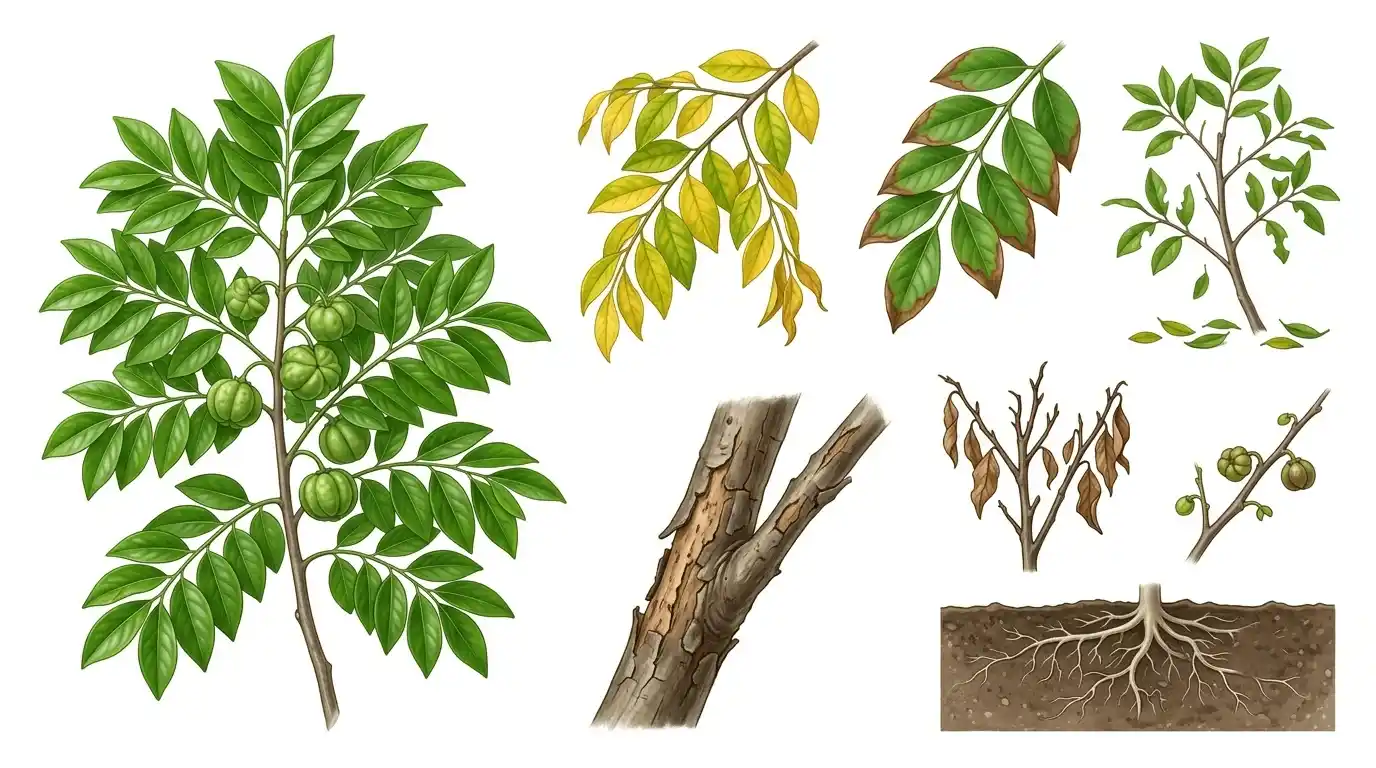
Early symptoms make treatment easier. Watch for:
- Yellow leaves
- Brown leaf edges
- Leaf drop
- Slow growth
- Sparse canopy
- Dead branches
- Bark damage
- Root decline
- Reduced fruit production
In our experience growing native rainforest trees, early action usually prevents serious decline.
Why Cheese Trees Develop Problems
Environmental stress
Heatwaves, drought, strong winds, frost, and waterlogged soil all stress the tree. As of recent Australian growing recommendations, improving drainage and deep watering during dry periods remain the best preventive practices.
Planting and maintenance mistakes
Common causes include poor drainage, compacted soil, incorrect mulching, planting in unsuitable locations, and excessive fertiliser that encourages weak growth.
Common Cheese Tree Problems and How to Fix Them
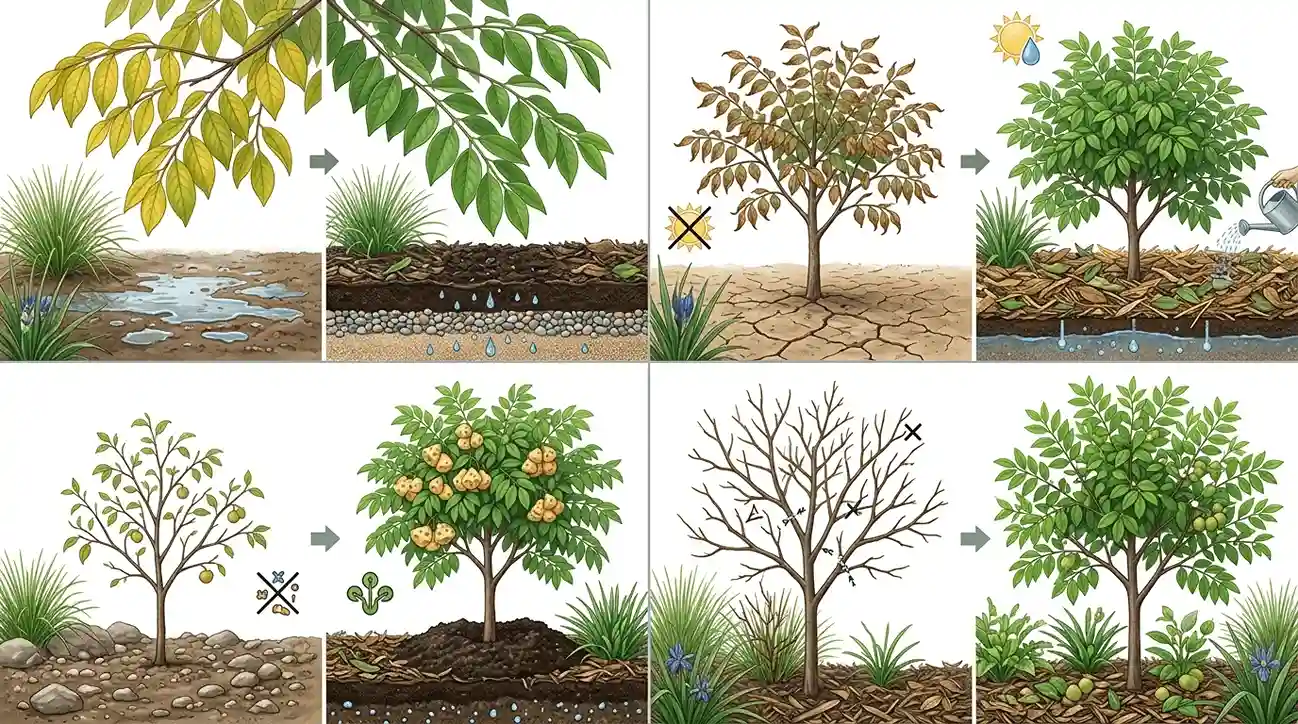
In gardens with consistently damp conditions, choosing species adapted to moisture can reduce long-term stress. See our guide to Plants That Like Wet Soil Australia for suitable alternatives and companion plants.
Yellowing leaves
Usually caused by overwatering, nutrient deficiencies, poor drainage, or natural seasonal leaf replacement. Improve drainage and water only when soil begins drying.
Brown leaves and scorched foliage
Heat, drought, drying winds, and coastal salt spray can scorch foliage. Deep watering and protective mulching reduce stress.
Slow growth or poor vigour
Poor soil, excessive shade, root competition, or nutrient imbalance commonly reduce growth. Greenery Inside recommends improving soil with compost rather than relying on heavy fertiliser.
Branch dieback
Stress, damaged roots, fungal infection, or natural ageing may kill branches. Remove dead wood and correct the underlying cause.
Poor fruit production
Young trees often produce little fruit. Flowering and fruiting improve with maturity, healthy growing conditions, and seasonal weather patterns.
Pests and Diseases That Affect Cheese Trees
Common insect pests
Scale insects, aphids, and leaf-eating caterpillars occasionally attack foliage. Healthy trees usually recover with minimal intervention. If you’re unsure which insects are affecting your tree, our guide to Common Garden Bugs can help you identify beneficial insects and common plant pests found in Australian gardens.
Fungal and root diseases
Poor drainage encourages root rot, while prolonged moisture can lead to leaf spot diseases and opportunistic fungal infections.
Preventing pest and disease outbreaks
- Plant in well-drained soil.
- Avoid overwatering.
- Prune damaged branches.
- Improve air circulation.
- Monitor foliage regularly.
Cheese Tree Root System: Can Roots Cause Problems?
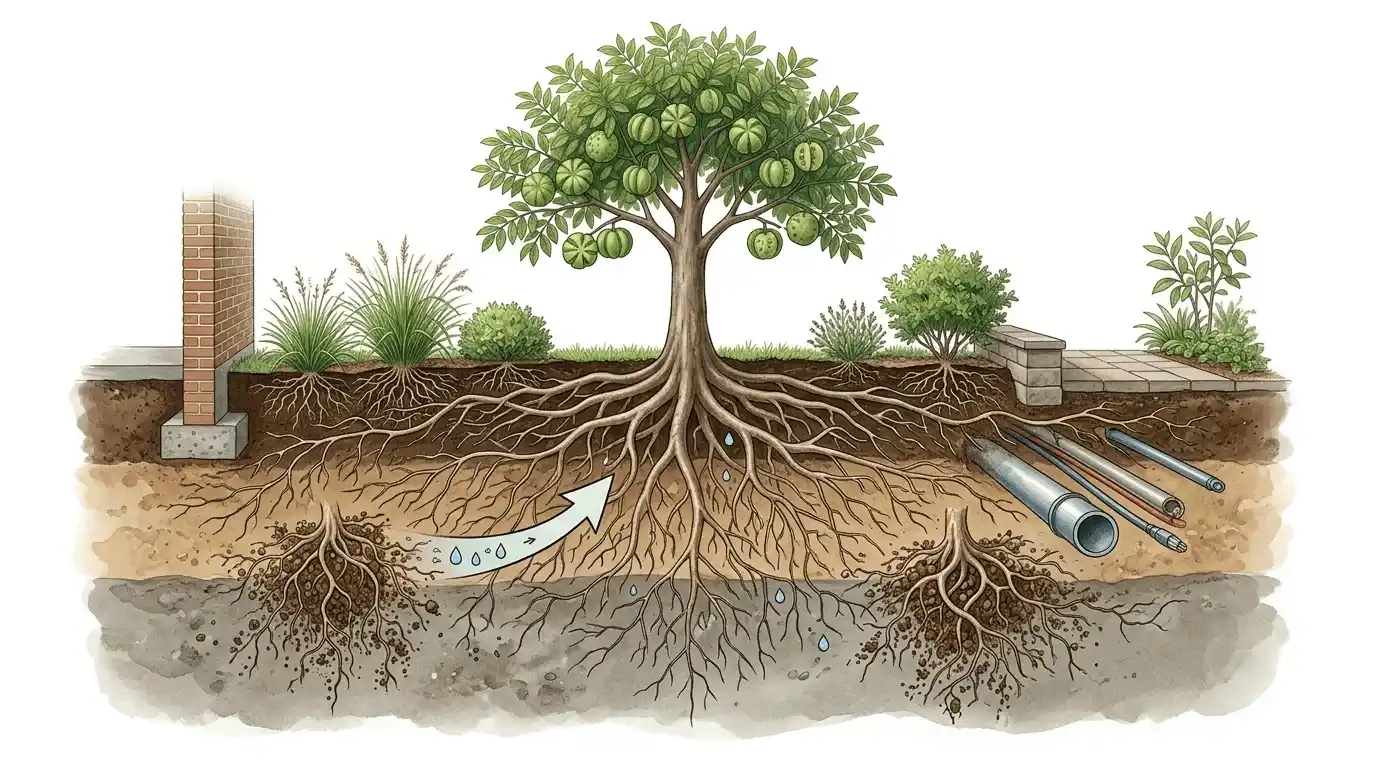
The cheese tree root system is generally non-invasive, forming mostly moderate, spreading roots rather than aggressive surface roots. Allow adequate planting distance from buildings, paving, and underground pipes. Although cheese tree roots are generally considered non-invasive, it’s still wise to understand how tree roots interact with underground services. Read our guide on Drain Tree to learn more about planting trees safely near drainage systems.
| Root characteristic | Typical behaviour | Practical implication |
| Moderate spread | Mostly non-invasive | Suitable for gardens |
| Surface roots | Limited | Avoid heavy soil compaction |
| Deep anchoring roots | Stable growth | Plant several metres from structures |
Plant Size, Growth Rate, and Care Requirements
Mature size
Typically grows 6–12 metres tall with a spread of 4–8 metres, depending on climate and soil.
Growth rate
Growth is moderate and improves in fertile soil with regular moisture.
Care guide
- Water deeply while establishing.
- Grow in sun or partial shade.
- Use well-drained fertile soil.
- Apply slow-release native fertiliser.
- Mulch without touching the trunk.
- Prune lightly after growth flushes.
- Tolerates warm temperate to subtropical climates.
Are Cheese Trees Protected in Australia?
Are cheese trees protected?
Whether are cheese trees protected depends on state legislation, local council rules, and environmental regulations. Before removing or heavily pruning a mature tree, always check local government requirements, particularly in environmentally significant areas.
Cheese Tree Fruit: Is It Edible?
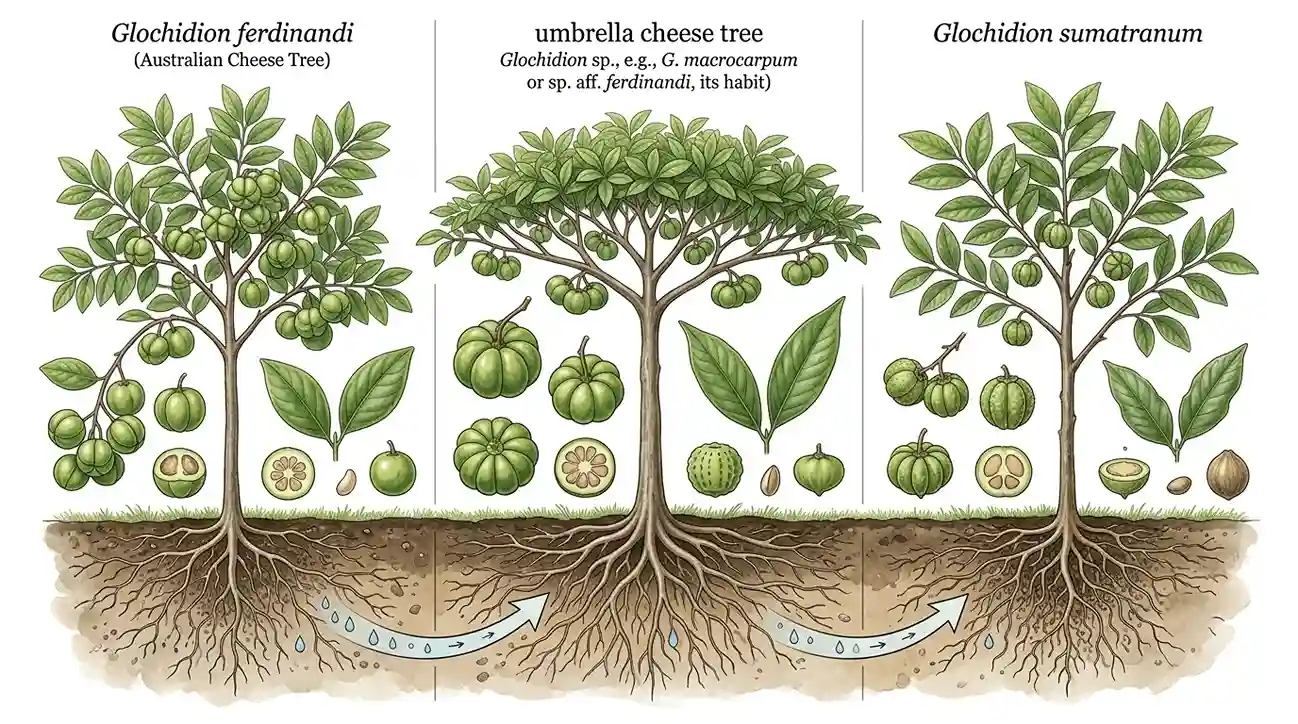
Identifying the fruit
The segmented capsule resembles a tiny cheese wheel, giving the tree its common name.
Is cheese tree fruit edible?
Although cheese tree fruit has traditional significance and provides food for wildlife, cheese tree fruit edible information is limited. Consumption should only occur after proper identification and reliable local advice.
Similar Trees Often Confused with the Cheese Tree
Umbrella cheese tree
Despite the name, it belongs to a different group and has distinct foliage.
Daintree cheese tree
A regional common name used for related rainforest species.
Glochidion sumatranum
Closely related but differs in distribution, leaf shape, and fruit characteristics.
| Species | Native range | Main differences | Common uses |
| Glochidion ferdinandi | Eastern Australia | Segmented fruit | Ornamental |
| Umbrella cheese tree | Tropical regions | Different foliage | Shade |
| Glochidion sumatranum | Northern Australia & Asia | Leaf and fruit variation | Native planting |
Common Beginner Mistakes That Lead to Cheese Tree Problems
Avoid these common mistakes:
- Planting in heavy clay
- Poor drainage
- Excess fertiliser
- Overwatering
- Mulching against the trunk
- Ignoring early symptoms
- Planting too close to structures because of cheese tree roots
Conclusion
Most cheese tree problems result from environmental stress, poor drainage, or maintenance mistakes rather than serious disease. By planting Glochidion ferdinandi in suitable conditions, monitoring early symptoms, and following good care practices, Australian gardeners can enjoy a healthy, long-lived native tree with attractive foliage and distinctive fruit.
Frequently Asked Questions
Why are my cheese tree leaves turning yellow?
Yellow leaves usually result from overwatering, poor drainage, nutrient deficiency, or seasonal leaf replacement.
How do I know if my cheese tree has root rot?
Signs include wilting, yellow leaves, soft roots, and persistently wet soil with poor drainage.
Are cheese tree roots invasive?
No. The cheese tree root system is generally moderate and not considered aggressively invasive.
Is cheese tree fruit safe to eat?
Only consume fruit after correct identification and expert advice, as information on safe consumption is limited.
Are cheese trees protected in NSW?
Protection varies by local council and environmental regulations. Always check NSW rules before removal.
How often should a cheese tree be watered?
Water young trees deeply once or twice weekly. Mature trees usually need watering only during extended dry periods.
Can a stressed cheese tree recover?
Yes. If the cause is identified early and corrected, many stressed cheese trees recover with improved watering, drainage, and ongoing care.