Introduction
Weeping eucalyptus refers to several ornamental eucalyptus species known for their graceful, pendulous branches. Popular weeping eucalyptus tree species include Eucalyptus lacrimans, Eucalyptus caesia, and Eucalyptus sepulcralis, each offering attractive bark, flowers, and drought tolerance. These weeping gum trees are widely planted across Australian gardens as feature trees because they combine ornamental beauty with the resilience typical of native gums.
Quick Summary
- Weeping eucalyptus includes several ornamental species with naturally drooping branches.
- Eucalyptus lacrimans, Eucalyptus caesia (Silver Princess), and Eucalyptus sepulcralis are the best-known varieties.
- Most thrive in full sun and well-drained soil with minimal maintenance.
- Choose a species based on climate, garden size, and ornamental features.
What Is a Weeping Eucalyptus?
What makes a eucalyptus tree “weeping”?
A weeping eucalyptus has naturally pendulous branches that hang downward instead of growing upright. This growth habit creates a soft, cascading canopy and distinguishes true weeping species from standard gum trees.
Why gardeners choose weeping gum trees
Gardeners value weeping eucalyptus for:
- Elegant landscape form
- Wildlife habitat
- Summer shade
- Attractive flowers and bark
- Excellent drought tolerance
Popular Weeping Eucalyptus Varieties
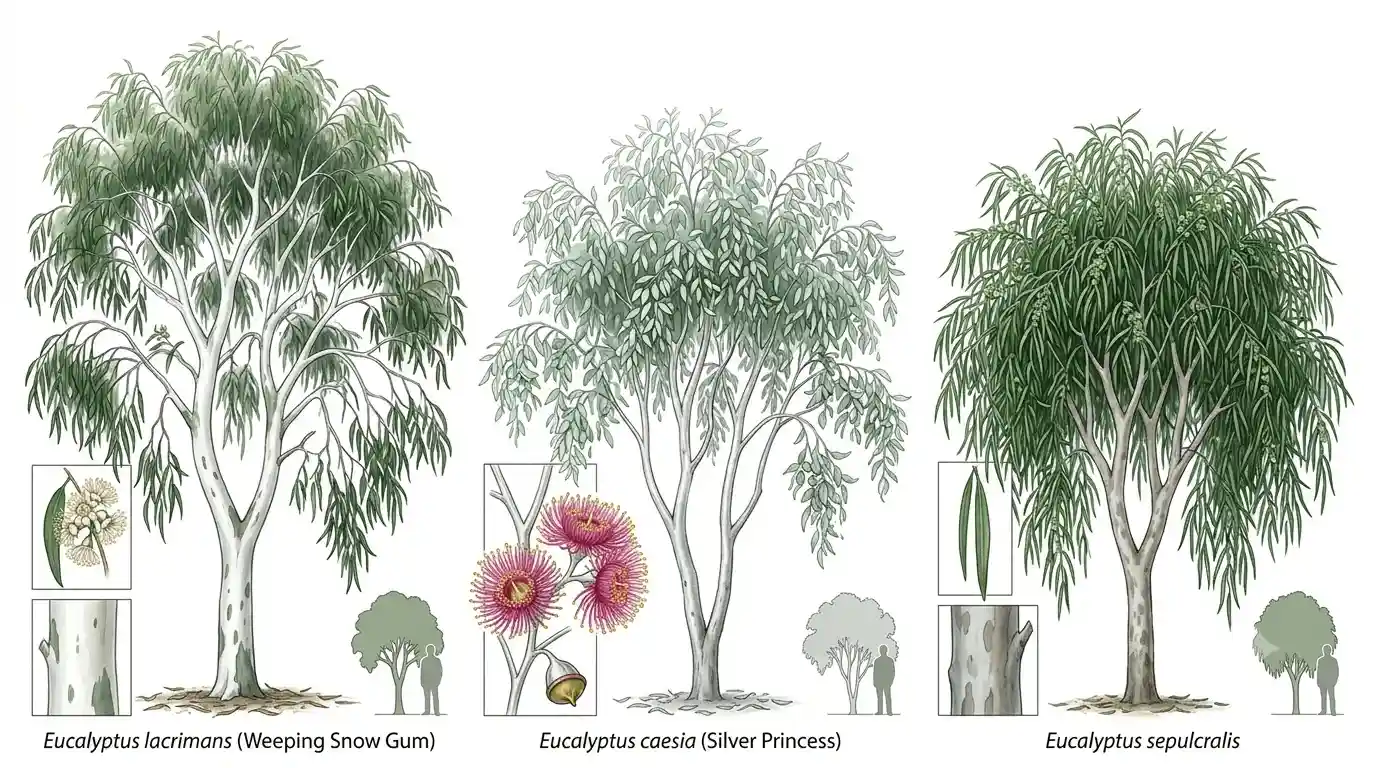
If you’re looking for even more compact gum trees for smaller landscapes, our guide to Dwarf Eucalyptus Trees explores additional varieties suitable for Australian gardens.
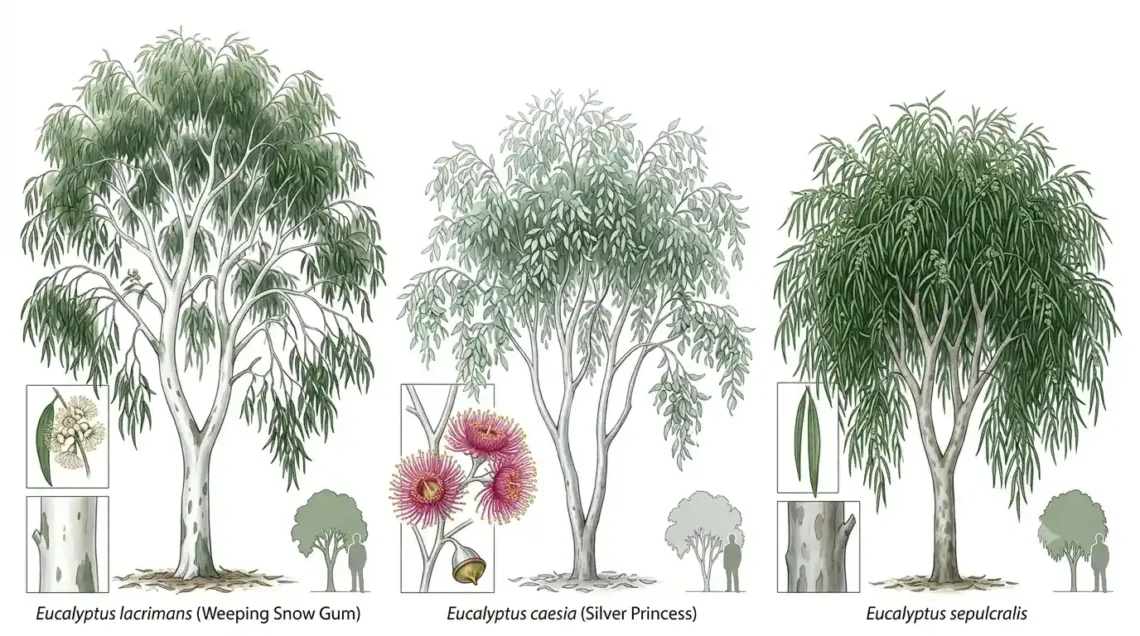
Eucalyptus lacrimans (Weeping Snow Gum)
Eucalyptus lacrimans, also called Weeping Snow Gum, is a compact alpine species with white bark, graceful branches, attractive snow gum leaves, and excellent frost tolerance. It is closely related to Eucalyptus pauciflora and suits cooler Australian gardens.
Eucalyptus caesia (Silver Princess)
Eucalyptus caesia, commonly known as Silver Princess, is famous for powdery white stems, silver foliage, long drooping branches, and striking pink flowers. Forms such as Eucalyptus caesia ssp. magna are popular ornamental selections, while the dwarf Silver Princess gum fits smaller landscapes.
Eucalyptus sepulcralis
This smaller ornamental species features narrow leaves and a naturally graceful canopy. It performs well as a feature tree in native and water-wise gardens.
Other eucalyptus species often compared
Although not naturally weeping, Eucalyptus leucoxylon, Eucalyptus leucoxylon rosea (Pink Flowering Yellow Gum), and Blue Gum (Eucalyptus globulus) are frequently compared because of their ornamental flowers, foliage, and garden performance. Gardeners interested in compact flowering gums should also compare Eucalyptus Leucoxylon ‘Euky Dwarf’, a popular ornamental native with colourful blooms and manageable size.
Comparison of Common Weeping Gum Tree Varieties
| Species | Mature Size | Flowers | Best Climate | Best Use |
| Eucalyptus lacrimans | Small | White | Cool | Frost gardens |
| Eucalyptus caesia | Small-medium | Pink | Dry | Feature tree |
| Eucalyptus sepulcralis | Small | Cream | Mild | Native gardens |
| Eucalyptus leucoxylon | Medium | Pink/Red | Temperate | Streets & parks |
Plant Size and Growth Habit
Mature height and width
Most small eucalyptus trees reach 4–10 m, while miniature forms remain suitable for compact gardens. Proper spacing allows healthy canopy development.
Growth habit and canopy shape
Weeping species develop rounded crowns with cascading branches. In our experience growing Australian natives, they create excellent focal points without appearing dense or heavy.
Growth Rate of Weeping Eucalyptus
How fast do different species grow?
Most weeping gums grow at a moderate rate. Growth improves with full sun, free-draining soil, and regular watering during establishment. Warm climates generally encourage faster development.
Care Guide for Weeping Eucalyptus
Sunlight requirements
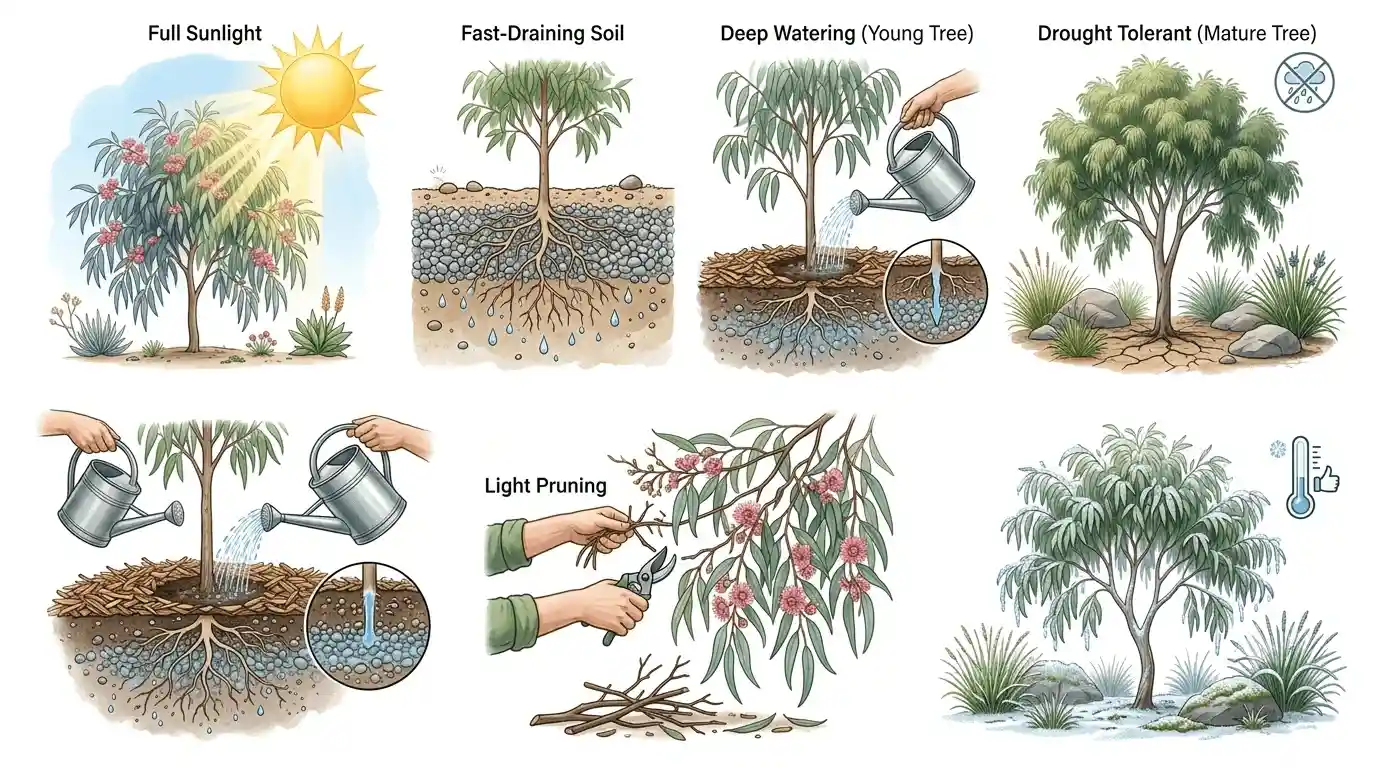
Plant in full sun to encourage healthy foliage and reliable flowering.
Soil preferences
Excellent drainage is essential. Sandy and gravelly soils perform better than heavy clay.
Watering requirements
Water young trees regularly for the first two years. Established trees are generally drought tolerant.
Fertilising
Greenery Inside recommends using low-phosphorus native plant fertilisers only when growth appears poor.
Pruning and maintenance
Remove dead or damaged branches after flowering while avoiding excessive pruning that spoils the natural shape.
Climate and frost tolerance
Species differ considerably. Weeping Snow Gum handles frost well, while Silver Princess prefers warmer, drier climates.
Landscaping Uses for Weeping Eucalyptus Trees
Popular uses include:
- Feature trees
- Native gardens
- Rock gardens
- Wildlife gardens
- Rural landscapes
- Streetscapes
The many weeping eucalyptus varieties provide options for gardens of almost every size. For more inspiration on selecting ornamental focal trees, see our guide to Small Feature Trees Australia, which includes many species suited to suburban landscapes.
Common Problems and How to Fix Them
Yellow leaves
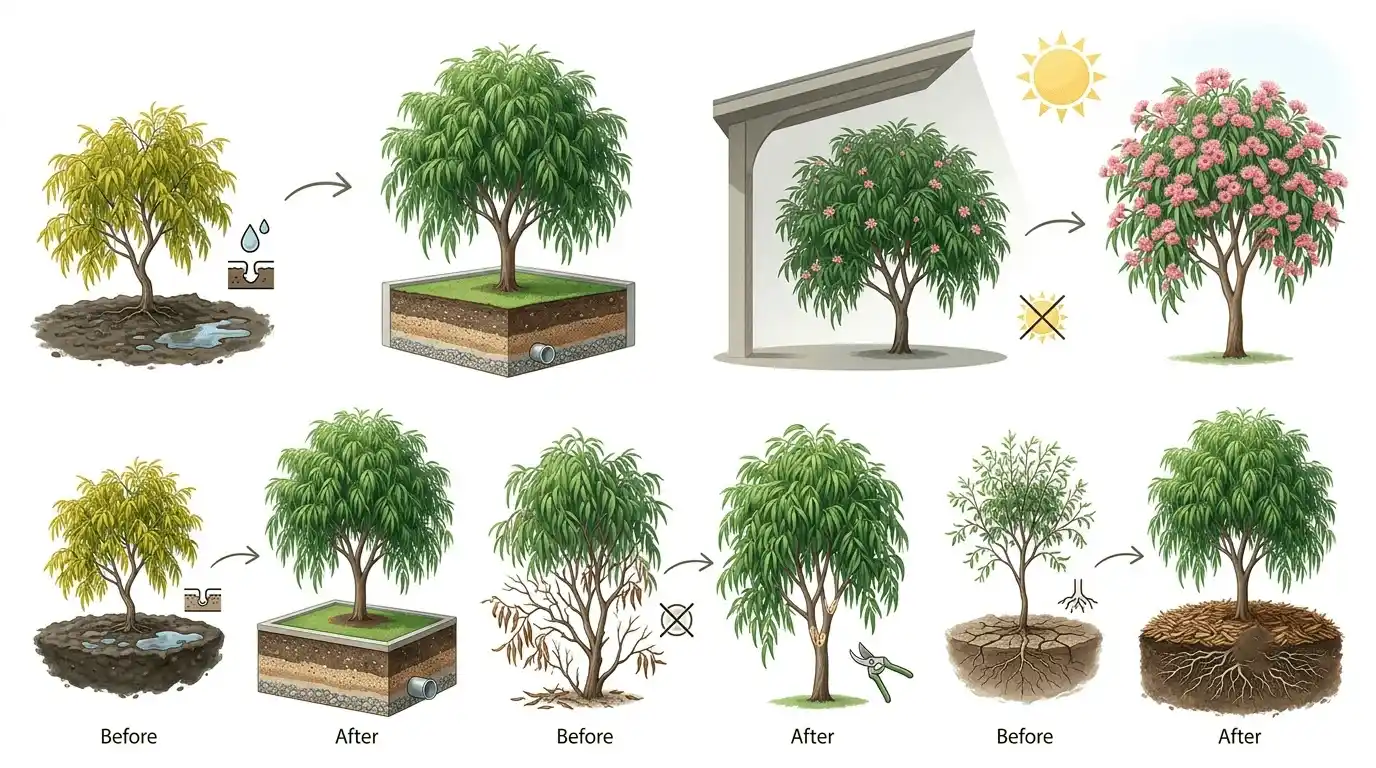
Usually caused by poor drainage, nutrient imbalance, or root stress. Improve soil drainage and avoid overwatering.
Poor flowering
Often results from insufficient sunlight, excessive nitrogen, or immature plants.
Branch dieback
May develop from disease, drought stress, or physical damage. Remove affected branches promptly.
Root problems
Compacted or waterlogged soils reduce root health. Good drainage prevents most issues.
Common Mistakes When Growing Weeping Gum Trees
Avoid these common mistakes:
- Planting too close to buildings
- Choosing the wrong species
- Poor soil drainage
- Heavy pruning
- Overwatering established trees
How to Identify Weeping Gum Trees
Common identification features include:
- Smooth or powdery bark
- Narrow gum leaves
- Distinctive gum nuts
- Pendulous branches
- Seasonal flowers
- Graceful overall habit
These characteristics help with gum tree identification in Australia.
Choosing the Right Weeping Eucalyptus for Your Garden
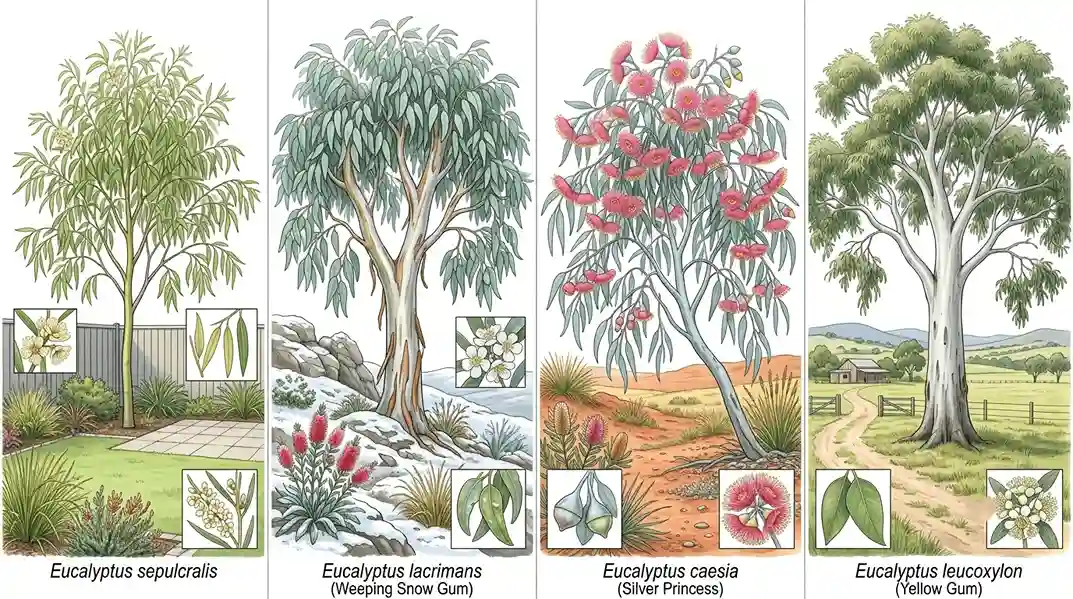
Choose according to your conditions:
- Small gardens: Eucalyptus caesia or Eucalyptus sepulcralis
- Frost-prone areas: Eucalyptus lacrimans
- Dry climates: Silver Princess
- Large landscapes: Eucalyptus leucoxylon
Consider mature size, flower colour, maintenance needs, and local climate before planting.
Conclusion
Weeping eucalyptus includes some of Australia’s most attractive ornamental gum trees, combining graceful form with hardy native characteristics. Whether you prefer the frost-hardy Weeping Snow Gum, colourful Silver Princess, or compact Eucalyptus sepulcralis, selecting the right species for your climate and garden size will provide decades of beauty with relatively little maintenance.
Frequently Asked Questions
Is Eucalyptus lacrimans the same as Silver Princess?
No. Eucalyptus lacrimans is the Weeping Snow Gum, while Silver Princess is Eucalyptus caesia.
Which is the smallest weeping eucalyptus tree?
Eucalyptus sepulcralis and dwarf forms of Eucalyptus caesia are among the smallest.
What is the difference between Eucalyptus caesia and Eucalyptus lacrimans?
Eucalyptus caesia has pink flowers and silver stems, while Eucalyptus lacrimans is valued for white bark and frost tolerance.
Are weeping gum trees suitable for small gardens?
Yes. Several compact species are ideal for suburban gardens.
How fast does a weeping eucalyptus grow?
Most species grow at a moderate rate under full sun and well-drained soil.
Can weeping eucalyptus tolerate frost?
Some species, particularly Eucalyptus lacrimans, tolerate significant frost.
Which weeping eucalyptus has pink flowers?
Eucalyptus caesia (Silver Princess) is well known for its vibrant pink flowers.
Are weeping eucalyptus trees native to Australia?
Yes. All major weeping eucalyptus species are native to Australia.