Introduction
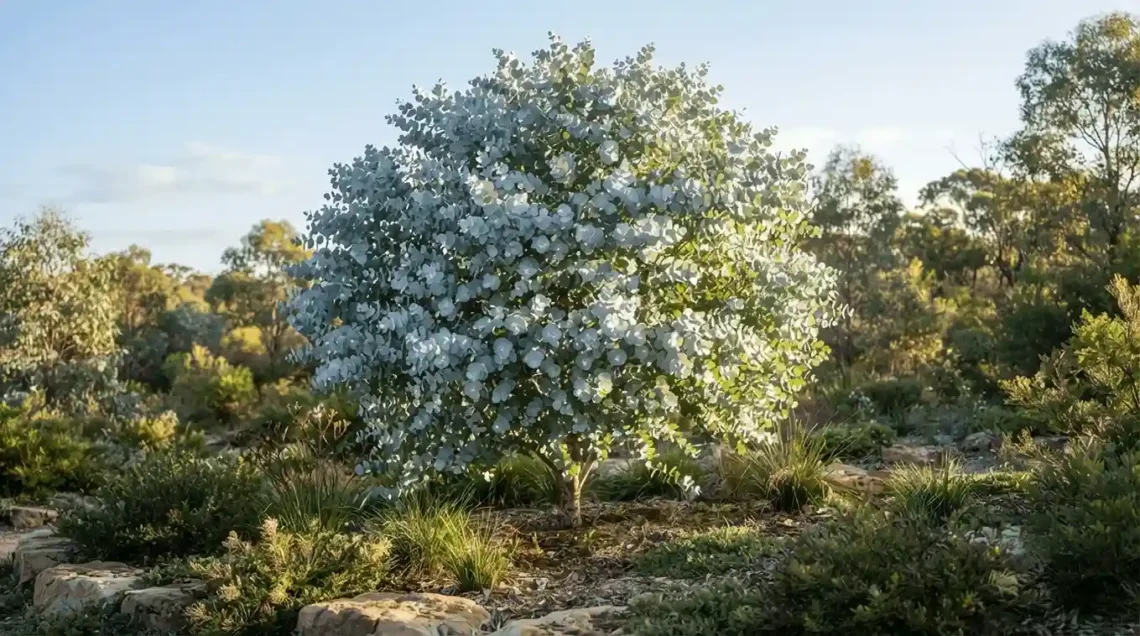
Eucalyptus pulverulenta is one of Australia’s most admired native trees, prized for its striking silver-blue foliage and adaptability in gardens. Commonly known as baby blue eucalyptus, baby blue gum, and silver-leaved mountain gum, this evergreen species is widely planted for ornamental landscapes, privacy screens, and the floral industry. Its rounded juvenile leaves have also made it a favourite for fresh and dried flower arrangements. Closely associated with names such as blue eucalyptus, silver mountain gum, and the baby eucalyptus tree, this attractive native combines beauty with resilience, thriving in sunny locations and requiring relatively little maintenance once established.
Quick Summary
- Eucalyptus pulverulenta is a fast-growing Australian native valued for its round silver-blue juvenile foliage.
- It is commonly grown as baby blue eucalyptus for gardens, hedging, landscaping, and floral foliage production.
- Regular pruning helps maintain the attractive juvenile leaves that make the tree highly desirable.
- It grows best in full sun with well-drained soil and becomes drought tolerant once established.
- Proper pruning, watering, and site selection help produce healthy, vigorous growth throughout the year.
What Is Eucalyptus Pulverulenta?
Eucalyptus pulverulenta is an evergreen tree belonging to the Myrtaceae (myrtle) family. Native to the tablelands of southeastern Australia, it naturally grows on rocky slopes and open woodlands where well-drained soils and abundant sunlight support healthy development. Eucalyptus pulverulenta is an evergreen tree belonging to the Myrtaceae (myrtle) family and is a member of the Eucalyptus genus.
The species is best known for its beautiful round juvenile leaves covered with a natural silvery wax that gives the foliage its distinctive blue-grey appearance. These leaves are widely harvested for floristry, making the plant one of the most commercially important ornamental eucalyptus species.
The common name silver-leaved mountain gum reflects both its mountain habitat and its attractive silver foliage. It is also frequently called silver mountain gum, although both names refer to the same species.
Gardeners often encounter several names that describe this plant:
- Baby Blue Eucalyptus – the most common horticultural name for compact ornamental forms.
- Silver Leaved Mountain Gum – traditional common name describing its native habitat.
- Silver Mountain Gum – shortened variation used by nurseries and gardeners.
- Blue Eucalyptus – a general term referring to eucalyptus species with blue-grey foliage, including Eucalyptus pulverulenta.
- Baby Blue Gum – another common nursery name, especially for young plants.
Many nurseries also sell selected cultivars under names such as Eucalyptus pulverulenta ‘Baby Blue’ or simply Eucalyptus pulverulenta Baby Blue. These selections are prized because regular pruning keeps the plant producing its highly ornamental juvenile foliage rather than mature adult leaves.
Unlike many eucalyptus trees that quickly develop long, narrow adult leaves, baby blue eucalyptus can be maintained in its juvenile stage through annual pruning, allowing gardeners to enjoy its rounded silver foliage indefinitely.
Botanical Overview
| Feature | Details |
| Scientific name | Eucalyptus pulverulenta |
| Botanical family | Myrtaceae |
| Common names | Baby blue eucalyptus, baby blue gum, silver-leaved mountain gum, silver mountain gum |
| Native range | Southeastern Australia (New South Wales) |
| Plant type | Evergreen tree |
| Foliage | Round silver-blue juvenile leaves with waxy coating |
| Primary uses | Ornamental tree, floral foliage, hedging, landscaping |
Key Characteristics
- Native Australian evergreen tree.
- Highly valued for decorative silver-blue foliage.
- Juvenile leaves remain attractive with regular pruning.
- Suitable for ornamental gardens and commercial foliage production.
- Adaptable to a range of well-drained soils.
Greenery Inside experience: In our experience, gardeners are often surprised by how dramatically pruning influences the appearance of Eucalyptus pulverulenta. Trees that are pruned annually retain the rounded juvenile leaves far longer than unpruned specimens, making them much more attractive for ornamental planting and cut foliage.
How to Identify Baby Blue Eucalyptus
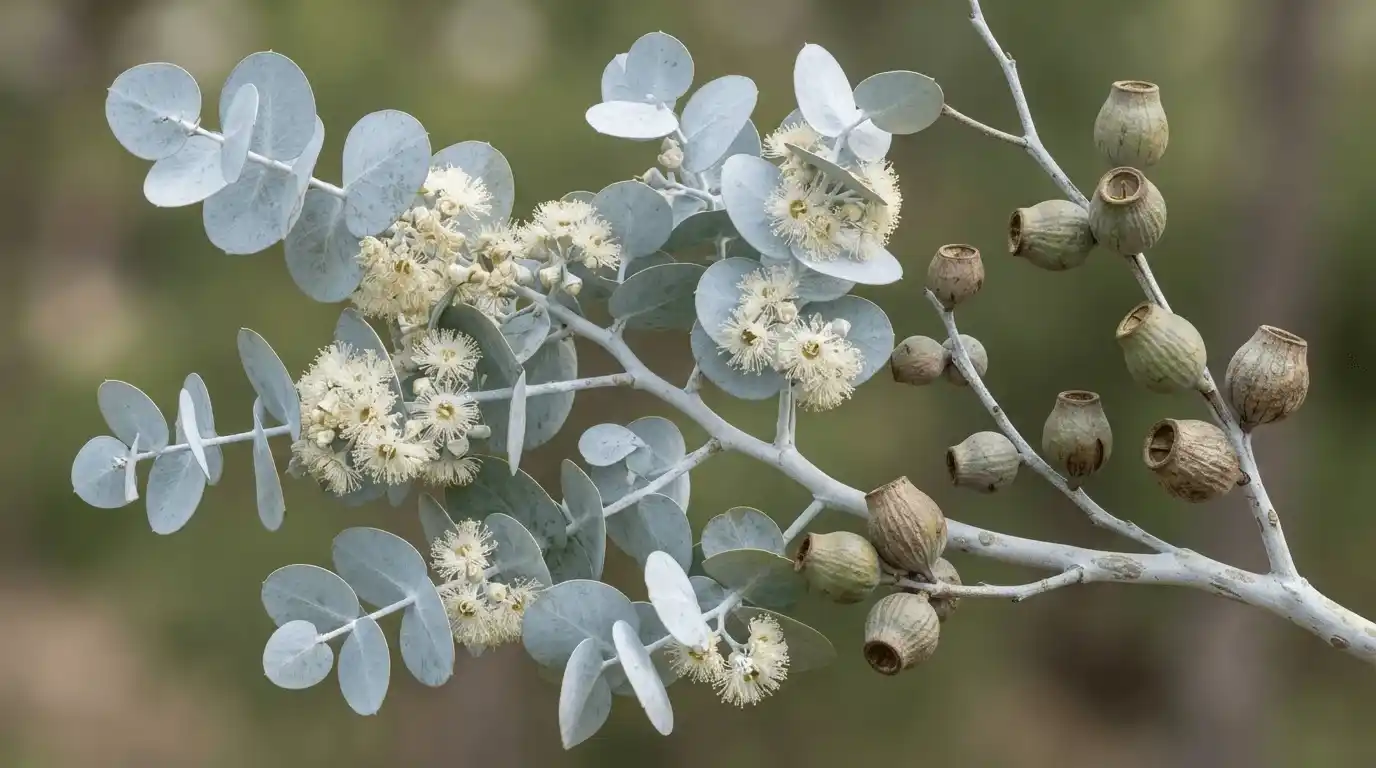
Correct identification of baby blue eucalyptus is relatively straightforward because few eucalyptus species produce such distinctive round silver-blue juvenile foliage. Its combination of leaf colour, waxy coating, and upright growth habit makes it stand out in both native and ornamental landscapes.
Leaves
The leaves are the defining feature of Eucalyptus pulverulenta.
Young growth produces almost perfectly rounded leaves that grow in opposite pairs along the stems. These juvenile leaves measure approximately 4–8 cm across and are covered by a fine waxy bloom known as a glaucous coating.
This natural coating gives the foliage its characteristic:
- Silver-blue colour
- Soft grey appearance
- Powdery texture
- Reflective finish under sunlight
The wax coating also helps reduce moisture loss, allowing the tree to tolerate dry Australian conditions more effectively.
As the tree matures naturally, the foliage gradually changes. Adult leaves become:
- Longer
- Narrower
- Greener
- Less rounded
- Less densely arranged
For this reason, ornamental growers regularly prune or coppice baby blue eucalyptus to encourage continuous juvenile growth.
The attractive foliage explains why this species remains one of the most popular eucalyptus varieties for floral arrangements and decorative landscaping.
Bark, Flowers and Fruit
Although the foliage receives most of the attention, the bark, flowers, and fruit are also useful identification features. If you’re interested in flowering characteristics, blooming season, and nectar production, see our detailed guide to Baby Blue Eucalyptus Flowers.
Bark
Young trunks typically have smooth bark that ranges from pale grey to cream. As trees age, sections of bark naturally shed in thin ribbons, revealing fresh layers beneath. This peeling habit is typical of many eucalyptus species.
Flowers
The Eucalyptus pulverulenta flower is relatively small but attractive.
Flower characteristics include:
- Creamy white flowers
- Nectar-rich blossoms
- Clusters developing from leaf axils
- Pollinator-friendly blooms
Flowering generally occurs from late spring into summer, although local climate can influence bloom timing.
The flowers attract numerous beneficial insects including:
- Native bees
- Honey bees
- Hoverflies
- Other nectar-feeding pollinators
Birds may also visit flowering trees to feed on nectar and insects.
Fruit
Following flowering, the tree develops woody seed capsules commonly called gum nuts.
These capsules:
- Are rounded to cup-shaped
- Mature from green to brown
- Contain numerous fine seeds
- Persist on branches after seed release
Gum nuts provide another characteristic feature that helps identify mature eucalyptus trees.
Growth Habit
Eucalyptus pulverulenta naturally develops an upright, moderately open canopy with a strong central trunk. However, its appearance varies considerably depending on pruning practices.
Unpruned trees typically grow into medium-sized upright specimens with spreading branches and adult foliage.
Regular pruning encourages a very different growth habit by promoting:
- Dense branching
- Multiple stems
- Compact structure
- Continuous juvenile foliage
- Vigorous new shoots
This multi-stemmed growth makes baby blue eucalyptus particularly valuable for commercial foliage production and ornamental hedging.
Greenery Inside recommendation: We have found that annual coppicing during the dormant season produces the straightest stems and the highest quality silver foliage for floral arrangements. Light annual pruning also helps maintain a compact garden specimen without sacrificing ornamental appeal.
Eucalyptus Pulverulenta Size and Growth Rate
Eucalyptus pulverulenta is considered a relatively fast-growing eucalyptus. Mature size depends greatly on climate, soil quality, available moisture, and how the tree is managed through pruning. Gardeners with smaller spaces may also prefer the compact Dwarf Baby Blue Eucalyptus Tree, which offers similar silver-blue foliage while remaining easier to manage in residential gardens.
Home gardeners often choose this species because it can be maintained as either a compact ornamental shrub or allowed to develop into a medium-sized landscape tree.
A full-grown baby blue eucalyptus tree grown without regular pruning typically reaches moderate heights suitable for parks, large gardens, and rural landscapes. In contrast, annually pruned plants remain much smaller while continuing to produce the desirable juvenile foliage.
Pruning therefore influences not only appearance but also ultimate size and shape.
Environmental factors affecting mature size include:
- Sunlight exposure
- Soil drainage
- Water availability
- Climate
- Pruning frequency
- Root space
Trees growing in ideal conditions generally produce faster, more vigorous growth than those planted in poor or compacted soils.
Table: Typical Mature Size
| Growing Condition | Height | Spread | Notes |
| Garden tree | 8–12 m | 4–8 m | Develops mature canopy if left unpruned |
| Regularly pruned | 2–5 m | 2–4 m | Retains juvenile silver-blue foliage |
| Container grown | 1.5–3 m | 1–2 m | Size controlled through pruning and root restriction |
Growth Rate
Eucalyptus pulverulenta is a fast-growing native tree capable of producing substantial new growth each year under favourable conditions. Young plants establish quickly and often develop long, vigorous shoots during the growing season.
Growth is typically strongest in spring and early summer when temperatures are warm and soil moisture is consistent. In cooler months, growth naturally slows as the plant enters a less active phase.
Several environmental factors influence how quickly the tree grows:
- Sunlight: Full sun encourages dense foliage and rapid stem development.
- Moisture: Regular watering during establishment supports healthy root growth, while prolonged waterlogging can slow development.
- Soil: Well-drained sandy or loamy soils promote stronger growth than compacted or poorly drained ground.
- Pruning: Annual pruning stimulates vigorous juvenile shoots, producing the fresh silver-blue foliage prized by gardeners and the floral industry.
Greenery Inside experience: In well-drained soil with full sun, established baby blue eucalyptus often puts on impressive seasonal growth after pruning. We consistently observe the healthiest regrowth when pruning is followed by moderate watering rather than excessive irrigation, allowing the roots to remain well-aerated.
How to Grow Baby Blue Eucalyptus Successfully
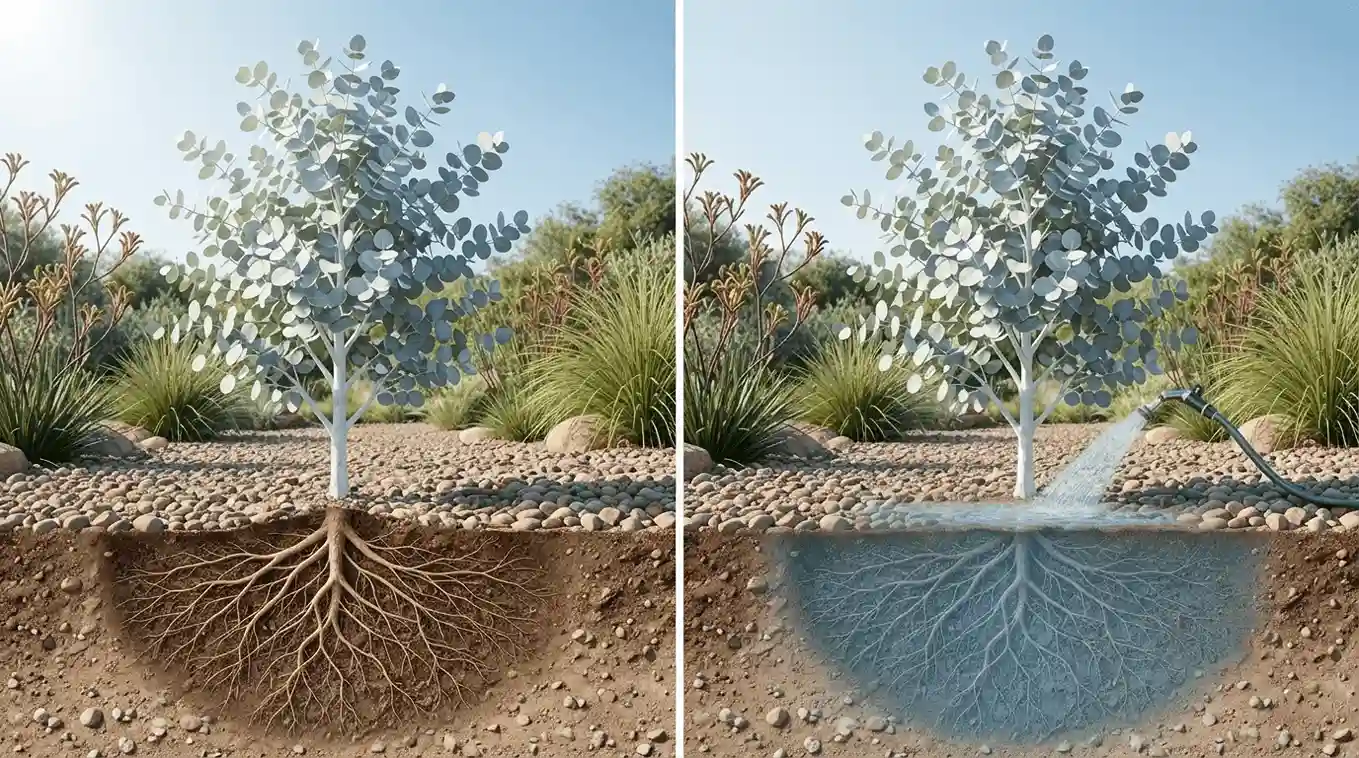
Growing baby blue eucalyptus successfully begins with choosing the right location. Eucalyptus pulverulenta naturally thrives in sunny, well-drained environments and requires relatively little maintenance once established. Matching its native growing conditions helps produce healthy roots, vigorous growth, and the distinctive silver-blue juvenile foliage.
Like many Australian native trees, this species prefers conditions that avoid prolonged waterlogging while providing ample sunlight throughout the year.
Light Requirements
Eucalyptus pulverulenta grows best in full sun. It requires at least 6–8 hours of direct sunlight daily to maintain compact growth, healthy stems, and vibrant silver-blue foliage.
Plants grown in insufficient light often become:
- Leggy and stretched
- Less densely branched
- Greener rather than silver-blue
- Slower growing
While young plants tolerate light afternoon shade in very hot climates, deep shade significantly reduces foliage quality and overall vigor.
For the best ornamental display, plant baby blue eucalyptus where it receives unobstructed sunlight for most of the day.
Soil Requirements
Well-drained soil is one of the most important requirements for growing healthy baby blue eucalyptus. In its native habitat, Eucalyptus pulverulenta commonly grows in rocky, sandy, or loamy soils that drain quickly after rainfall.
Suitable soil types include:
- Sandy soil
- Sandy loam
- Gravelly soil
- Well-drained loam
Heavy clay soils can retain excess moisture, increasing the risk of root diseases. If your garden has clay soil, improve drainage before planting by incorporating coarse sand, gravel, or organic matter and, where necessary, planting on a raised mound.
The preferred soil pH ranges from slightly acidic to neutral (approximately pH 6.0–7.5), although the tree tolerates a wider range if drainage is excellent.
Watering
Proper watering depends on the tree’s age.
Newly planted trees
During the first growing season:
- Water deeply once or twice each week.
- Allow the upper layer of soil to dry slightly between waterings.
- Avoid frequent shallow watering, which encourages weak surface roots.
Established trees
Once established, baby blue eucalyptus becomes highly drought tolerant.
Water only during:
- Extended dry periods
- Extreme summer heat
- Prolonged drought
Overwatering is far more damaging than occasional dry conditions.
Greenery Inside experience: We’ve found that new plants establish more quickly with deep, infrequent watering rather than daily light irrigation. This encourages deeper root systems that improve drought resilience in later years.
Fertiliser
Unlike many ornamental plants, Eucalyptus pulverulenta usually requires very little fertiliser.
In fertile garden soils, additional feeding may not be necessary.
If growth appears slow or foliage is pale, apply a low-phosphorus fertiliser formulated for Australian native plants during spring.
Suitable fertiliser practices include:
- Apply once in spring if needed.
- Follow label rates carefully.
- Water after application.
- Avoid heavy nitrogen feeding.
Excessive fertiliser often produces overly soft growth that is more susceptible to pests and may reduce the intensity of the foliage colour.
Pruning
Pruning is one of the most important aspects of growing baby blue eucalyptus.
Without pruning, the tree gradually develops mature, narrow leaves and loses much of its distinctive juvenile appearance.
Regular pruning encourages:
- Rounded juvenile foliage
- Dense branching
- Multiple stems
- Straight stems for cut foliage
- Compact growth
Two common pruning techniques are used.
Coppicing
Coppicing involves cutting the tree back close to ground level every one to three years.
Benefits include:
- Continuous juvenile foliage
- Vigorous new shoots
- Excellent stems for floral use
- Compact plant size
Pollarding
Pollarding removes upper branches while maintaining a permanent trunk.
This method:
- Controls tree height
- Produces repeated new shoots
- Maintains an attractive landscape specimen
- Reduces canopy size
Gardeners growing eucalyptus for decorative foliage often harvest stems several times each year while shaping the plant.
Greenery Inside recommendation: We recommend pruning during late winter or early spring before strong new growth begins. Clean, sharp tools produce faster healing cuts and reduce the likelihood of disease entering fresh pruning wounds.
Growing Eucalyptus Baby Blue in Pots
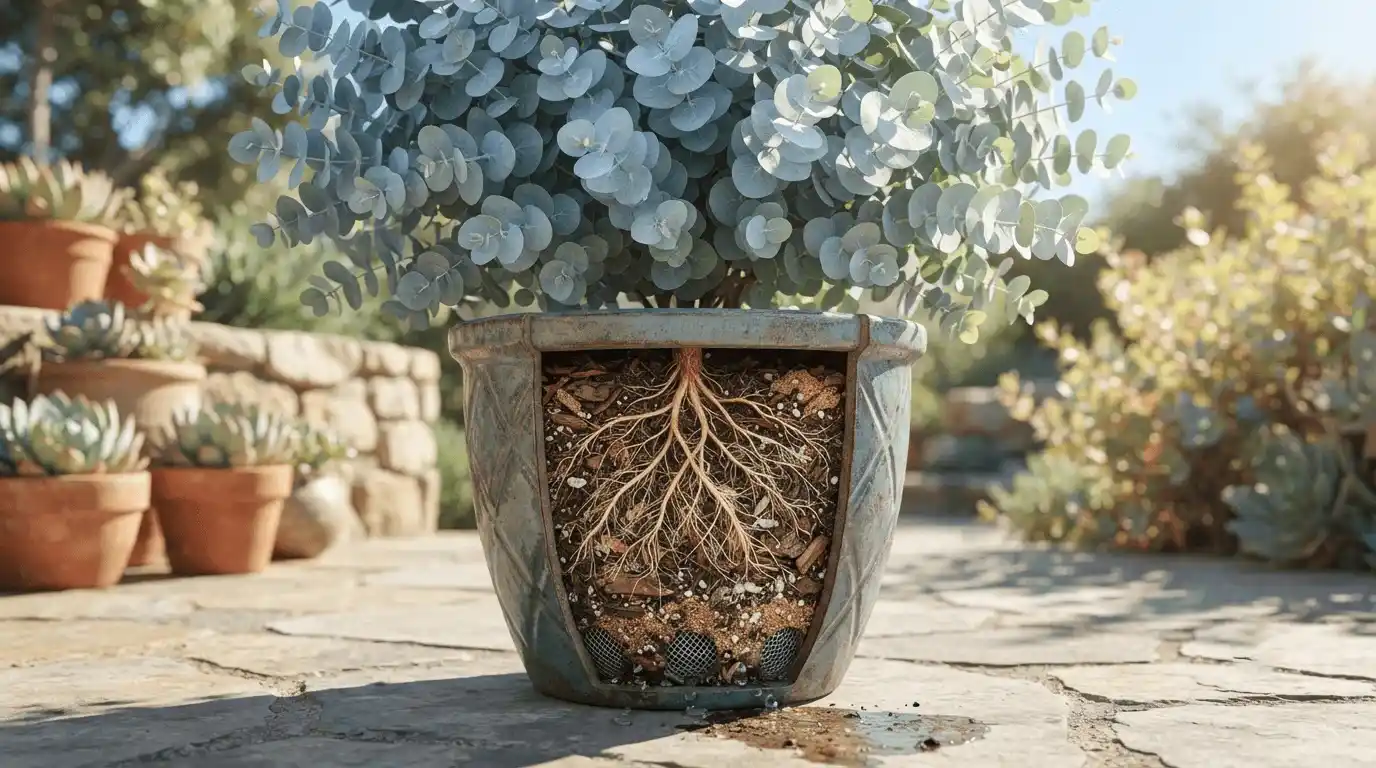
Growing eucalyptus baby blue in pots is an excellent option for gardeners with limited space, patios, balconies, or courtyards. While container-grown specimens remain smaller than those planted in the ground, they can still produce abundant silver-blue foliage with proper care.
Container culture also makes it easier to control the tree’s size through root restriction and regular pruning.
Choose the Right Pot
Start with a container at least 40–50 cm wide and deep for young plants.
As the tree matures:
- Upgrade to larger containers if continued growth is desired.
- Ensure multiple drainage holes are present.
- Use sturdy pots that will not tip over in windy conditions.
Terracotta and heavy-duty resin containers both perform well.
Potting Mix
Use a premium, free-draining native plant mix.
An ideal mix may include:
- Quality potting mix
- Coarse sand
- Pine bark
- Perlite or pumice
Avoid dense mixes that remain wet for long periods.
Watering Frequency
Container-grown trees dry out faster than garden specimens.
Generally:
- Water thoroughly when the top few centimetres of soil become dry.
- Increase watering during hot summer weather.
- Reduce watering during winter.
Never allow the pot to remain constantly waterlogged.
Root Management
Roots gradually fill the container over time.
To maintain healthy growth:
- Inspect roots every two to three years.
- Root prune if necessary.
- Refresh the potting mix.
- Remove damaged roots during repotting.
Repotting
Repot every 2–3 years or whenever roots begin circling the container.
Repotting helps:
- Restore nutrients
- Improve drainage
- Prevent severe root binding
- Encourage vigorous new growth
Long-Term Container Care
For long-term success:
- Place containers in full sun.
- Feed lightly in spring if needed.
- Prune regularly.
- Monitor watering during heatwaves.
- Protect roots from prolonged frost in very cold regions.
With consistent maintenance, potted baby blue eucalyptus can remain attractive for many years.
Common Uses of Eucalyptus Pulverulenta
The many Eucalyptus pulverulenta uses explain why this species has become one of Australia’s most widely grown ornamental eucalyptus trees. Its attractive foliage, rapid growth, and adaptability make it valuable in both residential landscapes and commercial horticulture.
Landscape Specimen
The silver-blue foliage creates a striking focal point in gardens.
It works particularly well in:
- Contemporary landscapes
- Australian native gardens
- Gravel gardens
- Minimalist planting designs
Privacy Screen
When planted in rows and pruned regularly, baby blue eucalyptus forms an effective evergreen screen that provides year-round privacy.
Windbreak
Its fast growth and dense branching make it suitable as a light windbreak in rural properties and larger gardens.
Native Gardens
Because it is an Australian native species, it combines well with:
- Grevilleas
- Bottlebrushes (Callistemon)
- Wattles (Acacia)
- Banksias
These combinations create diverse habitats for native wildlife while maintaining a cohesive landscape design.
Cut Flower Industry
One of the most commercially important uses is fresh and dried cut foliage.
Florists value the stems because they provide:
- Long vase life
- Attractive silver-blue colour
- Rounded leaf shape
- Pleasant eucalyptus fragrance
Floral Arrangements
Baby blue eucalyptus is widely used in:
- Wedding bouquets
- Table centrepieces
- Seasonal wreaths
- Dried floral displays
- Event decorations
Its foliage pairs beautifully with both native and traditional flowers.
Indoor Decorative Foliage
Freshly cut stems can also be displayed indoors in vases. While the plant itself is best grown outdoors in full sun, harvested foliage remains decorative indoors for extended periods.
Wildlife Habitat
Flowering trees support biodiversity by providing nectar and shelter.
They attract:
- Native bees
- Honey bees
- Butterflies
- Nectar-feeding birds
- Beneficial insects
This makes Eucalyptus pulverulenta a valuable addition to wildlife-friendly gardens.
Common Uses at a Glance
- Ornamental feature tree
- Privacy screen
- Informal hedge
- Windbreak
- Native landscape planting
- Commercial foliage production
- Fresh floral arrangements
- Dried flower displays
- Wildlife habitat
- Pollinator-friendly garden
Care Guide Throughout the Year
Seasonal care helps keep Eucalyptus pulverulenta healthy while encouraging vigorous growth and high-quality foliage. Although this species is relatively low maintenance, adjusting watering, pruning, and feeding throughout the year improves long-term performance.
As of 2026, many Australian growers continue to recommend seasonal maintenance rather than following a fixed monthly schedule, allowing care to respond to local rainfall, temperature, and growing conditions.
Spring Care
Spring marks the beginning of active growth.
Recommended tasks include:
- Check for winter damage.
- Apply a light native fertiliser if required.
- Begin regular watering for newly planted trees.
- Remove dead or damaged branches.
- Watch for early pest activity.
This is also an excellent time to plant new specimens, as warming soil encourages rapid root establishment.
Summer Care
During summer, growth remains strong provided the tree receives sufficient moisture.
Focus on:
- Deep watering during prolonged dry periods.
- Monitoring container-grown plants more frequently.
- Applying mulch to conserve soil moisture while keeping it away from the trunk.
- Watching for heat stress in young trees.
Established plants generally tolerate hot, dry weather very well once their roots are fully developed.
Autumn Care
Autumn is an ideal time to prepare the tree for cooler weather.
Tasks include:
- Reduce watering as temperatures decline.
- Remove weak or damaged shoots.
- Inspect for pests before winter.
- Refresh mulch if necessary.
- Continue harvesting decorative foliage if desired.
Autumn planting is also suitable in regions with mild winters, giving roots time to establish before the following growing season.
Winter Care
Growth naturally slows during winter.
Care should focus on maintaining overall plant health rather than encouraging new growth.
Recommended winter practices include:
- Water only when soil becomes dry.
- Avoid heavy fertiliser applications.
- Carry out major pruning in late winter before spring growth begins.
- Protect young container plants from severe frost if growing in colder climates.
- Check drainage after periods of heavy rain to reduce the risk of root rot.
Greenery Inside experience: We’ve observed that trees pruned in late winter often produce the most vigorous flush of silver-blue juvenile shoots during spring, making this one of the best times for structural pruning and foliage production.
Common Problems and Solutions
Eucalyptus pulverulenta is generally a resilient Australian native tree, but it can still experience problems if its growing conditions are unsuitable. Most issues arise from excess moisture, insufficient sunlight, poor soil drainage, or improper pruning. Fortunately, early identification and simple adjustments usually restore healthy growth.
Leaves Turning Yellow
Yellow leaves are one of the most common concerns among gardeners growing baby blue eucalyptus.
In most cases, yellowing indicates environmental stress rather than serious disease.
Possible Causes
Overwatering
Excess moisture reduces oxygen around the roots, causing foliage to yellow and growth to slow.
Signs include:
- Soft yellow leaves
- Wet soil for extended periods
- Wilting despite moist soil
Poor Drainage
Even moderate watering can cause problems if water cannot drain freely.
Heavy clay soils and poorly draining containers increase the risk of root damage.
Nutrient Imbalance
Although Eucalyptus pulverulenta requires little fertiliser, severe nutrient deficiencies may occasionally cause pale foliage.
Avoid applying excessive fertiliser in an attempt to correct yellowing, as this may worsen the problem.
Solution
- Check soil moisture before watering.
- Improve drainage if necessary.
- Allow the soil surface to dry between waterings.
- Apply a low-phosphorus native fertiliser only if a genuine nutrient deficiency is suspected.
Poor Growth
Healthy baby blue eucalyptus grows relatively quickly. Slow growth usually indicates one or more environmental limitations.
Common Causes
Insufficient Sunlight
Plants growing in partial shade often produce:
- Weak stems
- Sparse branching
- Smaller leaves
- Less vibrant silver-blue colour
Root Restriction
Container-grown trees may become root-bound over time.
Symptoms include:
- Reduced shoot growth
- Rapid drying of the potting mix
- Roots circling inside the container
Compacted or Poor Soil
Dense soils reduce root development and water movement.
Poor aeration can significantly slow overall growth.
Solution
Improve growing conditions by:
- Moving container plants into full sun.
- Repotting root-bound specimens.
- Improving soil drainage before planting.
- Avoiding excessive fertiliser applications.
Greenery Inside experience: In our experience, poor growth is far more commonly linked to insufficient sunlight than nutrient deficiencies. Simply relocating container-grown plants to a sunnier position often produces noticeable improvement within one growing season.
Pests
Although relatively pest resistant, Eucalyptus pulverulenta can occasionally attract insects, particularly during periods of environmental stress.
Psyllids
Psyllids are tiny sap-feeding insects that may cause:
- Leaf distortion
- Small bumps on foliage
- Sticky honeydew
- Reduced vigour
Healthy, actively growing trees usually tolerate minor infestations.
Scale Insects
Scale insects attach themselves to stems and leaves while feeding on plant sap.
Symptoms include:
- Sticky residue
- Sooty mould developing on honeydew
- Reduced growth
- Yellowing foliage
Light infestations can often be removed by hand or treated with horticultural oil.
Leaf Beetles
Several Australian leaf beetles feed on eucalyptus foliage.
Damage typically appears as:
- Chewed leaf edges
- Holes in young leaves
- Defoliation during severe outbreaks
Most established trees recover well from occasional feeding.
Diseases
Serious diseases are relatively uncommon when the tree is planted in suitable conditions.
Root Rot
Root rot is the most significant disease affecting Eucalyptus pulverulenta.
It usually develops when roots remain in saturated soil for prolonged periods.
Symptoms include:
- Yellow leaves
- Wilting
- Dieback
- Soft roots
- Declining vigour
Good drainage is the most effective prevention.
Fungal Leaf Problems
Extended periods of cool, damp weather may occasionally encourage fungal leaf diseases.
Signs include:
- Leaf spots
- Premature leaf drop
- Discoloured foliage
Improving air circulation and avoiding overhead watering usually helps minimise fungal problems.
Preventing Problems
Most health issues can be avoided through good cultural practices.
Preventative Care Checklist
- Plant in full sun.
- Ensure excellent soil drainage.
- Avoid overwatering established trees.
- Prune regularly to improve airflow.
- Inspect foliage for pests throughout the growing season.
- Remove damaged or diseased branches promptly.
- Use clean pruning tools.
- Avoid excessive fertiliser applications.
- Maintain mulch without allowing it to touch the trunk.
- Monitor container plants more frequently during hot weather.
Eucalyptus Pulverulenta vs Similar Blue-Leaved Eucalyptus Trees
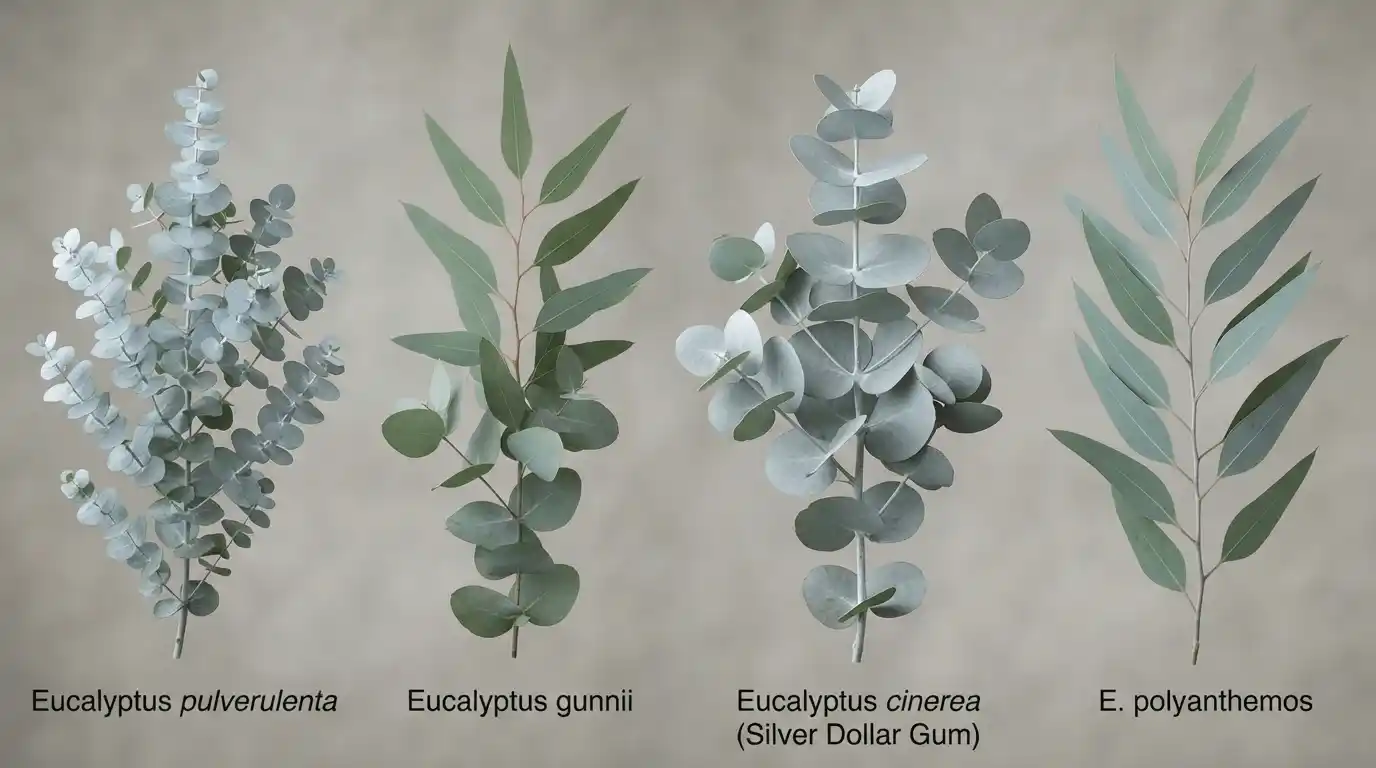
Many gardeners confuse Eucalyptus pulverulenta with other silver or blue-leaved eucalyptus species. While these trees share similar colouring, they differ in leaf shape, mature size, cold tolerance, and pruning response.
Understanding these differences helps you select the best species for your landscape.
Comparison Table
| Feature | Eucalyptus pulverulenta | Eucalyptus gunnii | Silver Dollar Gum (Eucalyptus cinerea) | Other Blue Eucalyptus Species |
| Leaf shape | Small, rounded juvenile leaves | Rounded when young, elongated with age | Large round silver leaves | Varies by species |
| Mature height | 8–12 m | 10–20 m | 10–15 m | Highly variable |
| Cold tolerance | Good | Excellent | Moderate to good | Species dependent |
| Best landscape use | Feature tree, hedging, floral foliage | Large gardens, shelterbelts | Ornamental specimen | Depends on species |
| Pruning response | Excellent for coppicing and pollarding | Very good | Good | Variable |
Key Differences
Eucalyptus pulverulenta
Best suited for gardeners wanting:
- Compact ornamental growth
- Dense juvenile foliage
- Regular harvesting for floral arrangements
- Easy pruning management
Eucalyptus gunnii
Known as cider gum, this species:
- Tolerates colder climates
- Eventually becomes much larger
- Produces broader canopies
- Is popular in temperate regions
Silver Dollar Gum (Eucalyptus cinerea)
Often confused with baby blue eucalyptus because of its round leaves.
However, it generally has:
- Larger leaves
- More open branching
- Slightly different silver colouring
- Greater mature size
Other Blue Eucalyptus Species
Numerous eucalyptus species produce blue-grey foliage, including ornamental cultivars selected for landscaping.
Selection should consider:
- Mature height
- Climate suitability
- Available garden space
- Desired foliage colour
- Maintenance requirements
Is Eucalyptus Pulverulenta Suitable for Your Garden?
Yes. Eucalyptus pulverulenta is suitable for many gardens, provided it receives full sun and well-drained soil. Its versatility allows it to be grown as a specimen tree, hedge, or foliage plant, making it an excellent choice for a wide range of landscape styles. Gardeners wanting a compact native landscape can also explore our guide to choosing the best Dwarf Eucalyptus Tree varieties for courtyards, smaller gardens, and container growing.
Small Gardens
Baby blue eucalyptus works surprisingly well in smaller gardens when managed through regular pruning.
Benefits include:
- Compact size
- Decorative silver foliage
- Attractive year-round appearance
- Easy shaping
Container growing also provides an excellent option where planting space is limited.
Large Gardens
In spacious landscapes, unpruned trees can develop into attractive medium-sized specimens.
They complement:
- Native planting schemes
- Mixed woodland gardens
- Open lawns
- Informal shelter plantings
Rural Landscapes
The species performs well on larger properties where it can be used as:
- Windbreak planting
- Shelter for wildlife
- Feature tree
- Native revegetation element
Native Gardens
As an Australian native, Eucalyptus pulverulenta combines naturally with many indigenous plants.
Excellent companion plants include:
- Banksias
- Grevilleas
- Callistemons
- Acacias
- Westringias
These combinations support biodiversity while creating visually cohesive landscapes.
Coastal Gardens
The tree generally performs well in coastal environments where drainage is good and exposure to salt spray is moderate.
Strong coastal winds are usually tolerated once the tree becomes established.
Dry Climates
One of its greatest strengths is drought tolerance.
After establishment, baby blue eucalyptus performs exceptionally well in regions experiencing:
- Low rainfall
- Hot summers
- Periodic drought
- Water restrictions
Feature Planting
The distinctive silver-blue foliage creates excellent contrast with darker green plants.
It is particularly effective as:
- Entrance feature
- Courtyard specimen
- Lawn focal point
- Modern landscape accent
Greenery Inside recommendation: We often recommend Eucalyptus pulverulenta for gardeners seeking year-round foliage interest without demanding maintenance. When positioned in full sun with adequate drainage, it consistently performs as one of the most reliable ornamental eucalyptus species.
Beginner Mistakes to Avoid
Although baby blue eucalyptus is relatively easy to grow, several common mistakes can reduce its health and ornamental value.
Avoiding these problems will help establish a vigorous, long-lived tree.
Planting in Heavy Clay
Poor drainage is one of the leading causes of failure.
Always improve clay soils or plant on raised mounds where excess water can drain freely.
Overwatering
Established trees require surprisingly little irrigation.
Constantly wet soil encourages:
- Root rot
- Yellow foliage
- Slow growth
- Reduced lifespan
Applying Too Much Fertiliser
Many beginners assume rapid-growing trees need heavy feeding.
In reality, excessive fertiliser often causes:
- Weak, soft shoots
- Reduced drought tolerance
- Nutrient imbalance
Native fertilisers should only be used when necessary.
Providing Insufficient Sunlight
Without adequate sunlight, the tree loses much of its ornamental appeal.
Low light commonly results in:
- Sparse growth
- Greener foliage
- Weak stems
- Reduced branching
Plant in full sun whenever possible.
Never Pruning
Many gardeners are disappointed when mature leaves replace the attractive round juvenile foliage.
Regular pruning maintains:
- Silver-blue juvenile leaves
- Dense branching
- Compact habit
- Better-quality cut foliage
Choosing the Wrong Planting Location
Always consider the tree’s future size before planting.
Avoid locations:
- Beneath power lines
- Too close to buildings
- Near underground services
- In poorly drained depressions
Selecting an appropriate location from the beginning reduces future maintenance and allows the tree to develop naturally.
Conclusion
Eucalyptus pulverulenta, commonly known as baby blue eucalyptus, is one of Australia’s most distinctive native trees, admired for its rounded silver-blue juvenile foliage, rapid growth, and versatility in gardens and the floral industry. Its attractive appearance, drought tolerance, and adaptability make it an excellent choice for feature planting, hedging, wildlife-friendly landscapes, and commercial foliage production.
Successful cultivation depends on providing full sun, well-drained soil, and regular pruning to encourage the ornamental juvenile leaves that define this species. While the tree is naturally resilient, avoiding overwatering, improving drainage, and carrying out seasonal maintenance will help it remain healthy for many years.
Whether grown as a compact ornamental shrub, a medium-sized landscape tree, or a container specimen, Eucalyptus pulverulenta offers year-round beauty with relatively low maintenance. For gardeners seeking a hardy Australian native with exceptional foliage and broad landscaping value, baby blue eucalyptus remains one of the finest choices available.
Frequently Asked Questions
What is Eucalyptus pulverulenta commonly called?
Eucalyptus pulverulenta is commonly known as baby blue eucalyptus, baby blue gum, silver-leaved mountain gum, and silver mountain gum. These names all refer to the same Australian native species known for its silver-blue juvenile foliage.
How large does a full-grown baby blue eucalyptus tree become?
A full-grown baby blue eucalyptus tree typically reaches 8–12 metres tall with a spread of 4–8 metres if left unpruned. Regular pruning can maintain the plant at a much smaller size for ornamental use.
Is baby blue eucalyptus suitable for growing in pots?
Yes. Baby blue eucalyptus grows well in large containers provided it receives full sun, excellent drainage, regular watering during establishment, and periodic root pruning or repotting.
How often should baby blue eucalyptus be pruned?
For the best juvenile foliage, prune annually in late winter or early spring. Plants grown for floral stems may also benefit from light trimming throughout the growing season to encourage fresh shoots.
What are the main uses of Eucalyptus pulverulenta?
Its primary uses include ornamental landscaping, privacy screening, hedging, windbreaks, native gardens, commercial cut foliage production, fresh and dried floral arrangements, and supporting pollinators and other wildlife.
Does Eucalyptus pulverulenta produce flowers?
Yes. Mature trees produce clusters of small creamy white flowers, generally from late spring to summer. The blossoms provide nectar for bees and other beneficial pollinators before developing into woody gum nuts.
Is Eucalyptus pulverulenta drought tolerant?
Yes. Once established, Eucalyptus pulverulenta is highly drought tolerant. Deep root systems allow mature trees to withstand extended dry periods, although young plants require regular watering during their first growing season.