According to Greenery Inside, Thai Constellation Monstera thrives in bright, indirect light for at least six hours daily, in a chunky, well-draining aroid mix, watered only when the top 2–3 inches of soil dry out, with 60–80% humidity, temperatures of 65–85°F (18–29°C), and monthly diluted fertilizer during spring and summer.
Variegation is unstable and light-dependent: too little light causes new leaves to revert to solid green, while excessive white tissue leaves the plant unable to photosynthesize efficiently, often resulting in leggy or stunted growth. Because propagated cuttings must include stem tissue already showing variegation to reproduce the pattern, genetically identical plants can still vary widely in appearance, growth rate, and market price.
As a tropical houseplant, its requirements are best understood alongside the fundamentals covered in our Guide to House Plants, including light, watering, humidity, soil, and indoor growing conditions.
By Greenery Inside | Plant Care & Gardening Expert
Last Updated: August 2026
Quick Summary
- Provide bright, indirect light; variegated tissue has less chlorophyll, but strong direct sun can scorch pale areas.
- Water when the upper 2–3 inches of the growing medium are dry, adjusting for season, light, pot size, and humidity.
- Use a chunky, well-aerated aroid mix rather than dense, water-retentive soil.
- Expect slower growth than a standard green Monstera deliciosa; slow growth alone does not mean the plant is unhealthy.
- Warm temperatures, moderate-to-high humidity, good airflow, and climbing support encourage stronger growth.
What Is a Thai Constellation Monstera?
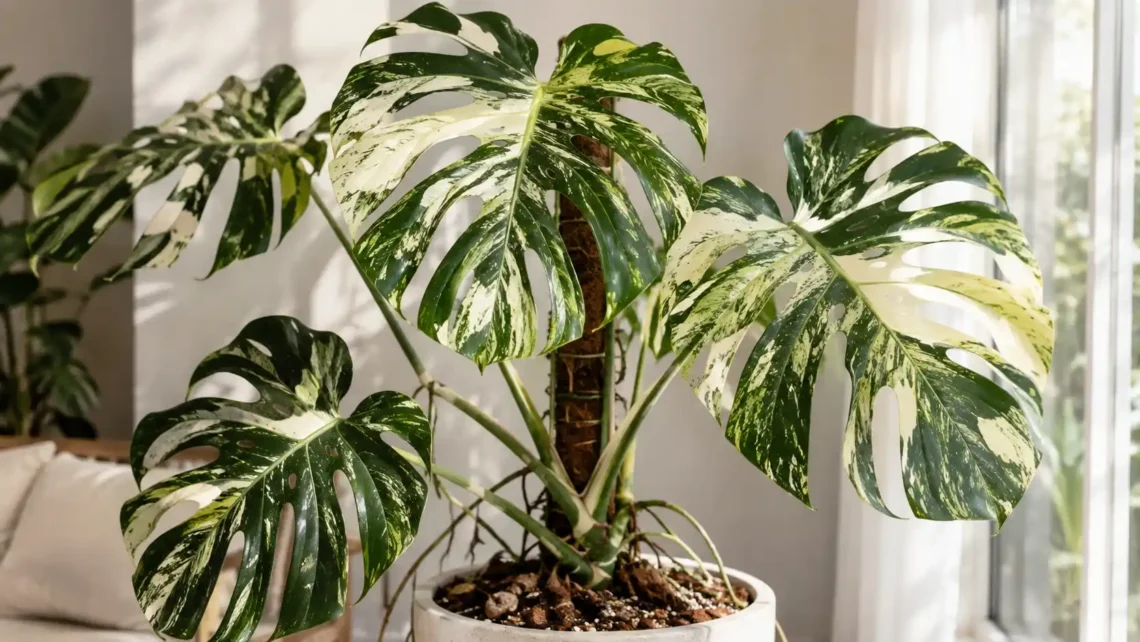
A Thai Constellation is a cultivated, variegated form of Monstera deliciosa in the Araceae family. Its characteristic cream or yellowish-white splashes and speckles are distributed across green leaves, creating the “constellation” appearance. Unlike an entirely separate species, the Thai Constellation remains a Monstera deliciosa cultivar.
A Thai Constellation is a cultivated, variegated form of Monstera deliciosa in the Araceae family. The species is commonly known as the Swiss cheese plant, and its natural climbing growth habit helps explain why mature plants benefit from vertical support. For additional botanical background, see the Wikipedia article on Monstera deliciosa.
The name is often shortened to Thai Monstera, Thai Constellation, or simply Constellation Monstera. Thai Constellation is distinct from Albo and Aurea variegated Monsteras. Albo commonly refers to white variegation, while Aurea generally refers to yellow or golden variegation. These names describe different variegation types rather than different species.
Why Thai Constellations Are So Rare and Expensive
Thai Constellations became highly sought after because attractive variegated Monstera plants were historically less available than standard green plants, while demand for unusual foliage remained high. Tissue culture helped increase production and availability, but plants still require time to grow into larger specimens. The combination of distinctive variegation, propagation time, and collector demand can increase prices. RHS similarly notes that variegated Monstera cultivars are less widely sold and consequently more expensive than the species.
Light Requirements for Thai Constellation Monstera
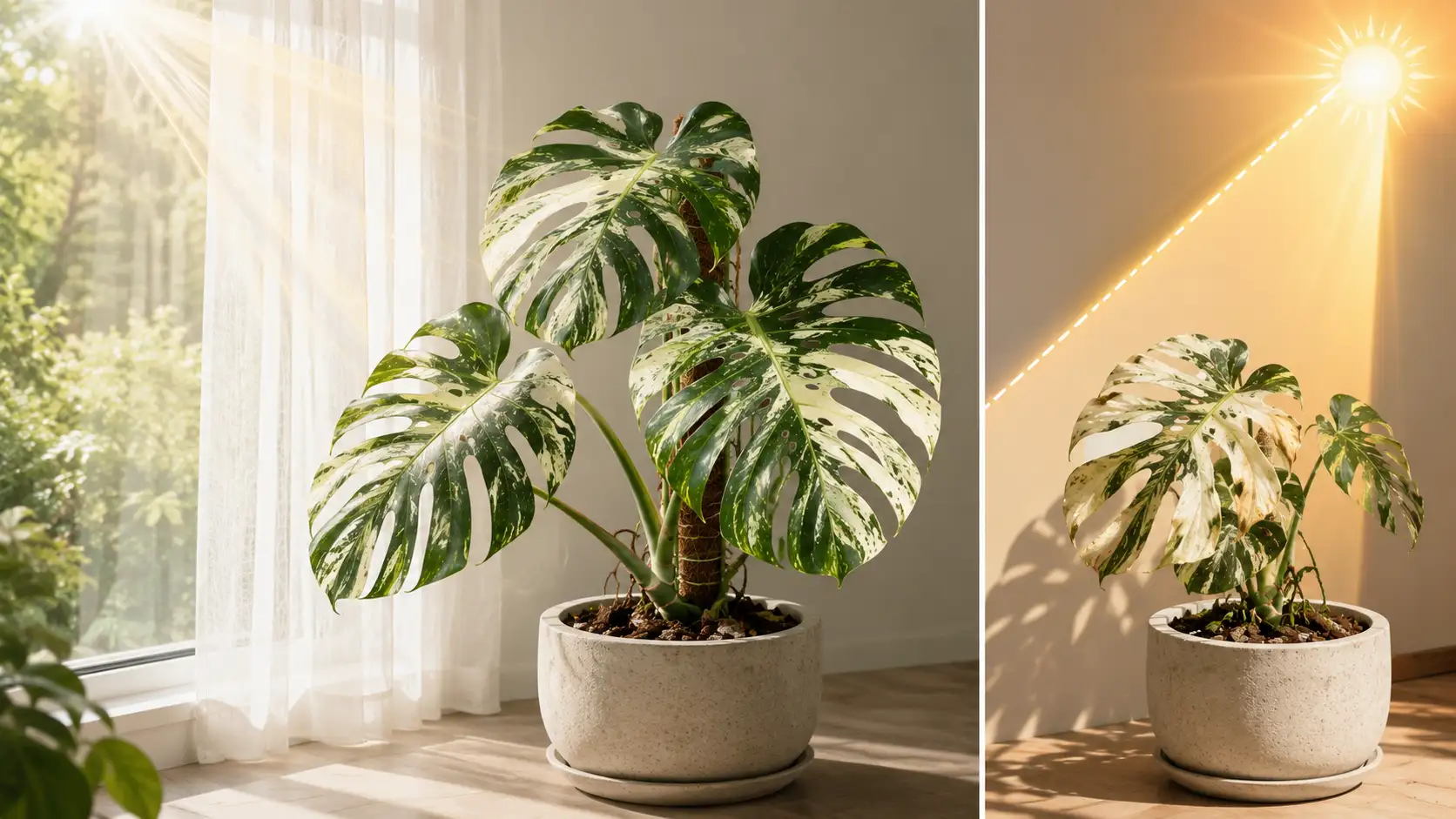
Thai Constellation Monstera light requirements are best met with bright, indirect or filtered light. Variegated sections contain less chlorophyll than green tissue, so adequate light is particularly important for maintaining useful photosynthesis and supporting growth; however, intense direct sunlight can scorch pale leaf areas.
Warm conditions, moderate-to-high humidity, good airflow, and climbing support encourage stronger growth. For a deeper explanation of how humidity affects Monsteras indoors, see our guide to Do Monstera Plants Like Humidity? Best Levels Explained.
A practical placement guide:
- East-facing window: Often excellent, especially with gentle morning sun.
- Bright south- or west-facing room: Keep the plant back from harsh direct rays or use a sheer curtain.
- North-facing window: May work if the room is genuinely bright, but supplemental grow lighting can help.
- Too little light: Small new leaves, long spaces between leaves, weak growth, and reduced overall vigor.
- Too much direct light: Bleached, tan, or crispy patches, especially on cream sections.
Greenery Inside recommends judging the actual light reaching the leaves rather than choosing a window direction alone. Seasonal sun angles can make the same window substantially brighter in summer than winter.
Watering a Thai Constellation Monstera
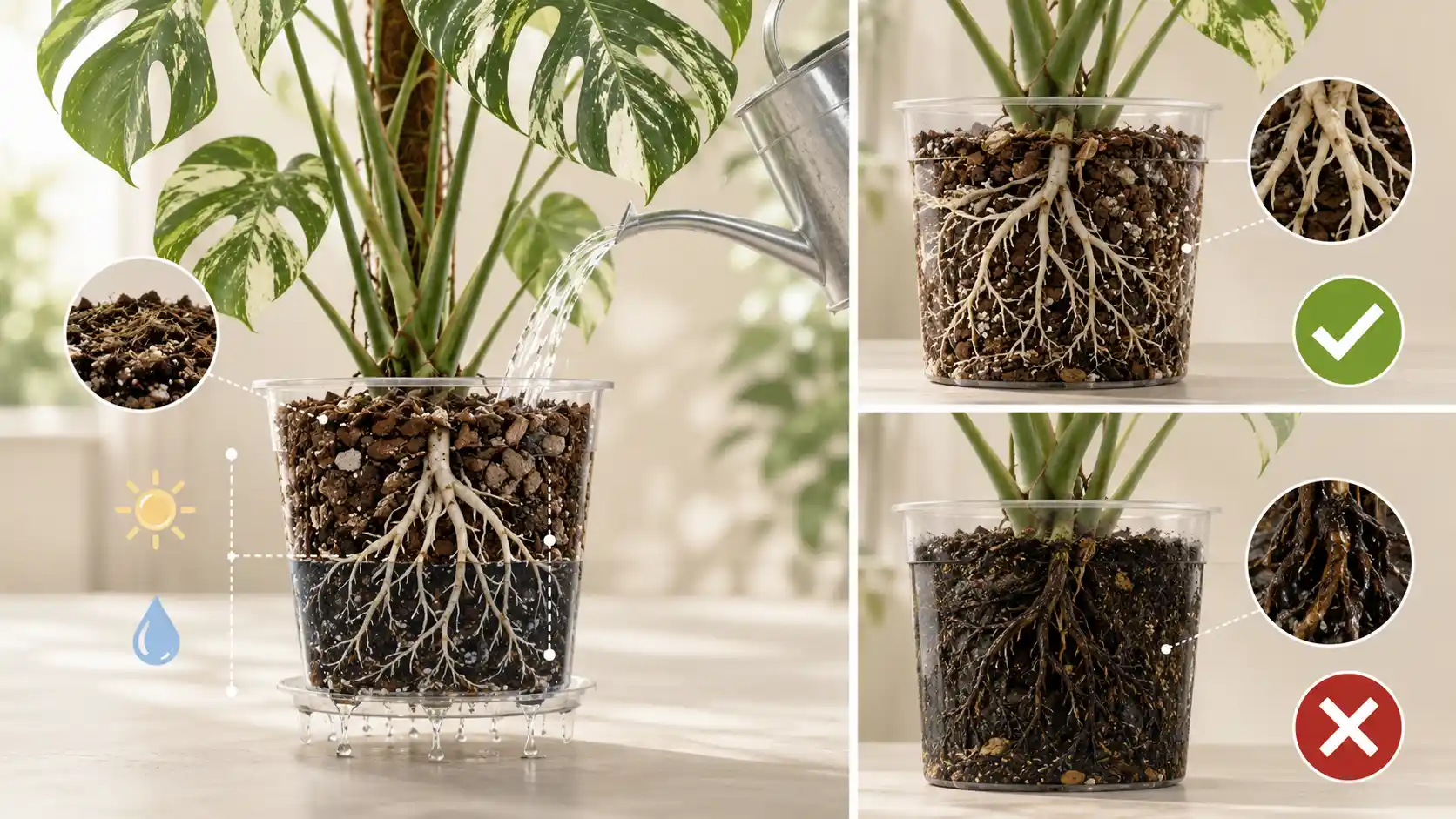
Thai Constellation Monstera care watering should be based on soil moisture, not a fixed calendar. Check the upper 2–3 inches of the mix; when that layer has dried and the pot feels noticeably lighter, water thoroughly until excess drains from the bottom. RHS similarly recommends watering variegated Monstera when the upper growing medium has dried.
Frequency changes with light, temperature, humidity, pot size, root density, and season.
Underwatering signs:
- Drooping or limp leaves
- Dry, curling edges
- Very light or dry potting mix
- Rapid wilting after prolonged dryness
Overwatering signs:
- Persistently wet soil
- Yellowing leaves
- Soft or deteriorating roots
- Musty-smelling medium
- New growth declining despite wet soil
A Monstera can sometimes go two weeks without water, particularly in lower-light or cooler conditions, but there is no universal two-week rule. A small plant in bright, warm conditions may dry considerably sooner. Never water simply because two weeks have passed.
What a Stressed or Overwatered Monstera Looks Like
A stressed Monstera may show yellowing, wilting, browning, stalled growth, or declining leaves. Overwatering is especially concerning when the potting mix remains saturated because poorly aerated roots are more vulnerable to rot. The safest response is to check the roots and moisture level before adding more water.
Greenery Inside recommends avoiding the common reaction of watering a wilted plant immediately. Wilting can result from either dryness or root damage, so check the growing medium first.
Best Soil and Potting Mix for Thai Constellation Monstera
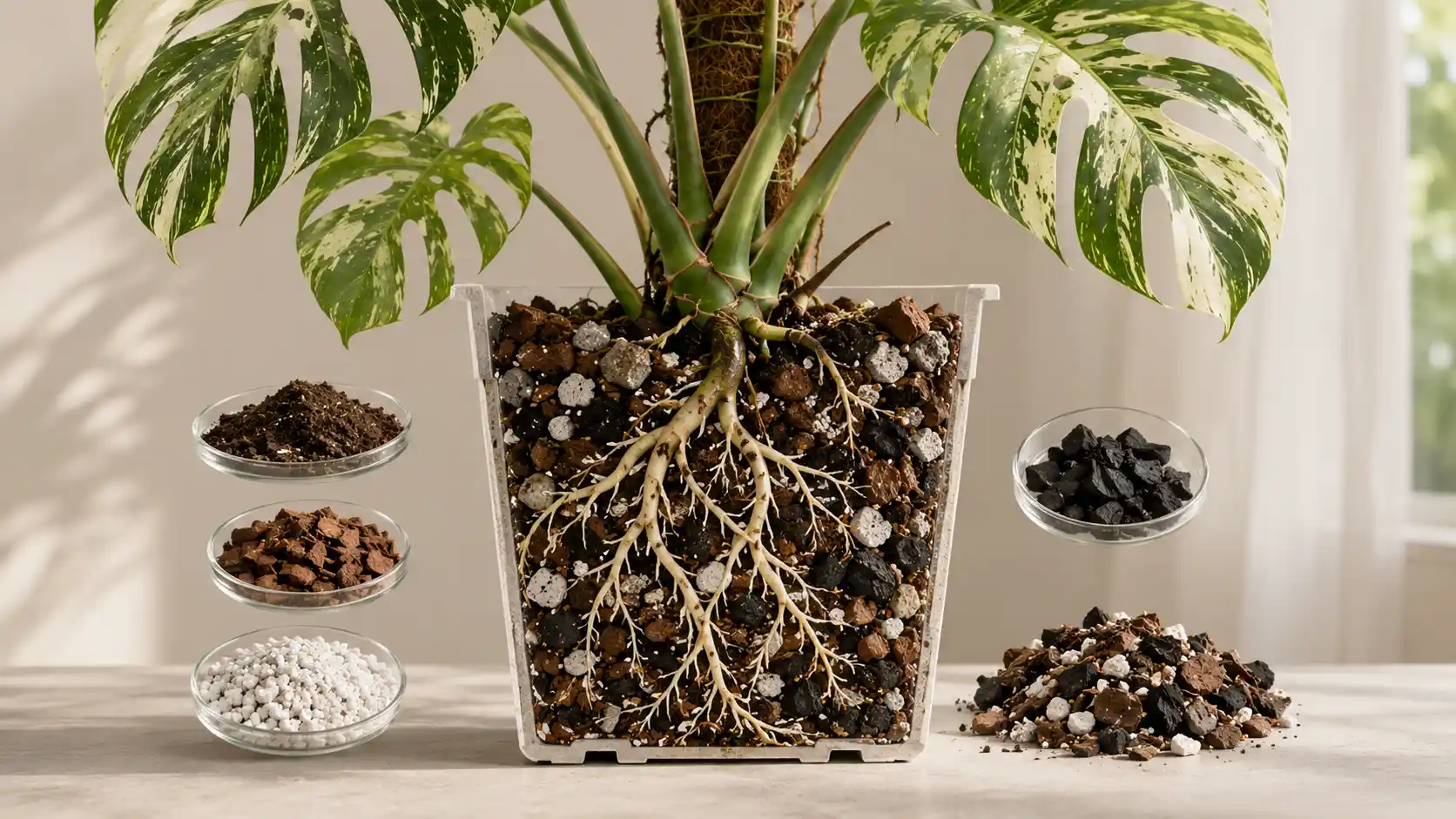
Thai Constellations benefit from a chunky, fast-draining, well-aerated growing medium that holds some moisture without staying saturated. Their climbing roots need both water and oxygen. Dense soil can remain wet too long and make watering harder to manage.
The same principles of balancing moisture retention with root aeration are important for other tropical aroids; our Anthurium Clarinervium Care Guide: Light, Soil & Water provides another example of how light, soil structure, and watering work together.
A practical starting mix is:
| Material | Suggested proportion | Purpose |
| Quality potting mix or coco-based mix | 40% | Moisture and nutrient retention |
| Orchid bark | 30% | Structure and airflow |
| Perlite or pumice | 20% | Drainage and root aeration |
| Horticultural charcoal | 10% | Structure and porosity |
The exact ratio can be adjusted according to indoor humidity and watering habits. A mix that dries extremely slowly should be made more open; one that becomes bone-dry very rapidly may need slightly more moisture-retentive material.
Pot Size — Do Thai Constellations Like Tight or Roomy Pots?
Thai Constellations generally do better in a snug pot rather than an excessively large one. A slightly tight root system is preferable to placing a small root ball into a large volume of wet soil.
Tight vs. roomy:
- Slightly snug: Easier moisture management and less unused wet soil.
- Too tight: Roots circle heavily, drainage can decline, and growth may eventually slow.
- Too roomy: More soil can remain wet around a relatively small root system, increasing overwatering risk.
Choose a pot only modestly larger than the existing root ball and always use drainage holes. University of Minnesota Extension likewise advises moving Monstera plants into progressively larger containers and avoiding oversized pots because moisture becomes harder to manage.
Repotting Your Thai Constellation
Repot when roots are densely circling the container, emerging substantially from drainage holes, or when the existing medium has broken down and drains poorly. A healthy plant does not need repotting simply because a certain number of months has passed.
Repot into fresh, airy medium and a pot only slightly larger than the previous container. Handle the roots carefully and water appropriately after repotting rather than keeping the new mix permanently wet.
Repotting can temporarily slow growth because the plant must adjust to disturbed roots and a changed moisture environment. That stress is normally temporary when the roots remain healthy. Greenery Inside recommends avoiding unnecessary repotting immediately after purchasing a healthy plant; first allow it to acclimate unless there is a clear drainage, pest, or root-health problem.
Fertilizing for Healthy Variegation
Use a balanced, complete houseplant fertilizer during active growth according to the product’s dilution instructions. RHS recommends balanced liquid fertilizer monthly during active growth for ‘Thai Constellation’.
Reduce or pause regular feeding during periods of significantly reduced growth, such as winter in a cool, lower-light home.
More fertilizer does not create better variegation. Excess fertilizer can damage roots and produce leaf-edge burn. Variegation is primarily a genetic characteristic; maintaining adequate light and overall plant health is more important than attempting to manipulate it through heavy feeding.
Growth Rate and What to Expect
Thai Constellations are typically slower growing than ordinary green Monstera deliciosa. RHS specifically describes ‘Thai Constellation’ as slightly slower growing than the species.
Slow production of new leaves is therefore not automatically a problem. Low light, cold temperatures, root disturbance, inadequate roots, and seasonal dormancy can slow growth further.
“Monstera miracle” is not a recognized botanical term or standard horticultural technique. Online, it may describe a dramatic recovery or a propagation/new-growth success, but it should not be treated as a formal care method.
Moss Pole — Does Your Thai Constellation Need One?
A Thai Constellation does not require a moss pole to survive, but climbing support can significantly improve its growth form. Monstera deliciosa is naturally a climbing plant with aerial roots, and support encourages it to grow upward rather than sprawling horizontally.
A moss pole, coir pole, or sturdy trellis can provide support. Secure the stem gently without crushing it. As the plant matures, support can help produce larger, more characteristic foliage.
This climbing growth habit is also seen in other tropical aroids, such as Philodendron verrucosum, which benefits from appropriate vertical support and conditions that encourage healthy climbing growth. See our Philodendron Verrucosum Care guide for another example of caring for a climbing aroid.
Common Thai Constellation Monstera Problems (and Fixes)
Yellowing Leaves
Why: Frequently associated with excessive moisture, aging leaves, poor root function, or inadequate light.
Fix: Check soil moisture and roots before watering again. Improve drainage and light if necessary.
Prevent: Avoid keeping the mix continuously saturated.
Overwatering and Root Rot
Why: Excess moisture combined with poor aeration can damage roots.
Fix: Inspect roots; healthy roots should generally be firm rather than soft and decomposing. Remove badly damaged roots and repot into fresh, airy medium when necessary.
Prevent: Use drainage holes and allow the upper medium to dry between waterings.
Losing Variegation
Why: Green growth can become more dominant, and poor growing conditions may contribute to reduced color expression. Variegated plants can also produce reverted green shoots.
Fix: Provide adequate light and monitor new growth. RHS advises improving light and pruning reverted growth where appropriate.
Prevent: Maintain stable, suitable growing conditions and monitor new leaves rather than judging only old foliage.
Slow or Stunted Growth
Why: Low light, cool temperatures, root problems, insufficient nutrition, or natural cultivar growth rate.
Fix: Check light first, then roots, moisture, temperature, and feeding.
Prevent: Give the plant consistent conditions rather than repeatedly changing its environment.
Brown, Crispy Leaf Edges
Why: Dry air, inconsistent watering, root problems, or excessive direct sunlight can contribute.
Fix: Correct the underlying moisture, humidity, or light issue rather than simply cutting away damaged tissue.
Prevent: Maintain consistent watering and protect foliage from harsh direct sun. RHS notes that dry air and direct summer sun can contribute to brown or scorched foliage.
Beginner Mistakes to Avoid
The most common Thai Constellation mistakes are usually attempts to provide too much of a good thing.
- Overwatering “just in case”: Check the soil first.
- Using dense regular potting soil: Improve aeration with chunky components.
- Using harsh direct sun for more variegation: More light does not justify leaf scorching.
- Ignoring humidity: Dry indoor air can contribute to crispy edges and poor appearance.
- Repotting too soon: Allow a healthy new plant to acclimate before unnecessary root disturbance.
What Makes a Thai Constellation Monstera Thrive
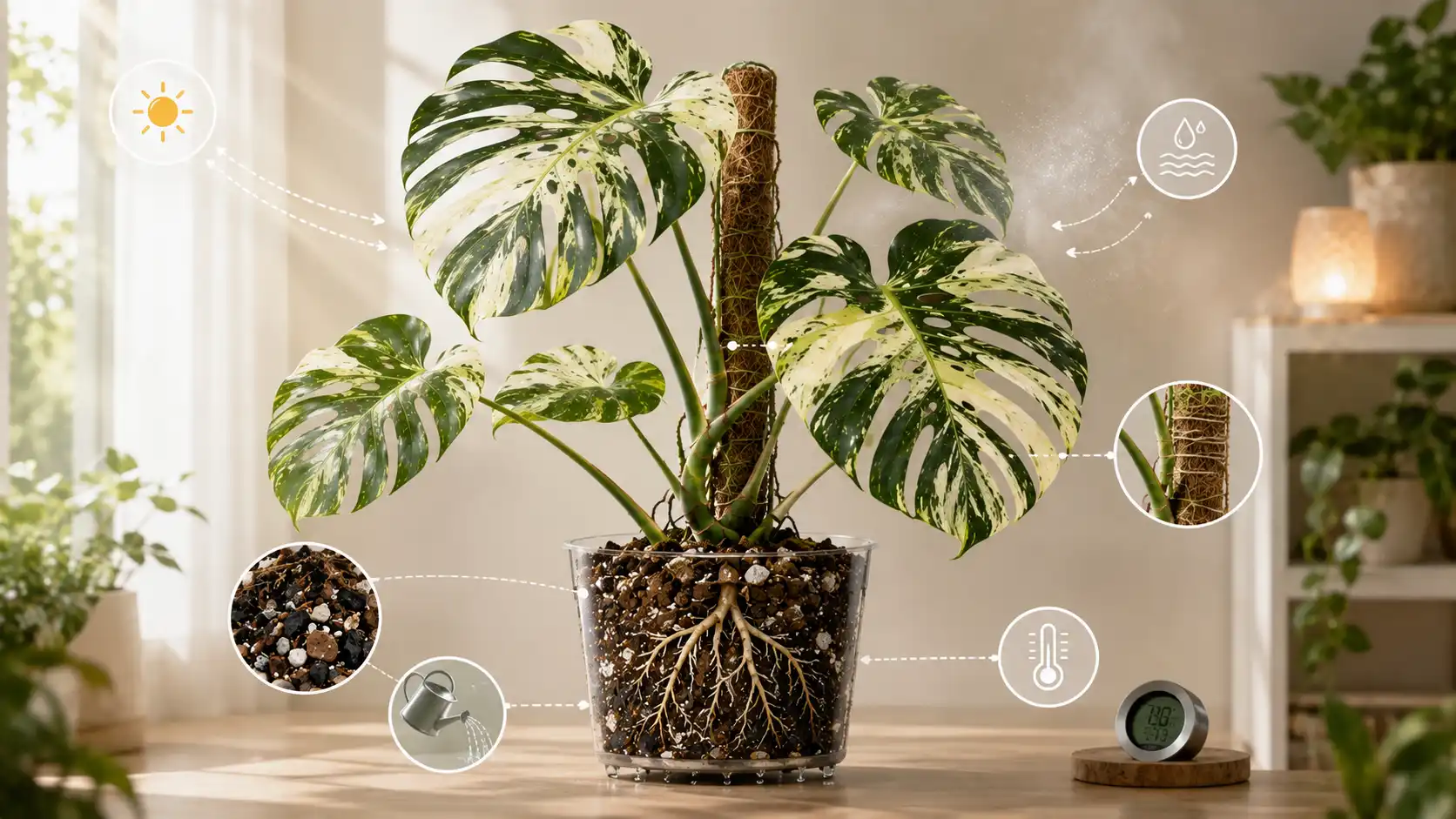
A thriving Thai Constellation does not need a complicated routine. It needs consistent conditions.
Greenery Inside’s practical thriving checklist:
- Bright, filtered light without harsh midday sun.
- Water only after the upper mix has dried sufficiently.
- An airy, chunky growing medium.
- A pot with reliable drainage.
- Warm conditions and moderate-to-high humidity.
- Regular but restrained feeding during active growth.
- Climbing support as the plant becomes larger.
- Patience with naturally slow growth.
As of August 2026, these fundamentals remain consistent with current horticultural guidance from the RHS and university extension information for Monstera deliciosa: bright indirect light, well-drained growing media, controlled watering, warmth, humidity, and appropriate climbing support remain the core requirements.
Conclusion
Good Thai Constellation Monstera care is less about complicated techniques and more about consistency. Give the plant bright indirect light, allow the growing medium to partially dry before watering, use an airy aroid mix, avoid oversized pots, maintain suitable humidity, and accept that this cultivar generally grows more slowly than a green Monstera deliciosa. Its reputation for being difficult largely comes from its sensitivity to poor watering and its slower growth, not from an inability to thrive indoors. With the right setup, a Thai Constellation is a manageable and rewarding tropical houseplant.
FAQs
Are Thai Constellation Monsteras easy to care for?
Yes. Thai Constellation Monsteras are manageable houseplants when provided with bright indirect light, controlled watering, airy soil, warmth, and suitable humidity. Their slower growth and sensitivity to excess moisture make them somewhat less forgiving than vigorous green Monsteras.
How often should I water a Thai Constellation Monstera?
Water when the upper 2–3 inches of growing medium have dried rather than following a fixed schedule. The interval varies with light, temperature, humidity, pot size, season, and soil composition.
Why is my Thai Constellation losing its variegation?
Reduced variegation can result from changes in growth balance, poor growing conditions, or green shoots becoming dominant. Adequate light is important, and strongly reverted green growth may need pruning to maintain a balanced variegated plant.
Do Thai Constellations need a moss pole?
No, a moss pole is not essential for survival, but climbing support is beneficial because Monstera deliciosa naturally climbs. A moss pole or trellis can encourage upright growth and support larger mature foliage.
How rare is a Thai Constellation Monstera?
Thai Constellations are less commonly available than standard Monstera deliciosa, although tissue-culture production has increased availability. Their distinctive stable-looking variegation, slower growth, and collector demand have contributed to their historically higher prices.
Can a Monstera go two weeks without water?
Yes, it can sometimes go two weeks between waterings, but this depends on environmental conditions. A plant in a cool, humid, low-light room may remain moist for two weeks, while one in bright light and warm, dry conditions may need water sooner. Check the soil rather than the calendar.