Introduction
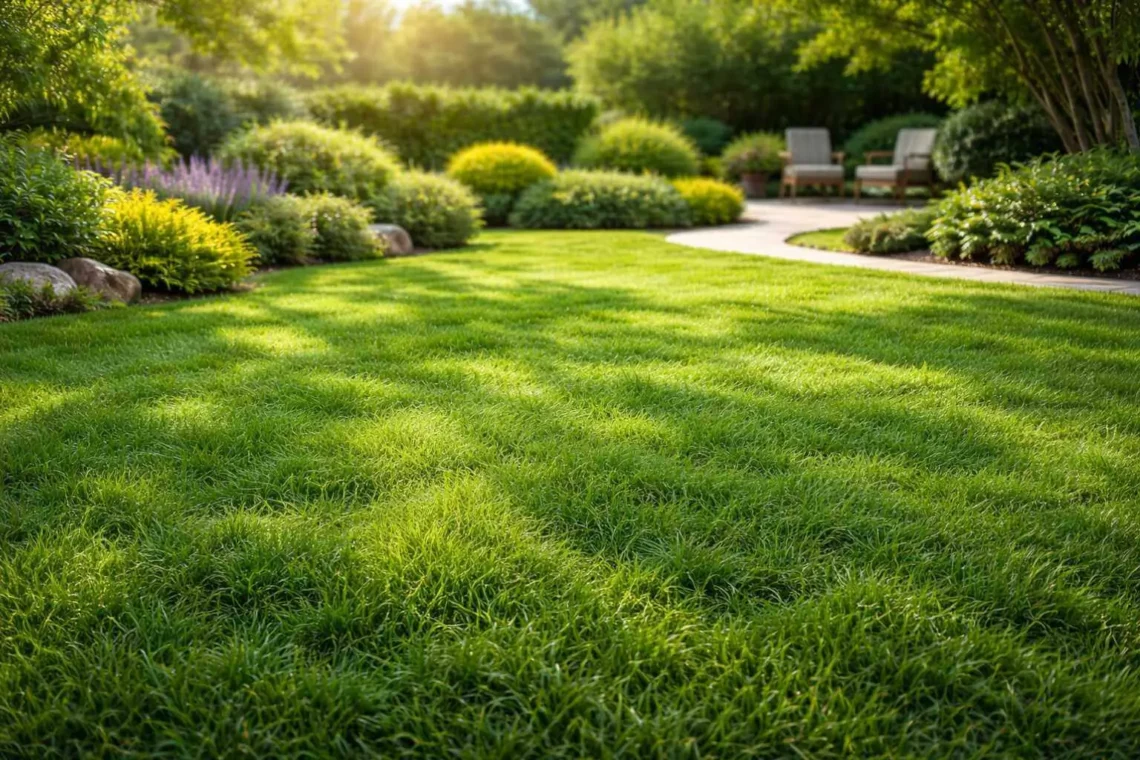
A Korean grass lawn is rapidly gaining popularity among homeowners and landscapers seeking a lush, low-maintenance alternative to traditional turf. Scientifically known as Zoysia tenuifolia Korean grass, this unique grass species is prized for its fine texture, rich green color, and adaptability across a variety of climates. Unlike conventional lawns that demand frequent watering and mowing, a Korean grass lawn provides a dense, velvety carpet that requires minimal upkeep. Its ability to thrive in both sunny and partially shaded areas makes it ideal for ornamental gardens, backyard spaces, and commercial landscaping. With its aesthetic appeal and practical advantages, Korean grass is becoming a go-to choice for sustainable and attractive lawns.
What is Korean Grass Lawn?
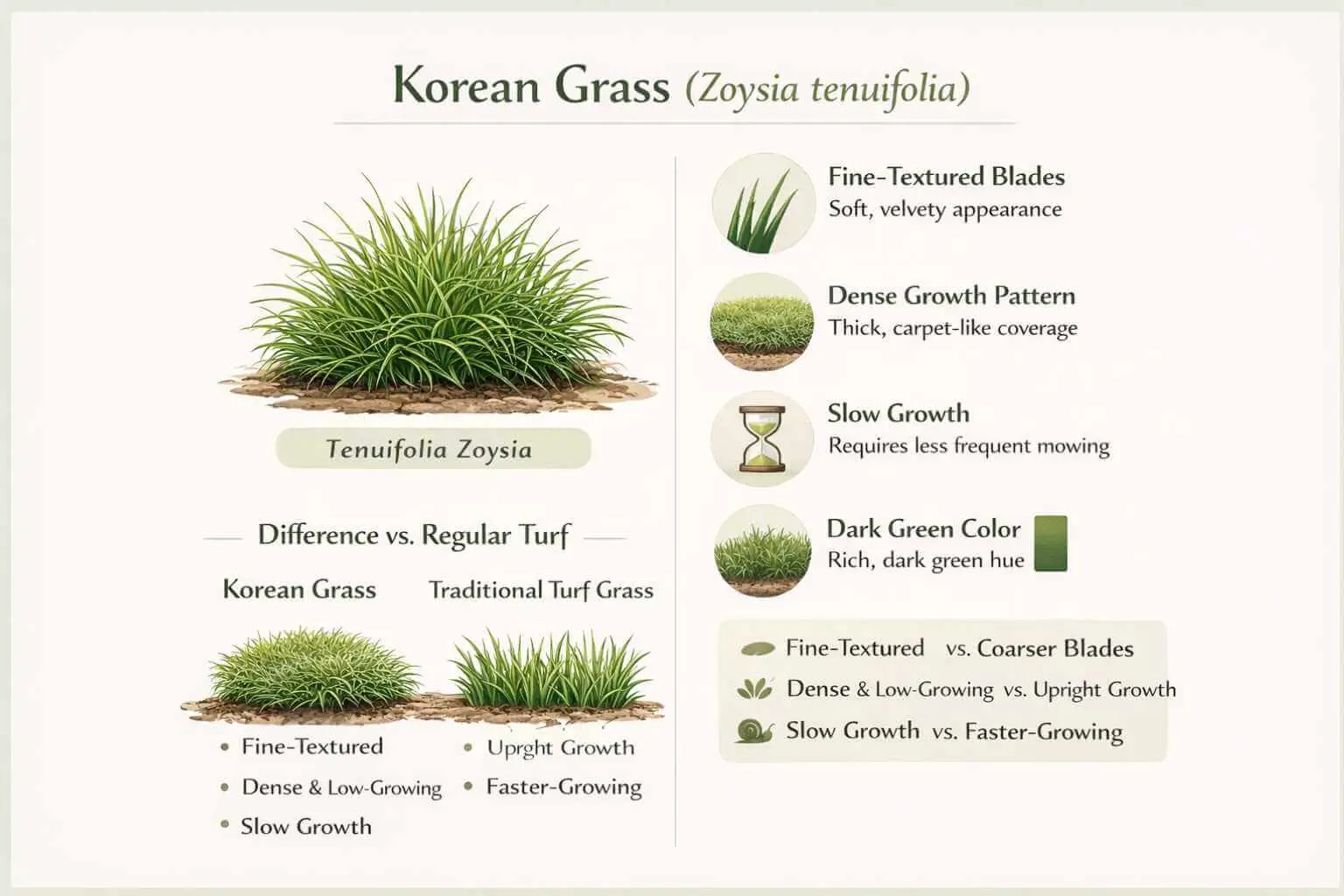
Korean grass, or Zoysia tenuifolia, is a slow-growing, warm-season grass native to East Asia. Unlike standard turf grasses, it forms a dense mat of fine, soft blades, giving it a smooth, velvet-like appearance. The korean grass botanical name highlights its connection to the Zoysia genus, known for durability and resilience. Compared to other turf types, tenuifolia zoysia requires less frequent mowing and is more drought-tolerant, making it highly suitable for low-maintenance landscapes. A Zoysia grass plant also establishes well in compacted soils, providing an aesthetically pleasing, uniform green surface that stands out among traditional lawn options.
-
Characteristics of Korean Velvet Grass
Korean velvet grass, or korean zoysia grass, is easily recognizable by its fine-textured, dark green blades. Its dense growth pattern forms a natural carpet that suppresses weeds effectively. One notable advantage is the low mowing requirement, making it perfect for homeowners looking for a korean no mow grass seed solution. The korean grass zoysia tenuifolia grows slowly but steadily, establishing a compact turf that is both durable and visually appealing. Its uniform growth and soft feel make it ideal for foot traffic areas without compromising aesthetics.
Benefits of Planting a Korean Grass Lawn
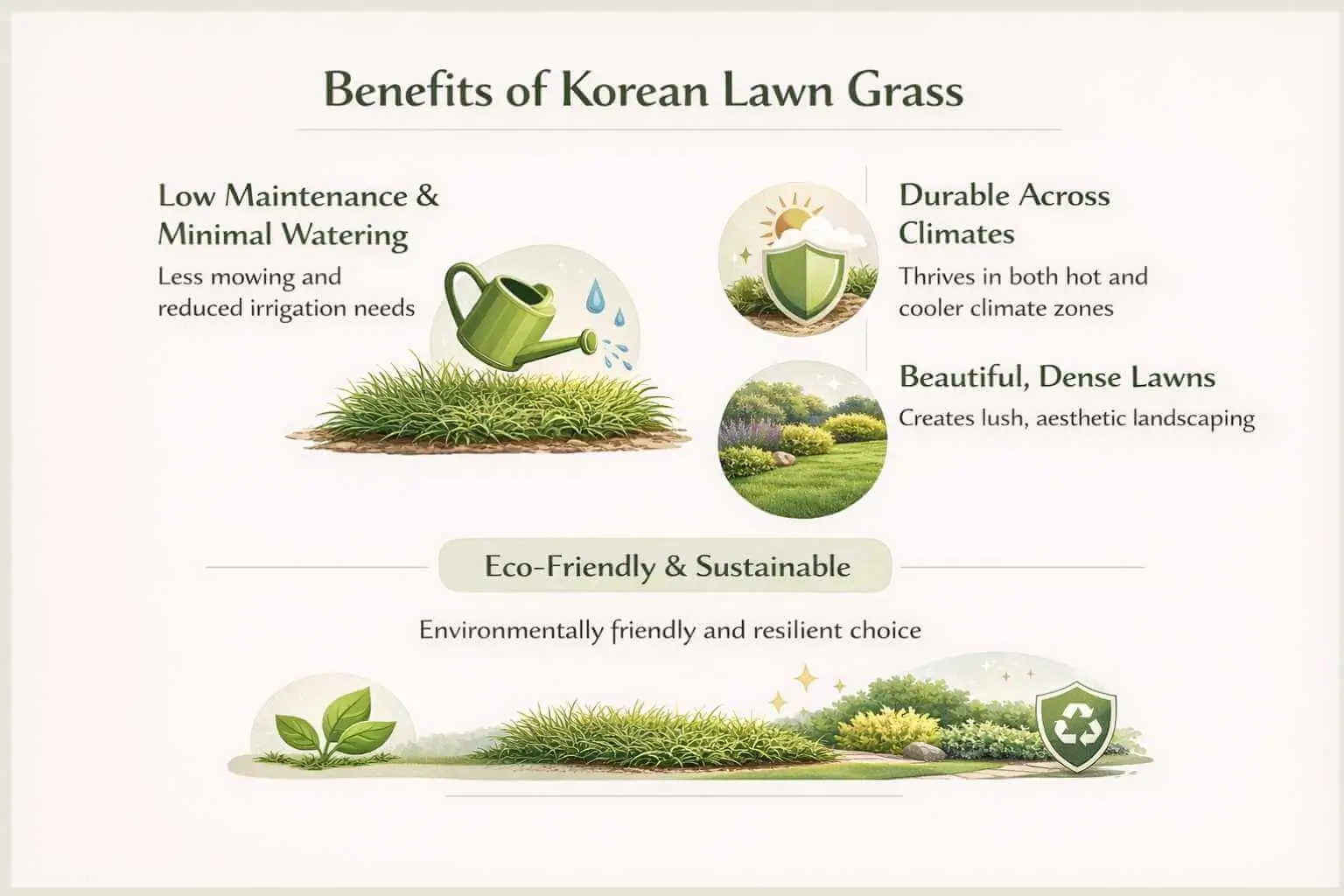
Planting korean lawn grass offers multiple advantages, both practical and visual. Its Zoysia plant nature ensures that the turf requires minimal watering while maintaining a vibrant green color throughout the growing season. Homeowners and landscapers appreciate how grass zoysia enhances garden aesthetics with its smooth, even surface. Moreover, Korean grass thrives in diverse climates, demonstrating excellent korean grass zone adaptability. This versatility ensures healthy growth whether planted in warm, temperate, or coastal regions, making it a reliable choice for long-term landscaping projects.
-
Environmental Benefits
A Korean grass lawn provides significant ecological advantages. Its dense root system helps reduce soil erosion, especially on sloped landscapes. Additionally, the grass improves air quality by trapping dust and cooling outdoor spaces through natural transpiration. As an eco-friendly alternative to high-maintenance lawns, Korean grass conserves water, minimizes chemical fertilizer use, and supports sustainable gardening practices. By planting korean grass, you create a greener, healthier environment while maintaining an attractive lawn.
How to Plant Korean Grass
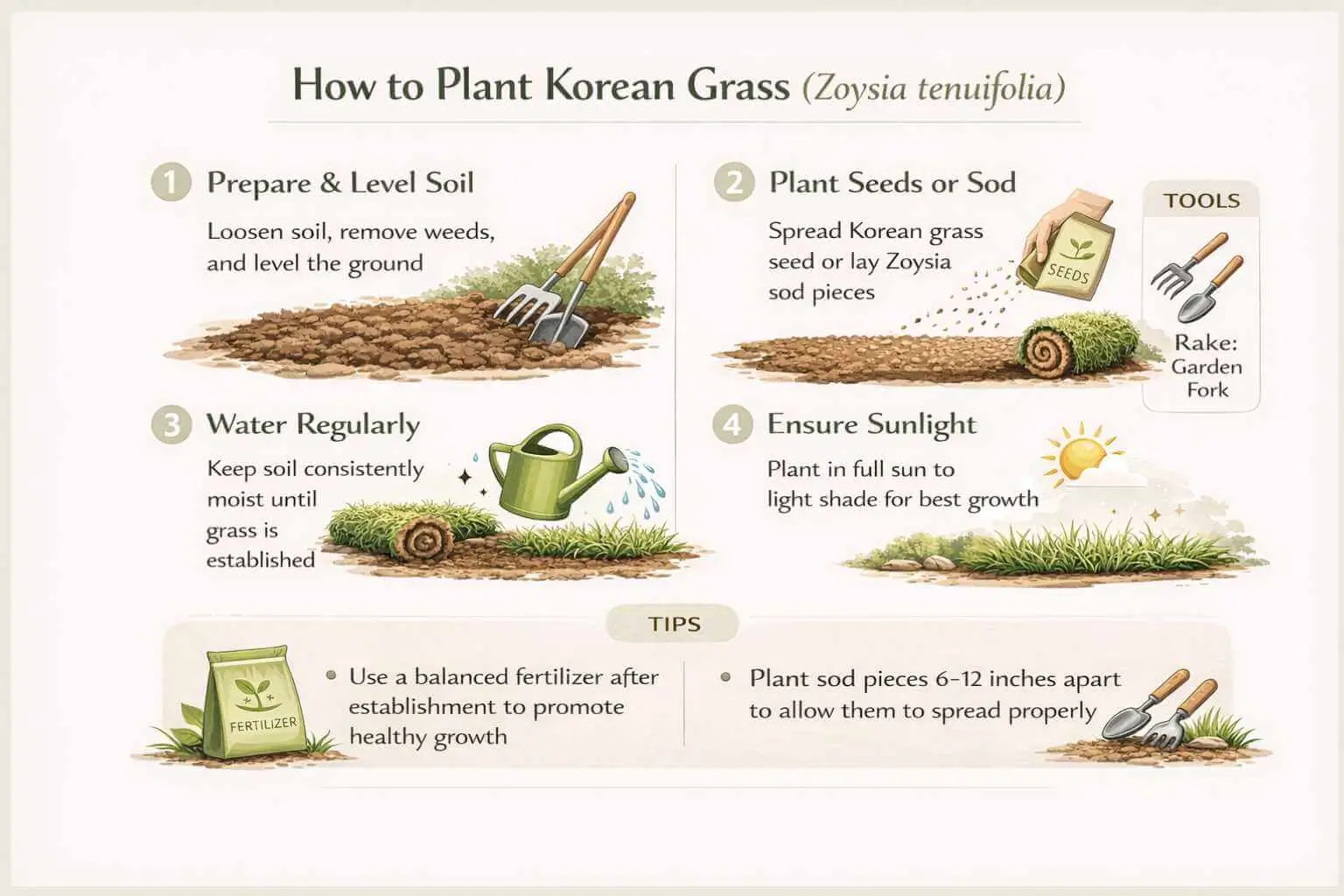
Korean grass planting begins with selecting high-quality seeds or sod. To start, prepare the soil by clearing debris and loosening the top layer for better root penetration. Choose a sunny to partially shaded location and ensure proper drainage. For how to plant korean grass, evenly distribute the korean grass seed or lay sod sections, then lightly water to encourage establishment. Consistent moisture is crucial during the first few weeks. Homeowners can also plant zoysia plugs or sprigs as an alternative method. For purchasing, consider reliable sources offering zoysia tenuifolia buy options.
-
Tips for Growing Healthy Korean Grass Lawn
To maintain a healthy Korean grass lawn, follow proper care practices. Fertilize with a balanced lawn fertilizer according to seasonal needs. Mow regularly, keeping the blades slightly higher to protect the root system. Manage weeds through pre-emergent treatments and manual removal. Pay attention to sun exposure and shade tolerance, adjusting care routines accordingly. With proper care, your korean grass will thrive, staying lush, dense, and vibrant throughout the year.
Where to Buy Korean Grass
Finding a trusted source for Korean grass for sale ensures quality and healthy growth. Both online nurseries and local garden centers offer korean velvet grass and zoysia plants. Online purchases may provide convenience and variety, while local nurseries allow inspection of plant quality before buying. Always confirm the species is zoysia tenuifolia to guarantee the desired slow-growing, low-maintenance characteristics. For homeowners, sourcing a verified korean grass plant is essential for long-term success and uniform lawn coverage.
Maintaining Your Korean Grass Lawn
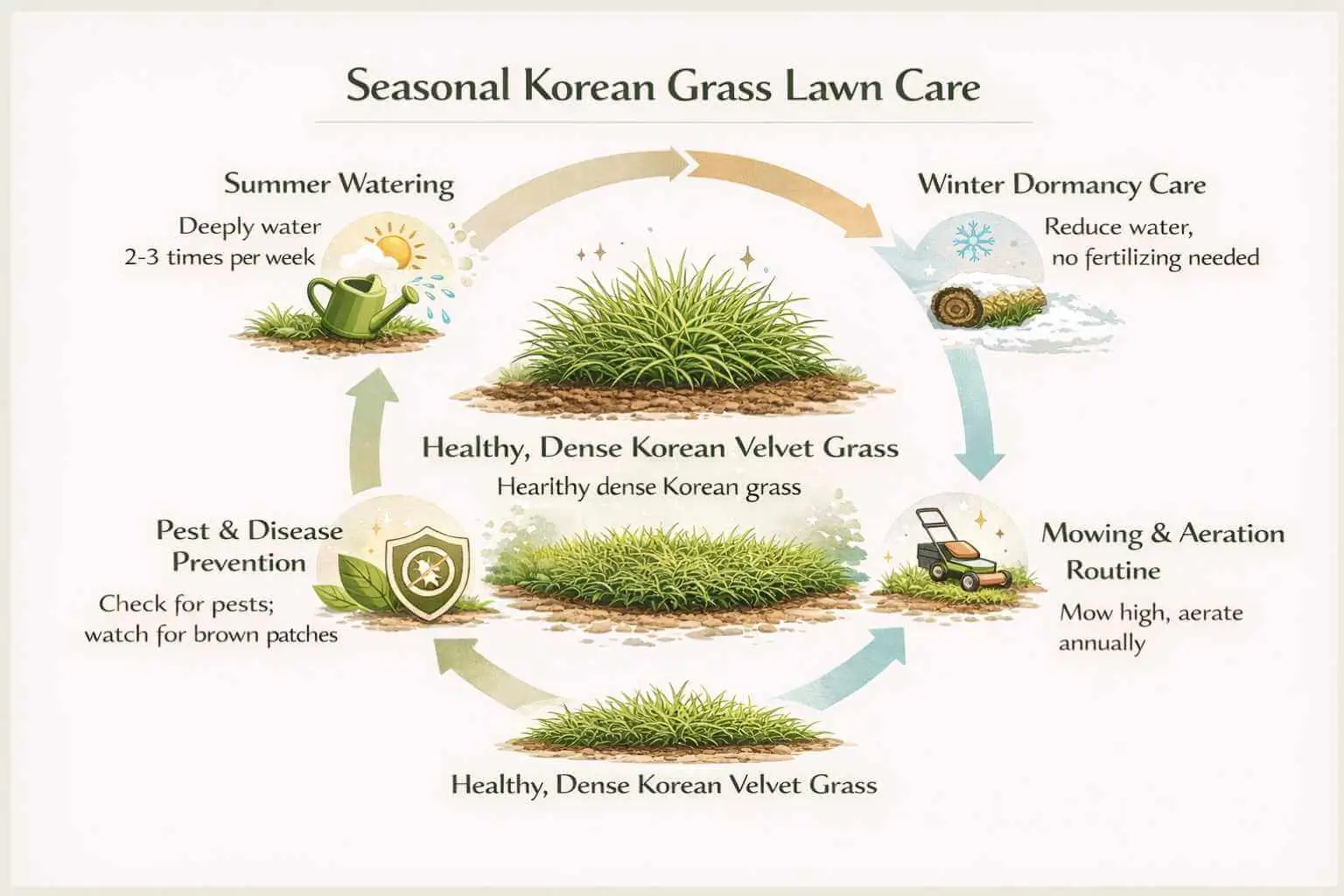
Seasonal care is vital for a thriving Korean grass lawn. During summer heat, ensure adequate irrigation to prevent stress, while winter dormancy may require minimal watering. Monitor for pests and diseases, applying preventive measures when necessary. Regular mowing, aeration, and controlled irrigation help maintain the lush texture and density of korean grass. By following a consistent maintenance schedule, your lawn will remain visually appealing, resilient, and healthy throughout the year.
Common Questions About Korean Grass Lawn
Many gardeners wonder about the growth and care of Zoysia tenuifolia. Common concerns include climate suitability, watering frequency, shade tolerance, and establishment time. Understanding these factors ensures successful planting and maintenance. With proper guidance, a Korean grass lawn can thrive in a variety of conditions, offering both beauty and practicality.
Conclusion & Call to Action
A Korean grass lawn combines beauty, durability, and low-maintenance convenience, making it an excellent choice for modern landscaping. With its fine texture, dense growth, and adaptability, zoysia tenuifolia Korean grass transforms outdoor spaces into lush, sustainable areas. Homeowners are encouraged to plant Korean grass or consult local nurseries for expert guidance. Share your experiences or ask questions to enhance your lawn care journey and enjoy the benefits of a stunning, eco-friendly lawn.
Learn more: 5+ Stunning Sunset Gold Breath of Heaven Tips for Your Garden
FAQs
- What is the ideal climate for Korean grass lawn?
Korean grass thrives in warm to temperate climates, tolerating partial shade and a range of soil types. - How long does it take for Zoysia tenuifolia to establish?
Establishment typically takes 2–3 months for seeds and 1–2 months for sod under proper care. - Can Korean grass be grown in shaded areas?
Yes, it tolerates partial shade but performs best with at least 4–6 hours of sunlight daily. - How often should I water a Korean velvet grass lawn?
Water regularly during establishment, then reduce to 1–2 times per week depending on rainfall and climate. - Where can I buy high-quality Korean grass seeds or sod?
Trusted sources include local nurseries and online suppliers offering verified zoysia tenuifolia plants. - Is Korean grass low-maintenance compared to other turf grasses?
Yes, it requires less mowing, minimal watering, and fewer fertilizers, making it an excellent low-maintenance lawn choice.