Introduction
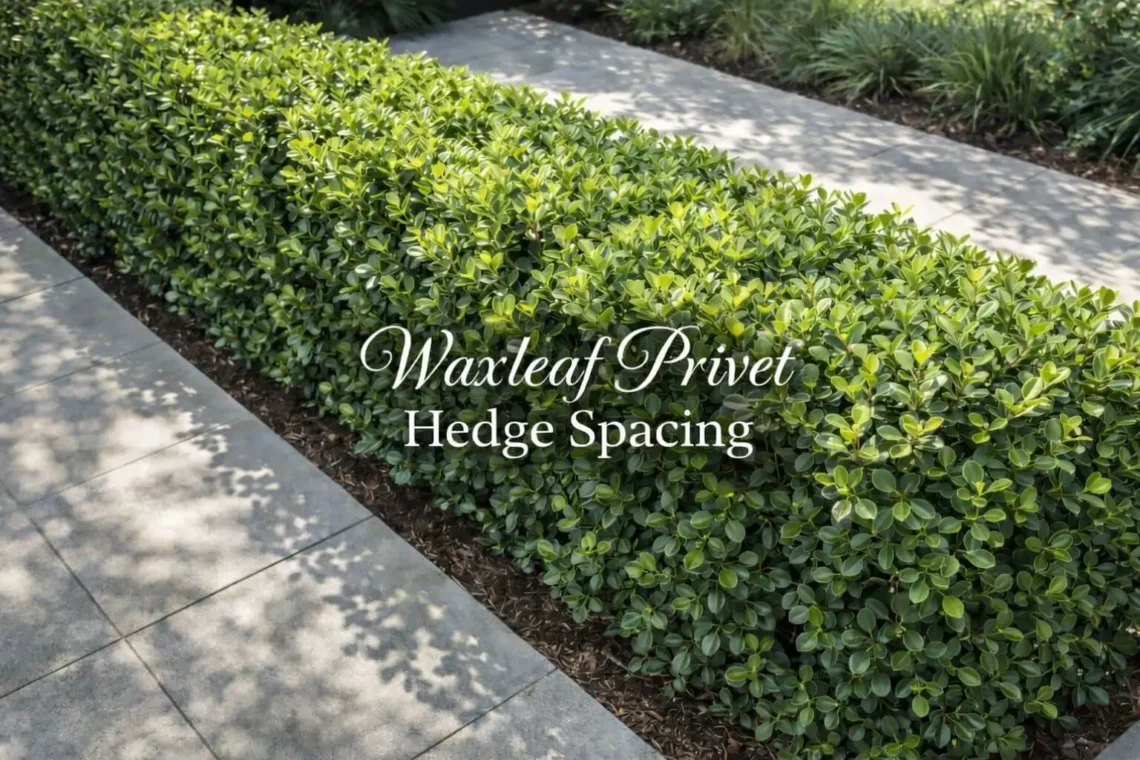
Waxleaf privet hedge spacing is a critical aspect of garden design and hedge health. Proper spacing ensures each plant receives sufficient sunlight, air circulation, and room for root growth. The significance of correct spacing extends to maintaining uniform growth, preventing disease, and reducing maintenance challenges. When planning a waxleaf privet hedge, gardeners should consider growth rate, pruning needs, and the ideal planting distance between individual plants. Factors such as waxleaf privet height, hedge planting techniques, and hedge propagation methods also influence the spacing decisions to achieve a healthy and attractive hedge.
Understanding Waxleaf Privet
Waxleaf privet, scientifically known as Ligustrum japonicum, is a popular evergreen shrub used in landscaping for its dense foliage and adaptability. It can grow as a hedge or standalone tree, with waxleaf privet height typically ranging from 2 to 5 meters under favorable conditions. The plant exhibits a moderate waxleaf privet growth rate and tolerates partial shade, making it versatile for various garden designs. Waxleaf privet trees are commonly planted for privacy screens, boundary hedges, or decorative garden features, providing both functional and aesthetic value.
-
Botanical Features
Waxleaf privet leaves are glossy, evergreen, and elliptical, supporting year-round coverage. The plant produces clusters of small, white flowers, which can influence pruning schedules and spacing requirements. These traits, including the dense foliage and evergreen habit, dictate how far apart plants should be set to allow adequate light penetration and airflow. Proper spacing ensures each plant can fully develop its waxleaf privet root system while maintaining overall hedge health.
-
Common Varieties
Several waxleaf privet varieties are suitable for hedging. Popular types include the standard waxleaf privet, wax-leaf privet, and wax leaf privet tree cultivars. Each variety may differ slightly in growth rate, height, and density, which affects recommended hedge spacing. Choosing the right variety is essential for achieving uniform hedges while accommodating environmental conditions and aesthetic goals.
Importance of Proper Hedge Spacing
Proper privet hedge spacing directly impacts the hedge’s overall health and appearance. Adequate spacing improves air circulation, allows sufficient sunlight to reach all foliage, and supports consistent growth patterns. Spacing also helps prevent disease by reducing fungal and pest infestations caused by overcrowding. Additionally, consideration of the waxleaf privet root system ensures that plants have enough soil space for nutrient absorption and long-term stability. Like the Brisbane Box Tree, understanding proper spacing is essential for a healthy hedge, ensuring adequate air circulation and uniform growth.
Factors Affecting Spacing
Several factors determine the ideal hedge spacing:
- Growth rate: Faster-growing varieties require more space to expand.
- Desired hedge density: Formal, dense hedges need closer spacing than informal, open designs.
- Pruning frequency: Regular pruning may allow tighter planting, while minimal pruning favors wider spacing.
- Environmental factors: Sun exposure, soil fertility, and local climate can influence growth and spacing needs.
Recommended Waxleaf Privet Hedge Spacing
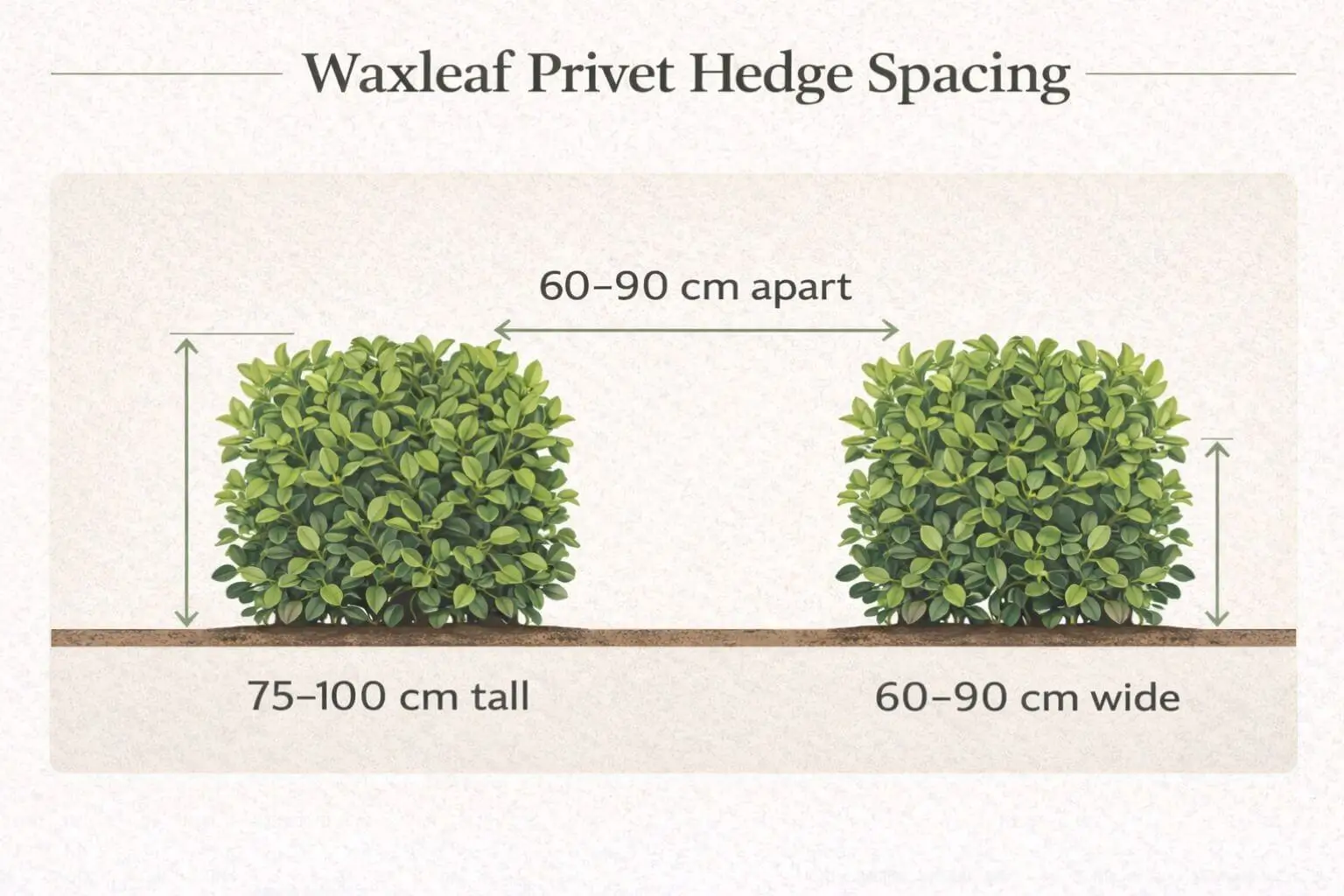
General guidelines for waxleaf privet hedge spacing ensure healthy, attractive growth. The distance between plants typically ranges from 30 to 60 cm, depending on desired hedge height, width, and environmental conditions. Utilizing tools like a waxleaf privet hedge spacing chart or calculator can provide precise recommendations tailored to specific planting goals. Similar to how Rosemary Prostrate benefits from correct spacing, waxleaf privet hedges thrive when planted at recommended distances.
-
Spacing by Growth Goal
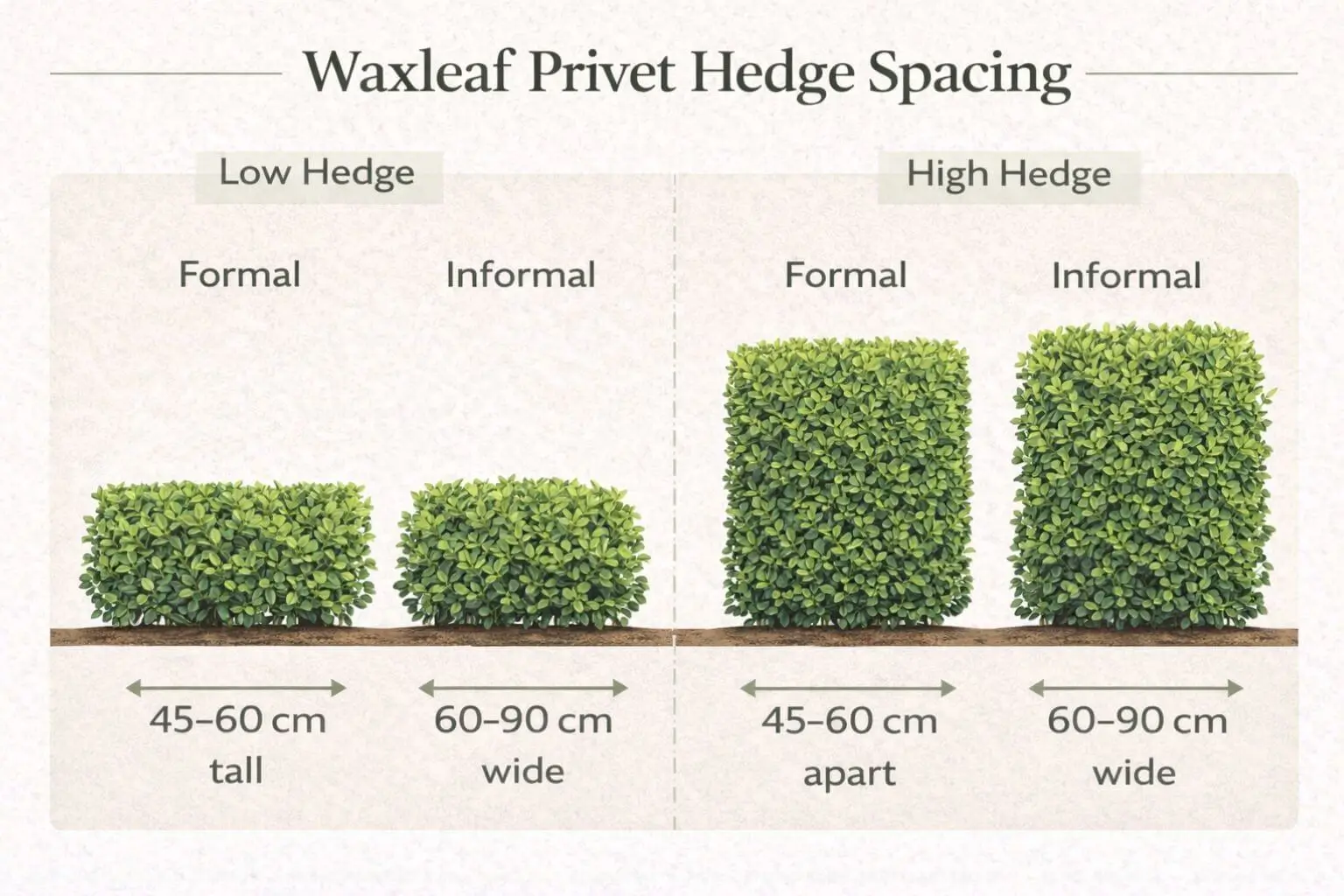
For low hedges, closer spacing supports a compact, uniform appearance, whereas taller hedges require wider spacing to accommodate height and facilitate pruning. Formal hedges benefit from consistent spacing and alignment, while informal hedges allow more natural gaps. Consider waxleaf privet hedge spacing and height, along with waxleaf privet hedge spacing width, to achieve the intended hedge structure. For gardeners who want exact figures rather than general ranges, our interactive hedge spacing reference chart breaks down plant-to-plant distances by hedge height and formal vs. informal style.
This free tool lets you cross-check your waxleaf privet measurements against dozens of other common hedge varieties in seconds.
-
Spacing for Different Environments
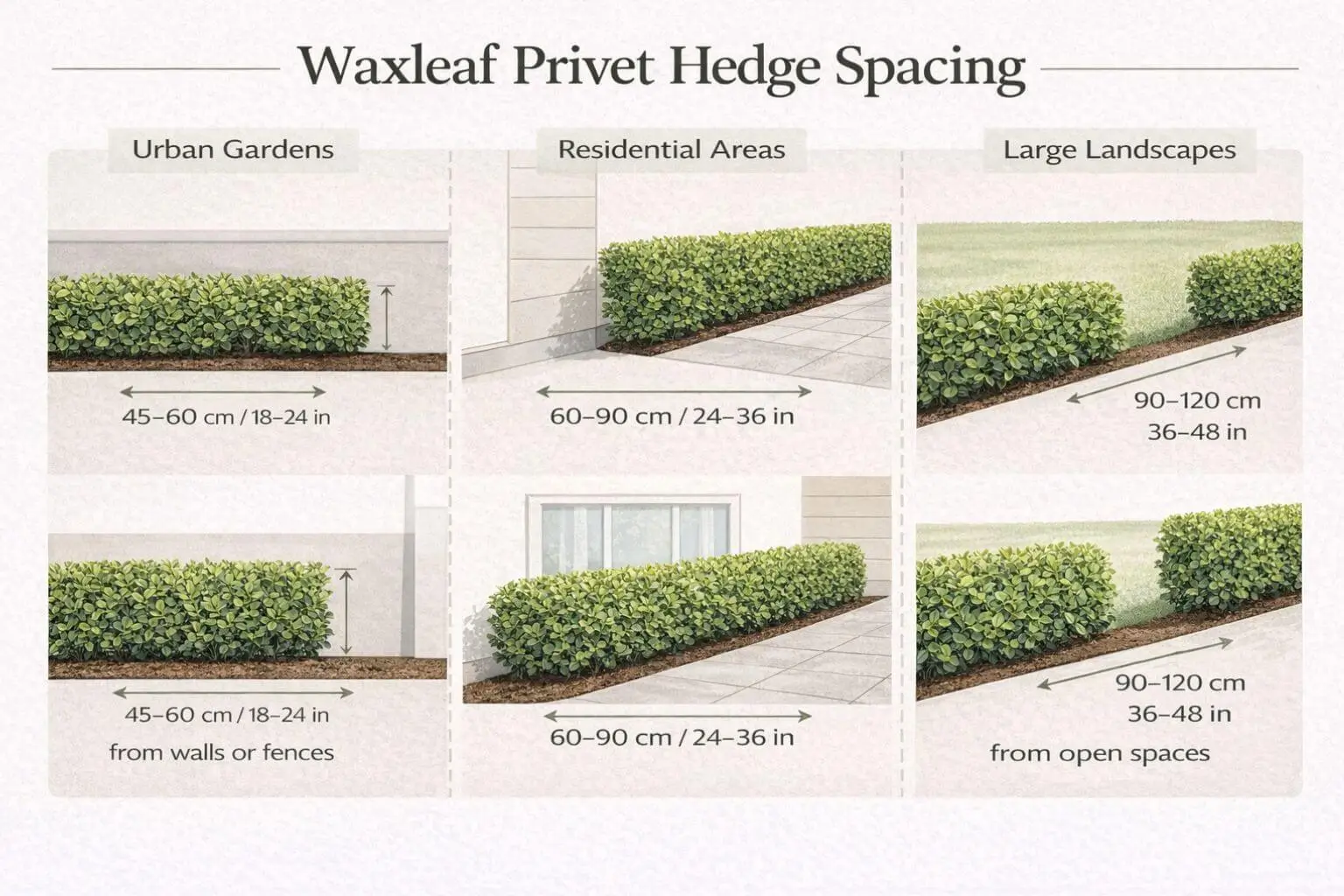
Urban gardens and residential areas often require careful planning, maintaining sufficient distance from structures while ensuring hedge density. In large landscapes, wider spacing can promote healthier growth and reduce maintenance needs. Typical guidelines include waxleaf privet hedge spacing around the house and waxleaf privet hedge spacing in garden beds for optimal performance.
Planting Techniques and Propagation
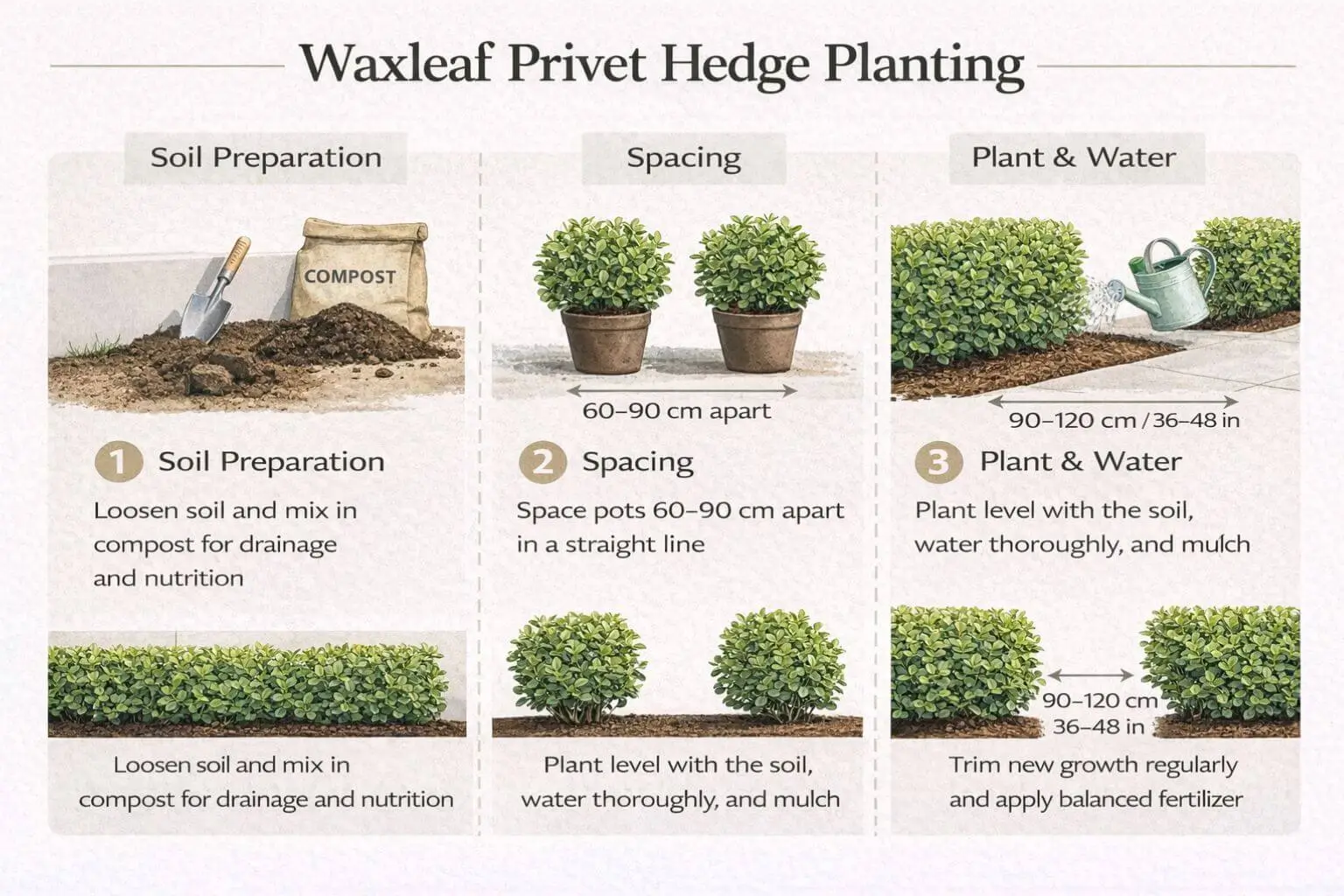
Effective hedge planting begins with proper site preparation and spacing. When planting in pots or directly in the ground, ensure that waxleaf privet hedge spacing in pots or between garden plants accommodates root expansion and air circulation. Soil preparation should include loosening and enriching the soil to support vigorous growth. Hedge propagation can be achieved through cuttings, layering, or seed methods, with spacing considerations adapted for each technique. Just as the Australian Brush Cherry requires careful planting, proper waxleaf privet hedge spacing supports optimal growth and maintenance. If you’re propagating multiple cultivars at once, our Hedge Plant Spacing Reference Database organizes spacing data by propagation method and root maturity stage.
It’s especially useful when comparing waxleaf privet against other privet species you might be propagating side by side.
-
Pruning and Maintenance
Spacing directly influences pruning frequency. Properly spaced plants reduce the need for constant trimming, while overcrowded plants may require frequent pruning to maintain shape and prevent disease. Keywords to note include waxleaf privet hedge spacing and cutting, waxleaf privet hedge pruning, and waxleaf privet hedge spacing when cutting.
Troubleshooting Common Spacing Issues
Improper spacing can lead to several problems: overcrowding, weak growth, poor air circulation, and increased susceptibility to disease. Overly wide spacing may result in gaps in the hedge and uneven growth. Observing the waxleaf privet hedge spacing root system can help identify if adjustments are necessary for optimal plant health.
-
Corrective Measures
To correct spacing problems, gardeners can adjust plant distances post-planting where feasible. Proper pruning, thinning, and selective transplanting help restore hedge structure and health. Regular maintenance ensures that each plant receives adequate resources for sustained growth.
Regional and Environmental Considerations
Climate, soil type, and local regulations affect spacing decisions. In the EU, UK, Victoria, and New Zealand, recommendations may vary based on temperature, rainfall, and frost exposure. Waxleaf privet hedge zone mapping can guide planting distances to account for these regional and environmental factors. Adapting spacing for local conditions ensures resilient and long-lasting hedges. To fine-tune spacing for your specific climate zone, download our downloadable regional hedge spacing spreadsheet, which lists adjusted distances by frost zone and rainfall level.
It’s built as an editable reference so you can plug in your local conditions and get a tailored planting plan.
Conclusion
Optimal waxleaf privet hedge spacing is essential for hedge health, aesthetics, and ease of maintenance. By considering growth rate, pruning requirements, environmental conditions, and regional factors, gardeners can create dense, uniform, and resilient hedges. Proper spacing supports healthy root systems, reduces disease risk, and maximizes the ornamental value of waxleaf privet hedges in any garden setting.
FAQs
What is the ideal spacing for waxleaf privet hedges?
Optimal spacing is typically 30–60 cm between plants for a dense hedge, depending on desired height and growth rate.
How does spacing affect waxleaf privet growth?
Proper spacing ensures adequate sunlight, airflow, and root expansion, reducing disease risk and encouraging uniform growth.
Can waxleaf privet be planted too close together?
Yes, overcrowding can lead to weak growth, poor air circulation, and increased susceptibility to pests and diseases.
How far apart should I plant waxleaf privet around a house?
Maintain at least 50 cm from walls and structures to prevent damage and allow pruning access.
Does regional climate influence spacing recommendations?
Yes, colder or drier regions may require wider spacing for healthy growth and frost protection.