Introduction: What Is Boxwood Japonica?
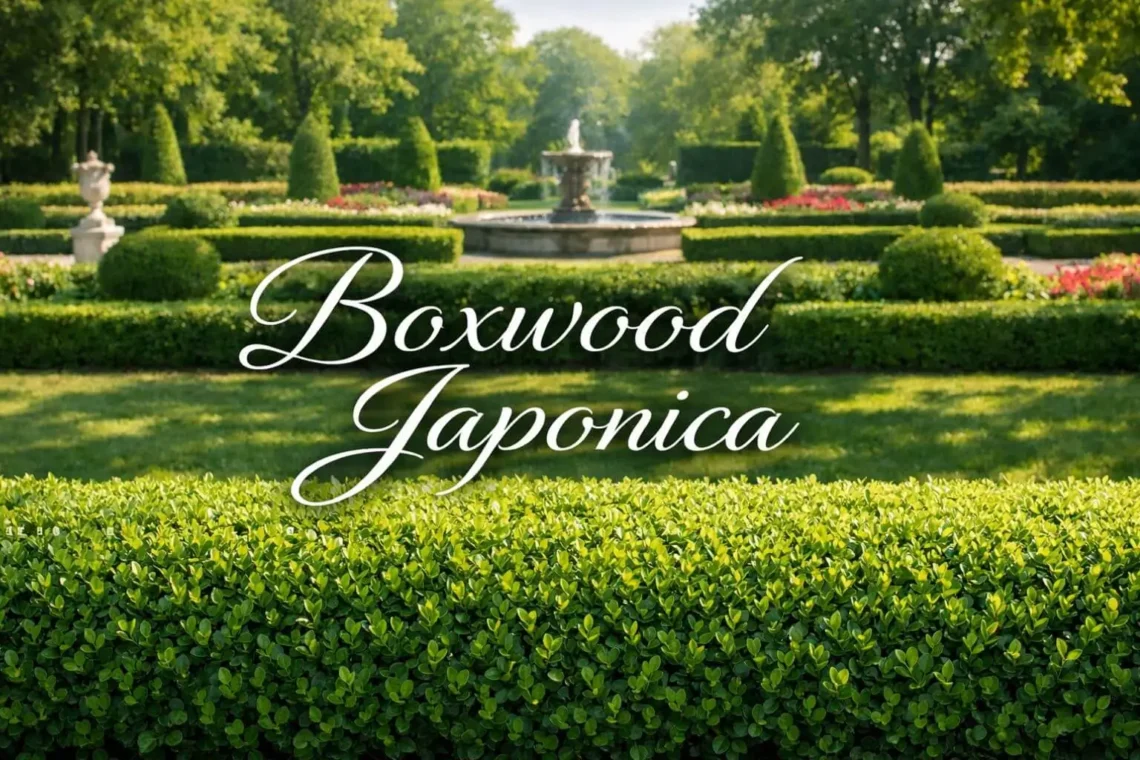
Boxwood japonica is an evergreen ornamental shrub valued for its dense foliage and compact form. It belongs to the genus Buxus and is often referred to as Japanese boxwood, reflecting its origin and naming conventions. The shrub is widely used in landscaping for hedges, borders, and foundation plantings due to its slow growth, adaptability, and ability to maintain shape over time.
Botanically, boxwood japonica is classified as Buxus microphylla japonica, distinguishing it from other varieties within the Buxus genus. This classification clarifies its relationship with Japanese boxwood naming. Landscapers and gardeners rely on this shrub for structured designs and year-round greenery. Its evergreen nature and dense growth make it ideal for visual screening, formal hedging, and low-maintenance landscape designs.
Botanical Identity and Classification
Boxwood japonica is scientifically named Buxus microphylla japonica, where Buxus is the genus and microphylla japonica represents the species and variety. The term microphylla means “small leaves,” while japonica indicates its regional origin in Japan. Boxwood japonica belongs to the genus Buxus, which includes various species commonly used for ornamental hedges worldwide.
Multiple names often exist for the same plant due to differences between species, varieties, and regional naming conventions. For example, Japanese boxwood, Buxus japonica, and Buxus microphylla japonica can refer to the same shrub depending on context. Understanding the taxonomy helps gardeners select the correct plant and reduces confusion caused by overlapping common names.
Growth Habit, Size, and Mature Dimensions
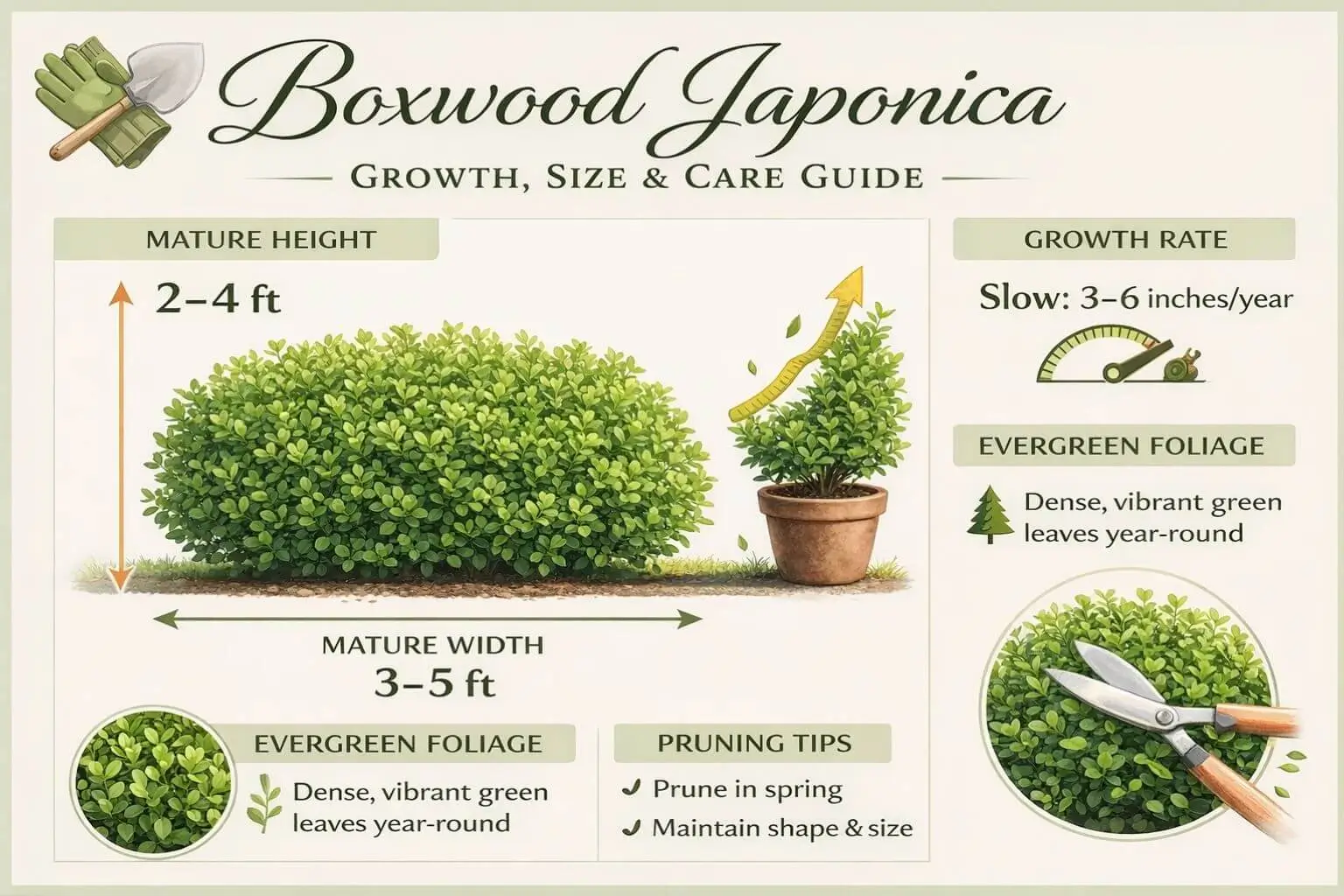
Boxwood japonica typically reaches a height of 2 to 4 feet and a width of 3 to 5 feet, although these dimensions vary with environment and care. The shrub grows in a dense, rounded form, naturally compact without extensive pruning.
Environmental factors, including soil quality, sunlight, and moisture, influence final size. Pruning can control spread and encourage thicker foliage. Spacing is essential in hedges to allow airflow and prevent disease, with recommended distances based on mature width. Understanding growth habit ensures proper placement and long-term landscape success.
Growth Rate and Development Timeline
Boxwood japonica is considered slow-growing, with an average annual growth of 3 to 6 inches. Slow growth means it establishes gradually in the first few years, then develops steadily over time.
Growth expectations differ based on site conditions, fertilization, and watering. Early establishment focuses on root development, while long-term growth increases height and density. Factors such as soil fertility, sunlight, and climate can either accelerate or limit growth.
Evergreen Characteristics and Seasonal Appearance
- Boxwood japonica maintains green foliage throughout the year, making it a true evergreen. Leaf color may slightly change under cold stress or winter sun exposure, often taking on a darker green or bronze tint.
- While fully evergreen in most climates, seasonal stress can affect leaf retention. The shrub remains visually appealing even in winter, providing consistent structure and screening in landscapes. Misconceptions about semi-evergreen behavior arise primarily in colder zones or harsh conditions.
Climate Adaptability and Hardiness
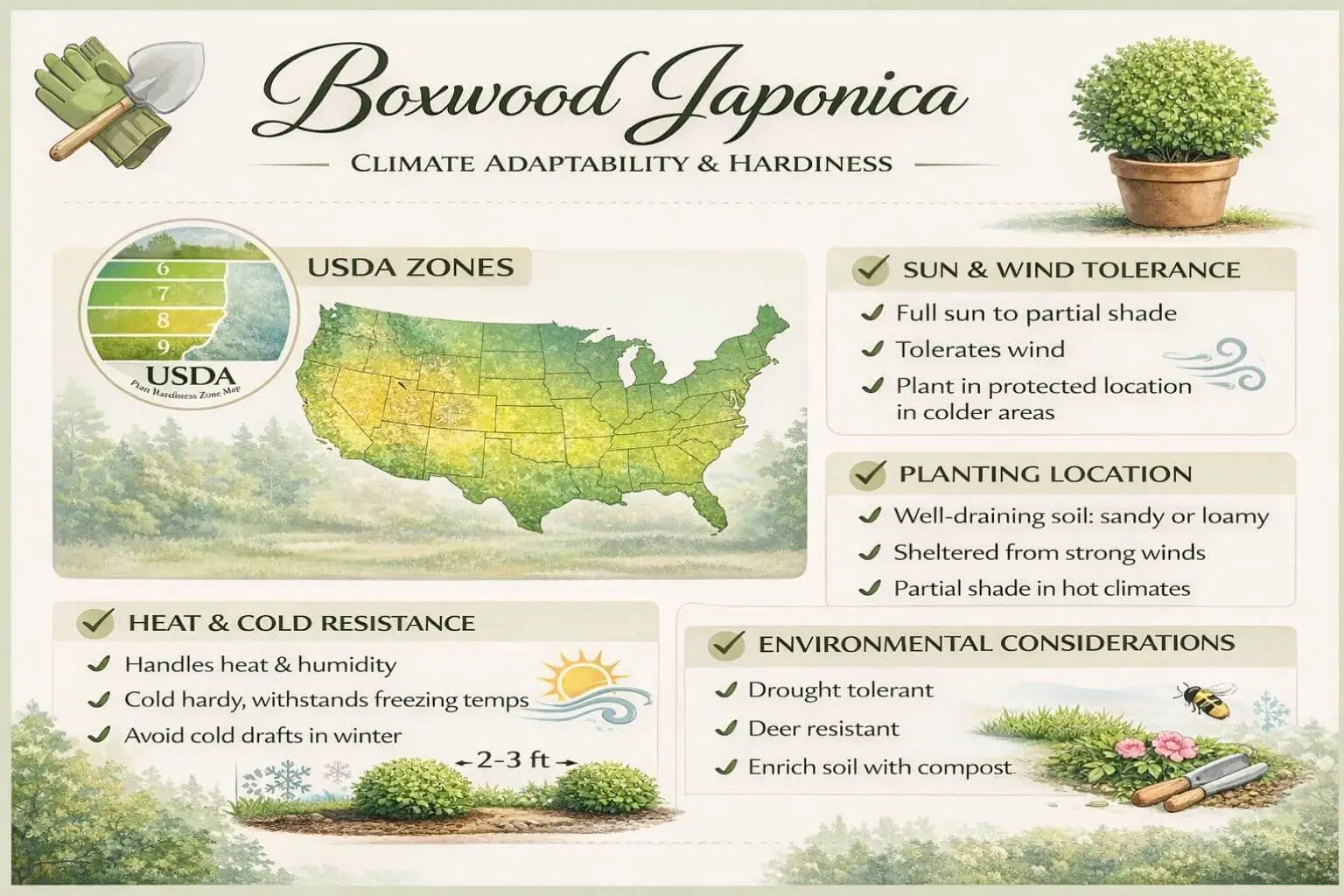
- Boxwood japonica grows best in USDA hardiness zones 6–9. It tolerates a range of temperatures, including moderate heat and cold, but extreme conditions may require protection.
- Sunlight, wind exposure, and soil drainage influence survival and appearance. Planting in protected areas enhances resilience, while locations with harsh winter winds or reflected heat may stress the shrub. Proper site selection ensures longevity and optimal growth.
Planting Timing and Establishment Conditions
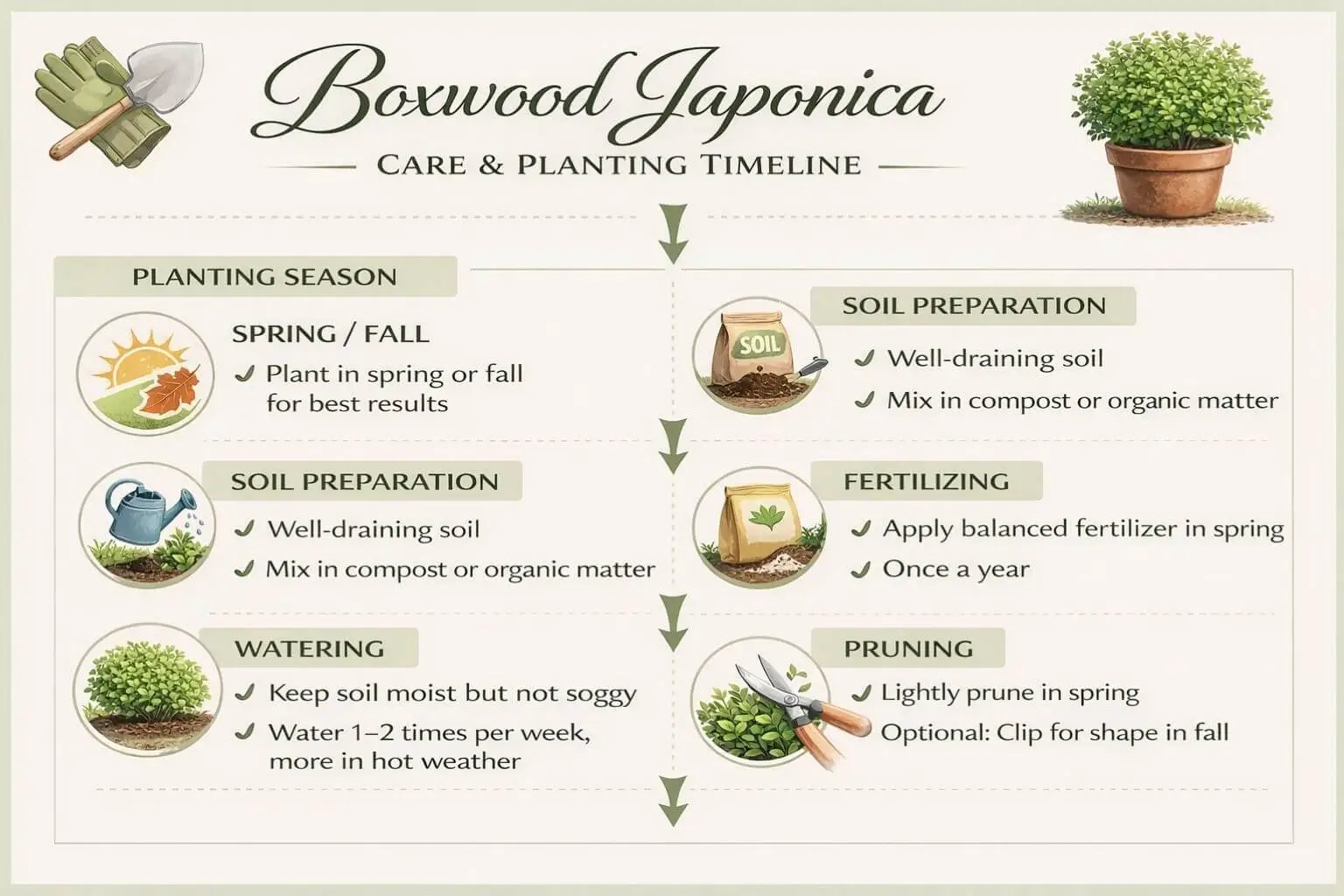
The optimal time to plant boxwood japonica is in spring or early fall, allowing roots to establish before extreme heat or cold. Soil temperature should be moderate to encourage root development.
Avoid planting during dormant winter or peak summer heat. Correct planting depth and well-prepared soil improve establishment, prevent root rot, and support early growth. Fall planting windows are safe if the soil remains workable and roots have time to establish before frost.
Maintenance Requirements and Care Level
- Once established, boxwood japonica is low maintenance. Watering should be consistent but moderate, avoiding waterlogging. Fertilization can be applied in spring using balanced, slow-release fertilizers. Mulching supports soil moisture and health.
- Perceived maintenance may exceed actual care needs, as gardeners often expect rapid growth or frequent pruning. Regular observation and minor interventions are usually sufficient for healthy shrubs.
Pruning, Shaping, and Hedge Formation
Boxwood japonica responds well to pruning. Light pruning in spring or early summer promotes dense branching. Hedge thickening is achieved by trimming new growth, encouraging fuller foliage.
Over-pruning can damage structure or reduce aesthetics. Understanding the cause-and-effect between pruning and branching ensures consistent form. Pruning timing is critical to avoid frost damage or stress during extreme heat.
Common Problems and Limitations
- Boxwood japonica is susceptible to pests like boxwood leafminer and diseases such as blight. Environmental stress, including poor drainage, excessive heat, or cold, can contribute to decline.
- Problems often arise from site conditions rather than inherent plant weakness. Awareness of common challenges allows gardeners to implement preventative care and mitigate widespread boxwood issues.
Safety and Environmental Considerations
Boxwood japonica is mildly toxic to pets if ingested. Placement away from areas with frequent animal activity reduces risk. In landscapes, consideration of foot traffic, children, and pets ensures safe use.
Exposure scenarios determine toxicity risk, but routine gardening poses minimal danger. Awareness of these considerations supports safe and responsible planting.
Comparison With Other Boxwood Types
- Compared with other boxwoods, japonica grows slower, forms denser foliage, and requires slightly less maintenance. Growth habit differs, with japonica remaining more compact.
- Resilience and adaptability vary among species; some boxwoods tolerate extreme conditions better. Use-case differences, such as formal hedges versus naturalistic borders, guide selection. Regular boxwood serves as a general category encompassing multiple species, including japonica.
Gardeners often compare boxwood japonica with other compact evergreens like Dwarf Myrtle Shrub or Brisbane Box Tree to select the best option for hedges and borders.
Landscape Design Uses and Placement
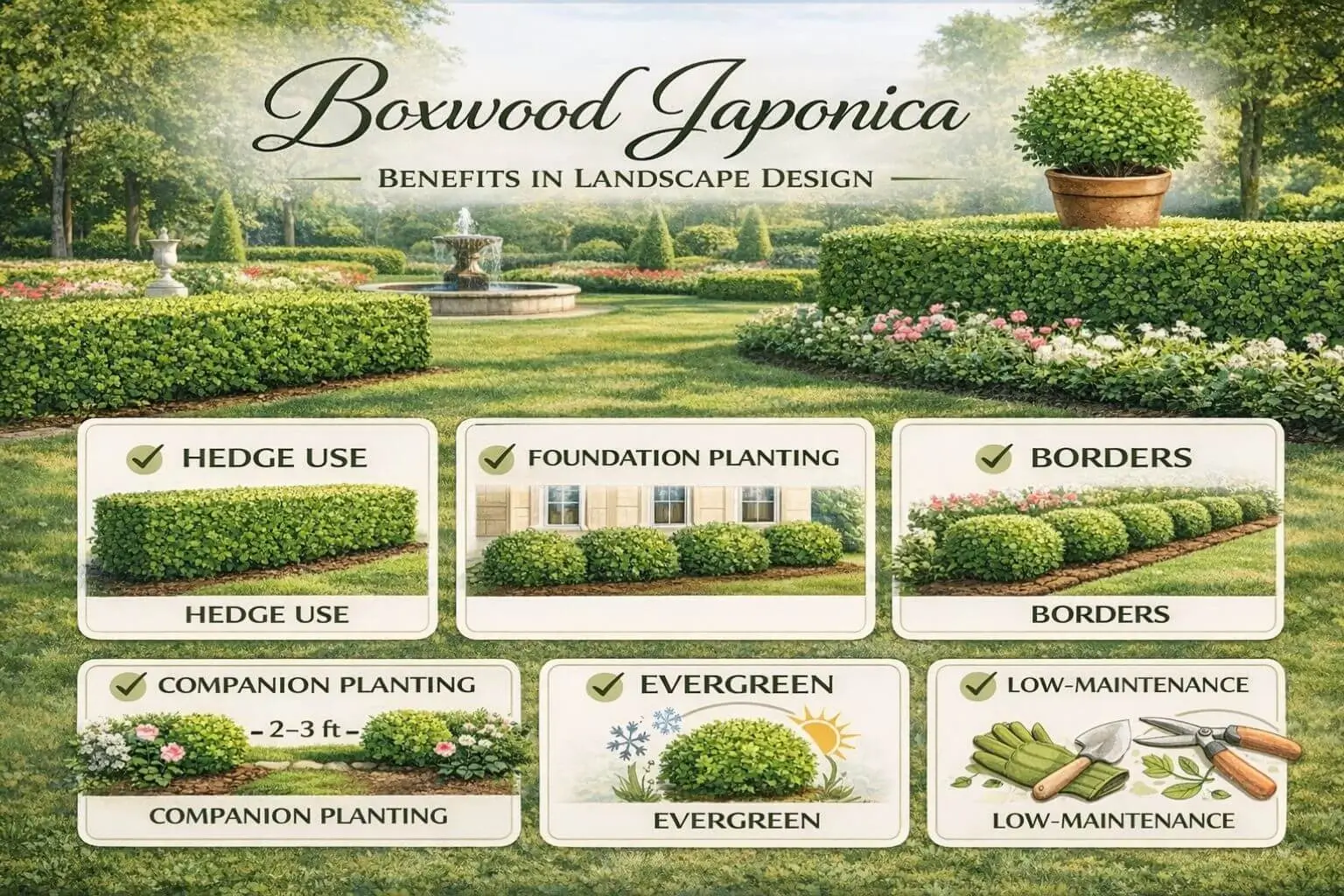
Boxwood japonica works well for foundation plantings, hedges, and borders. Companion planting concepts suggest spacing for airflow and visual balance.
Its compact form allows structured designs, while dense foliage provides privacy and windbreaks. Proper placement ensures healthy growth, aesthetic appeal, and integration with surrounding plants.
Alternatives When Boxwood Japonica Is Not Ideal
Boxwood japonica may struggle in extreme heat, poor drainage, or highly shaded areas. Alternatives with better tolerance, faster growth, or different visual traits may perform better.
Decision-making should focus on site conditions, climate compatibility, and desired maintenance levels rather than product promotion.
Conclusion: Understanding Boxwood Japonica for Informed Planting
Boxwood japonica offers dense evergreen foliage, compact growth, and adaptability for multiple landscape uses. Understanding size, growth rate, care requirements, and environmental tolerances allows informed planting decisions. Gardeners can evaluate site, climate, and design objectives before selecting this shrub for formal or practical applications.
FAQs
- How big does boxwood japonica get?
Boxwood japonica typically reaches 2–4 feet in height and 3–5 feet in width, depending on environment and pruning. - How quickly does boxwood japonica grow?
It grows slowly, about 3–6 inches per year, with growth influenced by sunlight, soil, and care practices. - Does boxwood japonica spread?
It maintains a compact, dense habit and does not spread invasively beyond its planted area. - Is boxwood japonica low maintenance?
Yes, once established, it requires moderate watering, occasional fertilization, and minimal pruning. - Does boxwood japonica stay green all year?
Yes, it is evergreen, though leaves may darken or bronze slightly in cold conditions. - When should boxwood japonica not be pruned?
Avoid pruning during extreme heat or frost periods to prevent stress or damage. - Why do boxwoods sometimes decline or die?
Decline is usually caused by pests, disease, poor drainage, extreme temperatures, or environmental stress.