Introduction
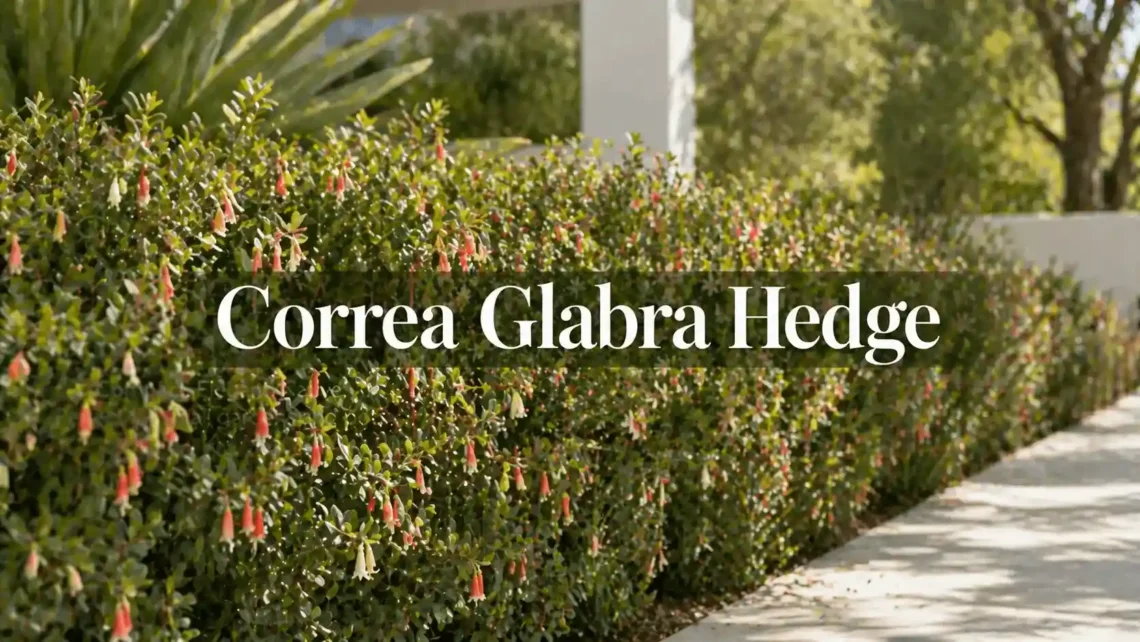
Correa glabra hedge is a versatile, evergreen native shrub commonly used for low-maintenance hedging. It belongs to the broader group of correas, known for their tubular flowers and hardy nature. Native to Australia, this plant adapts well to dry conditions and poor soils. Correa glabra hedge is especially suitable for drought-tolerant gardens, wildlife-friendly landscapes, and informal hedge designs. Its dense foliage and resilience make it an effective natural barrier while requiring minimal ongoing care once established.
Quick Summary
- Correa glabra hedge is a hardy, evergreen shrub ideal for informal hedging.
- It produces tubular flowers that attract birds and pollinators.
- It requires minimal maintenance and tolerates drought and poor soils.
- Available in varieties like ivory, red, green, and yellow forms.
What Is Correa Glabra and Why Is It Used as a Hedge?
Correa glabra is an evergreen shrub classified as “rock correa,” a group adapted to rocky, well-drained environments. Botanically part of the Rutaceae family, it differs from other correa plant varieties by its smoother foliage and more upright growth habit. Correa glabra belongs to the Correa genus, a group of Australian native shrubs known for their tubular flowers (see Correa plant genus on Wikipedia for botanical classification).
This species naturally occurs in regions such as the Coliban River area, where it thrives in dry, exposed conditions. Compared to other correas, it is more tolerant of poor soils and less prone to fungal issues.
Correa glabra is widely used as a hedge because it forms dense foliage, maintains structure year-round, and tolerates pruning well. Its resilience to drought and wind also makes it ideal for low-maintenance landscaping.
Key Features of a Correa Glabra Hedge
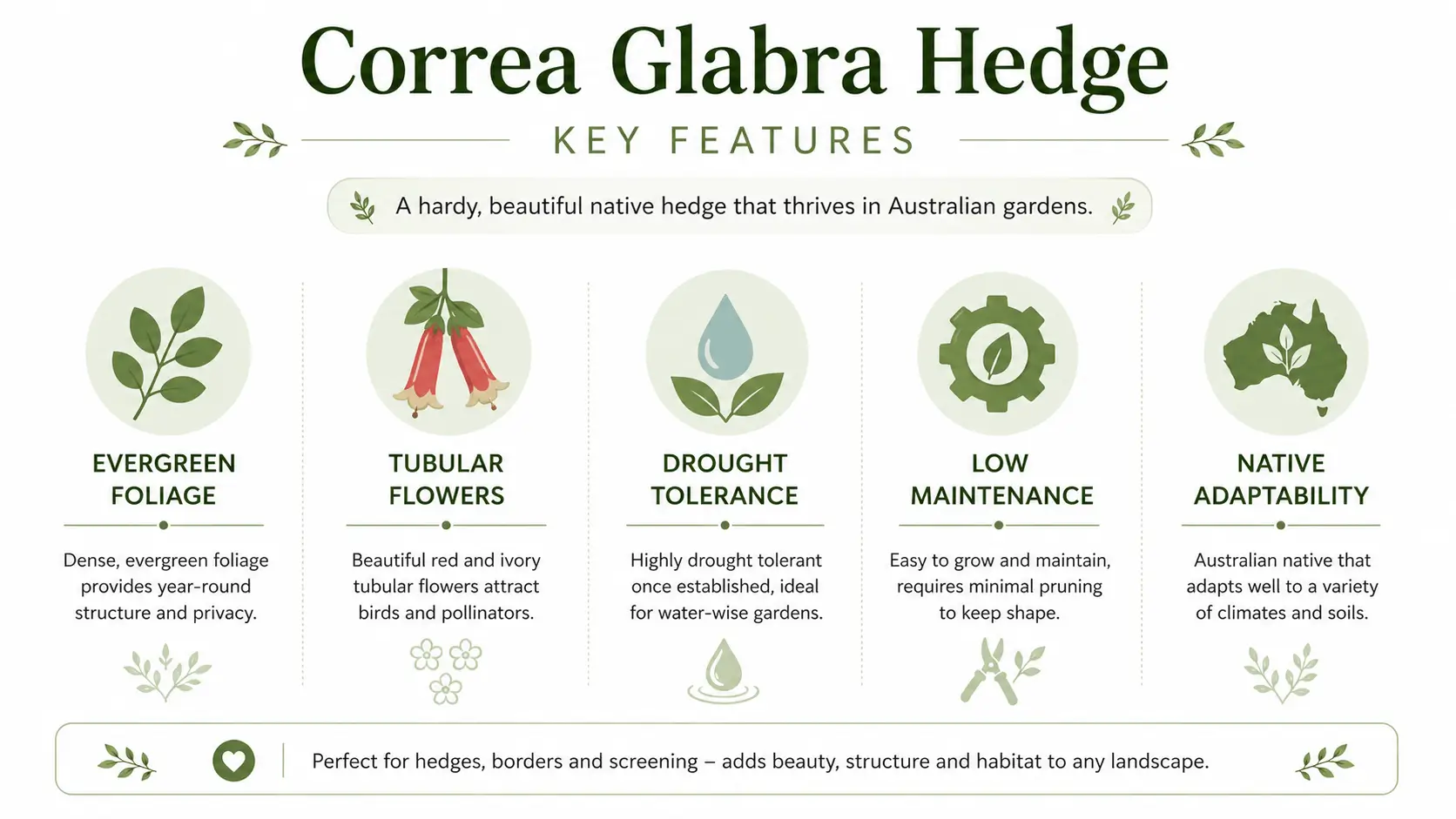
Correa glabra hedge is defined by its compact growth, evergreen foliage, and seasonal tubular flowers. The leaves are typically smooth and leathery, contributing to its drought resistance and longevity.
Flower colors vary across cultivars and include red, ivory, greenish tones, and yellow forms. These tubular flowers are highly attractive to nectar-feeding birds, making the hedge ecologically beneficial.
Key Characteristics
- Evergreen structure
- Tubular seasonal blooms
- Drought tolerance
- Low maintenance
- Native adaptability
Popular Correa Glabra Varieties for Hedging
Several cultivars of correa glabra are used for hedging, each offering differences in color, size, and growth habit.
- Correa glabra ‘Ivory Lantern’: Cream to ivory flowers with a compact form.
- Red forms (Correa glabra red): Bright red or pink flowers, ideal for attracting birds.
- Correa glabra green: Subtle greenish flowers, suited to naturalistic plantings.
- Correa glabra ‘Winter Glow’: Produces vibrant flowers during cooler months.
- Yellow forms: Less common, but valued for unique coloration.
All belong to the rock correa classification, known for durability and adaptability.
Comparison of Correa Glabra Varieties
| Variety | Flower Color | Growth Habit | Best Use |
| Ivory Lantern | Cream/ivory | Compact | Formal hedges |
| Red forms | Red/pink | Dense | Wildlife gardens |
| Green | Subtle greenish | Open | Naturalistic hedges |
| Winter Glow | Bright winter blooms | Medium | Seasonal interest |
Ideal Conditions for Growing a Correa Glabra Hedge
Correa glabra hedge grows best in well-drained soil and tolerates sandy, rocky, or low-nutrient conditions. Good drainage is essential, as waterlogged soil can damage roots.
It performs well in full sun to partial shade. Flowering is typically more abundant in sunnier locations.
While adaptable, correa plants may struggle in colder climates such as parts of the UK unless protected from frost. They are best suited to temperate and dry regions.
Correa Glabra Hedge Size and Growth Rate
Correa glabra hedge typically reaches a mature height of 1.5 to 3 meters, depending on the cultivar and growing conditions. Width varies similarly, making it suitable for medium-sized hedges.
The growth rate is slow to moderate. Growth is influenced by:
- Soil quality
- Water availability
- Sunlight exposure
- Pruning frequency
Correa Glabra Hedge Spacing Guide
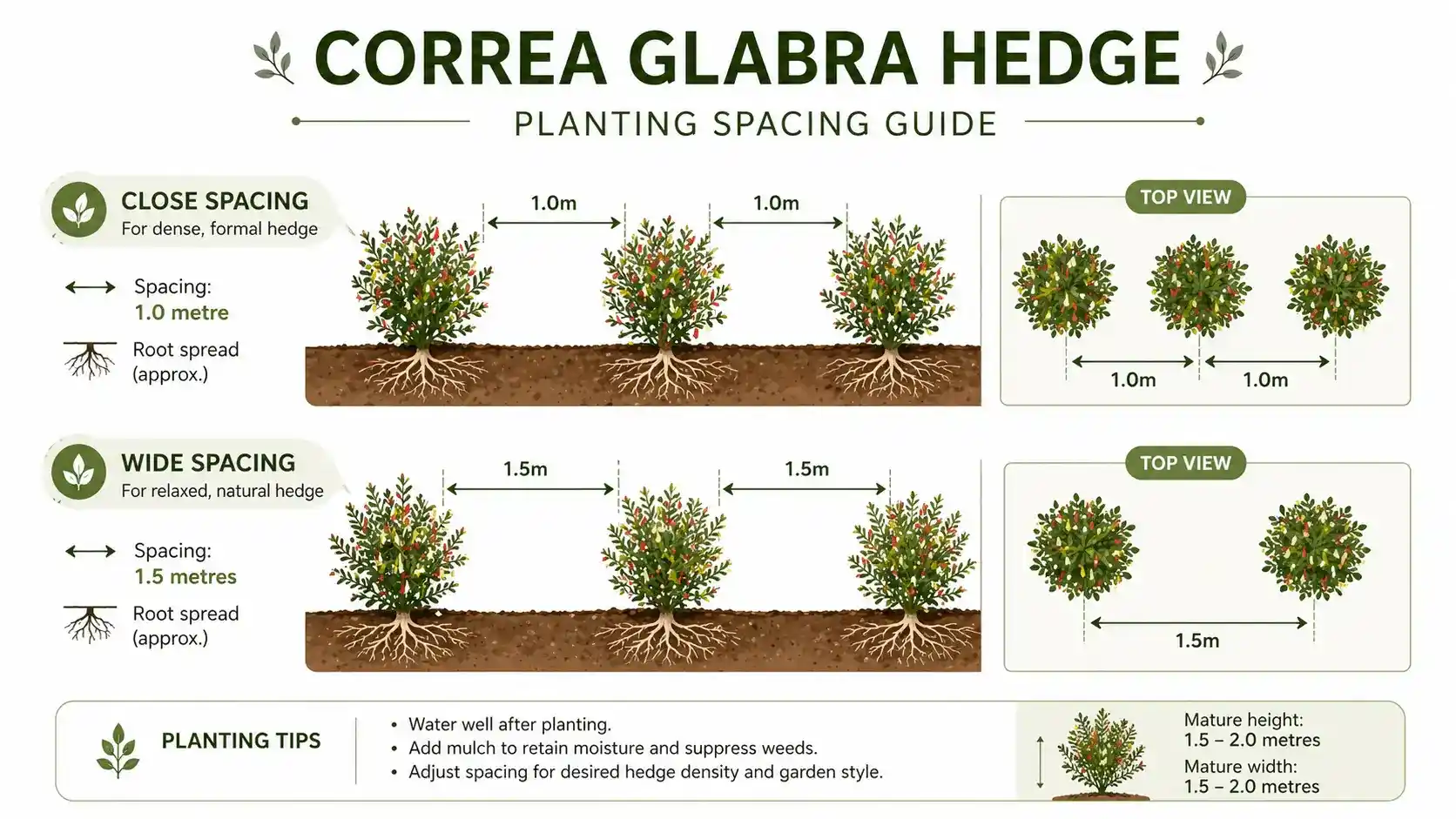
Proper spacing ensures healthy growth and optimal hedge density. For most situations, spacing plants between 1 to 1.5 meters apart is recommended.
Spacing Guidelines
- Close spacing: denser hedge
- Wider spacing: natural spread
- Allow room for root development
Spacing techniques are similar across hedge types—this detailed guide on waxleaf privet hedge spacing explains how plant distance affects density and long-term structure.
How to Plant a Correa Glabra Hedge (Step-by-Step)
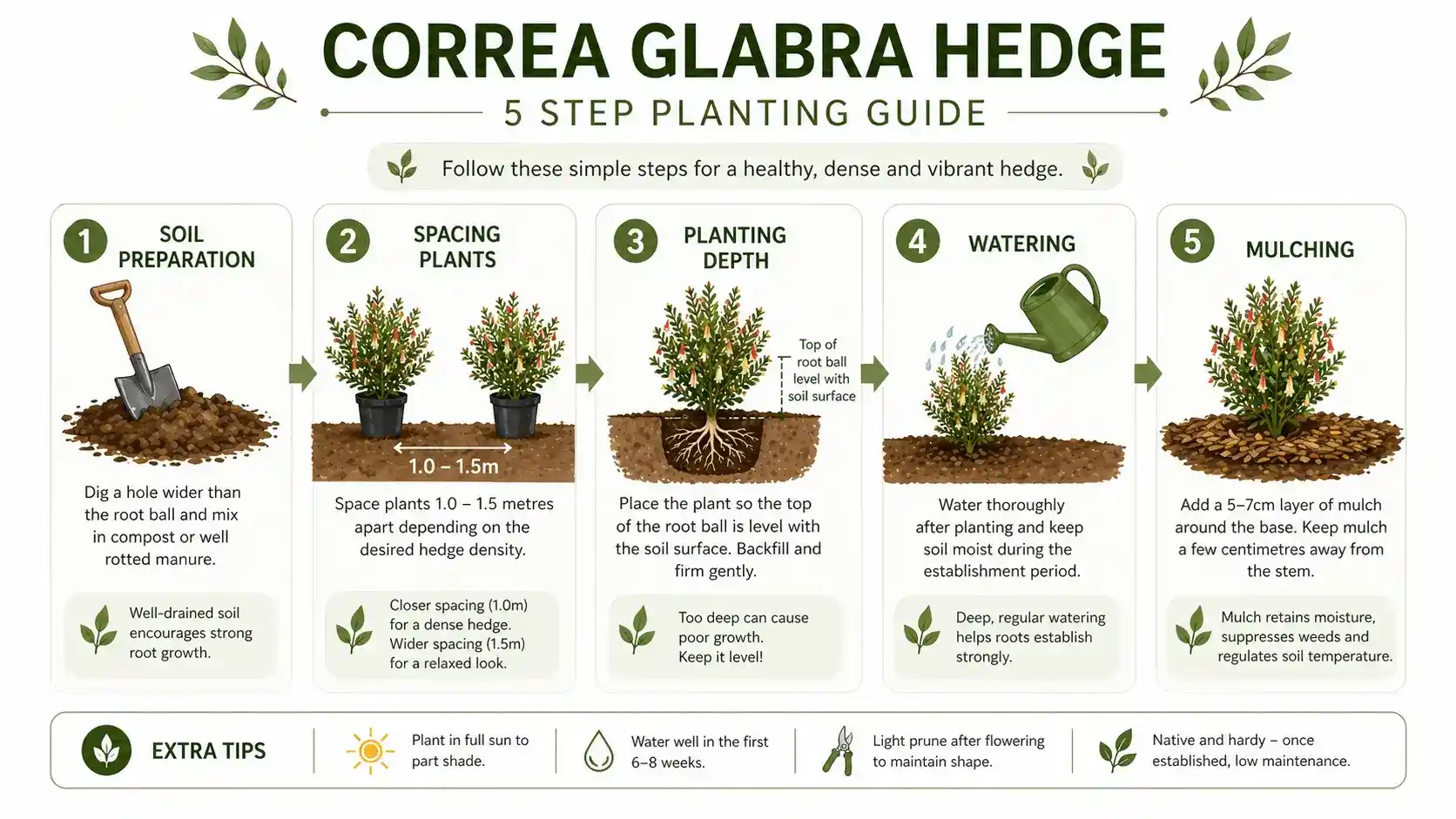
Planting correctly ensures long-term success.
Steps
- Prepare soil with good drainage
- Space plants evenly
- Plant at correct depth (same as nursery level)
- Water thoroughly after planting
- Mulch to retain moisture
Site preparation may include improving soil with organic matter if drainage is poor.
Correa Glabra Hedge Care Guide
Correa glabra hedge requires minimal maintenance once established.
Watering, Light, and Soil
- Water regularly during establishment
- Reduce watering as the plant matures
- Avoid waterlogged conditions
- Provide full sun to partial shade
Fertilization
- Low nutrient requirements
- Use native plant fertilizers if needed
Pruning and Maintenance
- Light pruning maintains shape
- Occasional trimming encourages density
When and How to Prune a Correa Glabra Hedge
Prune a correa glabra hedge after flowering to maintain shape and promote healthy growth. Early pruning preserves flower buds and encourages bushier structure.
Pruning Tips
- Avoid cutting into old wood
- Encourage bushier growth
- Follow seasonal pruning timing
Light trimming is generally preferred over heavy cutting.
Common Problems and Solutions (Troubleshooting Guide)
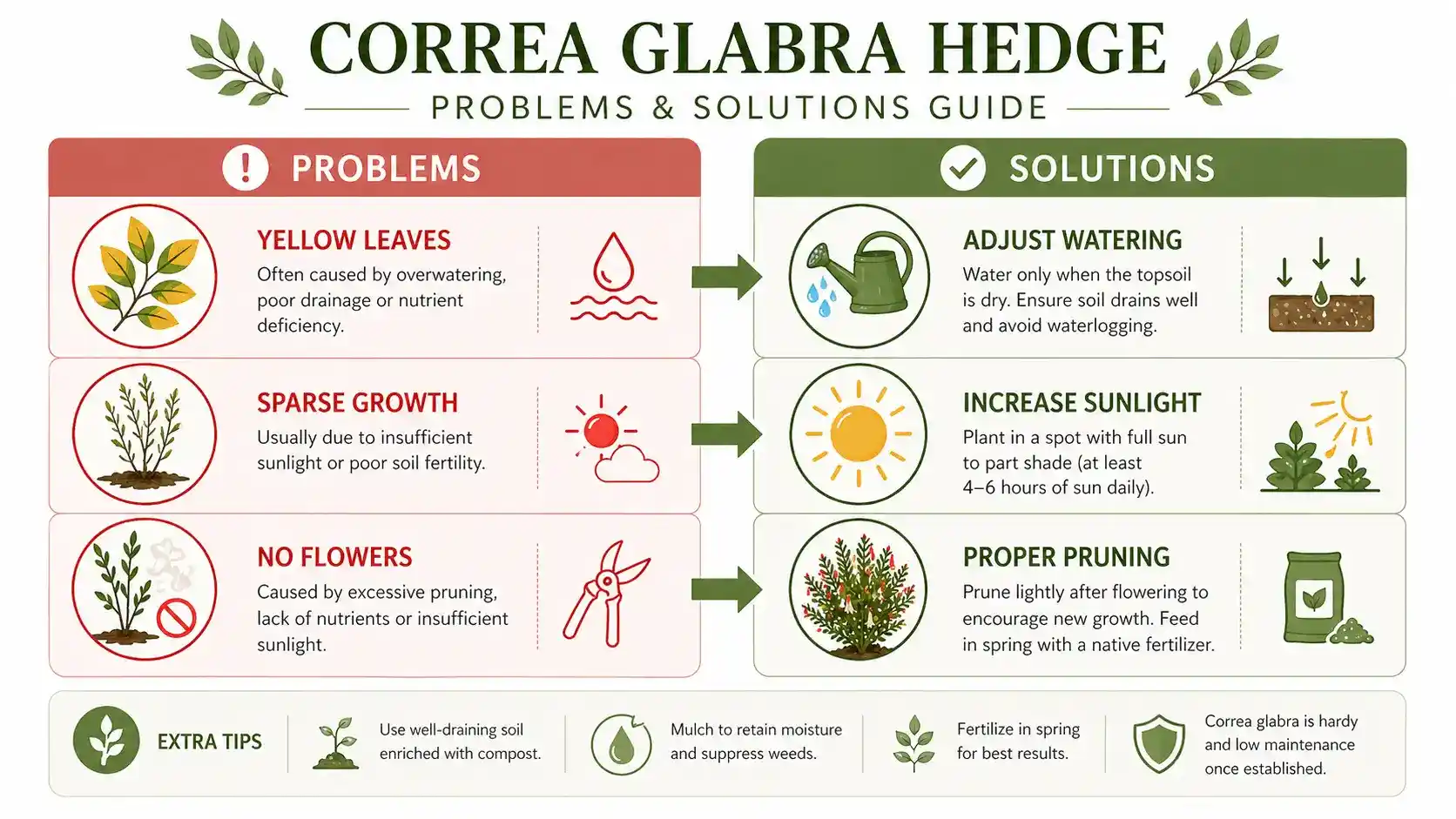
Correa glabra hedge is generally hardy but may face a few issues.
Common Issues
- Yellowing leaves: often due to overwatering
- Sparse growth: caused by poor light or incorrect spacing
- Lack of flowering: insufficient sunlight or improper pruning
Solutions
- Adjust watering practices
- Improve sunlight exposure
- Apply correct pruning techniques
Prevention Tips
- Ensure proper spacing
- Maintain well-drained soil
- Adjust care seasonally
Landscaping Uses and Design Ideas
Correa glabra hedge is widely used in landscaping for both functional and aesthetic purposes.
Common Uses
- Boundary hedges
- Informal screening
- Companion planting with native species
It pairs well with other drought-tolerant plants and supports wildlife-friendly garden designs. For broader options, gardeners often explore other privacy solutions—this guide on best hedging trees highlights alternative species suited for different climates and design needs.
Correa Glabra vs Other Hedge Plants
Correa glabra hedge differs from many traditional hedge plants in maintenance and ecological value.
You can also compare it with other hedge options like Carolina cherry laurel, which offers faster growth but requires more maintenance—see this guide on Carolina Cherry Laurel Hedge for a detailed comparison.
Comparison
| Feature | Correa Glabra Hedge | Other Hedge Plants |
| Water needs | Low | Medium–high |
| Maintenance | Low | Moderate |
| Wildlife value | High | Varies |
| Growth speed | Moderate | Often faster |
Seasonal Care Tips for Correa Glabra Hedge
Seasonal care ensures consistent growth and flowering.
- Spring: light pruning and monitoring growth
- Summer: minimal watering once established
- Autumn: prepare soil and reduce fertilization
- Winter: enjoy flowering in some varieties like Winter Glow
Beginner Mistakes to Avoid When Growing Correa Glabra Hedge
Avoiding common mistakes improves plant health and longevity.
Common Mistakes
- Overwatering
- Poor drainage soil
- Incorrect pruning timing
- Planting too close or too far apart
How Correa Glabra Fits Into Broader Gardening Practices
Correa glabra hedge fits well into modern gardening strategies focused on sustainability and efficiency.
It supports:
- Native plant gardening
- Low-water landscaping
- Functional hedge design
- Strategic plant selection
Its adaptability makes it a valuable choice in environmentally conscious gardens. While typically used outdoors, many of the same plant care principles apply indoors—this guide to house plants explains core concepts like light, watering, and soil management that apply across plant types.
Conclusion
Correa glabra hedge is a durable, low-maintenance solution for gardeners seeking an evergreen, wildlife-friendly hedge. Its adaptability to dry conditions, variety of forms, and minimal care needs make it suitable for a wide range of landscapes. With proper spacing, suitable growing conditions, and occasional pruning, it provides long-term structure and ecological value.
FAQs
1. How fast does a correa glabra hedge grow?
Correa glabra hedge has a moderate growth rate, depending on soil quality, sunlight, and water availability.
2. What is the ideal spacing for a correa glabra hedge?
Spacing is typically 1 to 1.5 meters apart, depending on the desired hedge density.
3. When should I prune a correa glabra hedge?
Pruning should be done after flowering to maintain shape and encourage new growth.
4. Can correa glabra grow in shade?
It tolerates partial shade but produces more flowers in full sun.
5. What makes correa glabra a good hedge plant?
Its drought tolerance, evergreen foliage, and low maintenance requirements make it highly suitable.
6. Are there different varieties of correa glabra for hedging?
Yes, including ivory, red, green, yellow, and winter-flowering forms.