
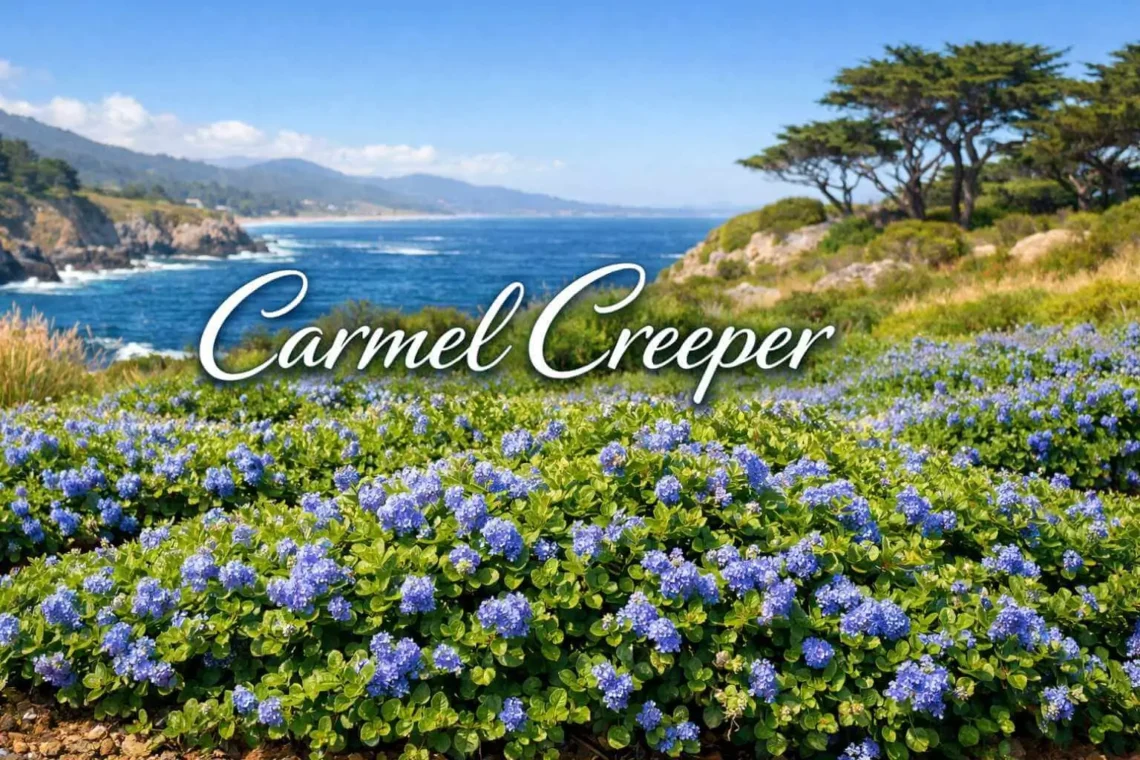
Introduction: What Is Carmel Creeper?
Carmel Creeper is a low-growing, mat-forming California native plant widely used as a ground cover in residential and ecological landscapes. Scientifically classified within the Ceanothus genus, this plant is also commonly referred to as the Carmel Creeper plant, Carmel Creeper ground cover, Carmel Creeper California lilac, or wild lilac. It is valued for its dense foliage, small, vibrant flowers, and adaptability to dry, coastal environments. Understanding Carmel Creeper involves examining its ecological role, growth habits, and landscape applications, including comparisons with other low-growing Ceanothus types. Clear distinction between common and botanical names ensures accurate identification for gardeners and ecological planners.
Botanical Classification and Naming
Scientific Name and Taxonomy
Carmel Creeper belongs to the Ceanothus genus, specifically classified as Ceanothus griseus var. horizontalis ‘Carmel Creeper’. It is a cultivar of the species Ceanothus griseus, sometimes referenced as Ceanothus horizontalis. The cultivar name distinguishes it from species-level identifiers. Using accurate botanical terminology, such as Ceanothus carmel creeper or Ceanothus griseus horizontalis carmel creeper, prevents misidentification and aligns with horticultural standards. This classification ensures clarity for ecological studies, landscaping, and propagation efforts. Carmel Creeper belongs to the Ceanothus genus (Wikipedia), specifically classified as Ceanothus griseus var. horizontalis ‘Carmel Creeper’.
Native Range and Ecological Role
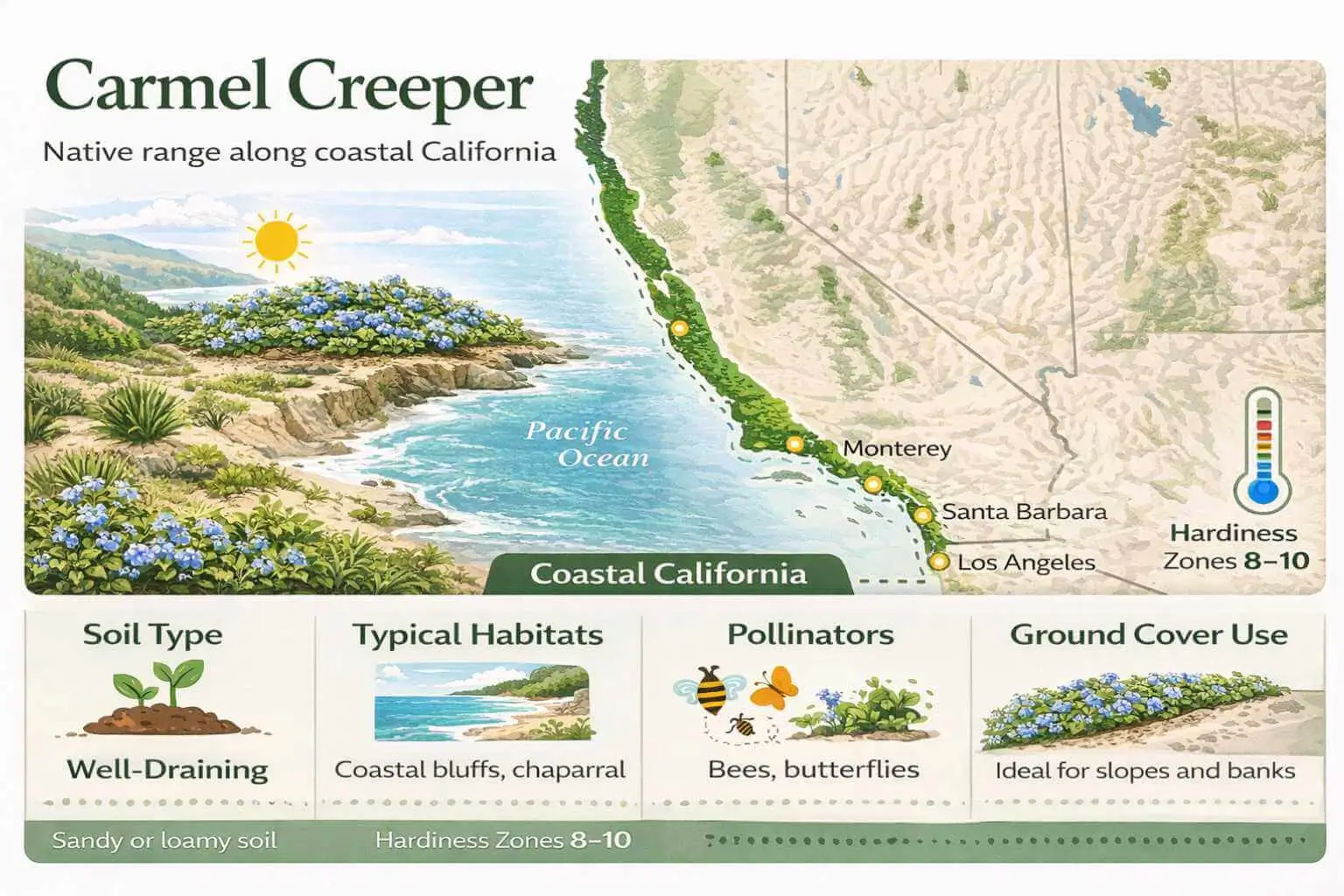
Carmel Creeper is native to coastal California, thriving in well-drained soils along coastal bluffs and chaparral regions. Within native plant communities, it contributes to erosion control, stabilizes slopes, and supports soil health through nitrogen fixation. The plant attracts native pollinators, including bees and butterflies, while providing shelter for local wildlife. Often referred to as California lilac or wild lilac, Carmel Creeper is well-adapted to Mediterranean climates, offering ecological benefits that make it suitable for both restoration projects and ornamental landscapes.
Growth Habit and Physical Characteristics
Size, Height, and Spread
Carmel Creeper is a low-growing, mat-forming plant, typically reaching 6–12 inches in height and spreading laterally up to 6–8 feet under optimal conditions. Its horizontal growth habit creates dense ground coverage, reducing weed growth and soil erosion. This low-profile structure makes it ideal for slopes, banks, and low-water landscapes.
Growth Rate and Longevity
Under suitable conditions, Carmel Creeper grows at a moderate rate, establishing substantial coverage within 2–3 years. Once mature, it maintains its form for decades with minimal intervention. The plant’s longevity and consistent structure contribute to its reliability as a landscape ground cover.
Growing Conditions and Environmental Requirements
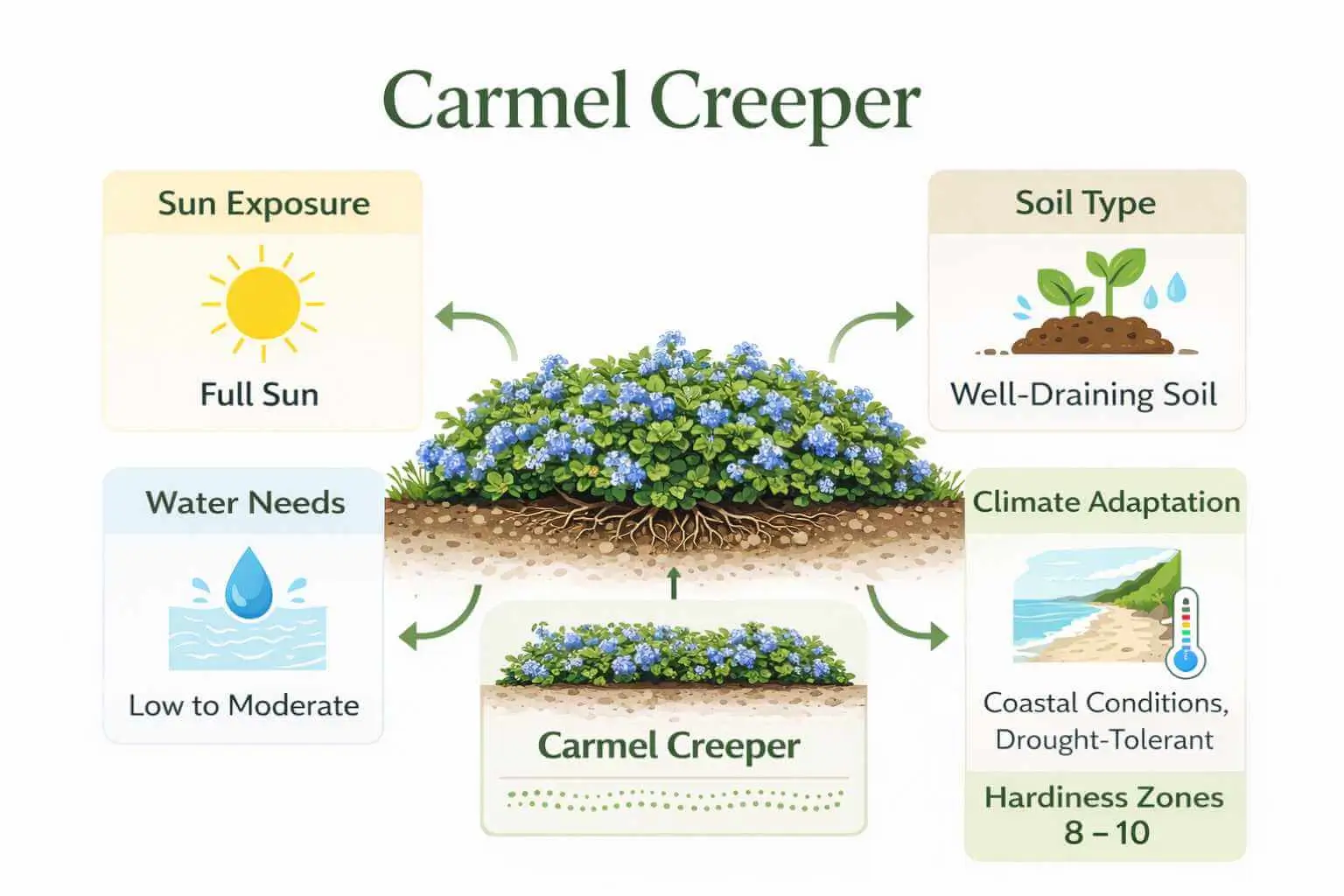
Sun, Soil, and Water Needs
Carmel Creeper thrives in full sun but tolerates partial shade. It requires well-drained soils and shows high drought tolerance once established. Excessive moisture or poor drainage can lead to root rot. Understanding these growing conditions ensures optimal plant health, minimizing maintenance needs and maximizing ground cover performance. Like drought-tolerant species such as bamboo, Carmel Creeper thrives in full sun and well-drained soils once established.
Climate and Hardiness
The plant performs best in coastal climates but can adapt to inland conditions with appropriate irrigation management. Carmel Creeper is sensitive to overwatering, poor drainage, and frost-prone microclimates. Selecting the right planting site enhances survival and visual appeal.
Carmel Creeper as a Ground Cover
Carmel Creeper functions effectively as a ground cover due to its low, spreading habit and dense foliage. It stabilizes slopes and banks, reduces soil erosion, and provides visual texture in low-water landscapes. Compared with other low-growing Ceanothus types, Carmel Creeper offers reliable coverage with minimal pruning, making it a practical choice for both ecological and ornamental uses. Variegated forms expand aesthetic options while maintaining the same functional benefits. Similar to other low-maintenance ground covers like Dymondia, Carmel Creeper provides dense foliage that stabilizes soil and reduces weed growth.
Varieties and Cultivars Related to Carmel Creeper
Standard Carmel Creeper vs Variegated Forms
Variegated Carmel Creeper features leaves with lighter margins, creating visual contrast and enhancing garden aesthetics. While maintaining a similar low-growing habit, variegated forms may exhibit slight differences in vigor and density compared with the standard cultivar. Both types retain their ecological and landscape benefits.
Diamond Heights Selection
Diamond Heights is a specific selection of Carmel Creeper distinguished by pronounced leaf variegation and slower, more compact growth. Known botanically as Ceanothus griseus Diamond Heights, this cultivar provides unique visual appeal and controlled spread, suitable for small-scale landscapes or feature plantings in native gardens.
Carmel Creeper vs Yankee Point
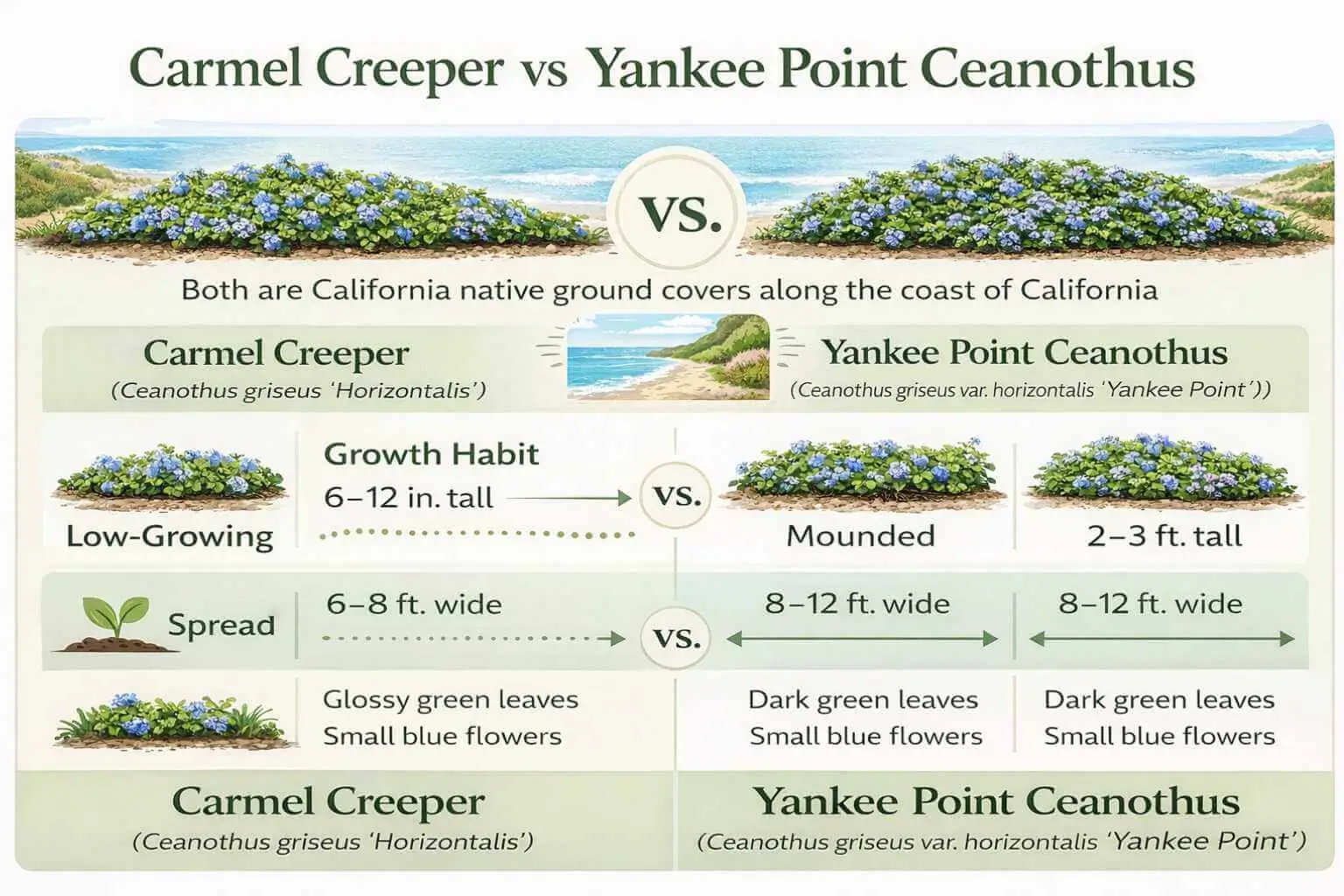
Carmel Creeper and Yankee Point (Ceanothus griseus Yankee Point) are closely related low-growing Ceanothus types. Carmel Creeper exhibits a broader spread and slightly lower profile, while Yankee Point often grows more compactly with denser foliage. Landscape selection depends on site conditions, desired visual effect, and maintenance considerations, with Carmel Creeper preferred for wider ground coverage and Yankee Point for tighter, formal arrangements.
Invasiveness and Maintenance Considerations
Carmel Creeper is not considered invasive in native habitats. It spreads naturally through vegetative growth without aggressive behavior. Minimal pruning maintains its shape and density, while its drought tolerance and low water requirement reduce ongoing maintenance. Awareness of natural spread patterns prevents misclassification as invasive.
Reproduction and Propagation Overview
Carmel Creeper reproduces through both seed production and vegetative spread. Seeds contribute to natural population renewal, while layering and stolon growth allow horizontal expansion. This dual reproduction strategy ensures resilience in native landscapes. Propagation is primarily ecological rather than commercial in focus.
Common Confusions and Misidentifications
Carmel Creeper can be confused with other low-growing Ceanothus, such as Yankee Point or other Ceanothus horizontalis cultivars. Naming overlap between species and cultivars often causes misidentification. Conceptually, Carmel Creeper is distinguished by its lateral spread, low height, and mat-forming habit, while related cultivars may differ in leaf variegation or growth density.
Conclusion: Understanding Carmel Creeper in Context
Carmel Creeper serves as a versatile, ecologically beneficial California native ground cover. Its low-growing, spreading habit, drought tolerance, and pollinator support make it a valuable addition to native plant gardens and sustainable landscapes. Understanding its growth requirements, cultivars, and ecological role encourages informed plant selection and promotes healthy, functional ecosystems.
FAQ
- What type of plant is Carmel Creeper?
A low-growing California native Ceanothus used primarily as a ground cover. - How big does Carmel Creeper typically get?
It stays low in height while spreading horizontally to form a dense mat. - Is Carmel Creeper invasive?
No, it spreads naturally but is not considered invasive in native landscapes. - How is Carmel Creeper different from Yankee Point?
They differ in growth habit, spread, and visual texture, despite both being low-growing Ceanothus types. - What conditions does Carmel Creeper need to grow well?
It prefers full sun, well-drained soil, and minimal summer water once established. - Why is Carmel Creeper considered a California lilac?
It belongs to the Ceanothus genus, commonly known as California lilac due to its flower form.