Introduction
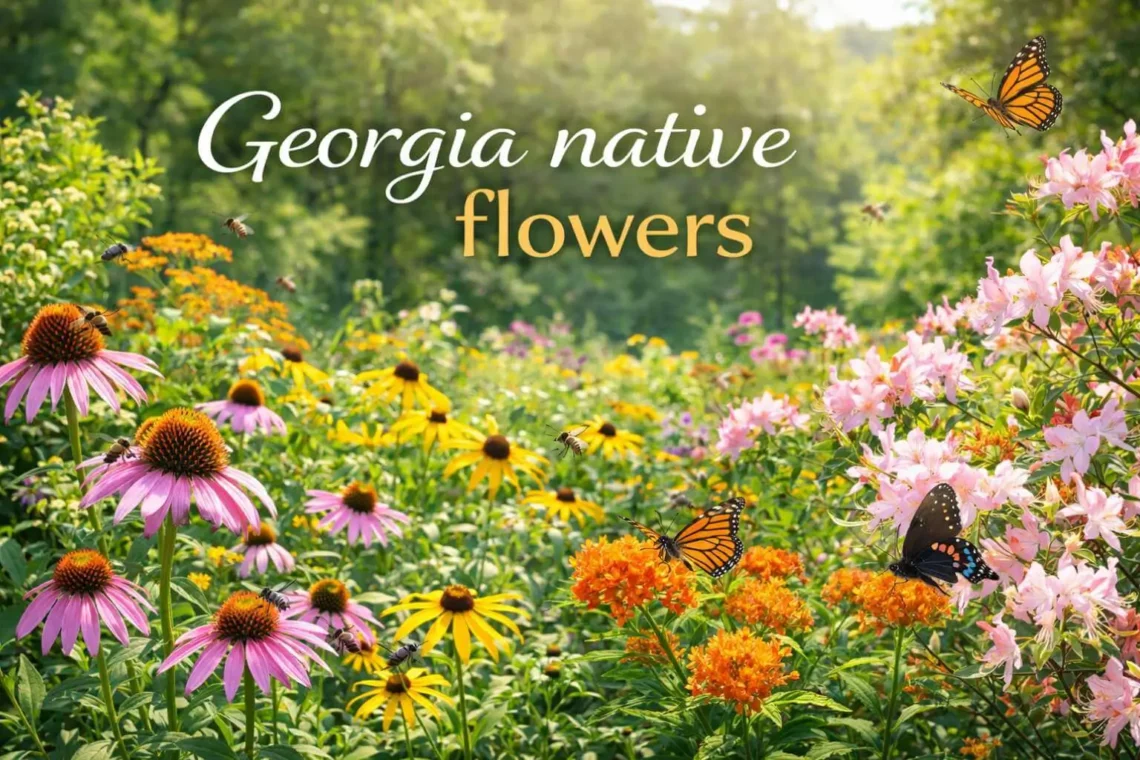
Georgia native flowers are plant species that naturally occur in the state without human introduction, perfectly adapted to the local soil, climate, and ecosystems. These plants play a crucial role in maintaining ecological balance by supporting pollinators, enhancing soil health, and sustaining regional biodiversity. Planting and identifying native flowers benefits bees, butterflies, and other pollinators while reducing the need for chemical fertilizers or pesticides. Across Georgia, native plants vary significantly: North Georgia features cooler mountain climates and forested regions, while South Georgia offers warmer coastal plains and wetlands. Understanding these distinctions allows gardeners and landscapers to choose the right species for their specific region. These plants play a crucial role in maintaining ecological balance by supporting pollinators such as bees and butterflies, enhancing soil health, and sustaining regional biodiversity.
Identifying Georgia Native Flowers
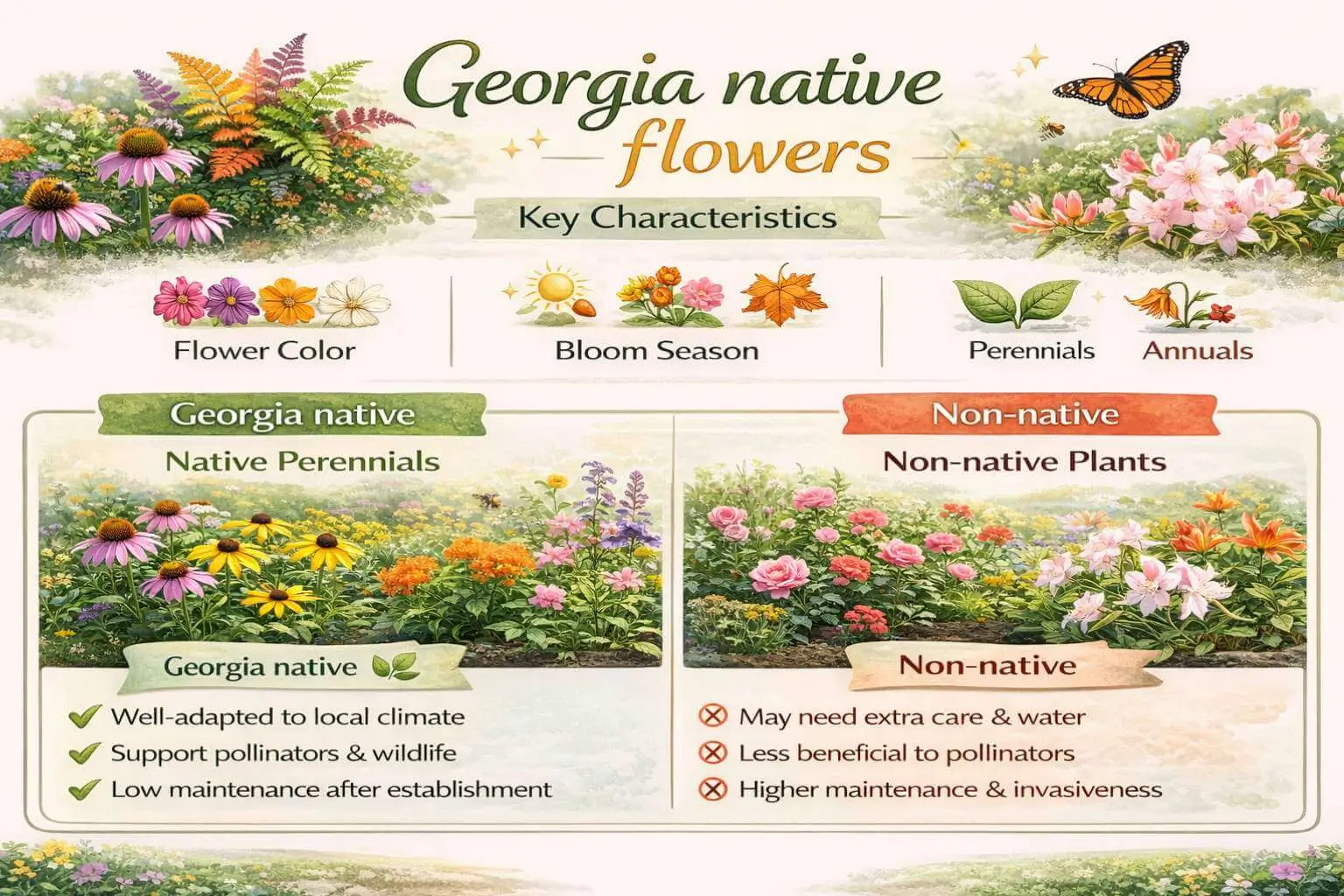
Key Characteristics
Native flowers can be recognized by several distinct characteristics:
- Flower color and bloom season: Many native perennials exhibit seasonal blooms ranging from spring to fall.
- Growth habits: Native species typically adapt to local soil and climate conditions, often requiring less maintenance than non-natives.
- Differentiating natives from non-natives: Native perennials can be distinguished by leaf shapes, natural propagation patterns, and resilience to local pests.
Regional Variations
Georgia’s native flowers differ between regions:
- North Georgia: Cooler temperatures and higher elevations favor mountain laurel, wild columbine, and native azaleas.
- South Georgia: Warmer coastal plains support species such as swamp milkweed, coneflowers, and black-eyed susans.
Understanding regional variations ensures optimal plant selection for garden success.
Tools for Identification
Effective tools for identifying native flowers include:
- Field guides: Printed guides specific to Georgia flora.
- Mobile apps: Plant identification apps like iNaturalist or PlantSnap.
- Native plant lists: State and regional databases detailing species and growth conditions.
Types of Georgia Native Flowers
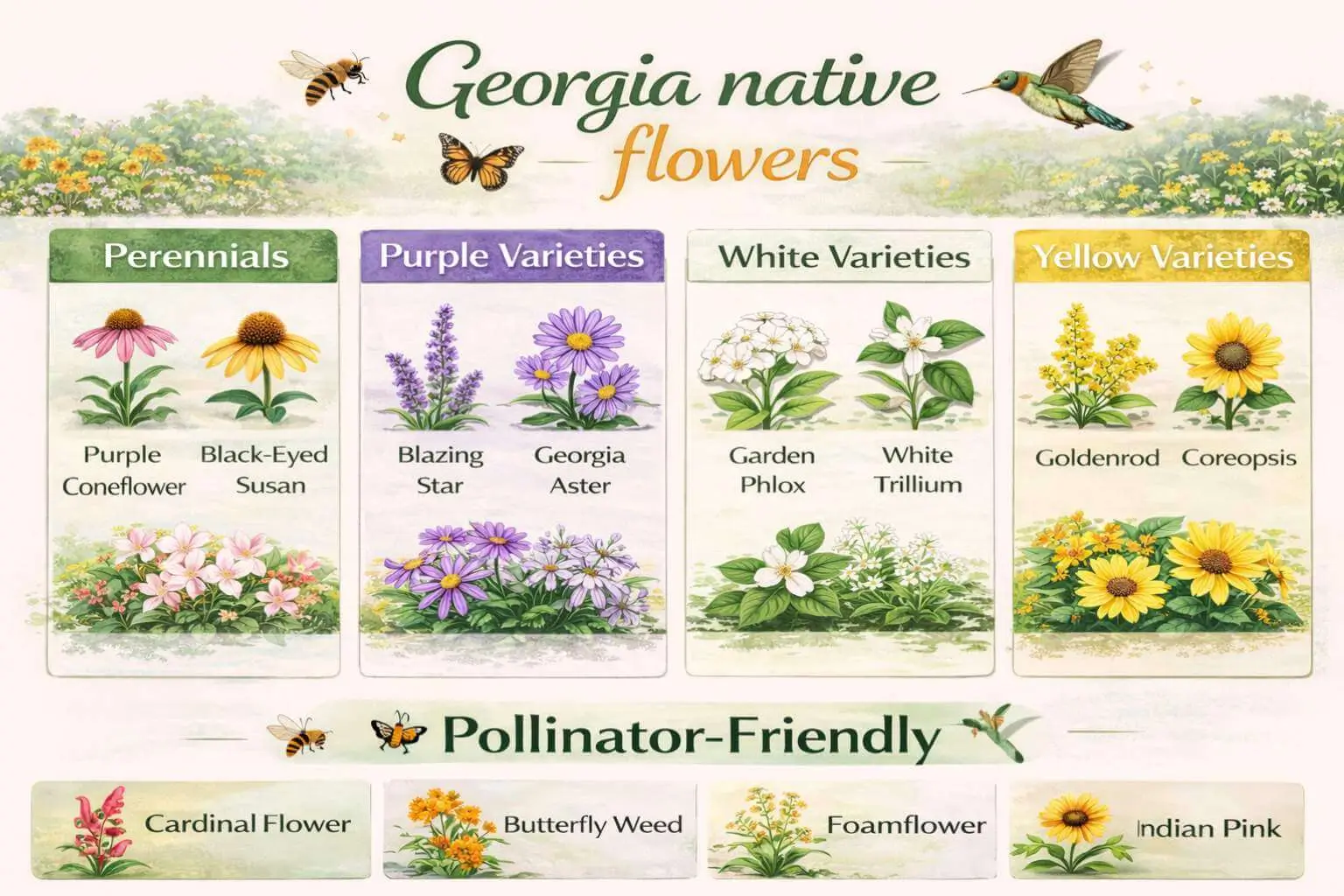
Perennial Flowers
Perennials are plants that live for multiple years, providing recurring blooms each season. Native perennial flowers are well-suited for Georgia landscapes because they require minimal care, are drought-tolerant, and attract pollinators. Popular examples include purple coneflowers, black-eyed susans, and wild indigo.
Color-Specific Varieties
Georgia native flowers exhibit a wide range of colors:
- Purple flowers: Purple coneflowers, wild bergamot.
- White flowers: White trilliums, Carolina jessamine.
- Yellow flowers: Black-eyed susans, goldenrod.
These color-specific options enhance both aesthetic appeal and ecological diversity.
Pollinator-Friendly Flowers
Many Georgia native flowers are highly attractive to pollinators such as bees, butterflies, and hummingbirds. Planting these species supports biodiversity while ensuring better garden productivity. Examples include milkweeds, bee balm, and cardinal flowers. any Georgia native flowers attract pollinators, especially hummingbirds, similar to species detailed in Perennial Flowers for Hummingbirds.
Using Native Flowers in Georgia Landscaping
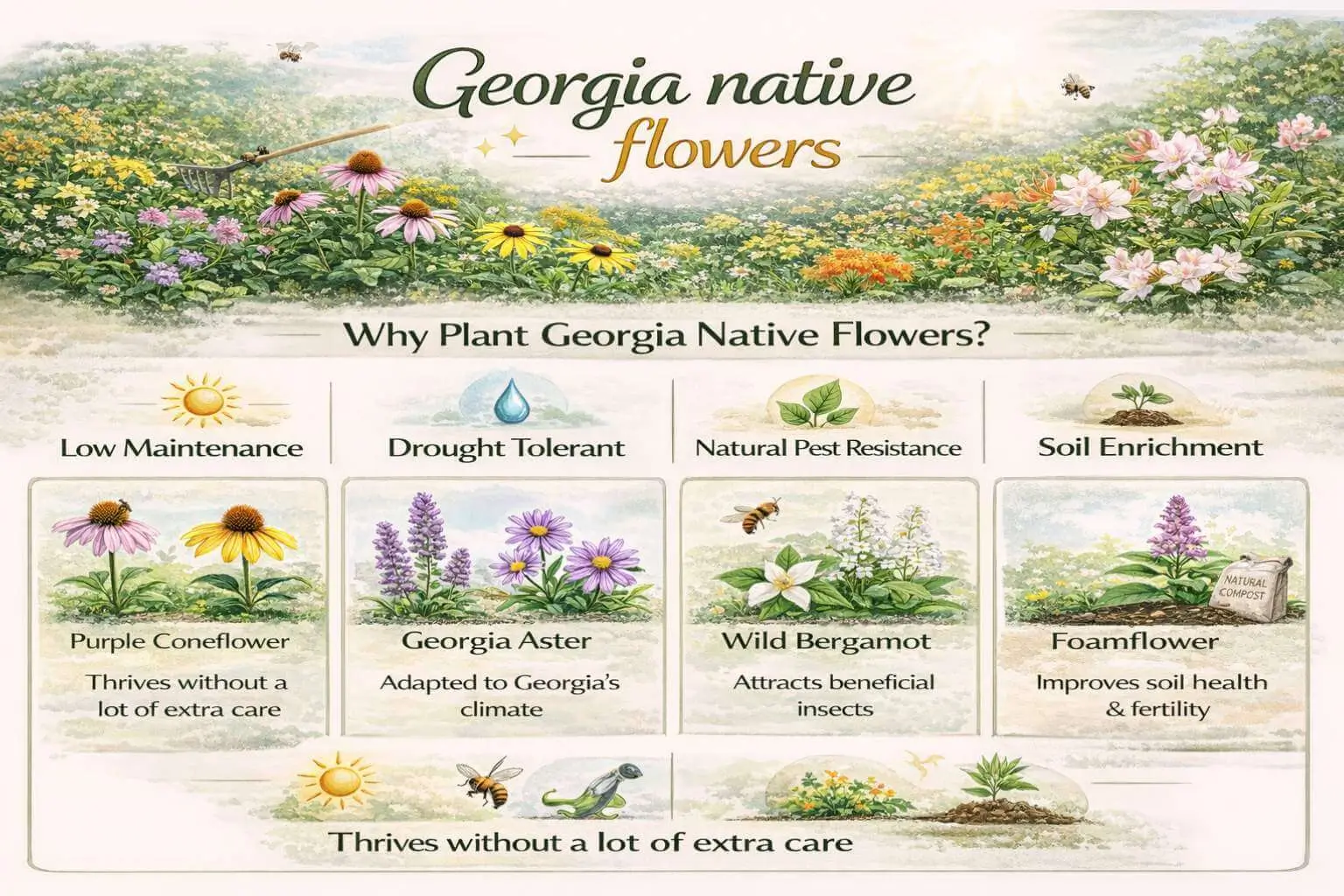
Benefits
Using native flowers in landscaping offers several advantages:
- Low maintenance: Adapted to local soil and climate.
- Drought tolerance: Survive dry spells with minimal watering.
- Natural pest resistance: Fewer chemicals needed.
- Soil enrichment: Promote healthy microbial activity and prevent erosion.
Native flowers provide soil enrichment and natural pest resistance, similar to how other low-maintenance plants like Sweet Flag Grass enhance garden health and biodiversity.
Design Considerations
When incorporating native flowers, consider:
- Sun exposure: Some species require full sun, others partial shade.
- Plant spacing: Proper spacing prevents overcrowding and disease.
- Companion planting: Combine species that benefit each other ecologically.
Regional Landscaping Tips
Gardeners should tailor landscaping choices based on regional climates:
- North Georgia: Opt for species tolerant of cooler temperatures and mountain soils.
- South Georgia: Choose plants suited for heat, humidity, and coastal soils.
Related Native Plants in Georgia
Trees Native to Georgia
Complementing native flower gardens with trees enhances structure and biodiversity. Native trees like dogwood, red maple, and eastern redbud provide shade, habitat for pollinators, and seasonal beauty.
Shrubs and Groundcovers
Layered gardens with shrubs and groundcovers increase ecological richness. Examples include azaleas, ferns, and creeping phlox, which provide habitat and erosion control.
Seasonal and Regional Flowering
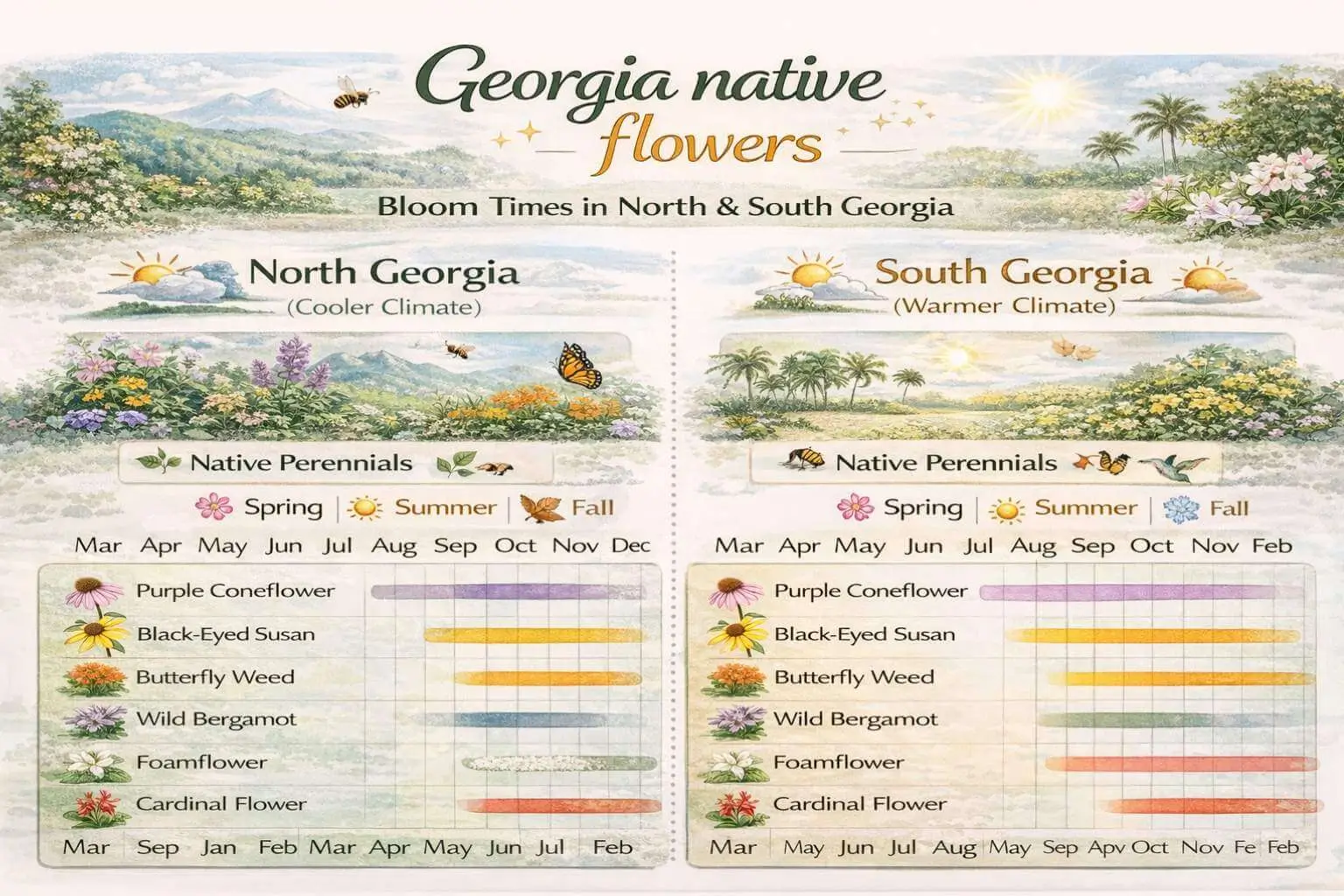
Flowering times vary by region and climate:
- North Georgia: Cooler climates delay blooming; spring and early summer are peak periods.
- South Georgia: Warmer temperatures encourage early spring and summer blooms.
Understanding seasonal patterns helps in planning a continuous display of native flowers.
Conclusion
Exploring Georgia native flowers encourages appreciation for the state’s rich botanical diversity. Planting native species not only beautifies landscapes but also supports pollinators, improves soil health, and promotes regional biodiversity. Understanding ecological benefits and regional adaptability ensures that gardeners contribute to the preservation of Georgia’s natural flora.
FAQs
- What are Georgia native flowers?
Georgia native flowers are species that naturally grow in Georgia without human introduction, adapted to local soil and climate conditions. - How can I identify native flowers in Georgia?
Identification is based on bloom season, flower color, leaf structure, and regional growth patterns, supported by guides and apps. - Which native flowers are best for Georgia pollinators?
Bees and butterflies are attracted to native perennials like purple coneflowers, black-eyed susans, and milkweeds. - Can I use native flowers in landscaping?
Yes, native flowers are ideal for low-maintenance landscaping, providing natural beauty, soil enrichment, and ecological support. - Do native flowers bloom differently across Georgia?
Yes, North Georgia flowers may have later blooms due to cooler climates, while South Georgia flowers bloom earlier in warmer zones.