
Introduction: What Are Arizona Roses?
Arizona roses are specialized rose varieties and cultivation practices developed to thrive in the unique climate and soil conditions of Arizona. The region’s intense heat, high sun exposure, low humidity, and alkaline soils make standard rose care practices insufficient. Arizona roses include selections that tolerate desert stress, adapt to rapid temperature changes, and maintain blooms under harsh sunlight. Gardeners, landscapers, and plant enthusiasts should understand these varieties to achieve optimal growth, durability, and aesthetic appeal. This article provides detailed guidance on selecting, planting, and maintaining roses specifically adapted to Arizona’s challenging environment. Arizona roses are specialized varieties of the genus Rosa, cultivated to withstand desert heat, low humidity, and alkaline soils.
Climate Factors That Shape Roses in Arizona
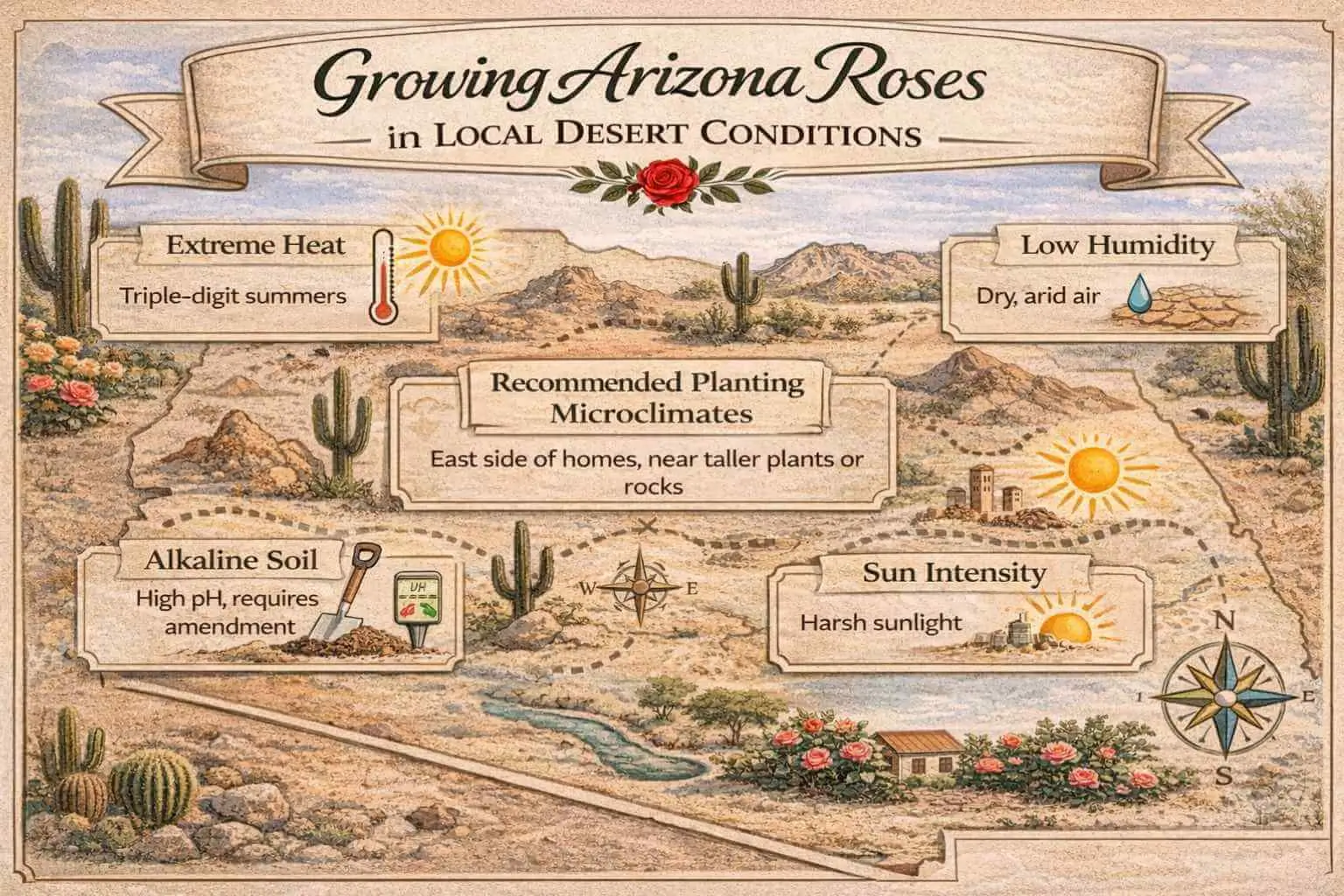
Arizona’s climate presents multiple challenges for rose cultivation. Extreme summer heat can exceed 100°F, while low humidity increases transpiration, leading to potential water stress. Soils are often alkaline with limited organic matter, affecting nutrient availability. Intense sun exposure can cause leaf scorch and fading blooms. Standard rose advice from temperate regions often fails because these roses are not selected for desert conditions. Understanding local heat, soil, and sunlight dynamics is critical when growing roses in Arizona.
Rose Types That Perform Well in Arizona
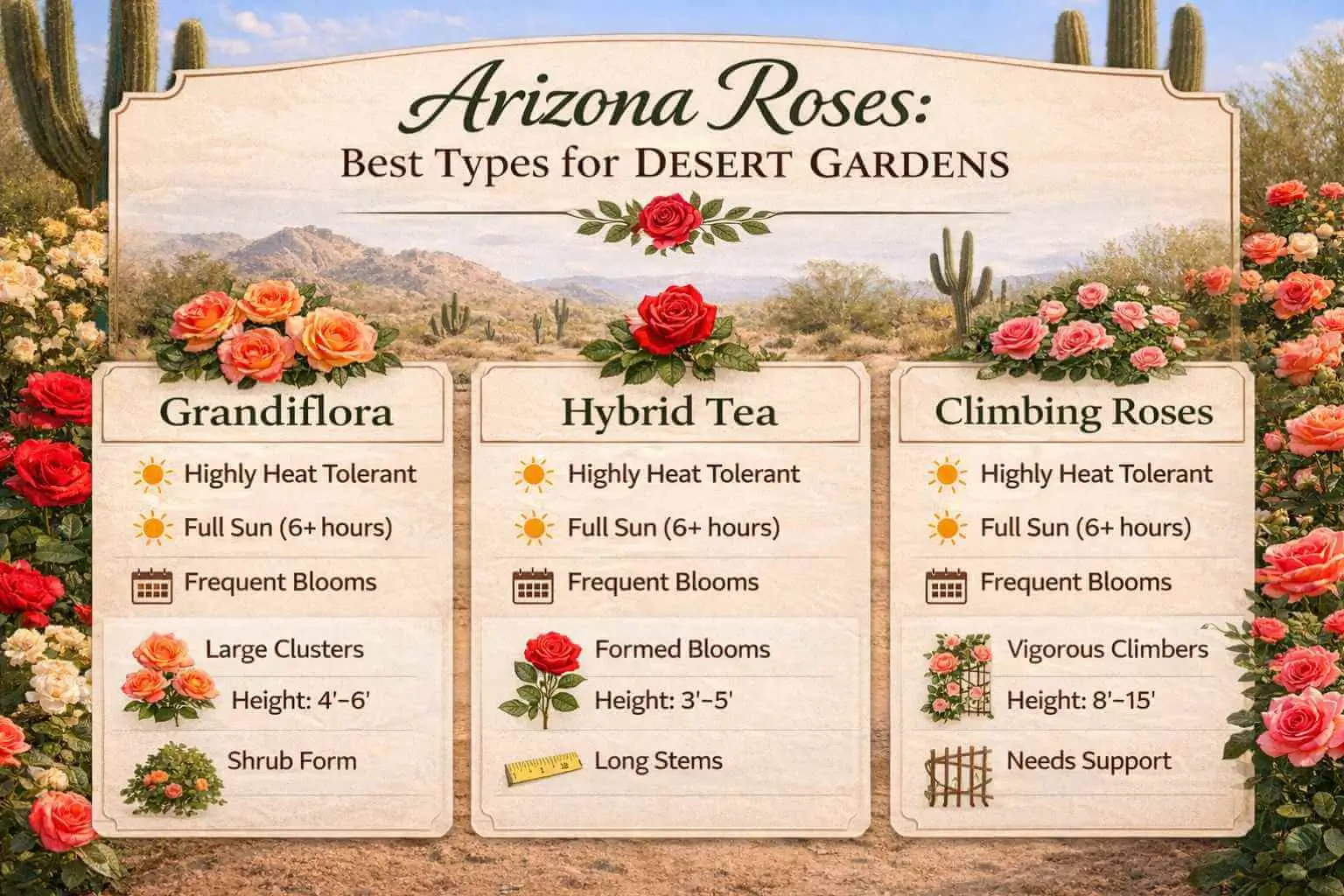
Roses that thrive in Arizona are selected for heat tolerance, sun resilience, and adaptability to arid soils. Instead of ranking varieties, it is useful to classify them based on performance under desert conditions. Groups such as Grandiflora, Hybrid Tea, and Climbing roses have specific traits that suit Arizona landscapes.
Grandiflora Roses in Arizona Conditions
Grandiflora roses combine the large blooms of Hybrid Teas with the bushy growth of Floribundas. These roses are valued in Arizona for their continuous bloom cycles, structural resilience, and ability to tolerate heat with proper irrigation. Commonly referenced as Arizona rose grandiflora, arizona grandiflora rose, or grandiflora rose arizona, they are versatile in both garden beds and structured landscapes.
Hybrid Tea Roses and Heat Adaptation
Hybrid Tea roses are known for their elegant, single blooms and formal shapes. In Arizona, they require attentive care, including regular watering, mulching, and shade during peak sun hours. Heat-sensitive compared to other groups, Arizona hybrid tea roses perform best in microclimates that reduce sun exposure while maintaining air circulation.
Climbing Roses for Arizona Landscapes
Climbing roses in Arizona require structural support such as trellises or arbors. They adapt well to vertical spaces and can withstand intense sun if planted in locations with morning shade or partial afternoon protection. Arizona climbing roses offer prolonged bloom periods and are excellent for fences, walls, and pergolas.
Heat-Tolerant and Desert-Adapted Rose Varieties
Certain physiological traits improve heat tolerance in roses. Thick, waxy leaves reduce water loss, while deep root systems enhance drought resilience. Varieties labeled as heat tolerant roses arizona or arizona desert roses bloom consistently under high temperatures and recover quickly from brief stress periods. Selecting these types reduces maintenance while supporting long-term garden performance.
Planting Roses Successfully in Arizona
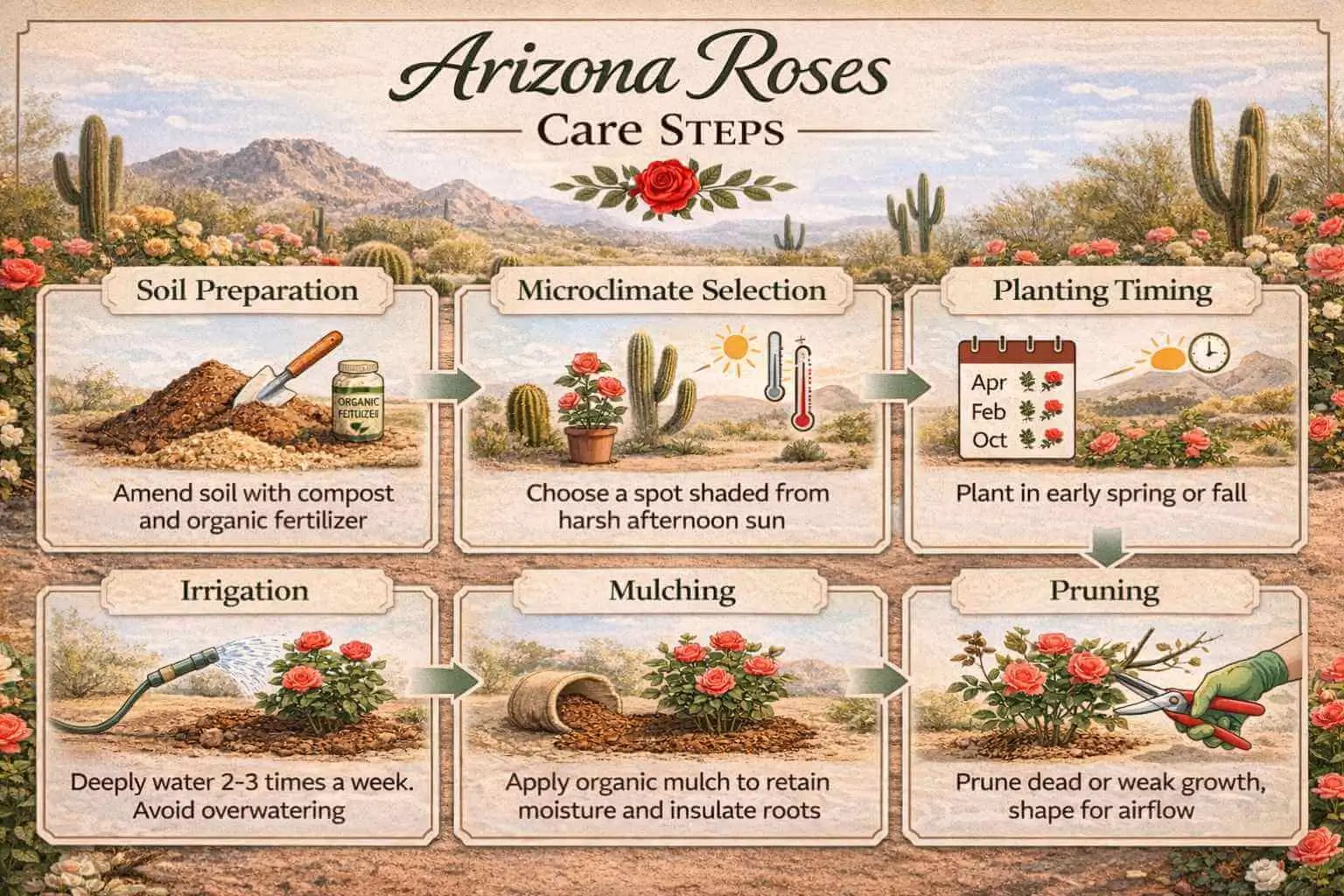
Soil preparation is critical when planting roses in Arizona. Loamy or amended soils with adequate drainage prevent root rot in high temperatures. Microclimate selection—planting near walls, partial shade areas, or wind-protected spots—can reduce heat stress. The best time to plant roses in Arizona is during cooler months to allow roots to establish before summer extremes. Similar to carefully planting desert-adapted bamboo, Arizona roses require soil preparation, microclimate selection, and proper irrigation to ensure healthy growth.
Seasonal Rose Care in Arizona
Seasonal care in Arizona focuses on water management, mulching, fertilization, and monitoring stress symptoms. Drip irrigation is preferred to maintain soil moisture without wetting foliage, reducing fungal risk. Organic mulch protects roots from temperature extremes. Fertilization schedules should align with bloom cycles, avoiding nutrient overload during peak summer heat. Arizona roses care requires constant monitoring for signs of sunscald, leaf drop, and dehydration.
When and How to Prune Roses in Arizona
Pruning timing in Arizona differs from cooler climates. Early spring pruning is common, but in extreme heat regions, light pruning during winter can prevent stress. Proper pruning enhances airflow, encourages blooming, and mitigates pest pressures. When to prune roses in Arizona should be guided by local frost dates and plant vigor.
Rose Colors and Landscape Uses in Arizona
Rose color varieties respond differently to intense sun. Arizona white roses reflect heat, reducing leaf scorch, while darker tones like Arizona sunset roses may fade under direct sun. Color selection affects visual impact, heat tolerance, and bloom longevity. Gardeners should consider shade patterns, background foliage, and seasonal aesthetics when planning rose placement.
Rose Growth Forms: Bushes, Trees, and Structure
Bush roses form compact growth suitable for beds and borders. Tree-form roses offer vertical accents, requiring staking or support in high winds. Arizona rose bush, arizona rose bushes, and arizona rose tree selections must be chosen with attention to growth habit, pruning needs, and maintenance intensity. Proper structural management ensures resilience under desert conditions.
Native and Locally Grown Roses in Arizona
Arizona-grown roses and rosa arizona varieties demonstrate adaptation to local soil, climate, and pest pressures. Native or locally propagated roses show higher survival rates, reduced irrigation needs, and better bloom consistency. Understanding the difference between “Arizona-grown” and non-local varieties supports sustainable and resilient garden planning. Just as desert-adapted plants like Japanese Sweet Flag Grass thrive under intense sunlight and arid conditions, Arizona-grown roses benefit from local adaptation and heat-tolerant traits.
Common Challenges When Growing Roses in Arizona
Arizona roses face heat stress, sunscald, water imbalance, and pest pressures. Preventive strategies include mulching, microclimate selection, regulated irrigation, and monitoring for insects or fungal disease. Timely pruning and careful variety selection mitigate environmental challenges, ensuring consistent bloom and plant health.
Conclusion: Understanding Arizona Roses
Arizona roses thrive when gardeners understand climate, soil, and seasonal care requirements. Selection of heat-tolerant varieties, proper planting, pruning, and irrigation practices enhance bloom quality and plant longevity. Observing environmental responses and exploring locally adapted varieties ensures success. Gardeners can learn more, explore diverse rose types, and optimize conditions for desert-adapted roses.
FAQ
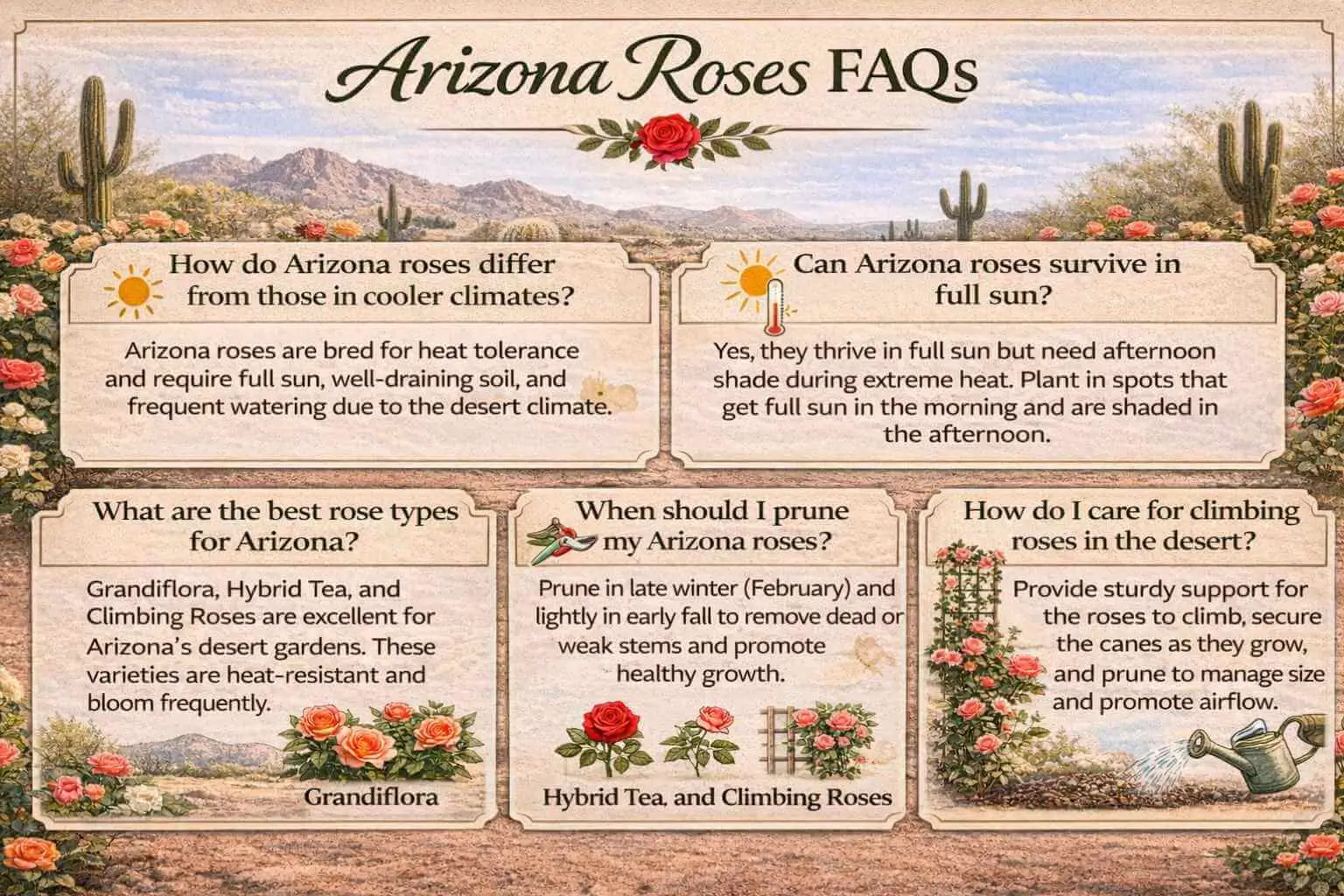
- What makes roses in Arizona different from roses grown in cooler climates?
Roses in Arizona must withstand extreme heat, intense sunlight, and alkaline soils. These conditions influence water needs, pruning schedules, and bloom cycles, differing significantly from cooler regions. - Can roses survive full sun in Arizona?
Yes, but only heat-tolerant varieties with adequate irrigation and mulching. Partial shade or morning sun exposure enhances survival and bloom quality. - What type of rose grows best in Arizona heat?
Grandiflora, Hybrid Tea, and climbing roses with heat tolerance thrive. Desert-adapted and locally grown varieties are best suited for survival and bloom performance. - When should roses be pruned in Arizona for healthy growth?
Pruning is generally done in early spring or winter, avoiding peak summer heat. Timing depends on frost dates and plant vigor to minimize stress. - Is it possible to grow climbing roses successfully in Arizona?
Yes, with structural support, proper site selection, and heat-tolerant varieties. Morning shade or protected areas improve growth and flowering consistency.