Introduction
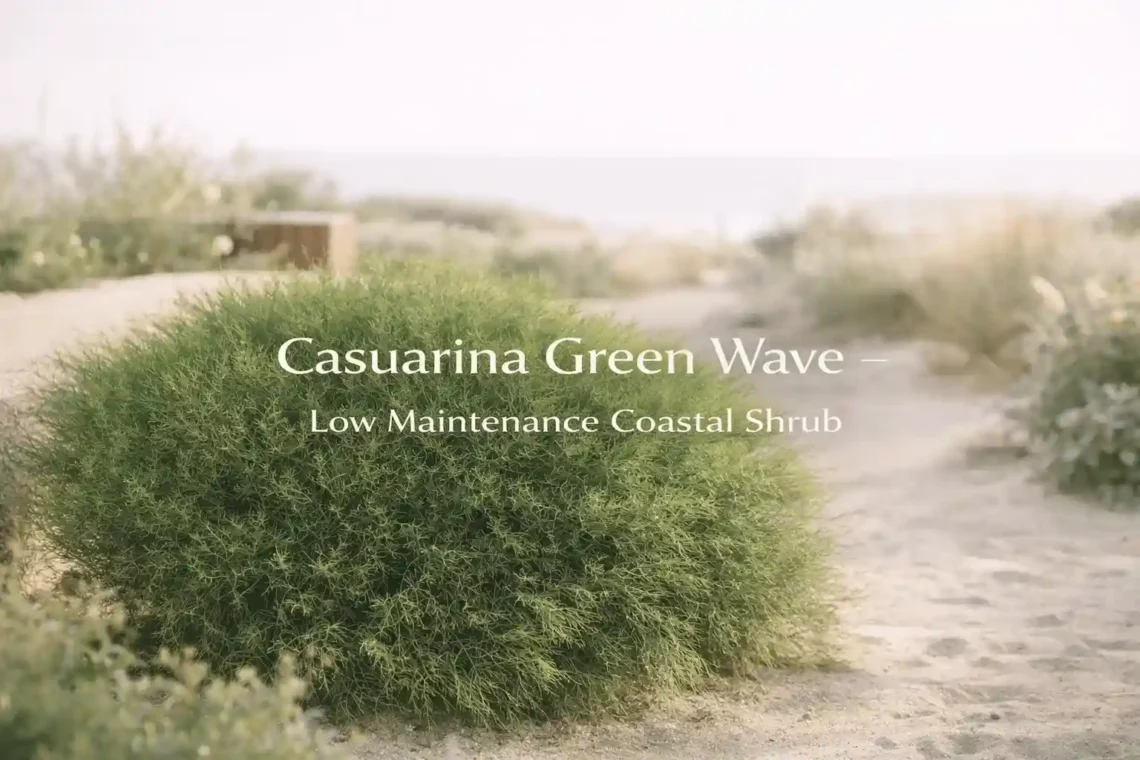
Casuarina glauca ‘Green Wave’ is a compact Australian native shrub valued for its dense, bright green, needle-like foliage and naturally rounded form. Often referred to as the casuarina green wave, green wave plant, or casuarina glauca greenwave, it belongs to the Casuarinaceae family, commonly known as the she-oak family. Native to coastal regions of Australia, this evergreen shrub is highly adapted to harsh conditions, including salt-laden winds and poor soils. Its soft, flowing texture and self-shaping growth habit make it a standout choice for low-maintenance, drought-tolerant landscapes that require year-round visual interest. It is also frequently used alongside other Australian natives such as Modern Australian Native Garden: 10+ Smart Design Ideas Guide for sustainable landscape planning.
The plant belongs to the Casuarinaceae family, commonly known as she-oaks, a group of nitrogen-fixing trees and shrubs native to Australia and nearby regions.
Learn more about the family structure here: Casuarinaceae
Quick Summary
- Hardy evergreen shrub growing 1–2m high and wide with a natural ball shape
- Thrives in full sun, coastal winds, salt spray, and poor soils
- Ideal for hedges, screens, borders, and low-water native gardens
- Requires minimal care with occasional watering and low-phosphorus fertilizer
Key Characteristics
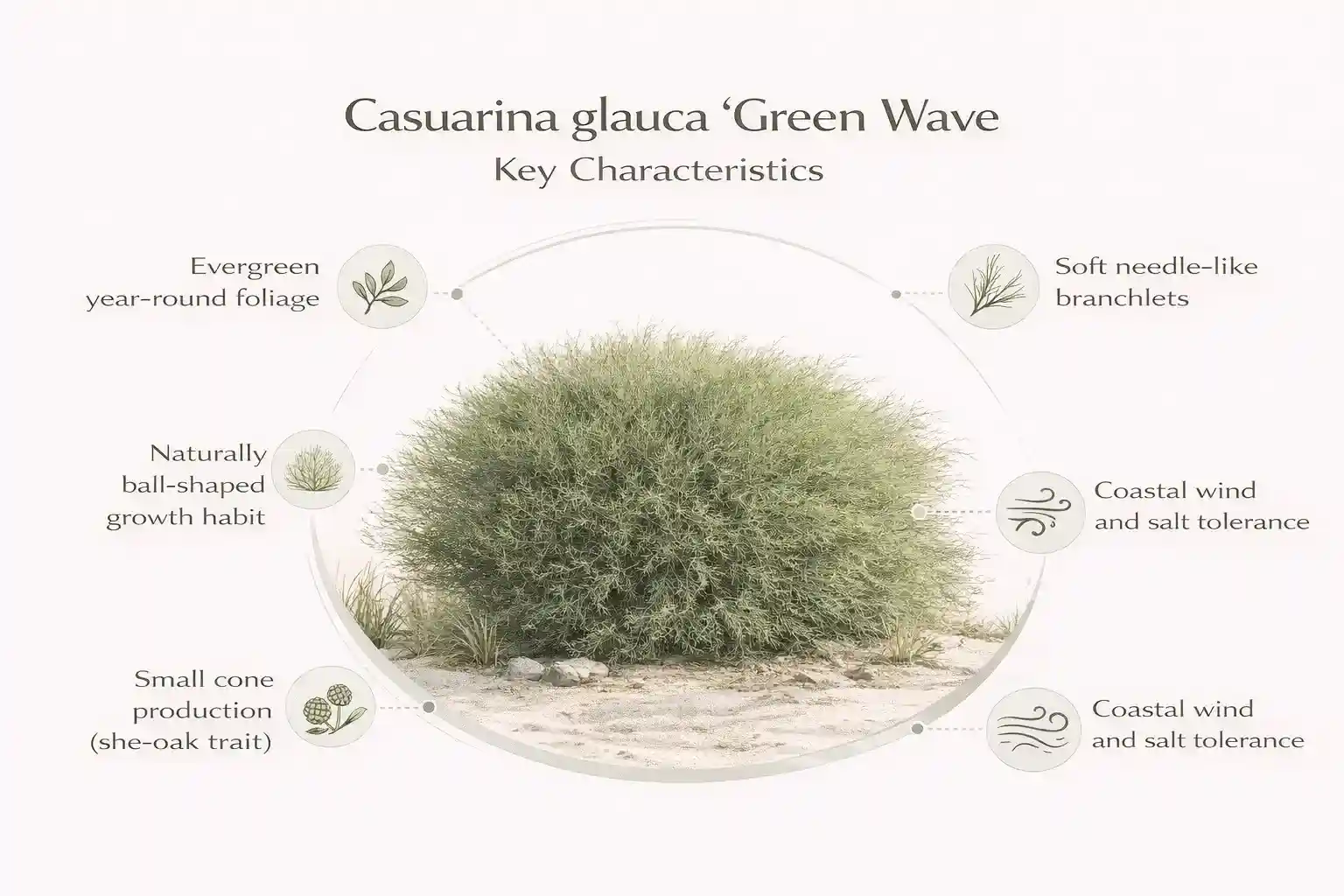
Distinctive Foliage and Structure
Casuarina glauca ‘Green Wave’ features fine, segmented branchlets that resemble pine needles but are soft and flexible. This unique foliage creates a gentle, flowing movement in the wind, adding dynamic texture to garden spaces.
- Fine, slender, bright green branchlets with a soft-touch feel
- Evergreen foliage providing year-round color consistency
- Produces small, chestnut-brown cones typical of she-oak species
Natural Growth Habit
The plant is widely known as casuarina greenwave due to its naturally rounded, compact structure. Unlike many shrubs, it maintains a tidy appearance without frequent trimming.
- Naturally spherical or mounded shape
- Dense growth ideal for screening and hedging
- Eliminates the need for constant pruning
Visual Landscape Value
Its soft texture contrasts effectively with broad-leaf native plants, enhancing visual diversity in mixed plantings.
- Creates contrast against bold foliage plants
- Adds movement and softness to structured gardens
- Works well in both modern and naturalistic landscapes
Plant Size
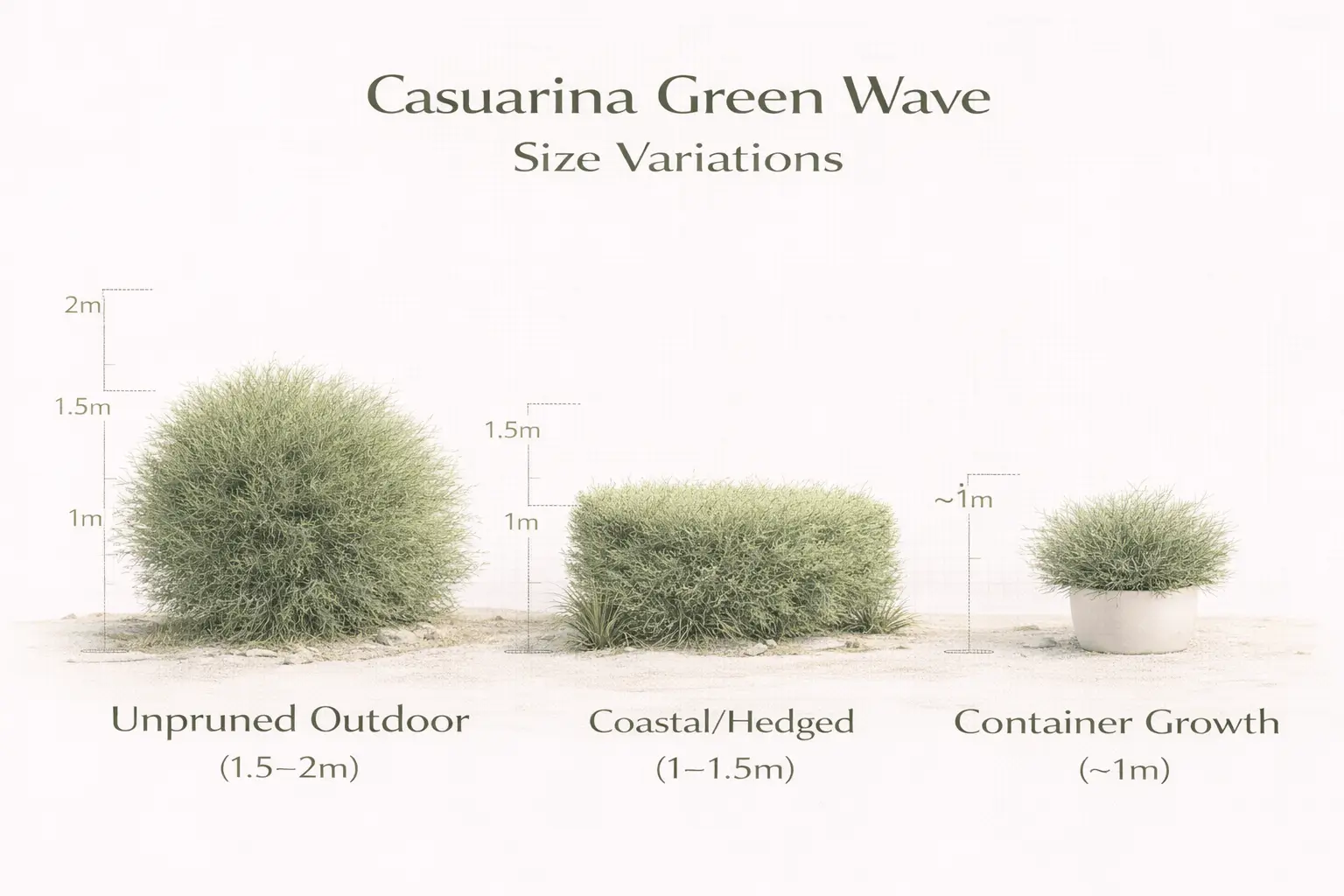
Casuarina glauca ‘Green Wave’ typically grows to a manageable size, making it suitable for residential gardens and landscape designs.
Size Variability Factors
Plant size depends on environmental conditions such as soil quality, climate, and maintenance practices.
- Rich soil may increase overall size
- Coastal winds can naturally limit growth
- Container planting restricts root expansion
Size Comparison Table
| Growth Context | Height | Width | Notes |
| Unpruned Outdoor | 1.5–2m | 1.5–2m | Full sun, fertile soil |
| Hedged/Coastal | 1–1.5m | 1–1.5m | Naturally wind-shaped |
| Container/Potted | 1m | 1m | Restricted root development |
This aligns with common search queries like “casuarina green wave height” and “casuarina glauca green wave size,” reflecting its adaptability across environments.
Growth Rate
Casuarina glauca ‘Green Wave’ has a moderate to fast growth rate, especially during its early establishment phase.
Growth Stages
- Establishment Phase (0–2 years): Rapid root and foliage development
- Maturity Phase: Growth slows, maintaining compact form
Seasonal Growth Patterns
- Peak growth occurs in spring and summer
- Growth slows significantly during cooler winter months
Influencing Factors
- Adequate sunlight accelerates growth
- Moderate watering supports healthy expansion
- Low-phosphorus fertilization enhances vigor
This growth behavior aligns with typical expectations for “casuarina glauca growth rate,” making it predictable and easy to manage.
Care Guide
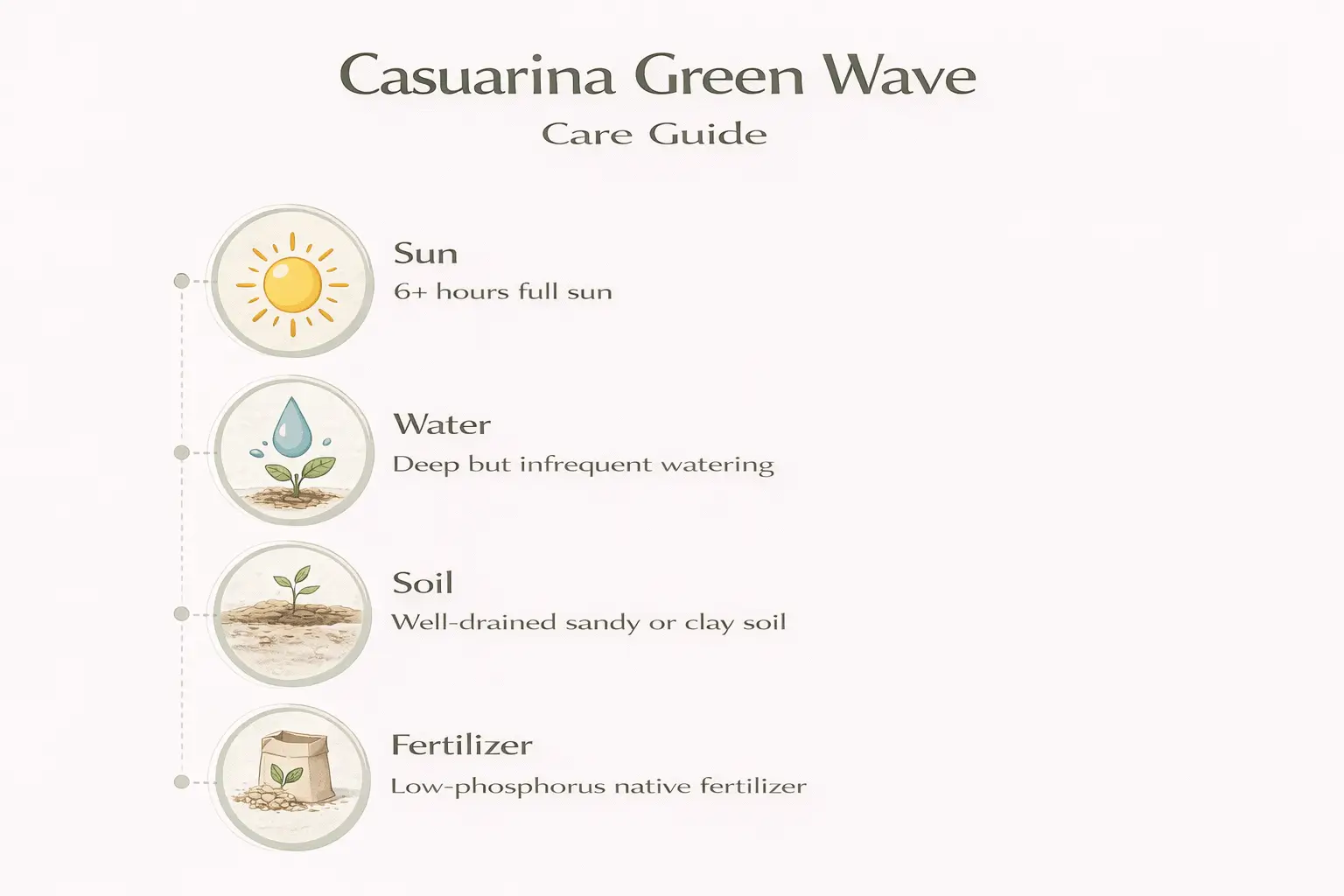
Watering
- Water deeply but infrequently
- Maintain regular watering for the first 10–12 weeks
- Once established, highly drought-tolerant
Light Requirements
- Requires full sun (minimum 6+ hours daily)
- Reduced sunlight leads to sparse growth
Soil Conditions
- Tolerates sandy, clay, and poor soils
- Prefers well-draining soil
- Adapts to neutral to slightly alkaline pH
Fertilization
- Use low-phosphorus native fertilizer annually in spring
- Avoid excessive fertilization, which can harm roots
Pruning
- Minimal pruning required
- Light tip-trimming can increase density
- Naturally maintains shape without intervention
Climate Suitability
- Suitable for warm temperate to subtropical regions (USDA zones 9–11)
- Thrives in coastal areas such as Brisbane and Perth
- Tolerates light frost but should be protected from severe cold
Since Casuarina Green Wave performs exceptionally well in coastal environments, it’s worth comparing it with other salt-tolerant, low-maintenance natives. Browse our Coastal Low-Maintenance Native Shrub Selector to discover more suitable plants for seaside gardens.
Comparisons with Similar Plants
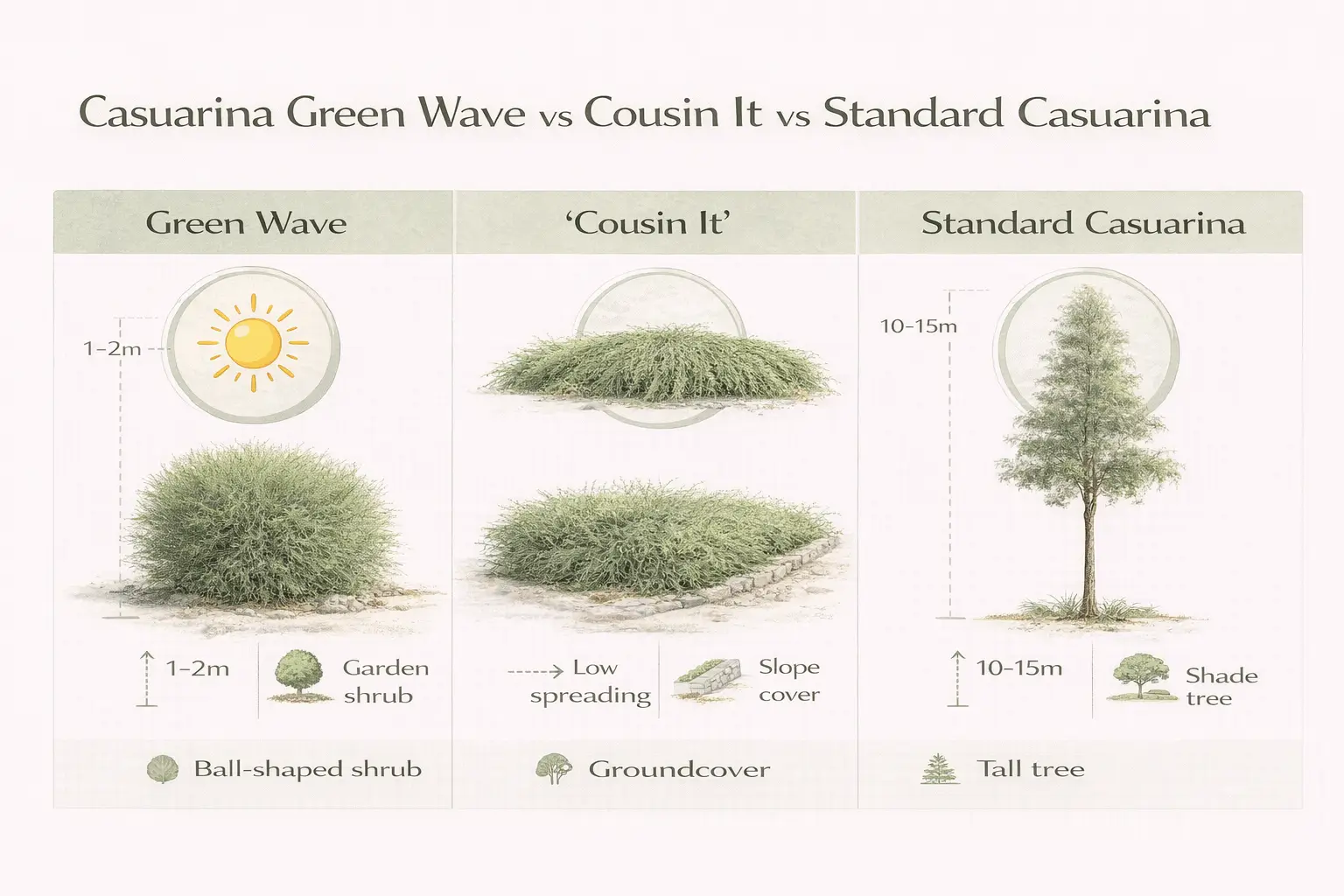
Casuarina glauca ‘Green Wave’ differs significantly from other forms within the same species.
Comparison Table
| Feature | Green Wave | Cousin It | Standard C. glauca |
| Height | 1–2m | 0.5m | 10–15m |
| Form | Ball-shaped shrub | Groundcover | Tall tree |
| Maintenance | No pruning needed | Minimal | Requires shaping |
| Best Use | Hedges/screens | Edging | Windbreaks |
Key Differences
- Green Wave: Compact and self-shaping shrub
- Cousin It: Low-growing, spreading groundcover
- Standard Casuarina glauca: Large tree requiring space and maintenance
This makes Green Wave ideal for small gardens where space efficiency is essential. For gardeners exploring similar native screening options, compare Best Lilly Pilly for Hedge: 7+ Proven Varieties Guide and 7+ Essential Lilly Pilly Varieties for Hedges & Screening to understand how Casuarina Green Wave differs in structure and maintenance needs.
Common Problems and Solutions
Yellowing Foliage
- Cause: Overwatering or poor drainage
- Solution: Improve soil drainage, use raised beds
- Prevention: Avoid waterlogged conditions
Slow Growth
- Cause: Insufficient sunlight or low nutrients
- Solution: Increase sun exposure, apply native fertilizer
- Prevention: Ensure proper planting location
Pest Infestation
- Cause: Stress leading to scale insects
- Solution: Wash with water or apply eco-oil
- Prevention: Maintain airflow and plant health
Common Beginner Mistakes
- Planting in heavy clay without improving drainage
- Over-fertilizing with phosphorus-rich products
- Placing in shaded areas
Landscaping Uses
Casuarina glauca ‘Green Wave’ is highly versatile in landscape design, particularly in low-maintenance and coastal gardens. Planning a privacy hedge or natural screen often means comparing several Australian native shrubs before planting. Use our Australian Native Screening Plant Lookup Tool to quickly identify species based on height, screening density, and landscape purpose.
Practical Applications
- Informal hedges (plant spacing: ~1m apart)
- Privacy screens with dense foliage
- Feature plant in minimalist gardens
- Mass planting for textured borders
Design Advantages
- Excellent for drought-tolerant and xeriscape gardens
- Provides year-round greenery
- Handles coastal exposure effectively
Regional Suitability
- Performs well in climates similar to Brisbane and Perth
- Ideal for sandy coastal gardens and dry inland areas
Its ability to maintain form without pruning makes it especially valuable in modern, low-maintenance landscapes.
Casuarina glauca ‘Green Wave’ is often combined with other low-maintenance native plants such as 7+ Powerful Coastal Rosemary for Stunning Gardens, Dodonaea Viscosa Hedge: 8+ Smart Reasons Homeowners Love It, and Dwarf Myrtle Shrub: 7 Stunning Benefits Every Garden Needs to create resilient, drought-tolerant garden designs.
Conclusion
Casuarina glauca ‘Green Wave’ is a reliable, low-maintenance shrub that combines structural beauty with environmental resilience. Its natural ball-shaped growth, soft evergreen foliage, and tolerance to coastal and drought conditions make it a practical choice for sustainable landscaping. With minimal care requirements and consistent performance, it offers long-term value for both residential and commercial garden designs. If you’re still comparing Australian native plants for hedging, coastal gardens, or drought-tolerant landscapes, explore our complete Australian Native Plant Database. It makes it easy to compare growth habits, maintenance needs, and landscaping uses in one place.
FAQ
What is the common name for Casuarina glauca ‘Green Wave’?
It is commonly referred to as Green Wave or Casuarina Greenwave, highlighting its flowing green foliage and compact form.
How tall does Casuarina Green Wave grow?
It typically grows between 1–2 meters in height and width, forming a natural rounded shape without the need for pruning.
Can Casuarina glauca Green Wave handle coastal conditions?
Yes, it is highly tolerant of coastal environments, including strong winds, salt spray, and sandy soils.
Is Casuarina Green Wave suitable for clay soils?
Yes, it adapts well to clay soils as long as drainage is adequate, making it suitable for a wide range of soil types.
How do you prune Casuarina glauca Greenwave?
Pruning is generally unnecessary. Light tip-trimming can be done occasionally to encourage denser growth, but the plant naturally maintains its shape.