Introduction
Iron sulphate for lawns is a widely used turf treatment that enhances grass color, suppresses moss, and corrects iron deficiencies. By supplying iron directly to grass blades and soil, it promotes darker green growth and healthier turf. Unlike general fertilizers, iron sulphate targets specific nutrient needs and moss control rather than overall nitrogen or phosphorus supplementation.
This guide provides detailed information on how iron sulphate works, appropriate application timing, correct mixing rates, safety precautions, and common errors to avoid, ensuring optimal lawn health and appearance.
What Is Iron Sulphate and How Does It Work on Lawns?
Sulphate of iron, also known as ferrous sulphate or ferrous sulfate, is a chemical compound used to improve grass health and control moss. Iron is essential for chlorophyll production, the pigment responsible for green coloration and photosynthesis in plants. Lawn iron supplements directly address iron deficiencies, unlike general fertilizers that primarily focus on nitrogen, phosphorus, or potassium.
Using ferrous sulphate for lawns ensures that iron is available for rapid absorption by grass blades and soil, improving overall turf density and color while also controlling moss growth.
Why Grass Needs Iron
Iron plays a critical role in photosynthesis by aiding in chlorophyll synthesis, which gives grass its green pigmentation. Without sufficient iron, lawns can exhibit yellowing, stunted growth, and reduced density. Symptoms of iron deficiency in grass include pale or yellow patches, slower recovery after mowing, and weakened turf structure. Iron is essential for chlorophyll production, which drives photosynthesis and green pigmentation in plants (Wikipedia – Iron in Biology).
Providing iron through iron sulphate for grass addresses these issues, maintaining uniform green coloration and promoting a robust lawn.
How Iron Sulphate Affects Moss
Iron sulphate acts as a moss killer by chemically burning moss tissues while leaving grass largely unharmed. Moss killer sulphate of iron works by altering cell structure within moss, causing it to blacken and die within 24–48 hours.
It is important to note that does iron sulphate kill moss? — yes, it does, but it is not a weed killer. The treatment targets moss specifically, and additional weed control may be necessary for broadleaf weeds. Sulphate of iron moss applications suppress moss growth effectively, improving lawn appearance and health.
Benefits of Using Iron Sulphate for Lawns
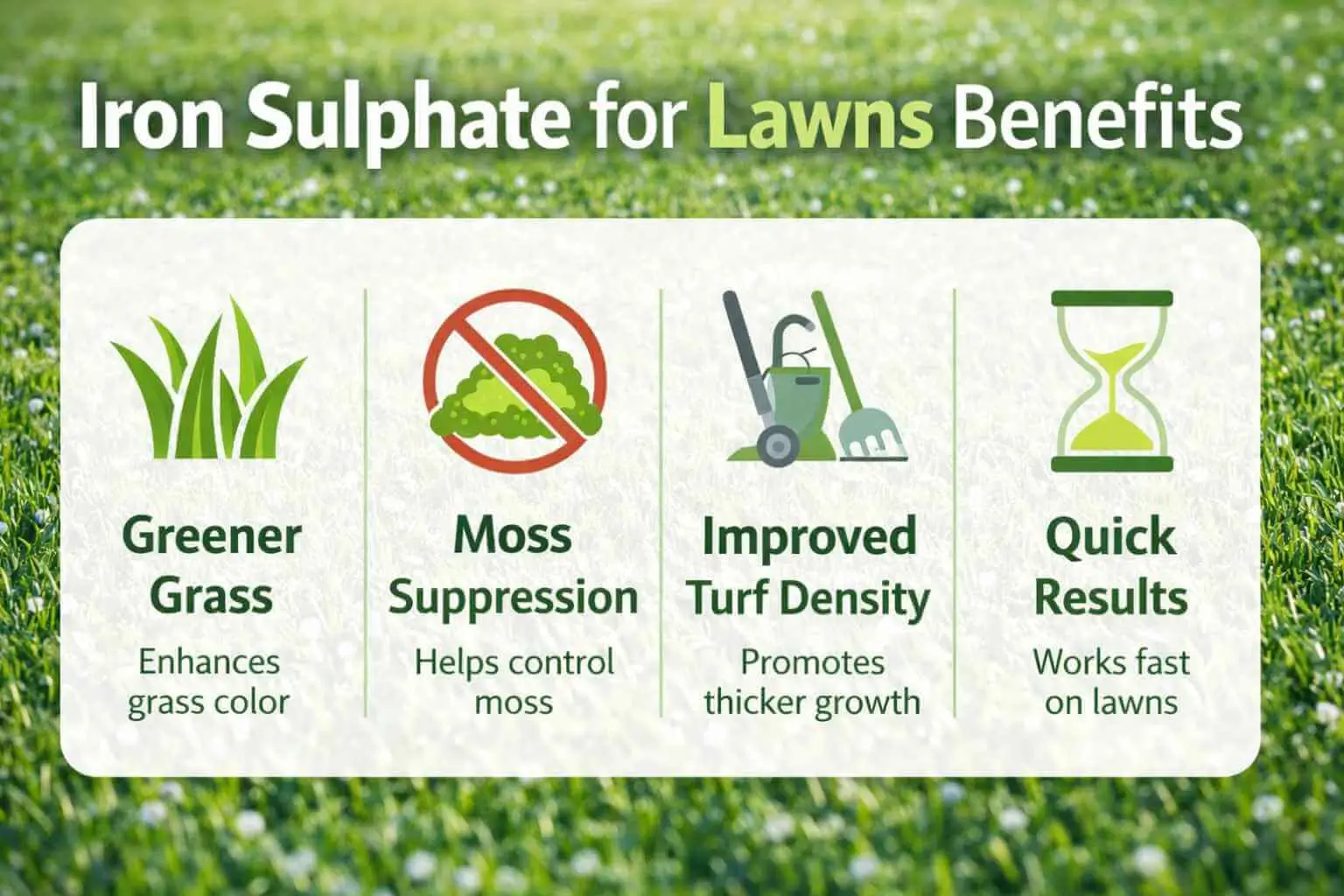
Iron sulphate lawn treatments provide multiple benefits beyond just greening. Key advantages include:
- Enhanced Lawn Color: Iron boosts chlorophyll, producing a darker, more vibrant green.
- Moss Suppression: Moss die-off improves turf uniformity and reduces competition for nutrients.
- Improved Turf Density: Healthier grass grows thicker, reducing bare patches and soil exposure.
- Quick Visible Results: Color changes appear within days, and moss often blackens within 24–48 hours.
Both liquid iron for grass and granular iron sulphate for lawns offer these benefits, with liquid forms providing faster absorption and coverage.
Liquid vs Granular Iron Sulphate
- Liquid Iron Sulphate for Lawns: Quickly absorbed by grass blades; ideal for uniform coverage.
- Granular Iron Sulphate for Lawns: Slower release; easier to apply over larger areas.
- Soluble Iron Sulphate for Lawns: Dissolves in water for precise application rates.
Pros and limitations vary: liquids provide rapid greening but require spraying equipment, while granules are simpler to broadcast but slower acting. Sulphate of iron liquid is preferred for rapid aesthetic improvement.
How to Use Iron Sulphate for Lawns
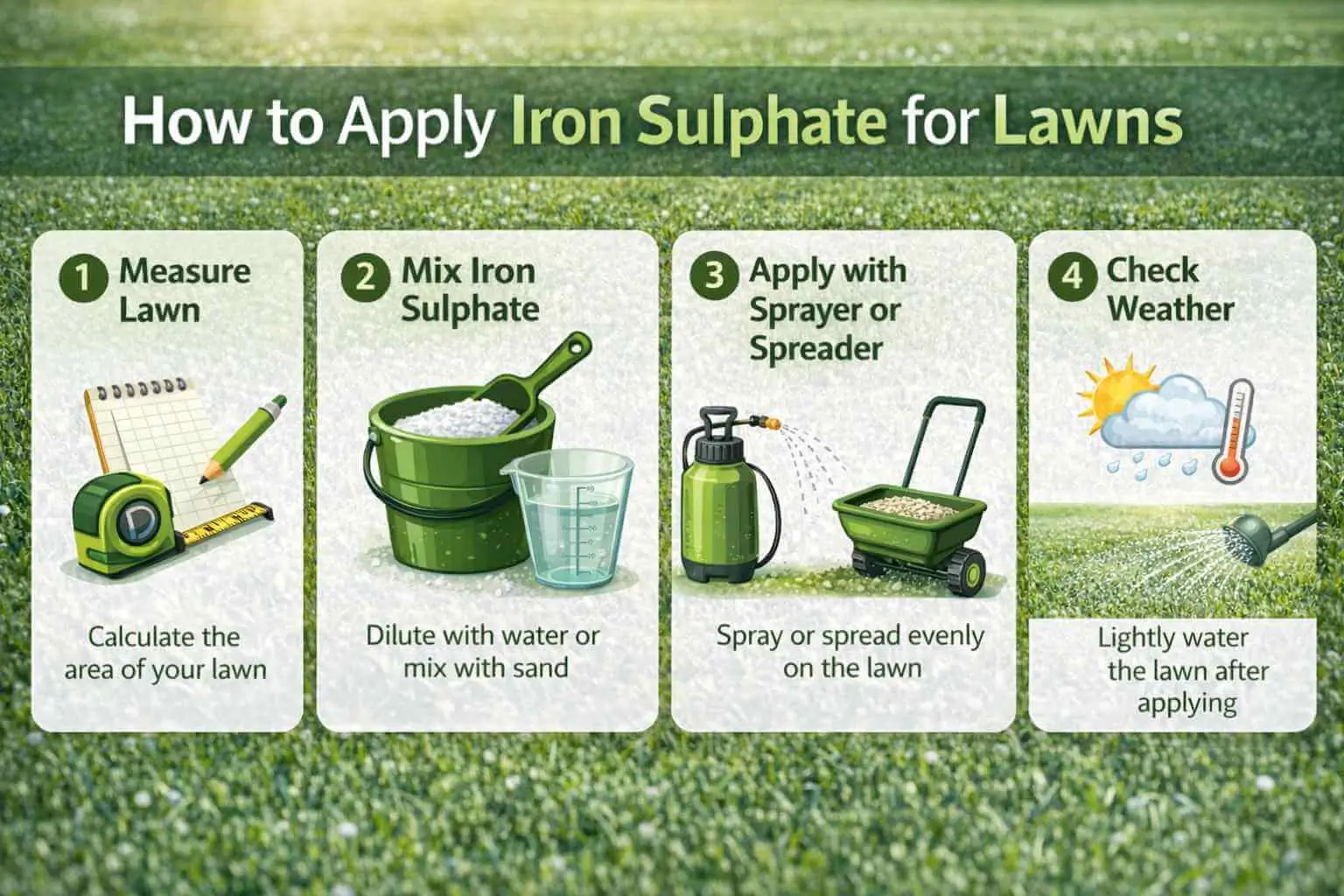
Applying iron sulphate correctly ensures maximum effectiveness while avoiding turf damage. Key steps include:
- Measure your lawn area to determine the correct application rate. (For optimal absorption, also consider soil type, as certain soils like clay may require amendments to improve iron uptake; see our guide on how to improve clay soil for lawns.)
- Mix iron sulphate for lawns with water according to label instructions.
- Apply using a sprayer (for liquid) or spreader (for granules).
- Choose calm weather to prevent drift and ensure even coverage.
- Avoid application during drought or immediately before frost.
Using iron sulphate for lawns how to use or how to use iron sulphate for lawns ensures consistent greening and moss control.
How Much Iron Sulphate Per Litre?
- Safe dilution ratios vary depending on concentration.
- Typically, 10–20 grams per litre of water is used for standard turf applications.
- Application rate per square meter should follow manufacturer guidance.
- Avoid over-application, which can cause blackening or turf stress.
When to Apply Iron Sulphate on Lawns
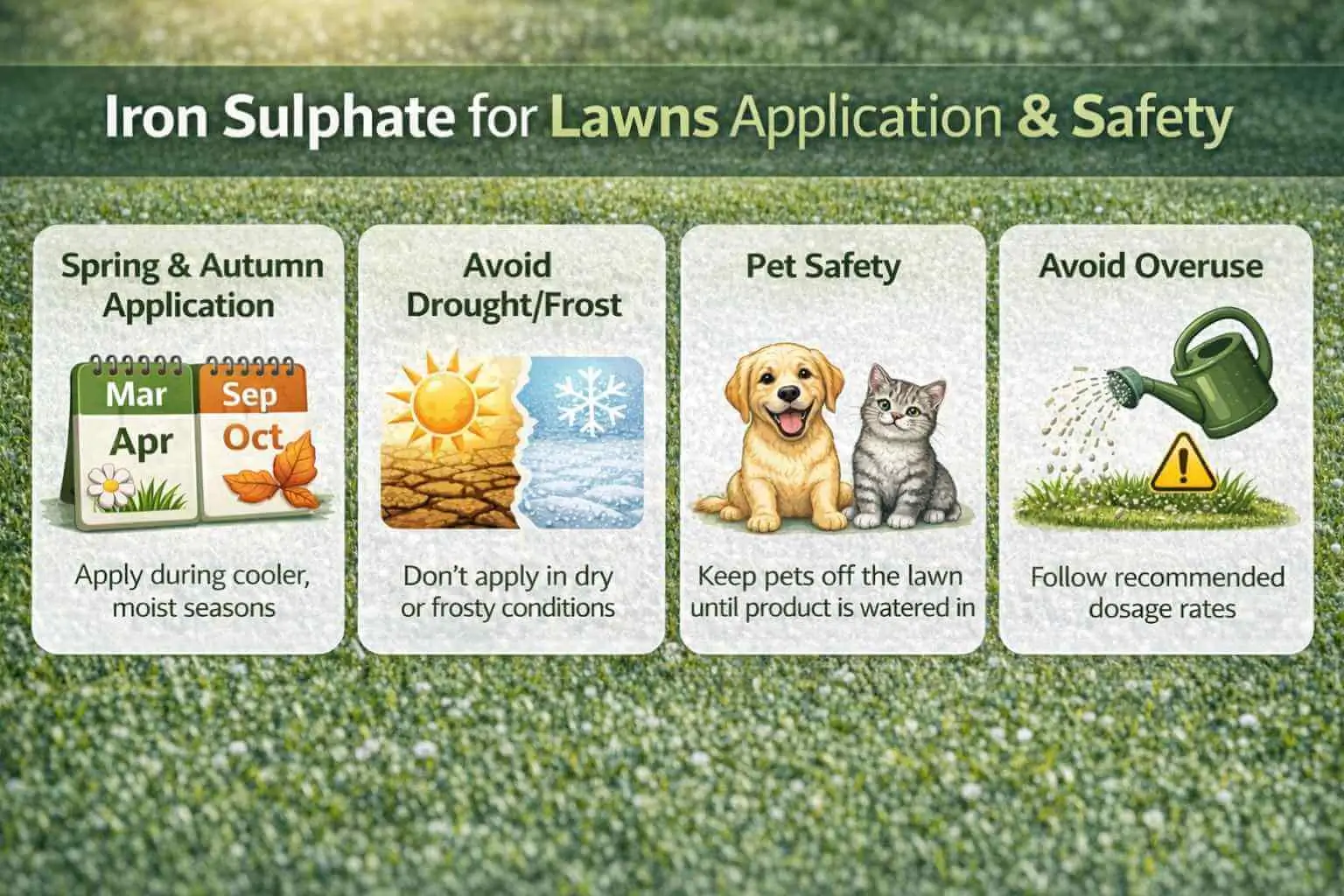
The best seasons to apply ferrous sulphate moss killer when to apply are spring and autumn, when grass is actively growing and can absorb nutrients efficiently. Avoid applications during drought, heat stress, or frost, as the lawn may be more susceptible to damage. Soil temperature affects absorption; moderate temperatures allow maximum iron uptake. Applying iron sulphate at the right time enhances results, similar to how proper lawn aeration and overseeding improve overall turf health; learn more in best time to aerate and overseed lawn UK .
Safety Considerations — Pets, Grass Damage, and Overuse
Iron sulphate for lawns safe for dogs and pet-friendly when applied properly. Protective measures include keeping pets off the lawn until the product dries. Overuse or high concentrations (too much iron sulphate on lawn) can cause grass blackening or temporary stress.
What Happens If You Apply Too Much?
- Lawn Blackening: Excess iron oxidizes, leaving dark stains.
- Temporary Turf Stress: Grass may wilt or show yellowing before recovery.
- Soil Imbalance: High iron levels can affect soil pH and micronutrient balance.
- Correction: Water the lawn thoroughly to dilute excess iron and prevent lasting damage.
Does Iron Sulphate Kill Weeds?
Direct answer: No, iron sulphate does not kill weeds. It targets moss specifically and does not act as a broadleaf herbicide. Weeds require separate treatments. Iron sulphate improves turf density, indirectly limiting weed growth by reducing bare soil areas, but additional weed control may be necessary.
Liquid Iron for Lawns — How It Compares to Traditional Iron Sulphate
Liquid iron for lawns offers faster absorption and uniform coverage compared to granular or powdered forms. Liquid iron grass treatments allow rapid greening and quicker moss suppression. They are easier to apply on uneven terrain and can be combined with other liquid lawn feeds for efficient maintenance.
Common Lawn Problems Solved by Iron Sulphate
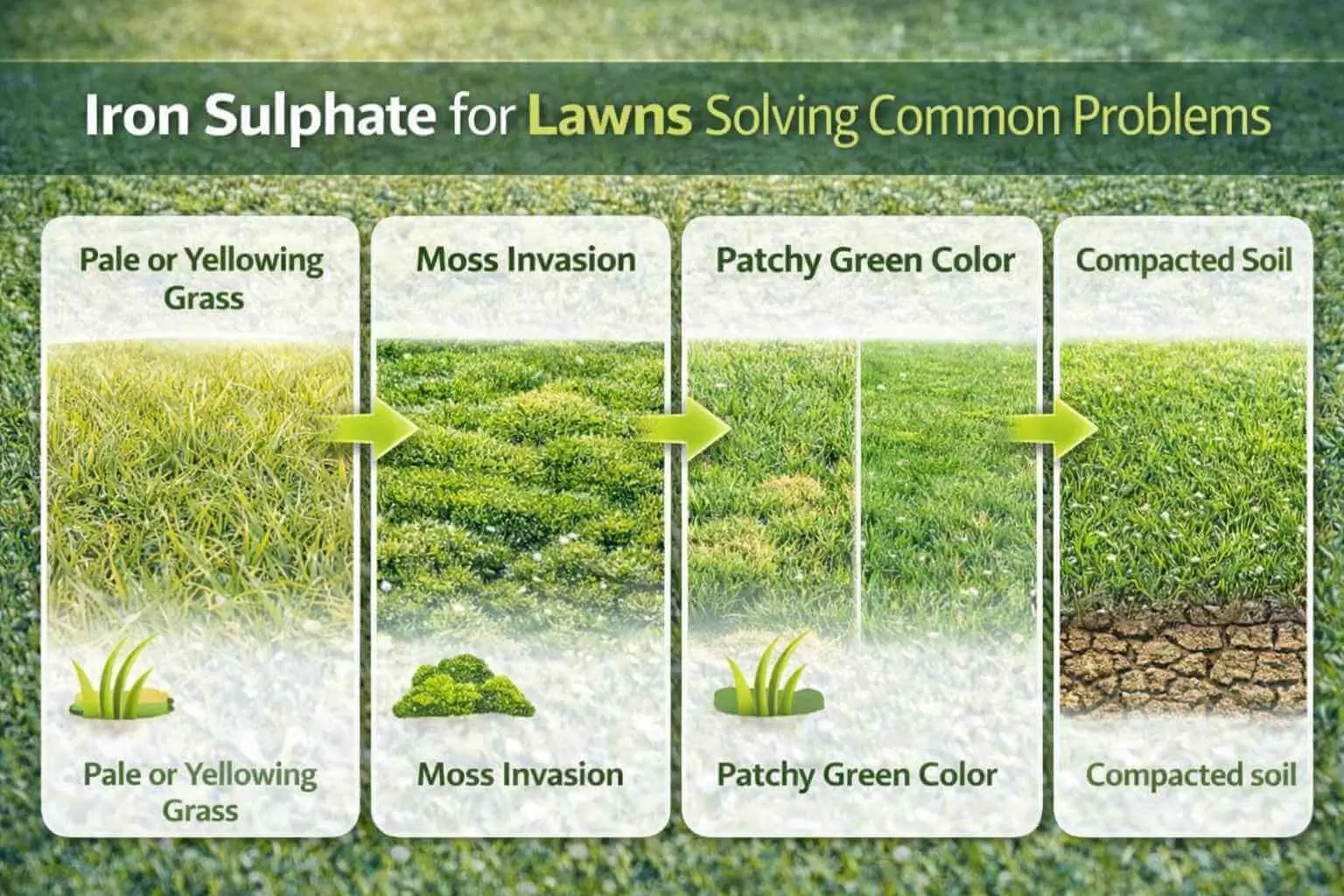
Iron sulphate addresses a variety of turf issues:
- Pale or Yellowing Grass: Iron corrects chlorophyll deficiencies.
- Moss Invasion: Sulphate iron kills moss and suppresses regrowth.
- Patchy Green Color: Improves uniformity across the lawn.
- Compacted Soil Conditions: Encourages denser root development and healthier turf.
Sulphate of iron moss killer treatments offer a simple solution to common lawn problems, maintaining green, healthy turf.
Conclusion
Iron sulphate for lawns is a targeted treatment that enhances turf color, suppresses moss, and improves grass density. Proper application timing, correct mixing ratios, and adherence to safety precautions are critical for healthy results. By understanding how iron interacts with soil and grass, homeowners can achieve vibrant lawns without damage.
FAQs
- How long does iron sulphate take to work on lawns?
Iron sulphate typically darkens grass within a few days, while moss blackens within 24–48 hours under suitable conditions. - Can I apply iron sulphate in summer?
It is best applied in spring or autumn. Extreme heat or drought may stress the lawn. - Is iron sulphate safe for pets once dry?
Yes, lawns are generally safe once the product has fully dried, but pets should be kept off during application and drying time. - Why did my lawn turn black after applying iron sulphate?
Blackening usually indicates moss die-off or temporary turf stress from high concentrations. Proper dilution prevents damage. - How often should I use iron sulphate on my lawn?
Most lawns benefit from seasonal applications (once or twice per year), depending on moss levels and soil iron deficiency. - Does rain wash away iron sulphate?
Light rainfall after drying is usually fine, but heavy rain immediately after application can reduce effectiveness.