Introduction
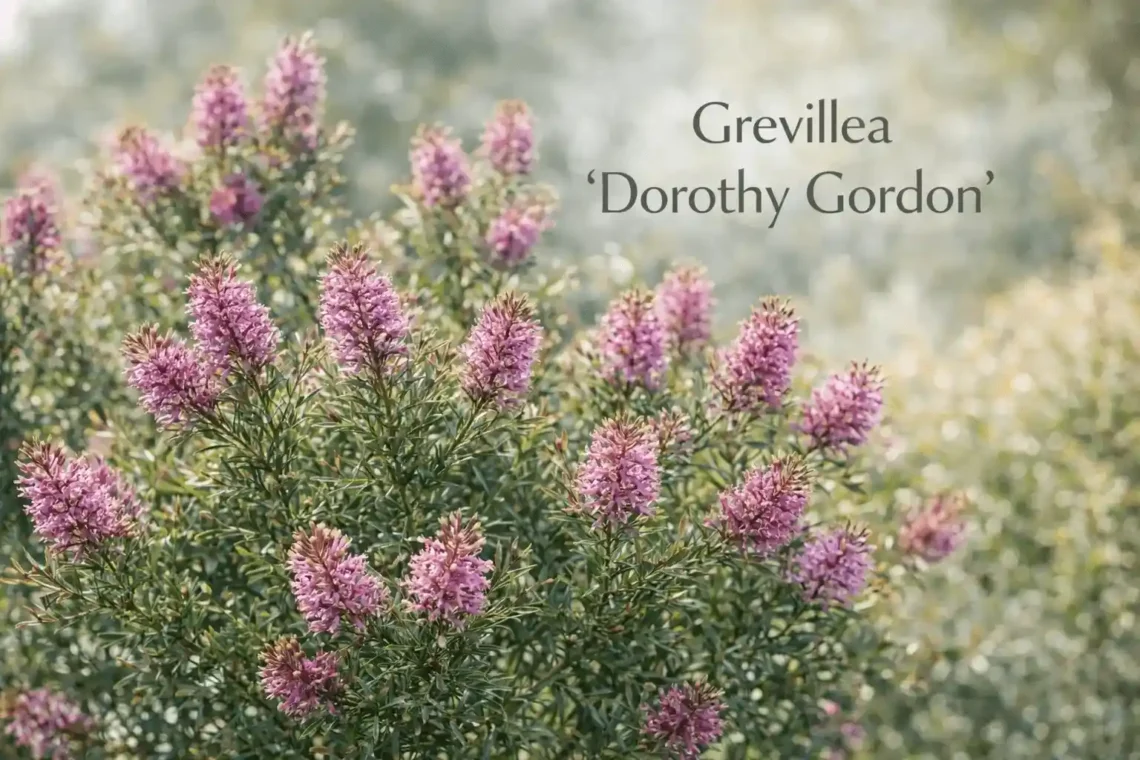
Grevillea ‘Dorothy Gordon’ is a popular Australian native shrub valued for its consistent flowering and wildlife-friendly characteristics. This hybrid, derived from Grevillea sessilis × Grevillea paradoxa, is widely grown for its ornamental appeal and adaptability. The plant produces distinctive mauve-pink blooms throughout the year, making it a reliable feature in gardens. Often referred to as a purple grevillea Dorothy Gordon, it combines attractive foliage with strong performance in warm climates. Its nectar-rich flowers attract birds such as honeyeaters, supporting local ecosystems while enhancing landscape aesthetics.
Grevillea ‘Dorothy Gordon’ belongs to the Grevillea genus, a diverse group of Australian native plants known for their unique flowers and ecological value (see Wikipedia).
Quick Summary
- Upright evergreen shrub reaching approximately 3m tall and 2m wide with bronze-tipped green foliage and mauve-pink flower spikes
- Thrives in full sun and well-drained soil; drought-tolerant once established and attracts nectar-feeding birds
- Suitable for hedges, feature planting, or wildlife gardens in temperate to subtropical regions
- Low-maintenance plant with moderate water needs and light frost tolerance after establishment
Plant Characteristics
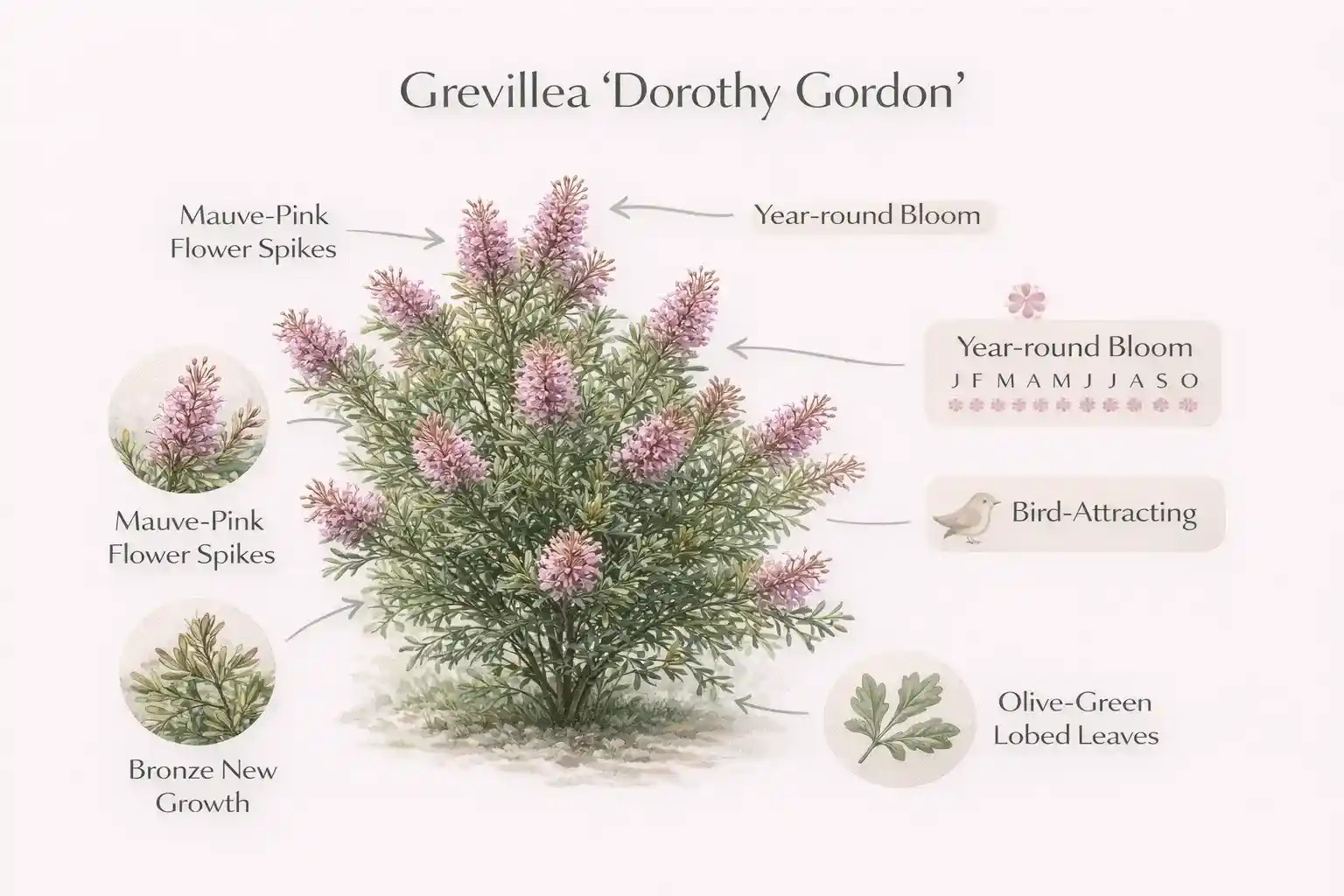
Grevillea ‘Dorothy Gordon’ is defined by its vibrant floral display, textured foliage, and hybrid vigor. As a cross between Grevillea sessilis and Grevillea paradoxa, it inherits both resilience and ornamental qualities.
The flowers appear as elongated racemes and bloom intermittently throughout the year, providing a consistent nectar source. The purple grevillea Dorothy Gordon produces two-toned mauve-pink flowers, often with deeper purple hues, enhancing visual contrast. For a deeper breakdown of parentage, cultivar codes, and registered hybrid details, the Grevillea cultivar reference database documents how ‘Dorothy Gordon’ fits within the broader sessilis × paradoxa hybrid lineage.
It’s a useful cross-reference if you’re trying to identify an unlabeled Grevillea by its foliage and flower traits.
Key characteristics include:
- Mauve-pink flower spikes with two-tone coloration
- Nectar-rich blooms that attract birds and pollinators
- Olive-green, deeply lobed leaves
- Bronze-colored new growth adding seasonal interest
The foliage provides texture and contrast, with bronze-tinted tips maturing into olive-green leaves. This variation contributes to its appeal in mixed plantings.
Visual Feature Comparison
| Feature | Grevillea ‘Dorothy Gordon’ | Generic Grevillea |
| Flower Color | Mauve-pink, two-toned | Variable (red, yellow) |
| Foliage | Bronze-tipped green | Often silver-grey |
| Bloom Period | Year-round | Seasonal |
Plant Size
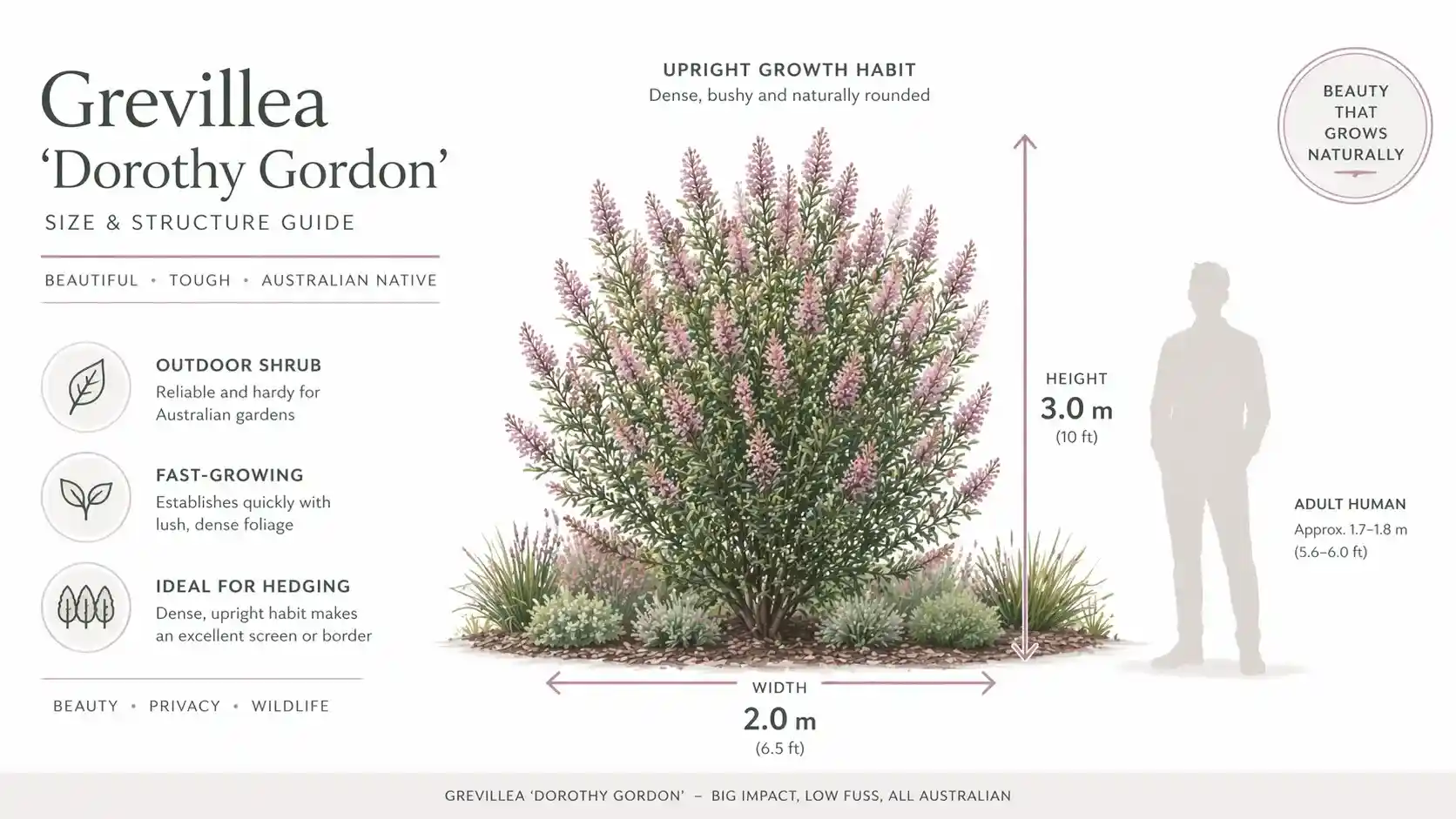
Grevillea ‘Dorothy Gordon’ typically reaches a mature height of around 3 meters and a width of 2 meters under optimal conditions. This makes it suitable for medium to large garden spaces.
Key size considerations:
- Height: Up to 3 meters
- Width: Approximately 2 meters
- Growth habit: Upright and slightly spreading
Indoor vs outdoor growth:
- Outdoor: Performs best in open garden conditions with full sun exposure
- Indoor: Not suitable due to size, light requirements, and airflow needs
Environmental factors influencing size:
- Soil quality and drainage
- Climate conditions (temperature and humidity)
- Sun exposure and watering practices
This structure makes it ideal for hedging, screening, or use as a feature shrub. Its upright growth habit makes it a practical option alongside selections in 6+ Smart Australian Native Screening Trees for Privacy for creating natural garden screens.
Growth Rate
Grevillea ‘Dorothy Gordon’ is considered a fast-growing shrub, particularly once it becomes established in suitable conditions.
Growth stages:
- Establishment phase: Moderate growth as roots develop
- Active growth phase: Rapid canopy expansion in warm seasons
- Mature phase: Steady growth with regular flowering
Factors affecting growth rate:
- Full sun exposure encourages faster development
- Proper watering during establishment supports root growth
- Well-drained soil prevents stress and promotes vigor
In warmer climates, growth accelerates during spring and summer, with noticeable flushes of new foliage and flowers.
Care Guide
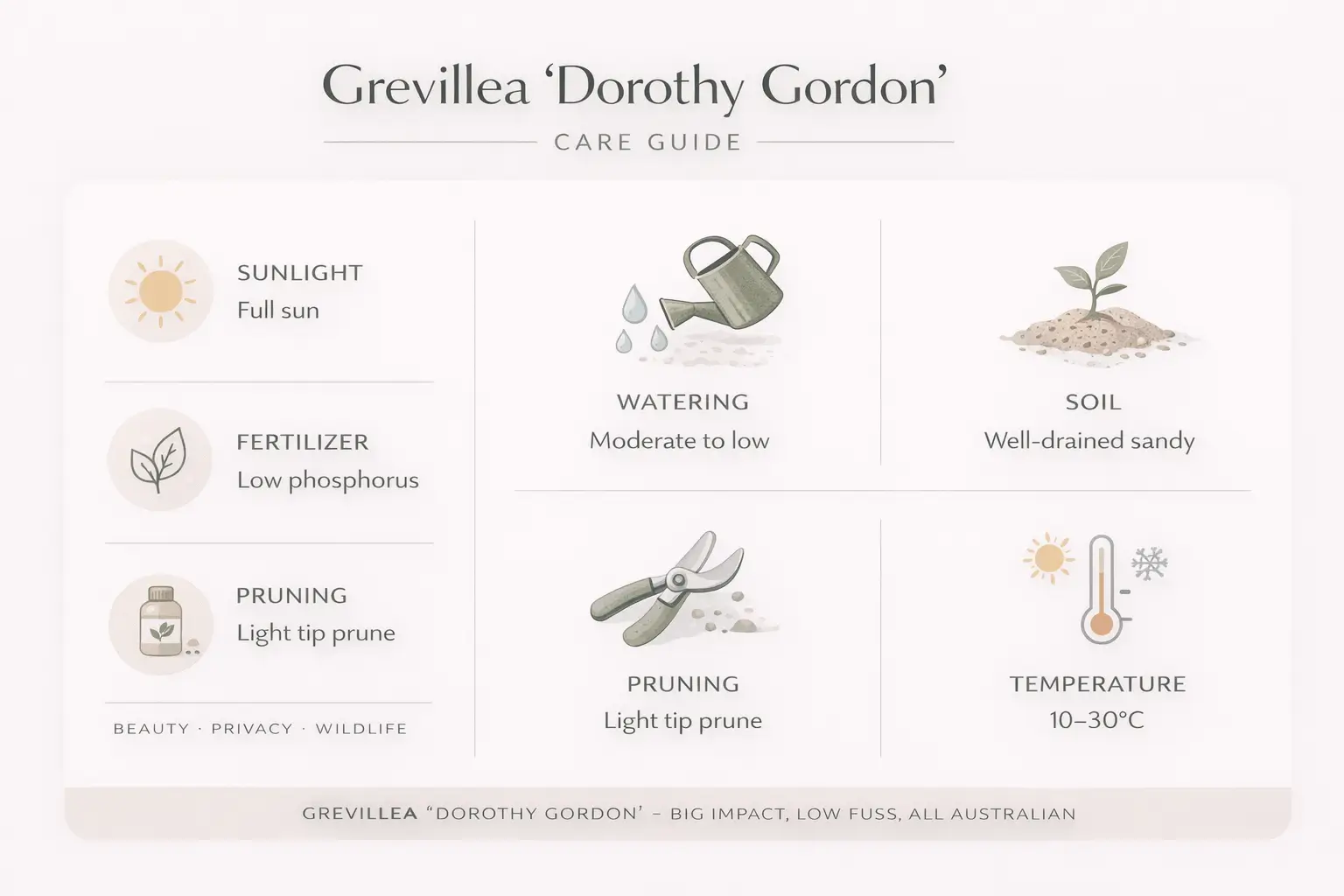
Grevillea ‘Dorothy Gordon’ requires minimal maintenance when grown in appropriate conditions. Proper care ensures healthy growth and consistent flowering.
Core care requirements:
- Watering: Moderate during establishment, then drought-tolerant
- Light: Full sun to partial shade
- Soil: Well-drained sandy or loamy soil with low nutrients
- Fertilization: Use low-phosphorus native fertilizer sparingly
- Pruning: Tip-prune after flowering to maintain shape
- Climate: Prefers temperatures between 10–30°C; tolerates light frost once established
For similar care practices and hedging uses, refer to Ultimate Grevillea Olivacea Hedge Guide: 7+ Easy Care Tips, which outlines comparable native shrub requirements.
Seasonal Care Table
| Season | Watering | Pruning | Fertilizer |
| Spring | Moderate | Tip after flowers | Native mix |
| Summer | Drought-tolerant | Light | None |
| Winter | Low | Remove dead | None |
A common beginner mistake is over-fertilizing, particularly with high-phosphorus products, which can damage native plants.
Grevillea ‘Dorothy Gordon’ vs. Similar Varieties
Grevillea ‘Dorothy Gordon’ differs from similar purple grevilleas such as ‘Robyn Gordon’ in size, flowering pattern, and environmental tolerance.
Key Differences
| Feature | Dorothy Gordon | Robyn Gordon |
| Size | Larger (3m tall) | Smaller, compact |
| Bloom | Year-round | Seasonal or intermittent |
| Hardiness | Better humidity tolerance | More frost-sensitive |
This variety is often preferred for larger landscapes due to its upright growth and extended flowering period. If you’re comparing more than just these two cultivars, the interactive Grevillea variety lookup tool lets you filter all 16 cultivars by height, bloom period, and frost tolerance side by side.
Common Problems and Solutions
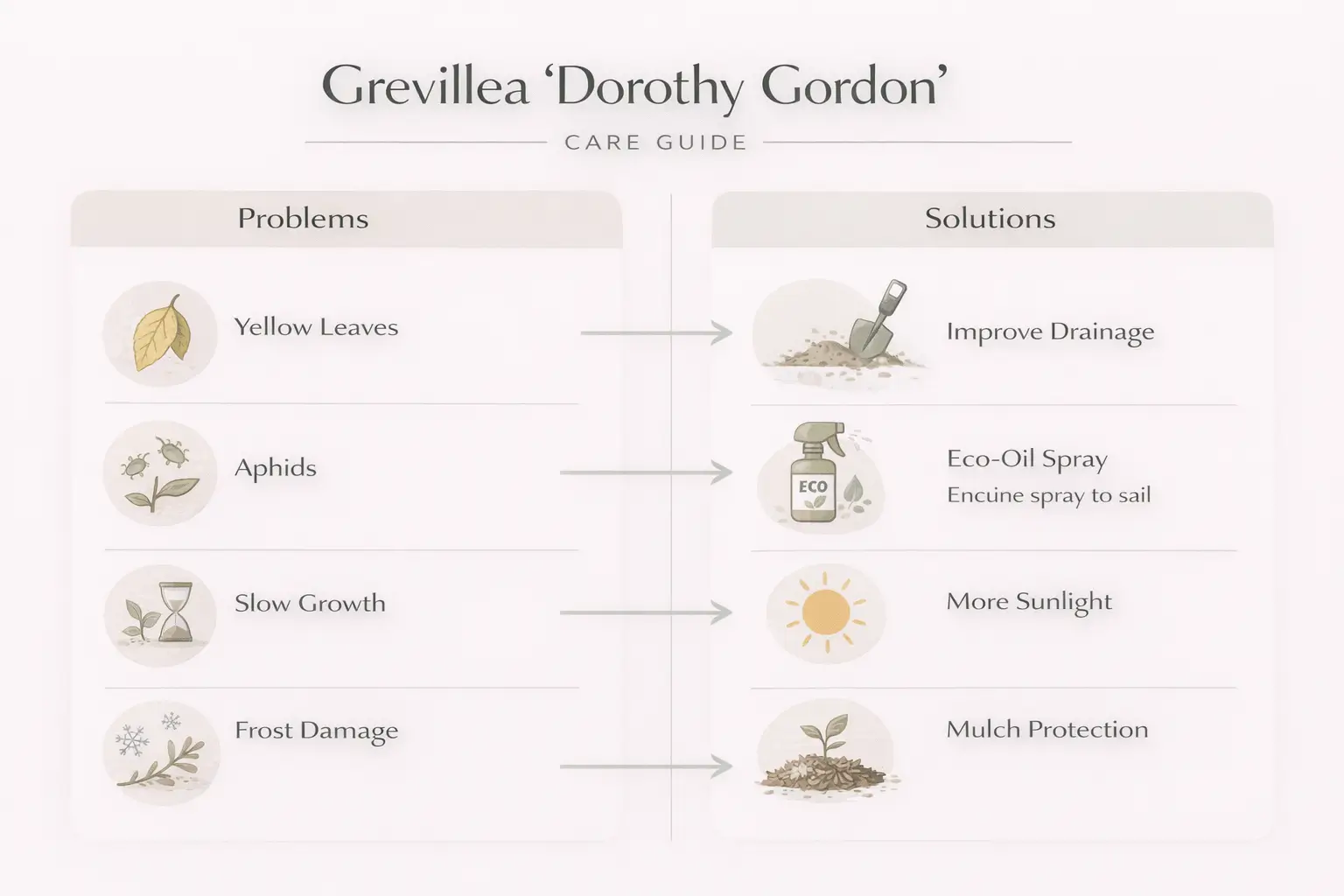
Grevillea ‘Dorothy Gordon’ is generally hardy, but certain issues may arise due to environmental conditions or care practices.
Common problems and solutions:
- Yellow leaves: Often caused by poor drainage or overwatering
- Solution: Improve soil drainage and reduce watering frequency
- Aphids: Small pests feeding on new growth
- Solution: Apply eco-oil and maintain airflow
- Slow growth: Usually due to insufficient sunlight
- Solution: Relocate to a sunnier position
- Frost damage: Affects young plants
- Solution: Apply mulch and protect during cold periods
Avoid planting in waterlogged soil, as grevilleas are highly sensitive to root rot. If yellowing, aphids, or slow growth are affecting multiple Grevilleas in your garden, the Grevillea cultivar comparison spreadsheet breaks down frost tolerance and drainage needs by variety.
Cross-checking your specific cultivar there can help confirm whether an issue is species-wide or specific to ‘Dorothy Gordon’.
Advanced Tips and Topical Clusters
Propagation and landscape integration enhance the value of Grevillea ‘Dorothy Gordon’ in garden design.
Advanced practices:
- Propagation: Use semi-hardwood cuttings in late summer for best success
- Landscaping: Ideal for hedges, screens, and native garden themes
- Wildlife support: Attracts birds and pollinators consistently
Seasonal adjustments:
- Apply mulch in cooler climates such as Melbourne or Perth to protect roots from frost
- Reduce watering during winter to prevent root issues
Common beginner error:
- Over-fertilizing or using standard fertilizers instead of native-specific blends
These practices improve long-term plant health and performance. Grevillea ‘Dorothy Gordon’ also works well in Mediterranean-style landscapes, similar to species featured in 7+ Stunning Tuscan Plants for a Timeless Mediterranean Garden, where drought-tolerant plants are prioritized.
Conclusion
Grevillea ‘Dorothy Gordon’ is a reliable, fast-growing Australian native shrub that combines year-round flowering with low maintenance requirements. Its upright habit, attractive mauve-pink blooms, and ability to attract wildlife make it a valuable addition to gardens. When grown in full sun with well-drained soil, it delivers consistent performance. This plant is particularly suitable for hedging, screening, or feature planting in temperate to subtropical climates, offering both aesthetic and ecological benefits.
FAQ
What is the mature size of Grevillea ‘Dorothy Gordon’?
Grevillea ‘Dorothy Gordon’ typically grows to about 3 meters in height and 2 meters in width under optimal conditions.
How do I prune Grevillea ‘Dorothy Gordon’?
Tip-prune after flowering to maintain a compact shape and encourage bushier growth, avoiding cutting into old wood.
Is Grevillea ‘Dorothy Gordon’ frost tolerant?
It tolerates light frost once established, but young plants should be protected with mulch or coverings.
What soil does Grevillea ‘Dorothy Gordon’ prefer?
It prefers well-drained, low-nutrient sandy or loamy soil, which prevents root rot and supports healthy growth.
Can Grevillea ‘Dorothy Gordon’ be used as a hedge?
Yes, its upright growth habit and dense foliage make it suitable for informal hedges and screening.
Why are the leaves on my Grevillea ‘Dorothy Gordon’ turning yellow?
Yellowing leaves are usually caused by poor drainage or overwatering; improving soil structure and reducing watering can resolve the issue.