Introduction
Shade tolerant flowers are plants specifically adapted to grow in low-light environments, often under trees, tall shrubs, or shaded structures. These flowers thrive in conditions where sunlight is limited, using physiological adaptations to optimize photosynthesis. Shade-tolerant plants are particularly relevant for home gardens, shaded landscapes, and native plant selection, as they allow gardeners to cultivate vibrant spaces even in areas with minimal sun. In Illinois, several native species, such as Wild Ginger and Virginia Bluebells, naturally flourish in shade, supporting biodiversity and pollinators while enhancing the ecological value of gardens.
Understanding Shade Tolerance in Flowers
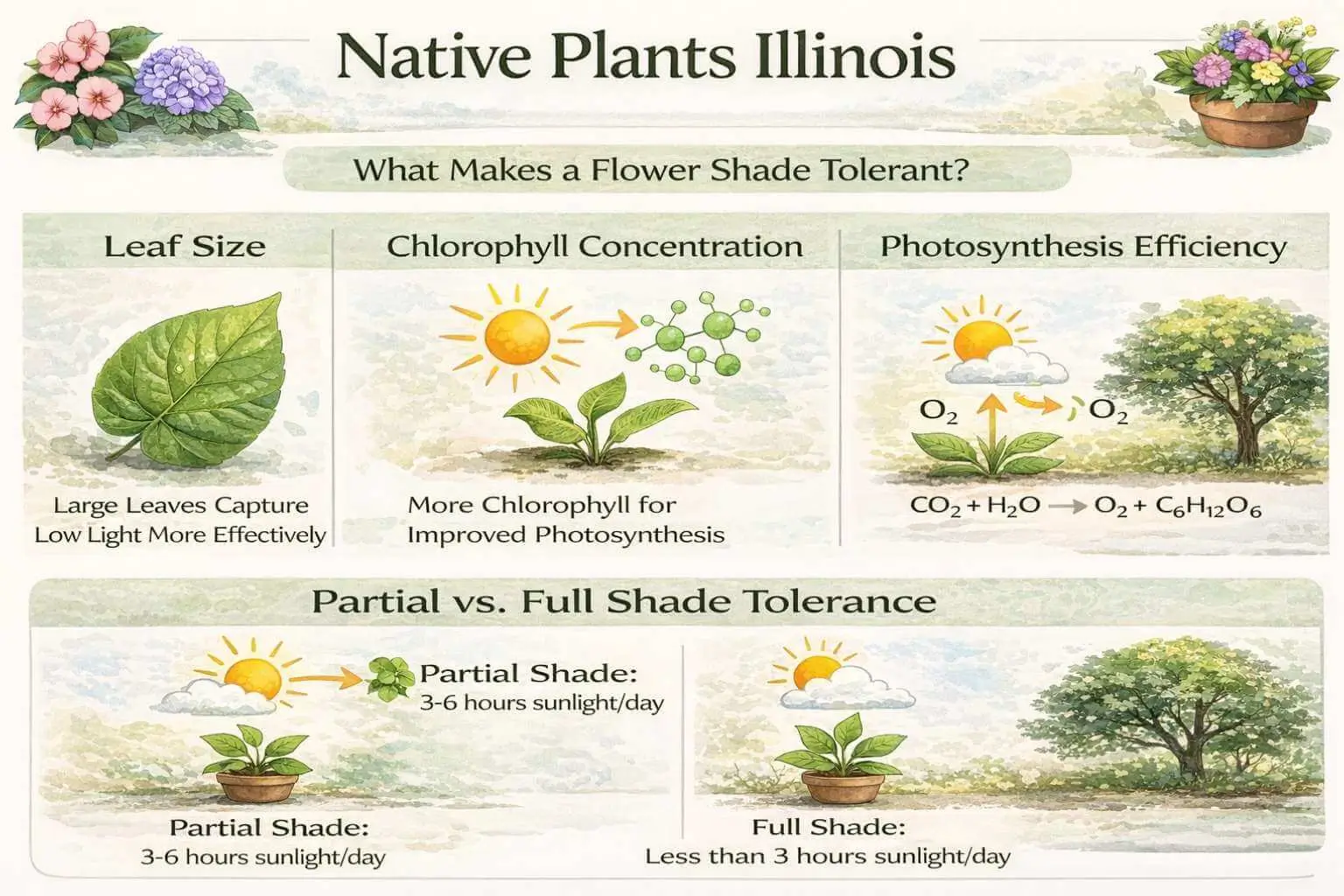
What Makes a Flower Shade Tolerant?
Shade-tolerant flowers possess physiological adaptations that allow survival in low-light conditions. These include larger leaf surfaces to capture more light, increased chlorophyll concentration for efficient photosynthesis, and slower growth rates suited to limited energy intake. Plants may also adjust their flowering cycles to maximize reproductive success under shade. Partial shade tolerance allows survival with a few hours of direct sunlight, while full shade tolerance requires minimal sunlight and relies heavily on indirect light. In Illinois, examples of shade-loving native plants include shade native plants Illinois such as Wild Ginger and Foamflower. Shade-tolerant flowers possess physiological adaptations that allow survival in low-light conditions, including specialized leaf structures and efficient photosynthesis processes (Wikipedia – Shade tolerance).
Types of Shade Tolerance
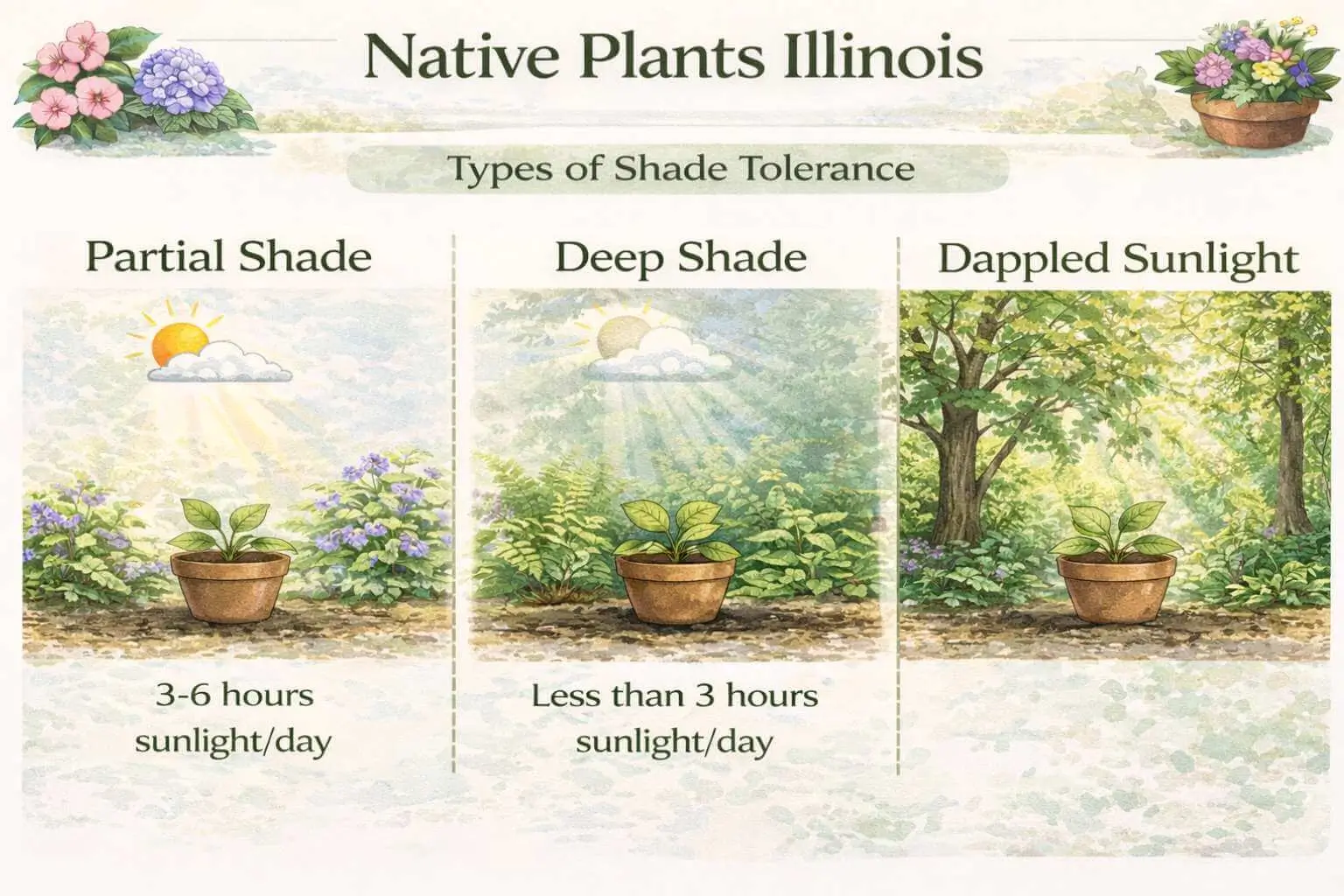
Shade tolerance varies by plant and environment. Partial shade plants can tolerate 3–6 hours of direct sunlight, while deep shade species thrive in less than 3 hours. Dappled sunlight plants perform best with intermittent light filtered through trees. Soil quality, moisture levels, and competition from surrounding vegetation influence how well a plant performs in shaded areas. Selecting the correct type of shade-tolerant plant ensures optimal growth and bloom in garden designs.
Native Shade Tolerant Flowers in Illinois
Benefits of Using Native Plants in Shaded Areas
Using native flowers in shaded areas supports local pollinators and overall biodiversity. These plants are adapted to Illinois soil and climate, reducing maintenance requirements and increasing resilience to pests and diseases. Native shade plants contribute to sustainable landscaping by minimizing irrigation and fertilizer needs. Gardeners benefit from aesthetically pleasing flowers while promoting ecological balance with native flowers Illinois and native flowering plants Illinois.
Examples of Native Shade Tolerant Flowers
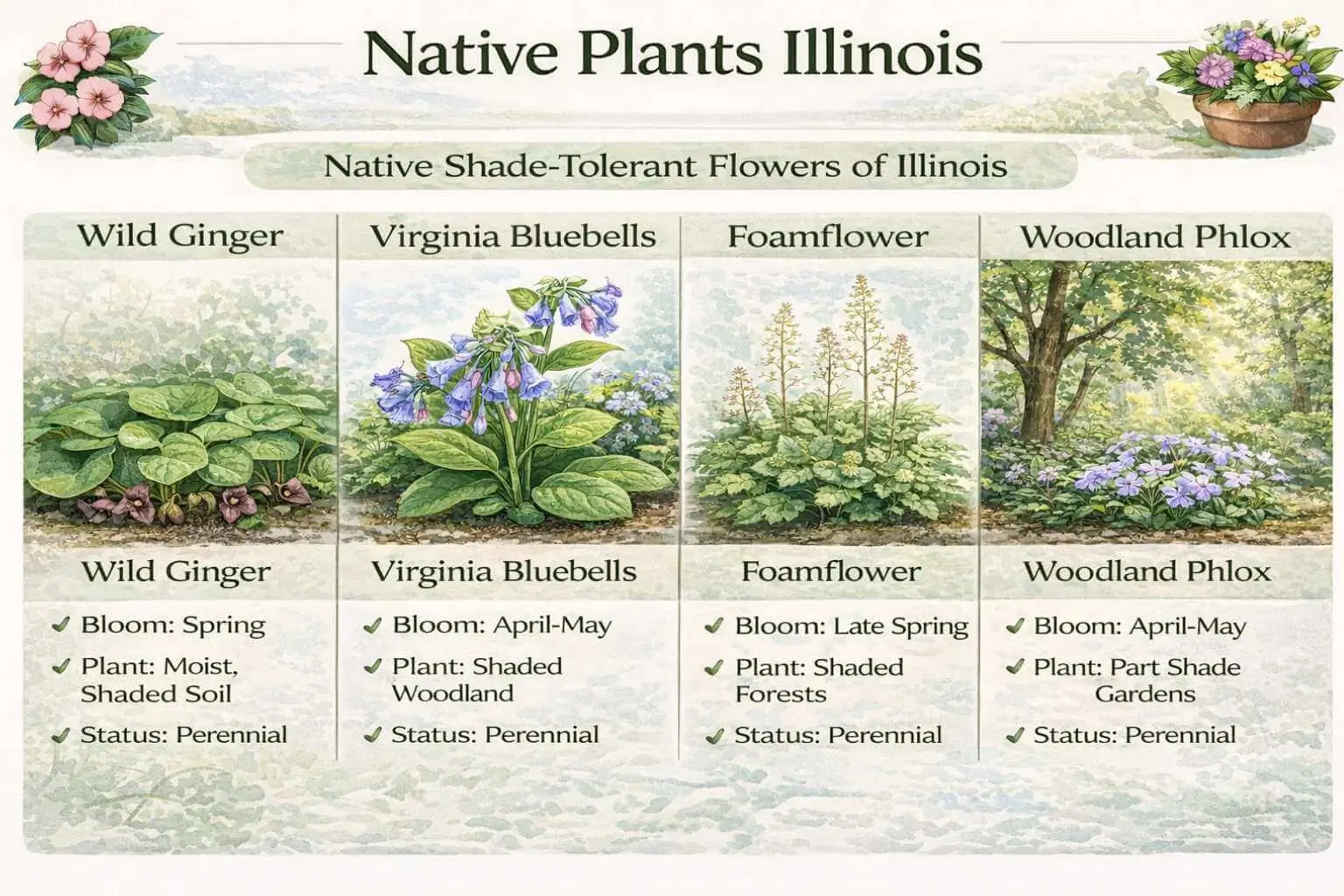
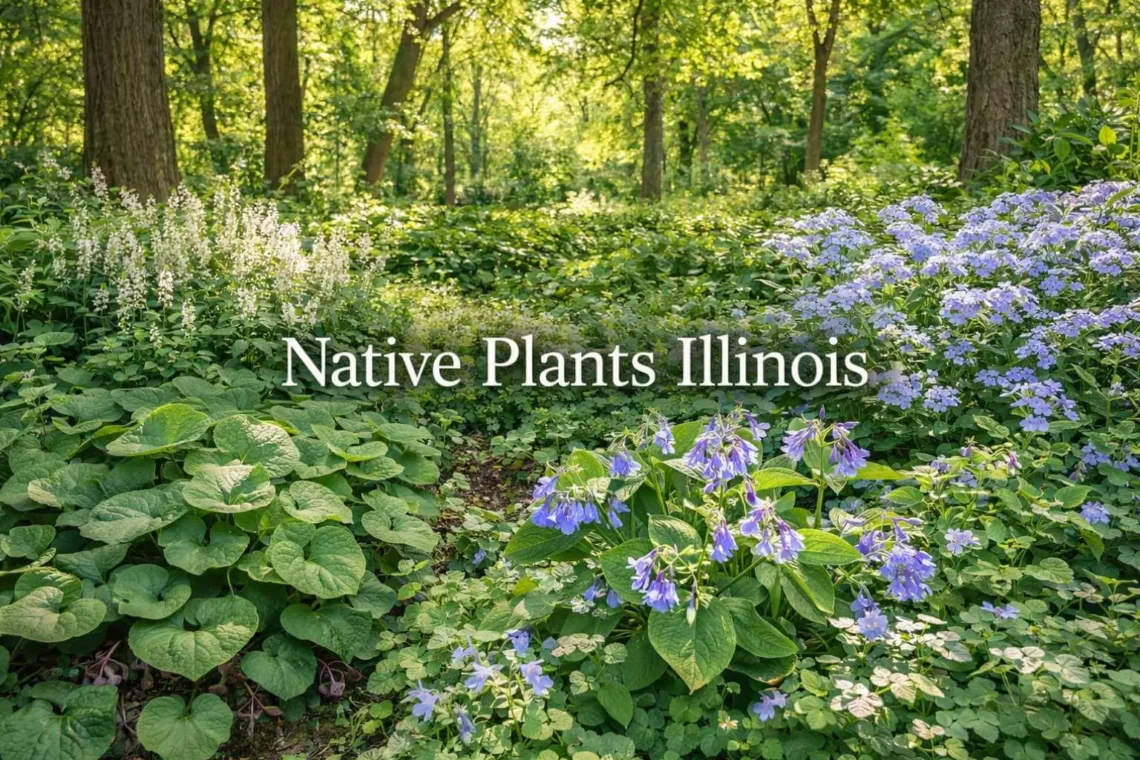
- Wild Ginger (Asarum canadense): A low-growing perennial with heart-shaped leaves, ideal for woodland understories. Blooms in early spring.
- Virginia Bluebells (Mertensia virginica): Produces clusters of blue flowers in early spring, prefers moist, shaded soil.
- Foamflower (Tiarella cordifolia): Features delicate white flowers and attractive foliage, suitable for partial to full shade.
- Woodland Phlox (Phlox divaricata): Offers fragrant blooms in spring and thrives under trees, perfect as a ground cover.
These native perennials Illinois species provide consistent blooms, require minimal care, and fit naturally into shaded garden ecosystems.
Planning a Shade-Tolerant Garden
-
Soil and Light Assessment
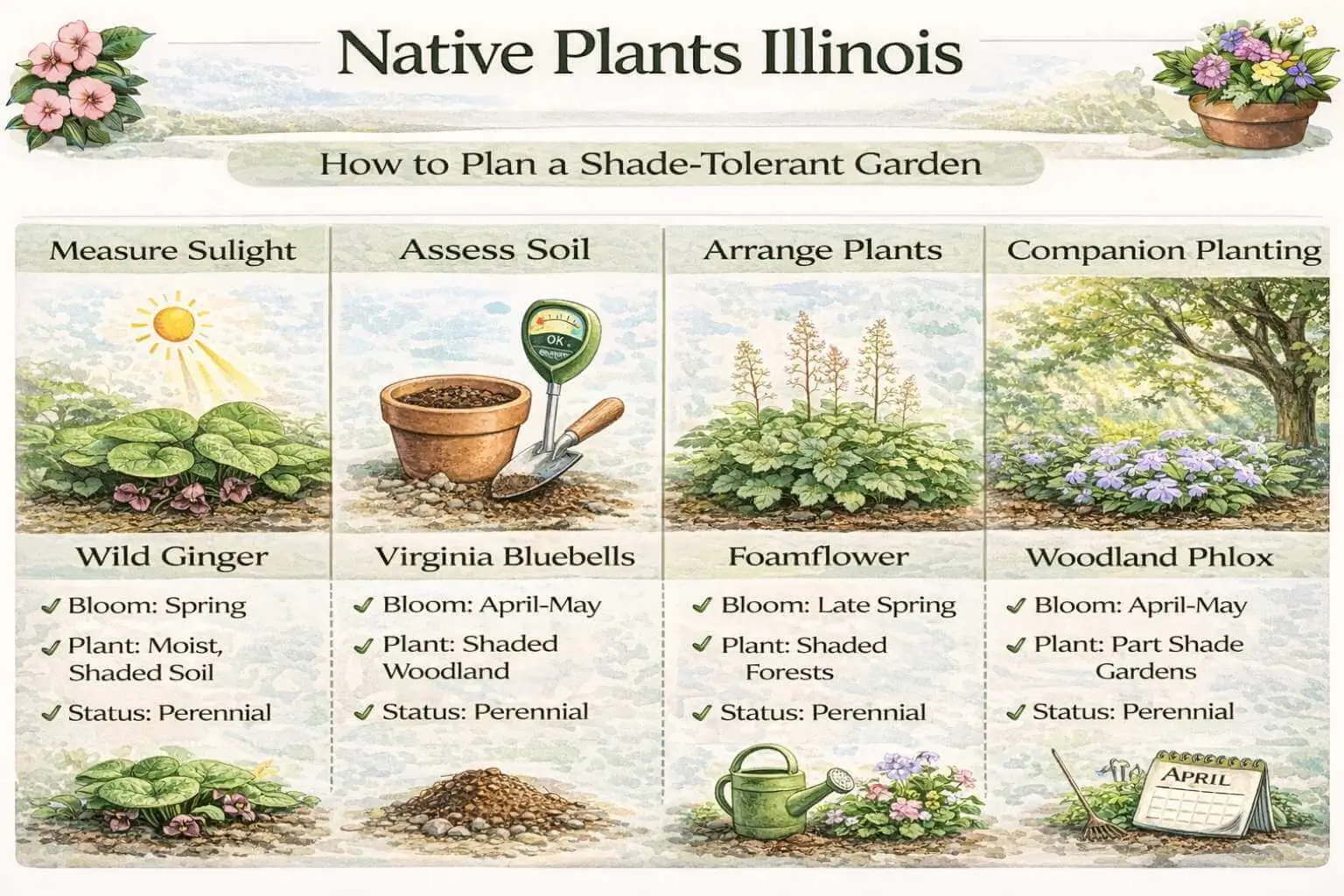
Successful shade gardens begin with measuring sunlight exposure using simple tools or observation over a day. Soil assessment includes checking pH, moisture retention, and organic matter content. Optimizing these factors ensures native plants thrive. For landscaping projects, native plants Illinois for landscaping provide an effective solution for shaded areas while maintaining ecological balance.
-
Plant Arrangement and Companion Planting
Shade gardens benefit from layering tall and short plants to maximize light capture and aesthetic appeal. Using native ground covers reduces weeds and improves soil health. Strategically arranging tall native plants Illinois, short native plants Illinois, and native ground cover plants Illinois ensures an organized and thriving shaded garden environment. Understanding the canopy and growth space, similar to planning for a Valencia Orange Tree, helps ensure that shade-tolerant plants receive optimal indirect light.
-
Maintenance and Seasonal Care
Maintenance involves regular mulching, pruning, and monitoring water needs. Seasonal changes influence flowering cycles, so gardeners should adjust care routines accordingly. Shade-tolerant natives generally require less intervention due to their adaptation to understory conditions.
Common Challenges with Shade Gardens
Shaded gardens can face limited bloom production in dense shade, soil drainage problems, and fungal diseases. Competition with tree roots may restrict water and nutrient availability. Selecting native shade-adapted species helps mitigate these issues naturally, ensuring sustainable growth and aesthetic appeal.
Additional Considerations
Encouraging pollinators in shaded areas improves ecosystem health. Integrating edible natives alongside ornamental shade plants diversifies garden utility. Using native climbing plants Illinois and native vining plants Illinois for vertical spaces adds dimension, while edible options enhance garden functionality. This approach balances aesthetics, ecology, and utility. Just like Spider Plants, which thrive indoors under indirect light, many native shade-tolerant flowers in Illinois can brighten low-light home or garden spaces.
Conclusion
Shade-tolerant flowers provide both ecological and aesthetic value, especially when native species are incorporated into gardens. In Illinois, plants such as Wild Ginger, Virginia Bluebells, Foamflower, and Woodland Phlox demonstrate how shade-tolerant natives can support biodiversity and sustainable landscaping. Home gardeners are encouraged to explore these options to create vibrant, low-maintenance shaded spaces that benefit pollinators and local ecosystems.
FAQ — Shade Tolerant Flowers
- What are shade tolerant flowers?
Shade tolerant flowers are plants adapted to grow in low-light conditions, often under trees or structures, with specialized leaf and photosynthesis adaptations. - Which native flowers in Illinois thrive in shade?
Examples include Wild Ginger, Virginia Bluebells, Foamflower, and Woodland Phlox, all naturally adapted to shaded Illinois environments. - How do I plan a garden for shade-tolerant plants?
Assess sunlight exposure, soil quality, and moisture. Arrange plants by height, bloom season, and shade preference for optimal growth. - Can shade-tolerant flowers attract pollinators?
Yes, many native shade-tolerant plants provide nectar and pollen for bees, butterflies, and other pollinators even in low-light areas. - What are common problems when growing shade plants?
Limited flowering, fungal issues, and competition from tree roots are common. Selecting adapted native species helps mitigate these challenges.