Introduction
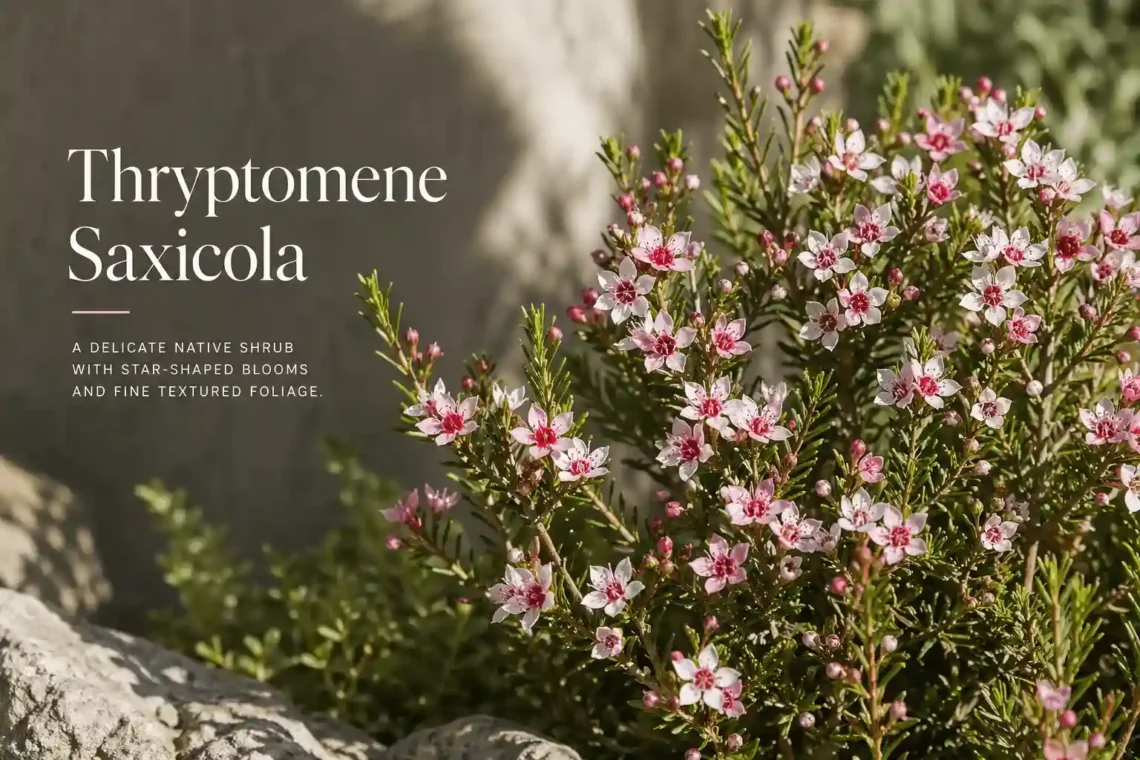
Thryptomene saxicola is a flowering evergreen shrub known for its delicate blooms and fine foliage, commonly used in ornamental gardens and landscaping. Often referred to as rock thryptomene, this plant is valued for its drought tolerance and long-lasting seasonal flowers. It belongs to the broader thryptomene genus, which includes several compact and flowering cultivars. Its adaptability to dry climates and attractive thryptomene flower display make it a practical choice for low-maintenance landscapes and decorative planting.
Quick Summary
- Thryptomene saxicola is a hardy, drought-tolerant shrub with fine foliage and small pink or white flowers.
- Popular varieties like thryptomene saxicola ‘FC Payne’ and compact forms are widely used in landscaping.
- It thrives in well-drained soil and sunny conditions.
- Common issues include poor drainage, overwatering, and limited flowering.
What Is Thryptomene Saxicola? (Definition & Plant Overview)
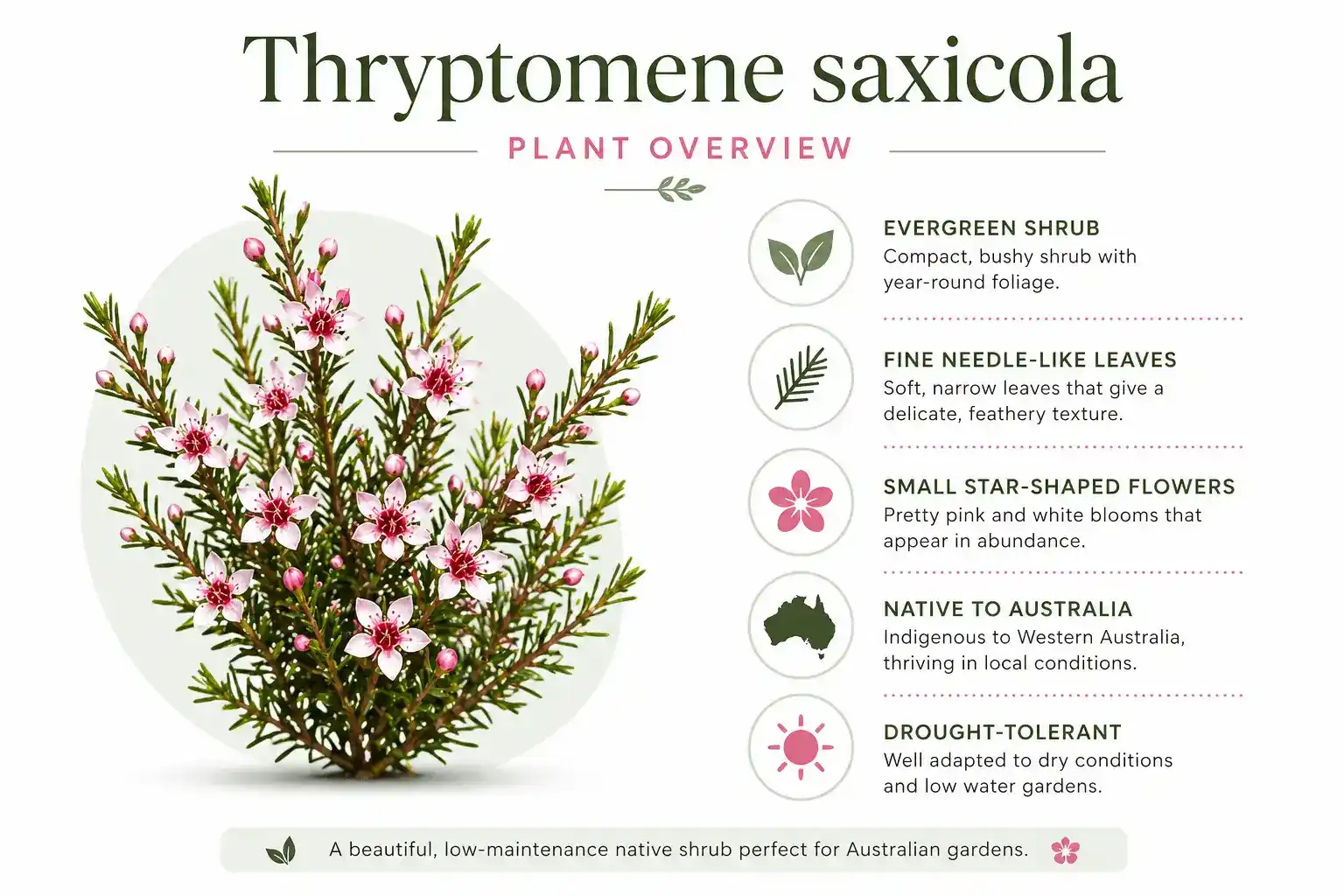
Thryptomene saxicola is an evergreen flowering shrub in the Myrtaceae family, valued for its fine foliage and long-lasting blooms. It is commonly known as rock thryptomene because it naturally grows in rocky, well-drained environments. Thryptomene saxicola is an evergreen flowering shrub in the Myrtaceae family known for its ornamental value and adaptability.
Botanical Classification and Naming
This plant belongs to the genus Thryptomene, which includes several compact shrubs native to Australia. The term “thryptomine” is a frequent misspelling, but the correct botanical name is Thryptomene saxicola.
Native Habitat and Origin
Thryptomene saxicola is native to Western Australia, where it thrives in sandy or rocky soils with minimal water retention and high sunlight exposure.
Plant Characteristics and Uses
- Evergreen shrub with fine, needle-like foliage
- Produces abundant small flowers during the blooming season
- Widely used in landscaping, borders, and drought-tolerant gardens
Key Characteristics of Thryptomene Saxicola
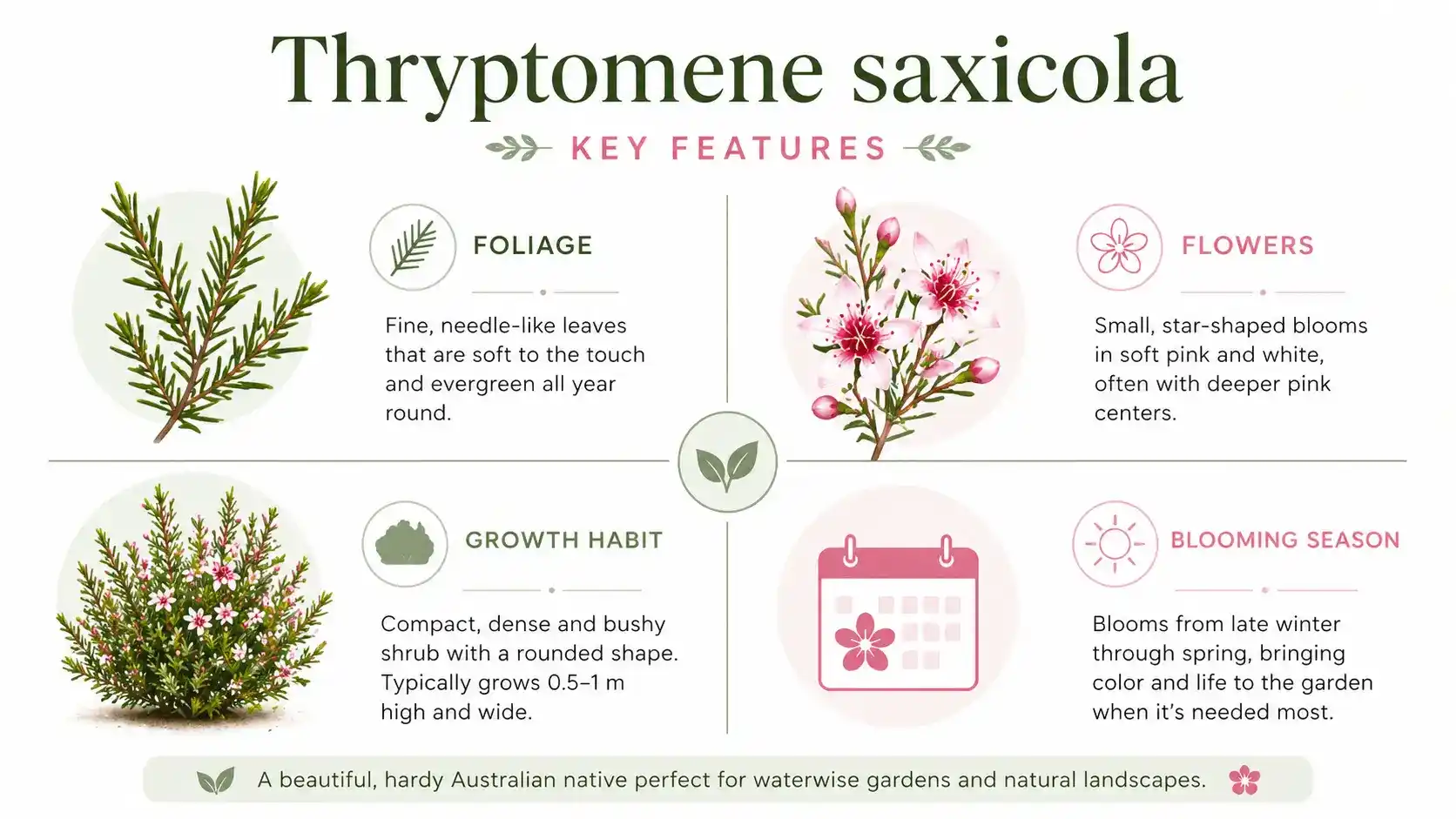
Thryptomene saxicola is recognized for its delicate appearance combined with strong resilience, making it suitable for ornamental and functional garden use.
- Fine, needle-like leaves that create a soft, textured look
- Small, star-shaped thryptomene flowers in pink, white, or rose tones
- Long blooming period, typically lasting several weeks
- Dense, bushy growth habit ideal for shaping and structure
Popular Varieties and Cultivars of Thryptomene Saxicola
Several cultivars and hybrids of thryptomene saxicola are developed for specific landscaping needs, offering variation in flower color, size, and growth habit.
Common varieties include:
- Thryptomene saxicola ‘FC Payne’ – known for vibrant pink flowers and upright growth
- Thryptomene saxicola compact – smaller form suitable for tight spaces
- Thryptomene saxicola pink lace – airy structure with soft pink blooms
- Thryptomene saxicola rosea – deeper pink flowers and bushy growth
- Dwarf thryptomene – compact and slow-growing
- White thryptomene – produces clean white flowers for contrast
Comparison Table: Thryptomene Saxicola Varieties
| Variety | Flower Color | Size | Growth Habit | Best Use |
| FC Payne | Pink | Medium | Upright | Landscaping |
| Compact | Pink/White | Small | Dense | Small gardens |
| Pink Lace | Soft pink | Medium | Airy | Decorative planting |
| Rosea | Deep pink | Medium | Bushy | Feature plant |
| White forms | White | Varies | Compact | Contrast planting |
Plant Size and Growth Habit
Thryptomene saxicola typically grows as a medium-sized shrub, though its size can vary depending on the variety and environmental conditions.
- Standard varieties reach moderate height and spread
- Dwarf thryptomene remains compact and suitable for small spaces
- Growth is denser in full sun and well-drained soil
- Indoor growth is limited due to light requirements; it performs best outdoors
Environmental factors such as sunlight, soil quality, and pruning influence its final shape and density.
Growth Rate and Seasonal Development
Thryptomene saxicola has a moderate growth rate and follows a seasonal flowering cycle influenced by climate conditions.
- Moderate growth speed under optimal conditions
- Peak flowering occurs from late winter to spring
- Growth improves with adequate sunlight and proper soil drainage
- Seasonal pruning helps maintain structure and encourage new growth
Care Guide for Thryptomene Saxicola
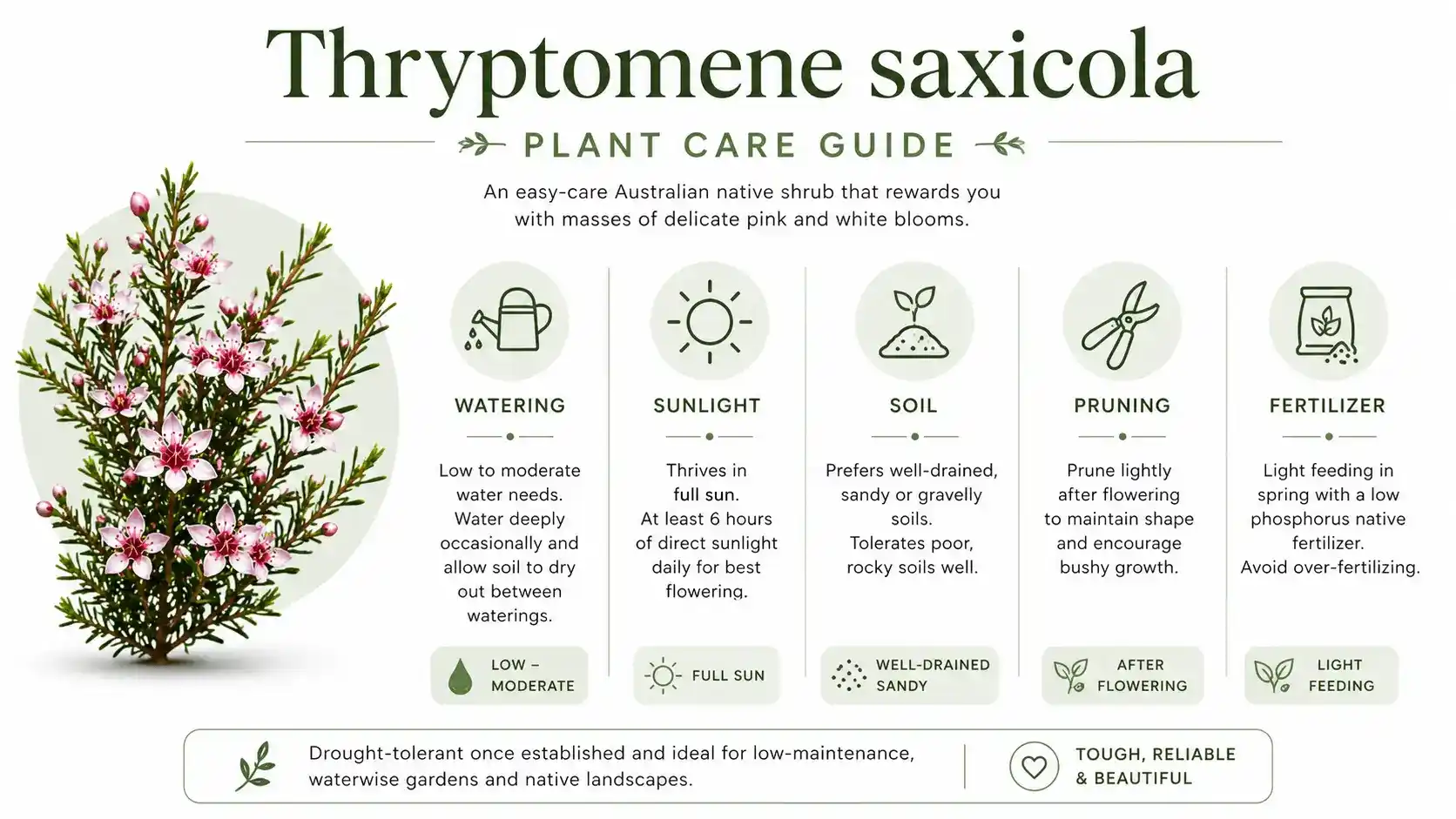
Proper care ensures healthy growth and consistent flowering of thryptomene saxicola.
Watering Requirements
- Low to moderate watering needs
- Allow soil to dry between watering
- Avoid waterlogged conditions
Light Conditions
- Full sun is ideal for maximum flowering
- Partial shade is tolerated but may reduce bloom quantity
Soil Preferences
- Requires well-drained sandy or loamy soil
- Poor drainage increases risk of root problems
Fertilization
- Light feeding during the growing season
- Avoid excessive nitrogen, which promotes foliage over flowers
Pruning
- Light pruning after flowering
- Helps maintain compact shape, especially in compact varieties
Climate Tolerance
- Drought-tolerant once established
- Sensitive to heavy frost and prolonged cold
While primarily grown outdoors, its care principles—such as light, watering, and soil balance—align with general practices covered in a guide to house plants.
Common Problems and Troubleshooting
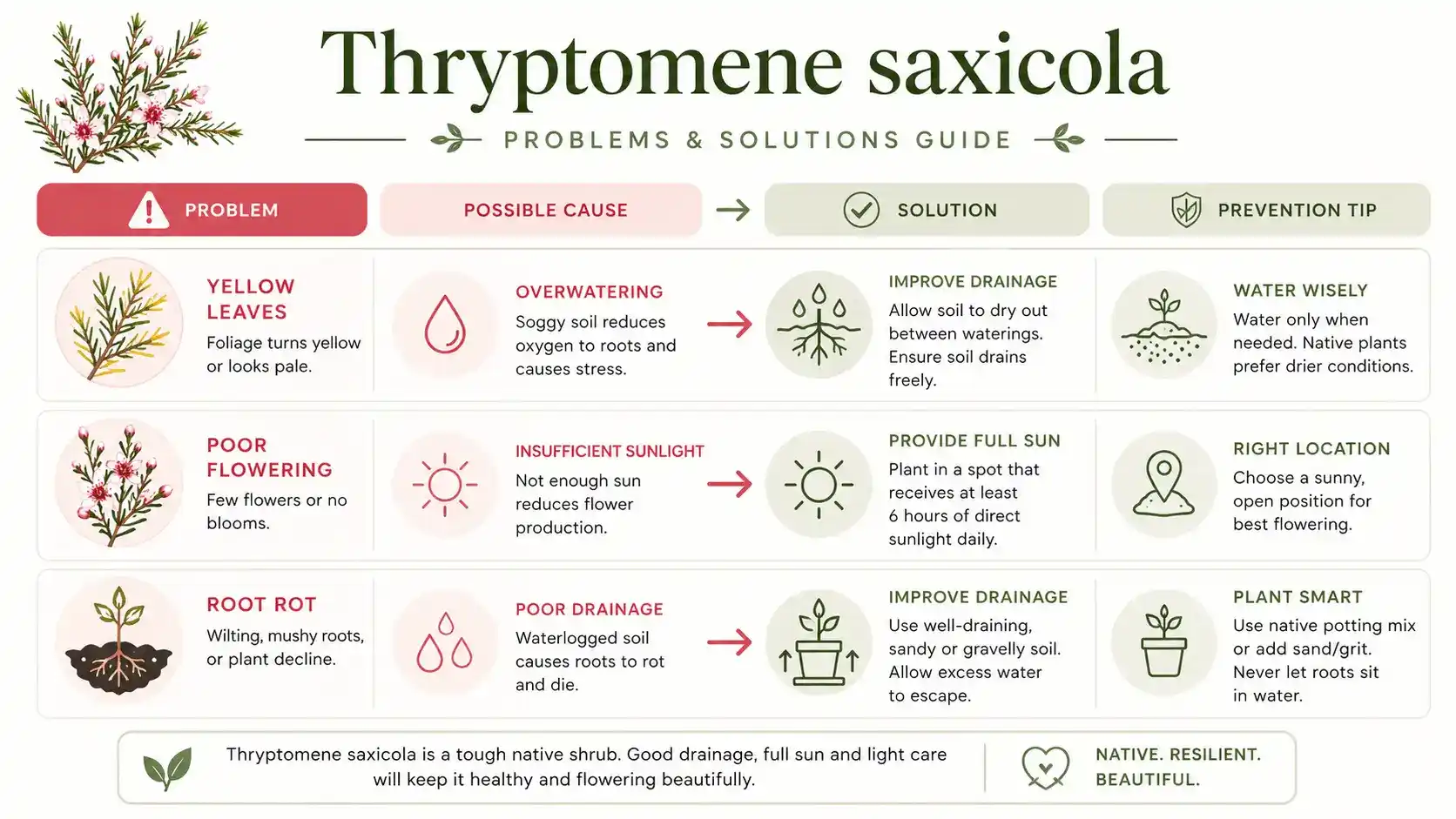
Common problems in thryptomene saxicola are usually related to environmental conditions and care practices.
Common Issues
- Yellowing leaves
- Poor flowering
- Root rot
Problem–Solution Breakdown
Overwatering
- Cause: Poor drainage
- Fix: Improve soil drainage
- Prevention: Use controlled watering
Lack of blooms
- Cause: Insufficient sunlight
- Fix: Move to a sunnier location
Stunted growth
- Cause: Nutrient imbalance
- Fix: Apply balanced fertilization
Beginner Mistakes to Avoid
Avoiding common mistakes improves plant health and flowering performance.
- Planting in heavy clay soil without drainage improvement
- Overwatering young plants before establishment
- Ignoring pruning needs after flowering
- Growing in low-light conditions that reduce blooming
One common mistake is planting in heavy clay soil without improving drainage—learning how to improve clay soil for lawns can significantly enhance root health and prevent waterlogging.
Comparison: Thryptomene Saxicola vs Other Thryptomene Species
Thryptomene saxicola differs from other species within the thryptomene genus in several key ways.
Comparison Highlights
- Higher drought tolerance compared to some species
- Dense and compact growth habit
- Strong adaptability to rocky soils
- Widely used in landscaping compared to less common varieties
Landscaping Uses and Design Ideas
Thryptomene saxicola is widely used in landscaping due to its structure and flowering appeal.
- Border planting for defined garden edges
- Rock gardens where drainage is high
- Low hedging for structured design
- Container gardening using compact varieties
Environmental Limitations and Growing Conditions
Understanding environmental limits helps prevent growth issues.
- Sensitive to poorly drained soils
- Limited tolerance to extreme cold climates
- Requires good airflow to reduce fungal risks
- Performs best in open, sunny environments
How Thryptomene Saxicola Fits Into Garden Ecosystems
Thryptomene saxicola contributes to garden biodiversity and sustainable planting.
- Attracts bees and pollinators during flowering
- Suitable for drought-tolerant landscapes
- Fits well in native and low-maintenance garden systems
As a pollinator-friendly shrub, it pairs well with other butterfly-attracting flowers to support a diverse and active garden ecosystem.
Conclusion
Thryptomene saxicola is a versatile, drought-tolerant shrub valued for its delicate flowers and adaptability in landscaping. With proper care—especially well-drained soil and sufficient sunlight—it can grow reliably with minimal maintenance. Selecting suitable varieties, such as compact forms or ‘FC Payne’, enhances both visual appeal and functional use in different garden settings.
FAQs
What is the common name of thryptomene saxicola?
It is commonly known as rock thryptomene, referring to its natural growth in rocky environments.
How big does thryptomene saxicola grow?
It typically grows to a medium shrub size, while compact and dwarf varieties remain smaller and more suitable for limited spaces.
When does thryptomene saxicola flower?
It flowers mainly from late winter to spring, producing clusters of small pink or white blooms.
What causes problems in thryptomene saxicola growth?
Common causes include overwatering, poor drainage, and insufficient sunlight, all of which affect plant health and flowering.
Is thryptomene saxicola suitable for small gardens?
Yes, compact and dwarf varieties are ideal for small gardens and container planting.
What is special about thryptomene saxicola ‘FC Payne’?
It is a popular cultivar known for its vibrant pink flowers and reliable upright growth, making it suitable for landscaping use.