Introduction: Understanding Dwarf Pomegranate Fruit Size
Dwarf pomegranates, scientifically classified as Punica granatum dwarf forms, are compact versions of standard pomegranate trees. Unlike their full-size counterparts, dwarf pomegranates are typically grown in smaller spaces, often as ornamental plants or bonsai. While they can still produce fruit, the compact growth habit naturally limits fruit size. Understanding dwarf pomegranate fruit size helps gardeners manage expectations, select suitable varieties, and optimize growth conditions for both ornamental appeal and fruit production. Dwarf pomegranates (Punica granatum dwarf forms) are a compact variety of the common pomegranate pomegranate, valued for their ornamental appeal and small-space fruit production.
What Is the Typical Dwarf Pomegranate Fruit Size?
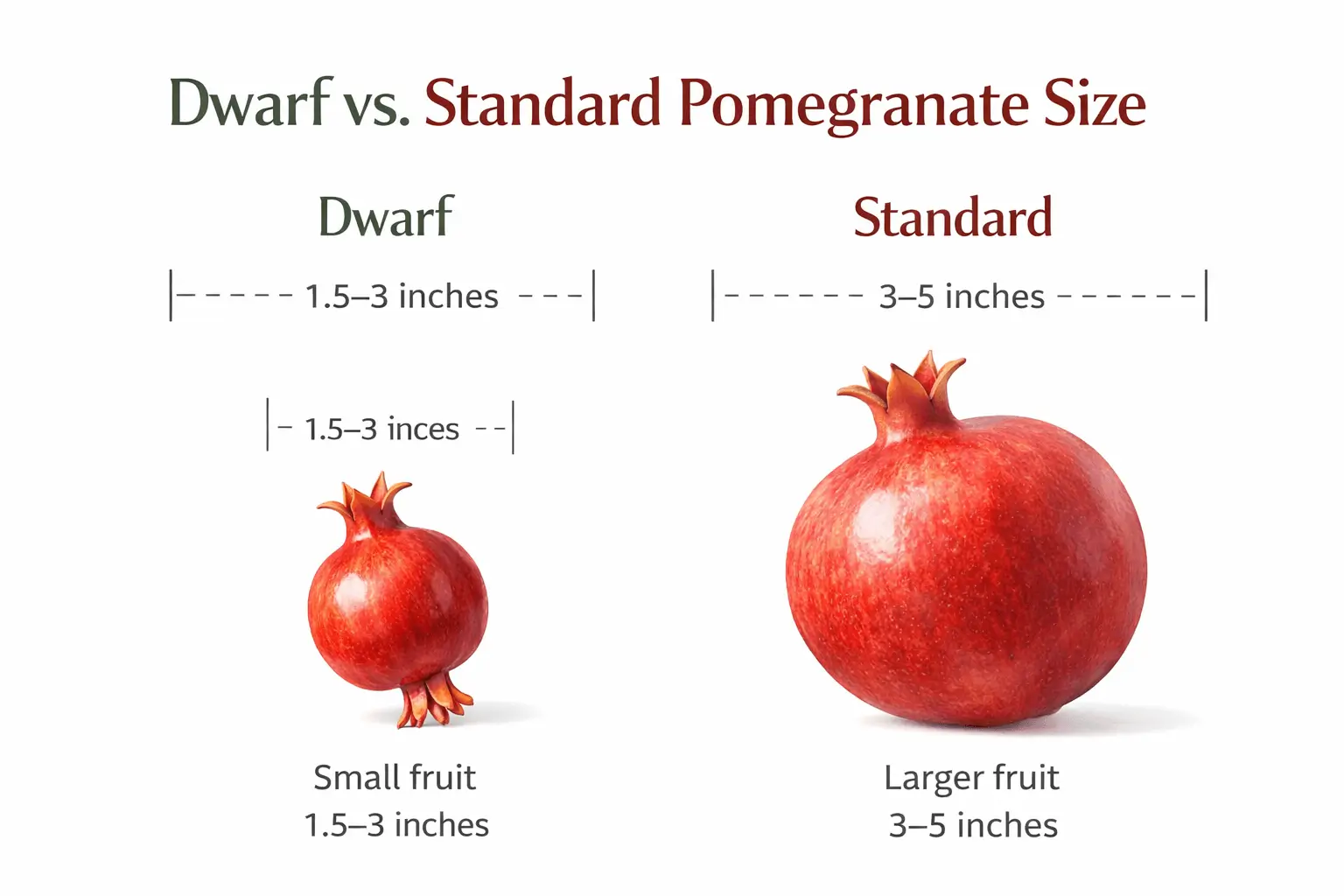
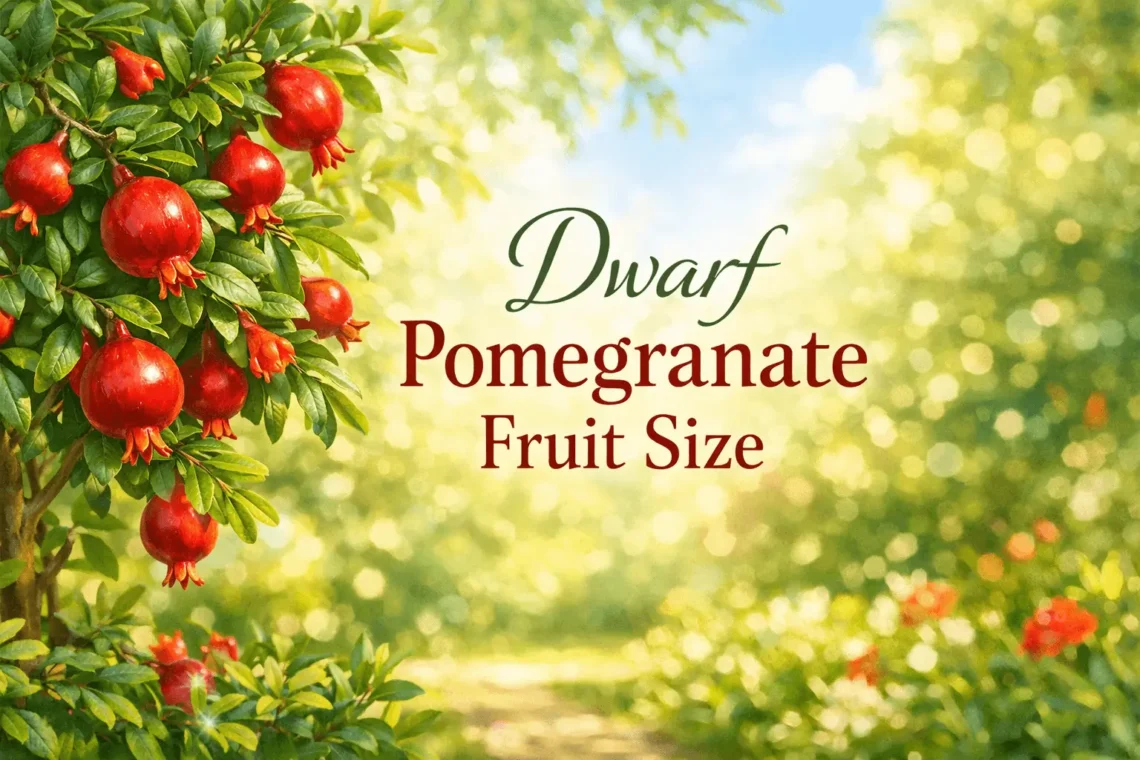
The average dwarf pomegranate fruit ranges from 1.5 to 3 inches in diameter, weighing roughly 2 to 6 ounces. In comparison, standard pomegranates typically grow 3 to 5 inches wide and can weigh over a pound. The smaller fruit of dwarf varieties is primarily due to compact growth and limited resources, which restrict the development of larger seeds and juice content. Gardeners should note that fruit size can also vary depending on variety, sunlight, and watering practices.
How Big Do Dwarf Pomegranate Trees Get?
Average Height and Spread
Dwarf pomegranate trees usually grow between 2 to 5 feet in height, with a canopy spread of 2 to 4 feet. Their smaller stature makes them ideal for container gardening and small yards, while still producing flowers and fruit. The compact size allows for easier pruning and maintenance without compromising ornamental appeal.
Dwarf Pomegranate Size in Containers vs Garden Soil
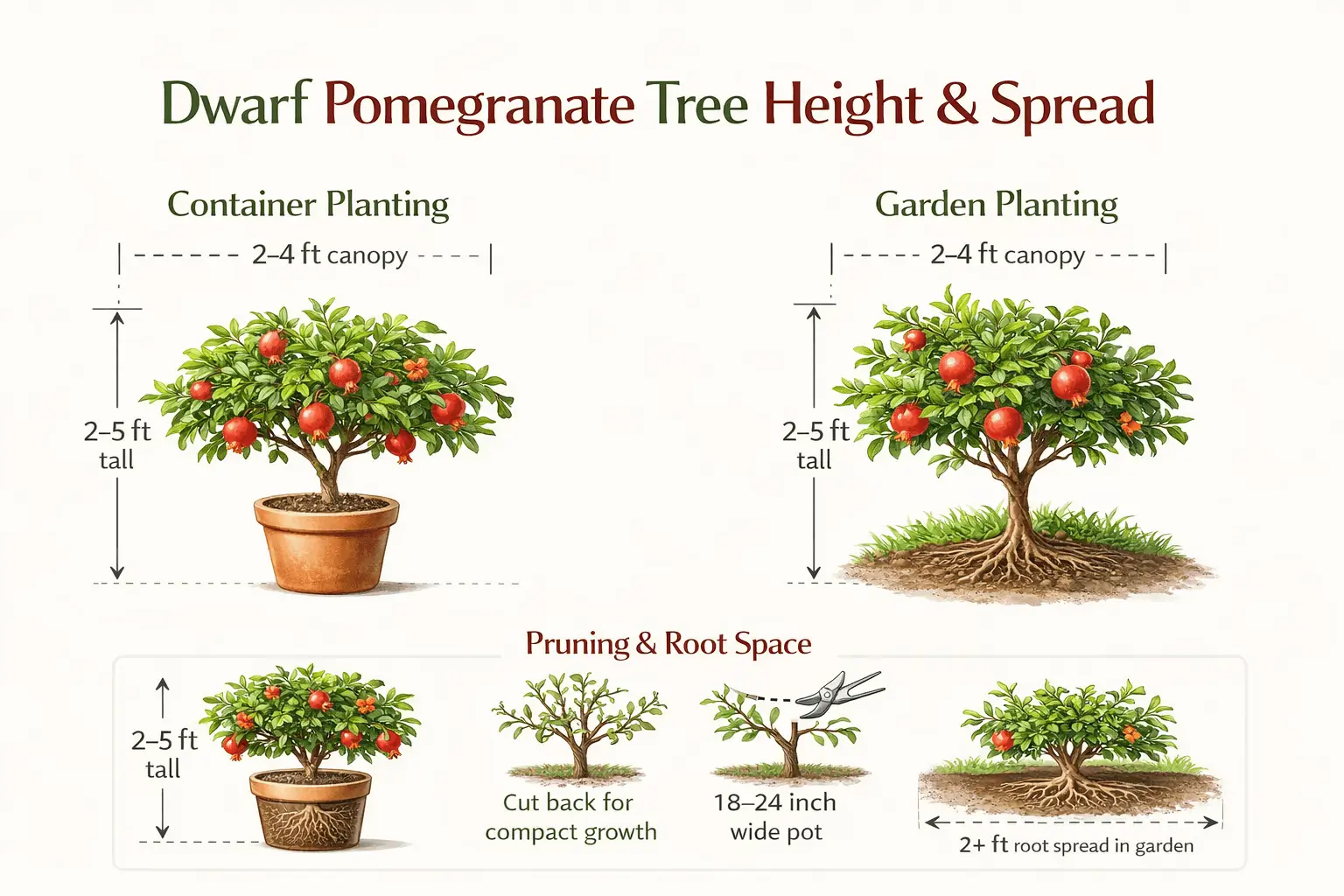
Container-grown dwarf pomegranates often remain smaller than those planted in garden soil due to restricted root space. Limited soil volume affects nutrient absorption, resulting in slightly smaller fruits. Pruning and fertilization can partially offset these limitations, but outdoor plants with unrestricted root zones generally achieve slightly larger fruit and overall size. Similar to managing compact grasses like Panicum Virgatum ‘Cheyenne Sky, controlling root space and pruning can optimize dwarf pomegranate growth in containers.
Are Dwarf Pomegranate Fruits Edible?
Taste and Edibility of Dwarf Pomegranate Fruit
Yes, dwarf pomegranate fruits are edible. They typically have a tart flavor with a lower juice yield than full-size varieties. While smaller, the seeds are still crunchy and nutritious, making them suitable for snacking, salads, or garnishes. Fruit sweetness can vary by cultivar and growing conditions.
Differences Between Ornamental and Edible Pomegranate Varieties
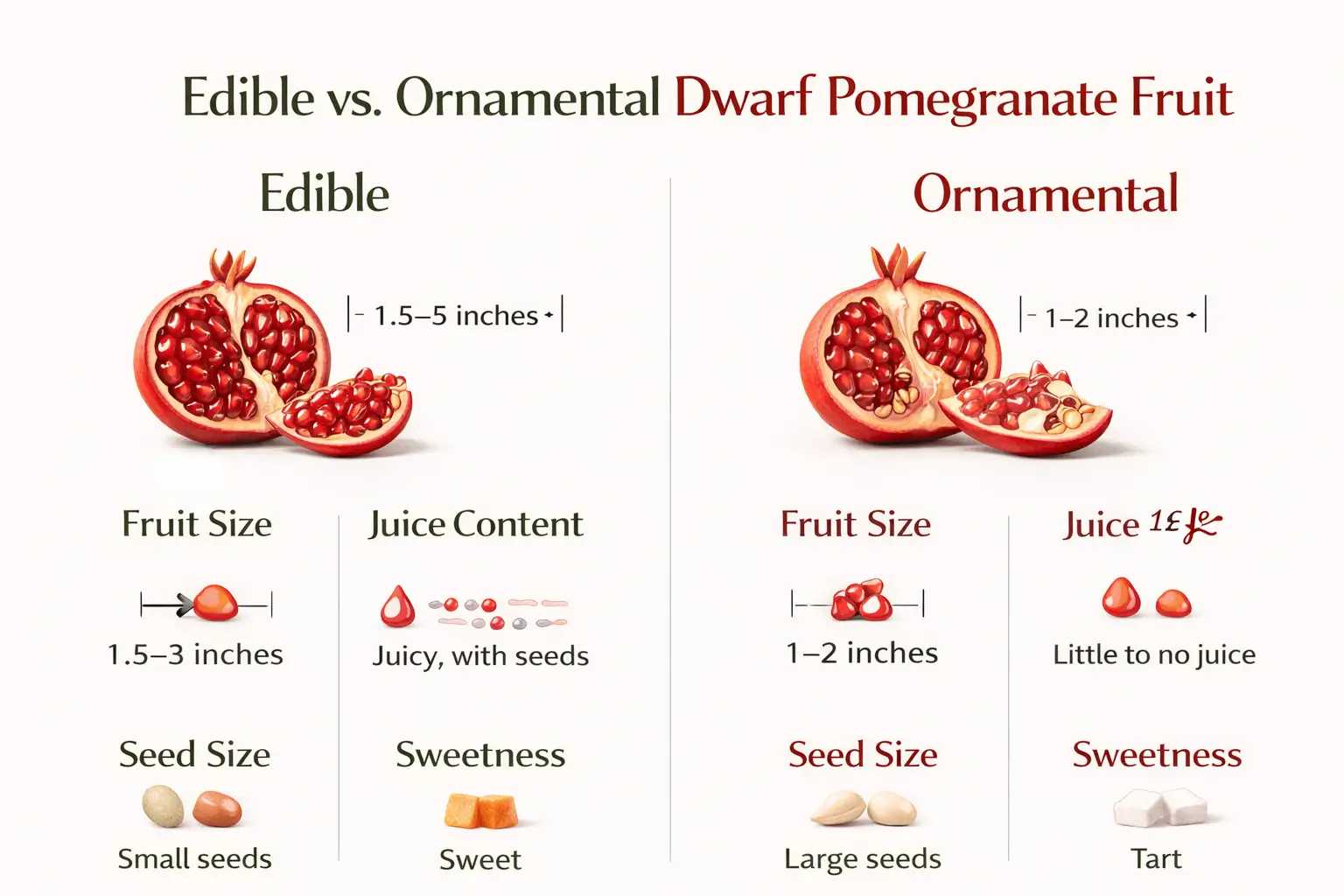
Some dwarf pomegranate varieties are primarily ornamental and produce fruit mainly for decoration. Ornamental types tend to have smaller seeds, thinner juice content, and less sweetness. In contrast, edible cultivars are selectively bred for taste, juice production, and seed size, even within compact dwarf forms.
Dwarf Pomegranate Varieties and Their Fruit Characteristics
Common dwarf pomegranate cultivars include Punica granatum nana, Nana Red, and Nana White. Fruit size varies slightly among these varieties, with Nana Red producing slightly larger fruits than Nana White. Selection of cultivar influences fruit appearance, flavor, and frequency of production. Gardeners choosing dwarf pomegranates should match the cultivar to intended use: bonsai, ornamental garden, or edible fruit.
Climate Requirements and Cold Tolerance
Dwarf Pomegranate Zone Requirements
Dwarf pomegranates thrive in USDA zones 7–10. They prefer full sun exposure and well-draining soil. Adequate warmth during flowering promotes proper fruit set, while consistent watering encourages healthy development.
Dwarf Pomegranate Tree Cold Tolerance
Dwarf pomegranates are moderately cold-tolerant. Temperatures below 15°F can damage buds, flowers, and fruit. In cooler climates, container plants should be moved indoors or protected during frost. Cold stress can reduce fruit size and yield, making climate awareness critical for successful cultivation.
Growing Dwarf Pomegranate as a Bonsai
Why Dwarf Pomegranate Works Well for Bonsai
Dwarf pomegranates are ideal for bonsai due to their naturally compact growth, small leaves, and ability to flower on miniature branches. Varieties like Punica granatum nana bonsai respond well to root pruning and container restrictions, making them suitable for indoor or patio bonsai projects.
Typical Fruit Size on Pomegranate Bonsai Trees
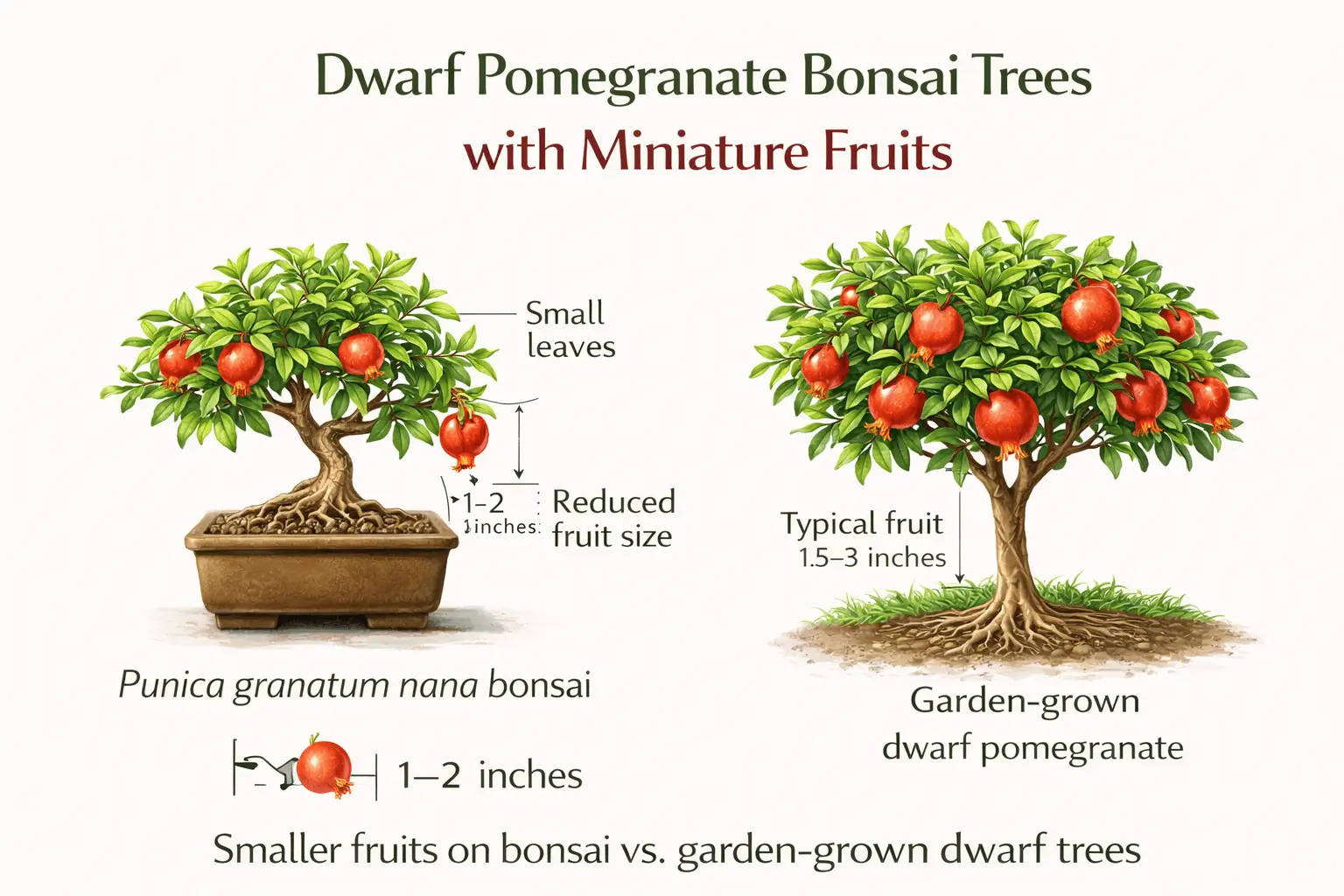
Bonsai cultivation further reduces fruit size, often yielding fruits under 2 inches in diameter. Despite their miniature appearance, bonsai fruits remain edible, though juice content and sweetness are lower than standard garden-grown dwarf pomegranates.
Common Problems That Affect Dwarf Pomegranate Fruit Size
-
Poor Pollination
Insufficient pollination can lead to smaller or misshapen fruits. Dwarf pomegranates benefit from insect pollinators or hand pollination to maximize fruit development.
-
Overwatering or Nutrient Imbalance
Excessive watering or improper fertilization can stunt fruit growth. Balanced soil nutrition and moderate watering schedules support optimal fruit size. aintaining proper nutrient balance and using natural boosters like tea water can help support healthy fruit growth; see our guide on Using Tea for Plants for more tips.
-
Limited Sunlight
Dwarf pomegranates require full sun for healthy flowering and fruiting. Inadequate sunlight results in smaller fruits and reduced yield. Positioning the plant in a sunny location is essential.
Beginner Mistakes When Growing Dwarf Pomegranates
Common mistakes include using containers that are too small, excessive pruning that reduces flowering branches, planting in low-light areas, and expecting full-size pomegranate fruits from dwarf varieties. Awareness of these errors helps gardeners improve fruit production and plant health.
Semi-Dwarf vs Dwarf Pomegranate Trees
Semi-dwarf pomegranate trees grow taller, typically 6–8 feet, and produce slightly larger fruit than dwarf forms. Dwarf trees remain 2–5 feet tall, ideal for small gardens or containers. Choosing between semi-dwarf and dwarf types depends on space availability, intended fruit size, and maintenance preferences.
Conclusion
Dwarf pomegranate fruit size is naturally smaller due to the tree’s compact growth habit. These varieties are valued for ornamental beauty, bonsai cultivation, and small-space gardening. While fruits are generally edible, size, sweetness, and juice content vary by cultivar, growing conditions, and whether the tree is container-grown or in garden soil. Understanding these factors helps gardeners maximize both aesthetic and fruiting benefits.
FAQs
1. How big is dwarf pomegranate fruit compared to regular pomegranates?
Dwarf pomegranate fruits typically measure 1.5–3 inches in diameter, while standard pomegranates grow 3–5 inches wide and weigh over a pound.
2. Can you eat the fruit of a dwarf pomegranate tree?
Yes, dwarf pomegranate fruits are edible. They are smaller, often tart, and have lower juice content than full-size varieties, but seeds are crunchy and suitable for consumption.
3. How tall do dwarf pomegranate trees grow?
Dwarf pomegranates generally grow 2–5 feet tall, with a canopy spread of 2–4 feet, making them ideal for container gardening and small garden spaces.
4. Do dwarf pomegranate bonsai trees produce fruit?
Yes, bonsai-grown dwarf pomegranates can produce fruits, but they are typically smaller, often under 2 inches, with lower juice content compared to garden-grown dwarf trees.
5. What conditions help dwarf pomegranate trees produce larger fruit?
Full sun exposure, well-draining soil, balanced watering, and proper fertilization all support healthier fruit growth and slightly larger fruit size.
6. Are dwarf pomegranate trees suitable for indoor or container growing?
Yes, dwarf pomegranates are suitable for containers. Adequate pot size, proper pruning, and sufficient sunlight are crucial to maintain fruit production and plant health indoors or on patios.