Introduction
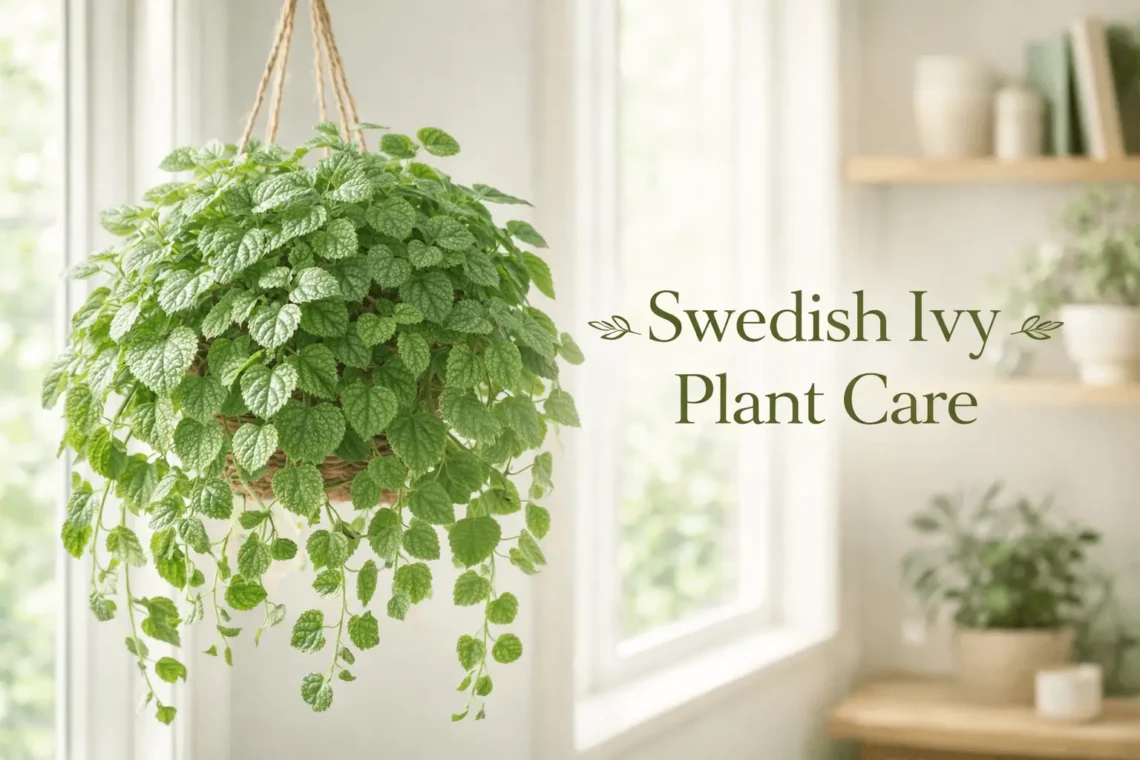
Swedish ivy plant care refers to the basic growing requirements and maintenance practices needed to keep this trailing houseplant healthy indoors or outdoors. Known for its fast growth, cascading stems, and attractive foliage, Swedish ivy is commonly grown as a hanging plant or potted houseplant. Understanding the plant’s light needs, watering routine, soil preferences, and propagation methods helps gardeners maintain vigorous growth and prevent common problems such as yellow leaves or poor flowering. Swedish ivy is widely used in indoor décor because it adapts easily to containers and thrives in typical household environments. With proper care, this plant develops lush trailing stems that make it ideal for hanging baskets, shelves, or decorative planters.
What Is Swedish Ivy and Why Is It Popular as a Houseplant
Swedish ivy is a trailing ornamental plant commonly grown as a houseplant, valued for its cascading growth and textured foliage. Despite its name, it is not a true ivy. The plant belongs to the genus Plectranthus, most commonly Plectranthus verticillatus, which is part of the mint family (Lamiaceae). Although Swedish ivy is not a true ivy species, it is often compared to trailing plants like the English Ivy Hanging Plant because both are widely used in hanging baskets and indoor plant displays.
Unlike true ivy species such as Hedera helix, Swedish ivy produces soft, succulent stems and rounded, glossy leaves with scalloped edges. These features give the plant a lush and decorative appearance.
The plant grows naturally in a trailing or cascading habit, which makes it particularly suitable for hanging baskets and elevated containers. Its stems can spill over the edges of pots, creating a dense curtain of foliage.
Swedish ivy belongs to the genus Plectranthus, a group of ornamental plants in the mint family commonly grown for decorative foliage.
Gardeners also appreciate Swedish ivy because it is easy to grow and tolerant of typical indoor conditions. It adapts well to indoor environments, requires moderate care, and occasionally produces small tubular flowers that appear on upright spikes.
Swedish Ivy Indoor or Outdoor: Where the Plant Grows Best
Swedish ivy grows best indoors in most climates, although it can also grow outdoors in warm regions. The plant thrives in indoor environments where temperatures remain stable and light conditions are moderate. Many gardeners combine Swedish ivy with other indoor-friendly plants such as Panda Plants, which also thrive in bright indoor environments and decorative containers.
Indoor Swedish ivy typically performs well in containers placed near bright windows or well-lit rooms. Because it tolerates average indoor humidity and temperatures, it is commonly used as a houseplant.
Outdoors, Swedish ivy can grow successfully in frost-free climates or during warm seasons. It performs well in sheltered patios, shaded balconies, or partially shaded garden areas.
However, the plant is sensitive to cold temperatures. Exposure to frost or temperatures below about 50°F (10°C) can damage foliage and slow growth. For this reason, many gardeners grow Swedish ivy indoors year-round or move it indoors during colder months.
Light Requirements for Healthy Swedish Ivy Growth
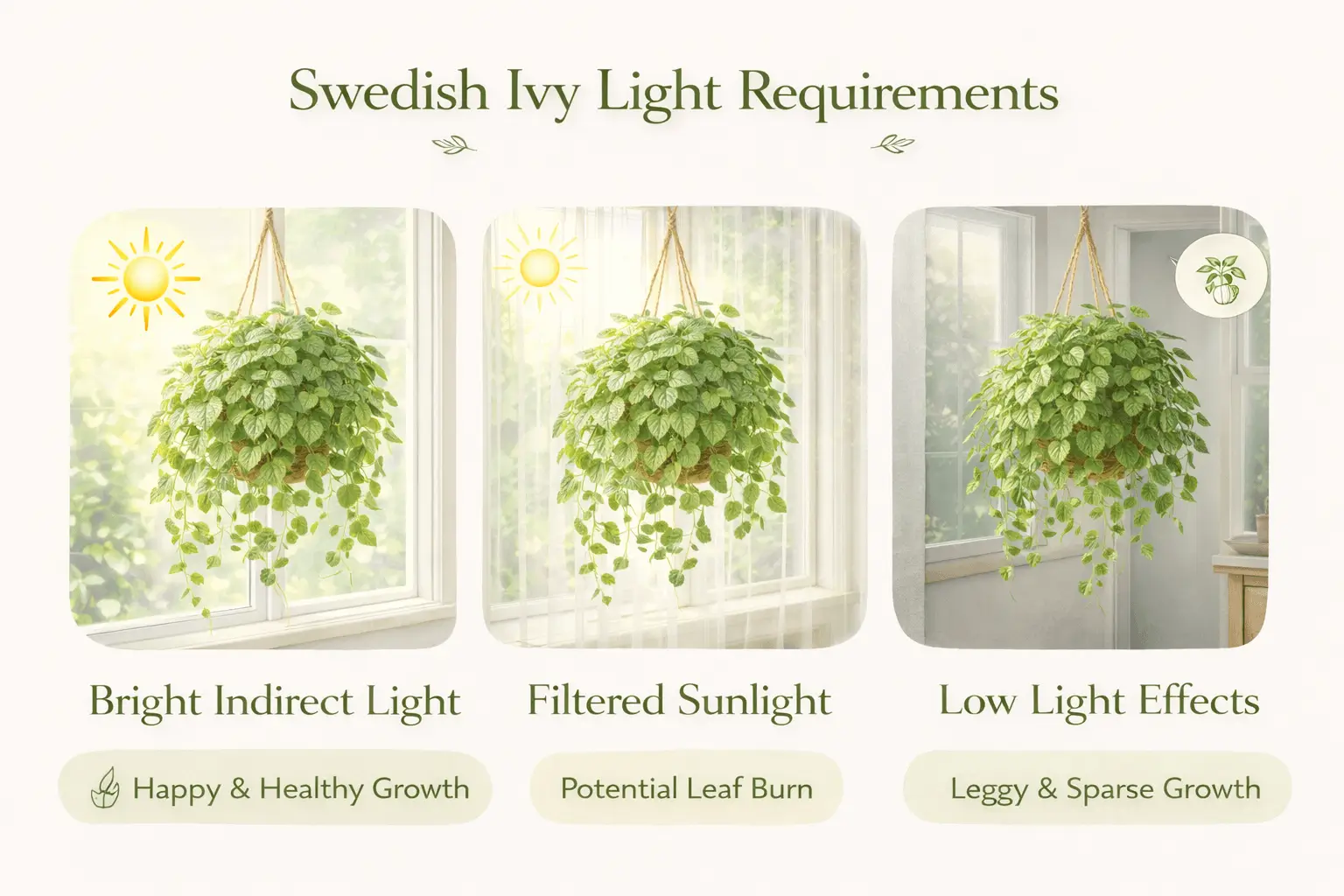
Swedish ivy grows best in bright, indirect light. Adequate lighting helps the plant maintain compact growth and vibrant leaf color.
Bright indirect light refers to locations where the plant receives strong ambient light but is protected from direct sun rays. East-facing or north-facing windows often provide suitable conditions.
Direct sunlight, especially during the afternoon, can scorch leaves and cause foliage discoloration. If the plant receives too much direct sun, the leaves may appear faded or develop dry edges.
Low light conditions can also affect plant health. When Swedish ivy grows in insufficient light, stems may stretch and become leggy as the plant searches for light.
For indoor placement, gardeners often position the plant near filtered windows or behind sheer curtains. Outdoors, Swedish ivy grows well in shaded patios or areas that receive dappled sunlight.
Water Requirements and How Often to Water Swedish Ivy
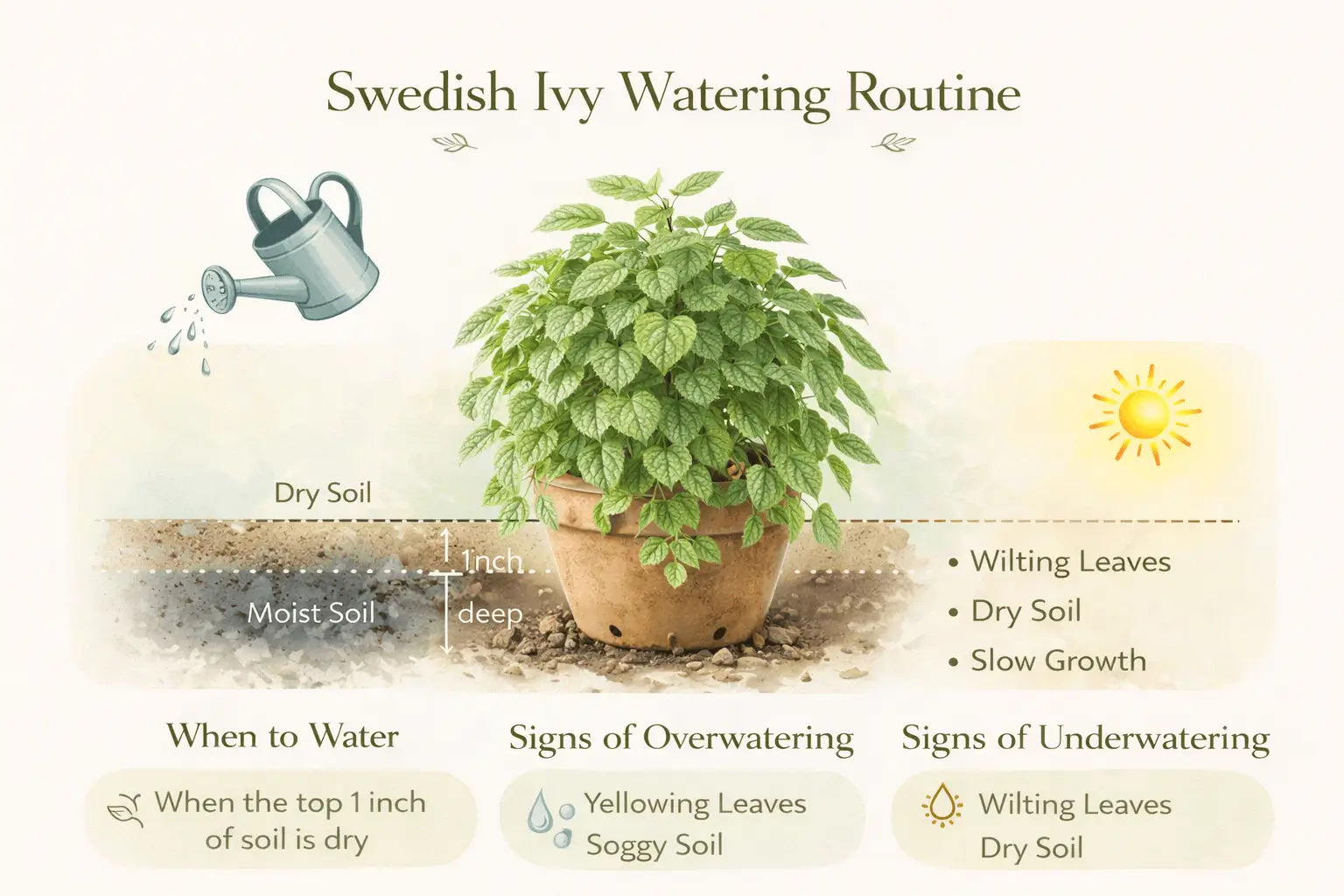
Swedish ivy prefers moderate watering with consistently moist but well-drained soil. Proper watering helps maintain healthy foliage and steady growth.
In most indoor conditions, Swedish ivy should be watered when the top layer of soil begins to dry. This usually occurs once the upper inch of potting mix feels dry to the touch.
During warmer months when growth is active, the plant may require more frequent watering. In cooler months, watering should be reduced because growth slows and evaporation decreases.
Signs of underwatering include drooping stems, dry soil, and reduced leaf vitality. Overwatering can cause yellow leaves, soft stems, and root rot.
Good drainage is essential for preventing waterlogged soil. Containers should include drainage holes so excess water can escape after watering.
Soil and Potting Conditions for Swedish Ivy
Swedish ivy grows best in well-draining potting soil that allows air circulation around the roots. Proper soil structure helps prevent root rot and supports healthy root development.
A standard indoor potting mix combined with materials such as perlite or coarse sand can improve drainage. Loose, aerated soil allows excess water to drain while retaining enough moisture for plant growth.
Swedish ivy adapts well to container growing and is commonly cultivated in pots or hanging baskets. Containers should provide sufficient drainage to prevent stagnant water around the roots.
As the plant matures, repotting may become necessary. Repotting every one to two years allows the roots to expand and refreshes the soil structure.
Healthy soil conditions help maintain strong root systems, which directly support vigorous foliage growth.
Plant Size
Swedish ivy develops long trailing stems that can reach significant lengths under proper conditions. Mature plants often produce cascading stems ranging from 2 to 3 feet (60–90 cm).
When grown indoors in containers, plant size depends largely on pot size, pruning, and available light. Regular trimming can maintain a compact and dense plant shape.
Outdoors in warm climates, Swedish ivy may grow larger because it receives stronger light and more space for root development.
Pruning and container size significantly influence the final plant size. Smaller containers and regular pruning keep the plant compact, while larger containers allow longer trailing stems.
Growth Rate
Swedish ivy is considered a fast-growing houseplant when provided with suitable light, water, and soil conditions. Its rapid growth makes it ideal for filling hanging baskets quickly.
The plant grows most actively during the warmer months of spring and summer. During this time, new stems and leaves develop rapidly.
Growth slows during cooler months or when light levels decrease. Reduced daylight in winter often results in slower stem development.
Environmental factors strongly influence growth rate. Adequate light, consistent watering, and moderate temperatures promote faster growth, while poor lighting or dry soil can slow development.
Swedish Ivy Propagation Methods
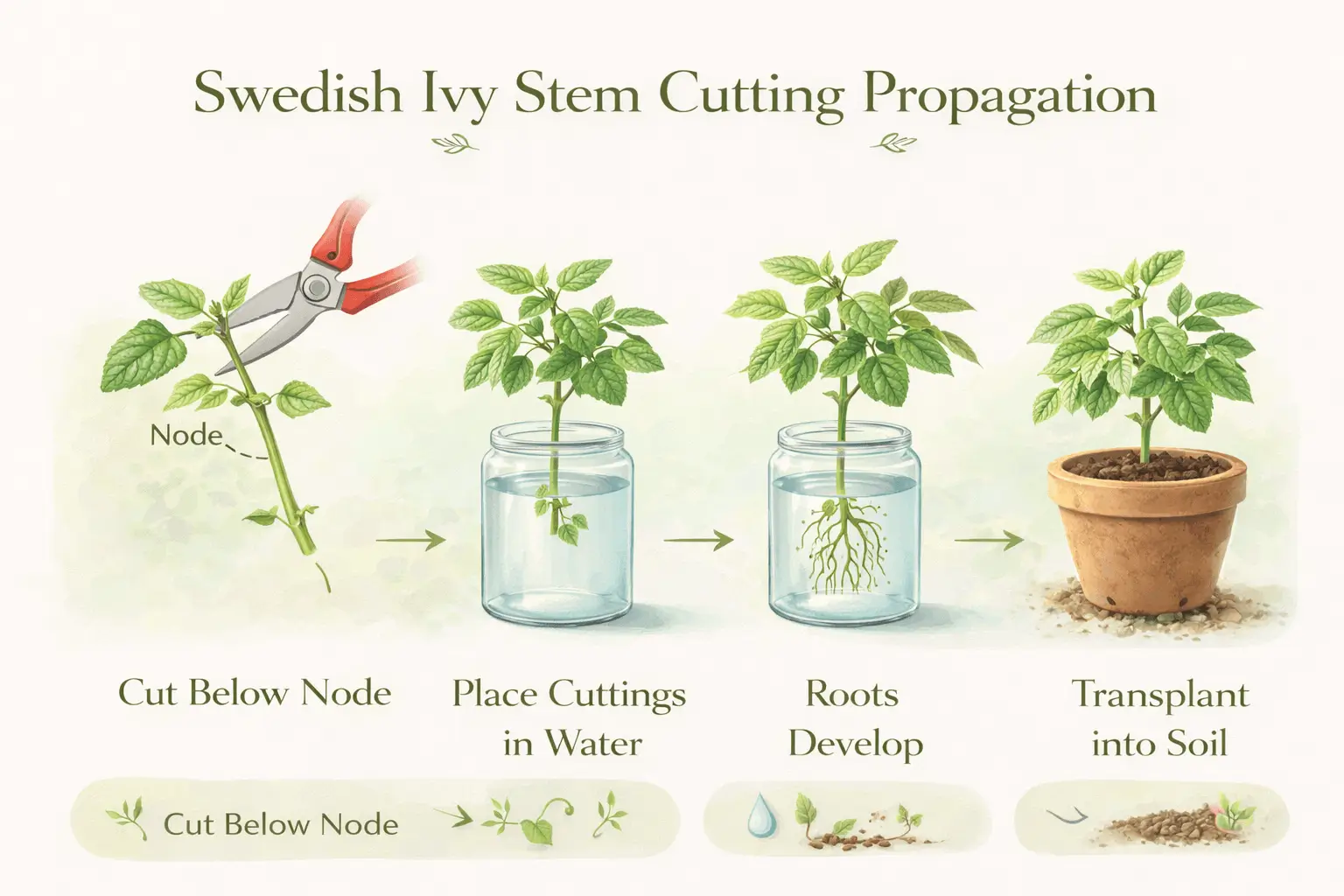
Swedish ivy propagation is most commonly performed using stem cuttings. This method is simple and produces new plants quickly.
Propagating Swedish Ivy in Water
Stem cuttings placed in water often develop roots within one to two weeks. A healthy stem cutting with several leaves is placed in a container of water until roots emerge.
Propagating Swedish Ivy in Soil
Cuttings can also be placed directly into moist potting soil. The soil should remain lightly moist while roots establish.
Step-by-Step Propagation
- Cut a healthy stem section just below a leaf node.
- Remove lower leaves from the cutting.
- Place the cutting in water or moist soil.
- Keep the cutting in bright indirect light.
- Transplant once roots develop.
Because Swedish ivy roots quickly, propagation is considered one of the easiest ways to multiply the plant.
Flowering and Blooms in Swedish Ivy
Swedish ivy produces small tubular flowers that typically appear on upright spikes above the foliage. These flowers are usually white, pale lavender, or light purple depending on the variety.
Flowering usually occurs when the plant receives sufficient light and reaches maturity. However, blooms are less common indoors compared to outdoor environments.
For most indoor gardeners, Swedish ivy is grown primarily for its foliage rather than its flowers. The decorative leaves and cascading stems are the plant’s main ornamental feature.
Environmental factors such as light intensity and plant age influence flowering frequency.
Care Guide
-
Watering Routine
Water the plant when the top layer of soil begins to dry. Avoid allowing the soil to remain constantly saturated.
-
Light Conditions
Provide bright indirect light indoors. Place the plant near windows where sunlight is filtered.
-
Soil and Drainage
Use well-draining potting soil with good aeration to prevent root rot.
-
Fertilization
Apply a balanced houseplant fertilizer during the active growing season to support leafy growth.
-
Pruning
Regular pruning encourages dense foliage and prevents stems from becoming excessively long.
-
Climate Tolerance
Swedish ivy grows best in indoor temperatures between 60–75°F (16–24°C). It prefers warm conditions and should be protected from cold drafts.
Common Swedish Ivy Problems and How to Fix Them
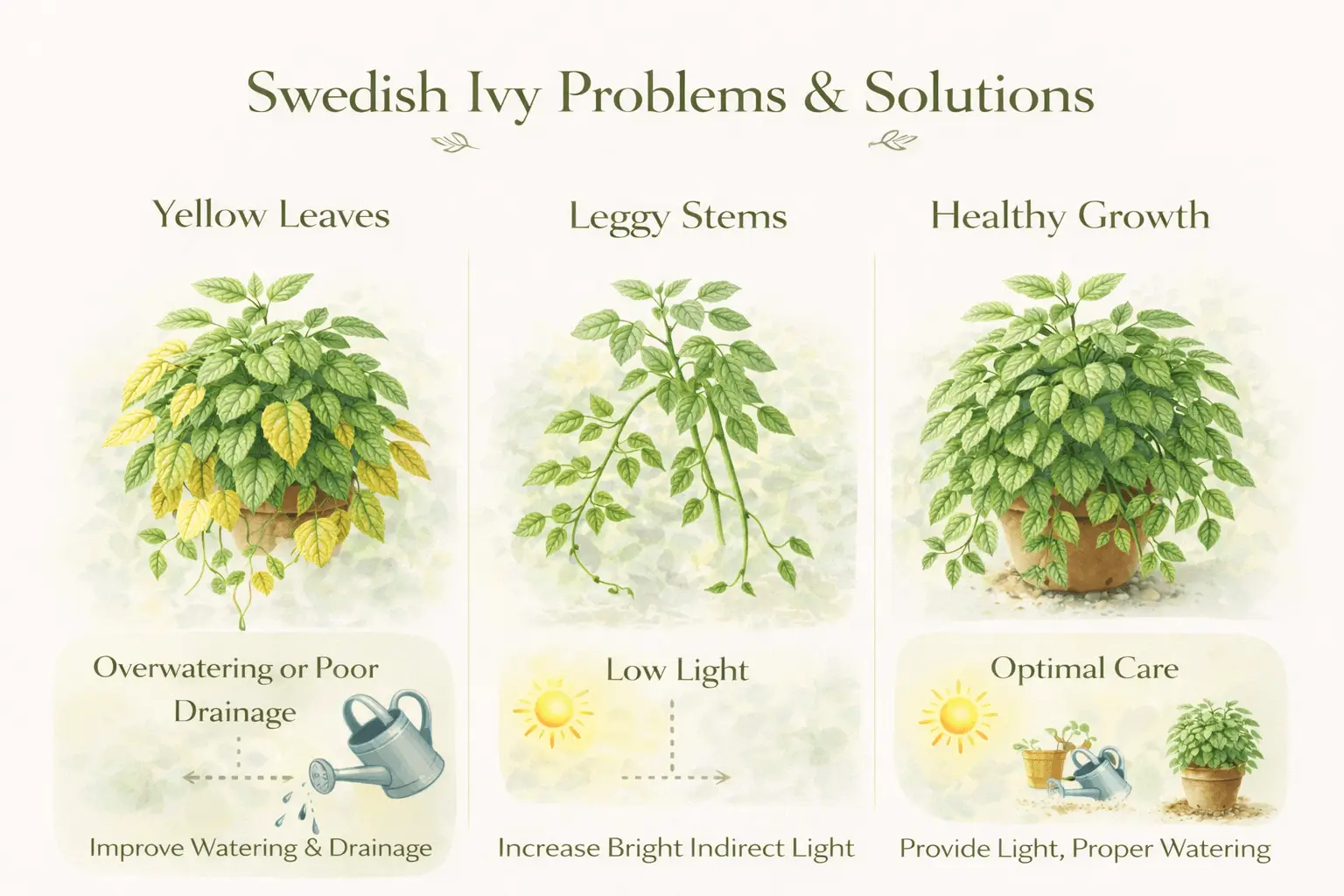
Several common issues may occur when Swedish ivy growing conditions are not ideal.
-
Yellow Leaves
Yellow leaves are often caused by overwatering or poor soil drainage. Allowing the soil to partially dry before watering usually resolves the problem.
-
Weak or Leggy Growth
Low light can cause elongated stems and sparse foliage. Moving the plant to a brighter location often improves growth.
-
Root Health Problems
Poor drainage can lead to root rot. Using well-draining soil and containers with drainage holes prevents this issue.
Early identification of these problems allows gardeners to adjust care practices and restore plant health.
Types of Swedish Ivy and Popular Varieties
Several varieties of Swedish ivy are commonly grown for decorative foliage.
Purple Swedish ivy features deeper green leaves with purple-tinted stems or undersides. White-edged Swedish ivy varieties display variegated leaves with light margins.
Although these varieties differ slightly in appearance, their care requirements remain similar. All types prefer moderate watering, bright indirect light, and well-drained soil.
These variations provide gardeners with options for adding visual diversity to indoor plant collections.
Beginner Mistakes When Growing Swedish Ivy
Several common mistakes can affect Swedish ivy health.
Overwatering is one of the most frequent problems and often leads to yellow leaves or root damage.
Placing the plant in strong direct sunlight may scorch foliage and reduce plant vitality.
Ignoring pruning can result in long, sparse stems rather than dense trailing growth.
Using dense or poorly draining soil can also harm root health. Well-aerated potting mixes prevent this issue.
Avoiding these mistakes helps maintain healthy growth and attractive foliage.
Swedish Ivy in Indoor Plant Design and Hanging Displays
Swedish ivy is widely used in indoor plant design because of its trailing growth habit. The plant naturally cascades over containers, making it ideal for hanging baskets or elevated shelves.
Trailing vines add vertical interest to indoor plant arrangements and soften the appearance of rigid plant containers.
Swedish ivy is often combined with other indoor plants in decorative displays, where its cascading stems create visual contrast.
Because it grows quickly and tolerates indoor conditions, it remains a popular choice for decorative plant collections.
Conclusion
Swedish ivy plant care focuses on providing balanced light, consistent watering, and well-draining soil so the plant can grow vigorously indoors or outdoors. With proper conditions, Swedish ivy becomes a fast-growing trailing houseplant that is easy to propagate and maintain. Understanding its light needs, watering routine, and soil preferences helps prevent common issues such as yellow leaves or weak growth. When these environmental requirements are met, Swedish ivy thrives as a decorative hanging plant in homes, patios, or indoor plant displays.
FAQs
How often should you water Swedish ivy?
Swedish ivy should typically be watered when the top layer of soil becomes dry. Indoor plants usually require watering once the potting mix begins to dry out, but frequency varies depending on temperature and light.
Can Swedish ivy grow indoors all year?
Yes. Swedish ivy adapts well to indoor environments and is commonly grown as a year-round houseplant when placed in bright indirect light.
Does Swedish ivy need direct sunlight?
No. Swedish ivy grows best in bright indirect light. Direct sunlight can damage leaves and reduce plant health.
How do you propagate Swedish ivy cuttings?
Swedish ivy propagation is usually done using stem cuttings placed in water or moist soil. Roots develop quickly, making propagation simple.
Why are the leaves on my Swedish ivy turning yellow?
Yellow leaves are commonly caused by overwatering, poor drainage, or insufficient light. Adjusting watering and improving growing conditions usually resolves the issue.