
Introduction
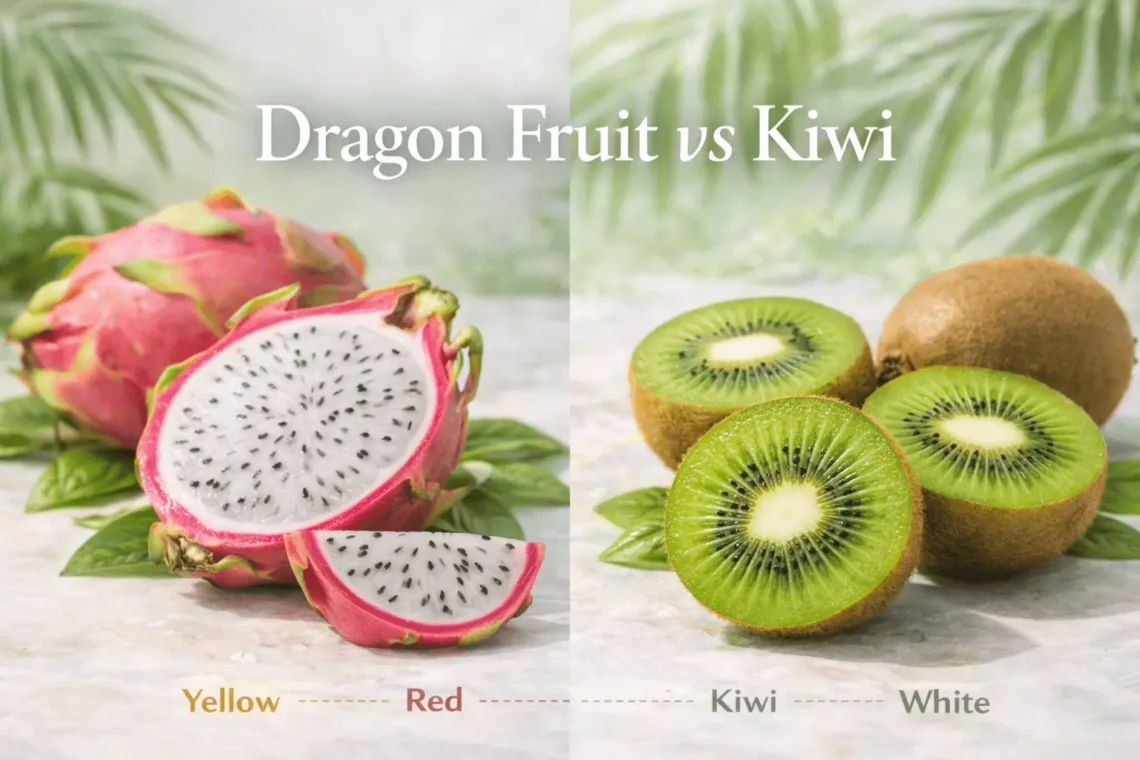
Dragon fruit vs kiwi is a common comparison for people interested in healthy tropical fruits. Both fruits are known for their vibrant colors, refreshing taste, and strong nutritional value. Dragon fruit, also known as pitaya, grows on a climbing cactus, while kiwi fruit is a small fuzzy berry that originates from East Asia. These fruits are widely consumed worldwide for their vitamins, antioxidants, and fiber content. Understanding the differences between dragon fruit and kiwi fruit helps people choose the option that best matches their nutritional needs, taste preferences, and health goals. Although dragonfruit and kiwifruit may appear somewhat similar because of their tiny edible seeds, they differ significantly in botanical origin, flavor profile, and nutritional composition.
Dragon Fruit vs Kiwi: Key Differences at a Glance
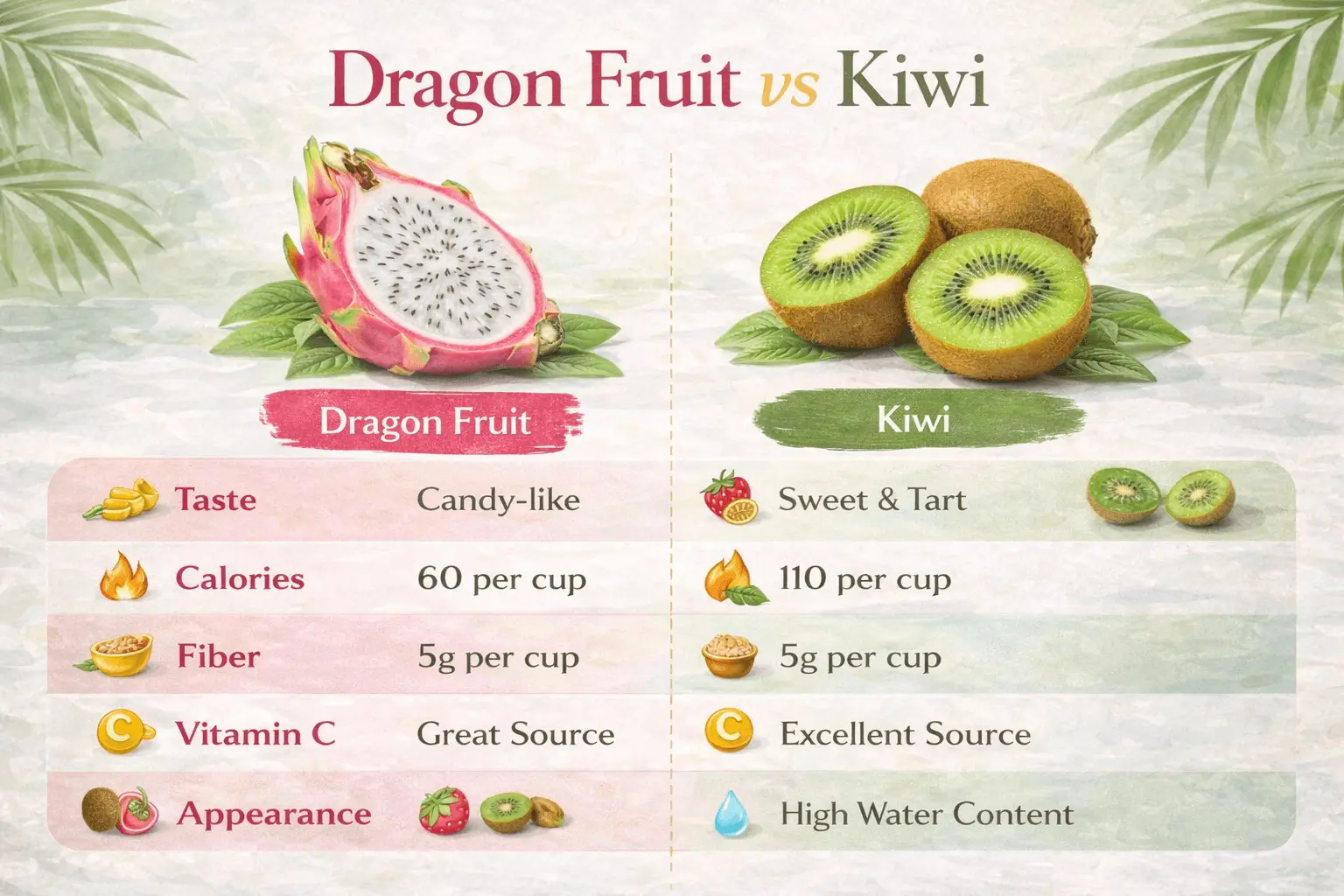
The comparison of dragon fruit vs kiwi highlights several noticeable differences in nutrition, taste, and appearance. While both fruits are nutrient-dense, they offer distinct benefits and flavors.
Key differences include:
- Taste: Dragon fruit has a mild sweetness, while kiwi has a tangy sweet-tart flavor.
- Nutrition: Kiwi generally contains more vitamin C.
- Calories: Both fruits are relatively low in calories.
- Fiber: Kiwi often provides slightly higher dietary fiber.
- Appearance: Dragon fruit has bright pink skin and white or red flesh with black seeds, while kiwi has brown fuzzy skin and bright green flesh.
These distinctions explain why comparisons such as kiwi vs dragon fruit are common among people exploring healthy fruit choices.
What Is Dragon Fruit?
Origin and Plant Background
Dragon fruit is a tropical fruit produced by cactus species in the genus Hylocereus and Selenicereus. The fruit is commonly called pitaya and grows on climbing cactus plants native to Central America. Today, dragon fruit cultivation is widespread in tropical and subtropical regions such as Southeast Asia, Mexico, and parts of South America. The fruit is known for its bright skin and speckled flesh filled with edible seeds. When people ask what is a dragon fruit, they are referring to this colorful cactus fruit that combines visual appeal with hydration and nutritional benefits.
Dragon fruit is sometimes written as dragonfruit, but both terms describe the same plant-based food. Some cultivated varieties are grown for their large fruit size and sweetness. One example is the Orange Giant Dragon Fruit, which is explained further in Orange Giant Dragon Fruit: Taste, Size, and Growing Guide.
Types of Dragon Fruit
There are several commonly cultivated varieties of dragon fruit:
- White-flesh dragon fruit – pink skin with white interior and black seeds
- Red-flesh dragon fruit – deep red interior with stronger sweetness
- Yellow dragon fruit – yellow skin with white flesh and sweeter flavor
Although comparisons like yellow dragon fruit vs kiwi occasionally appear in discussions, the two fruits differ significantly in taste, plant origin, and growing conditions. Many consumers also compare color varieties because flesh color can influence flavor and nutrients. For example, the differences between yellow and pink varieties are explored in detail in Yellow Dragon Fruit vs Pink: Taste.
What Is Kiwi Fruit?
Origin and Plant Background
Kiwi fruit, also called kiwifruit, is a small edible berry produced by vines in the genus Actinidia and belongs to the Actinidiaceae plant family.. The plant belongs to the Actinidiaceae family and grows on woody climbing vines. Historically, the fruit originated in China, where it was once known as the Chinese gooseberry. Later, commercial cultivation expanded to New Zealand, which popularized the fruit globally.
When people ask where are kiwis from or where does kiwi fruit come from, the answer typically includes China as the original region and New Zealand as the place where large-scale farming began.
Common Kiwi Varieties
The two most widely consumed types of kiwi include:
- Green kiwi – traditional variety with bright green flesh and tangy flavor
- Golden kiwi – smoother skin and sweeter, less acidic taste
These varieties differ mainly in sweetness, acidity, and skin texture.
Are Dragon Fruit and Kiwi Related?
No, dragon fruit and kiwi are not related botanically. Despite some visual similarities, they belong to completely different plant families.
Dragon fruit belongs to the Cactaceae family, which includes cactus species adapted to warm climates. In contrast, kiwi belongs to the Actinidiaceae family and grows on temperate climbing vines.
Questions such as are dragon fruit and kiwi related, are kiwi and dragon fruit related, or is dragon fruit related to kiwi often arise because both fruits contain small black seeds. However, their botanical classification clearly shows they evolved from entirely different plant lineages.
Dragon Fruit vs Kiwi Nutrition Comparison
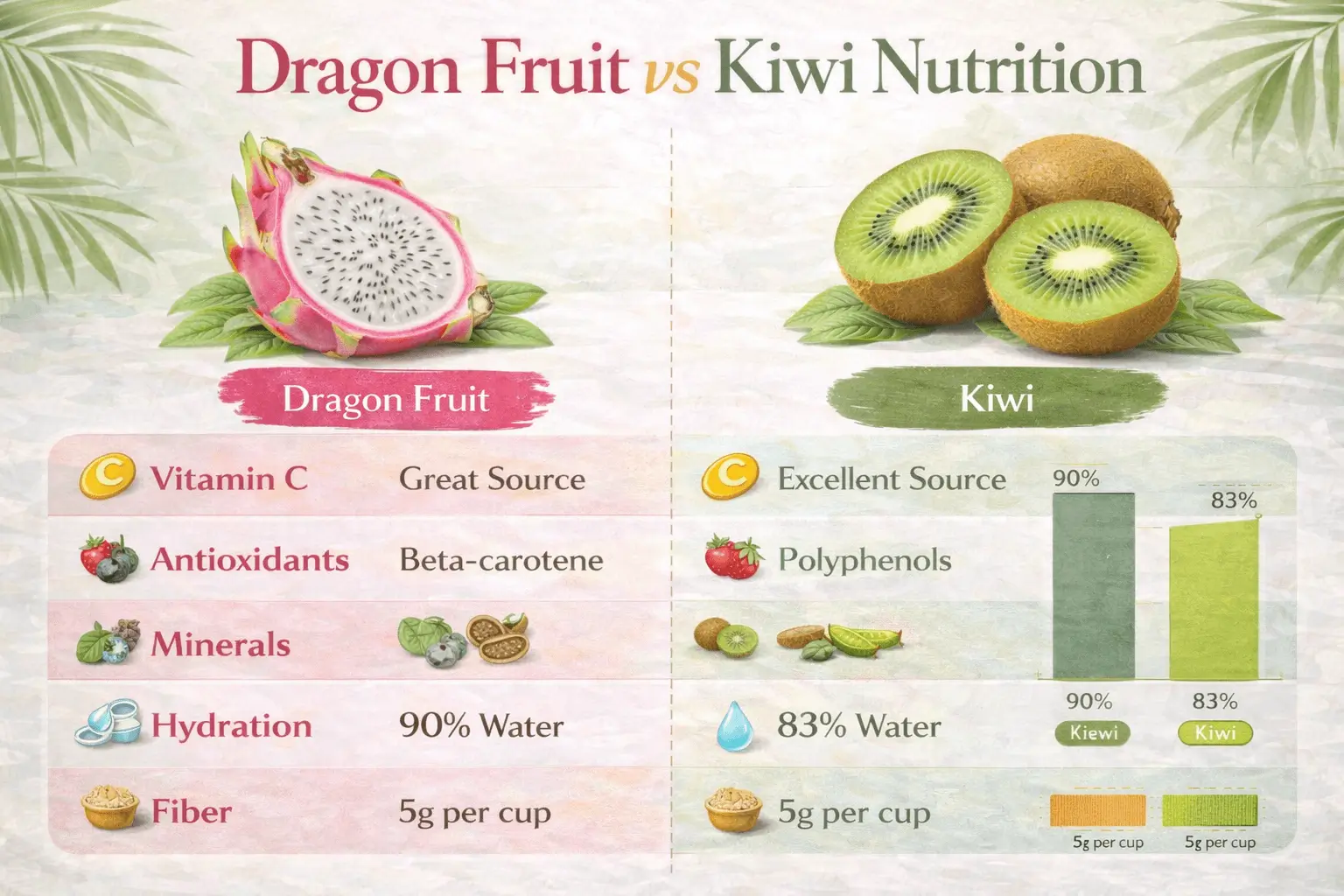
The dragon fruit vs kiwi nutrition comparison reveals that both fruits contain essential vitamins, antioxidants, and minerals.
Typical nutrients provided by these fruits include:
- Vitamin C
- Antioxidants
- Magnesium and potassium
- Hydrating water content
When comparing dragon fruit vs kiwi vitamin C, kiwi typically contains higher levels per serving. Dragon fruit, however, contributes hydration and beneficial plant compounds such as betalains and polyphenols.
Both fruits can support immune health, skin health, and general nutrition when consumed regularly.
For readers who want a more organized overview with supporting resources, visit our complete dragon fruit vs kiwi comparison hub, where the topic is explained with a guide, data table, and visual summary.
Dragon Fruit vs Kiwi Calories
The dragon fruit vs kiwi calories comparison shows that both fruits are relatively low in calories.
Approximate calories per 100 grams:
- Dragon fruit: about 50–60 calories
- Kiwi fruit: about 60 calories
Because both fruits contain mostly water and fiber, they can fit easily into weight-management diets. Low calorie density combined with natural sweetness makes them useful snacks for people seeking nutritious fruit options.
Dragon Fruit vs Kiwi Fiber Content
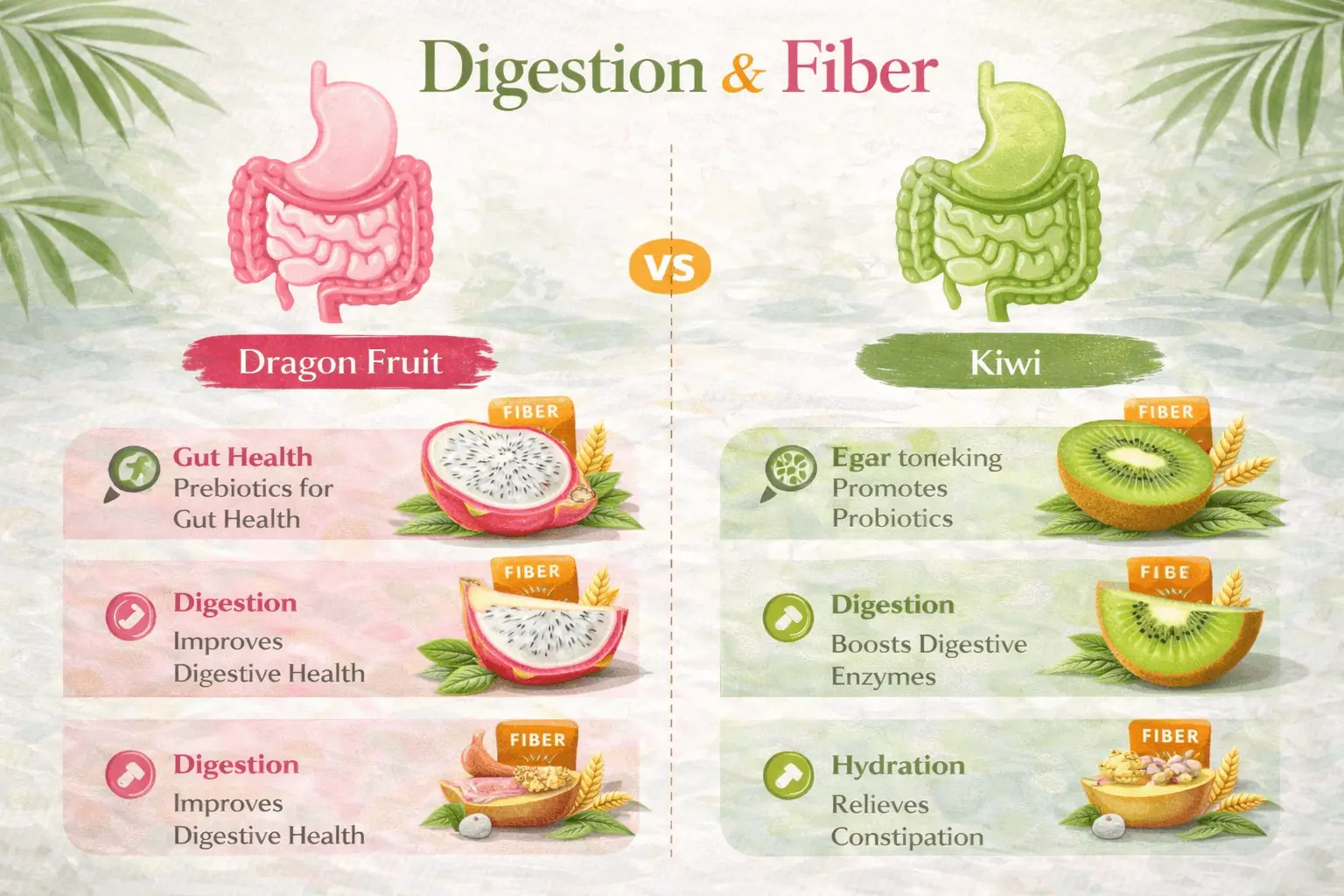
Dietary fiber is an important factor in the dragon fruit vs kiwi fiber comparison.
Both fruits contain fiber that supports digestion and gut health. Kiwi typically contains slightly higher fiber per serving, while dragon fruit contributes soluble and insoluble fiber from its seeds and pulp.
Fiber benefits include:
- Supporting healthy digestion
- Promoting satiety
- Helping regulate blood sugar levels
Including fiber-rich fruits such as kiwi and dragon fruit can improve overall digestive health.
Dragon Fruit vs Kiwi Taste and Texture
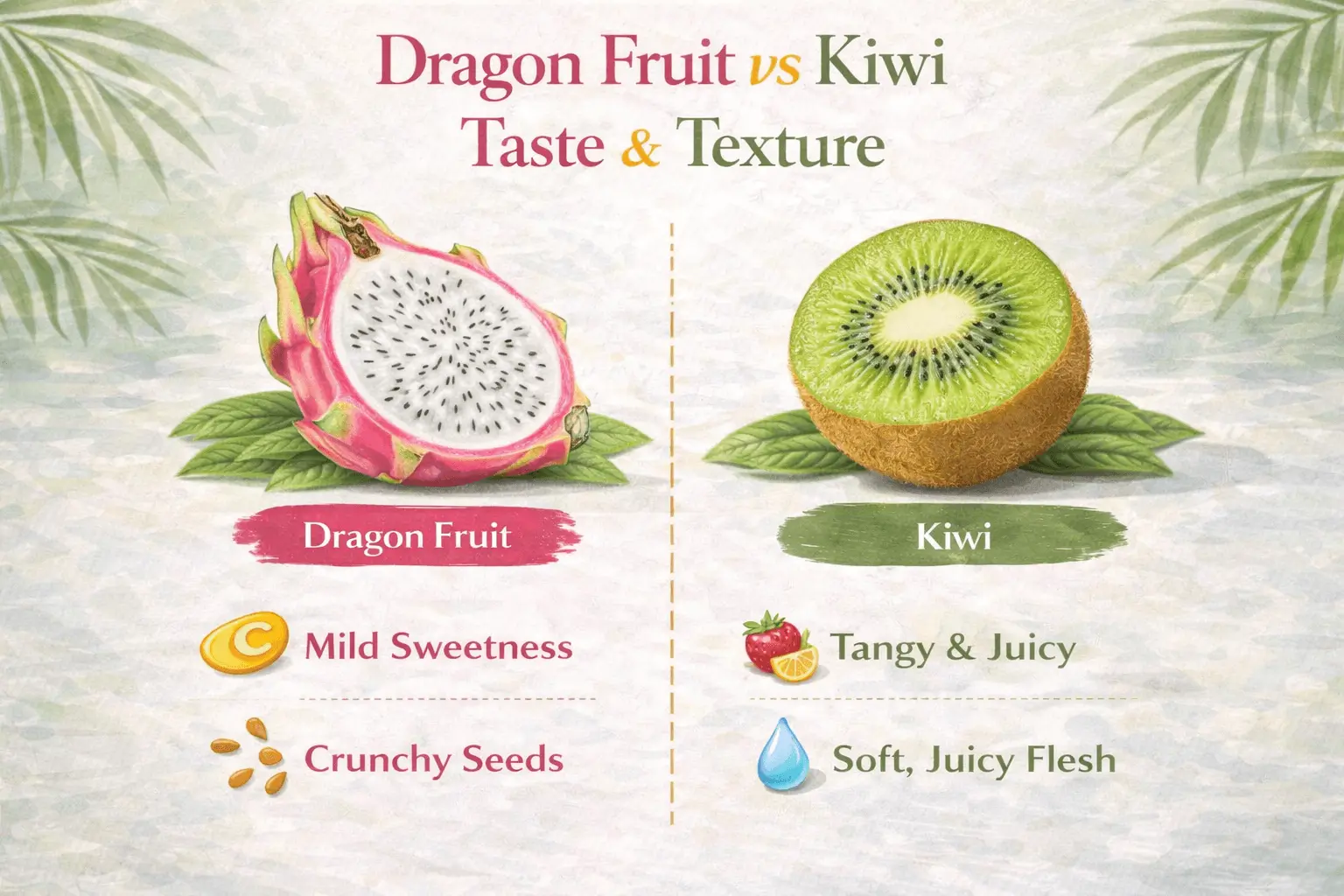
The dragon fruit vs kiwi taste comparison highlights clear flavor differences.
Dragon fruit flavor characteristics:
- Mild sweetness
- Subtle melon-like taste
- Crunchy edible seeds
Kiwi flavor characteristics:
- Tangy sweetness
- Sweet-tart balance
- Juicy flesh
When discussing dragon fruit vs kiwi fruit taste, kiwi generally delivers stronger flavor intensity, while dragon fruit offers a lighter, refreshing taste.
Dragon Fruit vs Kiwi Health Benefits
The dragon fruit vs kiwi benefits comparison shows that both fruits support overall health.
Shared health benefits include:
- Antioxidant compounds that protect cells
- Immune system support
- Digestive benefits
- Hydration from high water content
Dragon fruit benefits include hydration and antioxidant pigments such as betalains. Benefits of dragon fruit also include moderate fiber and magnesium.
Kiwi provides high vitamin C levels and natural enzymes that support digestion.
Dragon Fruit vs Kiwi for Digestion and Constipation
The dragon fruit vs kiwi for constipation comparison focuses on fiber and digestive effects.
Fiber and water together help support regular bowel movements. Dragon fruit contributes hydration and moderate fiber, while kiwi contains both fiber and digestive enzymes such as actinidin that may help break down proteins.
These characteristics make kiwi particularly helpful for digestion, though both fruits can support gut health when included in a balanced diet.
Can Kiwi and Dragon Fruit Be Eaten Together?
Yes, kiwi and dragon fruit can be eaten together. Both fruits pair well in fruit salads, smoothies, and desserts.
From a nutritional standpoint, combining them provides complementary nutrients:
- Vitamin C from kiwi
- Hydration and antioxidants from dragon fruit
- Fiber from both fruits
Because they are easy to digest and naturally refreshing, recipes often combine kiwi and dragon fruit benefits in fruit bowls and healthy snacks.
Which Is Better: Dragon Fruit or Kiwi?
The answer to dragon fruit vs kiwi which is better depends on personal priorities.
Kiwi may be better for:
- Higher vitamin C content
- Stronger flavor
- Digestive enzyme support
Dragon fruit may be preferred for:
- Hydration
- Mild sweetness
- Visual appeal in fruit dishes
Both fruits offer valuable nutrients, so including both in a balanced diet can provide diverse health benefits.
Common Mistakes When Comparing Tropical Fruits
Several misconceptions occur when people compare fruits such as dragon fruit and kiwi.
Common mistakes include:
- Judging fruits only by sweetness rather than nutrient content
- Ignoring fiber and micronutrients
- Assuming visually similar fruits are botanically related
- Believing fruits with similar seeds provide identical nutrition
Understanding botanical classification and nutritional data helps produce more accurate comparisons.
Environmental and Availability Differences
Dragon fruit and kiwi grow in different climates.
Dragon fruit typically grows in tropical and subtropical regions, including Southeast Asia, Mexico, and Central America. The cactus plant thrives in warm temperatures and well-drained soils.
Kiwi plants grow in temperate climates such as New Zealand, Italy, and China. They require seasonal temperature variation and climbing support structures.
Because of these environmental differences, their global production areas and seasonal availability vary significantly.
Conclusion
Dragon fruit and kiwi are both nutrient-rich fruits with unique flavors and health benefits. While dragon fruit offers hydration and mild sweetness, kiwi stands out for its tangy taste and high vitamin C content. Understanding the differences between dragon fruit vs kiwi helps consumers select the fruit that best fits their nutritional goals, digestion needs, and taste preferences. Including both fruits in a balanced diet can provide a diverse range of vitamins, antioxidants, and dietary fiber.
If you want a deeper look into nutrition, antioxidants, fiber content, taste, and health benefits, check this detailed dragon fruit vs kiwi comparison.
FAQs
Is dragon fruit healthier than kiwi?
Both fruits provide important nutrients. Kiwi generally contains more vitamin C, while dragon fruit contributes hydration, antioxidants, and fiber. Each fruit offers unique benefits depending on dietary goals.
Which fruit has more vitamin C: kiwi or dragon fruit?
Kiwi typically contains significantly more vitamin C per serving than dragon fruit, making it one of the richest natural fruit sources of this vitamin.
Can dragon fruit and kiwi be eaten together?
Yes. Dragon fruit and kiwi combine well in fruit salads and smoothies. Their flavors complement each other and together they provide fiber, antioxidants, and vitamin C.
Which fruit is better for digestion?
Both fruits support digestion due to their fiber content. Kiwi is especially helpful because it contains the digestive enzyme actinidin.
Why do dragon fruit and kiwi look similar but are unrelated?
Both fruits contain small edible seeds, which can make them appear similar. However, dragon fruit grows on a cactus plant, while kiwi grows on a climbing vine in a different botanical family.