Introduction
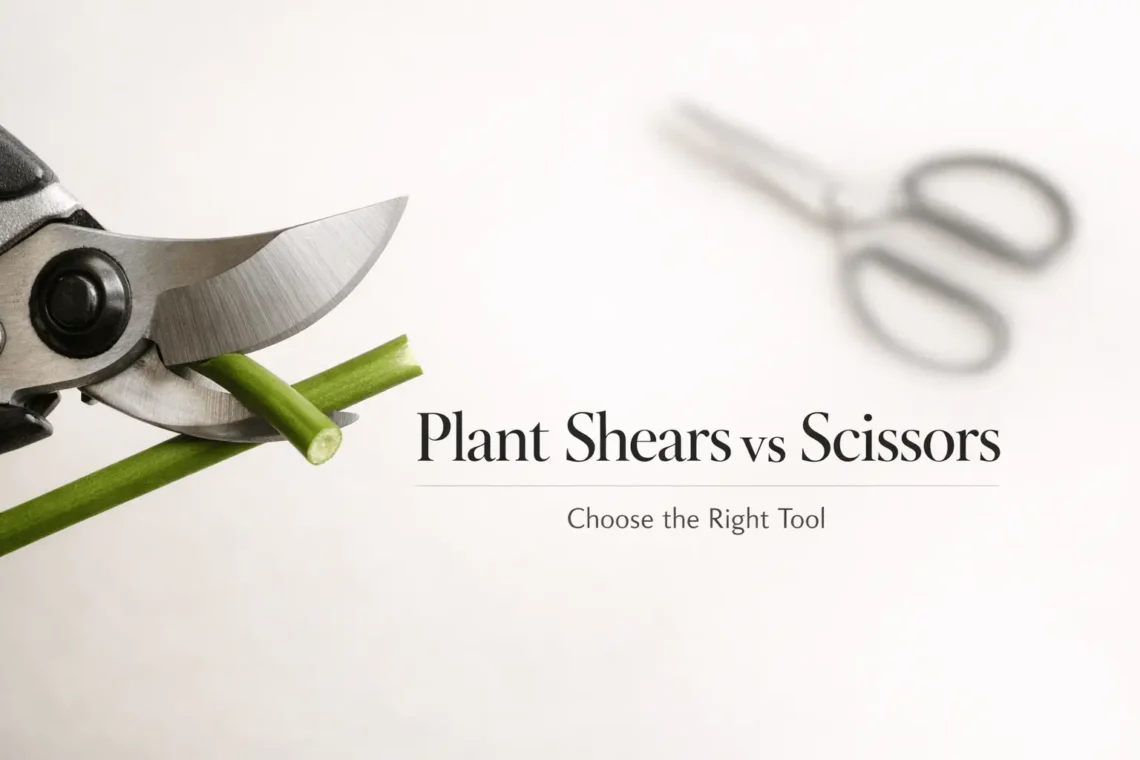
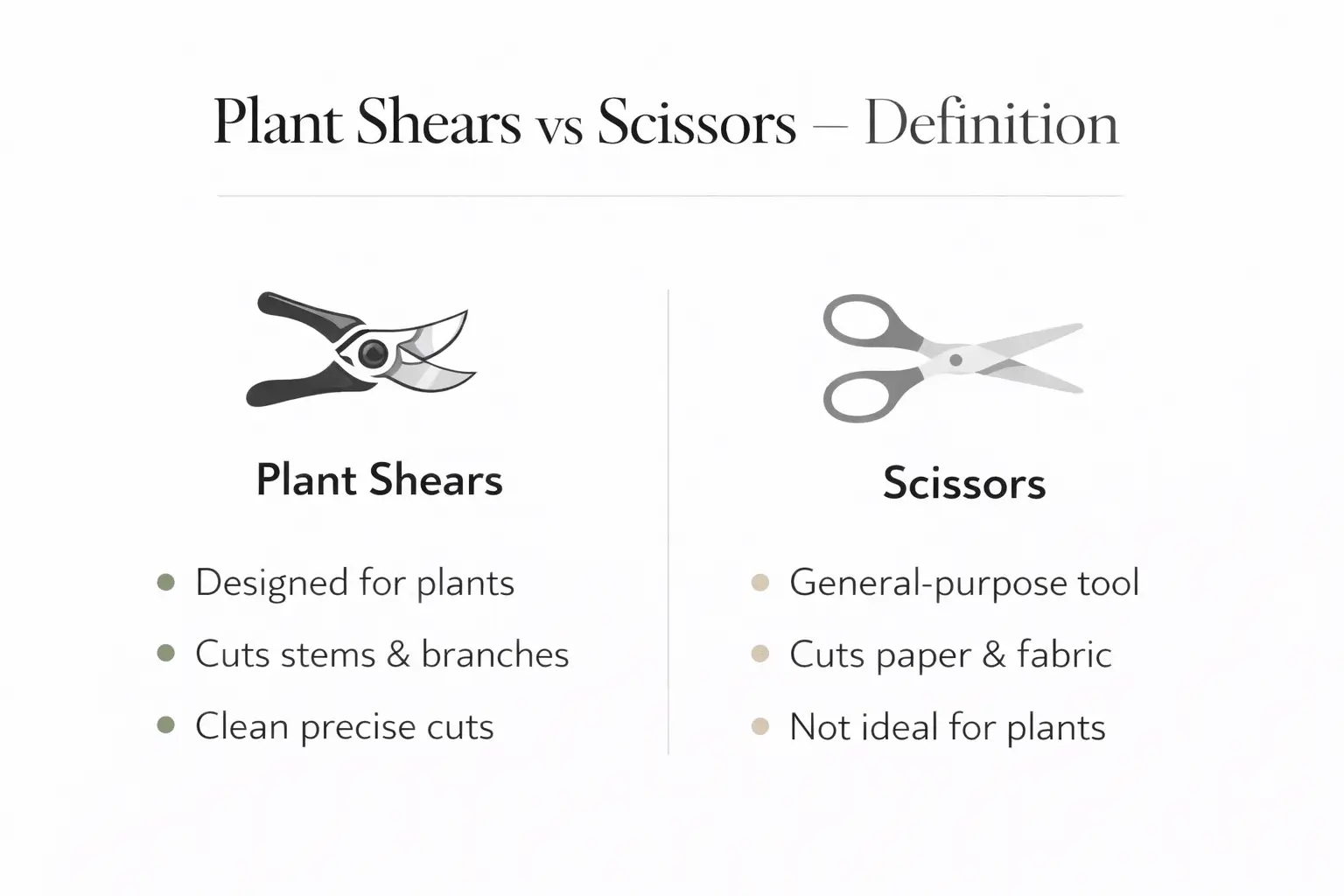
Plant shears vs scissors refers to the difference between specialized gardening cutting tools and general-purpose cutting tools. While both tools can cut plant material, they differ in design, strength, precision, and intended use. Choosing the right tool matters because it directly affects plant health, cutting efficiency, and the quality of the cut. Clean, precise cuts help plants heal faster, while improper tools can damage stems and increase disease risk. Understanding when to use plant shears versus scissors ensures better gardening results and long-term plant growth.
Quick Summary
- Plant shears are designed for cutting plant material cleanly and safely, while scissors are general-purpose cutting tools.
- Shears are stronger and more ergonomic, ideal for pruning and trimming.
- Scissors can be used for light plant tasks but may damage stems if misused.
- Choosing the right tool improves plant health, growth, and cutting efficiency.
What Are Plant Shears?
Plant shears, also known as pruning shears or secateurs, are specialized gardening tools used in pruning to cut plant material efficiently and cleanly. They are built to handle stems, branches, and foliage without damaging plant tissue.
Pruning shears typically consist of sharp blades, a spring mechanism for easy reopening, and ergonomic handles for repeated use. The term “plant scissors” is sometimes used informally, but true plant shears are engineered specifically for plant care.
Key Points:
- Designed specifically for cutting stems, branches, and foliage
- Built for strength and repeated use
- Types include:
- Bypass pruning shears
- Anvil pruning shears
- Hedge shears
What Are Scissors?
Scissors are universal cutting tools designed for a wide range of everyday materials such as paper, fabric, and thin plastics. They are not specifically made for plant care.
The difference between scissors and shears lies in their purpose and construction. Scissors are generally lighter, smaller, and intended for precision cutting of soft materials, while shears are built for heavier or specialized tasks.
Key Points:
- Used for paper, fabric, and light materials
- Smaller blades and lighter construction
- Not optimized for plant structure or sap exposure
Key Differences Between Plant Shears and Scissors
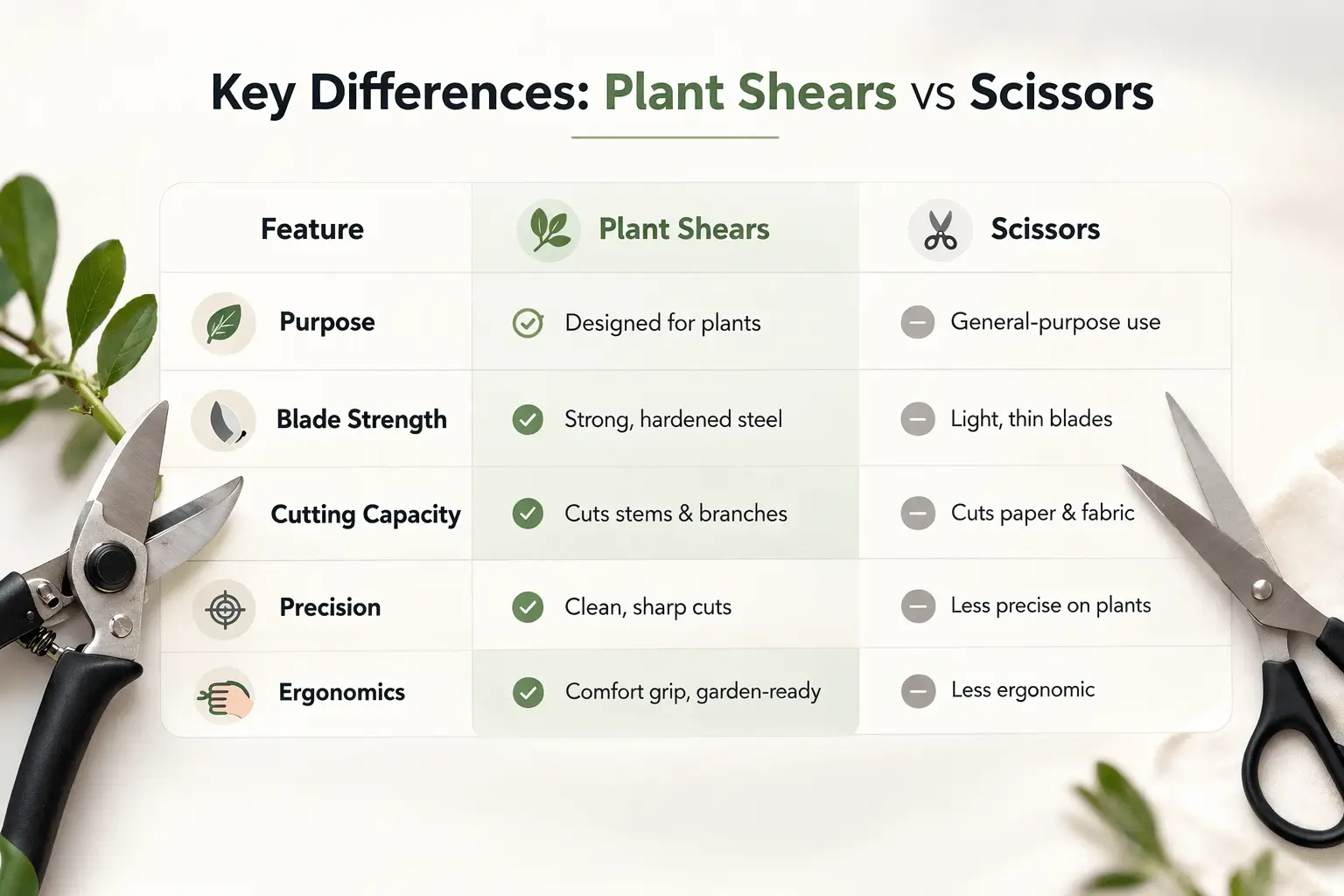
The main difference between plant shears and scissors is that plant shears are designed for cutting plant material cleanly, while scissors are general-purpose tools with limited effectiveness on plants.
| Feature | Plant Shears | Scissors |
| Purpose | Plant pruning and trimming | General cutting |
| Blade Strength | Strong, thick blades | Thin, lighter blades |
| Cutting Capacity | Stems, branches | Soft materials only |
| Ergonomics | Designed for hand comfort | Basic grip |
| Precision | Clean plant cuts | Less precise for plants |
Types of Plant Shears and Their Uses
Pruning Shears (Secateurs)
Pruning shears are used for cutting small branches and stems with high precision. They are essential for maintaining plant health by making clean cuts that heal quickly.
Hedge Shears
Hedge shears are designed for shaping hedges and shrubs. Their long blades allow for uniform trimming across larger surfaces.
Specialty Plant Shears
Specialty tools include herb snips and floral scissors. These are used for delicate cutting tasks where precision is important, such as harvesting herbs or arranging flowers.
Can You Use Scissors Instead of Plant Shears?
Yes, you can use scissors instead of plant shears, but only for soft stems and light plant tasks. Scissors are not suitable for thicker or woody plant material.
Suitable Uses:
- Soft stems
- Herbs and indoor plants
Not Recommended For:
- Woody stems
- Thick branches
Risks of Using Scissors on Plants:
- Crushing instead of cutting stems
- Increased risk of plant disease
- Slower healing of cuts
Plant Shears vs Scissors for Vegetables
Plant shears are better for harvesting vegetables because they provide clean cuts that prevent plant damage, For example, when harvesting crops like garlic, using the right cutting tool ensures clean separation and better yields—see this guide on How to Plant Garlic for proper harvesting and growth techniques. while scissors are limited to delicate harvesting tasks.
Key Points:
- Shears:
- Ideal for harvesting vegetables like tomatoes and peppers
- Prevent plant damage
- Scissors:
- Suitable for delicate herbs such as basil and parsley
- Limited for heavier crops
Kitchen Shears vs Scissors vs Plant Shears
Kitchen shears are stronger than regular scissors but still not as specialized as plant shears. Each tool serves a different purpose.
Comparison:
- Kitchen shears:
- Stronger than scissors
- Multi-purpose (food preparation and light herbs)
- Scissors:
- Light-duty, general use
- Plant shears:
- Specialized for plant care and pruning
When Should You Use Each Tool?
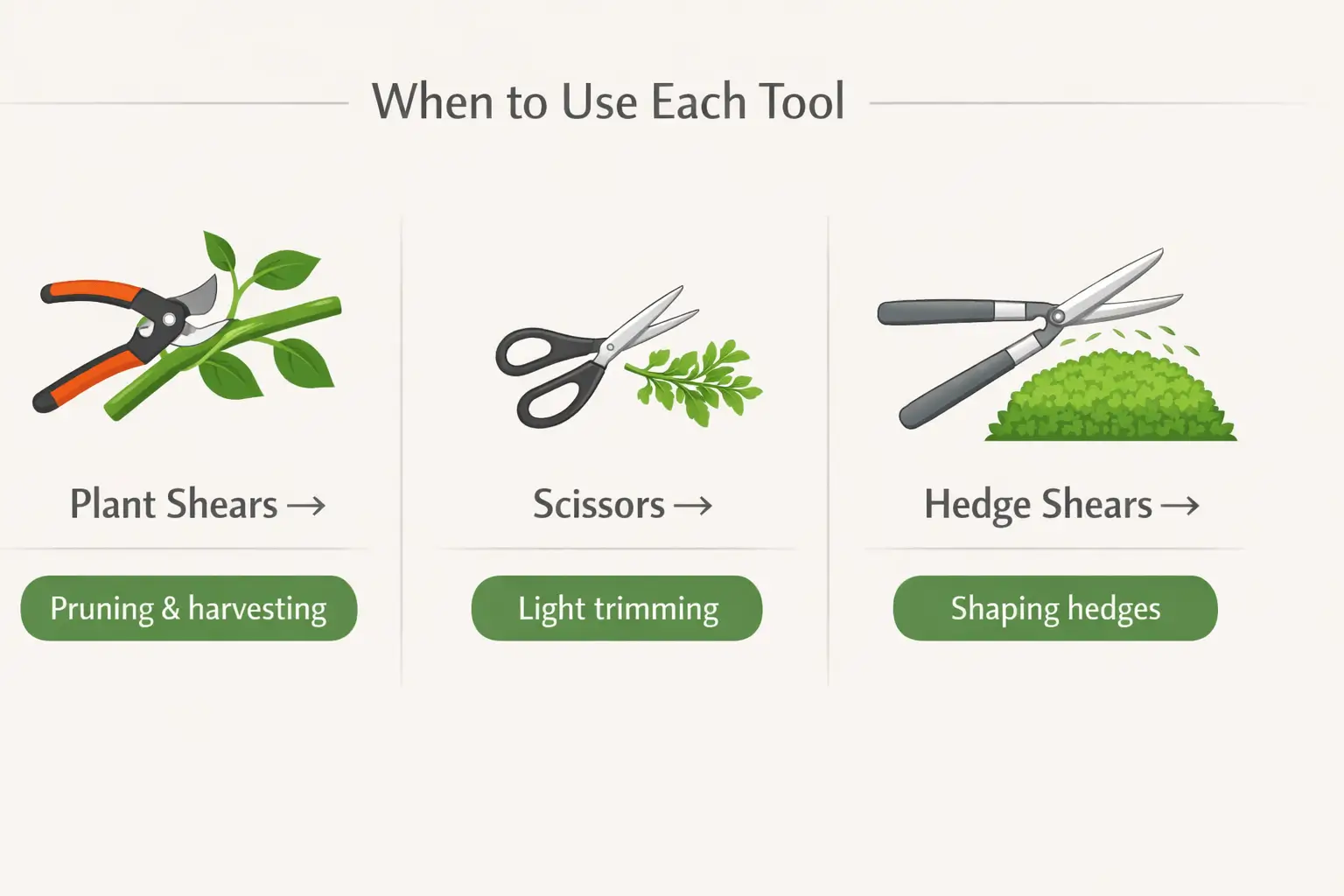
You should use plant shears, scissors, or hedge shears based on the type of plant and the cutting task required.
Use plant shears when:
- Pruning branches
- Shaping plants
- Harvesting vegetables
Use scissors when:
- Cutting herbs
- Light indoor trimming
Use hedge shears when:
- Trimming hedges or bushes
Common Mistakes When Cutting Plants
Common mistakes when cutting plants include using the wrong tools or poor techniques, which can damage plant tissue and reduce growth.
Key Points:
- Using dull tools damages plant tissue
- Using scissors on thick stems
- Not cleaning tools spreads disease
- Cutting at incorrect angles
Tool Care and Maintenance Tips
Proper tool maintenance ensures clean cuts, longer tool life, and healthier plants.
Key Points:
- Keep blades sharp
- Clean after each use
- Disinfect between plants
- Store in dry conditions
Plant Health Impact: Why the Right Tool Matters
Using the right cutting tool improves plant health by ensuring clean cuts, reducing stress, and minimizing disease risk. Clean cuts allow plants to heal faster and maintain proper growth patterns. This is especially important for fruiting plants like tomatoes, where improper cuts can reduce yield—learn more in this Tomatoes Plant Care Guide.
Key Points:
- Clean cuts heal faster
- Reduced disease risk
- Better growth and yield
- Less plant stress
Conclusion
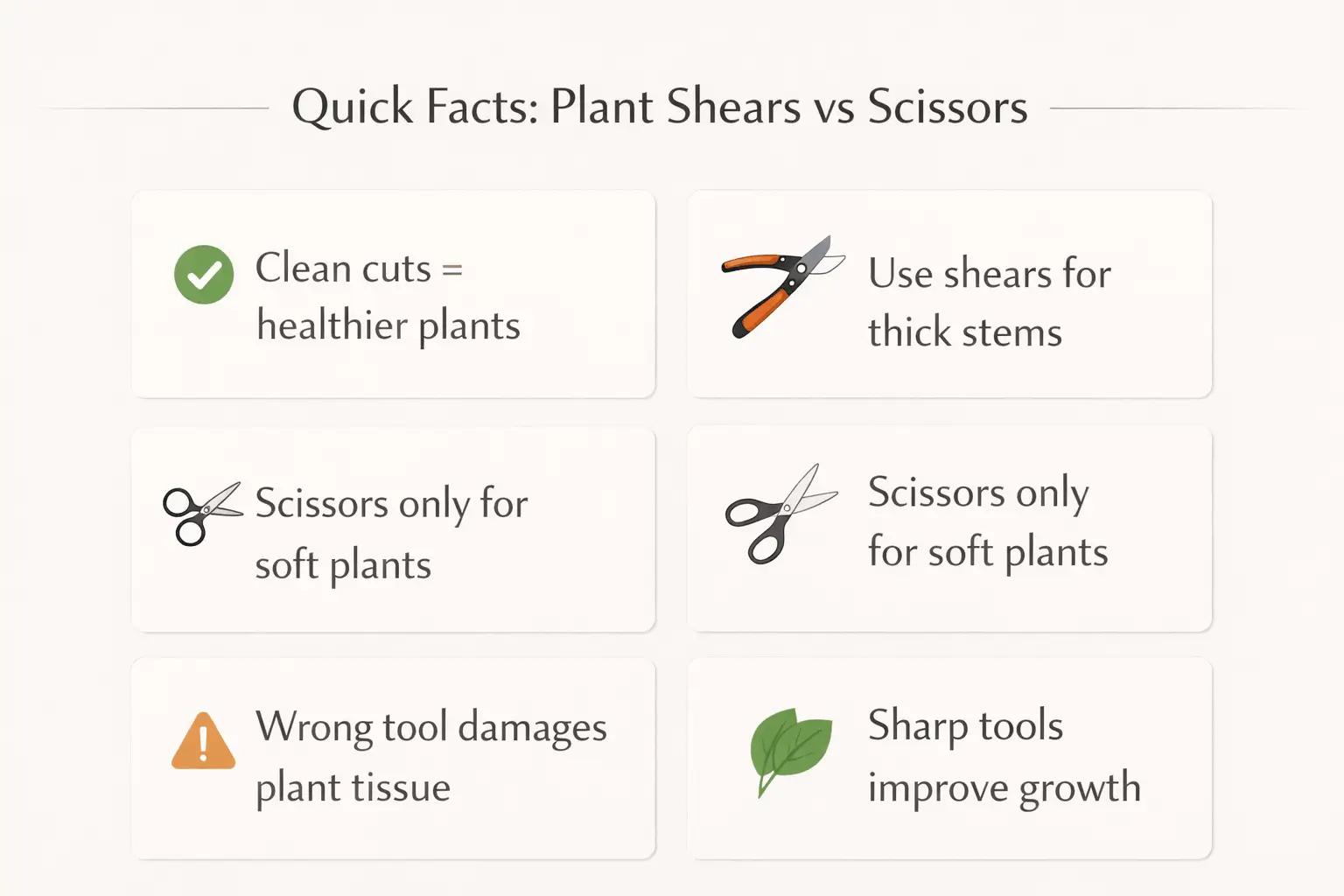
Plant shears vs scissors is ultimately a comparison between specialized precision and general convenience. Plant shears are essential tools for proper pruning, shaping, and harvesting because they provide clean, controlled cuts that support plant health. Scissors, while useful for light tasks like trimming herbs, are not suitable for most gardening needs. Using the correct tool ensures better efficiency, healthier plants, and improved overall gardening results.
FAQs
1. What is the main difference between plant shears and scissors?
Plant shears are designed for cutting plant material cleanly, while scissors are general-purpose tools not optimized for plant care.
2. Can I use regular scissors to prune plants?
Yes, but only for soft stems or herbs. For thicker stems, plant shears are recommended to avoid damage.
3. Are scissors and shears the same?
No, shears are typically larger, stronger, and designed for heavier cutting tasks compared to scissors.
4. What are pruning shears used for?
Pruning shears are used to trim stems, remove dead growth, and shape plants for healthy development.
5. Are kitchen shears good for plants?
Kitchen shears can work for light harvesting or herbs but are not ideal for regular pruning tasks.