Introduction
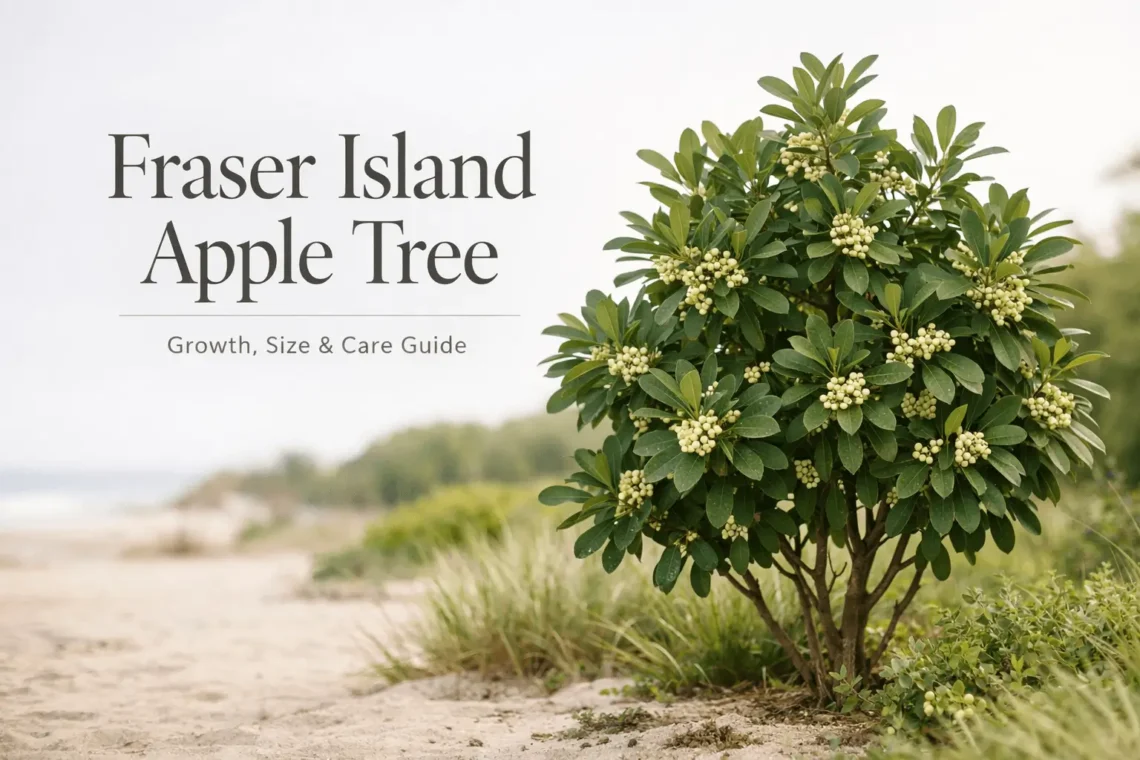
The fraser island apple tree (Acronychia imperforata) is a native Australian coastal tree valued for its dense foliage, edible fruit, and adaptability to sandy environments. Often used in hedging and landscaping, it is known for moderate growth, manageable size, and resilience in warm climates. This evergreen species performs well in coastal gardens where salt tolerance and wind resistance are essential. Its compact canopy and ability to respond well to pruning make it a reliable option for both structured hedges and standalone feature planting.
Quick Summary
- The fraser island apple tree is a coastal native tree with dense foliage and edible fruit.
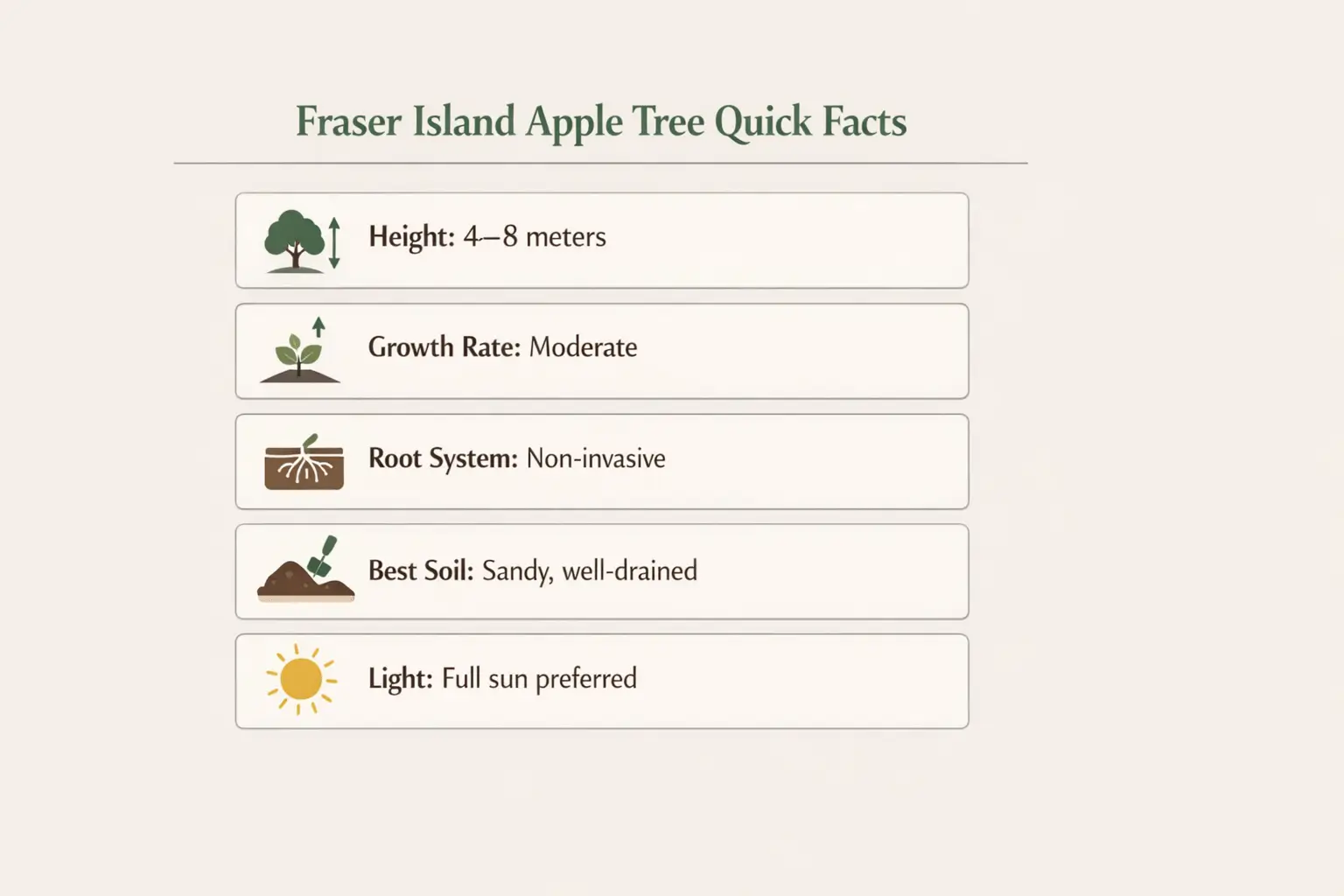
- It typically grows to a small-to-medium height, making it suitable for hedges and gardens.
- It thrives in sandy, well-drained soils and warm climates.
- Its root system is non-invasive but benefits from space and proper soil conditions.
What Is the Fraser Island Apple Tree?
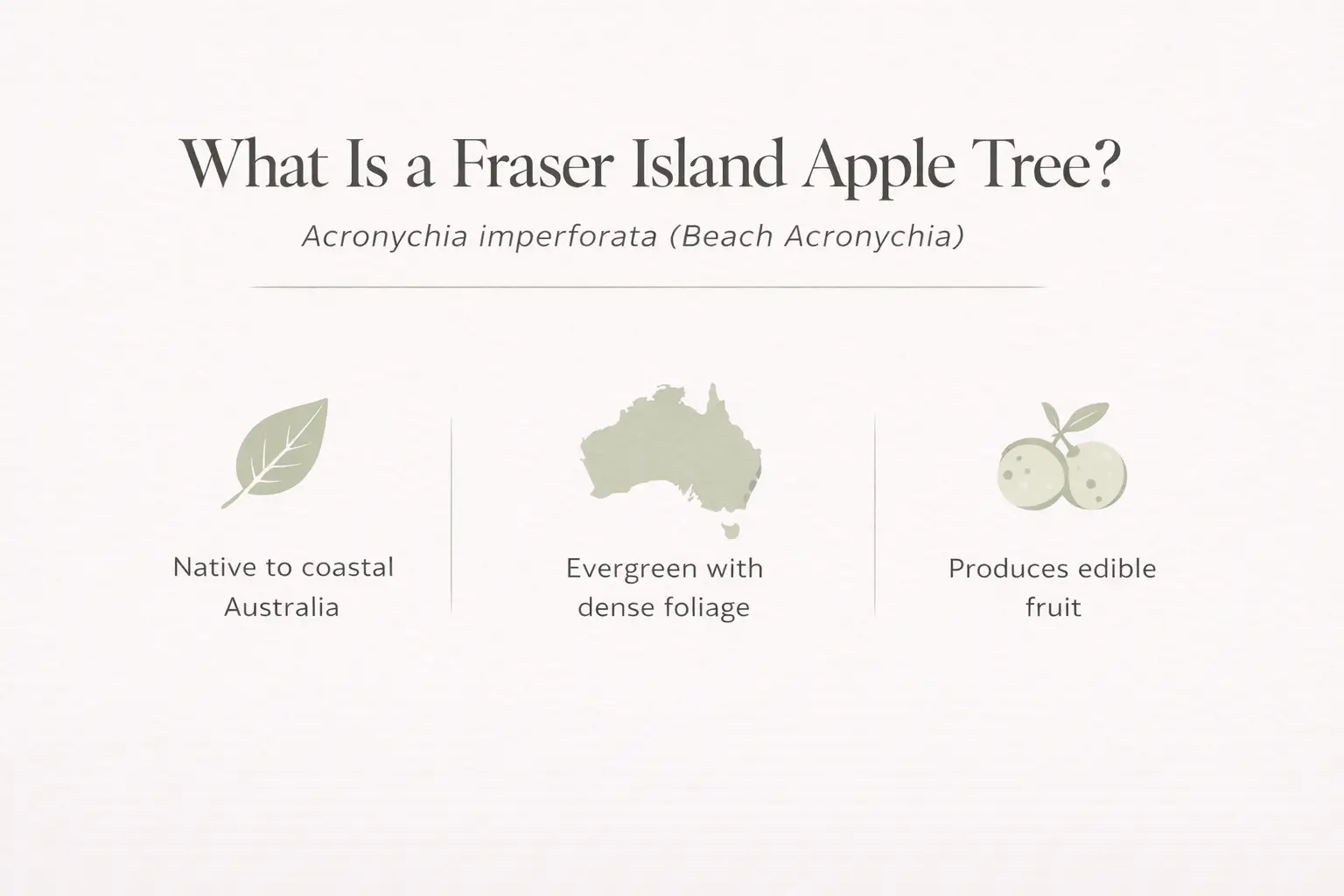
The fraser island apple tree (Acronychia imperforata), also known as beach acronychia, is an evergreen native species found in coastal regions of Australia. It belongs to the Rutaceae family and naturally grows in sandy and sometimes saline environments.
This plant is commonly referred to as:
- Fraser apple tree
- Fraser island apple
- Beach acronychia
It features dense green foliage and produces small, edible fruits that attract birds and wildlife. Its adaptability to coastal conditions makes it a preferred choice in native landscaping. For another coastal Australian species with similar resilience, explore Cupaniopsis Anacardioides to understand how native trees adapt to sandy environments.
Fraser Island Apple Tree Size and Mature Height
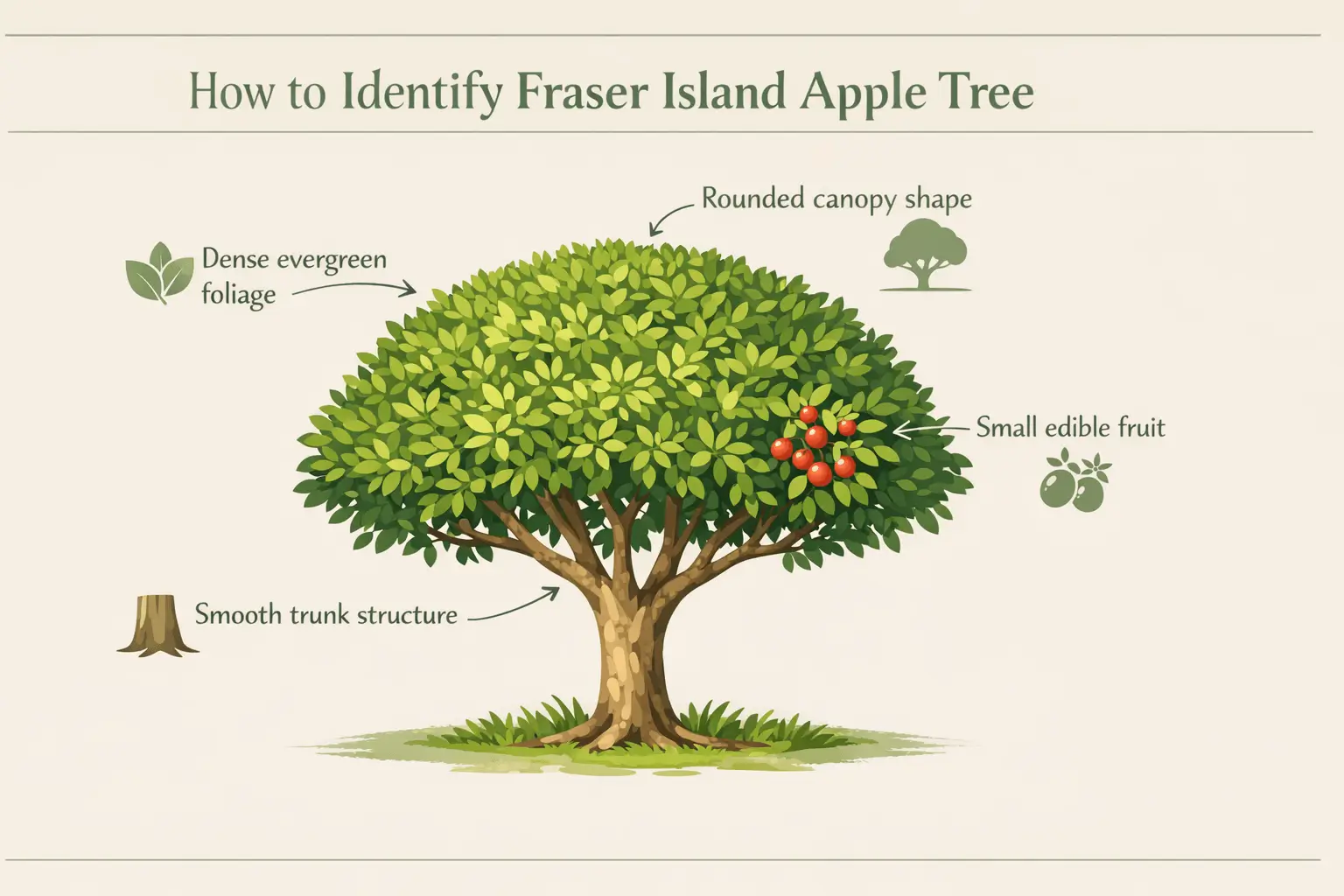
The fraser island apple tree size typically falls within the small-to-medium tree category, making it suitable for residential gardens and hedges. At maturity, it maintains a balanced height and spread that can be controlled with pruning.
In cultivated landscapes, the fraser island apple tree height is usually more compact than in wild conditions, where it may grow taller due to less restriction.
Key distinctions:
- Garden-grown trees are more compact and shaped
- Wild-grown trees can grow taller with broader canopies
Key Size Characteristics
- Average mature height range: 4–8 meters
- Typical spread and canopy shape: Dense, rounded canopy
- Suitability: Ideal for both small and large gardens with pruning
Growth Rate and Development Stages
The fraser island apple tree growth rate is considered moderate, allowing for steady and manageable development. This makes it suitable for long-term landscaping without aggressive expansion.
Growth stages include:
- Early stage: Establishment and root development
- Mid stage: Canopy expansion and foliage density
- Mature stage: Stable growth with fruit production
Growth is typically faster during warm months and slows during cooler seasons.
Growth Influencing Factors
- Sun exposure: Full sun promotes faster growth
- Soil type: Well-drained sandy soils support healthy development
- Water availability: Moderate watering encourages stability
- Climate conditions: Warm, coastal climates enhance growth
Root System and Planting Considerations
The fraser island apple tree root system is non-aggressive and moderately spreading, making it suitable for residential planting. Roots are primarily fibrous, with balanced depth and lateral spread.
Planting considerations:
- Safe to plant near pathways and structures with proper spacing
- Requires well-drained soil to prevent root stress
- Benefits from adequate spacing for canopy expansion
Root System Overview
| Feature | Description |
| Root Type | Fibrous, moderately spreading |
| Invasiveness | Low |
| Depth | Medium |
| Best Planting Distance | Away from foundations |
Can You Use Fraser Island Apple Tree as a Hedge?
Yes, the fraser island apple tree hedge is highly effective due to its dense foliage and strong response to pruning. It forms a thick screen that provides privacy and structure in gardens. Its natural growth habit allows it to be shaped easily, making it suitable for both formal and informal hedges. If you’re planning a structured hedge layout, see Waxleaf Privet Hedge Spacing to understand proper spacing and shaping techniques.
Hedge Benefits
- Privacy screening with dense foliage
- Wind protection, especially in coastal areas
- Strong aesthetic appeal in structured landscapes
Care Guide: How to Grow Fraser Island Apple Tree Successfully
To grow the fraser island apple tree successfully, provide conditions that replicate its native coastal habitat. It prefers well-drained sandy soil and performs best in warm climates.
Key care aspects include:
- Moderate watering, especially during establishment
- Full sun to partial shade exposure
- Occasional pruning to maintain shape and density
- Light fertilization to support growth
Once established, the tree shows good drought tolerance.
Care Requirements
- Water: Moderate, avoid waterlogging
- Light: Full sun preferred
- Soil: Sandy, well-drained
- Maintenance: Occasional pruning
Common Problems and How to Fix Them
The most common fraser island apple tree problems are related to environmental conditions and improper care. These issues are generally easy to correct when identified early.
Problem-Solution Breakdown
- Yellow leaves: Caused by overwatering → Improve drainage
- Poor growth: Lack of nutrients or light → Adjust placement and feeding
- Leaf drop: Environmental stress → Stabilize watering and conditions
Comparison: Fraser Island Apple Tree vs Similar Coastal Trees
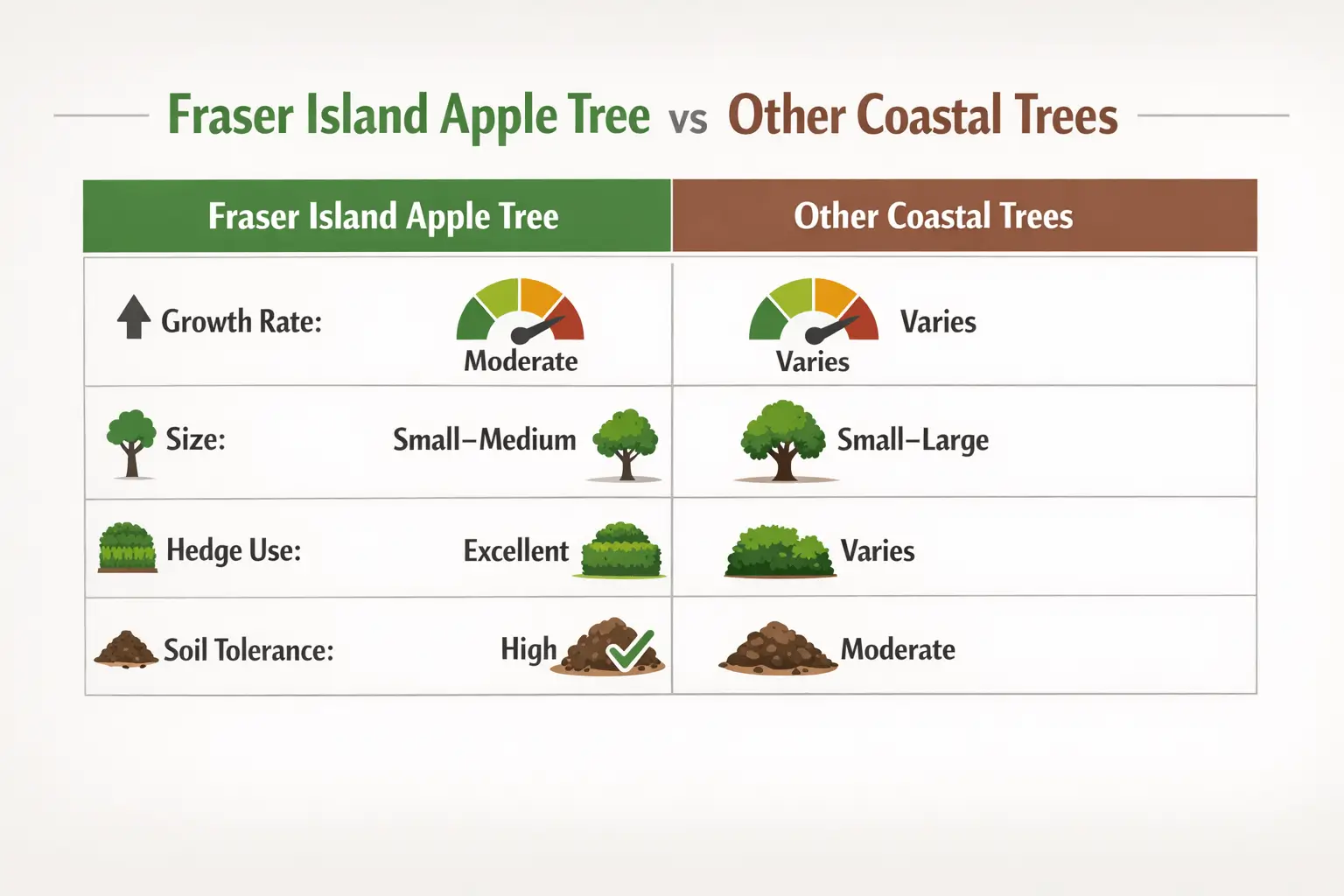
The fraser island apple tree (Acronychia imperforata) compares favorably with other coastal species, including related Acronychia varieties such as acronychia vista.
Comparison Table
| Feature | Fraser Island Apple Tree | Other Coastal Trees |
| Growth Rate | Moderate | Varies |
| Size | Small–Medium | Small–Large |
| Hedge Use | Excellent | Varies |
| Soil Tolerance | High | Moderate |
Environmental Benefits and Landscaping Uses
The fraser island apple tree provides multiple environmental benefits, particularly in coastal ecosystems. Its tolerance to salt and wind makes it a resilient option for challenging landscapes.
It also supports local biodiversity by producing fruit that attracts birds.
Landscaping Uses
- Privacy hedges
- Coastal gardens
- Native plant landscapes
Beginner Mistakes to Avoid
Improper care practices can limit the performance of the fraser island apple tree. Avoiding common mistakes improves long-term growth and structure.
Common Mistakes
- Poor soil drainage setup
- Incorrect spacing
- Lack of sunlight
When and Where to Grow Fraser Island Apple Tree
The fraser island apple tree grows best in warm, subtropical to coastal climates. It thrives in outdoor environments where it receives sufficient sunlight and airflow.
Best practices:
- Plant during warmer seasons for faster establishment
- Avoid indoor cultivation, as it is primarily an outdoor tree
- Choose locations with well-drained sandy soil
Conclusion
The fraser island apple tree is a versatile, low-maintenance coastal plant that offers both aesthetic and functional value. With its moderate size, manageable root system, and adaptability to sandy soils, it is an excellent choice for hedging, landscaping, and native gardens. Understanding its growth habits, care needs, and potential challenges ensures long-term success.
FAQs
1. How tall does a fraser island apple tree grow?
It typically reaches a small-to-medium height of around 4 to 8 meters, depending on environmental conditions and pruning practices.
2. Is the fraser island apple tree root system invasive?
No, the root system is non-invasive and moderately spreading, making it safe for residential gardens and planting near structures.
3. How fast does a fraser island apple tree grow?
It has a moderate growth rate, with faster development occurring in warm climates with adequate sunlight and proper soil conditions.
4. Can you grow fraser island apple tree as a hedge?
Yes, it is highly suitable for hedging due to its dense foliage and strong tolerance to pruning and shaping.
5. What are common problems with fraser island apple trees?
Common issues include overwatering, poor soil drainage, nutrient deficiencies, and slow growth caused by insufficient sunlight.