Introduction
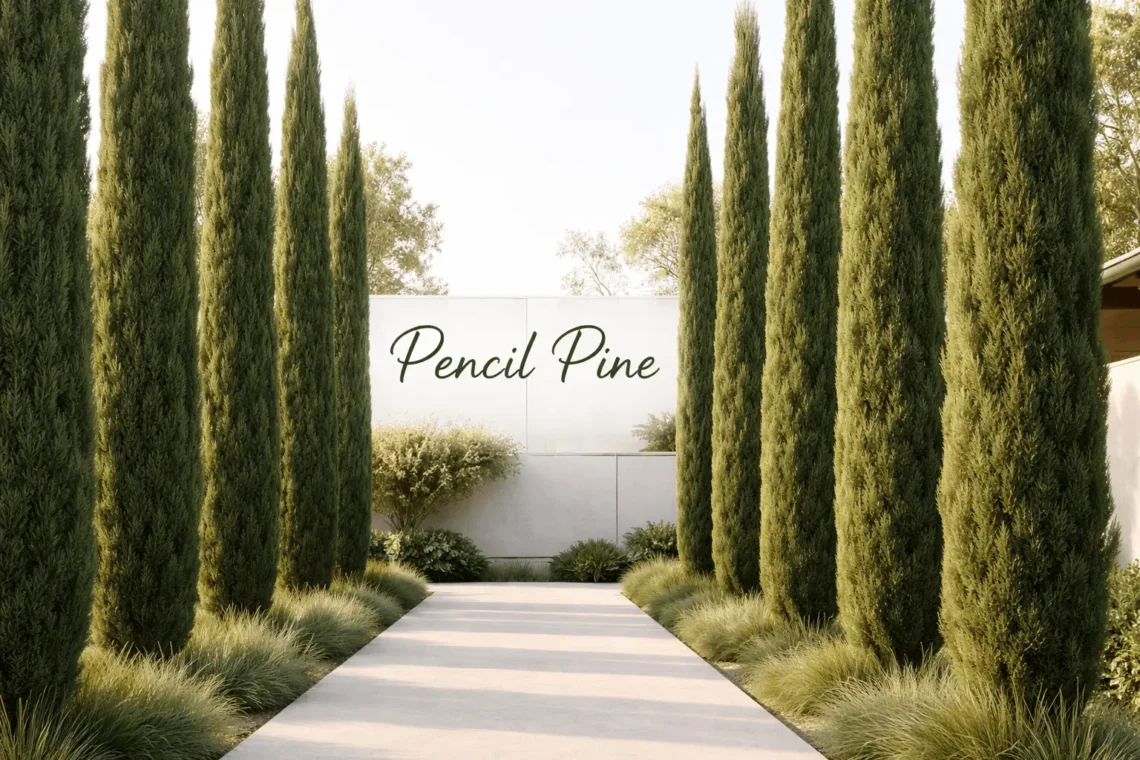
Pencil pine is a narrow, upright evergreen conifer widely used for hedging, screening, and formal landscaping. Known for its tall columnar shape and low-maintenance nature, it is especially popular in Australia for creating privacy screens and structured garden designs. Its vertical growth habit makes it ideal for tight spaces where width is limited but height is desired. Gardeners value pencil pine for its clean architectural form, evergreen foliage, and adaptability to different climates. With proper placement and basic care, it functions as both a decorative feature and a practical solution for privacy and wind protection.
Quick Summary
- Pencil pine is a tall, narrow conifer commonly used for hedges and screening
- It grows upright with minimal spread, making it ideal for small spaces
- Growth rate, height, and root behavior depend on climate and care
- Proper maintenance prevents common issues like browning and poor growth
What Is a Pencil Pine (Tree Characteristics & Classification)
Pencil pine refers to a columnar evergreen conifer, most commonly Cupressus sempervirens ‘Glauca’, a species of Mediterranean cypress (see: Cupressus sempervirens ‘Glauca’), belonging to the cypress family (Cupressaceae). It is widely known as a pencil pine tree or simply a conifer used in structured landscaping.
Key Characteristics
- Columnar growth habit with strong vertical form
- Dense evergreen foliage that remains year-round
- Low spread, making it suitable for narrow planting areas
Classification and Terminology
- Conifer: A cone-bearing plant with needle-like foliage
- Pencil pine plant: Refers to cultivated varieties used in gardens
- Tree form: Mature specimens reach significant height while staying slim
Common Variations Explained
- Italian pencil pine: Traditional tall form used in formal landscapes
- Glauca pencil pine: Blue-green foliage, widely planted in Australia
- Tasmanian pencil pine: A different species adapted to cooler climates
Pencil pines are evergreen, meaning they retain foliage year-round and provide continuous screening and structure.
Types of Pencil Pine (Varieties and Cultivars Explained)
Several varieties of pencil pine offer differences in color, size, and growth habit, allowing flexibility in landscape design.
Common Types
- Glauca pencil pine → Blue-green foliage, classic hedge plant
- Golden pencil pine → Yellow-gold foliage for visual contrast
- Dwarf pencil pine → Compact size for smaller gardens
- Italian pencil pine → Tall, formal landscape tree
Additional Cultivars
- Swanes golden pencil pine: Bright ornamental variety
- Tasmanian pencil pine: Cooler-climate species with distinct growth traits
Comparison with Similar Plants
- Sky pencil holly (Ilex crenata) resembles pencil pine in shape
- Difference: It is a broadleaf evergreen, not a conifer
These variations allow gardeners to choose based on color, size, and climate suitability.
Pencil Pine Height and Growth Rate (How Fast and How Tall?)
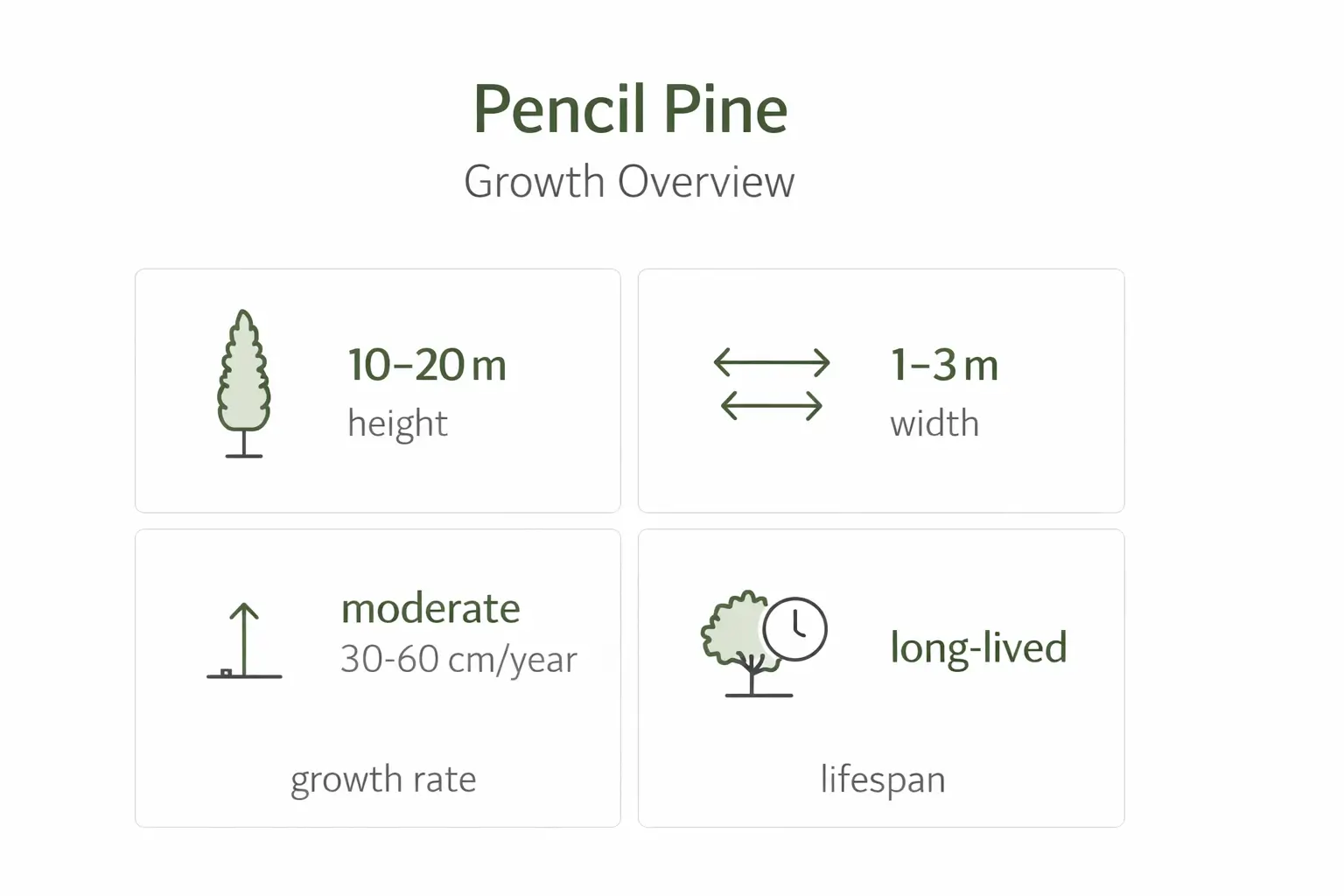
Pencil pines typically grow between 10 and 20 meters tall with a moderate growth rate of 30–60 cm per year, depending on climate and care conditions.
Growth Details
- Height varies by variety and environment
- Warmer climates (e.g., Perth) may encourage faster growth
- Cooler regions may slow development
Table: Pencil Pine Growth Overview
| Factor | Typical Range |
| Height | 10–20 m |
| Width | 1–3 m |
| Growth Rate | Moderate |
| Lifespan | Long-lived evergreen |
Consistent sunlight, proper spacing, and soil conditions significantly influence final size.
Pencil Pine Root System (Are Roots Invasive?)
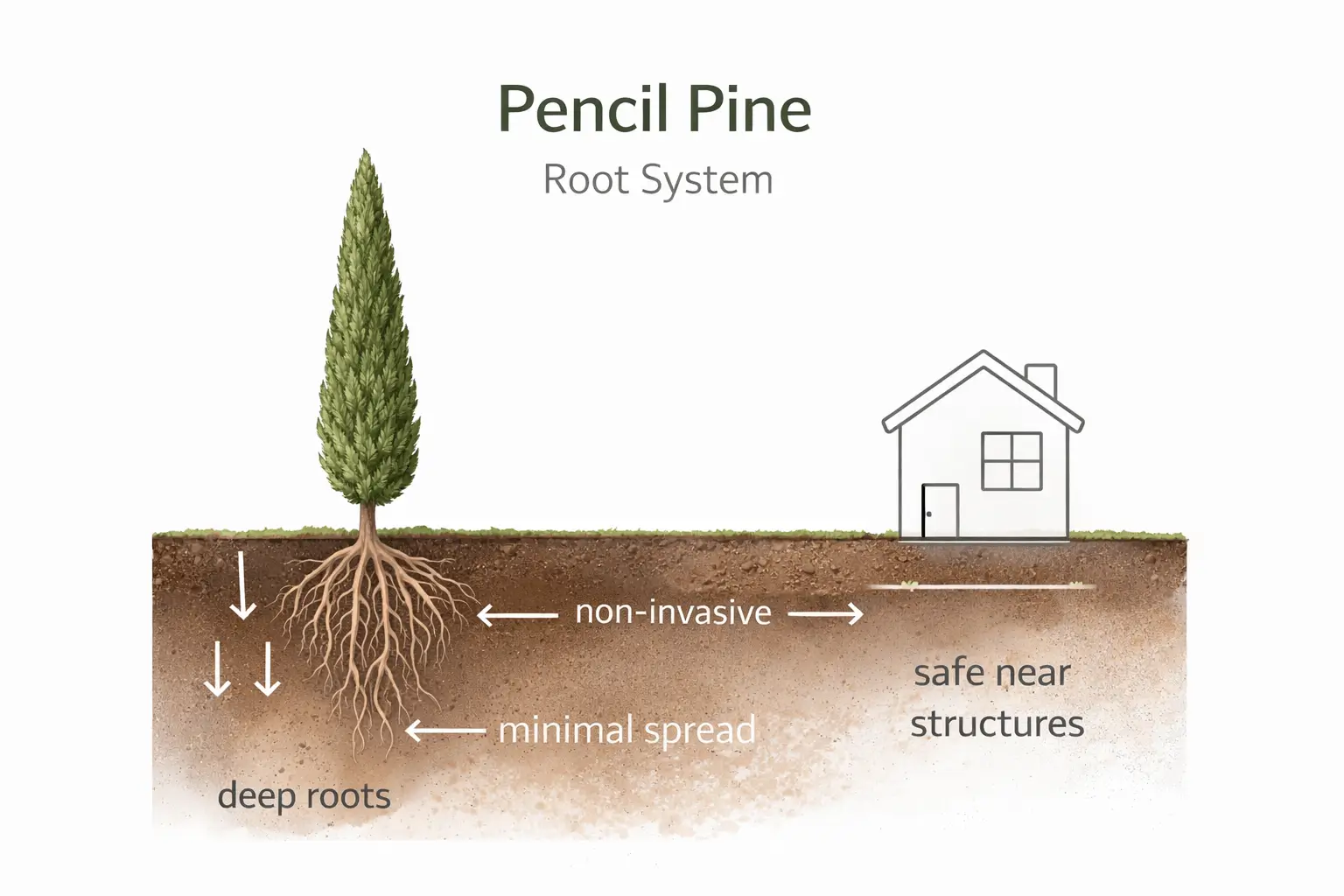
Pencil pine roots are generally non-invasive and grow deeper rather than spreading aggressively, making them suitable for planting near structures when spaced correctly.
Root Behavior
- Deep root system supports tall vertical growth
- Limited lateral spread compared to many trees
- Adapted for stability rather than expansion
Key Insights
- Safe for planting near walls and pathways with proper spacing
- Less likely to damage foundations compared to aggressive species
- Similar to other cypress-type conifers in root behavior
Proper soil drainage is essential to prevent root health issues.
How Pencil Pine Is Used in Landscaping (Hedges, Screens & Design)
Pencil pine is widely used in landscaping for its vertical form and structural value, especially in modern and formal garden designs.
Common Uses
- Privacy screens for residential boundaries
- Windbreaks in exposed areas
- Narrow garden borders along fences or pathways
- Architectural focal points in structured layouts
Hedge Spacing Guidelines
- Plant 60–100 cm apart for dense screening
- Wider spacing for individual tree form
Its uniform shape makes it ideal for symmetrical designs and clean garden lines. Pencil pine is often grouped with other fast-growing screening plants, making it a smart choice alongside options featured in Tropical Privacy Plants.
Pencil Pine Care Guide (Water, Light, Soil & Maintenance)
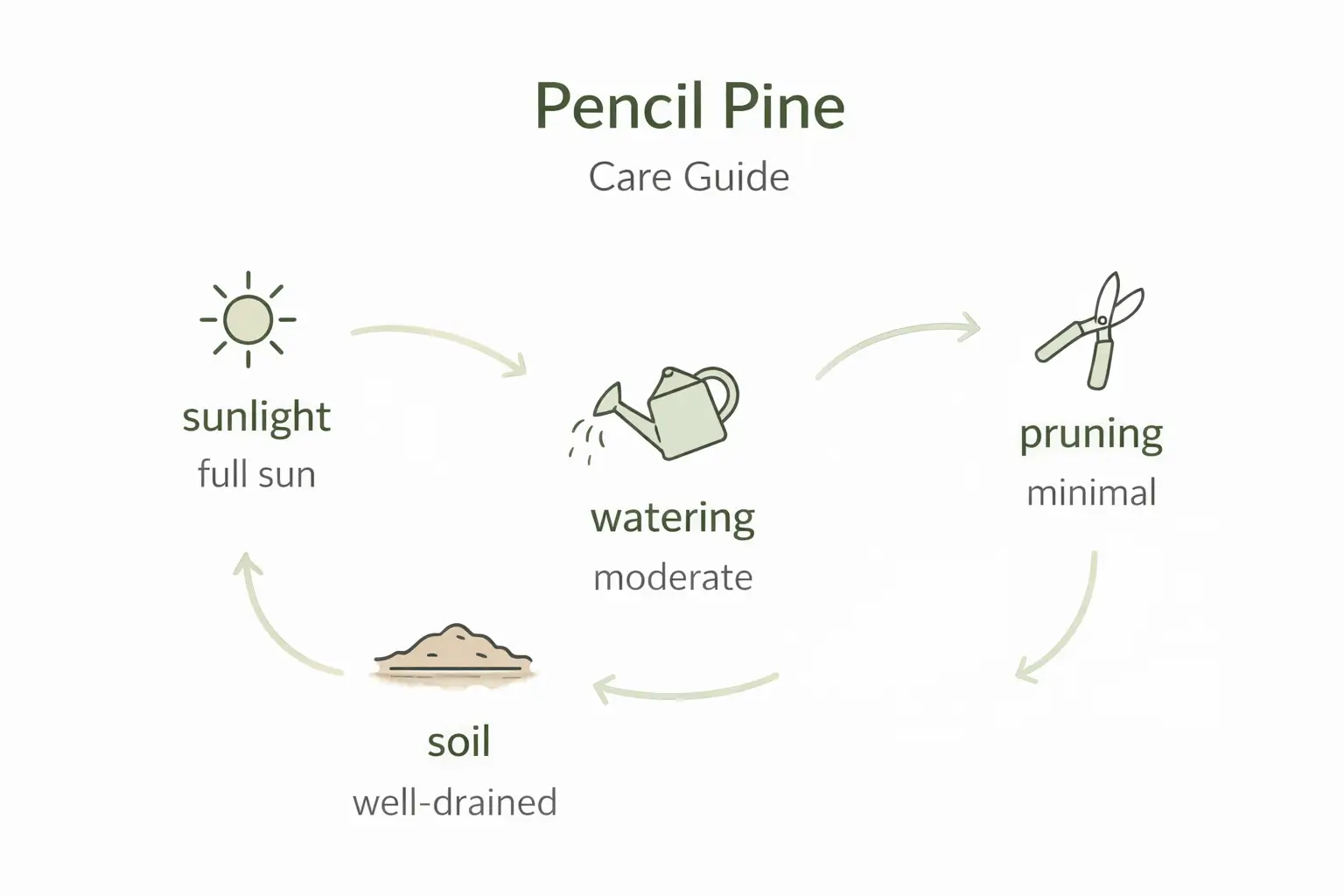
Pencil pine requires minimal care but performs best when key growing conditions are met.
Core Care Requirements
- Light: Full sun is essential for healthy growth
- Water: Moderate watering; drought-tolerant once established
- Soil: Well-drained soil is critical
- Pruning: Minimal, mainly to maintain shape
Additional Care Insights
- Avoid waterlogged conditions to prevent root rot
- Fertilize lightly during the growing season if needed
- Suitable for many Australian climates with proper drainage
Consistent care improves growth uniformity and foliage density.
Common Pencil Pine Problems and How to Fix Them
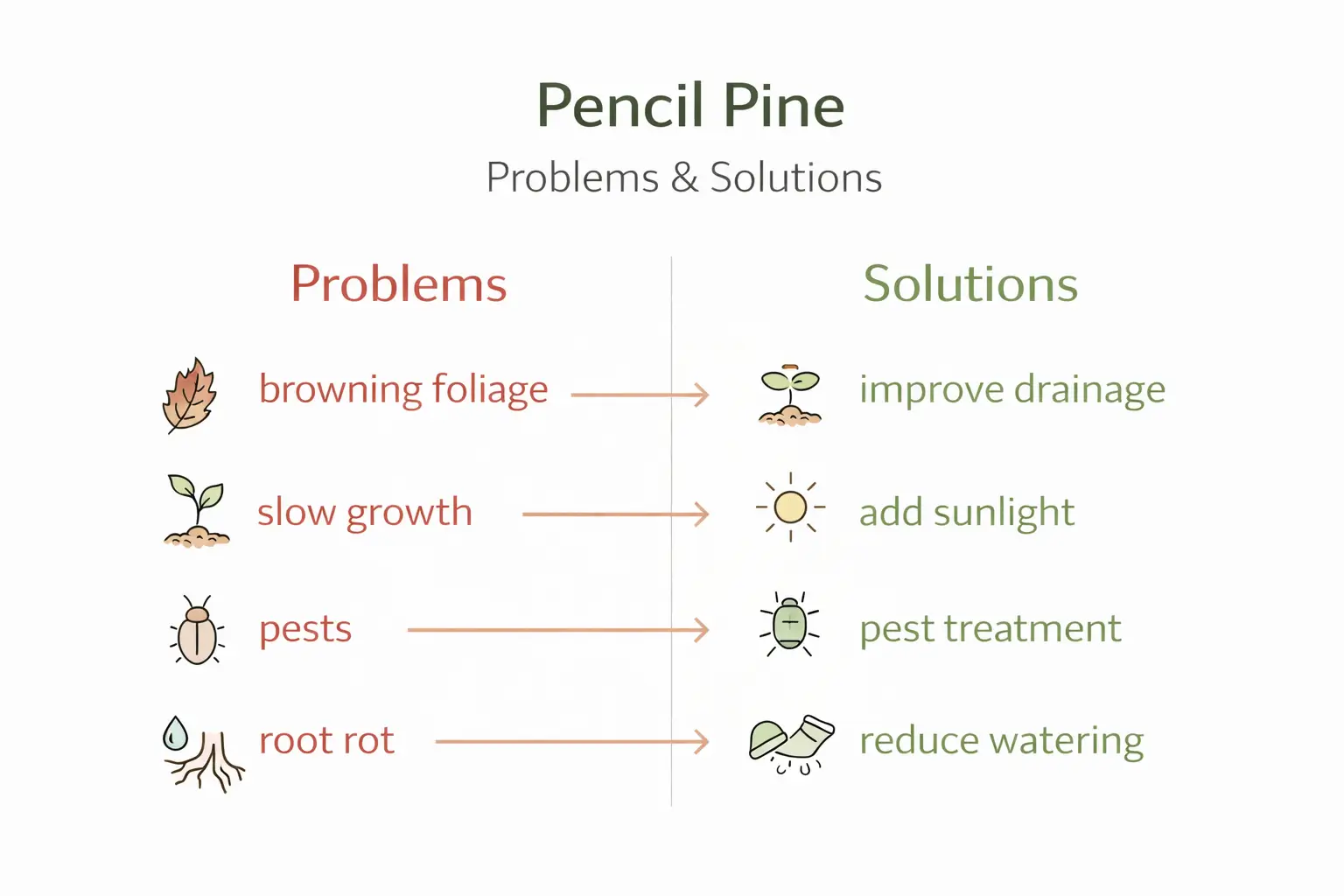
Pencil pine issues are usually related to environmental stress, poor soil, or incorrect watering practices.
Problem → Solution
- Browning foliage → Often caused by overwatering or poor drainage
- Slow growth → Nutrient deficiency or lack of sunlight
- Pest issues → Scale insects or mites; treat with horticultural oil
- Root rot → Waterlogged soil; improve drainage immediately
Prevention Tips
- Ensure proper drainage
- Avoid overwatering
- Maintain good airflow between plants
Early identification helps prevent long-term damage.
Pencil Pine vs Similar Plants (Comparison Guide)
Pencil pine differs from similar narrow plants in structure, growth rate, and botanical type.
Comparison Table
| Feature | Pencil Pine | Sky Pencil Holly | Cypress Trees |
| Type | Conifer | Broadleaf evergreen | Conifer |
| Shape | Tall & narrow | Very slim | Variable |
| Growth Rate | Moderate | Slow | Moderate–fast |
| Best Use | Screening | Small spaces | Large landscapes |
This comparison helps select the right plant for space and design goals.
Environmental Limitations and Growing Conditions
Pencil pine performs best in temperate climates and requires suitable soil and airflow conditions.
Key Growing Conditions
- Thrives in regions like coastal and temperate Australia
- Avoid heavy clay soils that retain excess water
- Requires good air circulation to prevent disease
Climate Considerations
- Tolerates mild frost
- May struggle in extremely humid or poorly ventilated environments
Site selection directly impacts long-term health and performance.
Beginner Mistakes to Avoid When Growing Pencil Pine
Common planting and care mistakes can reduce growth quality and lead to plant stress.
Common Mistakes
- Planting too close together, causing overcrowding
- Overwatering young plants
- Ignoring soil drainage requirements
- Placing in shaded areas with insufficient sunlight
Avoiding these errors improves establishment and long-term growth.
How Pencil Pine Fits into Garden Design (Topical Cluster Connection)
Pencil pine plays a key role in structured garden planning and modern landscaping concepts.
Design Applications
- Ideal for vertical design elements
- Works well in modern and formal gardens
- Complements hedging systems and boundary planting
Concept Integration
- Used alongside other landscaping plants
- Supports clean, symmetrical garden layouts
- Primarily suited for outdoor use
Its consistent shape enhances visual balance and structure. For structured landscapes, pencil pines work exceptionally well when combined with vertical focal species like those highlighted in Accent Trees.
Conclusion
Pencil pine is a versatile, low-maintenance conifer that offers structure, privacy, and elegance to any landscape. With proper care, understanding of its growth habits, and awareness of common problems, it can thrive for years as a reliable garden feature. Whether used for hedging or as a standalone tree, pencil pine remains one of the most practical choices for narrow spaces and structured planting designs.
FAQs
1. How tall do pencil pine trees grow?
Pencil pines typically grow between 10 and 20 meters tall, depending on variety and growing conditions.
2. Are pencil pine roots invasive?
No, pencil pine roots are generally non-invasive and grow deeper rather than spreading aggressively.
3. How fast does pencil pine grow?
Pencil pine has a moderate growth rate of about 30–60 cm per year under suitable conditions.
4. Why are my pencil pines turning brown?
Browning is usually caused by overwatering, poor drainage, or environmental stress.
5. Can pencil pines be used as a hedge?
Yes, pencil pines are widely used for hedges and screening due to their narrow, upright growth habit.