
Introduction
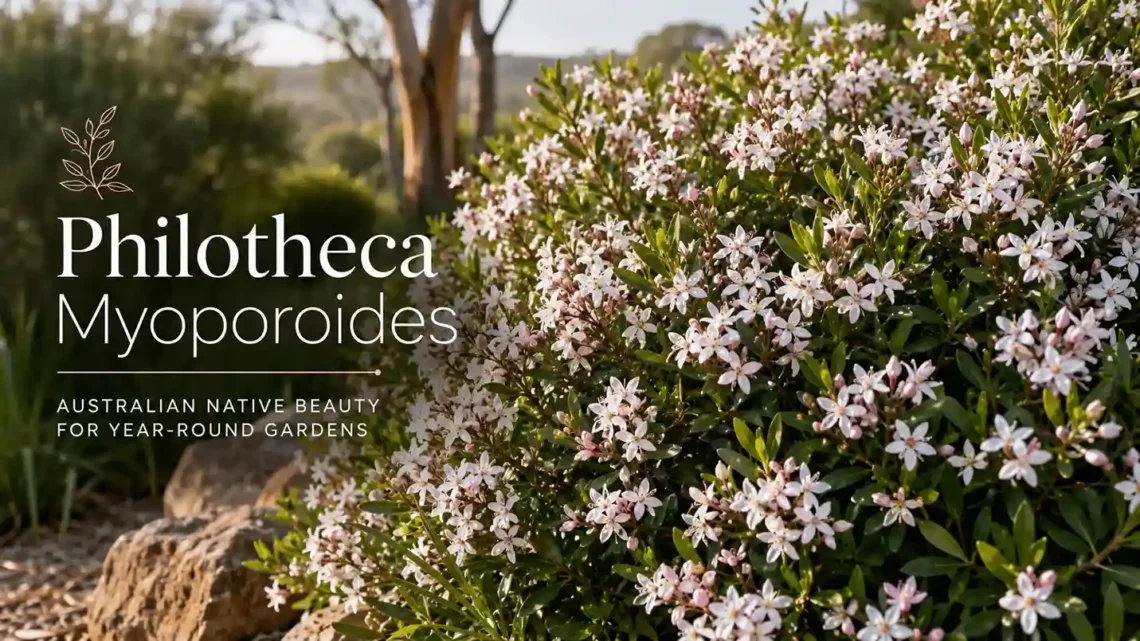
Philotheca myoporoides is an evergreen Australian native shrub valued for its glossy foliage and highly fragrant flowers. Commonly known as philotheca, long-leaf wax flower, philotheca wax flower, or formerly eriostemon myoporoides, this ornamental shrub is widely used in native gardens, low-maintenance landscapes, and flowering hedge designs. Gardeners appreciate its dense growth habit, attractive blooms, and adaptability to temperate climates. Popular cultivars such as philotheca profusion, philotheca myoporoides winter rouge, and philotheca myoporoides ruby cascade provide different flower colors, foliage tones, and landscaping forms. Its evergreen structure and pollinator-friendly flowers make it a practical and visually appealing choice for both residential and native garden settings.
Quick Summary
- Philotheca myoporoides is an Australian native flowering shrub known for fragrant white-to-pink blooms and evergreen foliage.
- It is commonly grown as a low-maintenance ornamental shrub or philotheca hedge.
- Popular cultivars such as Winter Rouge and Profusion offer different flower colors, growth habits, and landscaping uses.
- The plant grows best in well-drained soil with full sun to partial shade conditions.
- Philotheca is valued for native landscaping, pollinator attraction, and ornamental garden design.
What Is Philotheca Myoporoides?
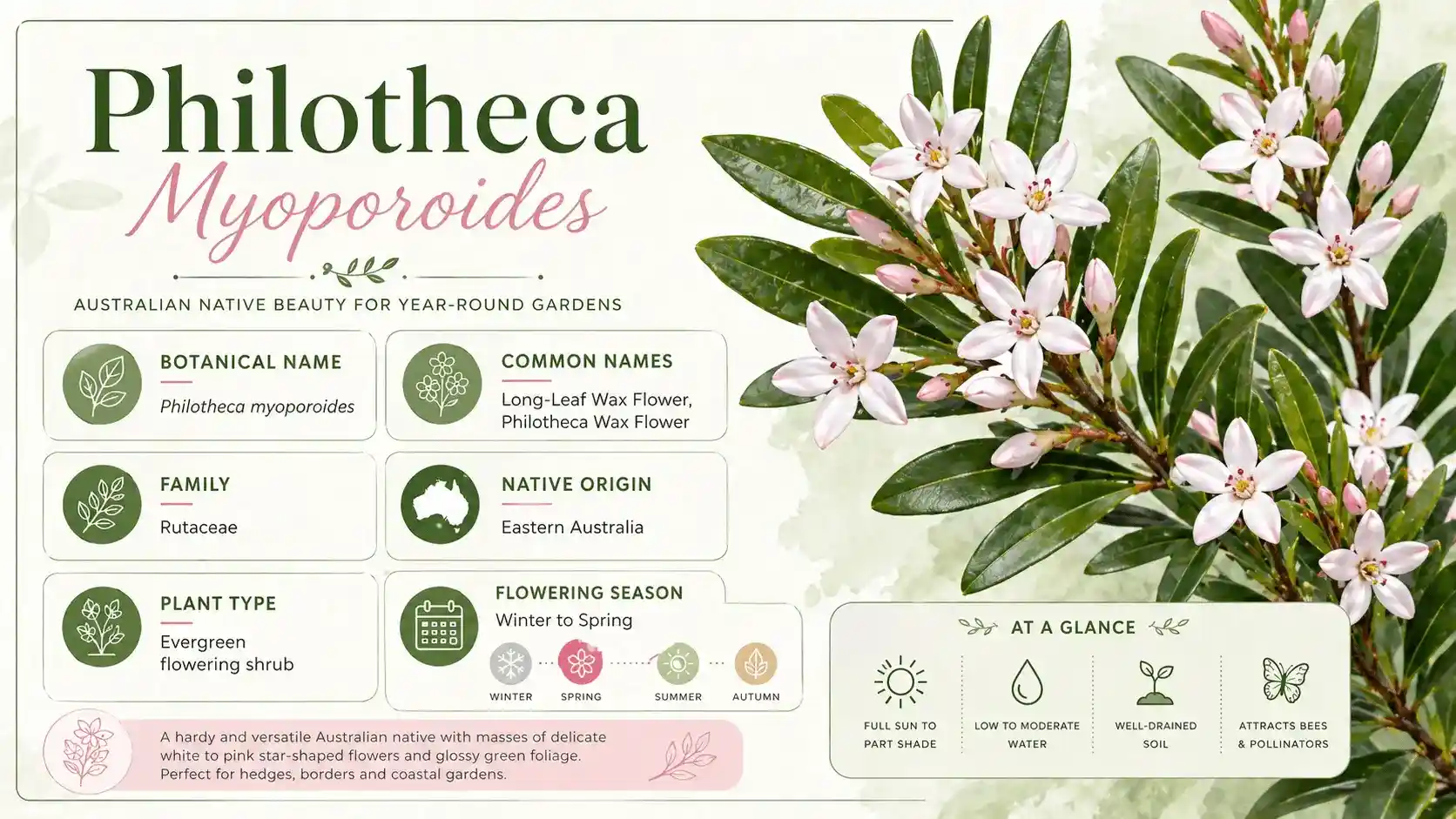
Philotheca myoporoides is a flowering evergreen shrub belonging to the Rutaceae family, which also includes citrus plants. It is native to eastern Australia and is widely cultivated for ornamental landscaping due to its fragrant blooms and compact growth habit. Philotheca myoporoides belongs to the Philotheca genus, a group of Australian flowering shrubs within the Rutaceae family.
Historically, the plant was classified as eriostemon myoporoides before botanical taxonomy moved it into the Philotheca genus. Many gardeners and nurseries still use both names interchangeably, which explains the continued association with eriostemon myoporoides.
Philotheca myoporoides is considered one of the most attractive Australian native flowering shrubs because of its dense branching, glossy green leaves, and long flowering season.
Botanical Characteristics
- Botanical name: Philotheca myoporoides
- Plant family: Rutaceae
- Former botanical name: Eriostemon myoporoides
- Native habitat: Eastern Australia
- Plant type: Evergreen flowering shrub
- Flowering season: Winter through spring in most climates
Philotheca Myoporoides Common Names and Plant Origins
Common Names Explained
Philotheca myoporoides is known by several common names, including long-leaf wax flower, long leaf wax flower, long leaved wax flower, and philotheca wax flower. These names refer to both its elongated leaves and the waxy appearance of its flowers.
The term “wax flower” is commonly associated with plants that produce glossy or slightly wax-coated petals. In philotheca myoporoides, the flowers often appear smooth and shiny, contributing to the common naming convention.
The plant is also commonly shortened to simply “philotheca” in horticultural use.
Native Origin and Natural Habitat
Philotheca myoporoides originates from eastern regions of Australia, particularly New South Wales and Queensland. It naturally grows in woodland areas, open forests, and rocky slopes with free-draining soils.
The plant prefers temperate to Mediterranean-style climates and performs well in areas with moderate rainfall and good airflow. Its adaptability makes it suitable for:
- Native Australian gardens
- Pollinator-friendly landscapes
- Coastal gardens
- Drought-tolerant planting schemes
Bees and beneficial insects are strongly attracted to the flowers during the blooming season.
Philotheca Myoporoides Size and Growth Habit
Philotheca myoporoides size varies depending on the cultivar, climate, pruning habits, and soil quality. Most standard forms grow as medium-sized shrubs with dense branching and upright growth.
Philotheca myoporoides height generally ranges between 1.5 and 3 meters outdoors. Compact varieties remain smaller and are often preferred for decorative borders and containers.
| Variety | Typical Height | Width | Growth Habit |
| Standard Philotheca Myoporoides | 2–3 m | 1.5–2 m | Upright shrub |
| Winter Rouge | 1.5–2 m | 1.5 m | Compact bushy form |
| Profusion | 1.5–2.5 m | 1.5–2 m | Dense flowering shrub |
| Ruby Cascade | 1–1.5 m | 1.5–2 m | Cascading habit |
Growth Factors
- Outdoor plants grow significantly larger than container-grown specimens.
- Full sun encourages denser branching and heavier flowering.
- Rich but well-drained soil supports faster growth.
- Cool climates may slow growth rates slightly.
- Regular pruning helps maintain compact structure.
Popular Philotheca Myoporoides Varieties
Philotheca Profusion
Philotheca profusion, also called philotheca myoporoides profusion, is valued for its exceptionally heavy flowering display. The shrub produces masses of fragrant white flowers that densely cover the foliage during blooming periods.
Its rounded shape and reliable flowering make it suitable for:
- Flowering hedges
- Native borders
- Pollinator gardens
- Feature shrub planting
Philotheca Myoporoides Winter Rouge
Philotheca myoporoides winter rouge is recognized for its decorative foliage coloration. New growth often develops reddish or bronze tones during cooler months, adding seasonal interest even outside the flowering period.
Philotheca winter rouge is commonly used in ornamental native gardens because of its compact structure and year-round visual appeal.
Philotheca Myoporoides Ruby Cascade
Philotheca myoporoides ruby cascade features an elegant cascading growth habit that works well in raised beds, retaining walls, and containers.
Its arching branches create a softer landscape appearance compared to upright varieties. Ruby Cascade is especially effective in decorative pots and small garden spaces.
Philotheca Myoporoides Pink and Flower Variations
Philotheca myoporoides pink cultivars produce blooms ranging from pale blush to deeper pink tones. Varieties such as philotheca myoporoides flower girl are selected primarily for ornamental flower color differences.
These cultivars are often chosen for aesthetic contrast within mixed native garden designs.
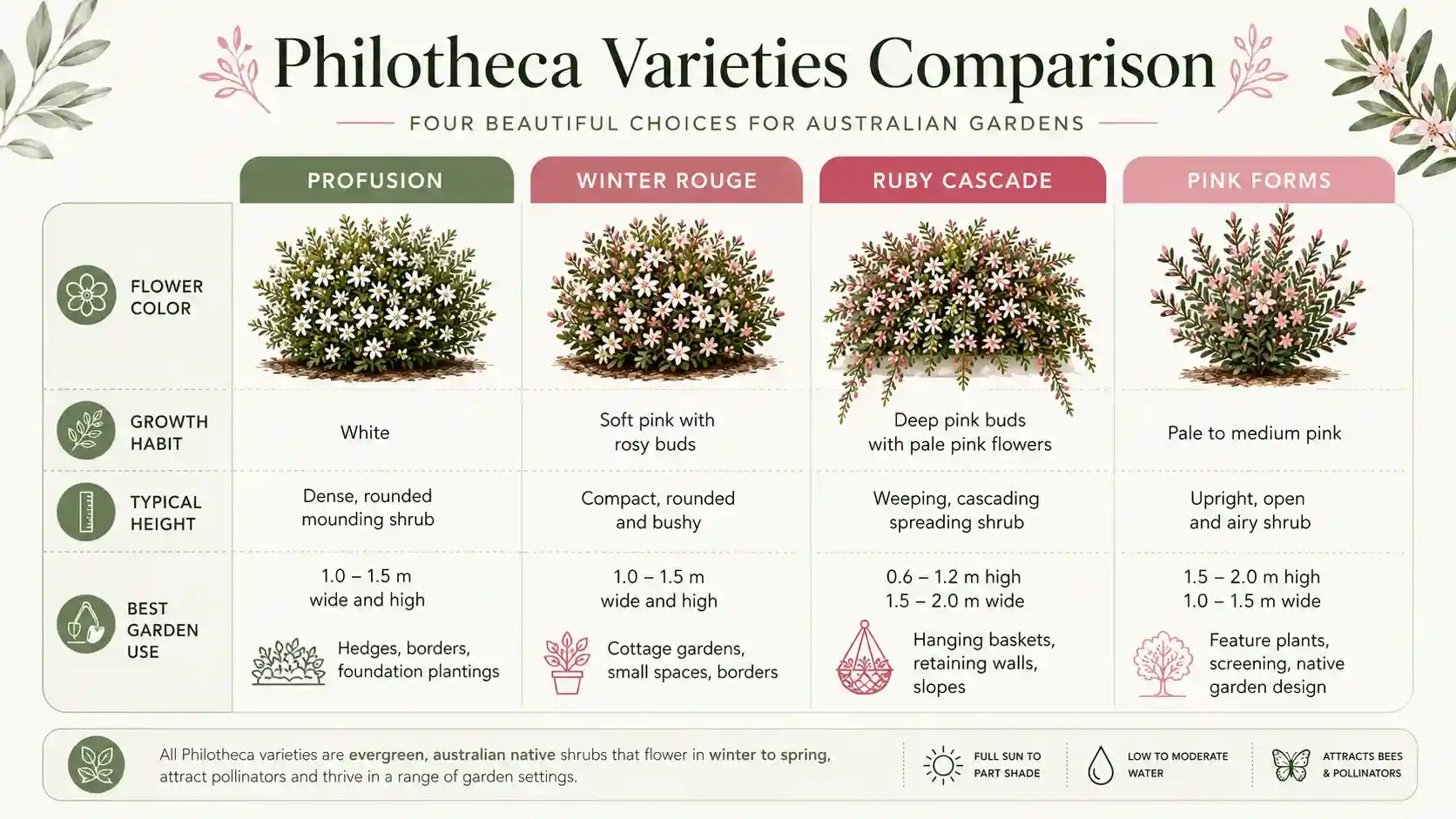
| Cultivar | Flower Color | Growth Form | Best Use |
| Profusion | White | Dense upright | Hedging |
| Winter Rouge | White-pink | Compact bushy | Ornamental gardens |
| Ruby Cascade | Pink-white | Cascading | Containers |
| Pink Forms | Soft pink | Compact shrub | Decorative borders |
How to Grow and Care for Philotheca Myoporoides
Ideal Light Conditions
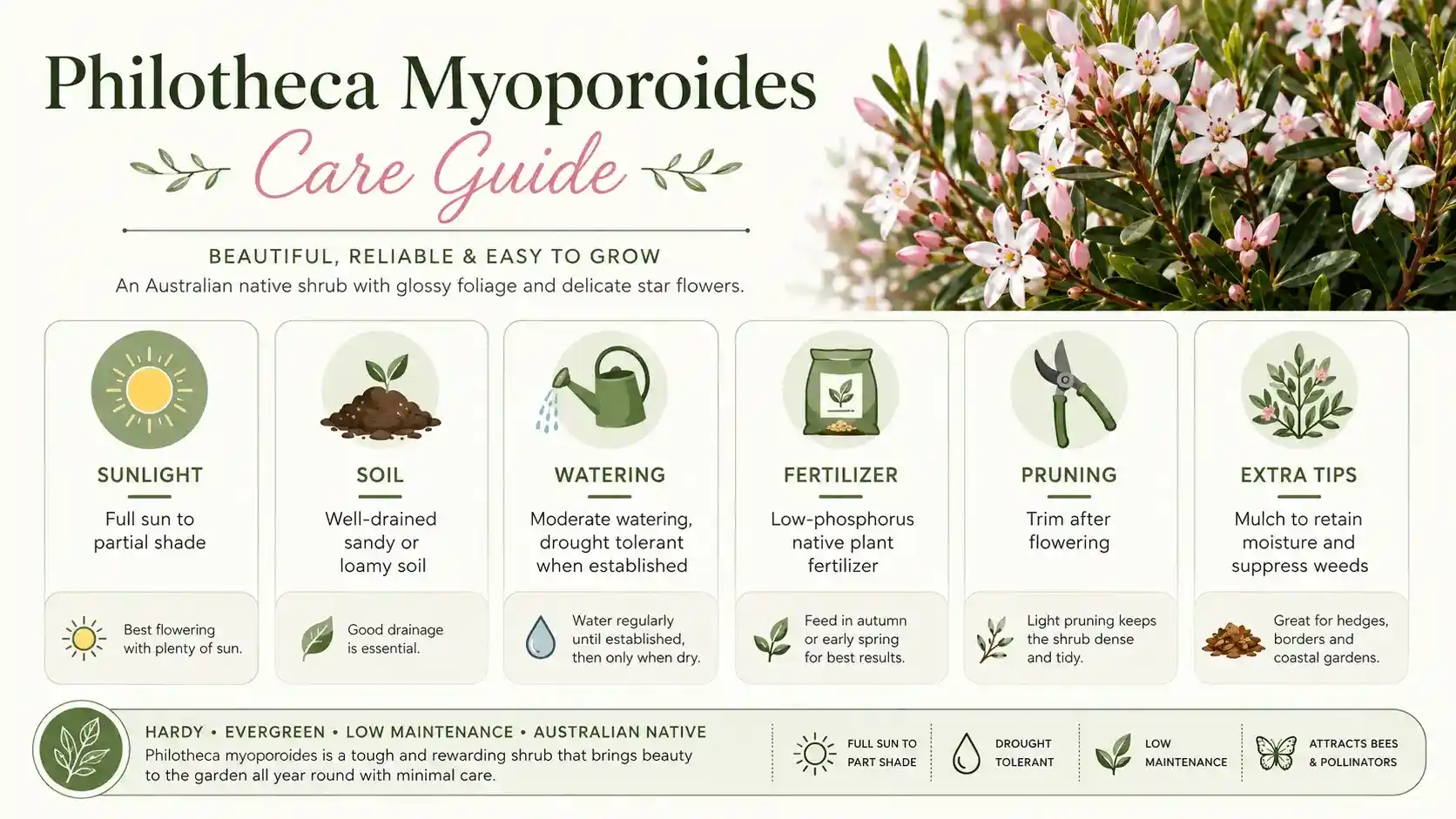
Philotheca myoporoides grows best in full sun to partial shade. Full sun generally produces denser growth and heavier flowering, while partial shade may reduce bloom production slightly.
In hotter climates, afternoon shade can help prevent foliage stress.
Soil Requirements
Well-drained soil is essential for healthy growth. Heavy clay soils often increase the risk of root rot and poor root development.
The plant prefers:
- Sandy or loamy soil
- Slightly acidic to neutral pH
- Good airflow around roots
- Organic mulch for moisture regulation
Watering Needs
Young plants require regular watering until established. Mature philotheca shrubs become moderately drought tolerant when roots are fully developed.
General watering guidelines include:
- Water deeply once or twice weekly during establishment.
- Reduce watering frequency for mature plants.
- Avoid waterlogged conditions.
- Increase watering during extreme heat periods.
Fertilizing and Feeding
Australian native shrubs respond best to low-phosphorus fertilizers. Excess phosphorus may damage sensitive root systems.
Apply fertilizer:
- In early spring
- Lightly after flowering if needed
- Using native plant formulations only
Pruning and Maintenance
Prune philotheca after flowering to maintain shape and encourage denser branching. Light trimming improves airflow and reduces leggy growth.
Maintenance Tips
- Yellow leaves may indicate overwatering.
- Pale foliage can suggest nutrient deficiency.
- Mulch helps regulate soil temperature and moisture.
- Remove dead branches seasonally.
Growing a Philotheca Hedge
Philotheca hedge planting is popular because of the shrub’s evergreen structure, fragrant flowers, and dense branching habit. A philotheca myoporoides hedge works well for privacy screening, decorative borders, and native landscaping projects. Gardeners comparing evergreen native screening plants may also explore other hedge-friendly options such as Lilly Pilly varieties for dense privacy planting.
Best Hedge Spacing
For dense coverage, plants are usually spaced between 1 and 1.5 meters apart depending on the cultivar size. Closer spacing creates faster hedge formation but may require more pruning maintenance.
Maintaining Hedge Shape
Regular trimming after flowering helps maintain an even hedge structure. Avoid excessive pruning into old wood, as recovery may be slower. Good airflow between plants helps reduce fungal disease risks.
Benefits of a Philotheca Hedge
- Evergreen privacy screening
- Fragrant seasonal flowers
- Pollinator attraction
- Native landscaping appeal
- Low-maintenance structure
Philotheca also pairs well with other Australian native hedge plants such as Correa species in pollinator-friendly landscapes.
Flowering Season and Bloom Characteristics
Philotheca myoporoides wax flower blooms primarily from winter through spring, although flowering periods vary slightly by climate and cultivar.
The flowers are highly fragrant and attract bees, butterflies, and beneficial pollinators. Bloom coverage can become extremely dense under ideal growing conditions.
Flower Characteristics
- White, blush pink, or soft pink flowers
- Star-shaped petals
- Mild sweet fragrance
- Pollinator-friendly nectar source
- Long ornamental flowering period
Common Problems With Philotheca Myoporoides
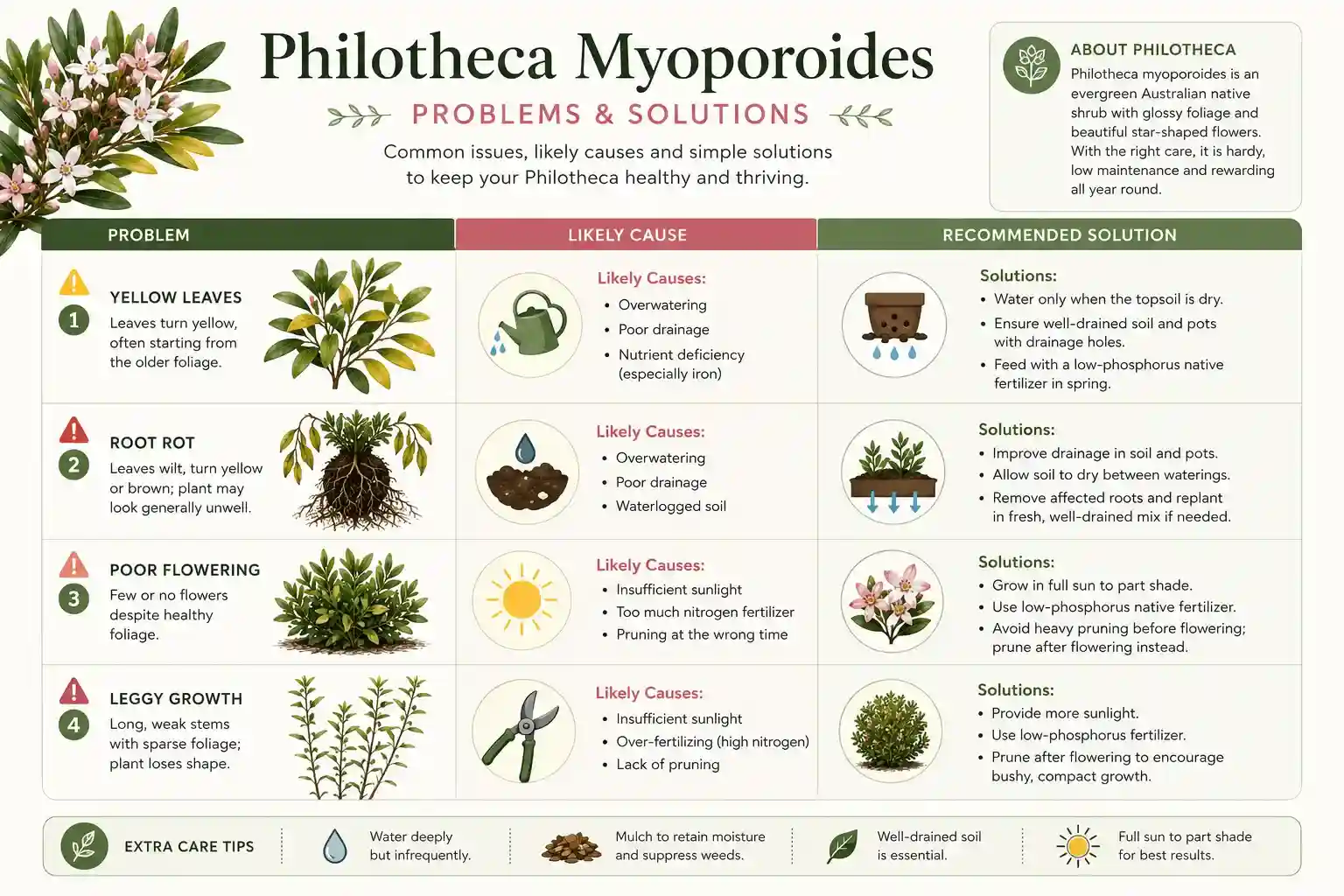
Yellow Leaves and Poor Growth
Yellow leaves are commonly caused by overwatering, poor drainage, or nutrient imbalance. Waterlogged soil limits oxygen availability around the roots.
Prevention methods include:
- Improving drainage
- Reducing watering frequency
- Using native-specific fertilizers
Root Rot and Drainage Issues
Root rot is one of the most serious philotheca problems. Heavy clay soils and excessive moisture create favorable conditions for fungal infections.
Raised beds and free-draining soil significantly reduce risk.
Pest and Disease Concerns
Common pests include:
- Scale insects
- Aphids
- Mealybugs
Eco-friendly treatments may include horticultural oils, neem oil, or manual pest removal.
Why Philotheca May Stop Flowering
Poor flowering is usually linked to insufficient sunlight, incorrect pruning timing, or nutrient imbalance.
Over-fertilization can encourage leaf growth at the expense of blooms.
| Problem | Likely Cause | Solution |
| Yellow leaves | Overwatering | Improve drainage |
| Poor flowering | Lack of sunlight | Increase sun exposure |
| Root rot | Waterlogged soil | Use raised beds |
| Leggy growth | Insufficient pruning | Trim after flowering |
Seasonal Care Tips for Philotheca Myoporoides
Seasonal care adjustments help maintain healthy flowering and growth throughout the year.
Seasonal Maintenance Tips
- Spring: Apply light fertilizer and monitor new growth.
- Summer: Water deeply during prolonged heat.
- Autumn: Prepare for pruning after flowering.
- Winter: Protect young plants from severe frost.
Philotheca tolerates mild frost but young plants may need temporary protection during cold snaps.
Philotheca Myoporoides in Landscaping and Garden Design
Philotheca myoporoides is widely used in ornamental landscaping because of its evergreen foliage and fragrant blooms.
It performs well in:
- Native gardens
- Pollinator gardens
- Decorative borders
- Drought-tolerant landscapes
- Container planting
Philotheca myoporoides works especially well in modern Australian native garden layouts focused on low-maintenance planting.
Companion Plants for Philotheca
Suitable Australian native companion plants include:
- Grevillea
- Westringia
- Callistemon
- Correa
- Lomandra
These plants share similar drainage and sunlight preferences.
Indoor vs Outdoor Growing Potential
Philotheca performs best outdoors where airflow and sunlight levels are higher. Indoor cultivation is usually limited due to lower light intensity and humidity imbalance. Container growing outdoors is generally more successful than indoor placement. This shrub is often featured in home garden planning guides focused on evergreen structure and low-maintenance landscaping.
Philotheca Myoporoides in Different Regions
Growing Philotheca Myoporoides in the UK
Philotheca myoporoides UK cultivation can be challenging because of colder winters and excessive moisture.
Gardeners in the UK often grow the plant:
- In containers
- Inside greenhouses
- Against sheltered walls
- In frost-protected courtyards
Good drainage becomes especially important in wetter climates.
Climate Suitability in Australia and Similar Regions
Philotheca performs best in Mediterranean and temperate climates with moderate rainfall and warm summers.
It adapts well to:
- Southern Australia
- Coastal climates
- Mild temperate regions
- Drought-prone landscapes with proper drainage
Beginner Mistakes to Avoid When Growing Philotheca
Many philotheca problems are caused by basic care mistakes that affect root health and flowering performance.
Common Beginner Errors
- Overwatering in heavy soil
- Excess fertilizer use
- Pruning at the wrong time
- Planting in deep shade
- Poor airflow around hedges
Avoiding these issues significantly improves long-term plant health.
Philotheca Compared With Similar Australian Native Shrubs
Philotheca eriostemon is often compared with other Australian native flowering shrubs because of its fragrant blooms and evergreen growth.
While philotheca shares similarities with wax flowers and bottlebrush species, its finer foliage and softer flowering display create a distinct ornamental appearance.
| Plant | Flower Type | Growth Habit | Best Landscape Use |
| Philotheca Myoporoides | Star-shaped | Compact shrub | Hedging and borders |
| Wax Flower Species | Small waxy blooms | Upright shrub | Floral gardens |
| Bottlebrush Varieties | Brush-like flowers | Larger shrub | Screening and pollinator gardens |
Conclusion
Philotheca myoporoides is a versatile Australian native shrub valued for its fragrant flowers, evergreen foliage, and adaptable growth habit. It works well as a flowering ornamental shrub, a low-maintenance philotheca hedge, and a pollinator-friendly landscape plant.
With proper drainage, moderate watering, and suitable sunlight, philotheca can provide reliable flowering and year-round structure in many garden styles. Choosing cultivars such as Profusion, Winter Rouge, or Ruby Cascade allows gardeners to match plant size, flower color, and growth form to their specific landscaping needs.
FAQs
What is the common name of Philotheca myoporoides?
Philotheca myoporoides is commonly known as long-leaf wax flower, philotheca wax flower, or simply philotheca.
How large does Philotheca myoporoides grow?
Most varieties grow between 1.5 and 3 meters tall depending on climate, pruning, and cultivar type.
Is Philotheca myoporoides suitable for hedging?
Yes. Its evergreen foliage, dense branching, and fragrant flowers make it an excellent native flowering hedge plant.
What is the difference between Philotheca Profusion and Winter Rouge?
Profusion is known for heavy flowering density, while Winter Rouge is valued for its reddish seasonal foliage coloration.
Why are the leaves on my Philotheca turning yellow?
Yellow leaves are usually caused by overwatering, poor drainage, or nutrient imbalance.
Can Philotheca myoporoides grow in pots or containers?
Yes. Compact varieties such as Ruby Cascade perform well in containers with free-draining potting mix.
Does Philotheca myoporoides tolerate frost?
Mature plants tolerate mild frost, but young shrubs may need protection during severe cold conditions.
When does Philotheca myoporoides flower?
Flowering generally occurs from winter through spring depending on climate and cultivar.
Is Philotheca myoporoides drought tolerant?
Yes. Once established, the plant becomes moderately drought tolerant if grown in suitable soil.
What soil type is best for Philotheca myoporoides?
Well-drained sandy or loamy soil with slightly acidic to neutral pH is ideal for healthy growth.