Introduction
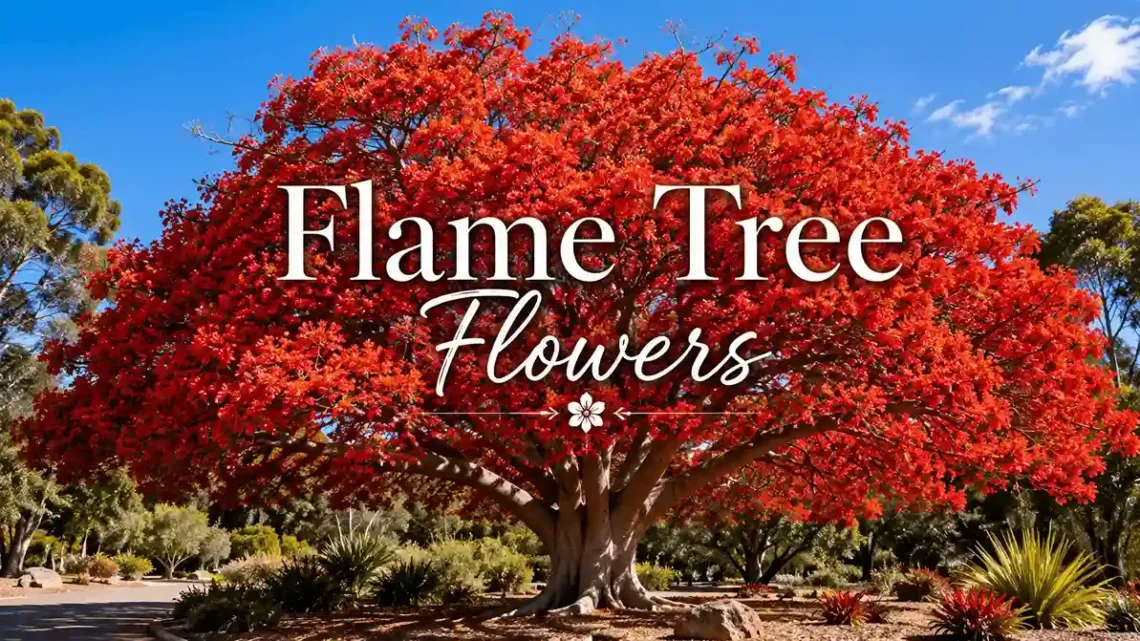
Flame tree flowers are bright ornamental blooms produced by several tropical and subtropical tree species, especially the Australian flame tree known as Brachychiton acerifolius. Commonly called the Illawarra flame tree, this striking species is famous for producing vivid red flowers that cover the canopy during seasonal blooming periods. Native to eastern regions of flame tree Australia habitats, these trees naturally grow in warm coastal rainforests and subtropical environments. The Illawarra flame tree is widely planted in parks, streets, and gardens because of its dramatic appearance, shade potential, and strong ornamental value. Many people also refer to it as the fire tree because the flowering canopy resembles flames from a distance.
Quick Summary
- Flame tree flowers are vibrant seasonal blooms produced by several ornamental tree species, especially the Illawarra flame tree.
- The Illawarra flame tree is native to Australia and is known for bright red flowers that often appear before new leaves emerge.
- Flame trees require warm climates, sunlight, and proper drainage for healthy flowering.
- Different flame tree varieties produce red, yellow, or orange flowers depending on the species.
What Are Flame Tree Flowers?
Characteristics of Flame Tree Blooms
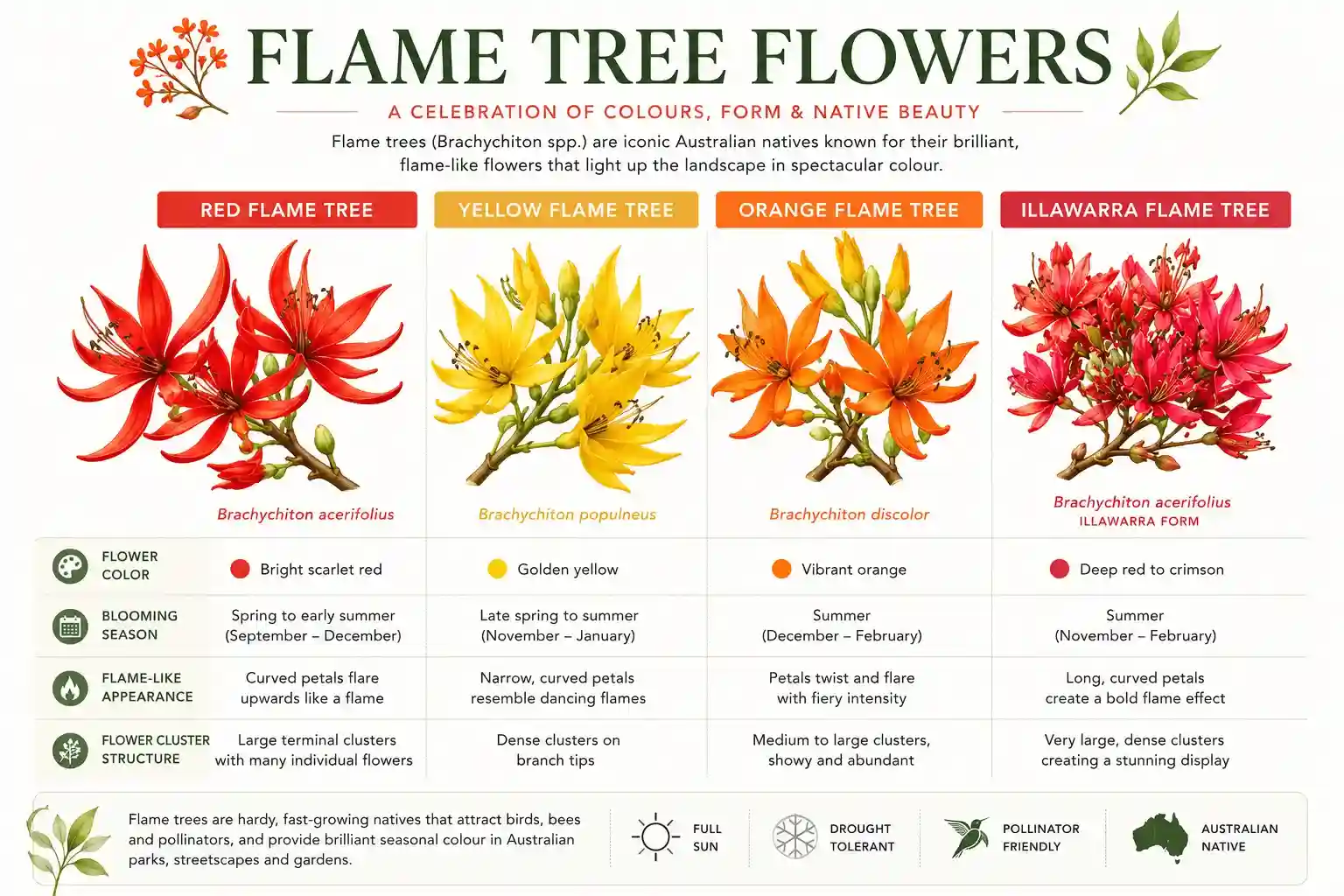
Flame tree flowers are large clusters of brightly colored blooms that appear during warm seasons. The illawarra flame tree flower is especially known for its intense scarlet-red appearance, although some species produce yellow flame tree flowers or orange blooms.
These flowers usually grow densely across the canopy, creating a fiery visual effect. This is why many people ask which tree has red flowers that look like a flame. The answer is commonly the Illawarra flame tree.
Common characteristics include:
- Bell-shaped or star-shaped flowers
- Bright red, orange, or yellow coloration
- Dense flowering clusters
- Seasonal blooming during warmer months
- Nectar-rich flowers that attract birds and insects
Common flower colors:
- Red flame tree flowers
- Yellow flame tree flowers
- Orange flowering varieties
Blooming seasons may vary depending on climate, rainfall, and sunlight exposure.
Why Flame Trees Flower Before Leaf Growth
Many illawarra flame tree flowers appear before fresh leaves emerge. This seasonal behavior allows the blooms to become more visible because the canopy is not covered by foliage.
During dry or cooler seasons, the tree may temporarily lose leaves. A flame tree without flowers may simply be outside its blooming cycle or growing in unsuitable conditions.
Flowering triggers commonly include:
- Increased sunlight exposure
- Seasonal temperature changes
- Dry weather periods
- Tree maturity
The Illawarra Flame Tree (Brachychiton acerifolius)
Botanical Overview
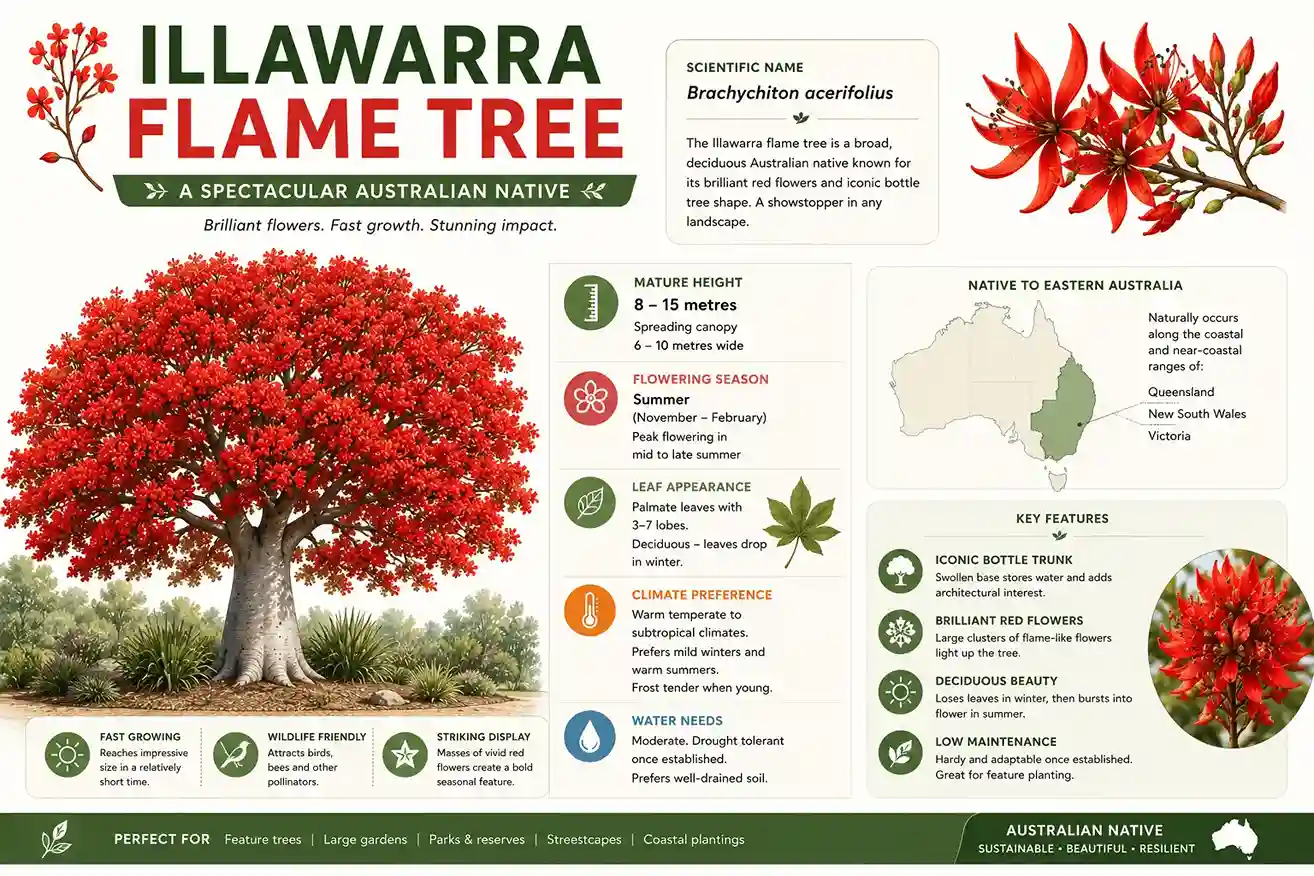
The scientific name of the Illawarra flame tree is Brachychiton acerifolius. It belongs to the Malvaceae plant family and is native to eastern Australia. The brachychiton acerifolius illawarra flame tree naturally grows in subtropical rainforest regions of Queensland and New South Wales. It is considered one of the most recognizable ornamental trees in Australia. The Illawarra flame tree is also considered one of the most visually striking ornamental feature trees in Australian landscapes, especially in subtropical regions like Brisbane.
Key botanical features include:
- Scientific Name: Brachychiton acerifolius
- Common Names: Australian flame tree, fire tree, brachychiton flame tree
- Growth Habit: Large deciduous or semi-deciduous tree
- Flower Color: Bright scarlet red
- Mature Shape: Broad rounded canopy
The Illawarra flame tree (Brachychiton acerifolius) is a native Australian species known for its brilliant red seasonal flowering canopy.
Why the Illawarra Flame Tree Is Famous in Australia
The Illawarra flame tree Australia regions are widely known for spectacular seasonal flowering displays. The tree has strong cultural and landscaping significance because of its dramatic visual impact.
It is commonly planted in:
- Public parks
- Streetscapes
- Large residential gardens
- Botanical gardens
- Australian native landscaping projects
The flame tree Illawarra regions of coastal New South Wales are especially associated with this species.
| Feature | Illawarra Flame Tree |
| Scientific Name | Brachychiton acerifolius |
| Native Region | Eastern Australia |
| Flower Color | Bright red |
| Mature Height | 10–30 meters |
| Flowering Season | Late spring to summer |
Flame Tree Leaves and Seasonal Appearance
What Flame Tree Leaves Look Like
Flame tree leaves are glossy, green, and often deeply lobed. The illawarra flame tree leaf resembles maple-style foliage in some stages of growth.
Australian flame tree leaves may vary depending on maturity and environmental conditions.
Leaf characteristics include:
- Lobed or variable leaf shapes
- Smooth leaf texture
- Medium to dark green coloration
- Broad leaf surface
Seasonal Leaf Drop and Regrowth
Many flame trees are deciduous or semi-deciduous. Seasonal leaf drop often occurs before flowering.
This process helps maximize flower visibility and conserves energy during dry conditions.
Seasonal appearance changes:
- Leaf drop before flowering
- Bright flowering canopy during bloom season
- Fresh green regrowth afterward
- Reduced flowering during cooler years
Australian Flame Tree Leaves Compared to Other Species
Compared with the flame bottle tree and other ornamental species, Illawarra flame tree leaves tend to be larger and more deeply lobed.
Common misconceptions include assuming all flame tree varieties have identical leaves. Different species may display compound, oval, or lobed foliage structures.
Flame Tree Varieties and Similar Trees
Common Flame Tree Varieties
Several flame tree varieties are grown worldwide for ornamental landscaping.
Common varieties include:
- Illawarra flame tree
- Chinese flame tree
- Yellow flowering flame tree species
- Tropical ornamental flame trees
Chinese flame tree flowers are often yellow or orange rather than deep red. Gardeners who enjoy dramatic flowering displays may also compare flame trees with other colorful ornamental species featured in our guide to trees with purple flowers in Australia.
Trees Commonly Confused With Flame Trees
Some ornamental species are frequently mistaken for flame trees because of similar flowering patterns.
Examples include:
- Flamethrower tree flowers
- Flame thrower redbud tree flowers
- Tropical flowering ornamentals
| Feature | Illawarra Flame Tree | Chinese Flame Tree |
| Flower Color | Red | Yellow/Orange |
| Native Region | Australia | Asia |
| Leaf Shape | Lobed | Compound |
| Typical Climate | Subtropical | Warm temperate |
Where Flame Trees Grow Best
Native Habitat and Climate Conditions
Flame trees grow best in warm subtropical and tropical climates with good sunlight and drainage.
People commonly ask where do flame trees grow naturally. In Australia, they are native to eastern coastal rainforest regions.
Ideal growing conditions:
- Full sunlight
- Warm temperatures
- Moderate rainfall
- Well-drained soil
- Frost-free environments
Climate limitations include severe frost, waterlogged soil, and prolonged cold exposure.
Growing Flame Trees in Different Australian Regions
Flame tree Perth growing conditions can be more challenging because of dry summers and occasional cooler weather.
Illawarra flame tree Perth cultivation succeeds best in protected areas with adequate watering during establishment.
Coastal regions generally support healthier flowering compared with inland environments.
Environmental stress factors include:
- Strong winds
- Frost exposure
- Poor soil drainage
- Urban root restriction
How Long Before a Flame Tree Flowers?
Typical Flowering Timeline
How long before a flame tree flowers depends on species, climate, and growing conditions. Trees grown from seed may take 5–8 years or longer before producing flowers.
Nursery-grown trees may flower earlier if mature stock is planted.
Factors That Affect Flowering
Flame tree flowering performance is influenced by several environmental factors.
Important factors include:
- Sunlight availability
- Tree maturity
- Soil drainage
- Seasonal temperatures
- Water balance
A flame tree without flowers is often immature or receiving insufficient sunlight.
| Growing Condition | Impact on Flowering |
| Full sun | Encourages blooms |
| Shade | Delays flowering |
| Poor drainage | Reduces growth |
| Mature age | Increases flowering likelihood |
Flame Tree Flowers Care Guide
Watering Requirements
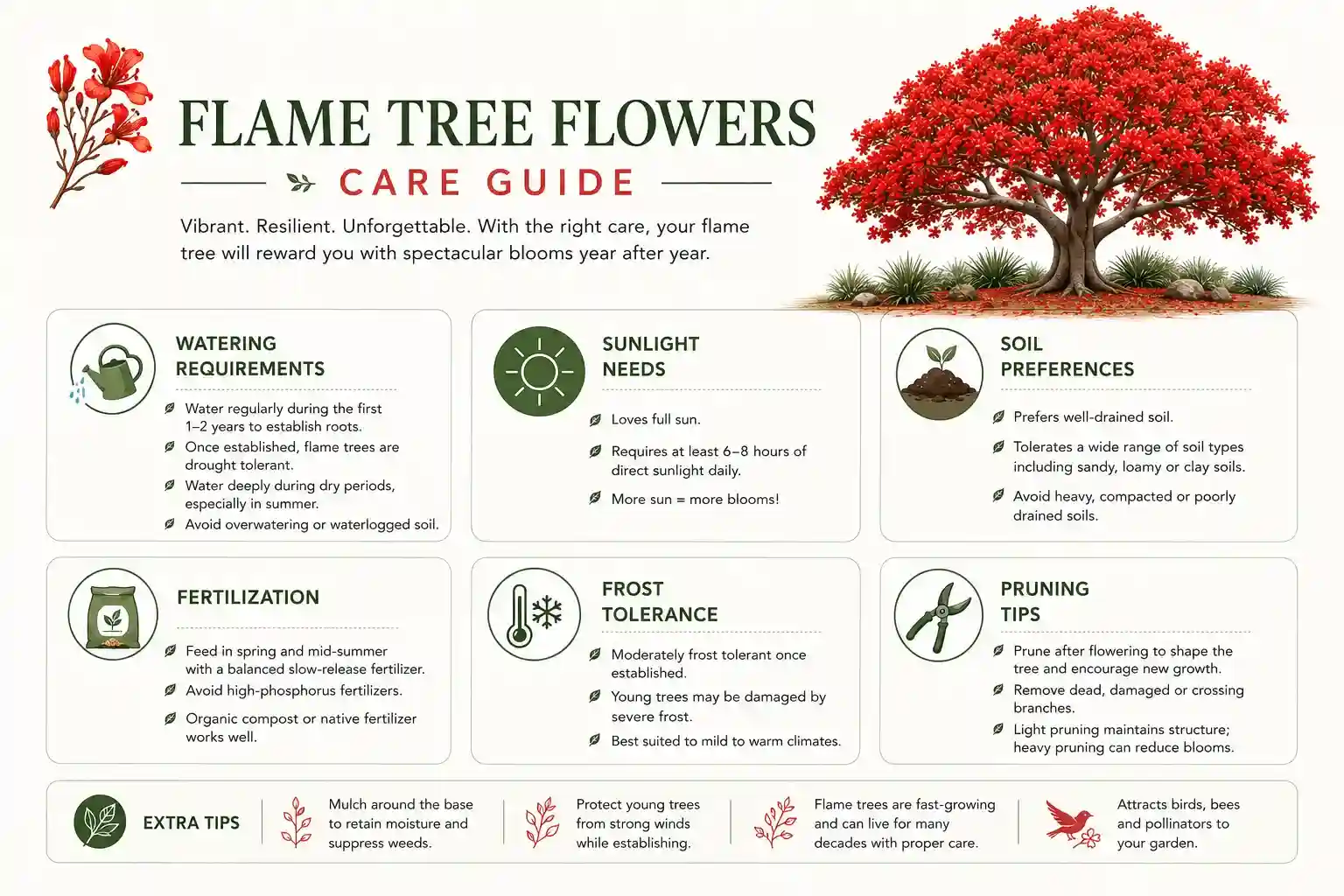
Young flame tree plants require regular watering during establishment. Mature trees become more drought tolerant.
Overwatering is a common mistake that can weaken root systems.
Soil Preferences
Flame trees prefer well-drained sandy or loamy soil. Heavy clay soils may reduce root health and flowering performance.
Sunlight Needs
Full sunlight is essential for strong flowering. Trees planted in shade often produce fewer blooms.
Fertilization and Pruning
Light fertilization during active growth supports healthy foliage and flowering. Excess nitrogen may encourage leaf growth instead of flowers.
Pruning should focus on removing damaged branches and maintaining canopy structure.
Climate and Frost Tolerance
Australian flame trees prefer frost-free or mild climates. Young trees are more sensitive to freezing conditions.
Basic care checklist:
- Provide full sun
- Avoid waterlogged soil
- Water young trees regularly
- Protect from severe frost
- Allow space for mature roots
Seasonal care reminders:
- Reduce watering during cooler months
- Monitor summer heat stress
- Remove damaged limbs after storms
Maintenance mistakes to avoid:
- Excessive pruning
- Planting in heavy shade
- Overwatering mature trees
Common Illawarra Flame Tree Problems
Why Flame Trees Fail to Flower
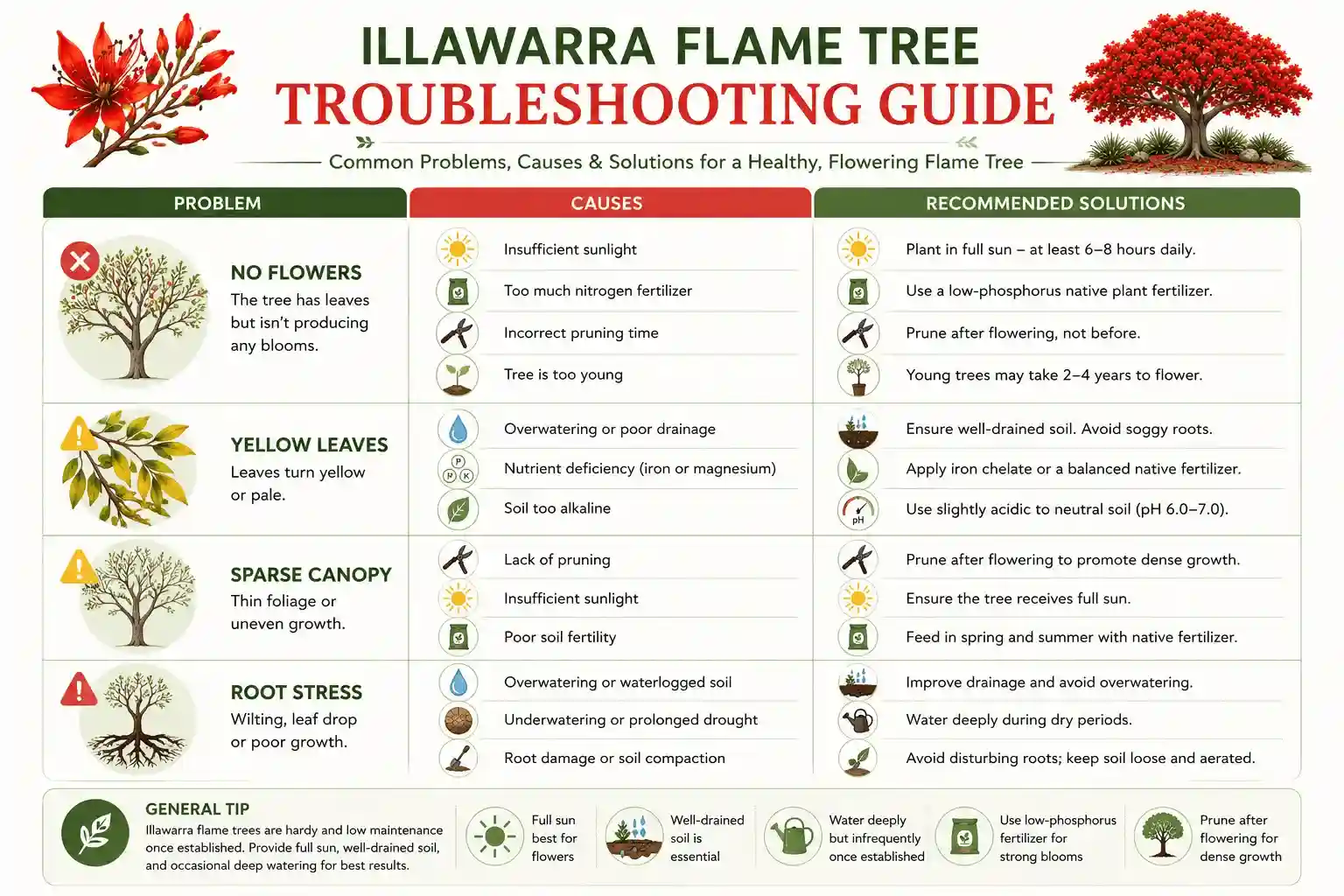
The most common reason for poor flowering is tree immaturity. Lack of sunlight and excessive fertilization can also reduce bloom production.
Yellowing Leaves and Poor Growth
Yellow leaves often indicate drainage problems or nutrient imbalance. Overwatering commonly affects young trees.
Root and Space Problems
Illawarra flame tree pros and cons include extensive root spread in some conditions. Planting too close to structures may create future issues.
Urban planting limitations often ignored by competitors include:
- Restricted root zones
- Compacted soil
- Heat stress from pavement
- Limited canopy expansion
Pest and Disease Issues
Flame trees are generally hardy but may occasionally experience pest infestations or fungal stress.
| Problem | Possible Cause | Solution |
| No flowers | Immature tree | Allow more time |
| Yellow leaves | Overwatering | Improve drainage |
| Sparse canopy | Lack of sunlight | Increase exposure |
| Root stress | Restricted space | Relocate if possible |
Are Flame Tree Flowers Poisonous or Edible?
Toxicity and Pet Safety
Flame tree flowers poisonous concerns are relatively uncommon, but some species may cause mild irritation if consumed in large amounts.
Pet owners should monitor animals around ornamental trees because reactions can vary.
Safety precautions:
- Avoid intentional consumption
- Prevent pets from chewing fallen flowers
- Monitor children around ornamental plants
Are Flame Tree Flowers Edible?
Some people ask whether flame tree flowers edible uses exist. While certain regional traditions may involve limited use, flame tree flowers are generally grown for ornamental purposes rather than food.
Human consumption warnings:
- Do not consume unidentified flowers
- Some species may trigger allergic reactions
- Always confirm species identification first
Pros and Cons of Growing Flame Trees
Benefits of Flame Trees
Flame trees are valued for dramatic seasonal beauty and shade production.
Benefits include:
- Spectacular flowering displays
- Wildlife attraction
- Fast visual impact
- Strong ornamental value
Potential Drawbacks and Limitations
Large mature size and seasonal litter can create maintenance challenges.
| Pros | Cons |
| Spectacular flowers | Seasonal leaf drop |
| Fast visual impact | Large mature size |
| Wildlife attraction | Root spread concerns |
| Shade tree potential | Messy flowering season |
Flame Trees in Landscaping and Gardens
Best Uses in Landscaping
Flame trees are popular ornamental trees in tropical garden design and Australian native gardening projects.
They are commonly used as:
- Feature trees
- Shade trees
- Streetscape plantings
- Parkland specimens
The Australian flame tree is commonly used in modern Australian native garden layouts because of its seasonal color impact and strong canopy presence.
Suitable Garden Sizes
Because of their mature size, flame trees are best suited to medium or large landscapes.
Small urban gardens may not provide adequate root space.
Companion Plants and Tropical Themes
Flame trees combine well with:
- Tropical foliage plants
- Australian native shrubs
- Ornamental grasses
- Landscaping plants with contrasting textures
Placement ideas:
- Use as a central feature tree
- Plant away from foundations
- Pair with drought-tolerant gardens
Design considerations:
- Allow canopy expansion
- Account for seasonal leaf drop
- Avoid overhead power lines
Urban garden suitability depends on available space and root management. Flame trees are often included in larger ornamental landscape plans alongside other feature plants discussed in our Plants for Homes and Gardens Guide.
Beginner Mistakes When Growing Flame Trees
Planting Too Close to Structures
One of the most common beginner mistakes is underestimating mature root spread and canopy width.
Overwatering Young Trees
Young flame trees require moisture but not constantly wet soil. Poor drainage can damage roots quickly.
Expecting Early Flowering
Many gardeners expect flowers too early. Flame trees often require several years of maturity before blooming consistently.
Choosing the Wrong Climate
Flame trees struggle in cold climates with severe frost exposure. Selecting climate-appropriate species is essential for long-term success.
Practical advice competitors often miss includes allowing sufficient root space and avoiding compacted urban soil conditions.
Conclusion
Flame tree flowers are among the most visually striking ornamental blooms found in subtropical and tropical landscapes. The Illawarra flame tree, scientifically known as Brachychiton acerifolius, is especially valued in Australia for its brilliant red flowering canopy and seasonal beauty. Climate, sunlight, drainage, and tree maturity all influence flowering performance and long-term health. While flame trees provide impressive ornamental value, they also require proper placement and environmental conditions because of their mature size and root systems. Choosing suitable flame tree varieties based on available space, local climate, and landscaping goals helps ensure healthier growth and stronger seasonal flowering.
FAQs
What is the scientific name of the Illawarra flame tree?
The scientific name of the Illawarra flame tree is Brachychiton acerifolius. It is a native Australian ornamental tree known for bright red flowers.
When do flame trees flower in Australia?
Flame trees typically flower from late spring to summer in Australia, although timing may vary depending on regional climate conditions.
How long does it take for a flame tree to flower?
A flame tree grown from seed may take 5–8 years or longer before flowering. Nursery-grown trees may bloom sooner if planted at a mature stage.
Are flame tree flowers poisonous to pets or humans?
Flame tree flowers are not widely considered highly toxic, but some species may cause irritation if consumed. Pets and children should avoid eating fallen flowers.
Why is my flame tree not flowering?
Common causes include insufficient sunlight, immature age, poor drainage, or unsuitable climate conditions.
What do Australian flame tree leaves look like?
Australian flame tree leaves are usually green, glossy, and lobed. Mature leaves often resemble maple-style foliage.
Can flame trees grow in Perth conditions?
Yes, flame trees can grow in Perth conditions if they receive adequate sunlight, drainage, and protection from environmental stress.
What is the difference between an Illawarra flame tree and a Chinese flame tree?
The Illawarra flame tree produces red flowers and has lobed leaves, while the Chinese flame tree usually produces yellow or orange flowers with compound leaves.
Are flame tree flowers edible?
Flame tree flowers are generally ornamental and not commonly consumed. Some species may cause allergic reactions if eaten.
Where do flame trees grow naturally?
Flame trees naturally grow in warm subtropical and tropical regions, especially eastern Australia for the Illawarra flame tree.