Introduction
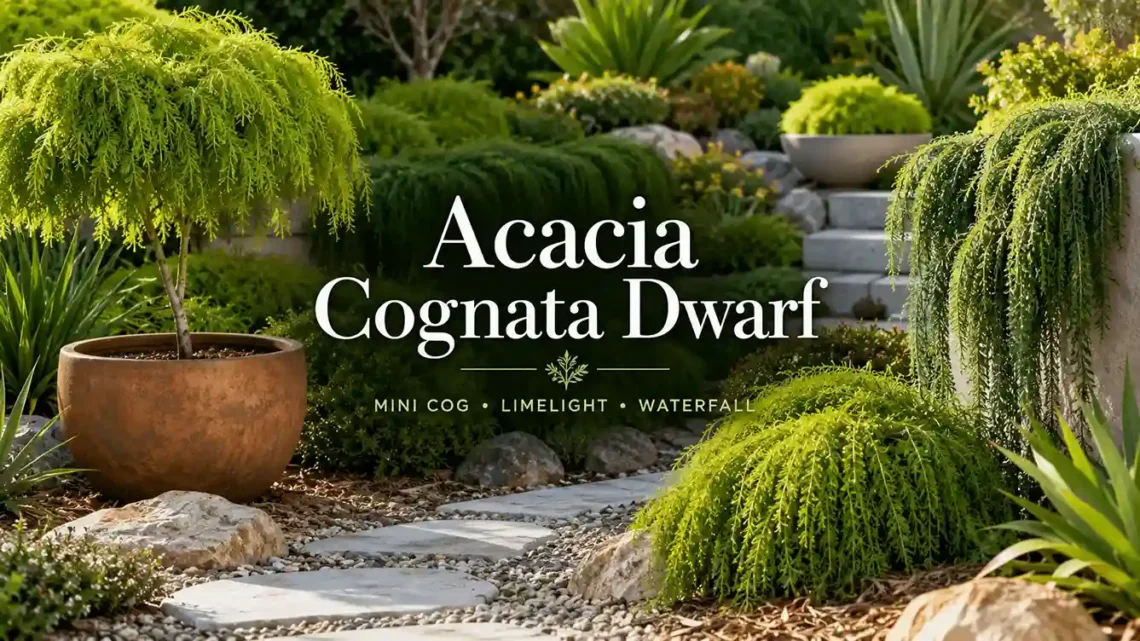
Acacia cognata dwarf is a compact ornamental Australian native shrub valued for its soft weeping foliage, evergreen appearance, and low-maintenance growth habit. These dwarf river wattle cultivars are widely used in modern landscaping because they provide texture, movement, and drought tolerance without requiring large garden spaces. Popular forms such as dwarf acacia limelight, acacia cognata mini cog, Waterfall, Green Mist, and Bower Beauty are commonly planted in borders, decorative pots, native gardens, and feature landscapes. Their compact size and graceful cascading foliage make them suitable for small residential gardens, commercial landscapes, and low-maintenance outdoor designs across many climate conditions in Australia and similar regions.
Quick Summary
- Acacia cognata dwarf varieties are compact weeping wattles valued for soft foliage and easy care.
- Popular cultivars include Mini Cog, Limelight, Waterfall, and Green Mist.
- Most dwarf forms grow well in pots, borders, and low-maintenance landscapes.
- Proper pruning, spacing, and drainage help prevent common growth problems.
- These Australian native shrubs are drought tolerant and highly adaptable in modern landscaping.
What Is Acacia Cognata Dwarf?
Acacia cognata dwarf refers to compact cultivated forms of Acacia cognata, an Australian native shrub commonly known as river wattle. These ornamental plants are bred for smaller mature sizes, denser foliage, and decorative weeping growth habits suitable for residential landscaping. Acacia cognata belongs to the broader Acacia genus of Australian native shrubs and trees known for drought tolerance and ornamental foliage.
The relationship between dwarf acacia, small acacia, mini cog acacia, and acacia dwarf varieties is mainly based on size and growth habit. While standard Acacia cognata can become a larger shrub, dwarf acacia cognata cultivars are specifically selected for compact growth.
Acacia cognata dwarf Australia cultivars are especially popular in drought-tolerant landscapes because they combine native adaptability with ornamental appeal. Many gardeners also refer to these plants as compact river wattles or ornamental weeping acacias due to their soft cascading foliage. The limelight river wattle is one of the best-known examples because of its bright lime-green color and dense rounded form. Acacia cognata dwarf varieties are often grouped with ornamental weeping wattles because of their cascading foliage and graceful growth habit. For broader information on similar native species, see our Weeping Wattle Guide: 8+ Essential Care & Varieties Tips.
Key Features of Dwarf Acacia Varieties
Dwarf acacia plants are known for combining ornamental texture with practical low-maintenance performance.
Key features include:
- Soft cascading foliage with a fine texture
- Evergreen growth throughout the year
- Compact mature form suitable for smaller gardens
- Strong drought tolerance once established
- Adaptability to Australian climates and poor soils
- Decorative weeping structure for feature landscaping
Landscaping appeal includes:
- Suitable for borders and edging
- Effective in rock gardens
- Attractive in containers and pots
- Useful for modern minimalist gardens
- Commonly planted in native Australian landscapes
Popular Acacia Cognata Dwarf Varieties
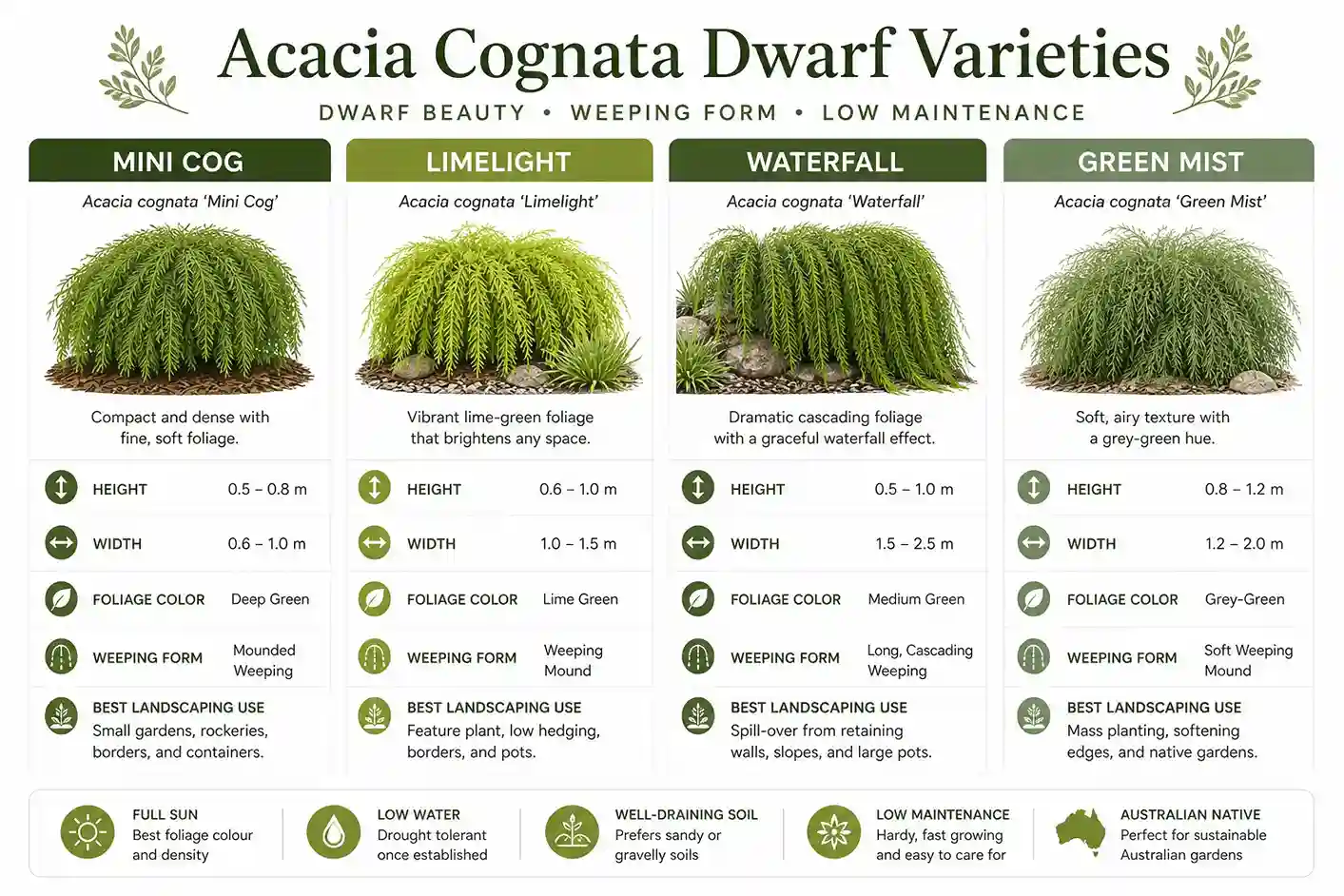
Acacia cognata dwarf varieties differ in foliage color, density, growth habit, and mature size. Some cultivars form rounded compact shrubs, while others develop dramatic weeping shapes suitable for feature planting.
The most recognized acacia cognata dwarf forms include Mini Cog, Limelight, Waterfall, Green Mist, Green Magik, and Bower Beauty. These acacia cognata varieties are commonly selected based on landscape goals, spacing needs, and visual texture preferences.
Acacia Cognata Mini Cog
Acacia Mini Cog is a compact rounded shrub with soft fine-textured foliage and a dense habit. The plant is commonly used in low borders, feature pots, and compact garden spaces.
The acacia cognata mini cog typically reaches around 1 to 1.5 meters in height and width, depending on conditions. Its naturally tidy form reduces pruning requirements compared to larger acacia varieties.
Common landscaping uses include:
- Border planting
- Native garden edging
- Decorative pots
- Small courtyards
- Low-maintenance residential gardens
The acacia cognata dwarf mini cog is popular because of its manageable size and year-round evergreen texture.
Acacia Cognata Limelight
Acacia cognata limelight is one of the most widely recognized ornamental dwarf wattles. The plant features bright lime-green foliage with dense cascading growth.
The acacia limelight plant is often selected for modern decorative gardens because its vibrant foliage contrasts well with darker shrubs and structural landscaping materials.
The dwarf acacia limelight typically grows into a rounded mound with soft weeping branches. The acacia cognata limelight dwarf river wattle is commonly used in:
- Feature planting
- Decorative containers
- Contemporary gardens
- Native landscapes
- Entryway plantings
Many gardeners choose limelight plants because they provide year-round color without flowering dependence.
Acacia Cognata Waterfall
Acacia cognata waterfall is known for its dramatic cascading structure and strong weeping form. Compared with compact rounded cultivars, waterfall acacia develops a more flowing appearance.
The weeping acacia waterfall is often trained into standard forms, creating elegant waterfall tree specimens for feature landscaping.
Popular applications include:
- Feature garden focal points
- Accent planting near pathways
- Decorative standard tree forms
- Architectural landscape designs
The acacia waterfall standard form is especially popular in formal gardens because it creates height while maintaining soft foliage movement.
Green Mist and Green Magik Varieties
Acacia green mist and acacia cognata green magik are valued for dense foliage and ornamental texture.
Green Mist generally has a softer, more open appearance, while Green Magik often develops a fuller and denser growth habit.
These varieties are commonly used for:
- Layered native plantings
- Mass landscape planting
- Foliage contrast gardens
- Low-maintenance commercial landscapes
The green mist plant performs well in sunny locations with well-draining soil.
Bower Beauty and Other Decorative Forms
Acacia cognata dwarf bower beauty is a decorative ornamental form with soft cascading growth and moderate spread.
Different decorative cultivars vary in:
- Mature height
- Width and spread
- Degree of weeping growth
- Pot suitability
- Foliage density
Some compact forms are ideal for containers, while others work best as spreading landscape fillers.
Acacia Cognata Dwarf Size, Height, and Growth Rate
Acacia cognata dwarf size varies depending on cultivar selection, climate, soil quality, and pruning practices.
Most compact varieties remain significantly smaller than standard river wattles, making them suitable for residential gardens and restricted planting areas.
Acacia cognata dwarf height generally ranges from 60 centimeters to 2 meters.
Typical Mature Height and Width
Typical dimensions include:
- Mini Cog: 1–1.5 meters high and wide
- Limelight: 1–1.2 meters high and wide
- Waterfall: 1.5–2 meters high with wider cascading spread
- Standard tree forms: trunk height varies, canopy often 1–2 meters wide
Acacia cognata size depends heavily on sunlight exposure, drainage, and pruning frequency.
Growth Rate and Environmental Factors
Most dwarf acacia varieties grow at a moderate rate under suitable conditions.
Environmental factors affecting growth include:
- Full sun exposure encourages denser growth
- Poor drainage slows development
- Sandy soils improve root health
- Consistent watering supports establishment
- Extreme frost may reduce seasonal growth
Seasonal growth is usually strongest during warmer months in spring and summer.
Acacia Cognata Mini Cog vs Limelight
Acacia cognata mini cog vs limelight comparisons are common because both cultivars are compact ornamental forms suited for small gardens and decorative landscapes.
Differences in Appearance and Shape
Mini Cog typically has a finer textured and slightly darker green appearance.
Limelight develops brighter lime-green foliage with a fuller cascading shape.
Comparison points include:
- Limelight has brighter foliage color
- Mini Cog often appears more compact
- Limelight develops denser mounding growth
- Waterfall forms show stronger weeping habits than both
Best Uses for Each Variety
Mini Cog is often preferred for:
- Borders
- Tight planting spaces
- Structured native gardens
Limelight is commonly used for:
- Decorative pots
- Feature planting
- Accent landscaping
- Contemporary garden designs
Waterfall and Limelight cultivars are also popular choices for compact ornamental focal points featured in our 7+ Smart Small Feature Trees in Australia Guide.
Table: Mini Cog vs Limelight Comparison
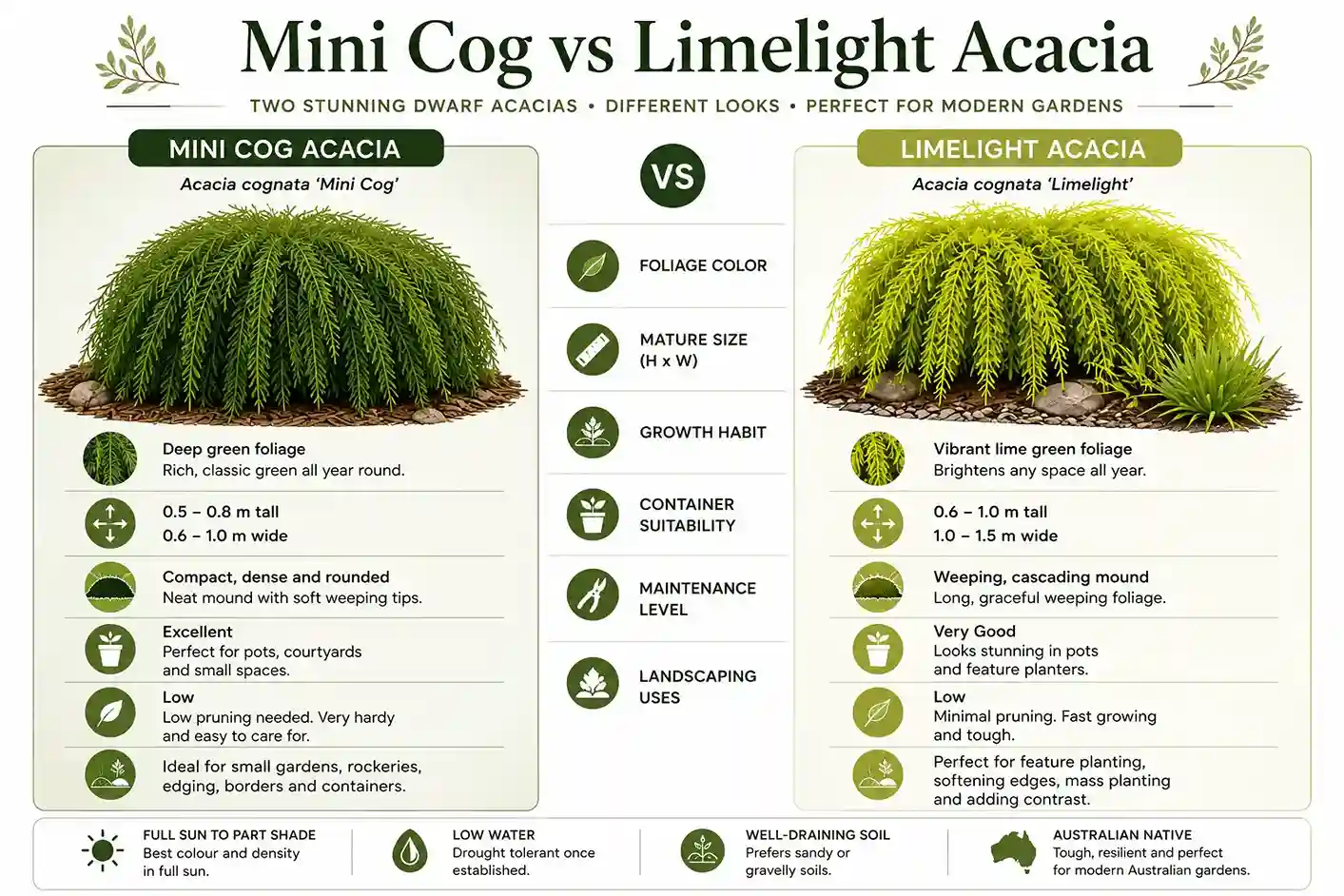
| Feature | Mini Cog | Limelight |
| Height | 1–1.5 m | 1–1.2 m |
| Width | 1–1.5 m | 1–1.2 m |
| Foliage Color | Medium green | Bright lime green |
| Growth Habit | Rounded compact | Dense cascading mound |
| Maintenance Level | Low | Low |
| Container Suitability | Very good | Excellent |
How to Care for Acacia Cognata Dwarf Plants
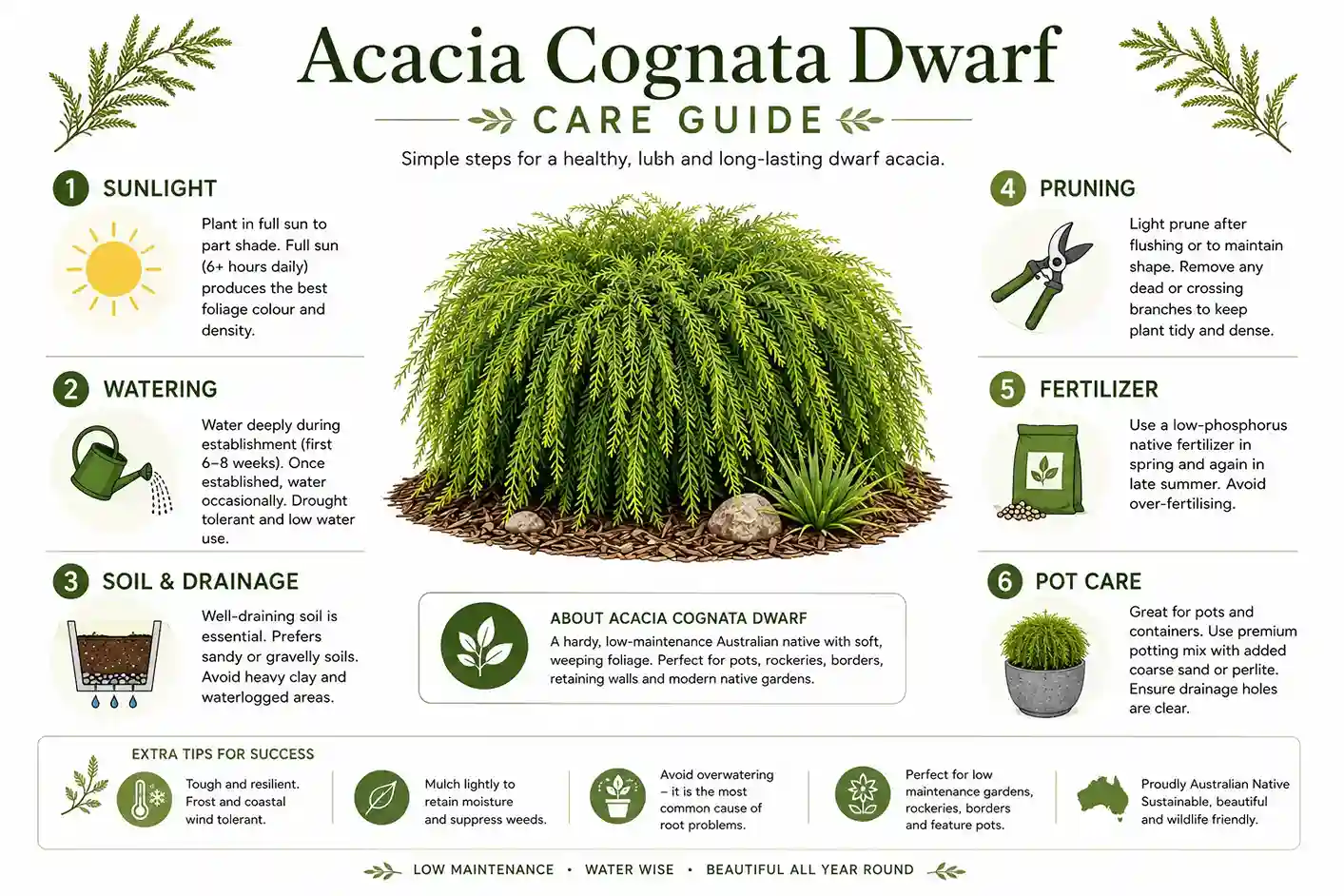
Acacia cognata dwarf plants require full sun, well-draining soil, moderate watering during establishment, and occasional pruning to maintain healthy compact growth.
Acacia limelight care is generally simple because the plant is drought tolerant after establishment.
Light and Soil Requirements
Most varieties grow best in:
- Full sun to partial shade
- Free-draining soil
- Sandy or loamy textures
- Mild to warm climates
Heavy clay soils can increase root rot risk.
Watering and Fertilizing
Care recommendations include:
- Water young plants regularly during establishment
- Reduce watering once plants mature
- Avoid constantly wet soil
- Apply slow-release native plant fertilizer in spring
- Prevent overwatering during cooler months
Established plants are usually drought tolerant.
Pruning and Shaping
Yes, you can prune acacia cognata to maintain compact growth and improve shape.
Pruning helps:
- Remove dead growth
- Encourage denser foliage
- Control size
- Shape weeping forms
Light pruning after active growth periods is generally recommended.
Growing Acacia Limelight in Pots
Acacia limelight in pots performs well when containers provide adequate drainage and root space. Standard acacia forms such as limelight standard tree and acacia limelight standard are popular in decorative container gardens.
Container care tips include:
- Use premium free-draining potting mix
- Avoid waterlogged containers
- Place pots in sunny positions
- Repot if roots become crowded
The acacia limelight tree can also function as a weeping acacia shrub centerpiece in patios and courtyards. Container-grown limelight varieties also benefit from the drainage and root management strategies explained in our Proven Guide to Growing Trees in Pots: Best Tips & Trees.
Proper Spacing and Landscaping Uses
Acacia cognata dwarf spacing is important for airflow, healthy foliage development, and long-term maintenance.
Most compact forms should be spaced according to mature spread rather than current nursery size.
Best Landscaping Applications
These plants are highly versatile in landscaping.
Popular uses include:
- Border planting
- Feature planting
- Rock gardens
- Native landscapes
- Low-maintenance gardens
- Decorative mass planting
These compact river wattles work exceptionally well in drought-tolerant native landscapes and contemporary outdoor spaces featured in our Modern Australian Native Garden: 10+ Smart Design Ideas Guide.
Indoor vs Outdoor Considerations
Most acacia cognata forms perform best outdoors because they require strong sunlight and airflow.
Indoor growing may lead to:
- Sparse growth
- Reduced vigor
- Leggy stems
Container-grown plants can be relocated seasonally in cooler climates. Although most acacia cognata forms perform best outdoors, container-grown varieties can still complement patio and indoor-outdoor greenery concepts discussed in our Guide to House Plants.
Common Acacia Cognata Limelight Problems and Solutions
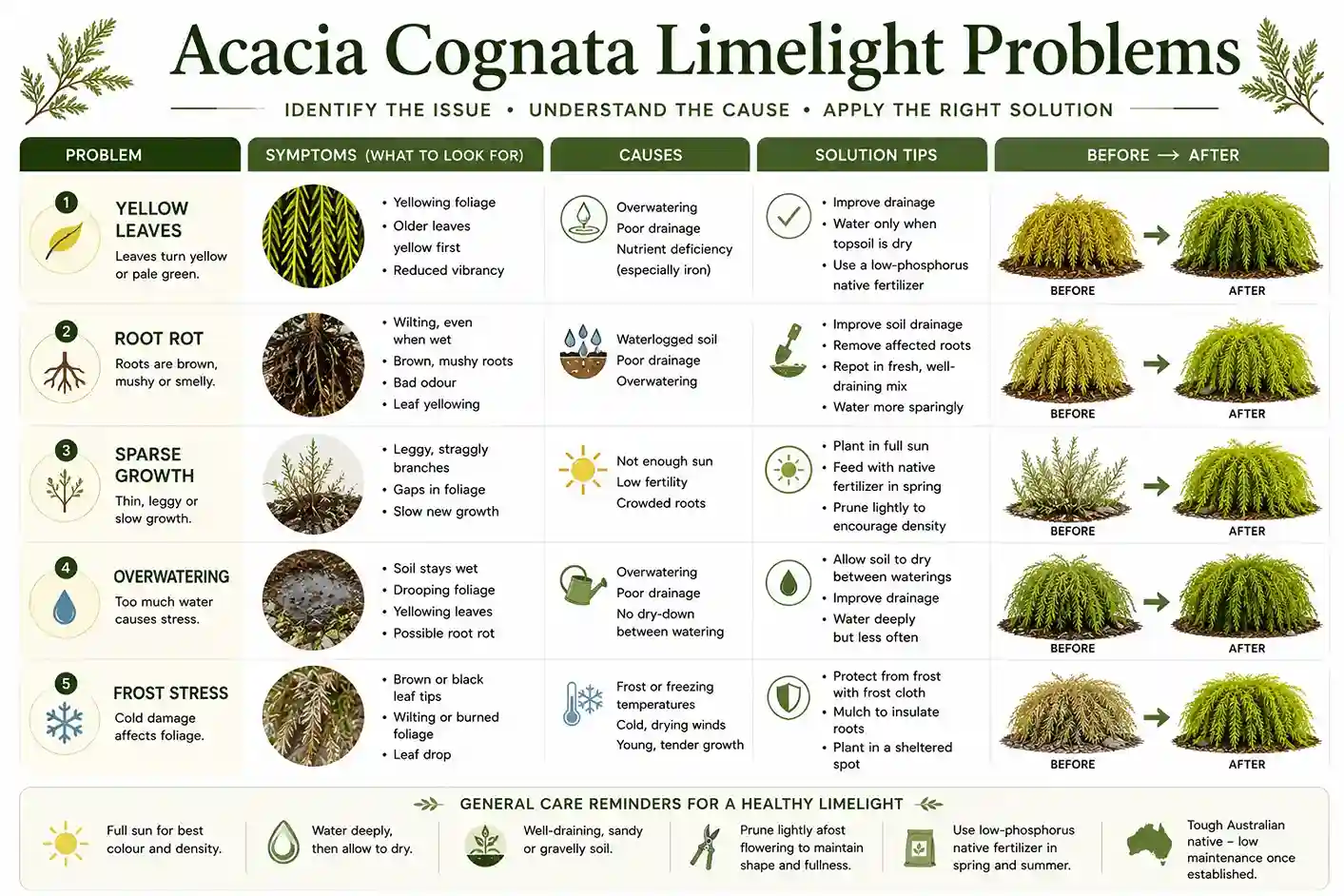
Acacia cognata limelight problems are often linked to drainage, watering habits, and insufficient sunlight.
Yellowing Leaves and Poor Growth
Yellowing leaves are commonly caused by:
- Overwatering
- Poor drainage
- Root stress
- Nutrient imbalance
Improving drainage and reducing watering frequency often resolves the issue.
Leggy or Sparse Growth
Sparse growth usually develops because of:
- Insufficient sunlight
- Overcrowding
- Lack of pruning
Plants grown in deep shade often lose their compact form.
Root Rot and Environmental Stress
Root rot develops most frequently in poorly drained soils.
Environmental stress factors include:
- Excessive heat
- Frost damage
- Waterlogged roots
Prevention strategies include:
- Improving drainage
- Using raised beds if necessary
- Avoiding excessive mulch near stems
- Planting in suitable climates
Beginner Mistakes to Avoid With Dwarf Acacia Plants
Many common problems develop from improper planting and watering practices.
Common Planting Mistakes
Frequent mistakes include:
- Incorrect spacing
- Planting in heavy clay soil
- Excess watering
- Poor sunlight placement
Beginners often overwater newly planted dwarf acacias, increasing root disease risk.
Choosing the Right Variety for Your Garden
Mini Cog suits compact structured gardens.
Limelight works well in decorative feature planting.
Waterfall varieties are best for dramatic cascading focal points.
Selecting the correct cultivar improves long-term maintenance and visual balance.
Where Dwarf Acacia Varieties Are Commonly Sold
Acacia cognata dwarf for sale listings are commonly available through Australian nurseries, landscape suppliers, and specialty native plant growers.
Cultivars such as acacia mini cog bunnings and acacia waterfall bunnings are frequently stocked during active planting seasons.
Availability in Australian Nurseries
Acacia cognata cultivars remain highly popular in Australian landscaping because they tolerate drought and adapt well to local climates.
Availability often increases during:
- Spring planting seasons
- Native plant promotions
- Landscape supply periods
Many retail nurseries carry multiple dwarf forms for residential landscaping demand.
How Acacia Cognata Fits Into Broader Landscaping and Gardening Themes
Acacia cognata fits naturally into broader landscaping trends focused on sustainability, low-maintenance gardening, and drought tolerance.
These plants are widely used in:
- Native Australian gardens
- Water-wise landscapes
- Modern minimalist designs
- Feature foliage plantings
Their evergreen cascading texture provides year-round visual interest.
Companion Plants and Design Pairings
Suitable companion plants include:
- Native grasses
- Kangaroo paws
- Lomandra
- Westringia
- Decorative succulents
Combining upright and cascading textures creates balanced layered garden designs.
Conclusion
Acacia cognata dwarf varieties are valued for their compact size, evergreen weeping foliage, and low-maintenance performance in modern landscapes. Mini Cog offers a tidy rounded form, Limelight provides bright cascading foliage, and Waterfall creates dramatic ornamental structure. Proper spacing, drainage, sunlight, and occasional pruning help maintain healthy growth and long-term visual appeal. These adaptable Australian native shrubs work especially well in compact gardens, decorative pots, borders, and drought-tolerant landscape designs.
FAQs
How big does acacia cognata dwarf grow?
Most acacia cognata dwarf varieties grow between 60 centimeters and 2 meters tall, depending on the cultivar and environmental conditions. Compact forms such as Mini Cog and Limelight generally remain around 1 to 1.5 meters in height and width.
What is the difference between Mini Cog and Limelight acacia?
Mini Cog typically has finer darker green foliage and a tighter rounded form, while Limelight features brighter lime-green foliage with denser cascading growth. Limelight is often used for feature planting and decorative contrast.
Can you prune acacia cognata to keep it compact?
Yes, acacia cognata responds well to light pruning. Occasional trimming helps maintain compact growth, improve density, and remove damaged stems without harming the plant’s natural shape.
Does acacia cognata grow well in pots?
Yes, many dwarf forms grow successfully in containers when planted in free-draining potting mix and positioned in full sun. Limelight standard forms are especially popular for decorative pots.
Why is my acacia cognata limelight turning yellow?
Yellowing foliage is commonly caused by overwatering, poor drainage, root stress, or nutrient imbalance. Improving soil drainage and reducing watering frequency usually helps restore healthy growth.
How far apart should dwarf acacia plants be spaced?
Spacing should match the mature spread of the chosen cultivar. Most dwarf forms require approximately 1 to 1.5 meters between plants to maintain airflow and healthy growth.
Is acacia cognata drought tolerant?
Yes, established acacia cognata plants are considered drought tolerant. They generally require less watering once mature, making them suitable for water-wise landscaping.
Which acacia cognata variety has the strongest weeping form?
Acacia cognata Waterfall is widely recognized for having one of the strongest and most dramatic weeping growth habits among ornamental dwarf acacia varieties.