Introduction
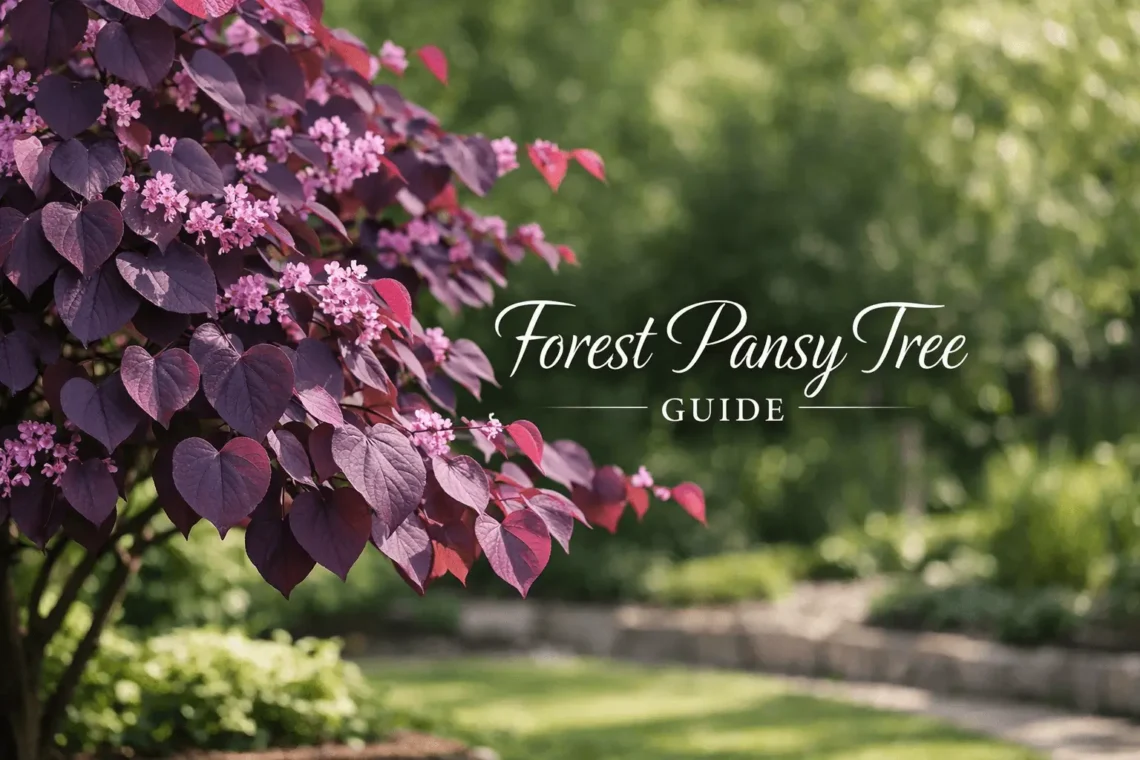
The forest pansy tree (cercis canadensis ‘forest pansy’) is a distinctive ornamental tree valued for its rich purple foliage and early spring blooms. As a cultivar of cercis canadensis (eastern redbud), it combines botanical heritage with strong visual appeal. Commonly referred to as cercis forest pansy, this tree is widely used in gardens for seasonal color contrast and compact growth. Understanding its growth habits, environmental needs, and care requirements is essential for maintaining healthy foliage and consistent flowering across different climates.
Quick Summary
- The forest pansy tree is a purple-leaf cultivar of cercis canadensis (eastern redbud).
- It features heart-shaped leaves, pink spring flowers, and moderate growth.
- Best suited to temperate climates, including Australia and the UK.
- Proper care helps prevent issues like leaf scorch and poor growth.
What Is the Forest Pansy Tree (Cercis canadensis ‘Forest Pansy’)?
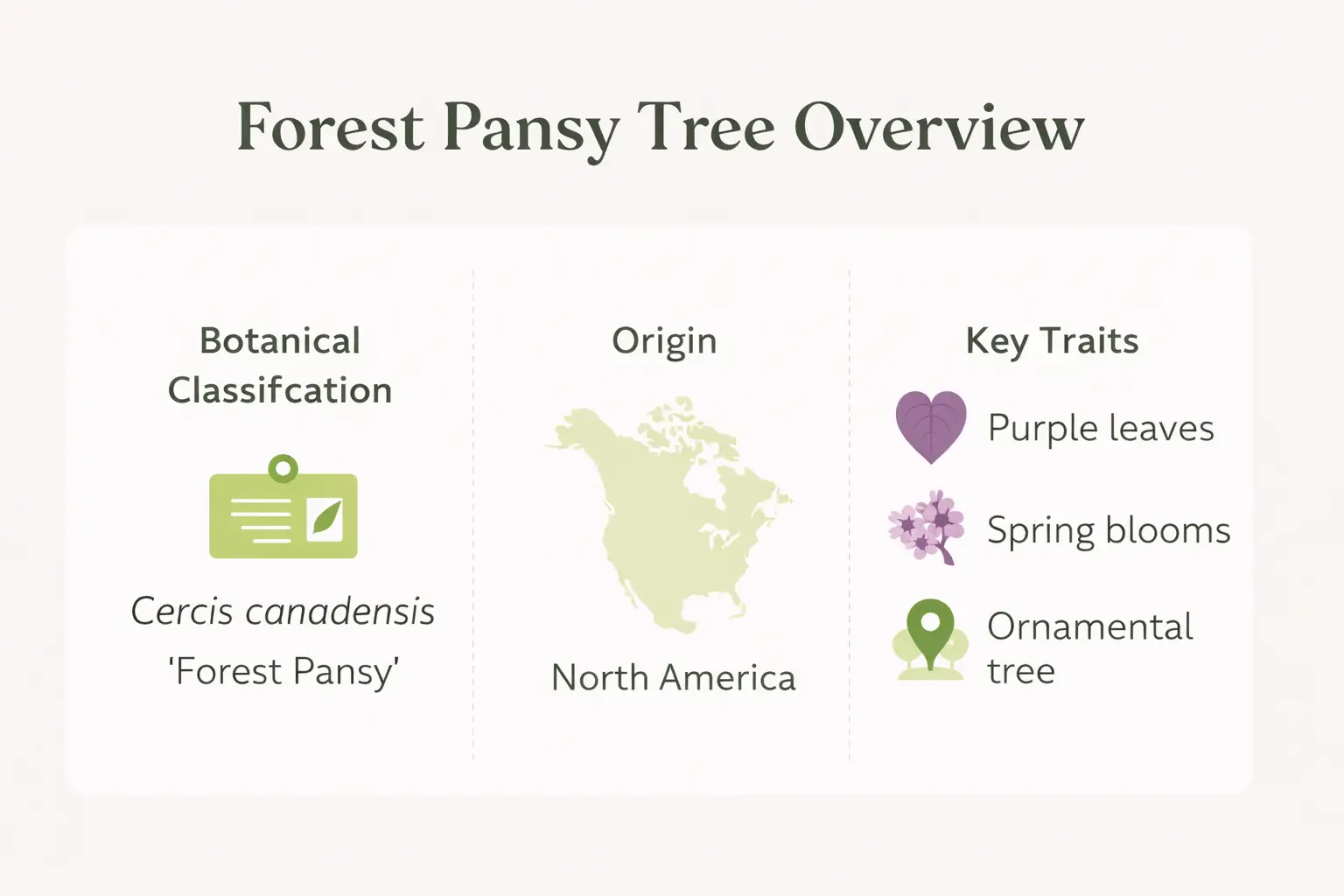
The forest pansy tree is a cultivated variety of eastern redbud (cercis canadensis) known for its ornamental purple foliage and spring blossoms. It belongs to the Fabaceae family and is widely used in landscape design.
Botanical clarification:
- Genus: Cercis
- Species: Cercis canadensis
- Cultivar: ‘Forest Pansy’
Common names include:
- Forest pansy
- Redbud forest pansy tree
- Forest pansy redbud
Originally developed from North American redbuds, this cultivar is valued for its aesthetic contrast, making it a popular choice in ornamental gardening. The forest pansy is a cultivar of eastern redbud (Cercis canadensis), a species widely studied in botany for its ornamental value and adaptability (source: Wikipedia).
Key Features and Identification
The forest pansy tree is identified by its vibrant foliage, seasonal flowers, and compact ornamental structure. Its appearance changes noticeably throughout the year.
Key characteristics:
- Heart-shaped leaves
- Deep purple to burgundy foliage (forest pansy redbud leaf)
- Smooth gray bark
- Rounded canopy, often multi-stemmed
Seasonal changes:
- Spring: pink to lavender blossoms appear before leaves
- Early summer: deep purple foliage
- Late summer: foliage may shift to greenish tones under heat
Forest Pansy Tree Size and Growth Rate
The forest pansy tree typically reaches a moderate size with steady growth, making it suitable for small to medium landscapes.
Size & Growth Overview
| Feature | Typical Range |
| Height | 4–8 meters |
| Spread | 3–6 meters |
| Growth Rate | Moderate |
| Lifespan | 20–30+ years |
Growth insights:
- Not a fast-growing tree, but consistent under proper care
- Growth depends on sunlight, soil quality, and watering
- Container growth is possible but limits size significantly
Ideal Growing Conditions and Climate Adaptation
The forest pansy tree thrives in balanced, temperate environments with adequate light and well-drained soil.
Optimal conditions:
- Light: full sun to partial shade
- Soil: well-drained, slightly acidic to neutral
- Climate: temperate regions
Regional adaptability:
- Performs well in cercis canadensis Australia, UK, and New Zealand
- Suitable for forest pansy Canberra, Adelaide, and similar climates
Key considerations:
- Prefers mild summers
- Sensitive to extreme heat and prolonged drought
- Adapts well to urban gardens
Care Guide for Healthy Growth
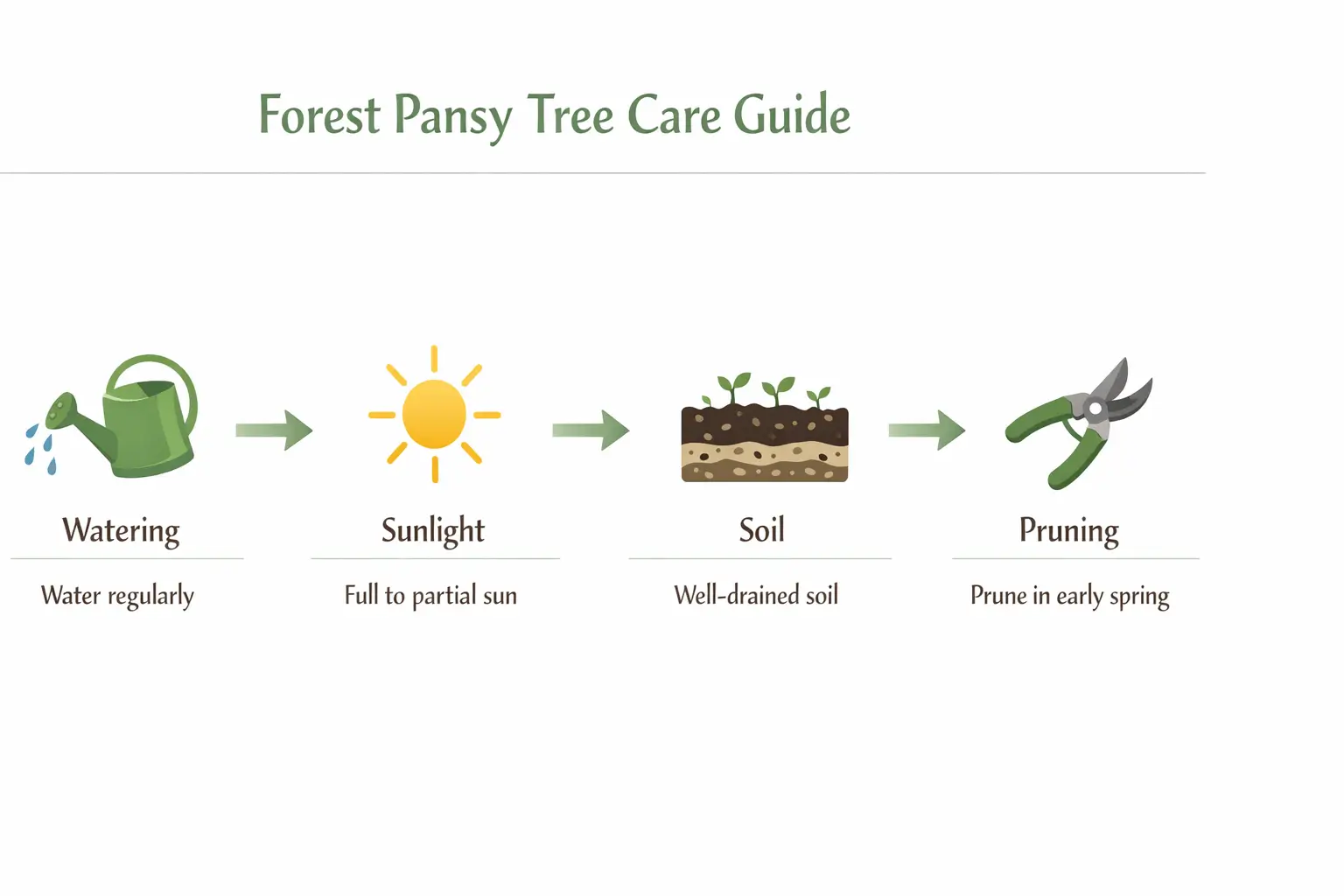
Proper care ensures stable growth, vibrant foliage, and reduced stress.
Essential care practices:
- Water deeply but infrequently
- Maintain good soil drainage
- Apply light fertilizer in spring
- Prune minimally for shape control
Additional tips:
- Use mulch to retain moisture
- Protect from strong winds
- Monitor young tree establishment closely
When shaping the tree, using the correct tools is essential—understanding the difference between pruning tools can help, as explained in this guide on Plant Shears vs Scissors.
Common Problems and How to Fix Them
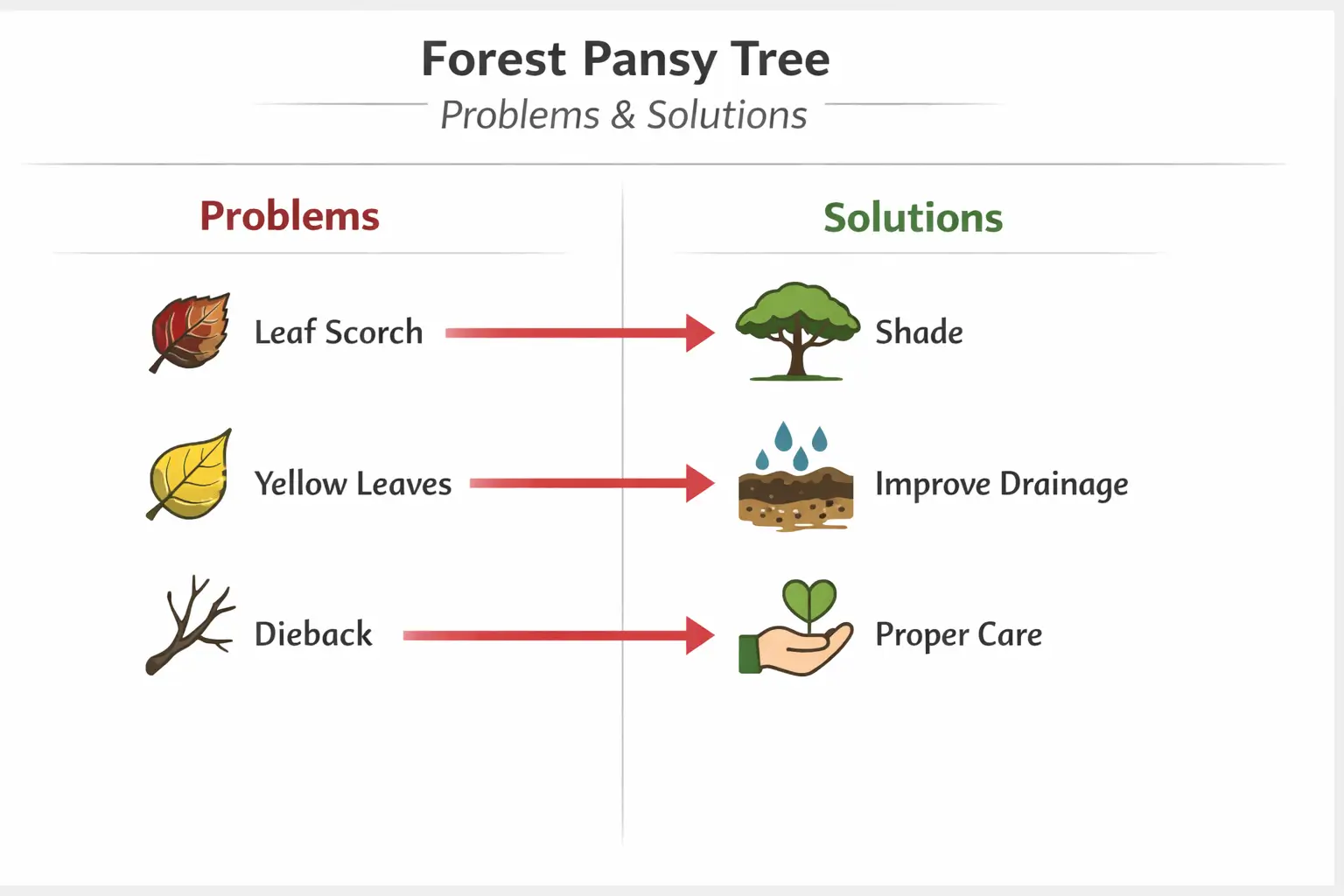
The forest pansy tree may experience stress-related issues, especially in unsuitable conditions.
Common problems and solutions:
- Leaf scorch → excessive heat → provide partial shade
- Yellow leaves → overwatering → improve drainage
- Poor growth → nutrient deficiency → apply balanced fertilizer
- Dieback → environmental stress → adjust care conditions
These issues are common in warmer climates, including forest pansy tree problems Australia, where heat stress is a major factor.
Forest Pansy in Australia and Regional Considerations
The forest pansy tree can grow successfully in Australia with proper placement and care adjustments.
Regional insights:
- Suitable for forest pansy tree Adelaide and Canberra
- Performs best in cooler regions or partial shade
- Requires protection from extreme summer heat
Key adaptations:
- Use shade positioning in hot climates
- Ensure consistent watering during dry periods
- Improve soil structure for drainage
Types and Similar Varieties (Merlot, Redbud, Dwarf Forms)
Several related varieties offer different characteristics and adaptability.
Popular types:
- Dwarf forest pansy tree (compact size)
- Weeping forest pansy tree (decorative structure)
- Cercis merlot (merlot redbud tree)
Notable differences:
- Merlot redbud has improved heat tolerance
- Dwarf forms suit smaller gardens
- Weeping forms enhance ornamental appeal
Comparison: Forest Pansy vs Other Redbud Trees
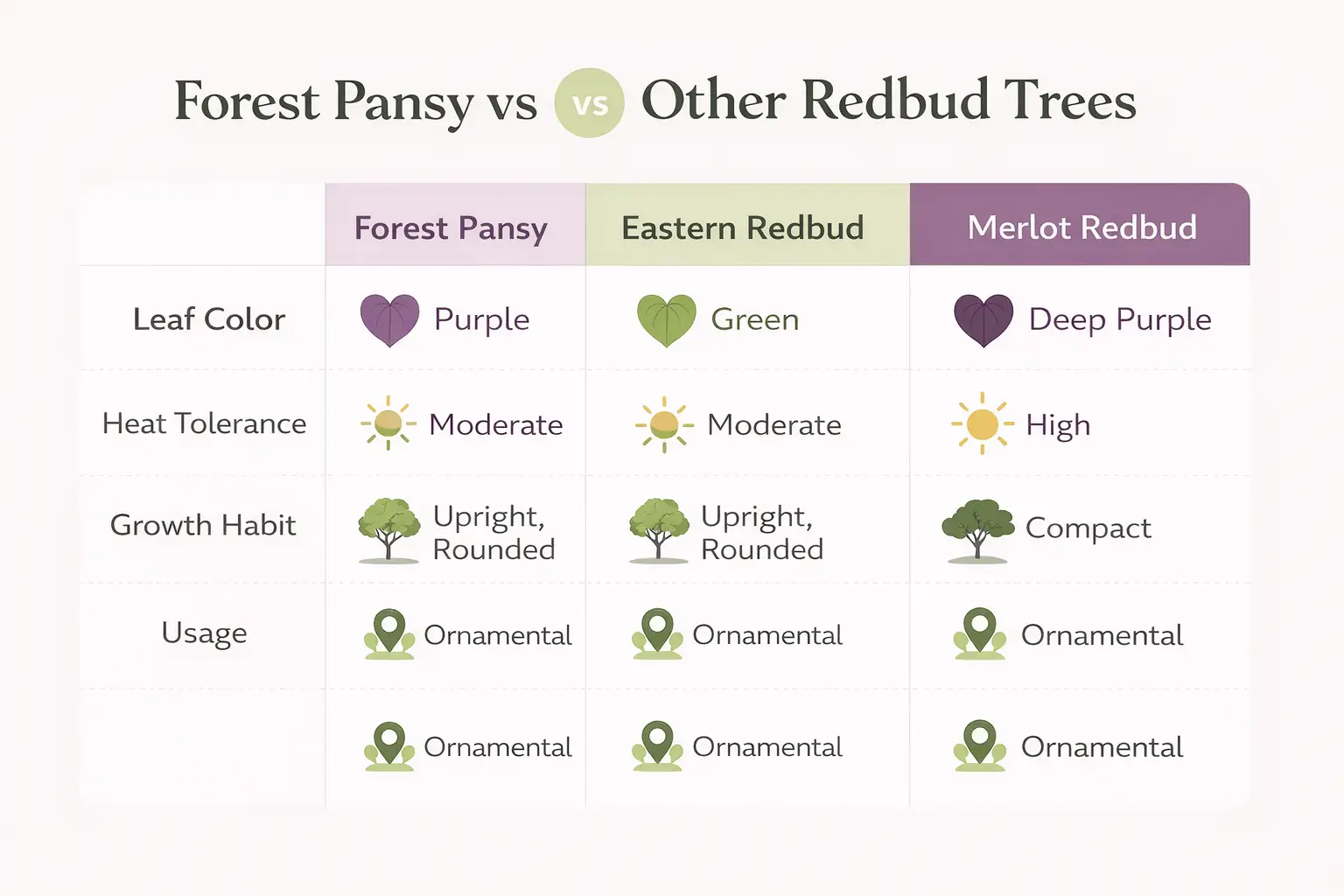
| Feature | Forest Pansy | Eastern Redbud | Merlot Redbud |
| Leaf Color | Purple | Green | Dark glossy |
| Heat Tolerance | Moderate | Moderate | Higher |
| Growth Habit | Compact | Spreading | Upright |
| Popular Use | Ornamental | Native landscapes | Modern gardens |
Similar to other ornamental tree comparisons, such as Magnolia Little Gem vs Teddy Bear, understanding differences in foliage, growth habit, and climate tolerance helps in choosing the right tree.
Landscaping Uses and Design Ideas
The forest pansy tree is widely used as a focal point in decorative landscapes.
Common uses:
- Feature tree in small gardens
- Contrast planting with green foliage plants
- Accent tree for seasonal color variation
Its compact size and vivid foliage make it suitable for patios, residential gardens, and urban landscapes. The forest pansy works exceptionally well as a feature tree, similar to other selections highlighted in accent trees that transform any space instantly.
Beginner Mistakes to Avoid
Avoiding common mistakes improves long-term plant health and performance.
Common errors:
- Planting in poorly drained soil
- Excessive direct sunlight in hot climates
- Ignoring early signs of stress
- Over-fertilizing
Practical insight: Beginners often overwater young trees, leading to root stress and yellowing leaves.
Conclusion
The forest pansy tree is a visually distinctive cultivar of cercis canadensis, valued for its purple foliage and seasonal beauty. With proper care, suitable climate conditions, and attention to common issues, it can thrive in a wide range of landscapes. Understanding its growth habits, environmental needs, and differences from related redbud varieties ensures healthy development and long-lasting ornamental appeal.
FAQs
1. What is the forest pansy tree?
The forest pansy tree is a purple-leaf cultivar of cercis canadensis, commonly known as eastern redbud, valued for ornamental landscaping.
2. How fast does a forest pansy tree grow?
It grows at a moderate rate, developing steadily each year under proper sunlight, soil, and watering conditions.
3. What problems do forest pansy trees face?
Common issues include leaf scorch, overwatering stress, nutrient deficiencies, and poor performance in extreme heat.
4. Can forest pansy trees grow in Australia?
Yes, they grow well in cooler regions like Canberra and Adelaide, provided they are protected from intense summer heat.
5. What is the difference between forest pansy and merlot redbud?
Merlot redbud has better heat tolerance and glossy leaves, while forest pansy is known for its classic deep purple foliage.