Introduction
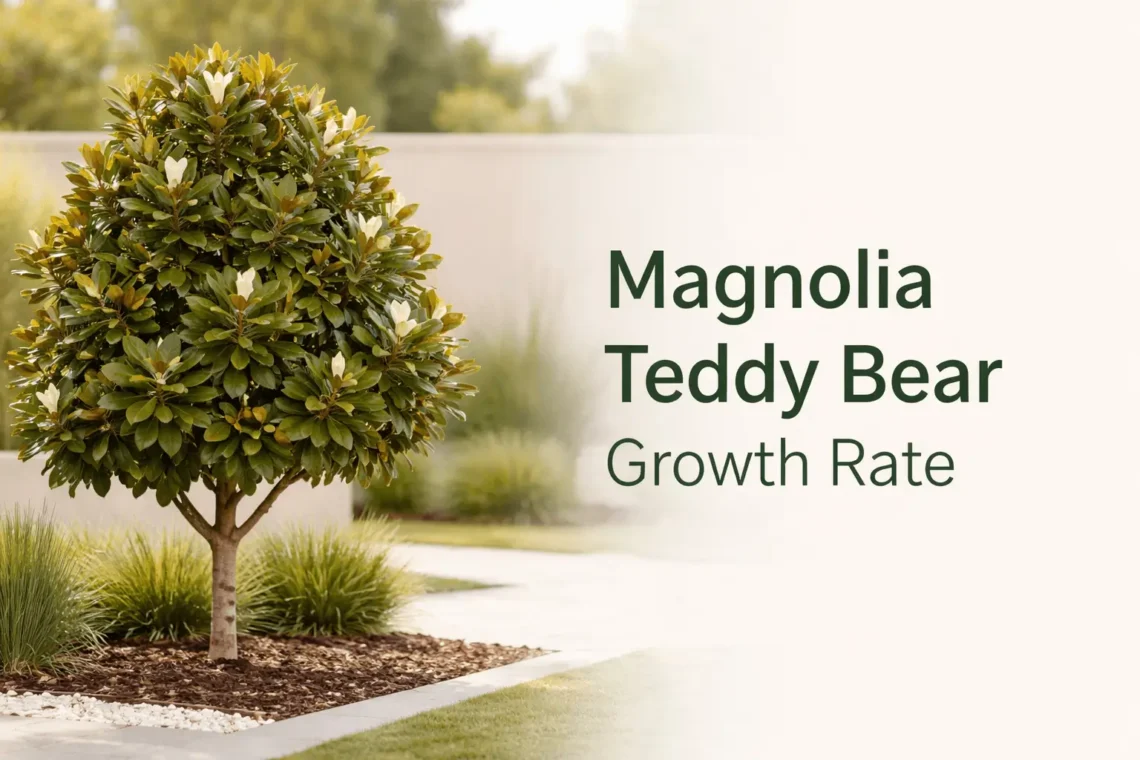
The magnolia teddy bear growth rate refers to how quickly this compact evergreen tree develops in height, width, and structure. Scientifically known as Magnolia grandiflora ‘Teddy Bear’, this tree belongs to the evergreen magnolia species (see Magnolia grandiflora on Wikipedia) and is widely used for hedging and screening.
Understanding how fast teddy bear magnolias grow helps gardeners plan spacing, maintenance schedules, and long-term landscape design. Its moderate growth rate makes it ideal for structured environments where predictable development is important.
Quick Summary
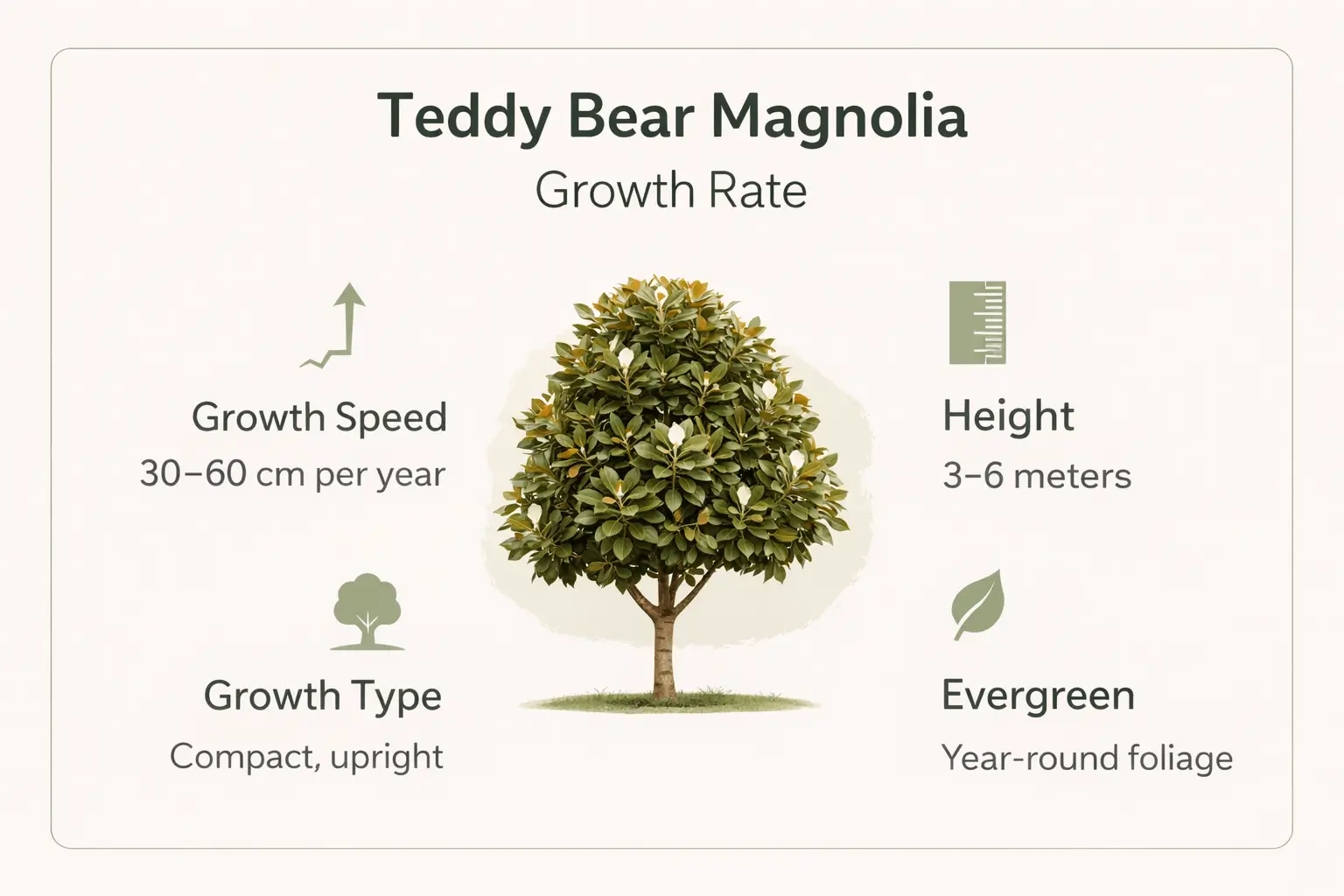
- Teddy bear magnolia growth rate is moderate (30–60 cm per year)
- Reaches 3–6 meters tall depending on conditions
- Slower in pots, faster in warm climates like Australia
- Ideal for hedges, compact gardens, and structured landscapes
What Is the Growth Rate of Magnolia Teddy Bear?
The magnolia teddy bear growth rate is considered moderate, typically increasing by 30–60 cm per year under suitable conditions. This places it between slow-growing ornamental trees and fast-growing shade trees.
Key Growth Facts
- Average yearly growth: 30–60 cm
- Growth type: Upright, dense, compact
- Evergreen structure: Maintains foliage year-round
- Growth consistency: Steady and controlled
Within the broader category of magnolia grandiflora teddy bear growth rate, this cultivar is specifically bred for compact growth. Compared to general magnolia tree growth rate patterns, it grows more predictably and remains easier to manage.
How Fast Do Teddy Bear Magnolias Grow in Different Conditions?
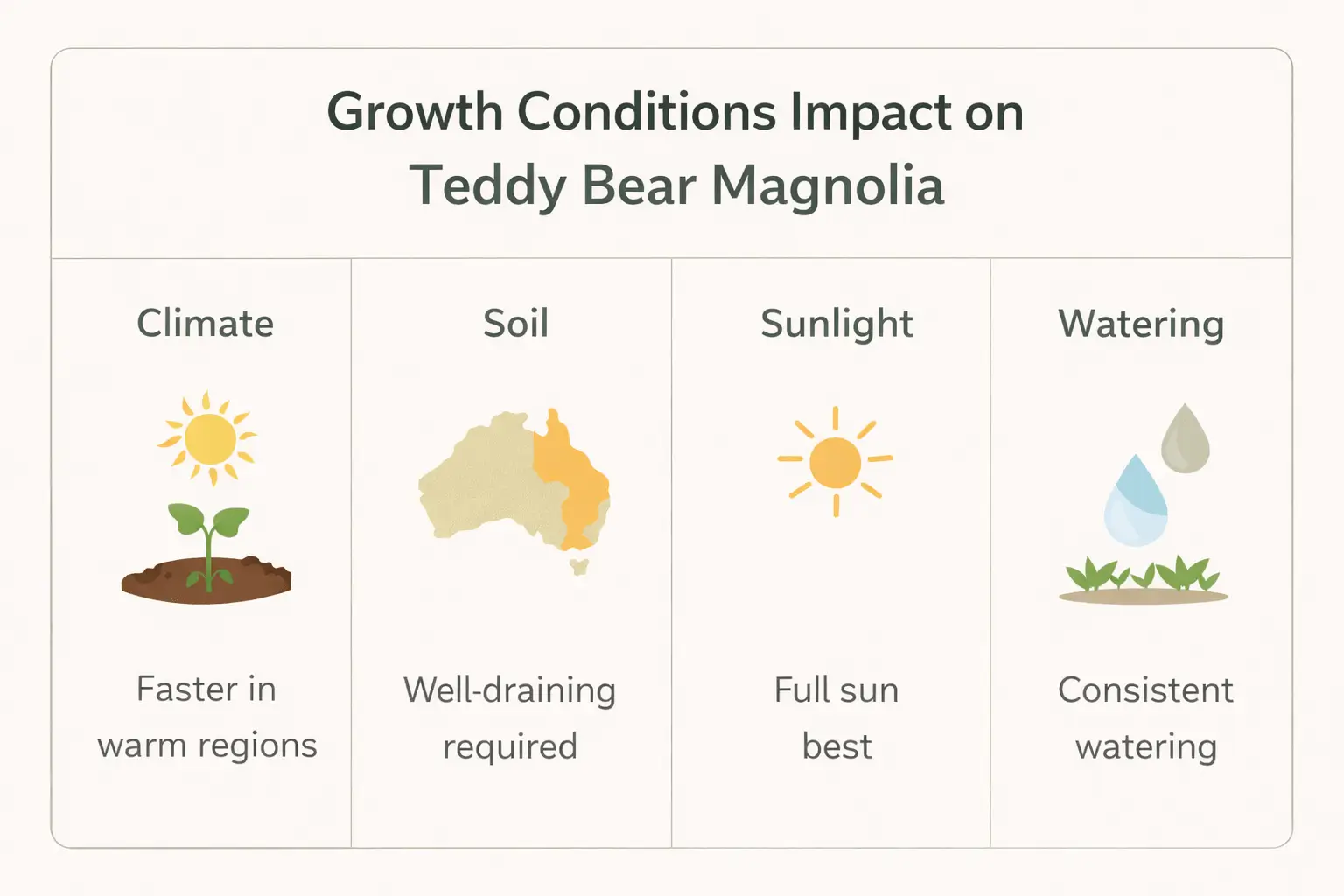
Teddy bear magnolias grow at different speeds depending on environmental conditions, but generally maintain a moderate and steady pace of development.
Growth Speed Factors
- Climate: Warmer regions promote faster growth than cooler areas like Melbourne
- Soil quality: Well-draining, nutrient-rich soil improves growth
- Sunlight exposure: Full sun leads to optimal development
- Watering consistency: Regular deep watering supports steady growth
Regional Example: Growth in Australia
In Australia, especially warmer regions, the magnolia teddy bear growth rate Australia is noticeably faster. In cooler climates such as Melbourne, growth may slow slightly but remains consistent.
This answers common queries like how fast do teddy bear magnolias grow and confirms they are moderate—not aggressive—growers.
Growth Rate in Pots vs Ground Planting
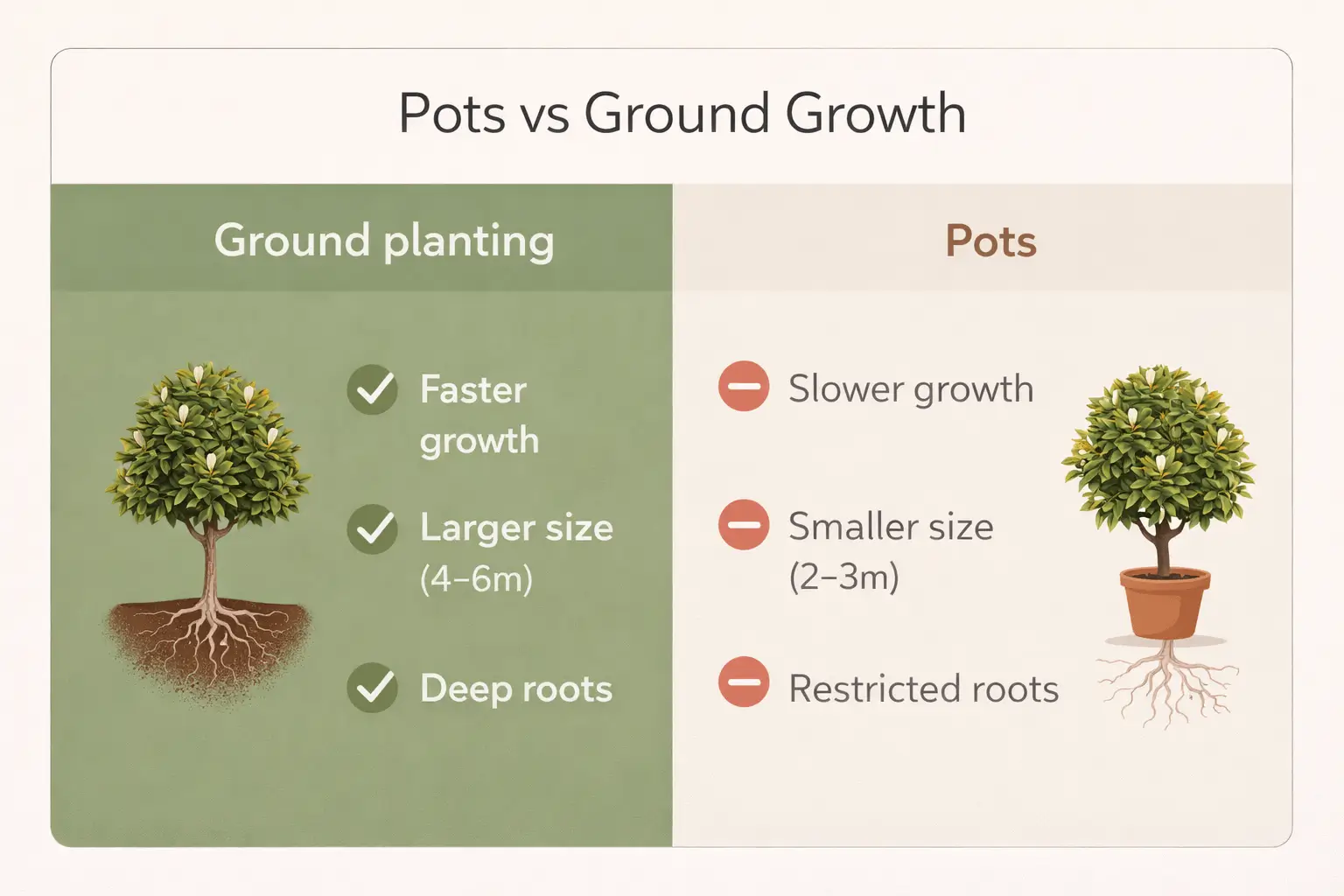
Growth speed differs significantly depending on whether the tree is planted in the ground or in a container.
Growth Differences
| Condition | Growth Speed | Final Size | Root Expansion |
| In Ground | Faster | Larger (4–6m) | Deep & wide |
| In Pots | Slower | Restricted (2–3m) | Limited |
Key Differences
- Root restriction slows growth in pots
- Soil nutrients are more stable in ground planting
- Water retention varies significantly between conditions
The magnolia teddy bear growth rate in pots is reduced due to limited root space, while in-ground planting allows full development.
How Tall Do Teddy Bear Magnolias Grow? (Mature Size Explained)
Teddy bear magnolias typically grow to a mature height of 3–6 meters with a width of 2–3 meters, depending on environmental conditions and care.
Typical Mature Size
- Height: 3–6 meters
- Width: 2–3 meters
Size Influencing Factors
- Pruning frequency
- Soil fertility
- Climate conditions
A full grown teddy bear magnolia remains compact compared to other magnolia varieties, making it suitable for smaller landscapes.
Growth Timeline: How Long Does It Take to Fully Grow?
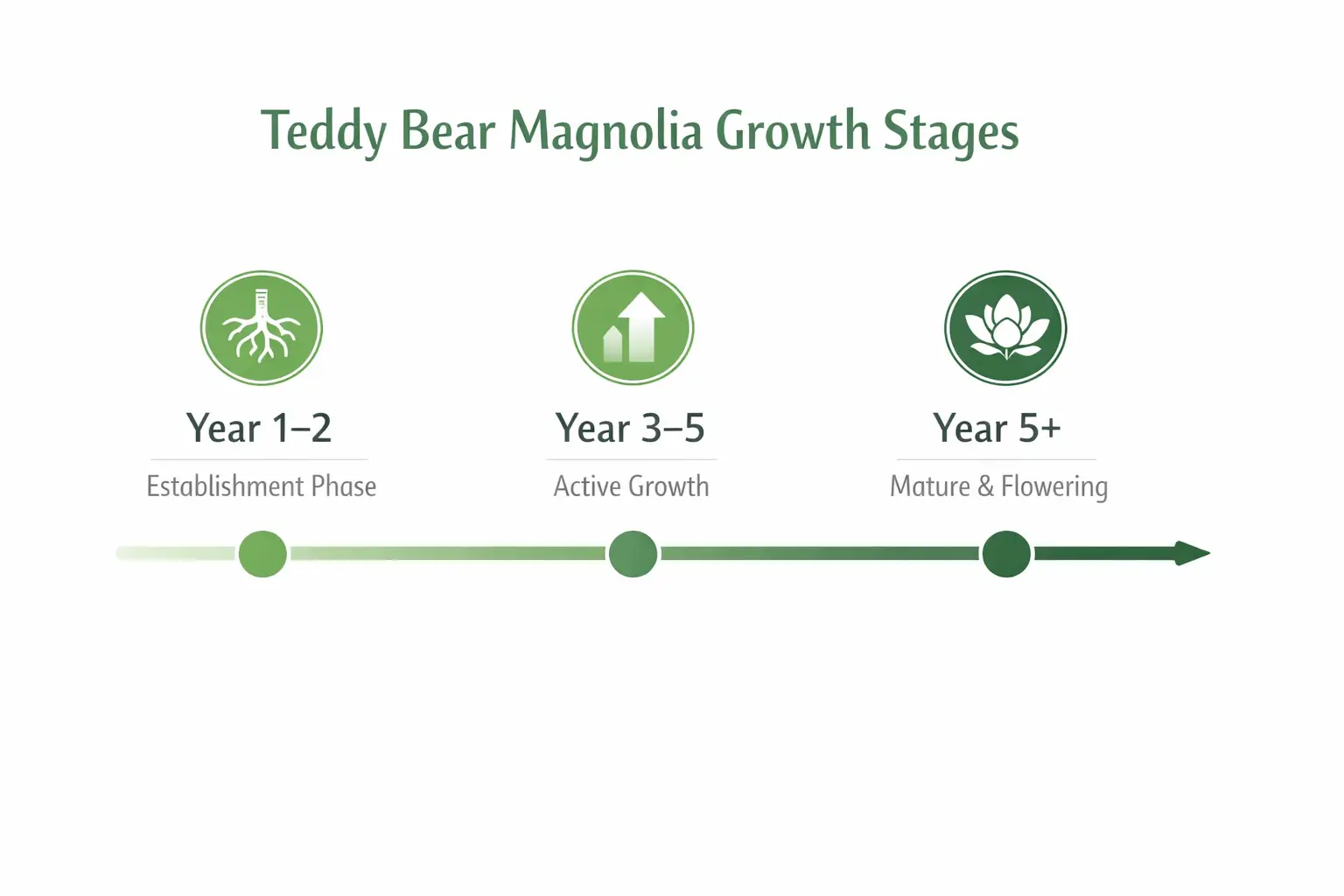
Teddy bear magnolias usually take around 5–8 years to reach near maturity under optimal conditions, with steady development across stages.
Growth Stages
- Year 1–2: Establishment phase (root development)
- Year 3–5: Moderate vertical and structural growth
- Year 5+: Mature shaping and consistent flowering
This timeline answers how long it takes for a teddy bear magnolia to grow and shows its predictable growth cycle.
Teddy Bear Magnolia vs Little Gem (Growth Rate Comparison)
Teddy Bear magnolia grows moderately, while Little Gem magnolia tends to grow slightly faster and taller under similar conditions.
Teddy Bear vs Little Gem
| Feature | Teddy Bear Magnolia | Little Gem Magnolia |
| Growth Rate | Moderate | Moderate to fast |
| Height | 3–6m | 4–8m |
| Shape | Compact | Slightly looser |
| Maintenance | Low | Moderate |
Key Differences
- Teddy Bear is denser and more compact
- Little Gem grows taller and slightly faster
- Teddy Bear is better suited for controlled hedges
This comparison helps clarify magnolia little gem vs teddy bear differences in structure and growth behavior. Teddy Bear magnolia grows moderately, while Little Gem magnolia tends to grow slightly faster and taller under similar conditions. For a deeper breakdown, see this detailed comparison of Magnolia Little Gem vs Teddy Bear: 7+ Key Differences.
Growth Rate Compared to Other Magnolias
Magnolia teddy bear growth rate is slower than some fast-growing magnolia cultivars but more manageable for structured landscapes.
Compared to other magnolia tree growth rate patterns:
- Standard magnolias may grow faster and larger
- Magnolia Little Gem growth rate is slightly quicker
- Teddy Bear offers better size control
This makes it ideal for gardeners seeking steady, predictable growth. Compared to other hedge trees, its moderate pace is more controlled—unlike faster-growing options explained in Ficus Flash Growth Rate, which are better for rapid screening.
Care Guide to Improve Growth Rate
Proper care directly influences the magnolia teddy bear growth rate and overall plant health.
Watering
- Deep watering during establishment
- Maintain consistent moisture without waterlogging
Sunlight
- Full sun exposure for best growth
Soil
- Well-draining, slightly acidic soil
Fertilization
- Balanced fertiliser during active growing season
Pruning
- Light pruning to maintain compact shape
Following these magnolia care practices improves growth consistency and plant structure.
Common Growth Problems and Solutions
Growth issues are usually caused by environmental or care-related factors and can be corrected with adjustments.
Slow Growth
- Cause: Poor soil or insufficient sunlight
- Fix: Improve soil quality and increase sun exposure
Yellow Leaves
- Cause: Overwatering or nutrient deficiency
- Fix: Adjust watering and apply nutrients
Lack of Flowering
- Cause: Immature plant or poor conditions
- Fix: Allow time and improve care conditions
These problems often affect teddy bear magnolia flowering and overall development.
Best Uses in Landscaping (Practical Application)
Teddy bear magnolia is widely used in landscaping due to its compact size and dense growth habit.
Common Uses
- Privacy hedges
- Feature trees
- Driveway lining
- Small garden focal points
Spacing Guidelines
- Hedge spacing: 1–1.5 meters apart
Its predictable growth makes it ideal for teddy bear magnolia landscaping and structured designs. For alternative hedge options with a similar structured look, explore Gardenia Magnifica Hedge, which offers a different flowering hedge style.
Beginner Mistakes to Avoid When Growing Teddy Bear Magnolia
Avoiding common mistakes ensures healthy growth and long-term success.
- Overwatering young plants
- Planting in poorly drained soil
- Expecting rapid growth
- Incorrect spacing for hedges
These issues often slow growth and reduce plant health.
Conclusion
The magnolia teddy bear growth rate is steady and manageable, making it an excellent choice for gardeners who want a structured, evergreen tree. With moderate yearly growth and predictable development, it suits hedges, small gardens, and controlled landscapes. Proper care ensures consistent growth, allowing the tree to reach its full size while maintaining a dense, attractive form. For a broader understanding of plant selection and care across indoor and outdoor spaces, explore our complete Plants for Homes and Gardens Guide.
FAQs
1. How fast do teddy bear magnolias grow each year?
They typically grow 30–60 cm per year under suitable conditions, depending on climate, soil, and care.
2. Are teddy bear magnolias fast growing?
They are considered moderate growers, not fast-growing compared to other tree species.
3. How tall does a teddy bear magnolia get?
A mature tree usually reaches 3–6 meters tall and about 2–3 meters wide.
4. Can teddy bear magnolias grow in pots?
Yes, but growth is slower and final size is smaller due to root restriction.
5. What is the difference between teddy bear and little gem magnolia growth rate?
Little Gem grows slightly faster and taller, while Teddy Bear remains more compact and dense.
6. How long does it take for a teddy bear magnolia to mature?
It generally takes 5–8 years to reach near full size under optimal growing conditions.