Introduction
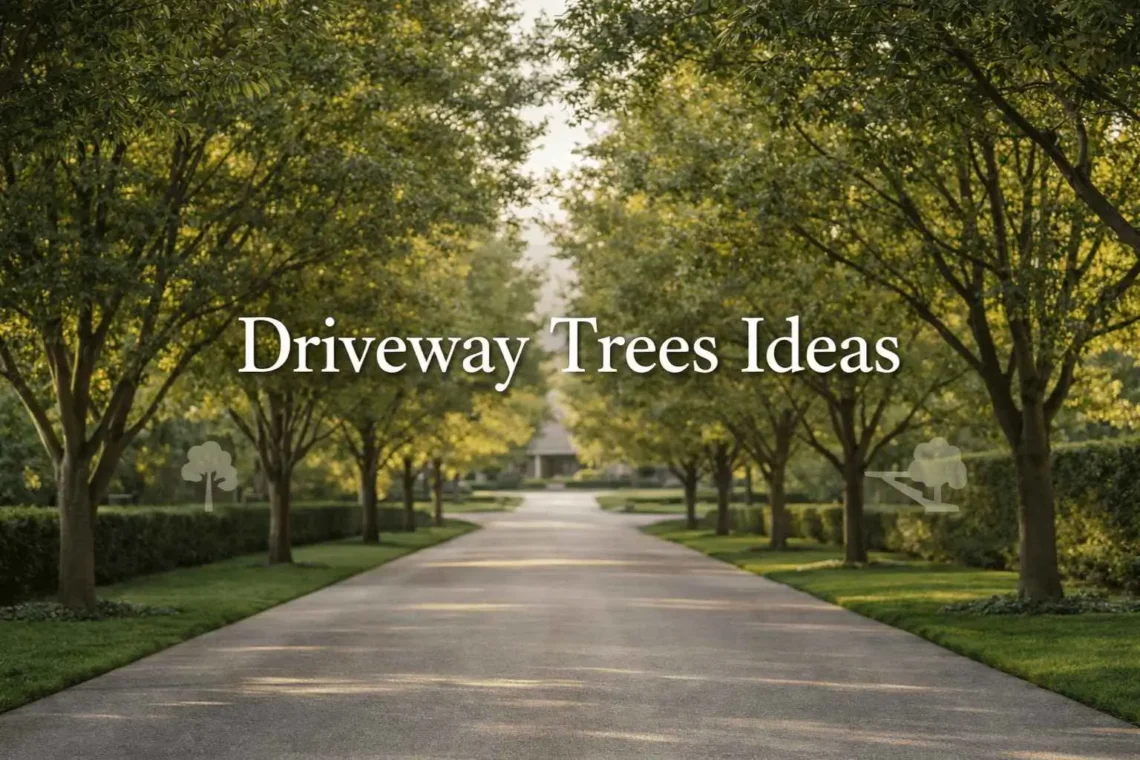
Driveway trees ideas focus on selecting and arranging trees to enhance aesthetics, provide shade, and create a structured entrance to a property. Whether designing a tree lined driveway, choosing small trees for lining driveway spaces, or planning a tree canopy driveway, the right approach depends on space, climate, and maintenance needs. Well-planned driveway trees improve curb appeal, guide visual flow, and can even influence property value when chosen and placed correctly. A balanced design ensures both visual appeal and long-term functionality.
Quick Summary
- Driveway trees create structure, shade, and visual appeal along entrances and long driveways
- Tree selection depends on size, root behavior, climate, and maintenance level
- Options range from small driveway trees to large canopy-forming avenue trees
- Proper spacing and placement prevent damage while enhancing long-term growth
What Are Driveway Trees and Why They Matter
Driveway trees are strategically planted trees along driveways designed to enhance visual structure, provide shade, and define property boundaries. A tree lined driveway creates symmetry, guides movement, and adds a sense of scale and elegance to an entrance.
From a functional perspective, driveway trees help reduce heat, control dust, and establish a clear landscape identity. Thoughtful driveway trees ideas balance aesthetics with practical concerns such as root growth and spacing, ensuring long-term performance without structural damage. This concept is closely related to traditional landscape avenues, where trees are planted in alignment to create structured and visually guided pathways.
Types of Driveway Trees Based on Design Goals
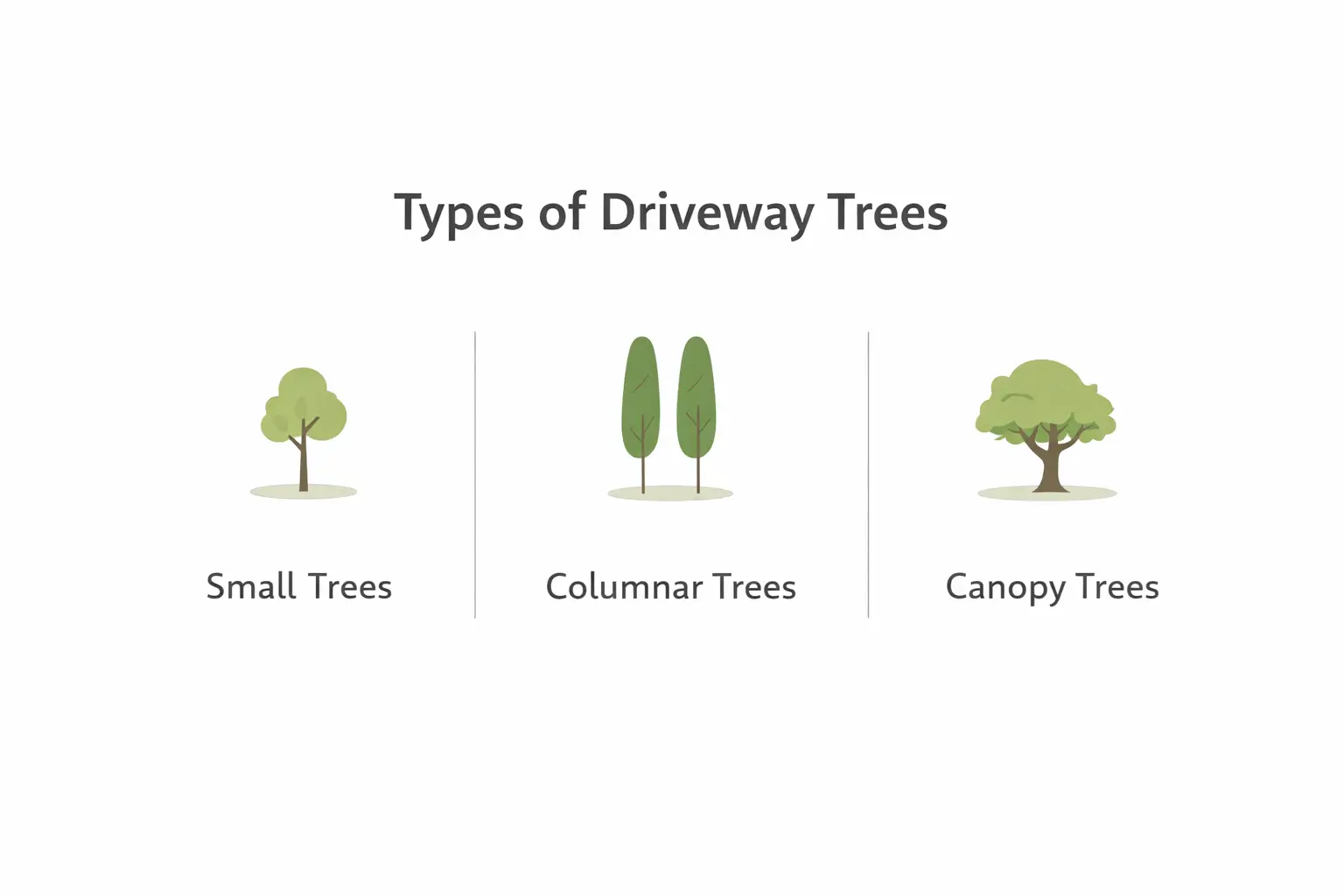
Small Trees for Lining Driveways
Small driveway trees are ideal for compact residential spaces where large roots or wide canopies are impractical. Small trees along driveway edges provide structure without overwhelming the space.
Benefits include:
- Easier maintenance and pruning
- Lower risk of root damage
- Suitable for narrow driveways
These small trees to line driveway areas work best in urban and front yard settings.
Columnar Trees for Structured Pathways
Columnar trees for driveways grow vertically with minimal spread, making them ideal for tight spaces. Their upright form creates a clean, modern look with consistent spacing.
They offer:
- Strong visual rhythm
- Efficient use of limited space
- Minimal canopy interference
This style suits contemporary landscapes and formal entrances.
Canopy Trees for Shaded Driveways
A tree canopy driveway uses large trees that spread outward to form overhead shade. Driveway canopy trees create a dramatic, tunnel-like effect that enhances both comfort and visual impact.
Benefits:
- Natural cooling
- Strong visual presence
- Ideal for long driveways
The best trees for driveway canopy designs are those with strong branches and wide crowns.
Evergreen vs Deciduous Driveway Trees
Evergreen driveway trees ideas focus on year-round greenery and privacy, while deciduous trees provide seasonal variation.
Comparison:
- Evergreen: consistent appearance, low seasonal cleanup
- Deciduous: shade in summer, sunlight in winter
Choosing between them depends on maintenance preferences and climate. For low-cleanup options, these trees that don’t drop leaves in Australia are ideal for maintaining a clean driveway year-round.
Best Trees for Driveways in Different Conditions
Best Trees for Driveways Australia
The best trees for driveways Australia must tolerate heat, drought, and varying soil conditions. Native species are often preferred for their resilience.
Key considerations:
- Drought tolerance
- Soil adaptability
- Low maintenance
Driveway trees Australia selections should prioritize long-term survival in local climates. If you’re selecting trees for visual impact and climate suitability, consider these feature trees in Brisbane for expert-approved choices.
Fast-Growing Driveway Trees
Fast growing driveway trees provide quick coverage and visual results. Fast-growing driveway trees Australia are popular for new properties.
Pros:
- Rapid shade and structure
Cons:
- Weaker wood
- Increased pruning needs
These trees require ongoing care to maintain safety and shape.
Trees for Long Driveways
The best trees for long driveway designs focus on spacing and repetition. Long driveway trees create continuity and guide the eye.
Design principles:
- Consistent spacing
- Avenue-style planting
- Balanced symmetry
Trees to line long driveway areas should be uniform in size and shape for visual harmony.
How to Choose the Best Driveway Trees
Choosing the best tree for driveway planting depends on multiple factors that affect long-term success.
Key criteria:
- Root system behavior
- Mature height and width
- Growth rate
- Maintenance requirements
Important considerations:
- Choose trees with non-invasive roots
- Match tree size to driveway width
- Consider long-term maintenance needs
- Align with climate and soil conditions
Selecting the best tree to plant next to driveway areas ensures both safety and aesthetic value.
Driveway Tree Layout Ideas and Design Styles
Symmetrical Tree-Lined Driveway
A symmetrical design places trees evenly on both sides of the driveway, creating a formal and balanced look.
Natural or Staggered Planting
This approach uses irregular spacing for a more organic appearance. It works well for rural driveway trees Australia and less formal landscapes.
Entrance-Focused Tree Design
Driveway entrance trees highlight the entry point using focal planting. Trees for driveway entrance areas create a welcoming visual frame. For more ideas on visually striking focal trees, explore these accent trees that transform any space instantly.
Tree Covered Driveway Concept
A tree covered driveway uses dense planting to form a continuous canopy. This tree canopy driveway style provides shade and a strong visual impact.
Spacing, Placement, and Safety Considerations
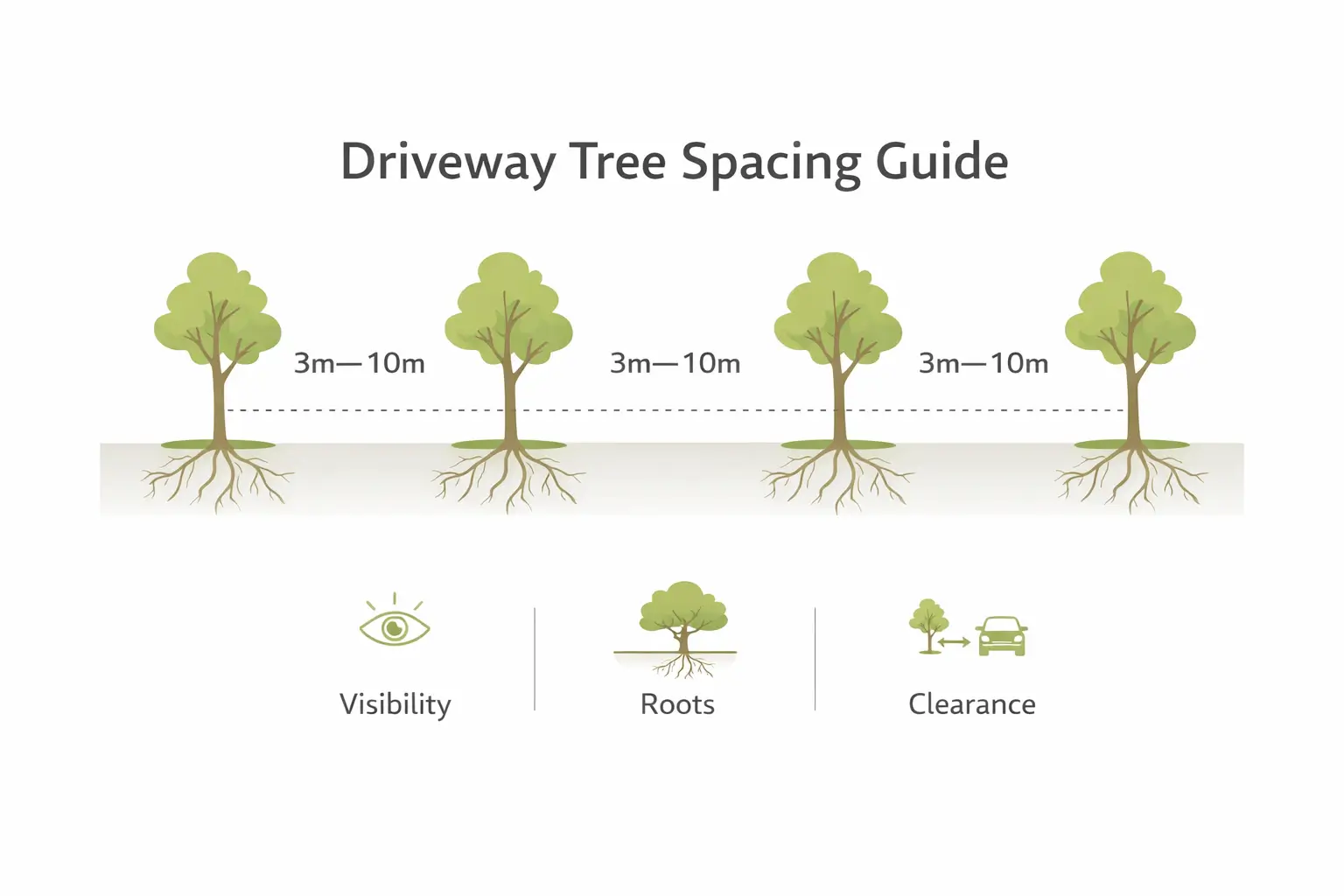
Proper placement ensures both safety and long-term growth.
Key guidelines:
- Maintain proper spacing between trees
- Keep roots away from concrete
- Avoid blocking visibility at entrances
- Consider overhead clearance
Incorrect spacing can lead to structural damage or uneven growth.
Comparison of Driveway Tree Types
| Tree Type | Best Use | Maintenance | Growth Rate | Space Needed |
| Small Trees | Narrow driveways | Low | Moderate | Minimal |
| Columnar Trees | Modern, tight layouts | Low | Moderate | Low |
| Canopy Trees | Long shaded driveways | Medium | Fast | High |
This comparison highlights the best trees for driveway scenarios based on space and design goals.
Common Mistakes When Lining a Driveway with Trees
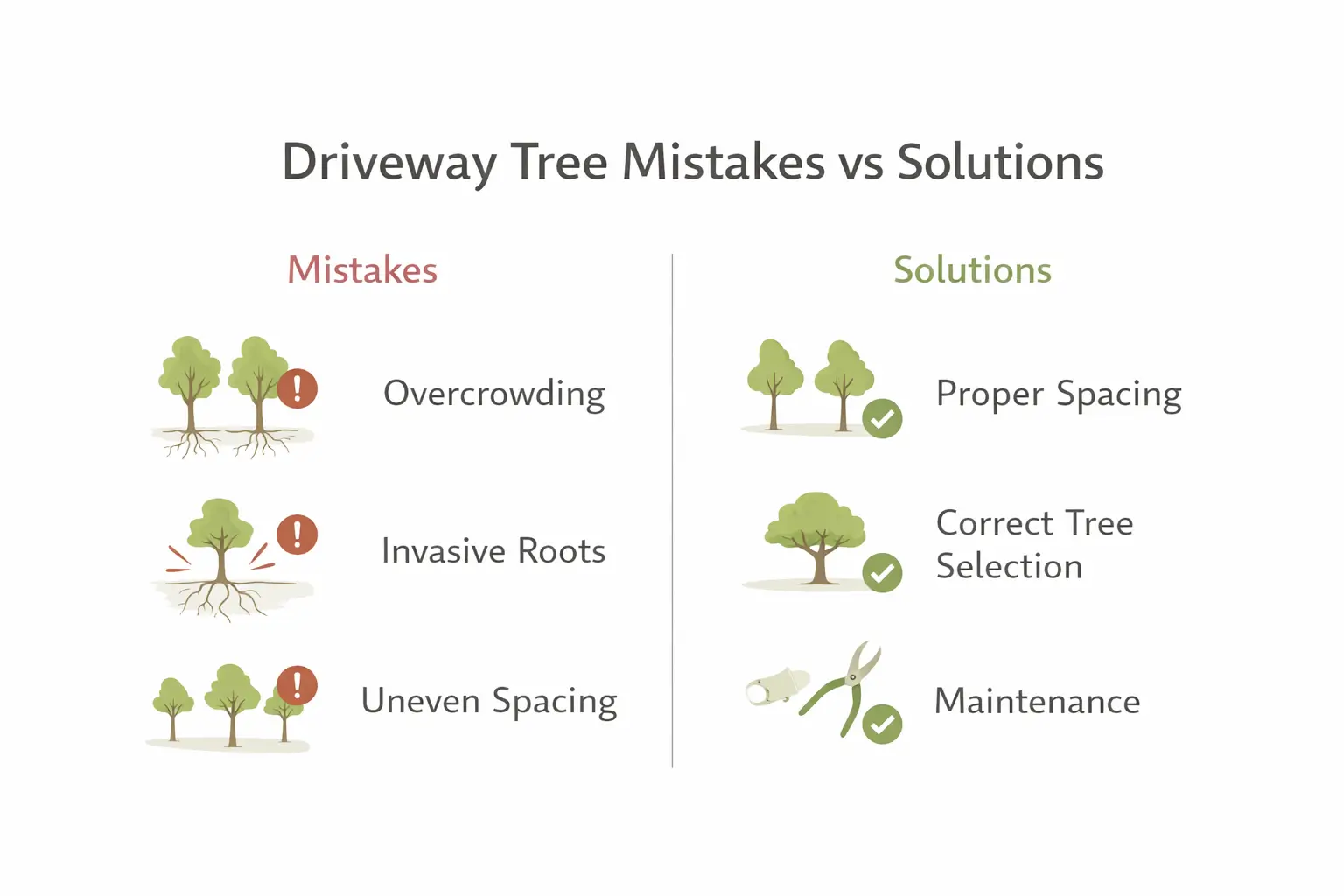
Common mistakes can reduce effectiveness and cause long-term issues.
Typical errors:
- Planting too close together
- Selecting trees unsuitable for climate
- Not planning long-term growth
- Ignoring maintenance needs
Avoiding these issues ensures a durable and visually consistent tree lined driveway.
Common Problems and Solutions
Roots Damaging Driveway
Roots damage driveways due to aggressive growth. Choosing non-invasive species and maintaining proper spacing prevents this issue.
Trees Not Growing Well
Poor growth is usually caused by unsuitable soil or incorrect species selection. Improving soil conditions and choosing the right tree resolves this problem.
Uneven Growth or Gaps
Uneven growth occurs due to inconsistent spacing or care. Replanting and proper pruning help restore uniformity.
Low-Maintenance Driveway Tree Ideas
Low maintenance driveway trees ideas focus on species that require minimal watering and pruning.
Ideal features:
- Drought tolerance
- Slow growth
- Strong structure
These trees are suitable for homeowners seeking long-term simplicity.
Driveway Trees for Different Property Types
Front Yard Driveway Trees Ideas
Driveway trees ideas for front yard spaces prioritize compact size and controlled growth. These designs must fit limited space while maintaining visual appeal.
Rural and Large Property Driveways
Rural driveway trees Australia allow for larger spacing and taller species. These designs often use avenue-style planting for expansive landscapes.
Care Guide for Driveway Trees
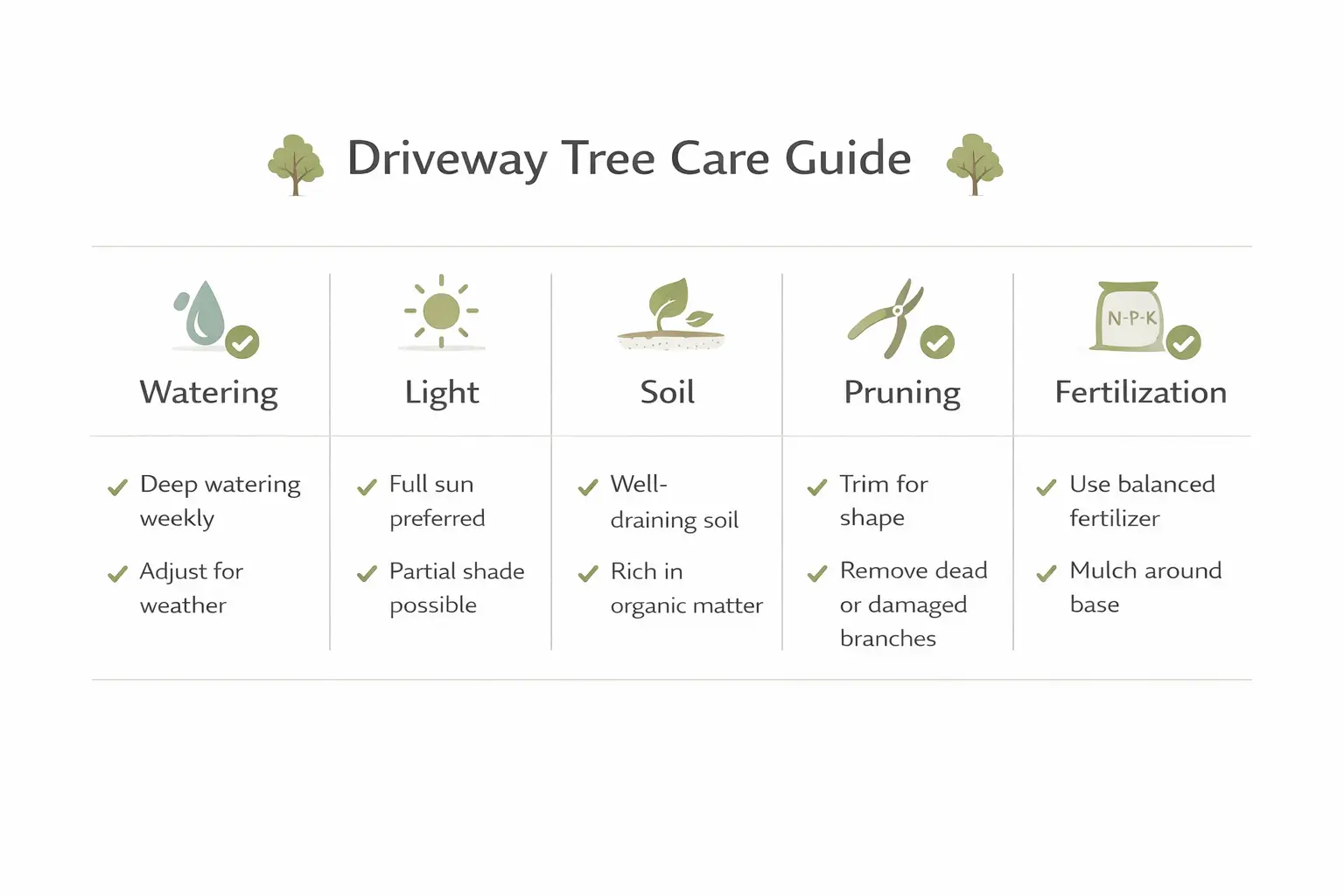
Proper care ensures healthy growth and long-term success.
Key care requirements:
- Watering: frequent during establishment, reduced over time
- Light: most trees require full sun
- Soil: well-draining soil is essential
- Fertilization: seasonal feeding improves growth
- Pruning: maintains shape and safety
- Climate: choose species suited to local conditions
Consistent care prevents common issues and supports healthy development.
Conclusion
Driveway trees ideas combine design, functionality, and long-term planning to create visually striking and practical landscapes. Whether choosing small driveway trees for compact spaces or canopy trees for a tree lined driveway, success depends on selecting the right species, spacing them correctly, and maintaining them over time. A well-designed driveway with trees enhances both aesthetics and property value.
FAQs
1. What are the best trees to line a driveway?
The best trees depend on space and climate but typically include columnar, small-rooted, or canopy-forming trees that provide structure without damaging pavement.
2. How far apart should trees be planted along a driveway?
Spacing depends on tree size but generally ranges from 3 to 10 meters to allow proper growth and canopy development.
3. What trees are best for driveway canopy shade?
Large spreading trees with strong branches are ideal for creating a tree canopy driveway.
4. Are small trees suitable for driveway edges?
Yes, small trees for lining driveway areas are ideal for narrow spaces and require less maintenance.
5. Which driveway trees grow fast?
Fast-growing driveway trees provide quick results but may require more maintenance and pruning over time.
6. What should I avoid when planting driveway trees?
Avoid trees with invasive roots, excessive height, or high maintenance needs.