Introduction
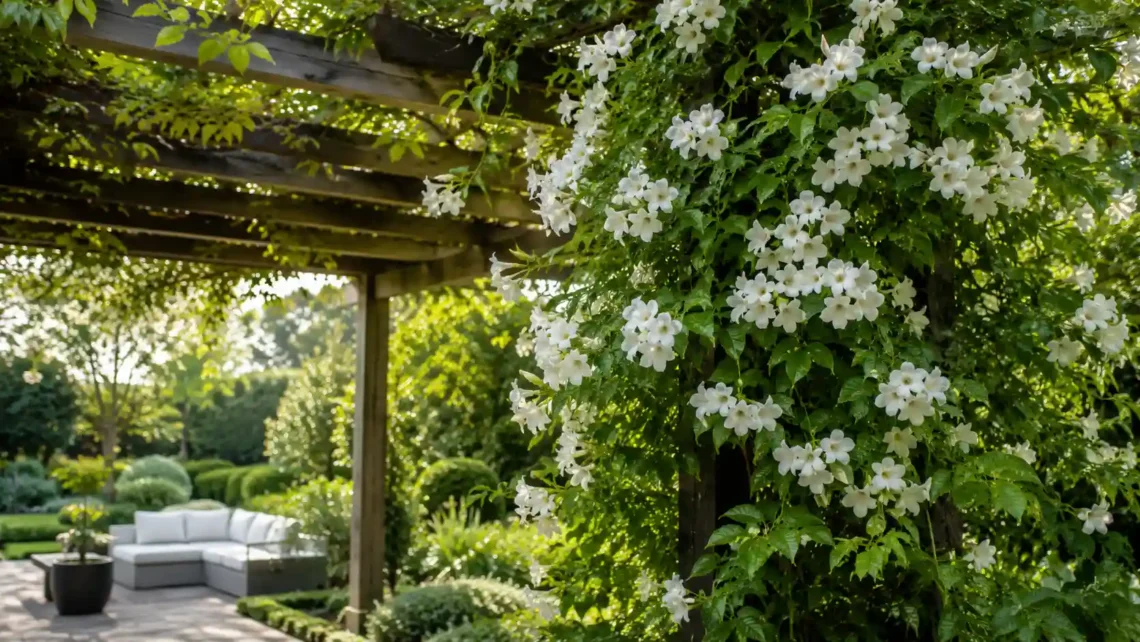
Pandorea pandorana ‘Snowbells’ is a popular ornamental climbing vine valued for its elegant white flowers, evergreen foliage, and vigorous growth habit. A cultivated variety of the Australian native wonga wonga vine, this attractive climber is widely used to cover fences, pergolas, arches, and trellises in warm-temperate and subtropical gardens. The plant produces masses of small bell-shaped blooms that create a striking display during the flowering season. Thanks to its adaptability, relatively low maintenance requirements, and ability to provide rapid coverage, Pandorea pandorana Snowbells has become a favored choice among gardeners seeking a beautiful flowering climber for landscaping and screening purposes.
It is a cultivated form of the Australian native Wonga Wonga vine (Pandorea pandorana), which is widely documented in botanical records.
Quick Summary
- Pandorea pandorana ‘Snowbells’ is a fast-growing evergreen climber with clusters of white bell-shaped flowers.
- It is a cultivar of the native Australian wonga wonga vine and belongs to the Bignoniaceae family.
- The vine can reach 4–8 metres in height when provided with suitable support.
- It grows best in full sun to part shade and well-drained soil.
- Once established, it is relatively drought-tolerant and suitable for fences, pergolas, and garden screens.
Snowbells is often included in broader Australian native garden trees and climber landscaping systems, especially in low-maintenance native garden designs.
What Is Pandorea Pandorana Snowbells?
Pandorea pandorana ‘Snowbells’ is a named cultivar of Pandorea pandorana, a flowering climbing plant within the Bignoniaceae family. It is grown primarily for its abundant clusters of white flowers and vigorous climbing habit. As part of Australia’s rich native plant ecosystem, it shares ecological value with species featured in native landscaping guides.
The common name “Snowbells” refers to the appearance of its blooms. The flowers are small, white, tubular, and bell-shaped, creating a soft cascading effect during the flowering season.
This cultivar originates from the Australian native wonga wonga vine, which is indigenous to eastern Australia. The species naturally occurs in forests and woodland environments where it climbs through surrounding vegetation.
The genus Pandorea contains several ornamental climbers valued for their flowers and adaptability. Compared with species-level plants, the ‘Snowbells’ cultivar is selected specifically for its distinctive white floral display.
Commonly associated names include:
- Snowbells plant
- Snowbell
- Snow bells
- Snow bells flowers
Pandorea Pandorana Snowbells Plant Features and Identification
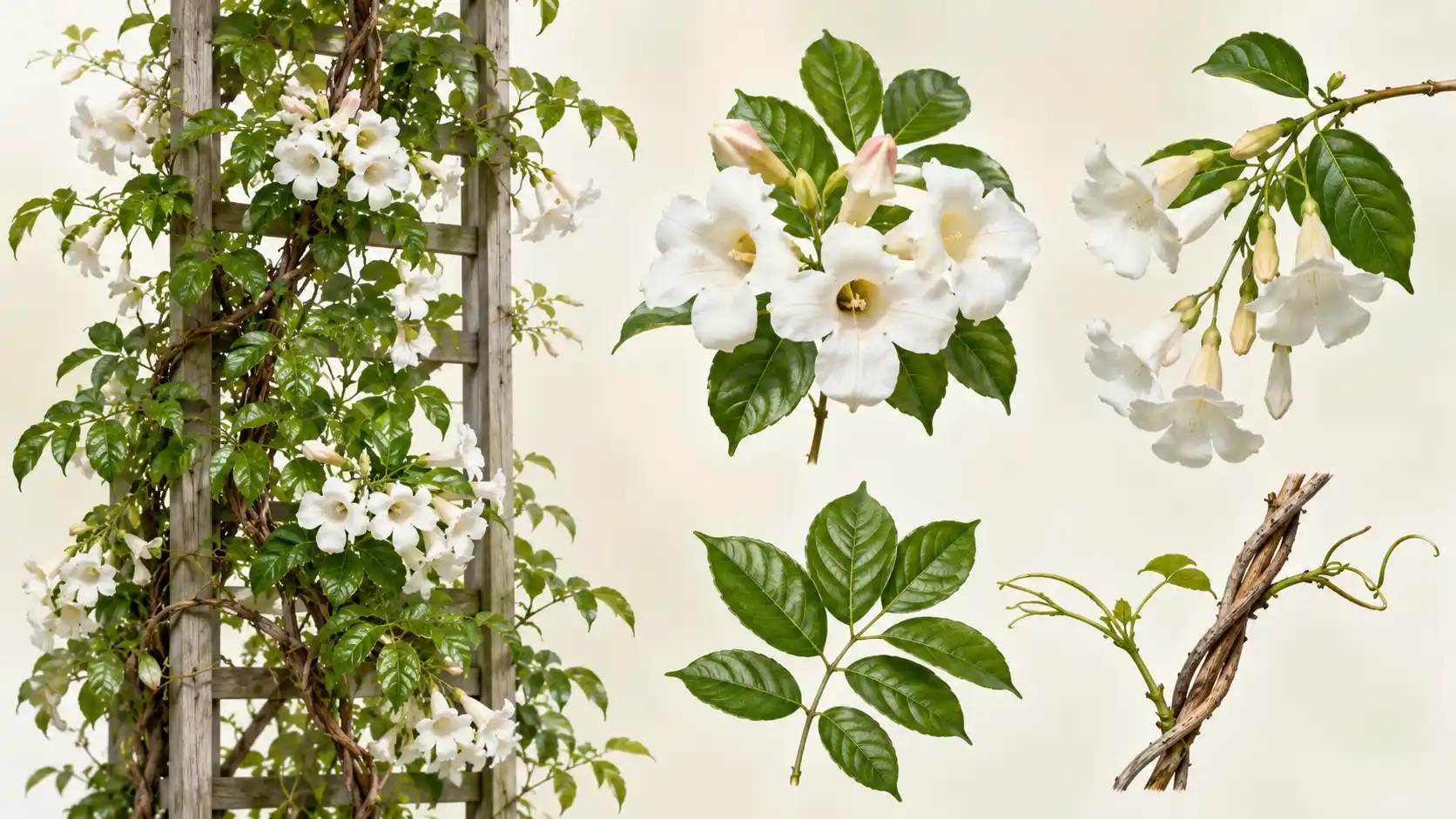
Pandorea pandorana ‘Snowbells’ is easy to identify by its evergreen foliage and masses of white blooms.
The leaves are dark green, glossy, and pinnate, creating an attractive backdrop for the flowers throughout the year.
Its flowers are small, tubular to bell-shaped, and produced in dense clusters. Flowering typically occurs during spring and early summer, when the vine becomes covered with blooms.
The plant has a woody growth habit and climbs by twining around nearby supports. Its vigorous nature allows it to quickly cover vertical structures.
Pandorea Varieties Comparison
| Feature | Pandorea pandorana Snowbells | Pandorea jasminoides (Bower Vine) | Pandorea pandorana Ruby Belle | Pandorea Lady Di |
| Flower colour | White | Pink-white | Pink-red | White-cream |
| Flower size | Small | Larger | Medium | Medium |
| Leaf type | Pinnate | Pinnate | Pinnate | Pinnate |
| Vigour | High | Moderate–High | Moderate | Moderate |
| Native to Australia | Yes | Yes | Yes | Yes |
This comparison helps distinguish Snowbells from related varieties such as Pandorea Ruby Belle, Pandorea Lady Di, Pandorea jasminoides Bower of Beauty, and Pandorea Wonga Gold.
Pandorea Pandorana Snowbells Height and Size
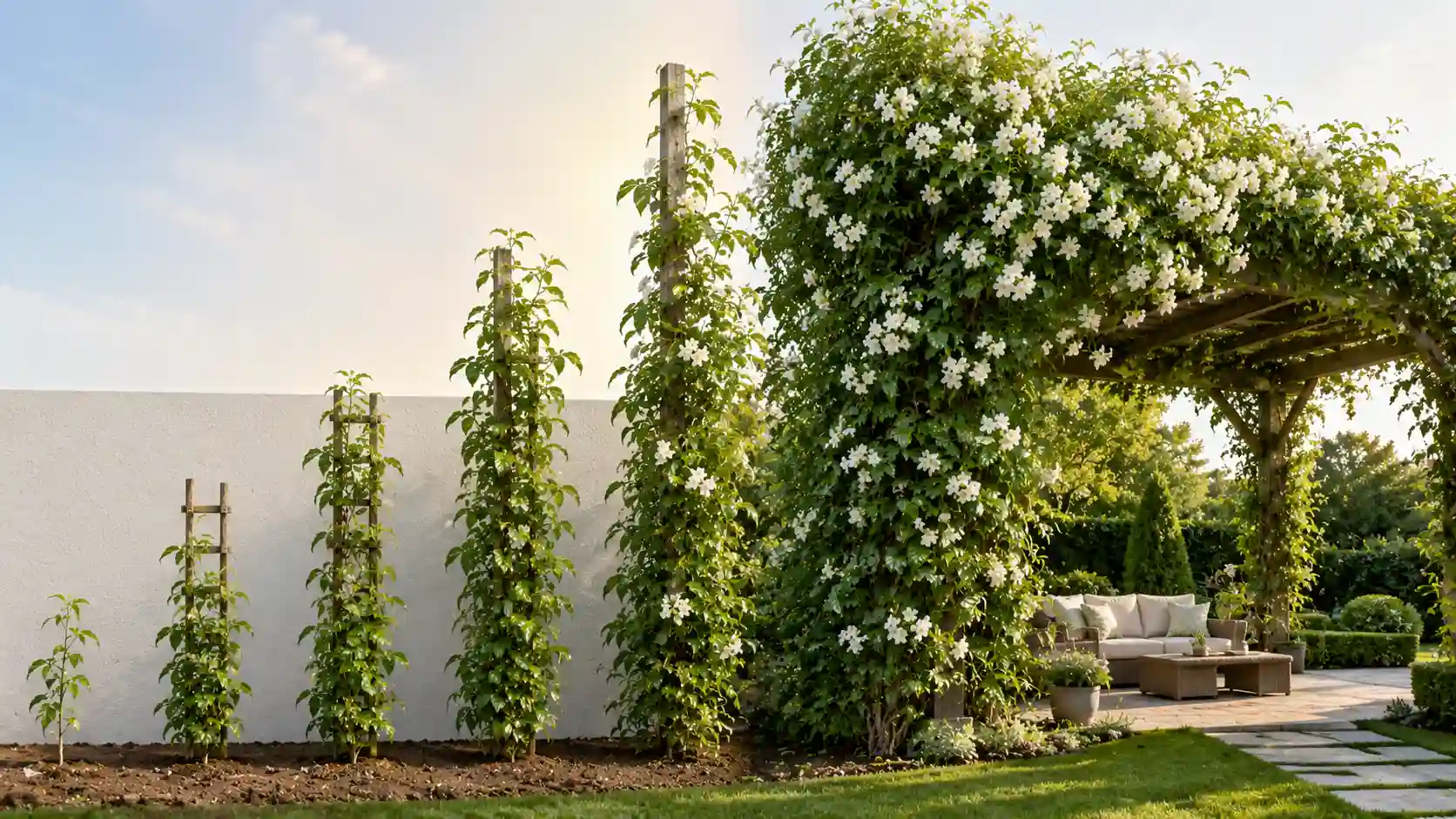
Pandorea pandorana Snowbells typically reaches between 4 and 8 metres in height when growing under favorable conditions.
Its mature width depends on support structures and pruning practices, but it can spread widely enough to cover fences, pergolas, and screening structures.
Outdoor plants generally achieve their maximum size, while container-grown specimens remain more compact.
Key size considerations include:
- Reaches maximum height when provided with strong support.
- Can be pruned regularly to control growth.
- Container cultivation limits ultimate height and spread.
- Mature plants provide extensive coverage for landscape structures.
When grown in containers, Snowbells behaves similarly to other climbers and shrubs that are successfully maintained in pots with proper support systems.
How Fast Does Pandorea Pandorana Snowbells Grow?
Pandorea pandorana Snowbells is considered a fast-growing to vigorous climber in warm climates. Growth is most active during spring and summer when temperatures are warm and daylight hours are longer. Growth slows significantly during winter. Its growth rate is often compared with fast climbers like Ficus Flash, especially in warm climates where both plants establish quickly.
Several factors influence growth speed:
- Soil quality
- Sunlight exposure
- Water availability
- Climate conditions
Important growth observations:
- Warm frost-free climates promote the fastest growth.
- Full sun encourages stronger seasonal extension growth.
- Newly planted specimens may focus on root establishment during their first year.
- Growth usually accelerates once the root system becomes established.
Pandorea Pandorana Snowbells Care Guide
Watering Requirements
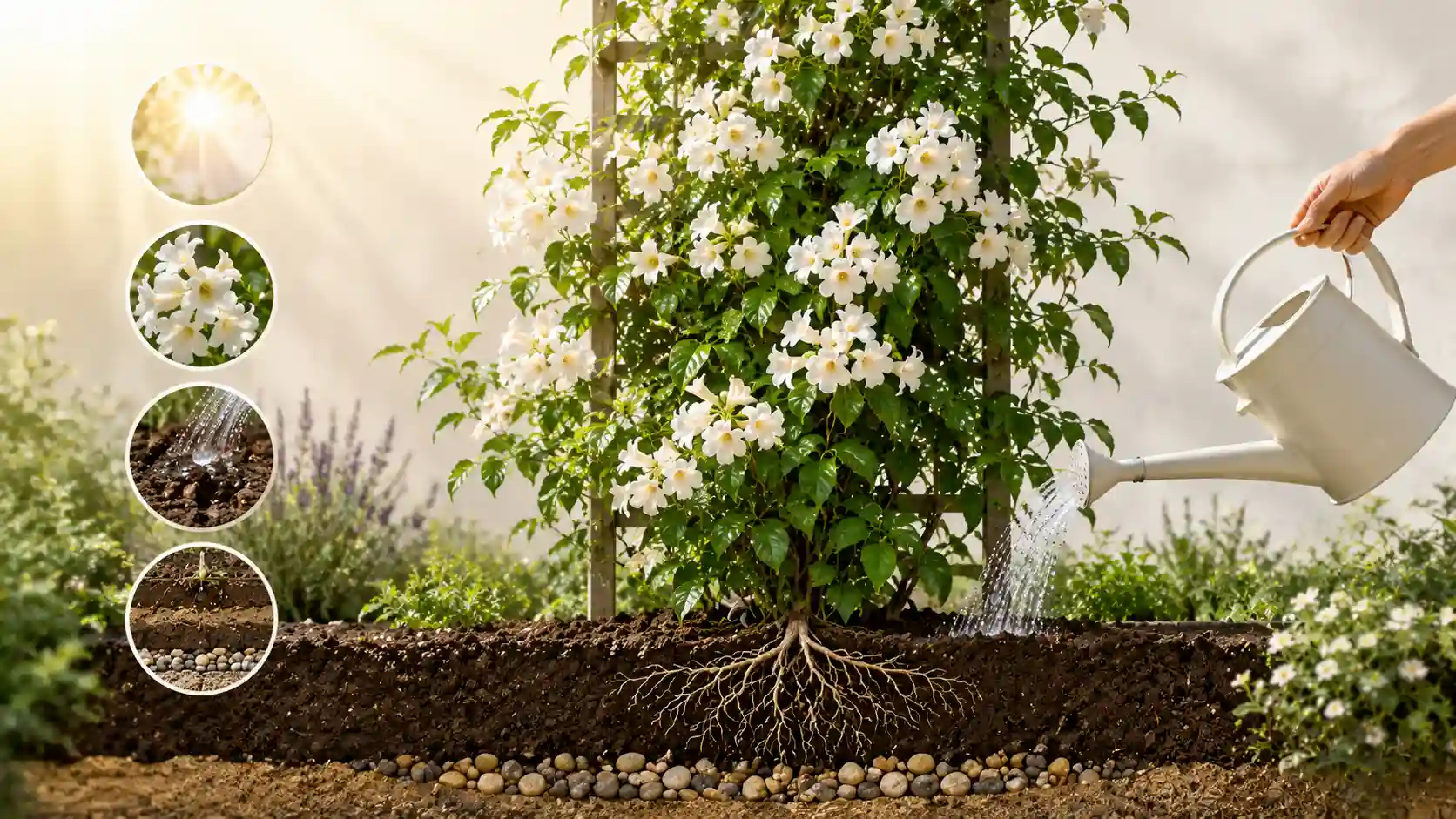
Young plants require regular watering during establishment. Once mature, Snowbells demonstrates moderate drought tolerance.
Avoid waterlogged conditions because excessive moisture may contribute to root rot and reduced plant vigor.
Light and Sun Conditions
Pandorea pandorana Snowbells performs best in full sun to part shade.
Plants grown in sunnier locations generally produce more flowers and denser growth.
Soil Preferences
The plant adapts to many soil types provided drainage is good.
Well-drained soil with a slightly acidic to neutral pH supports healthy root development and flowering.
Fertilization
Apply a balanced slow-release fertilizer during spring to encourage healthy growth and flowering.
Avoid excessive nitrogen because it can stimulate foliage growth at the expense of flowers.
Pruning
Pruning is best performed immediately after flowering.
Regular pruning helps:
- Maintain plant shape
- Encourage bushier growth
- Remove damaged stems
- Improve airflow through the vine
Climate Tolerance
Snowbells grows best in temperate and subtropical climates.
Young plants are frost sensitive, although mature specimens may tolerate light frosts once established.
Pandorea Pandorana Snowbells Spacing
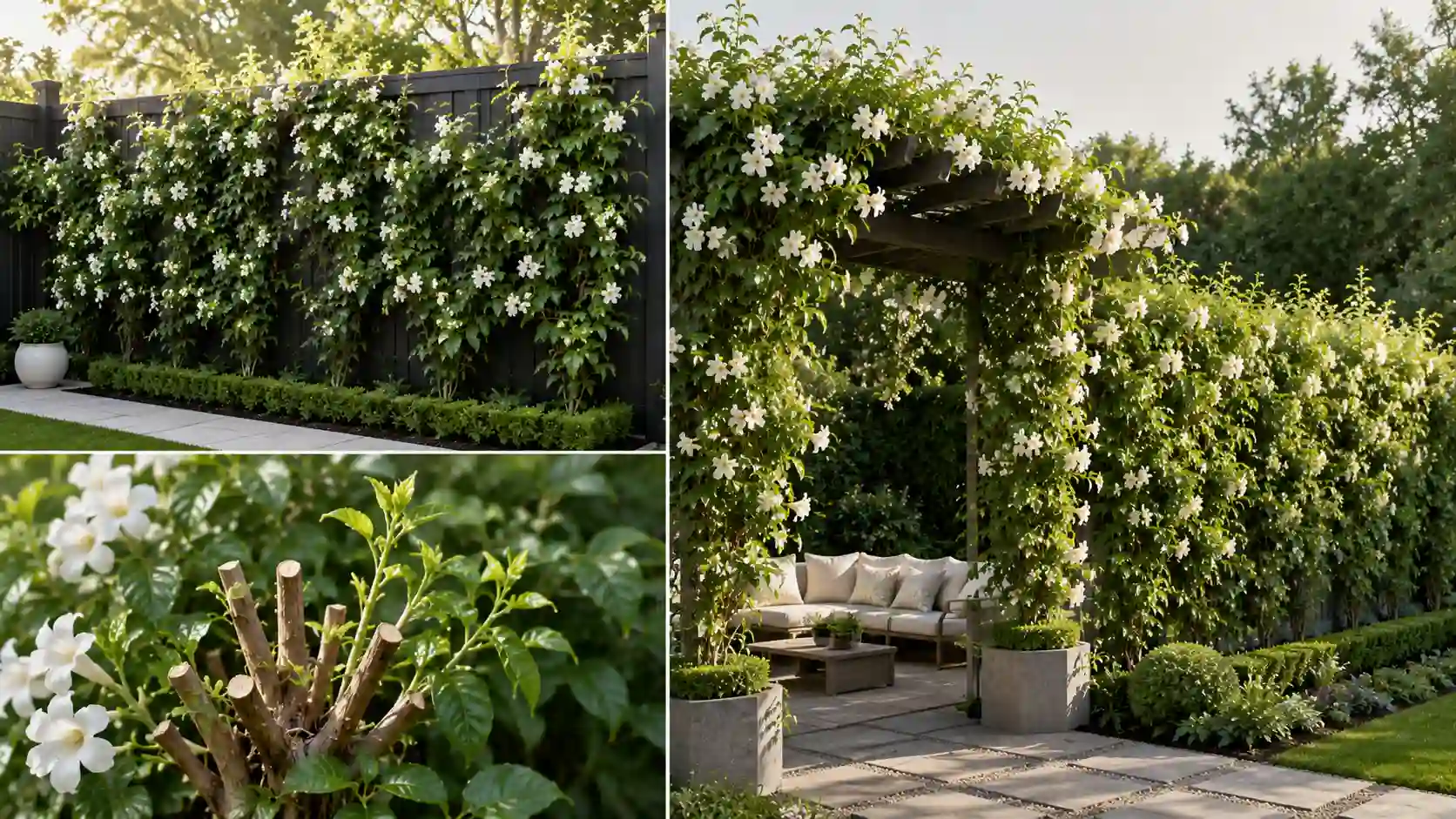
Pandorea pandorana Snowbells spacing depends on the desired landscape effect.
For dense screening, plants are typically spaced 1–1.5 metres apart. For individual specimens or wider coverage areas, spacing of 2–3 metres is generally sufficient.
Important spacing considerations:
- Allow room for mature spread.
- Maintain airflow around plants.
- Reduce competition for nutrients.
- Provide adequate support structures.
Recommended spacing for fence and pergola coverage ranges from 1.5–3 metres apart.
Is Pandorea Pandorana Snowbells Invasive?
Pandorea pandorana can be considered invasive in some regions outside its native Australian range, including parts of New Zealand and South Africa.
The Snowbells cultivar shares characteristics with the species, although invasiveness depends heavily on local environmental conditions and management practices.
The plant spreads primarily through seed dispersal. Birds may consume fruits and distribute seeds to surrounding areas.
Key considerations include:
- Check local invasive species regulations before planting.
- In Australia, the species is generally not classified as invasive.
- Remove seed pods before maturity to reduce spread risk.
- Monitor self-seeded plants where naturalization may occur.
Is Pandorea Pandorana Snowbells Poisonous?
Current information does not indicate widespread severe toxicity associated with Pandorea pandorana Snowbells. However, ingestion of any plant material is generally discouraged.
Similar uncertainty exists regarding Pandorea jasminoides and related species.
As a precaution:
- Keep plants away from young children.
- Prevent pets from chewing foliage or flowers.
- Seek veterinary advice if pets ingest plant material.
- Contact poison control if accidental ingestion occurs.
Although serious poisoning reports are uncommon, caution remains advisable.
Pandorea Pandorana Snowbells as a Climbing Plant — Uses in the Garden
Pandorea pandorana Snowbells is widely used as a decorative climbing plant for vertical landscaping. For dense privacy planting, Snowbells performs similarly to popular screening plants such as Lilly Pilly varieties used in hedging landscapes.
Its twining stems naturally wrap around supports such as:
- Trellises
- Pergolas
- Fences
- Arches
- Wire frameworks
- Timber structures
Popular garden applications include:
- Fast-growing privacy screens
- Feature climbers on arches
- Pergola coverage
- Espalier training against walls
- Container-grown climbers with support frames
Its evergreen foliage ensures year-round visual interest. Similar to other climbing plants like Hibbertia scandens, Snowbells thrives when trained on trellises and vertical garden structures.
Pandorea Pandorana Snowbells vs. Other Pandorea Varieties
Snowbells vs. Pandorea Ruby Belle
Snowbells produces white flowers, whereas Ruby Belle is known for its pink-red blooms.
Snowbells is often selected for bright, elegant garden designs, while Ruby Belle provides stronger color contrast and visual impact.
Snowbells vs. Pandorea Lady Di
Pandorea Lady Di typically features cream-white flowers and moderate growth.
Snowbells generally exhibits stronger vigor and faster coverage, making it suitable for larger screening applications.
Lady Di climber selections may be preferred where a slightly softer flowering display is desired.
Snowbells vs. Pandorea Jasminoides Bower of Beauty
Pandorea jasminoides Bower of Beauty is a separate species commonly known as the bower vine.
Compared with Snowbells:
- Flowers are generally larger.
- Some forms may have a light fragrance.
- Frost tolerance can differ slightly.
- Growth habits remain broadly similar.
Common Problems with Pandorea Pandorana Snowbells and How to Fix Them
Yellowing Leaves
Common causes include overwatering, poor drainage, and nutrient deficiencies.
Fix:
- Improve soil drainage.
- Reduce watering frequency.
- Apply chelated iron where chlorosis is present.
Prevention:
- Use well-drained soil from planting time.
Poor Flowering
Insufficient sunlight, excess nitrogen, and incorrect pruning often reduce flowering.
Fix:
- Increase sunlight exposure.
- Switch to balanced fertilizer.
- Correct pruning timing.
Prevention:
- Prune only after flowering.
Pest Issues
Common pests include:
- Scale insects
- Mealybugs
- Caterpillars
Fix:
- Apply horticultural oil.
- Use insecticidal soap when necessary.
Prevention:
- Encourage beneficial insects.
- Inspect plants regularly.
Many of the pests affecting Snowbells are also common across ornamental garden plants, as discussed in broader pest identification guides.
Slow Establishment
Cold weather planting and compacted soils can delay establishment.
Fix:
- Apply mulch.
- Water consistently.
- Use slow-release fertilizer.
Prevention:
- Plant during spring.
- Prepare soil thoroughly before planting.
Common Beginner Mistakes When Growing Pandorea Pandorana Snowbells
Common mistakes include:
- Planting without installing support structures first.
- Overwatering during establishment.
- Pruning late in the season and removing future flower buds.
- Growing plants in frost-prone locations without protection.
- Expecting abundant flowering in heavily shaded positions.
Avoiding these mistakes helps improve long-term growth and flowering performance.
Where to Buy Pandorea Pandorana Snowbells
Pandorea pandorana Snowbells is commonly available through Australian garden centres, native plant nurseries, and hardware-associated garden departments.
Availability often varies depending on season and regional demand.
Named cultivars such as Snowbells and Ruby Belle are frequently easier to source from specialist climber nurseries and native plant growers than from general retail outlets.
Pandorea Pandorana Snowbells in the Broader Landscape — Topical Cluster Connections
Pandorea pandorana Snowbells connects naturally with several broader gardening topics.
These include:
- Container gardening with Pandorea jasminoides in pots.
- Plant propagation through seed and cuttings.
- Climbing plants used for privacy screening and landscape design.
- Troubleshooting common plant health issues.
Understanding these related topics helps gardeners make informed planting and maintenance decisions.
Conclusion
Pandorea pandorana ‘Snowbells’ is a highly ornamental evergreen climber prized for its white bell-shaped flowers, vigorous growth, and versatility in garden landscapes. As a cultivar of the native Australian wonga wonga vine, it performs exceptionally well on fences, pergolas, trellises, and screening structures. With proper sunlight, well-drained soil, suitable support, and routine maintenance, the plant delivers abundant seasonal flowering and attractive year-round foliage. For gardeners seeking a fast-growing climber with reliable ornamental value, Pandorea pandorana Snowbells remains an excellent choice for warm-temperate and subtropical gardens.
FAQs
Q1: What is Pandorea pandorana ‘Snowbells’?
Pandorea pandorana ‘Snowbells’ is a cultivated variety of the Australian native wonga wonga vine. It is known for producing clusters of small white bell-shaped flowers and vigorous climbing growth.
Q2: How tall does Pandorea pandorana Snowbells grow?
Pandorea pandorana Snowbells typically reaches between 4 and 8 metres in height when provided with suitable support. Regular pruning can help control its size.
Q3: Is Pandorea pandorana Snowbells invasive?
In some regions outside Australia, Pandorea pandorana may be considered invasive. The risk varies by location, and seed dispersal by birds can contribute to spread.
Q4: Is Pandorea pandorana Snowbells poisonous to pets or children?
No severe toxicity is widely documented, but plant ingestion is not recommended. Children and pets should be prevented from consuming any part of the plant.
Q5: How do I care for Pandorea pandorana Snowbells?
Provide well-drained soil, full sun to part shade, moderate watering during establishment, balanced spring fertilization, and pruning after flowering.
Q6: What is the difference between Pandorea Snowbells and Pandorea Ruby Belle?
Snowbells produces white flowers, while Ruby Belle displays pink-red blooms. Snowbells is often chosen for bright, elegant displays, whereas Ruby Belle offers stronger color contrast.
Q7: How far apart should I plant Pandorea pandorana Snowbells?
For dense screening, space plants approximately 1–1.5 metres apart. For individual specimens or wider coverage, allow 2–3 metres between plants.