According to Greenery Inside, Alocasia Purple Sword thrives in bright, indirect light with well-draining aroid soil kept lightly moist—watered only once the top two inches dry out. It needs humidity above 60%, temperatures between 65–85°F, and monthly diluted fertilizer during spring and summer growth.
The plant is toxic to cats and dogs due to calcium oxalate crystals, and yellowing lower leaves or slowed growth in winter typically signal normal dormancy rather than a care problem. Propagation works best through rhizome offset division rather than stem cuttings, and repotting is only needed every 1–2 years since the species prefers being slightly root-bound.
If you’re building an indoor plant collection, our comprehensive Guide to House Plants covers the essential care principles that help tropical foliage plants like Alocasia Purple Sword thrive indoors.
Quick Summary
- Purple Sword Alocasia (Alocasia lauterbachiana) thrives in bright indirect light, chunky well-draining soil, and evenly moist conditions without becoming waterlogged.
- It is considered a moderate-growing houseplant, typically reaching 2–3 feet (60–90 cm) indoors.
- While not among the rarest Alocasia species, it is less common than many standard varieties, making it moderately desirable among collectors.
- Most issues—including yellow leaves, drooping foliage, and slow growth—are caused by watering or lighting imbalances rather than pests.
- Warm temperatures, consistent humidity, and careful fertilization help maintain vigorous growth throughout the active growing season.
What Is the Alocasia Purple Sword Plant?
The Alocasia Purple Sword is the common name for Alocasia lauterbachiana, a tropical perennial belonging to the Araceae (aroid) family. Native to Papua New Guinea, it naturally grows beneath rainforest canopies where it receives filtered sunlight, warm temperatures, and consistently moist—but well-drained—soil. If you enjoy growing dramatic elephant ear plants, you may also find our African Mask Plant Care: Complete Indoor Growing Guide helpful, as both species share similar light, humidity, and watering requirements.
Alocasia lauterbachiana belongs to the Alocasia genus within the Araceae family, a group of tropical plants known for their striking foliage and distinctive growth habits.
The plant is recognized by several common names, including:
- Purple Sword Plant
- Purple Sword Alocasia
- Lauterbachiana Alocasia
- Alocasia Sword
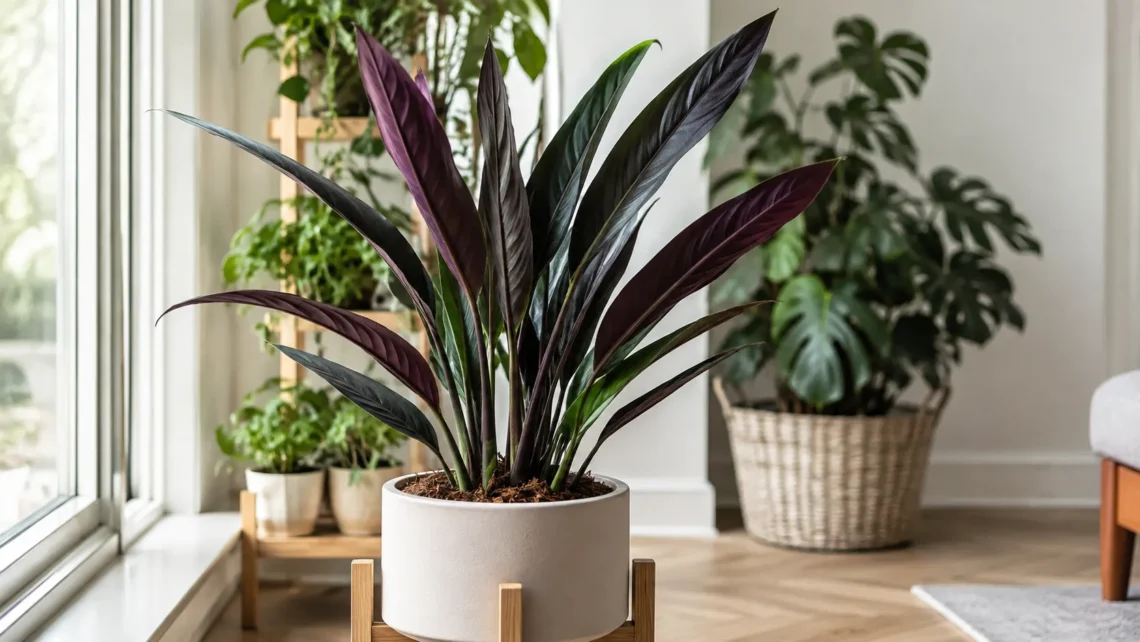
Its most distinctive feature is its long, narrow, sword-like leaves with gently wavy edges. The upper leaf surface is deep green, while the underside develops rich purple to burgundy tones, creating an eye-catching contrast.
Unlike many larger elephant ear species, Alocasia lauterbachiana maintains a relatively upright and compact form, making it suitable for homes, apartments, offices, and tropical plant collections.
In our experience growing Alocasias, Purple Sword adapts well to indoor environments when humidity remains stable and the soil never stays soggy for extended periods.
How Is It Different From Similar Alocasias?
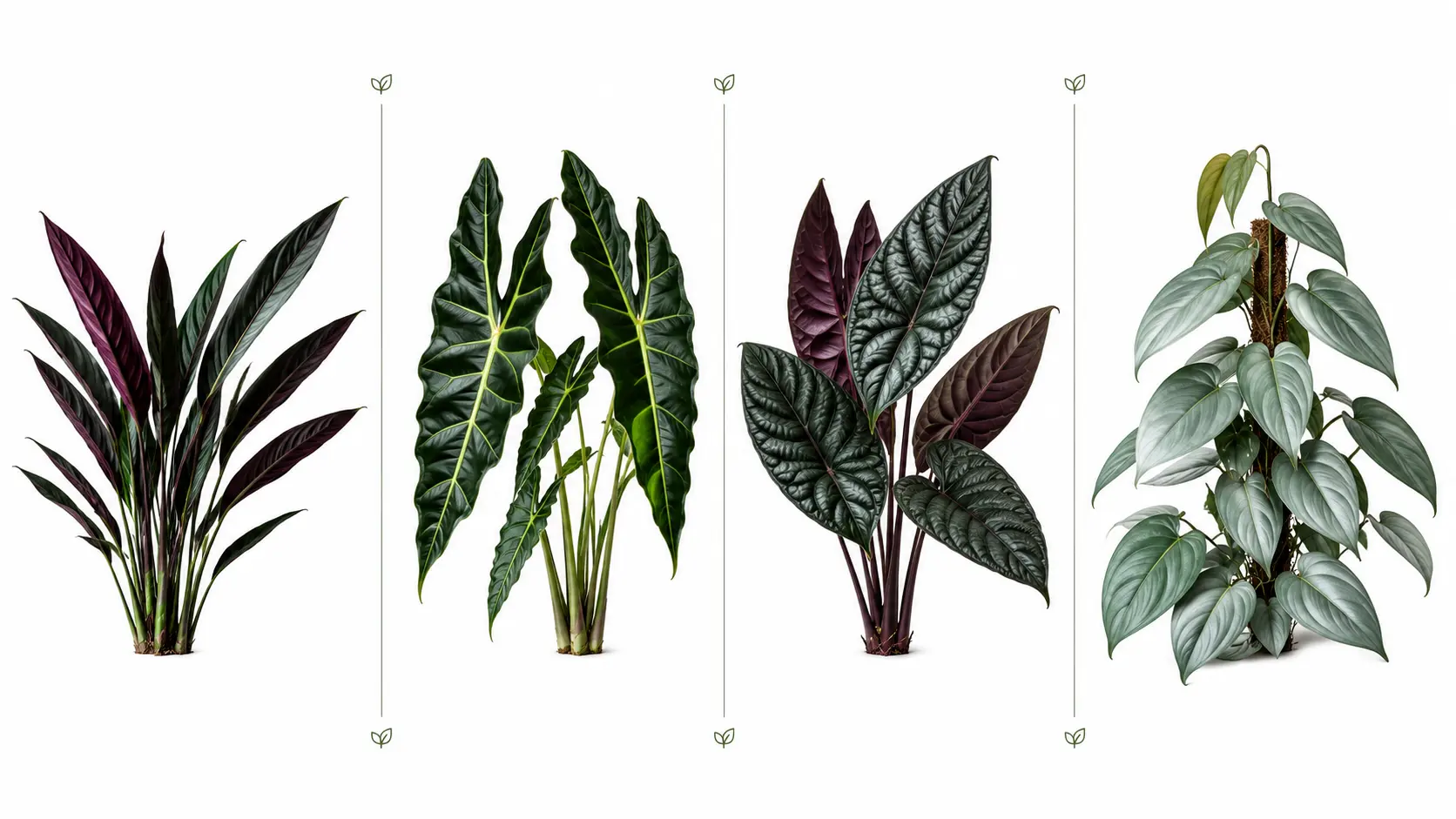
Although Purple Sword belongs to the Alocasia genus, it is often confused with several similar-looking plants because of its elongated leaves or purple coloration. For another popular member of the same genus, explore our Alocasia Silver Dragon Care: Complete Growing Guide to compare its foliage, growth habit, and care needs with Purple Sword. Alocasia lauterbachiana differs by combining narrow sword-shaped foliage with pronounced purple leaf undersides and an upright architectural growth habit.
Some commonly confused plants include:
Alocasia longiloba
Alocasia longiloba generally produces wider arrow-shaped leaves with bold contrasting veins. While some varieties develop purple coloration, the leaves are broader and less sword-like than those of Alocasia lauterbachiana.
Alocasia princeps (‘Purple Cloak’)
Purple Cloak develops thick, heavily textured leaves with dramatic purple coloration underneath. The foliage is considerably broader, more shield-shaped, and has a stronger sculptural appearance than Purple Sword.
Philodendron Silver Sword
One of the most common search confusions involves the Philodendron Silver Sword (Philodendron hastatum). Despite sharing the word “sword,” it is not an Alocasia.
Key differences include:
- Philodendron belongs to a different genus.
- It has silver-blue foliage rather than green leaves with purple undersides.
- It develops as a climbing plant instead of an upright clumping plant.
- Care requirements differ, particularly regarding watering frequency and growth habit.
Some growers also mistake Scindapsus or Silver Pothos species for Silver Sword plants, but these belong to entirely different genera as well.
Understanding these distinctions helps buyers and collectors choose the correct plant while avoiding confusion caused by similar common names.
Purple Sword Alocasia vs. Similar Look-Alikes
| Plant | Leaf Color | Growth Habit | Relative Rarity | Care Difficulty |
| Alocasia lauterbachiana (Purple Sword) | Deep green leaves with purple undersides | Upright clumping | Moderately uncommon | Moderate |
| Alocasia longiloba | Green with contrasting veins; some purple forms | Upright, broader foliage | Moderately uncommon | Moderate |
| Alocasia princeps (Purple Cloak) | Dark green with rich purple undersides | Upright, broad sculptural leaves | Less common | Moderate to high |
| Philodendron Silver Sword | Silvery blue-green | Climbing vine | Fairly common | Easy to moderate |
Is Alocasia Purple Sword Rare?
Alocasia Purple Sword is considered moderately uncommon rather than truly rare. It is more difficult to find than common Alocasia varieties such as Polly or Amazonica, but it is significantly more available than collector species like Alocasia azlanii, Alocasia dragon scale variegata, or highly variegated cultivars.
Its availability has increased over recent years as more specialty nurseries and tissue-culture growers have propagated the species. As a result, prices have become more accessible while demand among collectors remains steady.
Several factors influence how “rare” the plant feels in the marketplace:
- Regional nursery availability
- Demand among collectors
- Plant size
- Overall health
- Import availability
- Seasonal supply
A healthy mature specimen is naturally less common than a juvenile plant because it requires more time and care to produce.
Greenery Inside recommends purchasing healthy, well-rooted plants rather than chasing rarity. Strong roots and healthy foliage generally provide better long-term success than purchasing stressed collector specimens.
How Much Does Alocasia Purple Sword Cost?
The price of Alocasia lauterbachiana varies depending on several factors, but most standard green plants fall within a moderate price range.
Typical pricing includes:
| Plant Size | Typical Price Range |
| Small starter plant | $20–40 |
| Medium established plant | $40–80 |
| Large mature specimen | $80–150+ |
Several characteristics may increase the price:
- Larger root systems
- Multiple mature stems
- Exceptional foliage quality
- Healthy established plants
- Imported specimens
- Variegated mutations
Naturally occurring variegated Purple Sword plants are much less common than standard green forms and often command substantially higher prices because of their limited availability rather than differences in care requirements.
Rather than focusing solely on price, evaluate:
- Root health
- Leaf condition
- Pest-free foliage
- Strong active growth
- Quality of the growing medium
Healthy plants often establish more quickly after purchase than cheaper but stressed specimens.
Ideal Growing Conditions for Alocasia Purple Sword
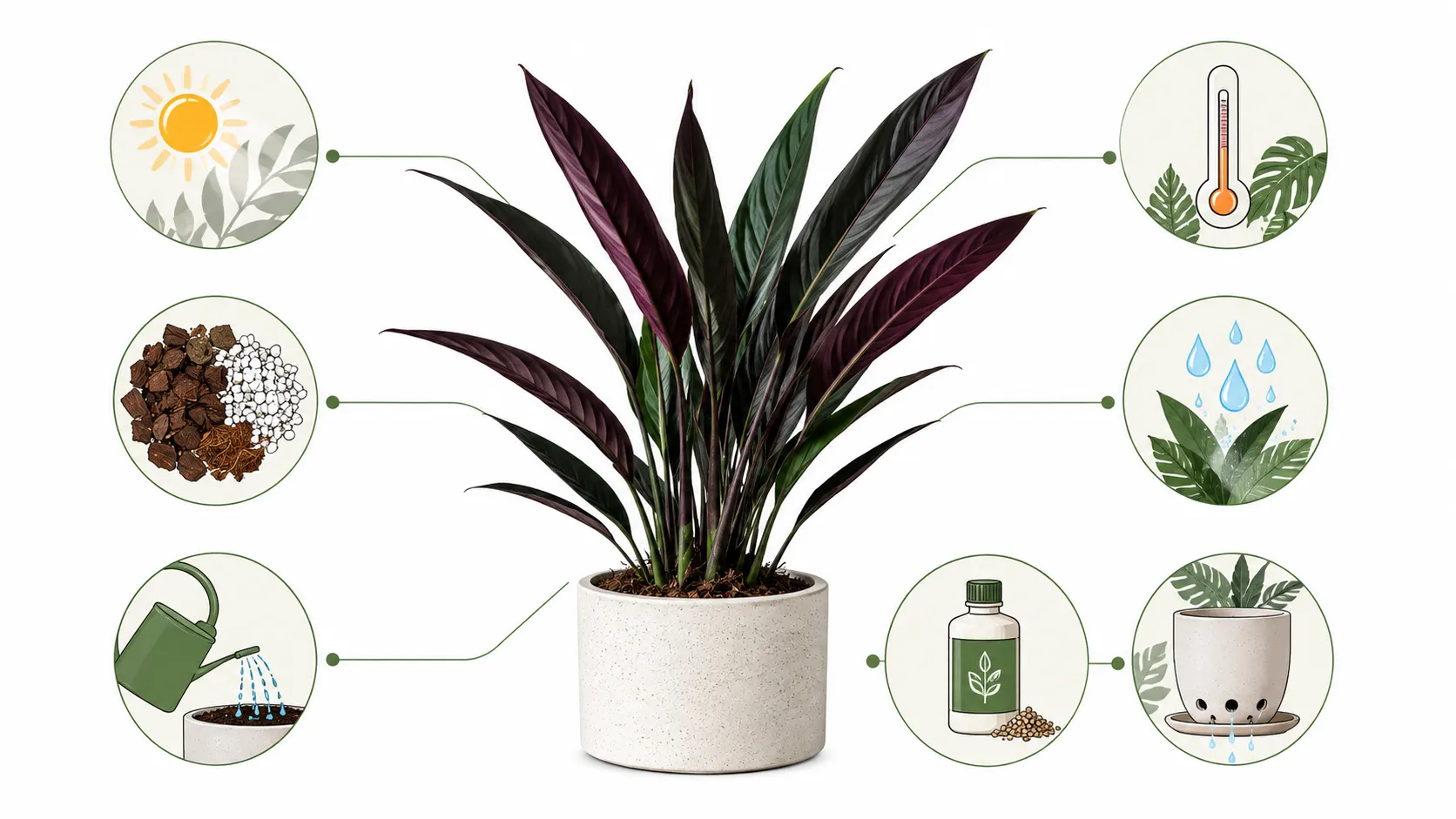
Creating conditions that resemble the plant’s tropical rainforest habitat is the key to successful alocasia purple sword care. Bright filtered light, warm temperatures, consistent moisture, and an airy growing medium encourage vigorous foliage production while reducing common stress-related problems.
Light Requirements
Bright, indirect light is ideal for Alocasia Purple Sword. This level of lighting promotes strong growth, healthy leaf color, and upright stems without exposing the foliage to damaging midday sun.
Suitable indoor locations include:
- East-facing windows
- Bright north-facing rooms
- South or west windows with sheer curtains
- Bright rooms positioned a few feet from sunny windows
Too little light often causes:
- Slower growth
- Smaller leaves
- Longer leaf stalks
- Leaning toward the light source
- Loss of vibrant coloration
Excessive direct sunlight may lead to:
- Brown leaf edges
- Bleached patches
- Leaf scorch
- Curling foliage
In our experience growing tropical aroids indoors, morning sunlight is generally well tolerated, while harsh afternoon sun is the most common cause of leaf damage.
As of the 2026 growing season, many experienced indoor growers continue to supplement winter lighting with full-spectrum grow lights in darker climates to maintain active growth and reduce seasonal decline.
Best Soil Type and Mix
The best soil for Alocasia Purple Sword is a chunky, fast-draining aroid mix that retains moisture while allowing excellent airflow around the roots.
A balanced mix may include:
- High-quality potting mix
- Orchid bark
- Perlite or pumice
- Coco coir or coco chips
- Small amount of horticultural charcoal (optional)
This combination provides:
- Excellent drainage
- Improved oxygen around roots
- Reduced compaction
- Better moisture balance
- Healthier root development
Many gardeners ask whether Alocasias like chunky soil.
The answer is yes. Their roots perform best in loose, airy media that stay evenly moist without becoming dense or saturated.
Is Miracle-Gro potting mix suitable?
Standard Miracle-Gro potting mix can serve as a base, but it is generally too dense on its own for Alocasia species. Mixing it with orchid bark and perlite creates a more suitable structure that improves drainage and reduces the risk of root rot.
Avoid heavy clay soils or mixes that remain wet for extended periods, as consistently saturated conditions are one of the leading causes of root decline.
Pot Size and Depth
Many gardeners wonder whether Alocasias prefer deep or shallow pots.
Alocasia Purple Sword develops a sturdy underground rhizome and an expanding root system, so it generally performs best in a moderately deep pot with excellent drainage holes rather than an overly shallow container.
Choose a pot that is only 1–2 inches (2.5–5 cm) wider than the current root ball. Oversized pots retain excess moisture, increasing the likelihood of root rot.
Important considerations include:
- Drainage holes are essential.
- Heavy ceramic pots improve stability as the plant grows taller.
- Avoid excessively large containers.
- Repot gradually as the root system expands.
Proper pot sizing encourages balanced moisture retention while supporting healthy root development.
Watering Guidelines
Alocasia Purple Sword prefers consistently moist—but never waterlogged—soil. Allow the top 1–2 inches (2.5–5 cm) of the growing medium to dry slightly before watering again.
Both top watering and bottom watering can be effective. While Alocasias require consistently moist soil, watering needs differ between plant groups. Our guide on How Often to Water Heartleaf Philodendron explains how watering practices vary among popular indoor tropical plants.
Top watering is generally preferred because it:
- Flushes accumulated fertilizer salts
- Evenly hydrates the soil
- Supports healthy microbial activity
Bottom watering may be useful when:
- Soil has become excessively dry
- The mix is hydrophobic
- Even moisture is difficult to achieve
Regardless of the method, always allow excess water to drain completely. Never let the pot sit in standing water.
Signs of overwatering include:
- Yellow leaves
- Soft stems
- Mushy roots
- Fungus gnats
- Persistent wet soil
Signs of underwatering include:
- Curling leaves
- Crispy edges
- Dry soil pulling from the pot
- Drooping foliage that improves after watering
A practical schedule depends on temperature, humidity, and season rather than fixed weekly intervals. During active spring and summer growth, watering is usually more frequent than during autumn or winter dormancy.
Fertilizing Alocasia Purple Sword
Alocasia Purple Sword benefits from regular feeding during its active growing season. A balanced fertilizer supports healthy foliage, strong roots, and consistent growth without encouraging excessive salt buildup.
The best fertilizer for most Alocasia plants is a balanced, water-soluble formula, such as 10-10-10, 20-20-20, or a fertilizer formulated specifically for tropical foliage plants. Slow-release fertilizers can also be effective when used according to the manufacturer’s directions.
A general feeding schedule is:
- Spring to early autumn: Feed every 2–4 weeks at half strength.
- Late autumn and winter: Reduce or stop fertilizing if growth slows or the plant enters dormancy.
Avoid fertilizing a dry plant. Water first if the soil is dry, then apply diluted fertilizer to reduce the risk of root burn.
Greenery Inside recommends using less fertilizer more consistently rather than applying strong doses infrequently. This approach often produces healthier foliage and minimizes fertilizer salt accumulation in container-grown plants.
Coffee Grounds as Fertilizer
Many houseplant owners ask whether coffee grounds are good for Alocasia plants. The answer is only in moderation and with proper preparation.
Used coffee grounds contain organic matter and small amounts of nutrients, but they are not a complete fertilizer. Fresh or excessive coffee grounds can compact the soil, encourage mold, and alter moisture retention.
If you choose to use coffee grounds:
- Use used, not fresh, coffee grounds.
- Allow them to dry before composting or mixing into compost.
- Apply only small amounts after they have broken down through composting.
- Avoid creating a thick layer directly on the soil surface.
Some gardeners also ask about soaked coffee grounds. While soaking may reduce some soluble compounds, it does not eliminate the need for moderation.
Houseplants that generally dislike frequent coffee ground applications include many succulents, cacti, lavender, rosemary, and other plants that prefer alkaline or very well-drained soils.
For Alocasia Purple Sword, a balanced commercial fertilizer remains the most reliable and predictable nutrient source, while composted coffee grounds should only be considered an occasional soil amendment rather than a primary feeding method.
Plant Size and Growth Rate
Alocasia Purple Sword is a moderately sized tropical houseplant that develops upright, architectural foliage rather than spreading widely. Under proper indoor conditions, it grows steadily throughout the warm months and slows significantly during cooler seasons. Its mature size depends on light, humidity, root space, and overall care.
In our experience growing Alocasia lauterbachiana, plants kept in bright indirect light with consistent watering and humidity develop larger leaves and stronger stems than those grown in low-light indoor environments.
How Big Does Alocasia Purple Sword Get?
Alocasia Purple Sword typically reaches 2–3 feet (60–90 cm) tall indoors with a spread of about 1–2 feet (30–60 cm). Outdoors in tropical or frost-free climates, mature plants can become slightly larger when planted in the ground.
| Growing Location | Typical Height | Typical Width |
| Indoors | 2–3 ft (60–90 cm) | 1–2 ft (30–60 cm) |
| Outdoors (tropical climates) | 3–4 ft (90–120 cm) | 2–3 ft (60–90 cm) |
Several environmental factors influence mature size:
- Bright indirect light encourages larger foliage.
- High humidity supports healthier leaf expansion.
- Proper fertilization promotes vigorous growth.
- Slightly root-bound plants may slow in size.
- Larger containers allow greater root development.
- Consistent warmth extends the active growing season.
Plants grown in dim lighting often remain smaller and produce narrower leaves, while those receiving ideal conditions develop fuller, more dramatic foliage.
Growth Rate and Seasonal Patterns
Alocasia Purple Sword is considered a moderate-growing plant. During spring and summer, healthy plants commonly produce new leaves every few weeks under favorable conditions.
Growth naturally follows seasonal patterns:
- Spring: Growth resumes as temperatures increase.
- Summer: Fastest period of leaf production.
- Early autumn: Growth gradually slows.
- Late autumn and winter: Many plants enter partial dormancy.
Dormancy varies depending on climate and indoor conditions. In warm homes with supplemental lighting, some plants continue producing leaves year-round, although growth is usually slower.
Factors that encourage faster growth include:
- Bright filtered light
- Temperatures between 65–85°F (18–29°C)
- Humidity above 60%
- Regular feeding during the growing season
- Well-draining, oxygen-rich soil
Conversely, cool temperatures, poor lighting, and prolonged dry conditions reduce growth and may trigger dormancy.
Indoor vs. Outdoor Care Differences
Alocasia Purple Sword adapts well to both indoor and outdoor environments when temperatures remain warm, but its care requirements differ depending on where it is grown.
Indoor cultivation offers greater control over light, watering, and temperature, making it the preferred option for most climates. Outdoor growing can produce larger, faster-growing plants but requires protection from direct sun, cold weather, and drying winds.
Indoor Care
Indoor plants benefit from:
- Stable temperatures
- Bright indirect light
- Controlled watering
- Protection from heavy rain
- Reduced exposure to pests
Indoor growers should monitor humidity closely because heating and air conditioning often dry the air.
Outdoor Care
Outdoor-grown plants generally receive:
- Higher humidity
- Better airflow
- Faster seasonal growth
- Larger mature size
However, they also face challenges such as:
- Intense afternoon sunlight
- Heavy rainfall
- Wind damage
- Snails and slugs
- Temperature fluctuations
Greenery Inside recommends gradually introducing indoor-grown plants to outdoor conditions rather than moving them directly into full shade or filtered sun.
When Can You Move Alocasia Purple Sword Outside?
You can move Alocasia Purple Sword outdoors once nighttime temperatures consistently remain above 60°F (16°C) and all danger of frost has passed.
The safest acclimation process includes:
- Place the plant in bright shade for several days.
- Gradually increase exposure to filtered light over one to two weeks.
- Avoid harsh afternoon sunlight.
- Monitor watering more frequently, as outdoor containers dry faster.
Before bringing the plant indoors in autumn:
- Inspect for insects.
- Clean the foliage.
- Reduce watering slightly.
- Acclimate the plant to lower indoor light over several days.
As of the 2026 growing season, many experienced growers continue using shaded patios or covered porches during summer to provide natural humidity while protecting Alocasias from intense midday sun.
Repotting Alocasia Purple Sword
Yes, Alocasia Purple Sword generally benefits from repotting when it becomes root-bound, but unnecessary repotting should be avoided. Like many aroids, it prefers stable growing conditions and may experience temporary transplant stress.
Most plants require repotting every 1–2 years, depending on growth rate and container size.
Signs it’s time to repot include:
- Roots growing through drainage holes
- Water running straight through the pot
- Slower growth despite proper care
- Soil breaking down into a dense texture
- Roots circling tightly around the root ball
- Frequent drying between waterings
The best time to repot is spring or early summer, when active growth allows the plant to establish quickly.
When repotting:
- Choose a container only slightly larger than the current one.
- Replace old compacted soil with a fresh chunky aroid mix.
- Inspect roots for signs of rot or damage.
- Water lightly after repotting.
- Avoid heavy fertilization for several weeks.
In our experience, repotting immediately before the active growing season helps Purple Sword recover faster and produce new roots more efficiently.
Can Alocasia Purple Sword Grow in Water?
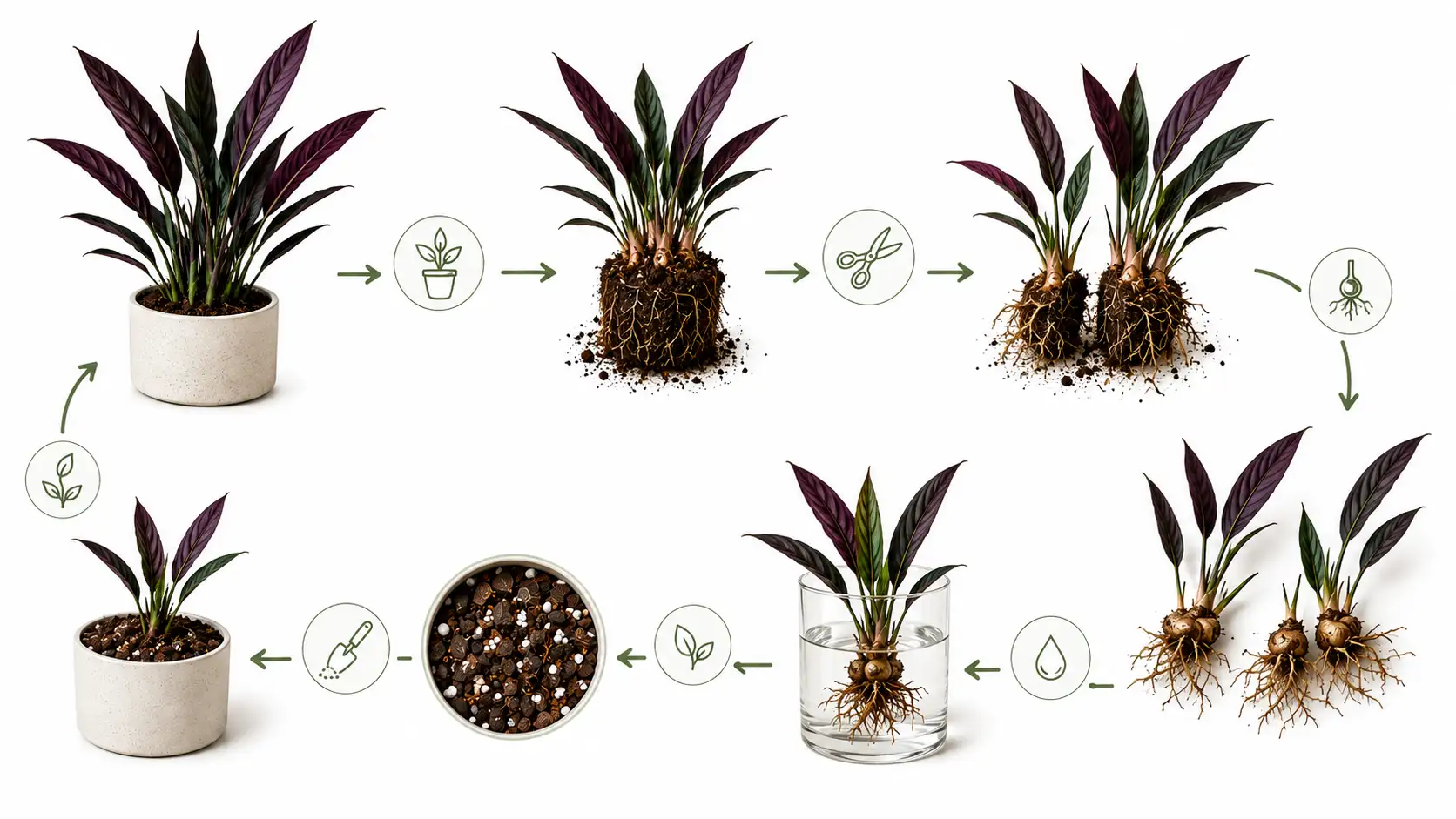
Yes, Alocasia Purple Sword can grow in water for short periods and can adapt to semi-hydroponic systems, but long-term success requires careful nutrient and oxygen management.
Many growers root divisions in water before transferring them into soil or semi-hydroponic media such as LECA (lightweight expanded clay aggregate).
Advantages include:
- Easy root observation
- Reduced transplant shock during propagation
- Cleaner rooting environment
- Lower risk of soil-borne pathogens during initial rooting
However, long-term water culture also presents challenges:
- Nutrient deficiencies without proper hydroponic fertilizer
- Reduced oxygen around roots
- Greater sensitivity to water quality
- Need for regular water changes
For most home gardeners, a well-draining soil mix remains the easiest and most reliable growing method.
If transitioning a water-grown plant back to soil:
- Use fresh chunky aroid mix.
- Keep soil evenly moist initially.
- Avoid exposing the plant to direct sunlight during the transition.
- Increase humidity temporarily to reduce stress.
How to Propagate Purple Sword Alocasia
The most reliable propagation method is division, as Alocasia lauterbachiana naturally produces offsets from its underground rhizome.
Division Method
- Remove the plant from its pot.
- Gently separate offsets with healthy roots.
- Use a sterile knife if necessary.
- Plant each division in fresh, well-draining soil.
- Water lightly.
- Place in warm, humid conditions with bright indirect light.
Water Propagation
Small rooted divisions can also be placed in clean water until additional roots develop.
For successful water propagation:
- Use room-temperature water.
- Change the water every few days.
- Keep the container in bright indirect light.
- Transfer to soil once roots are several inches long.
Division generally produces stronger, faster-establishing plants than rooting stem sections because Alocasias do not propagate from leaf cuttings like some other houseplants.
Does Alocasia Purple Sword Bloom?
Yes, Alocasia Purple Sword can bloom, but flowering is uncommon indoors. Like other members of the Araceae family, it produces a flower consisting of a spathe surrounding a central spadix.
The bloom is usually:
- Pale green to cream
- Small compared to the foliage
- Short-lived
- Less ornamental than the leaves
Flowering typically occurs only when the plant is mature and growing under excellent conditions.
Most indoor growers cultivate Alocasia lauterbachiana for its dramatic foliage rather than its flowers.
Some enthusiasts remove developing flowers because producing blooms requires significant energy. Removing the flower may allow the plant to redirect resources toward producing larger, healthier leaves, although healthy mature plants can often support both foliage and flowering without issue.
Common Problems With Alocasia Purple Sword
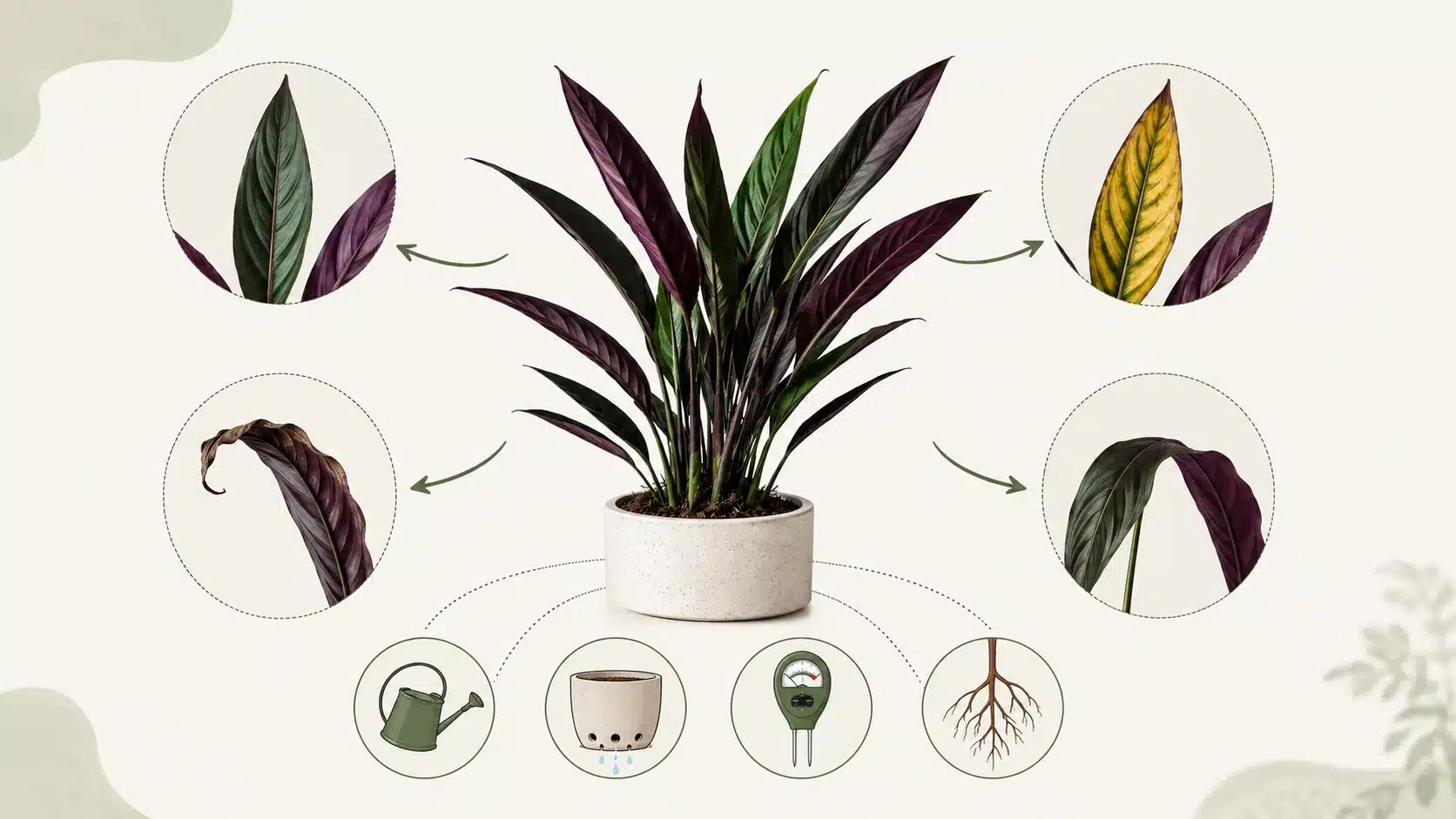
Most Purple Sword problems are related to watering, lighting, humidity, or temperature rather than serious diseases. Identifying symptoms early makes recovery much easier.
Yellowing Leaves
Yellow leaves are one of the most common concerns with Alocasia Purple Sword.
Why It Happens
Common causes include:
- Overwatering
- Poor drainage
- Nutrient imbalance
- Natural aging of older leaves
- Low light
- Root stress
Occasionally, a single older leaf turning yellow while new growth appears is simply part of the plant’s normal growth cycle.
How to Fix It
- Check soil moisture before watering.
- Improve drainage if soil remains wet.
- Remove damaged roots if rot is present.
- Adjust fertilization if deficiencies are suspected.
- Increase light if the plant is growing in deep shade.
How to Prevent It
- Use chunky soil.
- Water only when the top layer begins drying.
- Maintain good drainage.
- Feed consistently during active growth.
- Provide bright indirect light.
Drooping or Dying Plant
Drooping foliage often indicates that the roots are unable to supply sufficient water to the leaves.
Common Causes
- Root rot
- Underwatering
- Temperature shock
- Sudden environmental changes
- Low humidity
- Transplant stress
How to Fix It
- Inspect the root system.
- Remove rotten roots if necessary.
- Adjust watering practices.
- Increase humidity.
- Keep temperatures consistently warm.
Prevention
- Avoid letting the soil stay saturated.
- Protect plants from cold drafts.
- Use well-draining soil.
- Maintain stable indoor conditions.
Pest Infestations
Although generally resilient, Purple Sword can occasionally attract common indoor plant pests.
The most common pests include:
- Spider mites
- Mealybugs
- Scale insects
- Thrips
- Fungus gnats (associated with overly wet soil)
Treatment
Depending on the pest, treatment may include:
- Washing leaves with water
- Insecticidal soap
- Neem oil
- Cotton swabs dipped in rubbing alcohol for mealybugs
- Sticky traps for fungus gnats
Repeat treatments as directed until all signs of infestation disappear.
Prevention
Prevent pest outbreaks by:
- Inspecting new plants before bringing them indoors.
- Cleaning leaves regularly.
- Providing adequate airflow.
- Avoiding chronic overwatering.
- Monitoring plants weekly for early signs of infestation.
Slow or Stalled Growth
Slow growth does not always indicate a problem. Seasonal dormancy is a normal part of the life cycle for many Alocasia species.
Common Causes
- Insufficient light
- Low humidity
- Nutrient deficiencies
- Cool temperatures
- Root-bound conditions
- Winter dormancy
How to Encourage Healthier Growth
- Increase bright indirect light.
- Maintain temperatures above 65°F (18°C).
- Feed regularly during spring and summer.
- Repot if roots become crowded.
- Maintain humidity between 60–80%.
Greenery Inside recommends evaluating seasonal conditions before assuming poor health. Many Alocasias naturally slow their growth during winter and quickly resume producing new foliage once warmth and longer daylight return.
Beginner Mistakes to Avoid
The most common beginner mistakes with Alocasia Purple Sword involve excessive watering, dense soil, unstable environmental conditions, and unsuitable pot sizes. These errors interfere with root oxygen, moisture balance, and normal leaf development.
Overwatering on a Fixed Schedule
Watering automatically every few days can keep the root zone permanently saturated. Alocasia Purple Sword prefers consistent moisture, but its roots also need oxygen.
Instead of following a rigid schedule:
- Check the top 1–2 inches of soil before watering.
- Consider the room temperature and humidity.
- Reduce watering when growth slows in winter.
- Empty water collected in saucers or decorative pots.
A plant in bright summer conditions may need water more frequently than the same plant during cooler, darker months.
Using Dense or Water-Retentive Soil
Standard potting soil used alone can compact around the roots and remain wet for too long. This increases the risk of root rot, fungus gnats, and yellowing leaves.
A better growing medium combines moisture-retentive material with coarse ingredients such as:
- Orchid bark
- Perlite
- Pumice
- Coco chips
- Horticultural charcoal
Greenery Inside recommends checking the soil structure whenever a Purple Sword repeatedly develops yellow leaves despite careful watering. Dense soil may be the underlying problem.
Providing Insufficient Humidity
Alocasia lauterbachiana can adapt to average household humidity, but persistently dry air may cause brown edges, curling foliage, and slow leaf development.
Humidity levels around 60% are generally suitable. A humidifier is more reliable than frequent misting because misting only raises humidity briefly and may leave foliage wet.
Plants should still receive airflow. Very high humidity combined with stagnant air can encourage fungal or bacterial problems.
Choosing the Wrong Pot Size
An oversized pot contains more soil than the root system can use. The unused growing medium dries slowly, increasing the likelihood of overwatering.
A container that is too small can also cause problems by:
- Restricting root growth
- Drying too quickly
- Making the plant unstable
- Limiting nutrient availability
Choose a pot approximately 1–2 inches wider than the existing root ball and ensure that it has functional drainage holes.
Exposing the Plant to Sudden Environmental Changes
Moving a Purple Sword abruptly between different light, temperature, or humidity conditions can cause drooping or leaf loss.
Common examples include:
- Moving it directly into outdoor sunlight
- Placing it near an air-conditioning vent
- Bringing it indoors without pest inspection
- Repotting and relocating it simultaneously
- Exposing it to cold nighttime temperatures
Make environmental changes gradually whenever possible.
Fertilizing a Stressed Plant
Fertilizer does not correct root rot, low light, cold stress, or improper watering. Feeding a damaged plant may worsen root stress through salt accumulation.
Correct the environmental problem first. Resume diluted feeding only when the plant is stable and showing active growth.
Alocasia Purple Sword Varieties
The standard Purple Sword is Alocasia lauterbachiana, identified by its narrow, upright leaves, wavy margins, green upper surfaces, and purple-toned undersides. Plants sold under the Purple Sword name are usually forms of the same species rather than a large group of formally recognized cultivars.
Variegated Purple Sword Alocasia
Variegated Purple Sword plants display pale green, cream, yellow, or white sections caused by reduced chlorophyll in portions of the foliage. Variegation may appear as marbling, speckling, sectoral patches, or irregular streaks.
A variegated specimen generally requires the same basic care as a standard Alocasia lauterbachiana, with several adjustments:
- Provide strong, bright indirect light.
- Protect pale sections from direct sunlight.
- Avoid removing healthy green leaves unnecessarily.
- Use moderate fertilizer rather than forcing rapid growth.
- Monitor watering carefully because growth may be slower.
Variegated plants contain less chlorophyll and may grow more slowly than fully green specimens. Their higher price usually reflects limited supply and collector demand rather than greater mature size or easier care.
Not every pale leaf is true variegation. Nutrient deficiencies, pest damage, root problems, and light stress can also create discoloration. Stable variegation normally appears in repeated patterns across new growth.
Relationship to Alocasia longiloba Forms
Alocasia longiloba is a separate species that includes several named or commercially labelled forms associated with dark foliage, purple coloration, or prominent veins.
Names encountered in cultivation may include:
- Purple Prince
- Purple Vein
- Denudata
- Watsoniana-type forms
These plants should not automatically be classified as Purple Sword varieties. Alocasia longiloba generally produces broader, more arrow-shaped leaves, while Alocasia lauterbachiana has narrower, elongated, sword-like foliage.
Commercial plant names are not always applied consistently. Leaf shape, venation, petiole structure, and verified botanical labelling are more dependable than color-based common names.
Alocasia princeps Purple Cloak
Alocasia princeps ‘Purple Cloak’ is another related-looking plant but is not a variety of Alocasia lauterbachiana. It is known for broader, heavier-looking leaves, pronounced texture, and purple coloration beneath the foliage.
Compared with Purple Sword:
- Purple Cloak has broader leaves.
- Purple Sword has a narrower, more upright silhouette.
- Purple Cloak may appear more compact and sculptural.
- Both prefer warm temperatures, high humidity, airy soil, and bright indirect light.
Distinguishing these plants matters because common names such as Purple Sword, Purple Prince, Purple Vein, and Purple Cloak are sometimes used loosely in online listings.
Conclusion
Successful alocasia purple sword care depends on providing bright indirect light, chunky well-draining soil, consistent moisture, warm temperatures, and moderate feeding during active growth. Alocasia lauterbachiana is not a low-maintenance plant, but its needs become manageable once watering and drainage are balanced.
Most yellowing, drooping, root decline, and stalled growth can be traced to overly wet soil, insufficient light, temperature stress, or seasonal dormancy. Choosing the correct pot size and allowing slight drying near the soil surface help protect the underground rhizome and roots.
The clearest takeaway is to recreate a tropical understory environment without keeping the plant permanently wet. With filtered light, warmth, humidity, root aeration, and seasonal care adjustments, Purple Sword can develop healthy upright growth and retain its distinctive purple-backed foliage indoors.
Frequently Asked Questions
Is Alocasia Purple Sword rare?
Alocasia Purple Sword is moderately uncommon but is not considered one of the rarest Alocasia species. It may be less available than Alocasia Polly or common elephant ear varieties, but standard Alocasia lauterbachiana plants are increasingly propagated by specialist growers.
Variegated Purple Sword specimens are significantly less common and usually more expensive because they are produced in smaller numbers and grow more slowly.
Are sword plants easy to care for?
Purple Sword Alocasia has moderate care requirements. It is manageable for growers who can provide bright indirect light, warm temperatures, well-draining soil, and careful watering.
It may be challenging for beginners who frequently overwater plants or grow them in dark rooms. Once moisture and lighting are properly balanced, its care becomes more predictable.
The term “sword plant” can also refer to unrelated plants, including Philodendron Silver Sword and various outdoor species, so care requirements depend on the botanical identity.
Do Alocasia plants like chunky soil?
Yes, Alocasia plants generally perform well in chunky soil because coarse ingredients improve drainage and airflow around the roots. The mix should retain some moisture while allowing excess water to leave quickly.
A suitable blend can include:
- Potting mix or coco coir
- Orchid bark
- Perlite or pumice
- Coco chips
- A small amount of charcoal
A mix that drains instantly without retaining any moisture can dry too rapidly. The goal is balanced moisture retention, not an entirely dry substrate.
How do I make my Alocasia happy?
Keep an Alocasia healthy by providing bright indirect light, temperatures between approximately 65–85°F, moderate-to-high humidity, airy soil, and consistent watering.
For stronger growth:
- Rotate the pot periodically.
- Water after the upper soil begins to dry.
- Fertilize lightly during spring and summer.
- Protect the plant from cold drafts.
- Inspect the undersides of leaves for pests.
- Reduce watering during periods of slow growth.
Stable conditions are more important than frequent changes or complicated treatments.
What is the rarest Alocasia?
There is no single universally accepted rarest Alocasia because availability changes by country, propagation success, legal collection status, and market demand. Species such as Alocasia azlanii, Alocasia sanderiana ‘Bull’, unusual variegated forms, and locally restricted wild species are often regarded as rare in cultivation.
True rarity should not be judged only by online price. Some plants are expensive because of temporary demand, slow propagation, variegation, or limited commercial supply rather than extreme botanical rarity.
Which Alocasia has purple under leaves?
Several Alocasia species and cultivars can have purple or burgundy leaf undersides. Alocasia lauterbachiana, commonly called Purple Sword, is one of the best-known examples.
Other purple-backed Alocasias may include:
- Alocasia princeps ‘Purple Cloak’
- Selected Alocasia longiloba forms
- Alocasia azlanii
- Some dark-leaved hybrid cultivars
Purple Sword is distinguished by its long, narrow, upright leaves with wavy edges and contrasting purple-toned undersides.