Introduction
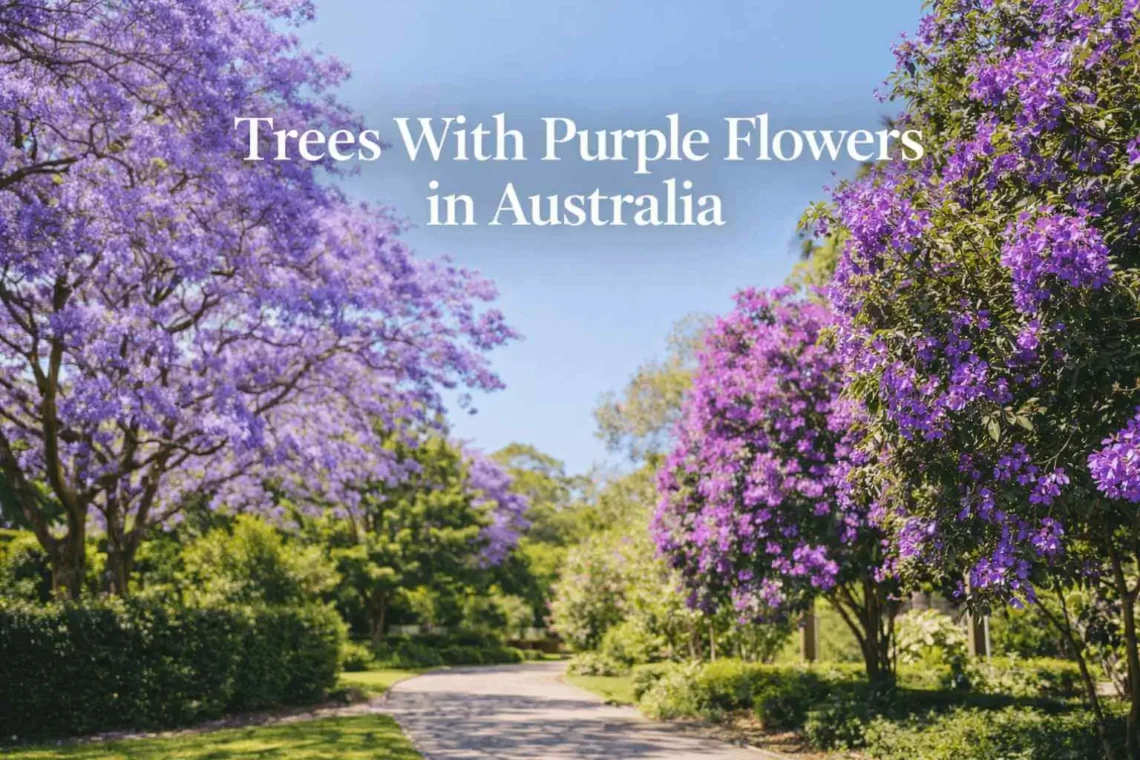
Trees with purple flowers in Australia are among the most visually striking additions to landscapes, combining seasonal color with ecological and ornamental value. From iconic species like the jacaranda tree to lesser-known Australian native trees with purple flowers, these trees vary in size, growth habits, and climate suitability. Understanding how to identify, choose, and care for a purple flowering tree in Australia helps homeowners, gardeners, and landscapers create vibrant, sustainable outdoor spaces.
Quick Summary
- Trees with purple flowers in Australia include both native and ornamental species like jacaranda and crepe myrtle
- Identification depends on flower shape, leaf structure, and seasonal bloom patterns
- Options range from small trees to tall shade trees suited for full sun conditions
- Native purple flowers Australia species offer better adaptability and lower maintenance
What Are Trees With Purple Flowers in Australia?
Trees with purple flowers in Australia refer to a broad category of native and non-native tree species that produce blooms in shades of purple, including lavender, violet, and deep purple. These purple flowering trees are valued for their ornamental appeal and seasonal color variation.
This category includes:
- Native Australian species adapted to local climates
- Introduced ornamental trees commonly used in landscaping
Purple trees in Australia display diverse bloom cycles. Some flower in spring, while others bloom in summer, depending on species and climate conditions. These seasonal patterns play a key role in garden planning and visual impact.
Most Popular Purple Flowering Trees in Australia
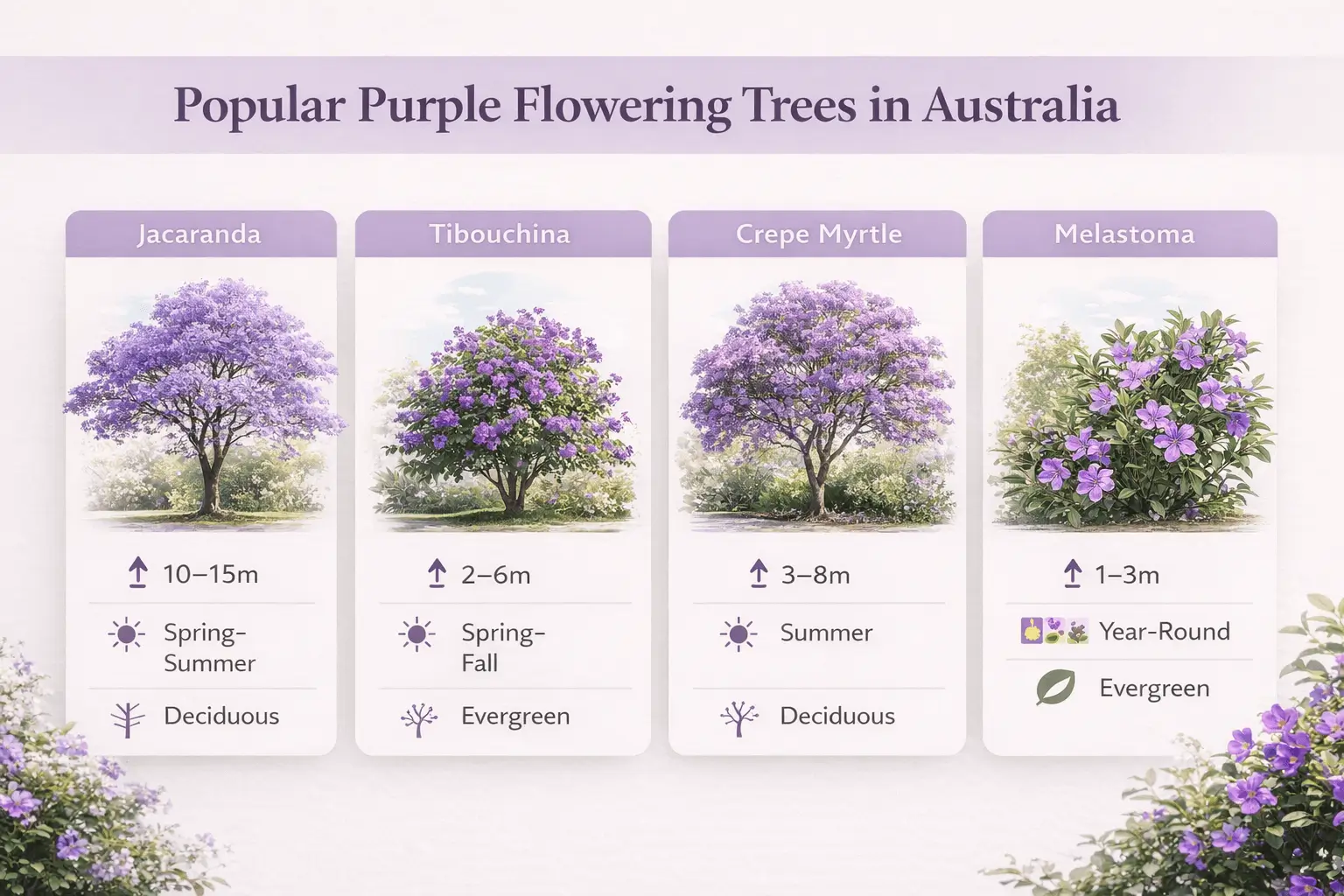
Commonly Grown Species
Several trees with purple flowers are widely planted across Australia due to their beauty and adaptability.
- Jacaranda tree
A deciduous ornamental tree known for its vibrant violet-blue flowers. Typically blooms in late spring to early summer and can grow up to 10–15 meters tall. - Tibouchina
An evergreen purple flowering tree with large, velvety flowers. Suitable for warmer climates and smaller gardens, usually reaching 3–6 meters. - Lagerstroemia (Crepe Myrtle)
Some varieties produce purple flowers. These trees are deciduous, bloom in summer, and vary in size from small to medium. - Melastoma species
Known for native purple tones, these shrubs or small trees thrive in tropical and subtropical regions.
These are often considered among the most beautiful trees due to their striking seasonal displays. The jacaranda tree is one of the most iconic ornamental trees in Australia, widely recognized for its vibrant seasonal blooms.
Australian Native Trees With Purple Flowers
Australian native trees with purple flowers are well-adapted to local environments and require less maintenance compared to exotic species. These native purple flowers Australia species often tolerate drought, poor soils, and varying climates.
Key benefits include:
- Better resistance to local pests and diseases
- Reduced water requirements once established
- Support for native pollinators such as bees and birds
Examples of purple native flowers Australia species include certain Melastoma varieties and other region-specific flowering plants. These trees contribute to sustainable gardening and ecological balance.
How to Identify a Purple Flowering Tree
Key Identification Factors
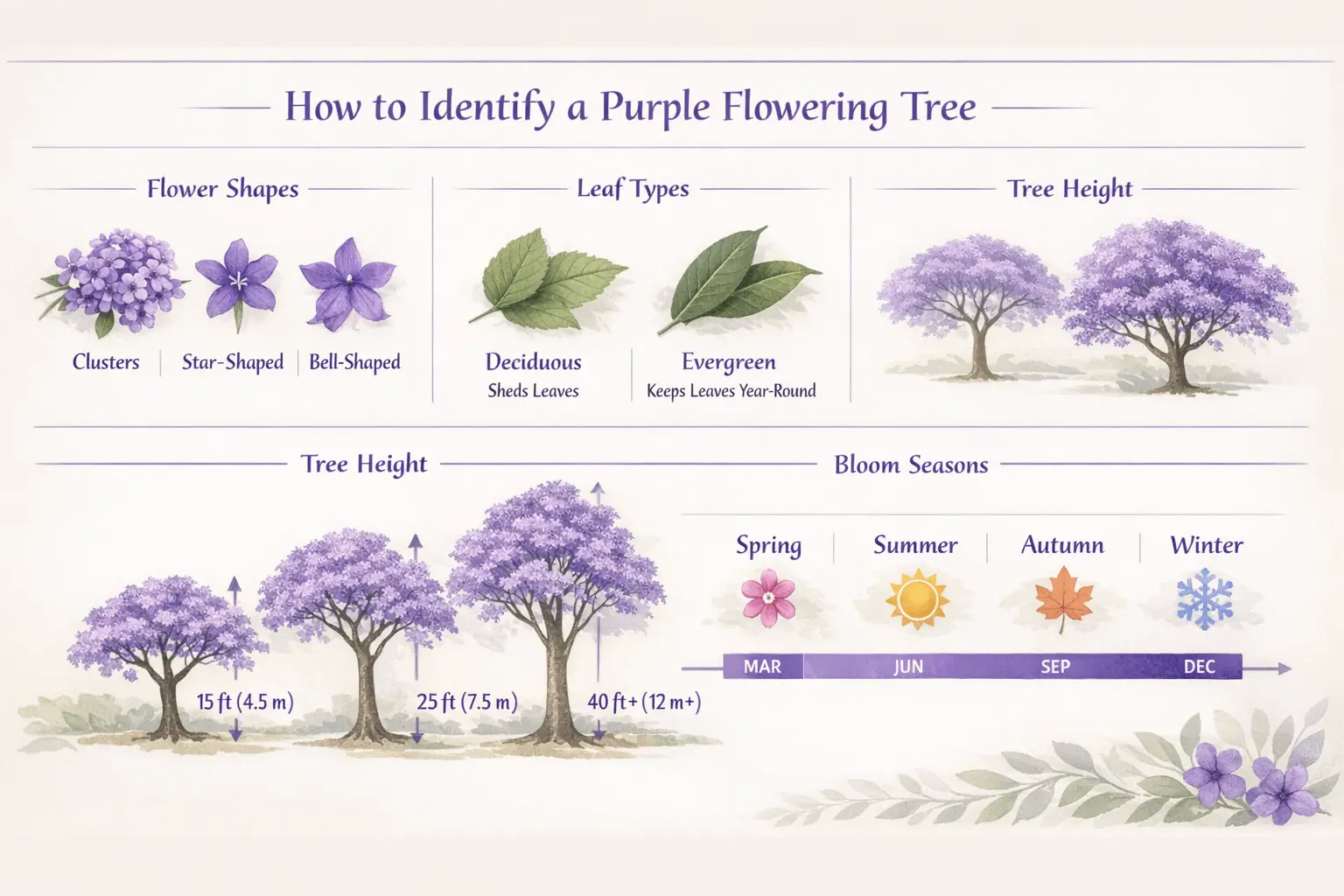
Purple flowering tree identification depends on several observable characteristics:
- Flower shape and clustering
Some species have trumpet-shaped blooms (jacaranda), while others have large, open petals (tibouchina). - Leaf type
Trees may be deciduous (shedding leaves seasonally) or evergreen (retaining foliage year-round). - Tree height and spread
Mature size helps distinguish between small ornamental trees and large shade trees. - Flowering season
Bloom timing varies, helping differentiate species.
When identifying a purple flower tree, comparing it with white flower tree and pink flowering trees identification can help narrow down species differences.
Small vs Tall Trees With Purple Flowers (Comparison Section)
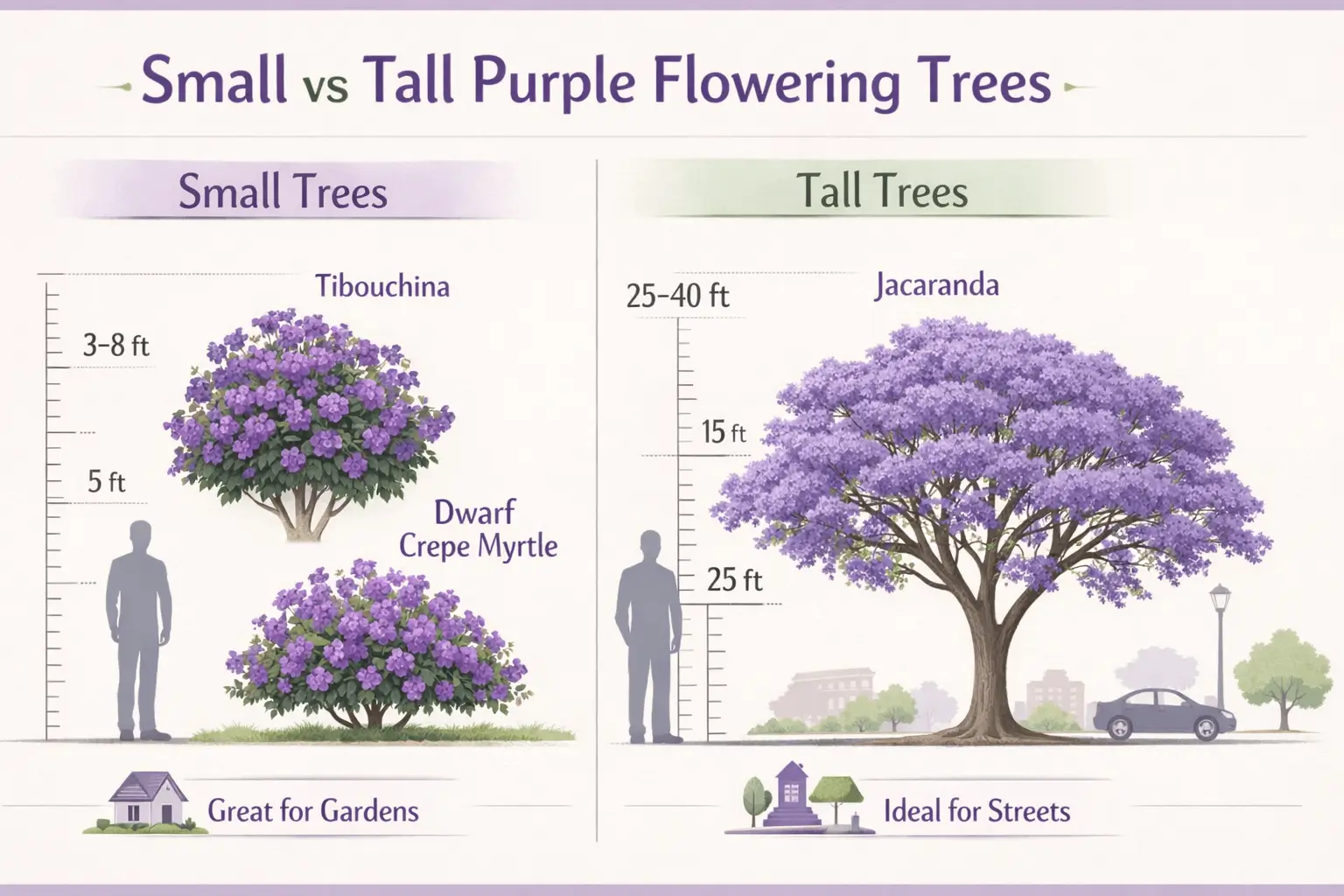
| Category | Typical Height | Best Use | Examples |
| Small tree with purple flowers australia | 3–6 meters | Small gardens, patios | Tibouchina, dwarf crepe myrtle |
| Tall trees with purple flowers australia | 8–15+ meters | Shade, streetscapes | Jacaranda tree |
Small trees are ideal for compact spaces, while tall trees provide shade and strong visual impact in larger landscapes.
Trees Similar to Jacaranda (Comparison Block)
Alternatives to Jacaranda
Trees like jacaranda offer similar visual appeal but may differ in size, foliage, or climate suitability.
- Trees like jacaranda with similar bloom color
Tibouchina and some crepe myrtle varieties produce comparable purple tones. - Tree similar to jacaranda but smaller or evergreen
Tibouchina is a popular evergreen alternative with a more compact size. - Trees that look like jacaranda but suited to different climates
Crepe myrtle adapts well to various climates and offers seasonal color.
These alternatives differ in bloom density, leaf structure, and maintenance requirements.
Growing Conditions for Purple Flowering Trees in Australia
Climate and Sunlight Requirements
Most trees with purple flowers in Australia thrive in full sun and require adequate light for optimal blooming. Some species are sensitive to frost and perform best in warmer regions.
Soil and Water Needs
- Prefer well-drained soil to prevent root rot
- Require moderate watering during establishment
- Become more drought-tolerant once mature
Environmental factors such as heat, drought, and frost can influence growth and flowering performance.
Evergreen vs Deciduous Purple Flowering Trees
| Type | Characteristics | Example |
| Evergreen flowering trees | Year-round foliage | Tibouchina |
| Deciduous flowering trees | Lose leaves seasonally | Jacaranda tree |
Evergreen trees provide consistent greenery, while deciduous trees create dramatic seasonal displays when flowering.
Comparison With White and Pink Flowering Trees
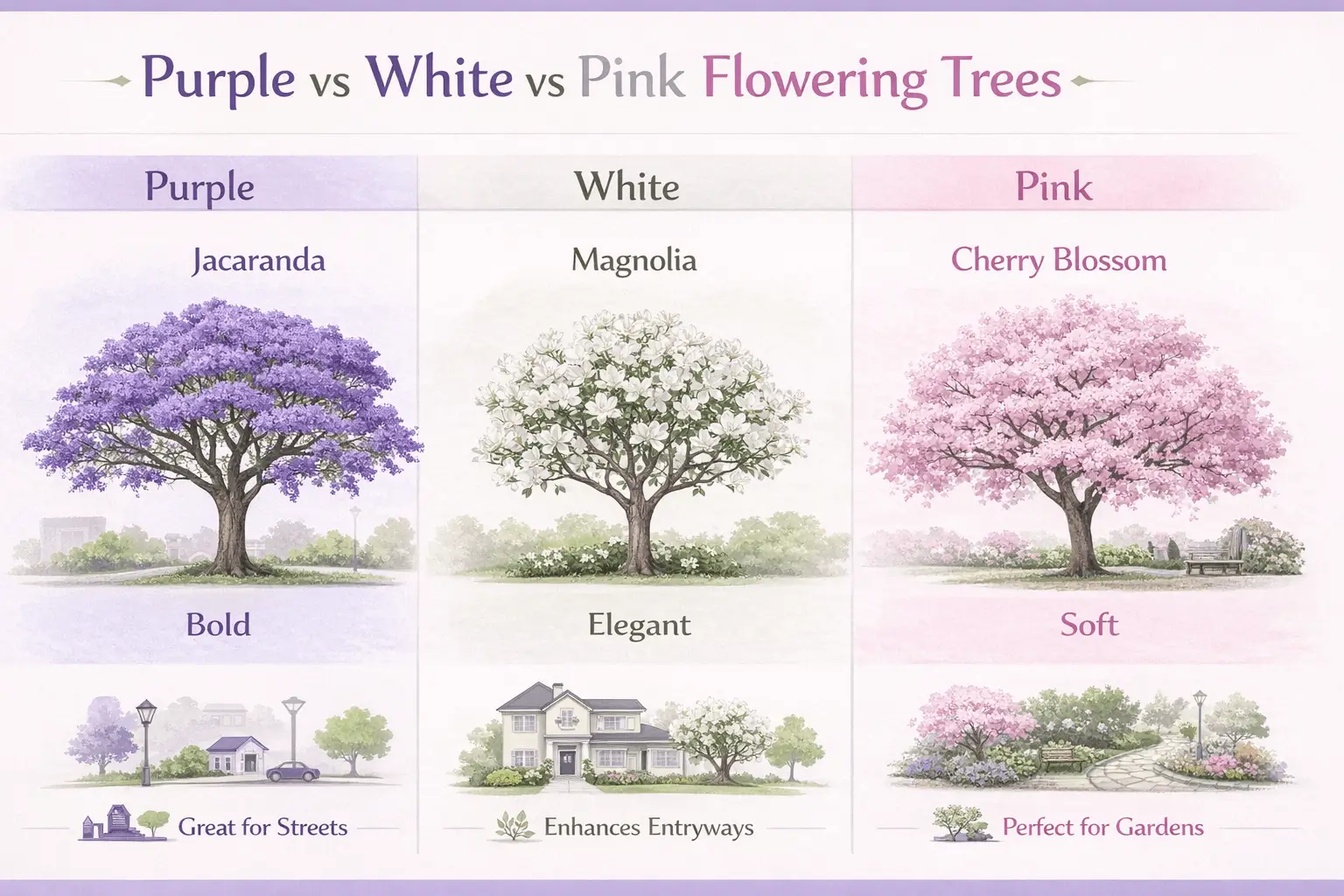
Purple vs White vs Pink Flowering Trees
| Feature | Purple Flowering Tree | White Flower Tree | Pink Flower Tree |
| Visual impact | Bold, vibrant | Clean, elegant | Soft, romantic |
| Common types | Jacaranda, Tibouchina | Magnolia, citrus | Cherry blossom, crepe myrtle |
| Use case | Statement trees | Formal gardens | Decorative landscapes |
Purple flowering trees stand out for their intensity, while white and pink flowering trees offer softer or more classic design aesthetics. White flowering trees such as crepe myrtle are commonly used for formal garden designs and seasonal contrast—learn more in this detailed guide on white crepe myrtle trees.
Common Problems and Solutions
Leaves Turning Yellow
Cause: Overwatering or poor drainage
Fix: Improve soil drainage and reduce watering frequency
Lack of Flowers
Cause: Insufficient sunlight
Fix: Ensure full sun exposure or prune surrounding plants
Pest Issues
Common pests may affect flowering trees, including insects that damage leaves and buds.
Solutions:
- Use natural predators or organic treatments
- Apply appropriate chemical controls if necessary
Beginner Mistakes to Avoid
- Planting large trees in small spaces, leading to overcrowding
- Ignoring climate suitability, causing poor growth
- Overwatering native species, which often prefer drier conditions
- Choosing non-native trees without understanding maintenance needs
Avoiding these mistakes improves long-term plant health and landscape success.
How to Choose the Best Purple Flowering Tree
Key Factors
Selecting the best trees with purple flowers in Australia depends on:
- Garden size
Choose small or tall trees based on available space - Climate zone
Match species to local temperature and rainfall conditions - Maintenance level
Native trees generally require less upkeep - Native vs ornamental preference
Decide between ecological benefits and aesthetic variety
These factors help narrow down suitable options effectively. If space is limited, selecting compact options is essential—this guide on small feature trees in Australia can help refine your choice.
How Purple Flowering Trees Fit Into Landscaping
Purple flowering trees can enhance landscape design in multiple ways:
- Serve as focal points in gardens
- Pair with white and pink flowering trees for contrast
- Create layered seasonal color displays
They are often used in both residential and public landscapes for visual impact and biodiversity support. For a broader understanding of how different plants fit into indoor and outdoor spaces, refer to this complete plants for homes and gardens guide.
Conclusion
Trees with purple flowers in Australia offer a diverse range of options, from iconic jacaranda trees to resilient native species. By understanding identification, growth conditions, and landscape use, you can select the right purple flowering tree for your space. Whether you prefer small ornamental trees or large shade providers, these trees bring lasting beauty and seasonal interest to Australian gardens.
FAQs
1. What is the most common tree with purple flowers in Australia?
The jacaranda tree is the most widely recognized purple flowering tree in Australia due to its vibrant seasonal blooms and widespread use in urban landscapes.
2. Are there Australian native trees with purple flowers?
Yes, several native species produce purple blooms and are well-suited to Australian climates, offering better adaptability and lower maintenance.
3. What tree looks similar to a jacaranda?
Tibouchina and some crepe myrtle varieties are often considered similar alternatives due to their purple flowers and ornamental appeal.
4. Can purple flowering trees grow in full sun?
Most purple flowering trees in Australia thrive best in full sun, which supports healthy growth and abundant flowering.
5. What is the difference between purple, pink, and white flowering trees?
The main differences lie in visual impact, species variety, and landscape use, with purple being bold, white being elegant, and pink offering a softer decorative effect.