Introduction
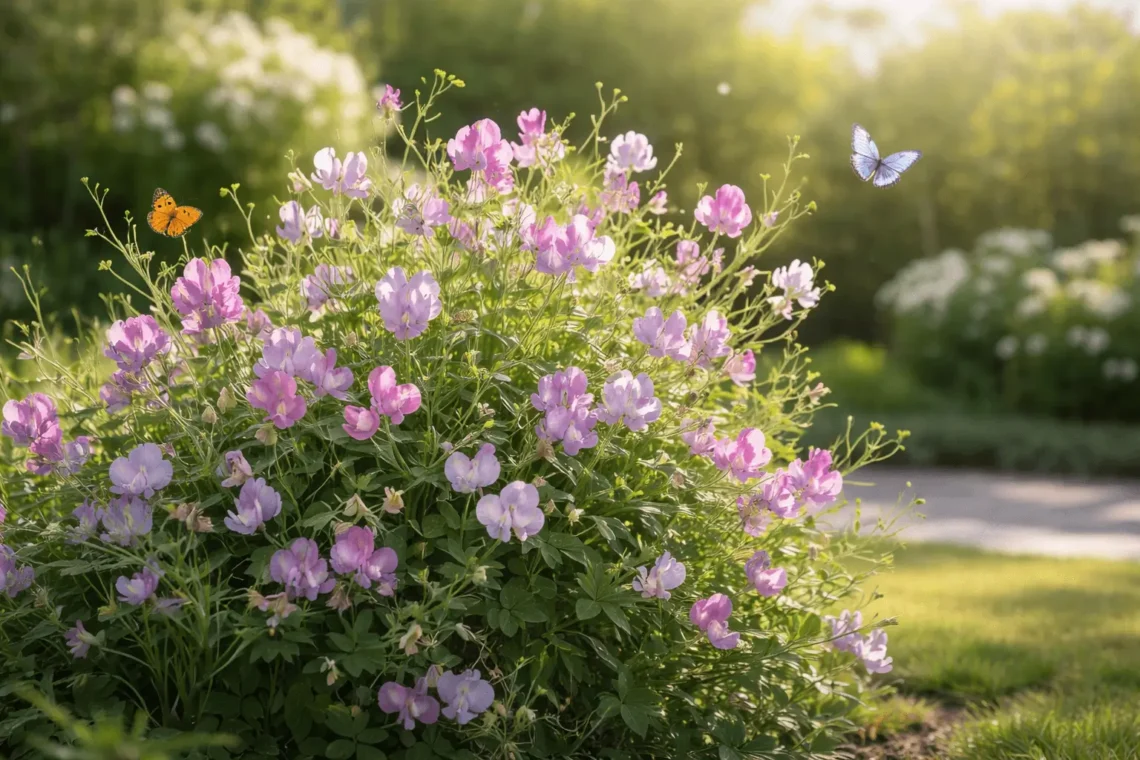
The sweet pea bush is a compact, flowering shrub valued for its soft, pea-shaped blooms and easy-care nature, making it a popular choice in modern landscapes. Commonly known as the sweet pea shrub, sweetpea bush, or bush sweet peas, this plant offers year-round greenery with vibrant seasonal flowers. Its ornamental appeal lies in its delicate purple, pink, or lavender blooms that resemble traditional sweet peas without the climbing habit. Gardeners also appreciate the sweet pea bush for its ability to attract butterflies while requiring minimal maintenance once established. With its tidy growth, drought tolerance, and adaptability to different garden styles, it fits seamlessly into contemporary, coastal, and low-water landscapes.
What Is a Sweet Pea Bush?
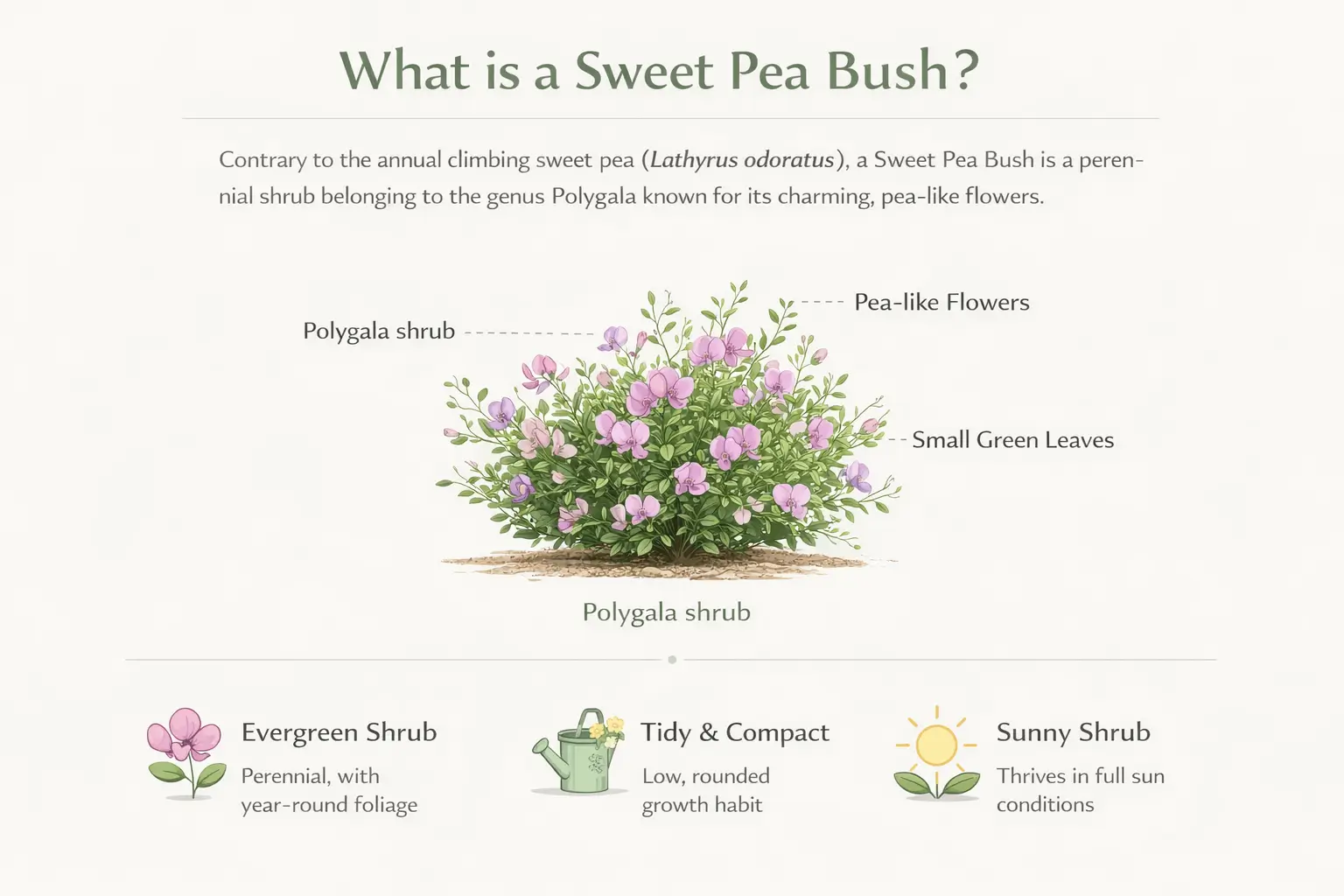
Sweet Pea Bush vs Sweet Pea Vine (Key Differences)
Bush sweet peas are often confused with climbing sweet peas, but they are entirely different plants. A sweet pea bush grows as a self-supporting shrub, while sweet pea vines are annual climbers that need trellises or supports. Bush sweet peas maintain a rounded form and flower repeatedly without sprawling.
Terms like “pea bush” and “sweet pea tree” are frequently misused, but they are not botanically accurate. The sweet pea bush does not develop a tree-like trunk, nor is it related to edible pea plants.
Botanical Classification and Origin
The sweet pea bush belongs to the Polygala genus, a diverse group of ornamental flowering plants. The most recognized species include Polygala fruticosa and Polygala × dalmaisiana. Polygala fruticosa is a naturally occurring species, while Polygala × dalmaisiana is a cultivated hybrid developed for improved flowering and form. Both native and cultivated varieties are widely grown for ornamental use due to their adaptability and visual appeal.
Popular Sweet Pea Bush Varieties
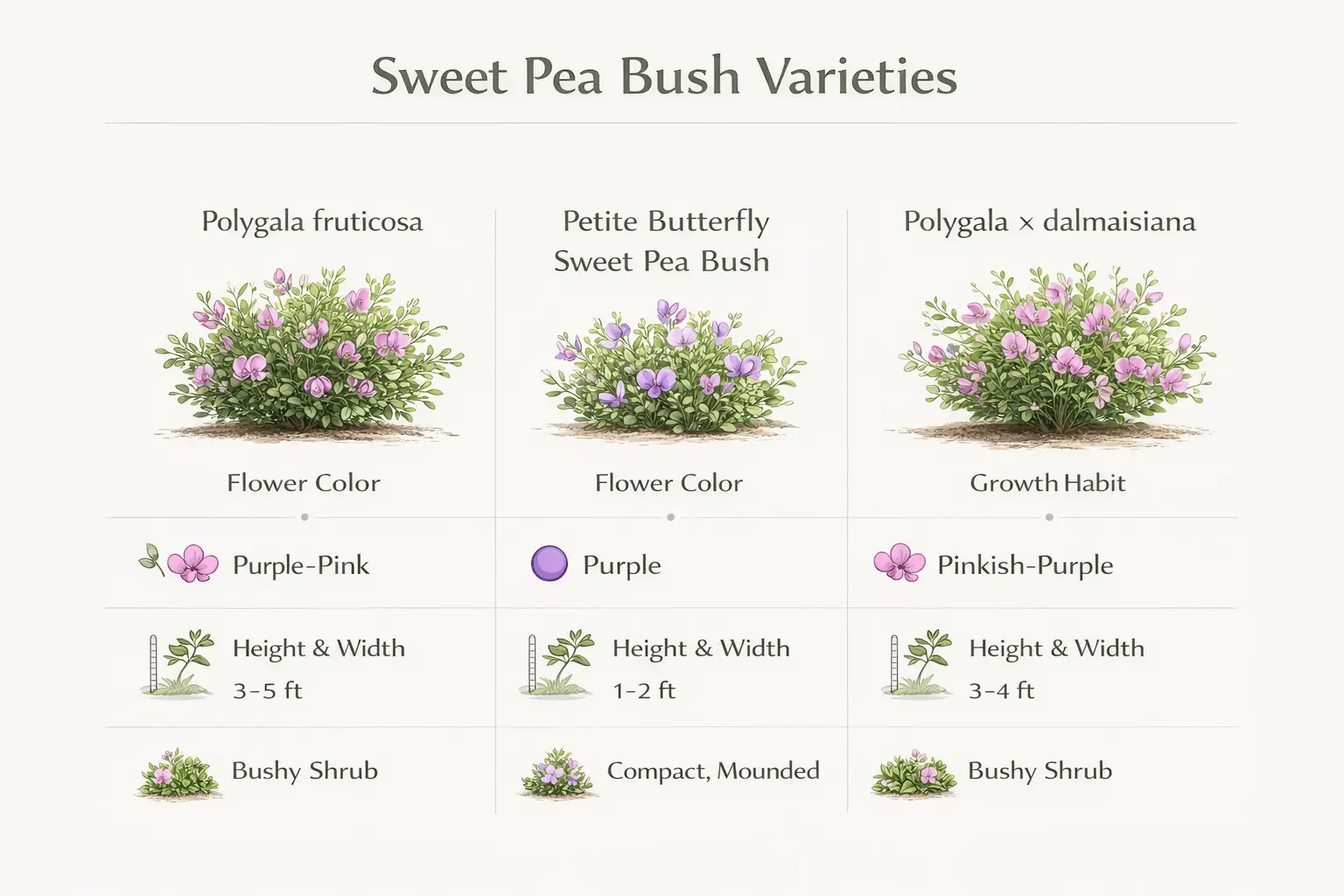
Polygala Fruticosa (Classic Sweet Pea Shrub)
Polygala fruticosa is the classic sweet pea shrub known for its airy structure and vibrant purple blooms. It grows well in warm, dry climates and performs best in well-draining soil. Its loose, natural shape suits informal gardens and native-style landscapes.
Petite Butterfly Sweet Pea Bush
Polygala fruticosa ‘Petite Butterfly’ is a compact cultivar bred for smaller spaces. Polygala petite butterfly features dense growth, fine-textured foliage, and abundant butterfly-like flowers.
The main difference between the petite butterfly sweet pea bush and standard shrubs is size. Petite Butterfly remains shorter and more controlled, making it ideal for containers and small garden beds.
Polygala × Dalmaisiana Sweet Pea Shrub
Polygala × dalmaisiana is a hybrid sweet pea shrub valued for its vigorous growth and extended flowering season. It produces larger blooms and maintains a fuller shape, offering strong landscape performance and consistent color throughout the growing season.
Sweet Pea Bush Size, Height, and Growth Habit
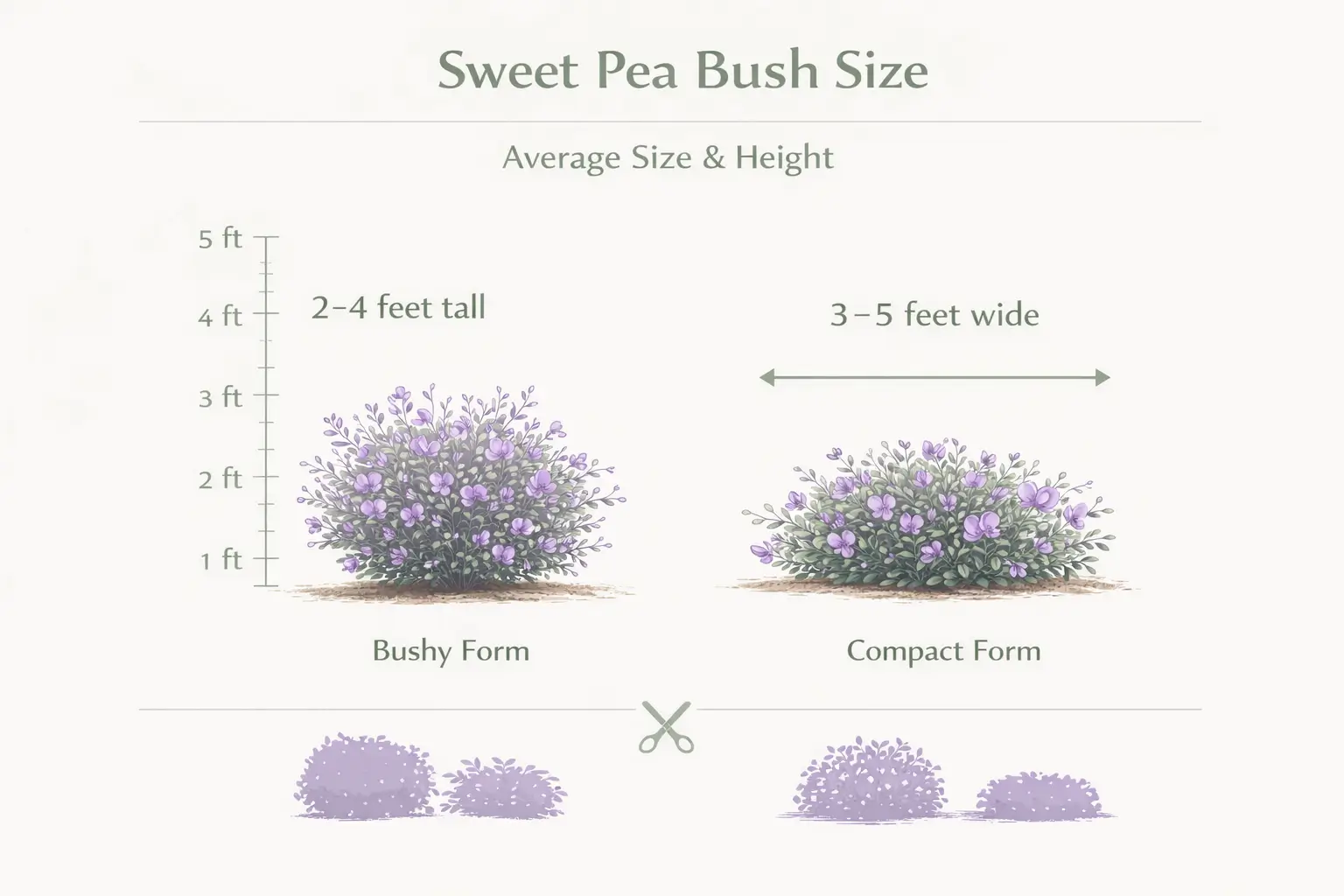
Average Sweet Pea Bush Size
A mature sweet pea bush typically reaches 4–6 feet in width with a similar spread. Compared to other sweet pea shrubs, compact cultivars remain smaller while hybrid types grow broader and denser.
Sweet Pea Height and Shape
Sweet pea height usually ranges between 4 and 8 feet, depending on variety and pruning. Bushy sweet peas develop a rounded, airy form, while compact shrubs stay tighter. Regular pruning directly influences size, shape, and overall fullness.
Sweet Pea Bush Care and Maintenance
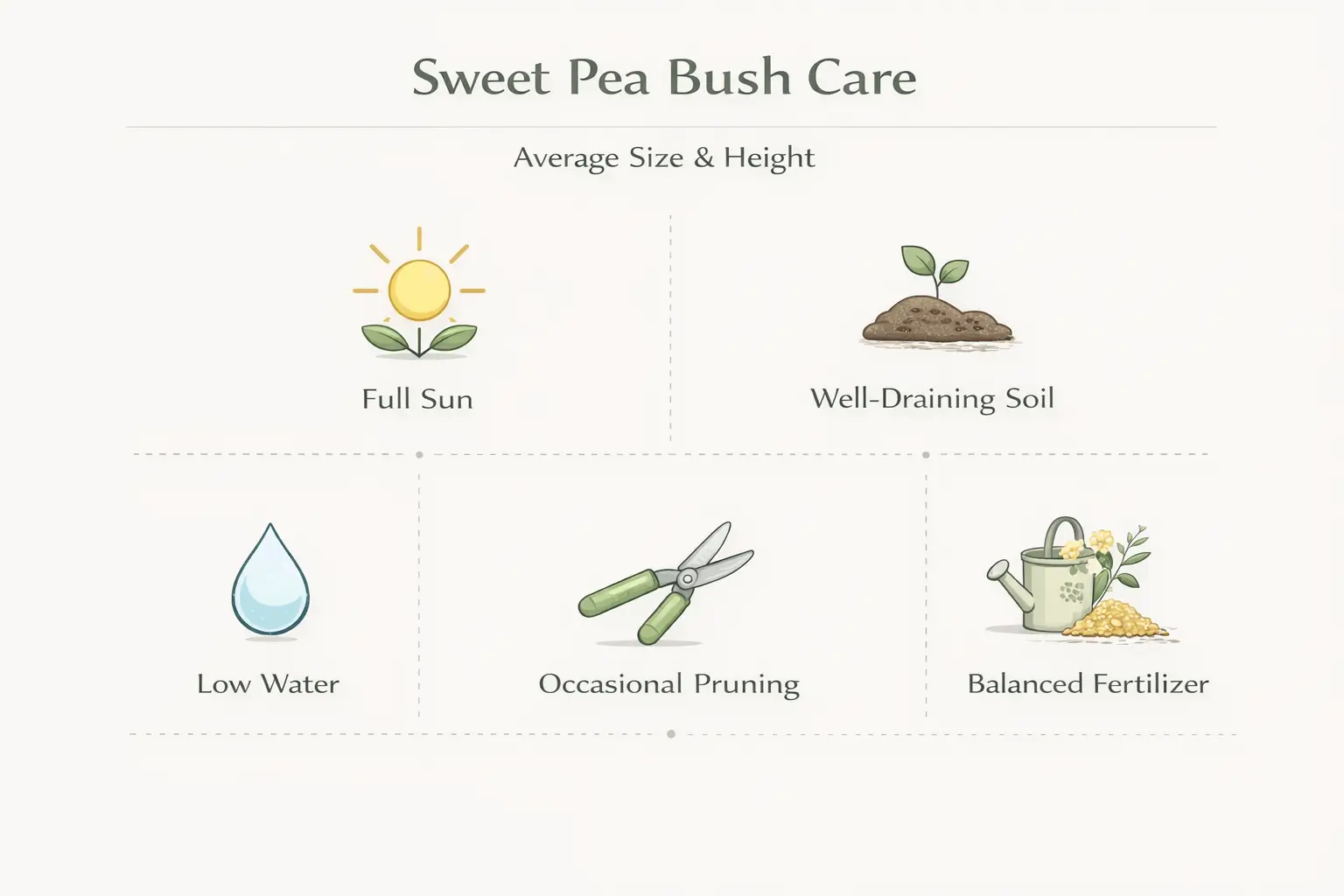
Sunlight, Soil, and Water Requirements
Sweet pea bushes thrive in full sun to partial shade. Well-draining soil is essential to prevent root issues. Once established, they show good drought tolerance but perform best with occasional deep watering.
Sweet Pea Shrub Care Tips
- Fertilize lightly in early spring with a balanced fertilizer
- Apply mulch to retain moisture and regulate soil temperature
- Reduce watering during cooler seasons
Pruning and Shaping Sweet Pea Bushes
Pruning helps maintain bushy sweet peas and encourages fresh growth. Light trimming after flowering promotes compact form and increased blooming.
Is Sweet Pea Bush Invasive or Native?
Native Status of Polygala Species
Polygala fruticosa is native to parts of southern Africa. It adapts well to non-native regions without aggressive spreading, making it suitable for controlled landscapes.
Petite Butterfly Sweet Pea Shrub — Invasive or Safe?
The petite butterfly sweet pea shrub is considered safe. Its growth is manageable, and it does not pose environmental risks when properly maintained.
Landscaping Uses for Sweet Pea Bush Shrubs
Sweet Pea Shrub Landscape Design Ideas
Sweet pea shrub works well in:
- Borders and low hedges
- Focal planting areas
- Containers and raised garden beds
Attracting Butterflies and Pollinators
Bush sweet peas are pollinator-friendly due to their nectar-rich flowers. Pairing them with flowering shrubs enhances butterfly activity and visual harmony.
Common Problems and Solutions
Pests and Diseases
Sweet pea bushes are generally resistant to pests. Occasional aphids or root rot can occur, usually prevented with proper airflow and drainage.
Growth Problems and Flowering Issues
If a sweet pea bush doesn’t bloom, insufficient sunlight or over-pruning is often the cause. Leggy or sparse shrubs benefit from corrective pruning and balanced feeding.
Conclusion & Call to Action
Sweet pea bush shrubs are an excellent choice for home gardens because they combine ornamental beauty with practical performance. Their compact growth, extended flowering period, and butterfly-attracting blooms make them suitable for both small and large landscapes. With low maintenance needs, good drought tolerance, and adaptability to various garden styles, sweet pea bushes fit easily into modern gardening routines.
From classic Polygala fruticosa to compact options like the petite butterfly sweet pea bush and vigorous hybrids such as Polygala × dalmaisiana, there is a variety to match different space, size, and design preferences. When planted in the right sunlight, soil, and with proper pruning, these shrubs remain healthy, well-shaped, and consistently attractive.
Now is the time to choose the right sweet pea bush for your landscape. Evaluate your space, climate, and design goals, then select a variety that complements your garden while delivering long-lasting color and pollinator appeal.
Read Also: False Agave Plant: 7+ Stunning Facts Gardeners Love
FAQs — Sweet Pea Bush
How big does a sweet pea bush grow?
Most sweet pea bushes grow 4–8 feet tall and wide, depending on the variety.
Is sweet pea bush the same as sweet pea vine?
No. Sweet pea bush is a shrub, while sweet pea vine is a climbing annual plant.
Is the petite butterfly sweet pea shrub invasive?
No, it is considered non-invasive and safe for home landscapes.
How fast does a sweet pea bush grow?
Growth is moderate, with noticeable size increase within the first two growing seasons.
What is the best climate for growing sweet pea shrubs?
They perform best in warm, Mediterranean, and coastal climates.
Does sweet pea bush attract butterflies?
Yes, sweet pea bush is highly attractive to butterflies and other pollinators.