Introduction
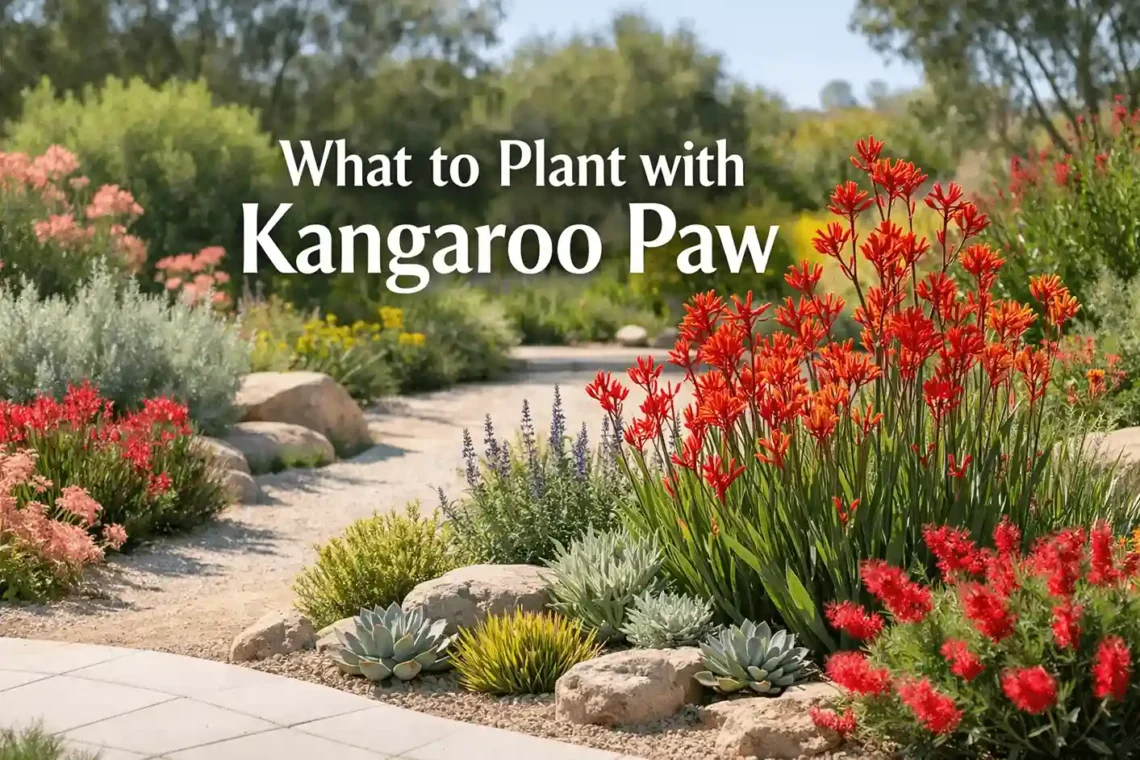
Companion planting with kangaroo paw (Anigozanthos spp.) enhances garden aesthetics and health by pairing this striking Australian native with complementary plants that match its sun-loving, well-drained soil needs. These vibrant, fuzzy flowers thrive in full sun and sandy conditions, making them ideal for low-water landscapes. By selecting compatible species, gardeners can improve flowering, reduce disease risks, and create visually balanced plantings. This guide explains what to plant with kangaroo paw for optimal growth, pollinator attraction, and long-term garden performance.
Kangaroo paw (Anigozanthos spp.), a genus native to Western Australia, is widely recognized for its unique tubular flowers and ecological value. [Wikipedia]
Quick Summary
- Kangaroo paw pairs best with drought-tolerant plants like grevillea, callistemon, and succulents.
- Dwarf and miniature varieties are ideal for pots and layered garden designs.
- Full sun companions improve flowering and overall plant health.
- Avoid water-loving plants to prevent root rot and fungal diseases.
Best Companion Plants
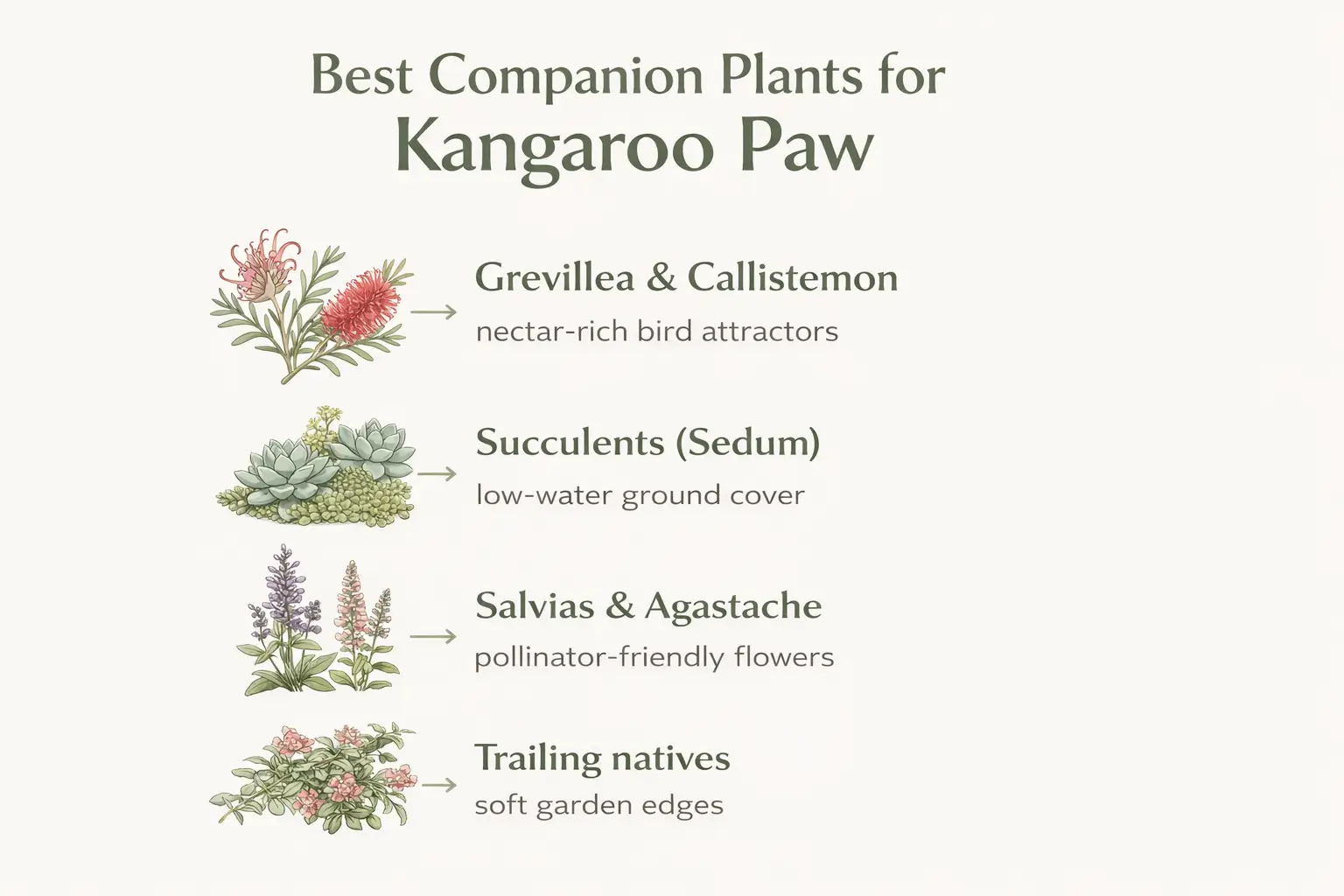
The best plants to grow alongside kangaroo paw are those that share similar sunlight, soil, and water requirements. Choosing compatible companions ensures healthy growth and enhances the overall garden design.
Kangaroo paw works especially well in mixed native and drought-tolerant landscapes, similar to plants featured in guides like Rosemary Prostrate and other Mediterranean garden plants, which share the same low-water and sun-loving conditions.
Grevillea and Callistemon
Grevillea and callistemon are ideal companions because they produce nectar-rich flowers that attract birds and pollinators. Their drought tolerance and preference for well-drained soils align perfectly with kangaroo paw. These plants also provide structural contrast with their bushy forms. Gardeners looking for a complete side-by-side breakdown can explore this detailed kangaroo paw companion plants guide covering the top species ranked by compatibility. It covers soil needs, sun preferences, and pairing logic to help you build the most effective native garden combination.
Succulents for Ground Contrast
Succulents such as sedum work well as low-growing companions beneath the upright, strappy foliage of kangaroo paw. They help retain soil structure while adding texture and visual layering without competing for water.
Flowering Perennials for Height
Salvias, agastache, and verbena bonariensis add vertical interest and seasonal color. These sun-loving perennials complement kangaroo paw by filling mid-to-upper layers in mixed garden beds while supporting pollinators.
Trailing Natives for Edges
Trailing native plants soften hard edges in pots or borders. They create a cascading effect that balances the upright growth habit of kangaroo paw, improving overall garden cohesion.
Kangaroo Paw in Pots
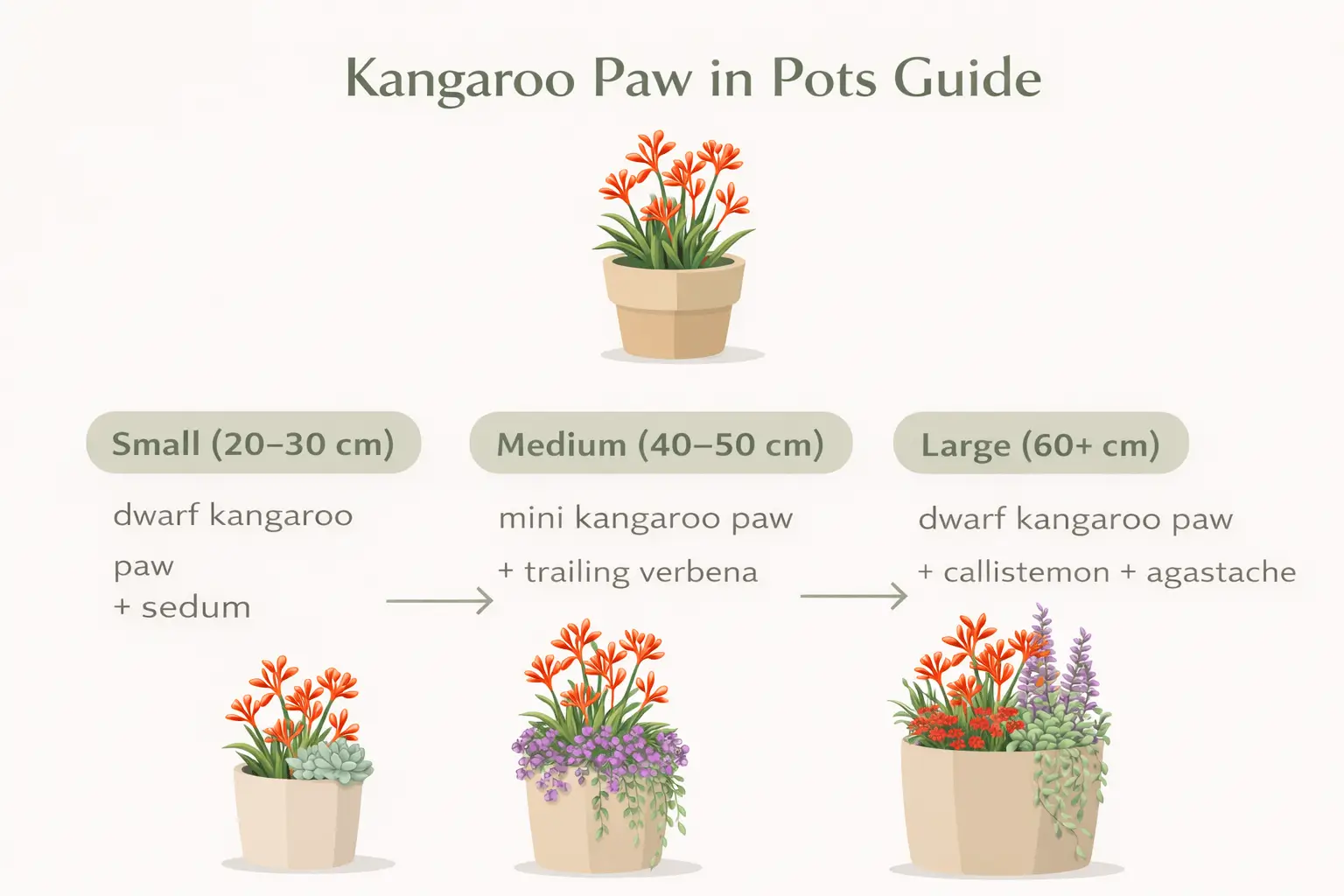
Growing kangaroo paw in pots allows flexibility in placement and design. Dwarf varieties perform especially well in containers when provided with proper drainage and suitable soil.
Pot Selection and Size
Choose pots that are at least 40 cm wide to allow sufficient root development. Smaller pots can be used for miniature varieties, but drainage must always be a priority.
Companion Plants for Pots
Pair kangaroo paws in pots with:
- Compact succulents for low-level texture
- Trailing plants like verbena for layered displays
- Small native shrubs for balanced container arrangements
Watering and Soil
Use a premium native potting mix with added grit to ensure drainage. Water deeply but infrequently, allowing the soil to dry between watering sessions to prevent root rot.
Pot Size Guide
| Pot Size | Recommended Varieties | Companion Plants |
| Small (20–30cm) | Dwarf kangaroo paw | Succulents, low sedum |
| Medium (40–50cm) | Miniature kangaroo paws | Trailing grevillea, verbena |
| Large (60cm+) | Standard in dwarf form | Callistemon dwarfs, agastache |
Landscaping with Kangaroo Paws
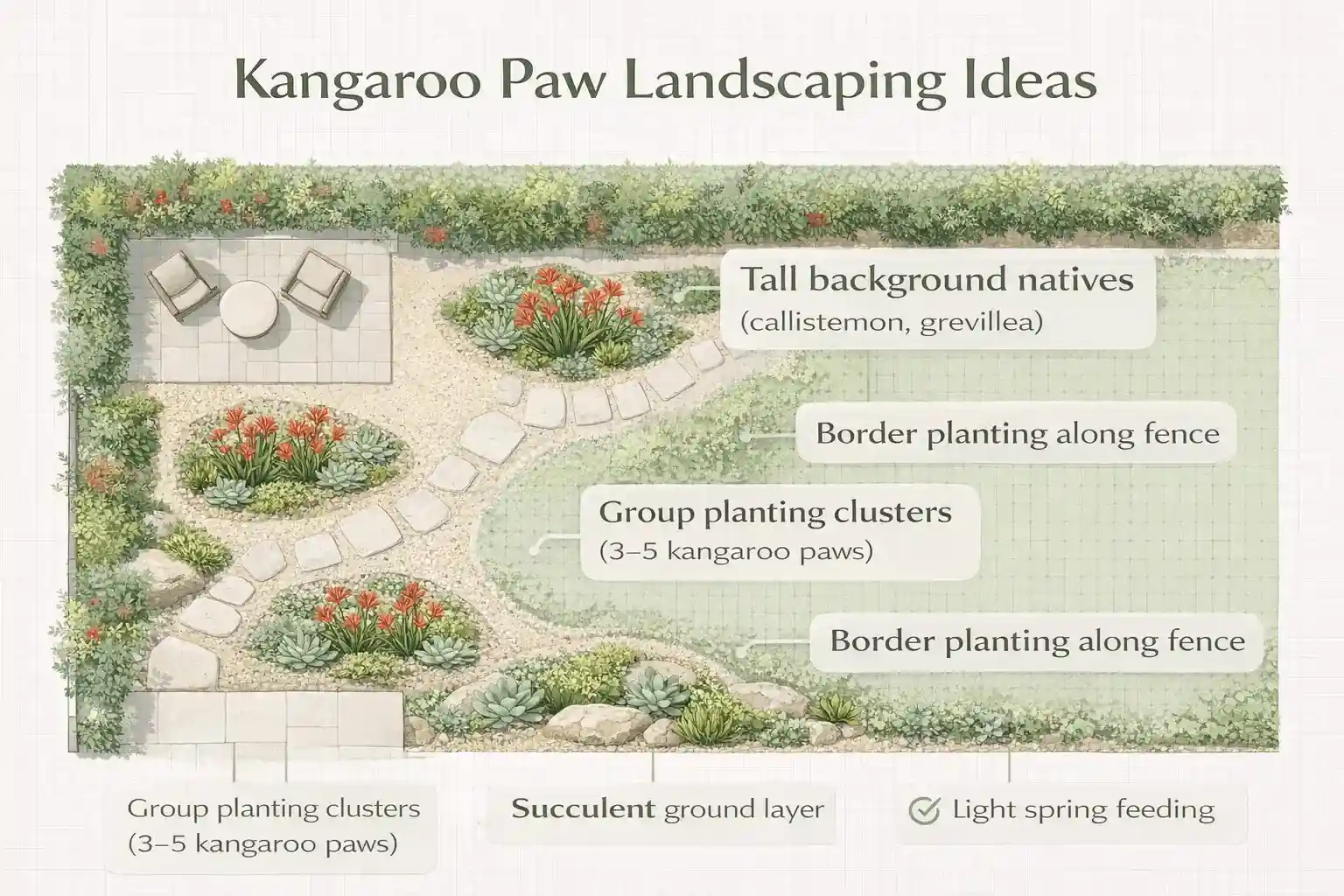
Kangaroo paws are widely used in landscaping due to their bold color and low maintenance needs. They are particularly effective in dry gardens and modern landscape designs.
For larger garden designs or screening layouts, kangaroo paw can be combined with structured planting styles often used in tropical privacy plant designs to create layered, bird-friendly outdoor spaces.
Group Planting
Plant kangaroo paws in groups of three or five to create visual unity. This approach enhances their impact and makes the display more cohesive in larger spaces. For a structured overview of which plants work best in group landscaping scenarios, this curated kangaroo paw companion plant database organizes species by height, spread, and visual pairing potential. It’s a practical reference when planning multi-plant groupings for borders, beds, or native garden displays.
Borders and Edges
Use kangaroo paw along fences or walls with suitable underplantings. This creates depth and balances the vertical growth with lower companion plants.
Xeriscape Designs
Kangaroo paw fits well in xeriscapes where water conservation is important. Its upright form contrasts with rounded or spreading plants, adding architectural interest.
Comparison: Garden vs. Pots
| Aspect | Garden Beds | Pots |
| Space Needs | 50–100 cm spacing | Compact root system |
| Companions | Taller native plants | Dwarf trailing plants |
| Maintenance | Mulching required | Frequent drainage checks |
For a data-driven comparison across even more variables like drainage requirements, pot sizing, and companion plant performance scores, refer to this kangaroo paw companion planting spreadsheet. It provides a filterable, plant-by-plant breakdown that makes it easy to match the right companion to your specific garden or container setup.
Kangaroo Paw Care Guide
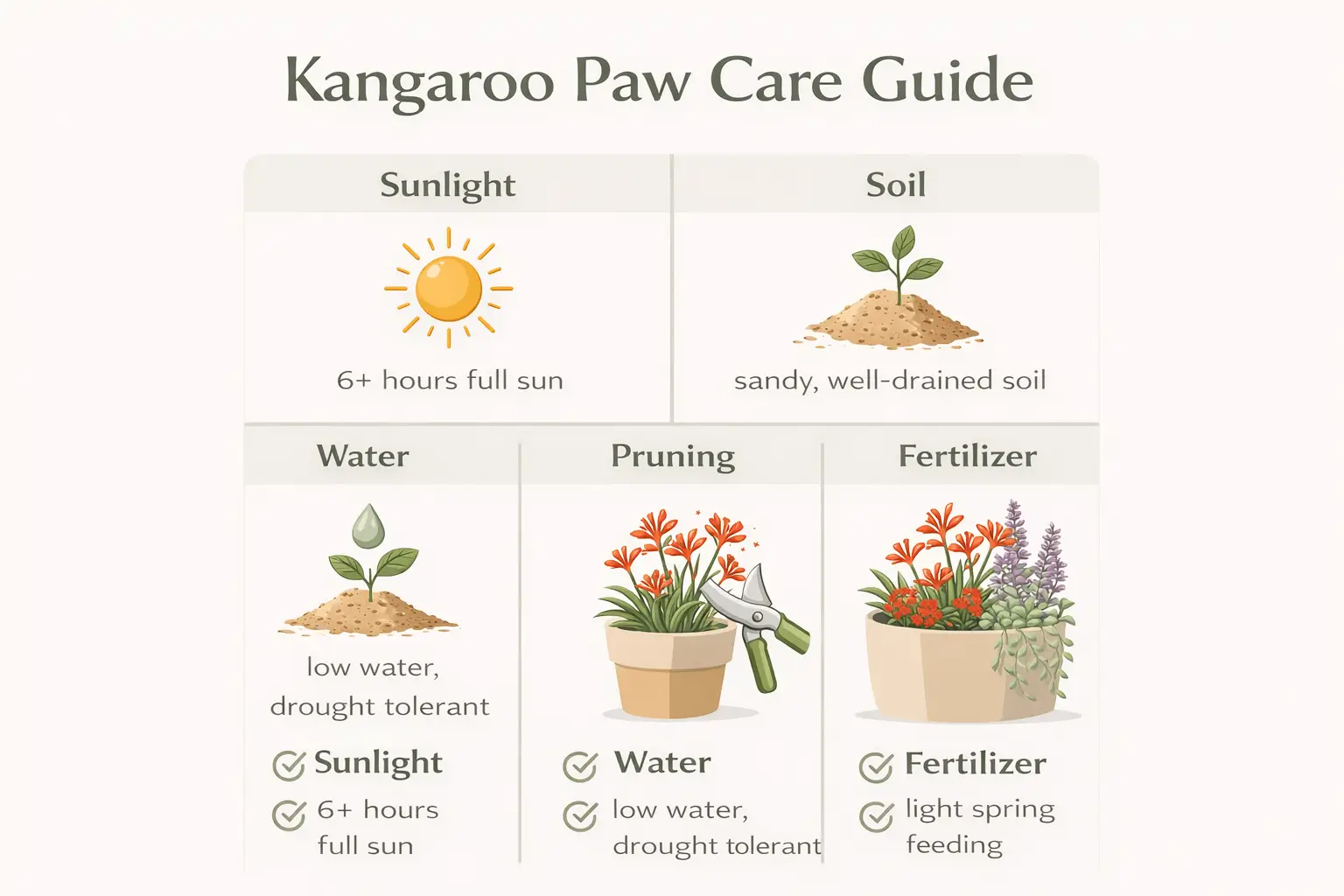
Kangaroo paw requires specific conditions to thrive. Proper care ensures consistent flowering and long plant life.
Light
Provide at least 6 hours of direct sunlight daily. While the plant can tolerate light shade, flowering will be reduced.
Soil
Use sandy, well-draining soil with slightly acidic pH. Poor drainage can lead to root diseases. Similar dry-climate planting principles are also used in Mediterranean-style gardens, where drainage and sun exposure are the most important growth factors.
Water
Kangaroo paw is drought-tolerant once established. Water more frequently during the blooming season but avoid overwatering.
Pruning
Remove old or spent flower stems after flowering. Cutting back old foliage encourages new growth and maintains plant health.
Plant Size
Kangaroo paw size varies depending on the variety and growing conditions. Mature plants range from 30 cm to 2 meters in height.
Dwarf varieties typically grow between 50–80 cm, making them suitable for pots and small gardens. Outdoor plants in ideal conditions can exceed 1 meter, while indoor or container-grown plants usually remain smaller due to limited root space.
Growth Rate
Kangaroo paw has a moderate growth rate and can flower within 1–2 years when grown from seed.
Growth is most active during spring and summer when sunlight and temperatures are optimal. Well-drained soil and full sun significantly accelerate development, while poor drainage can slow growth.
Common Problems and Solutions
Yellow Leaves
Yellowing leaves are usually caused by overwatering or poor drainage. Improve soil structure with sand or grit and ensure companion plants do not increase moisture levels.
Lack of Flowering
Insufficient sunlight is the main reason for poor flowering. Relocate plants to a full-sun location and pair them with sun-loving companions.
Pest and Disease Issues
Ink disease can occur in overly wet conditions. Maintain proper spacing between plants to improve airflow and reduce moisture buildup.
Comparison with Similar Plants
Kangaroo paw varieties differ in size, color, and growth habit.
Standard varieties produce vibrant red and orange flowers with taller stems, while dwarf varieties offer compact growth suitable for small spaces. Compared to black or pink kangaroo paw types, dwarf forms are easier to manage in mixed plantings and containers without overcrowding.
Conclusion
Choosing the right companion plants for kangaroo paw improves both plant health and garden design. Drought-tolerant, sun-loving species such as grevillea, callistemon, and succulents create a balanced environment that supports growth and flowering. Whether planted in pots or garden beds, proper pairing ensures long-term success and visual appeal. Using dwarf varieties further increases flexibility, making kangaroo paw suitable for a wide range of landscaping styles.
For a broader understanding of plant selection, care principles, and home gardening strategies, explore our complete Guide to House Plants for more foundational knowledge.
FAQ
What to plant with kangaroo paw in full sun?
Grevillea, callistemon, and succulents are ideal because they thrive in full sun and well-drained soil, matching kangaroo paw’s requirements.
What to plant with kangaroo paw in pots?
Dwarf kangaroo paw pairs well with trailing verbena, sedum, and compact succulents to create layered and balanced container arrangements.
Can kangaroo paw grow in shade?
Kangaroo paw can tolerate light shade, but it produces fewer flowers. Full sun is recommended for best results.
What to plant with dwarf kangaroo paw?
Compact plants such as mini grevillea and agastache are suitable companions, as they do not overcrowd the plant.
How to landscape with kangaroo paws?
Use kangaroo paw in groups, borders, or xeriscape designs with drought-tolerant companions to create a cohesive and low-maintenance landscape.
What causes kangaroo paw not flowering?
The most common causes are lack of sunlight and overwatering. Ensure full sun exposure and well-drained soil for consistent blooms.