Introduction
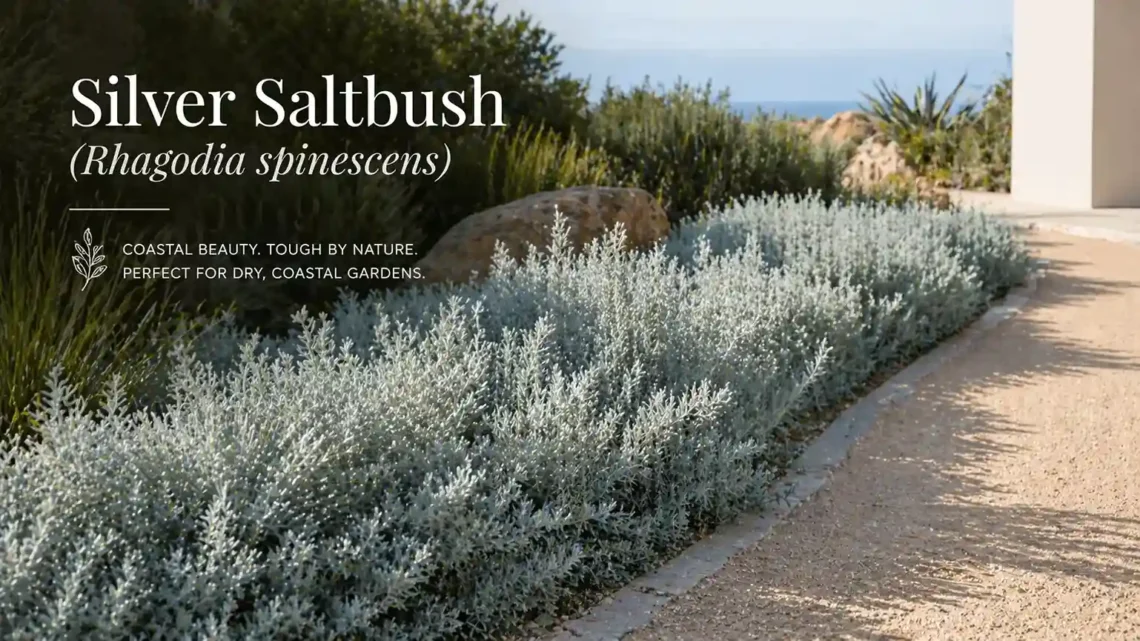
Silver saltbush, commonly known as Rhagodia spinescens, is a hardy, low-maintenance Australian native shrub widely used as a saltbush ground cover and ornamental hedge. This plant, often called rhagodia silver border or silver border saltbush, stands out for its silvery foliage and ability to thrive in difficult environments.
It is especially valued in landscaping due to its drought tolerance, adaptability to poor soils, and resilience in coastal conditions. As a native species, it also supports sustainable gardening practices while providing strong visual appeal in modern landscapes.
It is commonly featured alongside other resilient native plants like coastal rosemary, known for its durability in similar harsh environments.
Quick Summary
- Silver saltbush is a drought-tolerant native shrub ideal for ground cover and hedging
- Known botanically as Rhagodia spinescens, part of the broader Rhagodia group
- Thrives in poor soils, coastal conditions, and dry climates
- Widely used in landscaping for erosion control and low-maintenance gardens
What Is Silver Saltbush? (Definition & Botanical Overview)
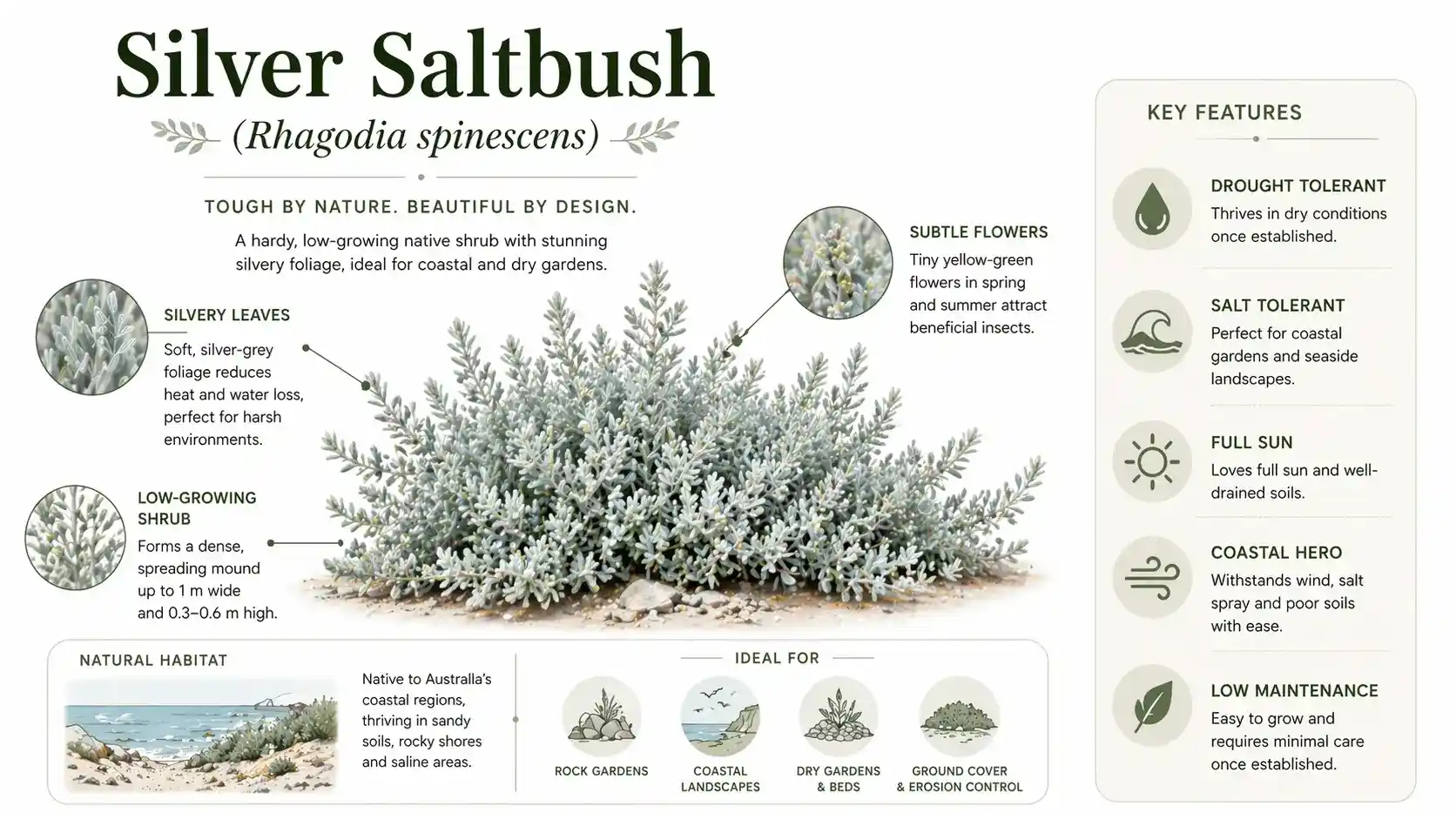
Silver saltbush is a salt-tolerant Australian native plant classified botanically as Rhagodia spinescens, belonging to the Amaranthaceae family. It is part of a broader group of plants commonly referred to as saltbush, known for their ability to grow in saline and arid environments.
Saltbush plants belong to a group of halophytes, which are species adapted to saline environments, as described in botanical classifications.
Saltbush includes several genera such as Rhagodia, Atriplex, and Enchylaena. Within this group, silver saltbush is particularly valued for its ornamental use and dense ground-covering habit. It is closely related to species like Atriplex nummularia (old man saltbush), which is more commonly used for livestock fodder.
Common names for Rhagodia spinescens include:
- Silver border saltbush
- Rhagodia silver border
- Silver holly saltbush
Related species such as Enchylaena tomentosa (ruby saltbush) are known for producing edible berries, highlighting the diversity within saltbush plants.
Key characteristics include:
- Native to Australia
- Highly salt-tolerant
- Adapted to dry and coastal climates
- Some species produce edible fruit
Types of Saltbush and Related Species
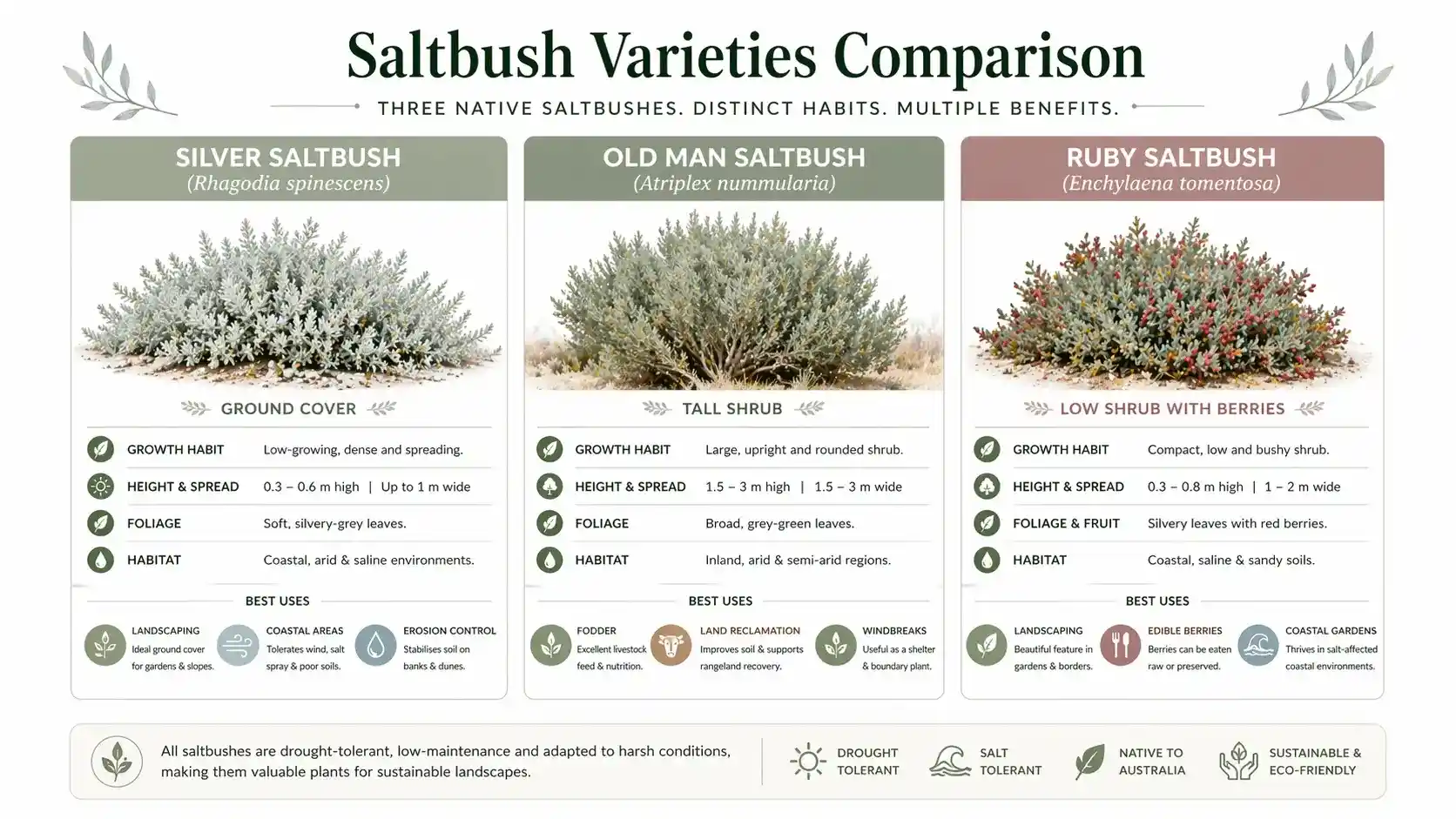
Saltbush plants vary widely in growth habit, use, and ecological role. The main types include Rhagodia, Atriplex, and Enchylaena species.
Common Saltbush Types
- Rhagodia species
Includes creeping saltbush varieties used for ground cover and ornamental landscaping - Atriplex species
Includes spiny saltbush and old man saltbush, often used for grazing and large hedges - Enchylaena species
Known as ruby saltbush, valued for edible berries and bush food applications
Comparison Table: Common Saltbush Varieties
| Plant Type | Scientific Name | Growth Habit | Key Use |
| Silver Saltbush | Rhagodia spinescens | Ground cover | Landscaping |
| Old Man Saltbush | Atriplex nummularia | Shrub/hedge | Fodder |
| Ruby Saltbush | Enchylaena tomentosa | Low shrub | Edible berries |
Silver Saltbush Size and Growth Habit
Plant Size
Silver saltbush typically grows as a low, spreading shrub. It forms a dense ground cover, making it ideal for borders and large landscape areas.
- Typical height: 0.5 to 1 meter
- Spread: up to 2–3 meters
- Forms thick mats when planted closely
Environmental factors such as sunlight, soil quality, and spacing can influence its final size.
Growth Rate
Silver saltbush has a moderate to fast growth rate under suitable conditions.
Growth is influenced by:
- Full sunlight exposure
- Well-drained soil
- Limited but consistent watering
In ideal environments, it establishes quickly and covers ground efficiently within one to two growing seasons.
How to Grow Silver Saltbush (Planting & Propagation)
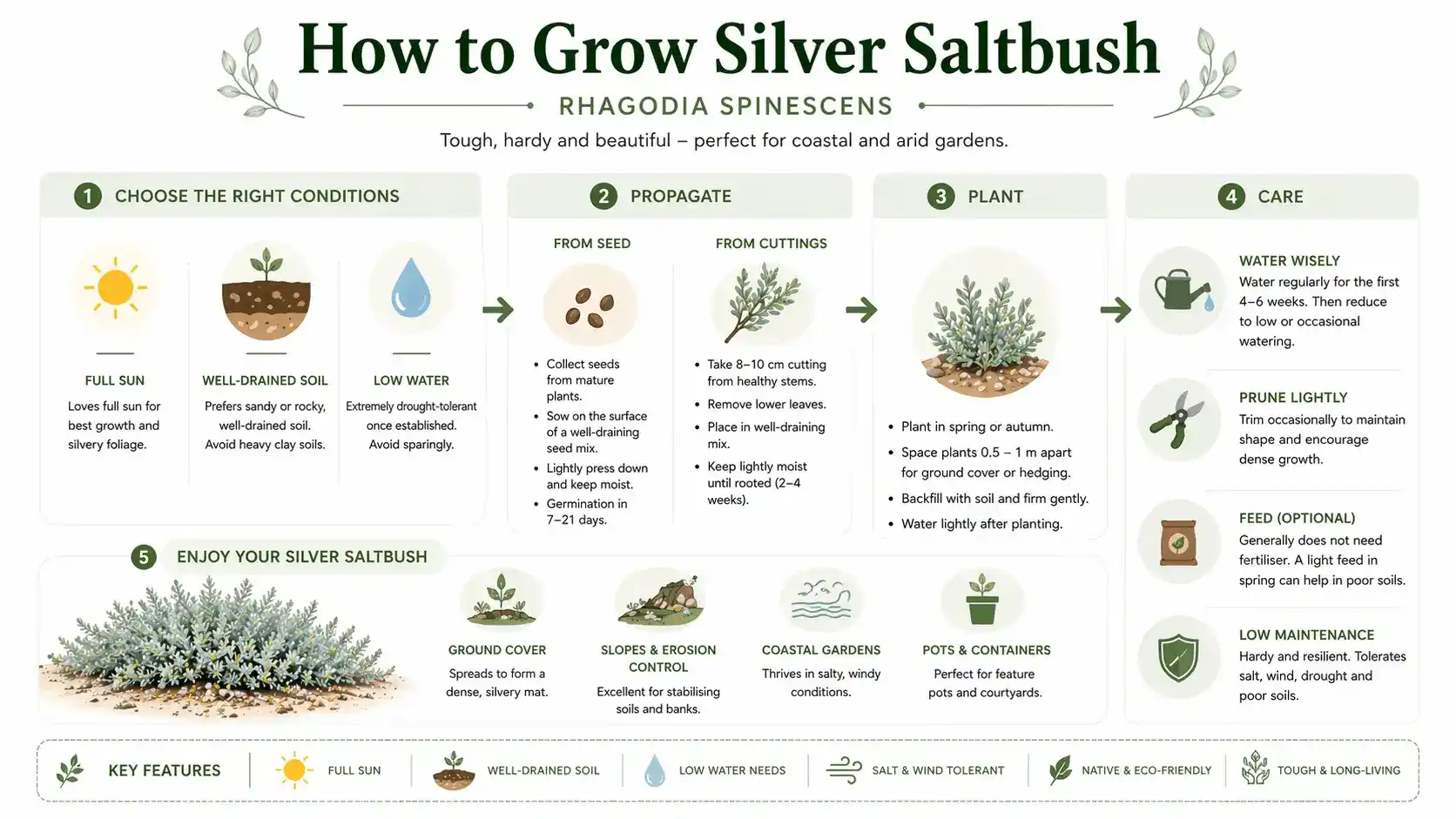
Growing saltbush successfully requires full sun, well-drained soil, and minimal water once established. This makes it suitable for low-maintenance and drought-prone landscapes.
Key Growing Requirements
- Full sun is preferred for dense growth
- Tolerates poor, sandy, or saline soils
- Requires minimal watering after establishment
Propagation Methods
Silver saltbush can be propagated using:
- Seeds (saltbush seedlings)
- Sow in well-draining soil
- Keep lightly moist until germination
- Semi-hardwood cuttings
- Taken from mature plants
- Root easily in warm conditions
For best results, plant during mild seasons to allow roots to establish before extreme weather.
Silver Saltbush Care Guide
Silver saltbush is considered a low-maintenance plant, requiring minimal intervention once established.
Care Essentials
- Water: Low; avoid overwatering
- Soil: Sandy or loamy, well-drained
- Light: Full sun to partial shade
- Fertilizer: Rarely necessary
Understanding proper watering and soil conditions is similar to other drought-tolerant plants, as explained in guides like Flax Lily Plant: 7+ Stunning Benefits & Care Secrets Revealed.
Pruning & Maintenance
- Light pruning helps maintain shape
- Can be trimmed into a formal hedge
- Occasional cutting encourages denser growth
A common beginner insight: overwatering is the most frequent cause of poor performance in this plant.
While silver saltbush is primarily grown outdoors, many of its care principles—such as proper watering and light management—are also essential when caring for indoor plants, as covered in a complete guide to house plants.
Common Silver Saltbush Problems and Solutions
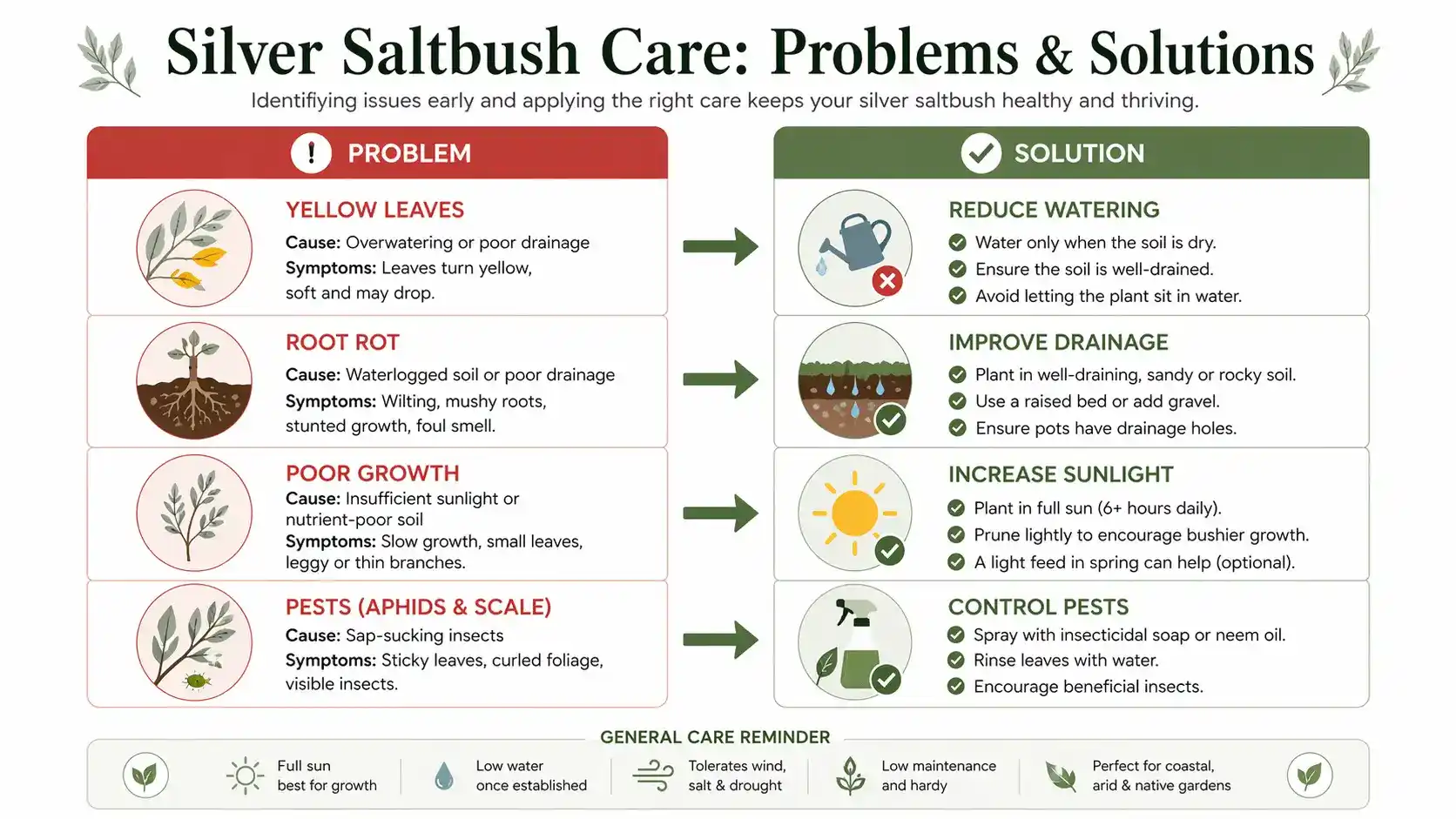
Silver saltbush problems are usually related to water and soil conditions rather than pests or diseases. Addressing these early ensures healthy plant growth.
Common Issues
- Yellowing leaves → Often caused by overwatering
- Poor growth → Insufficient sunlight
- Root rot → Poor drainage
Prevention Tips
- Ensure well-drained soil
- Avoid excessive watering
- Plant in sunny locations
Maintaining proper conditions prevents most issues without the need for chemical treatments.
Is Silver Saltbush Invasive?
Silver saltbush is generally not invasive, especially in its native Australian environment. It is a controlled-growing species that integrates well into local ecosystems.
However, it can spread widely as a ground cover if left unmanaged. Regular pruning helps control its expansion and maintain desired shape.
Key points:
- Non-invasive in native regions
- Spreads through lateral growth
- Easily managed with trimming
Uses of Saltbush in Gardening and Beyond
Saltbush plants serve multiple practical and ecological purposes, making them valuable in landscaping and traditional uses.
Practical Uses
- Ground cover for erosion control
- Coastal landscaping plant
- Habitat for wildlife
Edible & Traditional Uses
- Some species produce edible berries
- Ruby saltbush is used in bush foods
- Leaves of certain varieties have been traditionally consumed
Saltbush is especially useful in dry climates where other plants struggle to survive.
Silver saltbush is often compared to other low-maintenance ground covers such as 7+ Powerful Benefits of Dymondia Ground Cover You’ll Love, which are also widely used for erosion control and dry landscapes.
Silver Saltbush vs Other Saltbush Varieties
Silver saltbush differs from other saltbush types mainly in growth habit, usage, and edibility.
Key Differences
- Silver saltbush vs old man saltbush
- Silver: low ground cover
- Old man: tall shrub used for fodder
- Silver saltbush vs ruby saltbush
- Silver: ornamental foliage
- Ruby: produces edible berries
These distinctions help gardeners choose the right plant for their needs.
Beginner Mistakes When Growing Silver Saltbush
Common Mistakes
- Overwatering a drought-tolerant plant
- Planting in heavy clay soil
- Neglecting pruning
How to Avoid Them
- Match the plant to dry conditions
- Use well-drained soil
- Trim occasionally to control growth
Understanding these common issues improves long-term success and plant health.
Environmental Benefits and Landscaping Value
Silver saltbush contributes significantly to sustainable landscaping and environmental stability.
Key benefits include:
- Soil stabilization in erosion-prone areas
- Reduced water usage due to drought tolerance
- Support for biodiversity in native gardens
It is commonly used in native landscaping projects focused on low maintenance and ecological balance.
Conclusion
Silver saltbush (Rhagodia spinescens) is a highly adaptable, low-maintenance plant ideal for modern landscaping needs. Its drought tolerance, spreading growth habit, and visual appeal make it a reliable choice for ground cover, coastal gardens, and sustainable planting.
Whether used for erosion control or aesthetic enhancement, it remains a practical and resilient option in a wide range of environments.
FAQs
1. What is silver saltbush used for?
Silver saltbush is primarily used for ground cover, erosion control, and decorative landscaping, particularly in dry or coastal environments where hardy plants are required.
2. How big does silver saltbush grow?
It typically grows as a low shrub, reaching around 0.5 to 1 meter in height while spreading up to 2–3 meters wide, making it ideal for coverage.
3. Is silver saltbush edible?
Some related saltbush species produce edible berries, but silver saltbush itself is mainly grown for ornamental and landscaping purposes.
4. Is silver saltbush invasive?
Silver saltbush is not considered invasive in most regions, but it can spread widely as ground cover if not pruned regularly.
5. How do you grow silver saltbush successfully?
To grow silver saltbush successfully, plant it in full sun with well-drained soil and water sparingly, especially after it becomes established.