Introduction
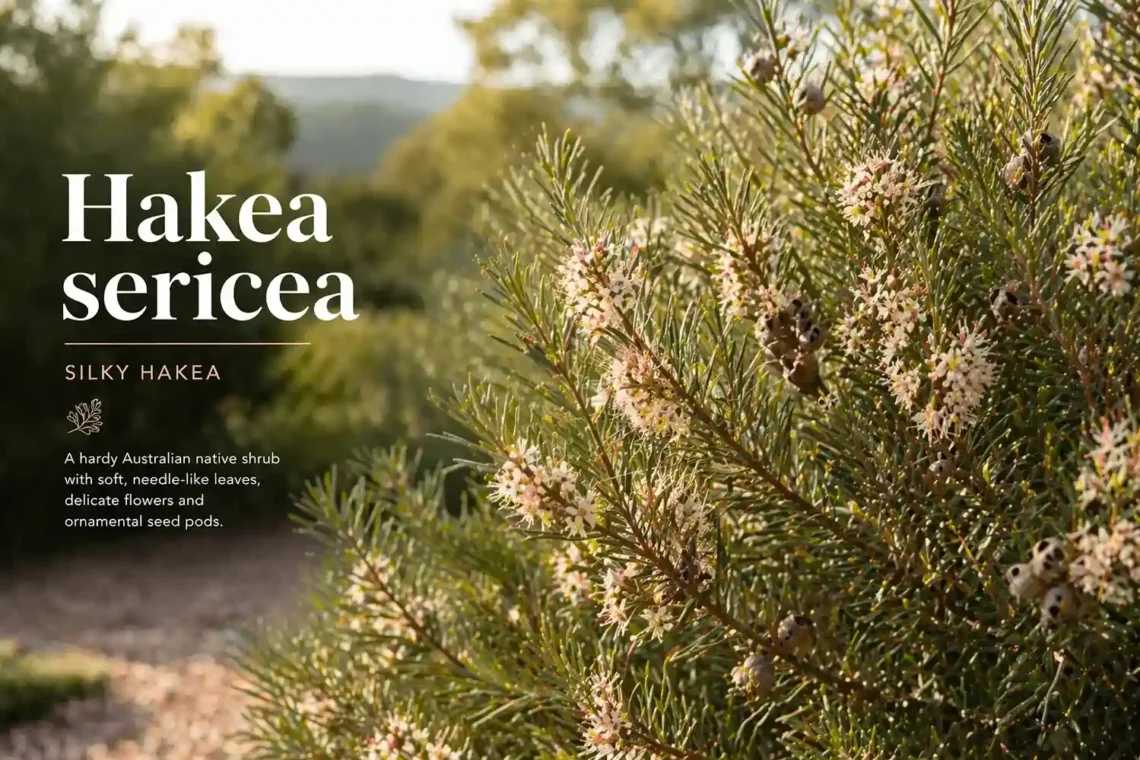
Hakea sericea is a woody shrub or small tree recognized for its sharp, needle-like leaves and strong ecological adaptability. Commonly known as silky hakea, needle bush, or cape green hakea, it is widely used in landscaping and natural hedging. This species is valued for its resilience in harsh environments, making it suitable for low-maintenance gardens and erosion control. At the same time, it plays an important role in ecological discussions due to its ability to spread aggressively outside its native range. Understanding its identification, growth behavior, and environmental impact is essential for responsible cultivation and management.
Quick Summary
- Hakea sericea is a hardy shrub known for sharp, needle-like foliage and woody seed pods.
- Commonly called silky hakea or needle bush, it is used in hedging and native landscaping.
- Produces distinctive hakea sericea fruit (woody follicles) that release seeds after fire or stress.
- Adaptable to poor soils but can become invasive in some regions.
What Is Hakea sericea? (Definition and Classification)
Hakea sericea is a flowering shrub belonging to the Proteaceae family, native to Australia. It is classified within the genus Hakea, which includes species adapted to dry, nutrient-poor environments.
Key classification details:
- Family: Proteaceae
- Genus: Hakea
- Species: Hakea sericea
Originally found in southeastern Australia, silky hakea has been introduced to regions such as South Africa and parts of Europe. In these areas, it is sometimes considered invasive due to its aggressive seed dispersal.
It is important to distinguish hakea sericea from Grevillea sericea, which belongs to the same family but is a different genus with softer foliage and ornamental use. The confusion arises due to the shared species name “sericea.”
Hakea sericea belongs to the Proteaceae family, a diverse group of flowering plants widely studied for their adaptations to nutrient-poor soils (learn more on Wikipedia: Proteaceae).
Key Characteristics of Silky Hakea (Identification Guide)
Leaves, Flowers, and Structure
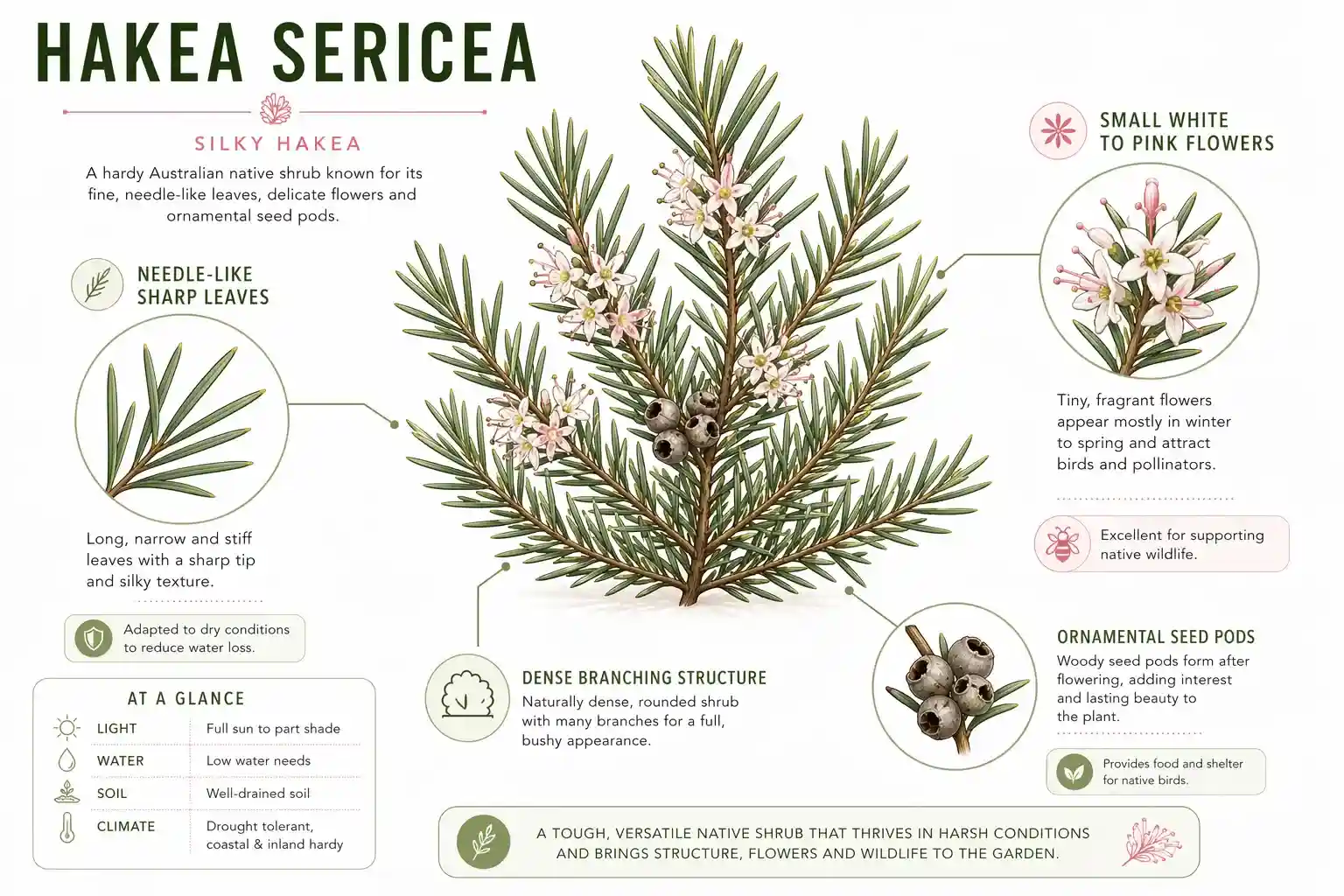
Hakea sericea is easily identified by its rigid, needle-like leaves, which are sharp and pointed. These leaves give rise to the common name “needle bush” and act as a natural defense against herbivores.
Key features:
- Leaves: Long, narrow, and sharp
- Flowers: Small clusters, typically white to pale pink (sometimes referred to as pink hakea variations)
- Structure: Dense, bushy growth ideal for forming a hakea hedge
The plant’s compact branching structure makes it suitable for natural barriers and protective hedging.
Hakea sericea Fruit and Seeds
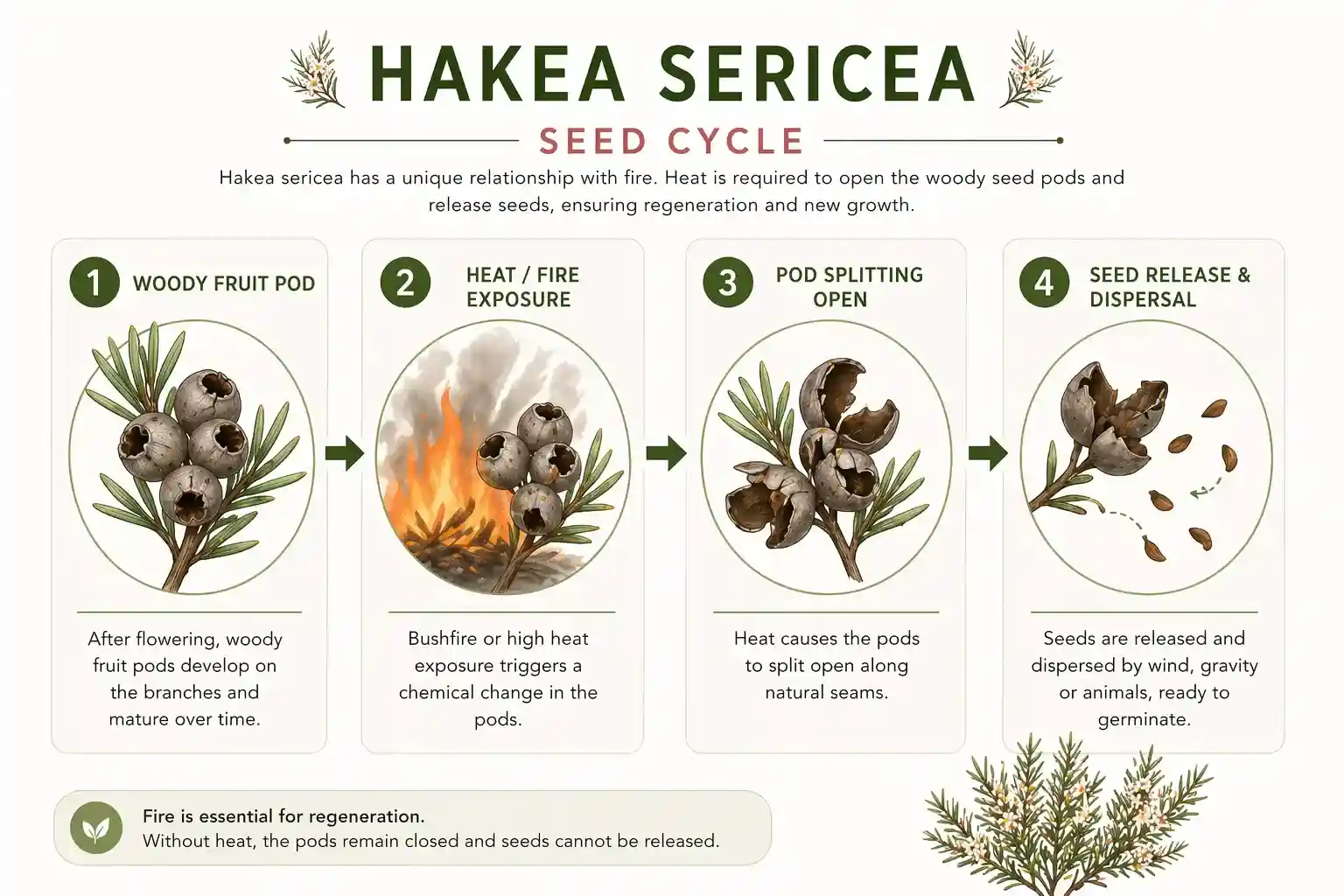
The hakea sericea fruit consists of woody follicles that are thick and hard, designed to protect seeds until environmental triggers occur.
Important characteristics:
- Fruit: Woody, oval-shaped pods
- Seed release: Triggered by heat or fire (serotiny)
- Seeds: Winged, allowing wind dispersal
This adaptation enables the plant to regenerate quickly after wildfires and contributes to its rapid spread in certain environments.
Plant Size and Growth Patterns
Hakea sericea varies in size depending on environmental conditions. It can grow as a dense shrub or develop into a small tree.
Typical size range:
- Height: 2 to 5 meters
- Width: 2 to 4 meters
Growth is influenced by:
- Soil type: Performs well in sandy or rocky soils
- Climate: Prefers warm, dry conditions
- Water availability: Limited water promotes compact growth
In favorable conditions, it forms thick, impenetrable stands.
Growth Rate and Environmental Adaptability
Hakea sericea is a moderate to fast-growing shrub that adapts well to challenging environments. It thrives where many plants struggle.
Optimal conditions:
- Poor, sandy, or rocky soils
- Drought-prone climates
- Areas prone to periodic fires
Its fire-adapted behavior allows seeds to remain dormant until heat triggers release. Growth is most active during warmer seasons, particularly spring and early summer.
Care Guide for Hakea sericea
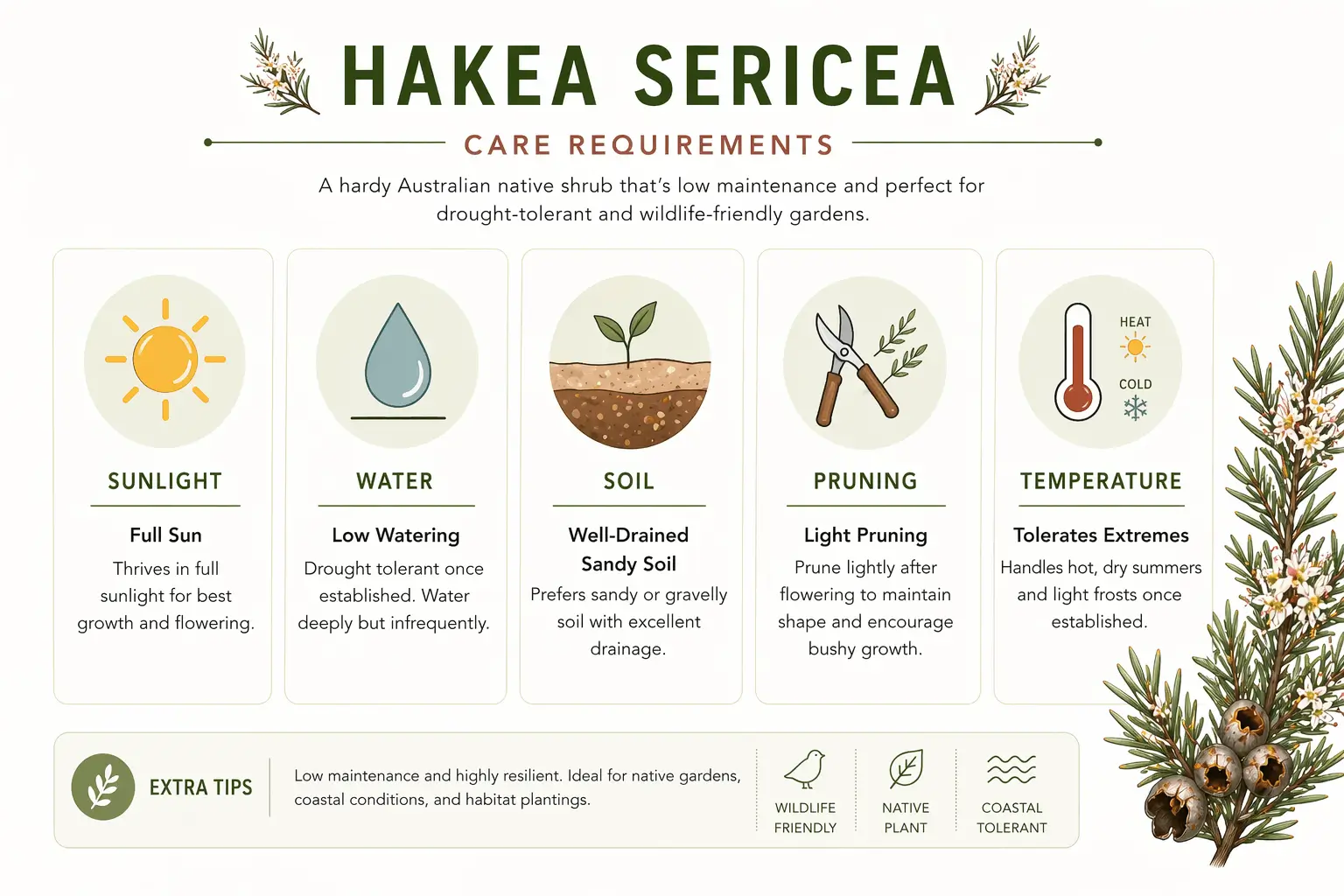
Hakea sericea is low-maintenance once established and requires minimal intervention.
Watering:
- Low water needs after establishment
- Avoid overwatering
Light:
- Requires full sun for optimal growth
Soil:
- Prefers well-draining, low-nutrient soils
Fertilization:
- Minimal feeding required
- Avoid phosphorus-rich fertilizers due to Proteaceae sensitivity
Pruning:
- Prune to maintain shape, especially for hedge use
Climate:
- Tolerates drought and mild frost
While hakea sericea is primarily an outdoor plant, understanding general plant care principles from a broader guide to house plants can help beginners build foundational growing skills.
Uses of Hakea sericea in Landscaping
Hakea sericea is commonly used in landscaping for both practical and ecological purposes.
Common uses:
- Natural fencing (hakea hedge)
- Wildlife shelter
- Erosion control
Benefits:
- Dense growth provides privacy and protection
- Low maintenance requirements
- Adaptability to poor soils
Limitations:
- Sharp foliage can pose a hazard
- Not suitable for high-traffic areas
Hakea sericea is commonly used for natural fencing, similar to dense hedge plants like Carolina Cherry Laurel Hedge, which are also valued for privacy and structural landscaping. For alternative hedge options, plants such as Dodonaea Viscosa Hedge are often compared due to their adaptability and suitability for low-maintenance garden boundaries.
Hakea sericea vs Similar Plants (Comparison Section)
| Feature | Hakea sericea (Silky Hakea) | Grevillea sericea | Other Hakea Species |
| Leaf Type | Needle-like, sharp | Soft, divided leaves | Varies |
| Growth Habit | Dense shrub | Smaller shrub | Diverse forms |
| Flower Color | White to pink hakea tones | Pink/red | Varies |
| Use | Hedge, barrier | Ornamental | Mixed uses |
| Invasiveness | Can be invasive | Not invasive | Depends on species |
This comparison highlights the structural differences and helps prevent confusion with grevillea sericea.
Within the same genus, species like Willow Leaf Hakea Care offer a softer foliage alternative, making them suitable for less defensive landscaping uses.
Varieties and Natural Variations
Hakea sericea has limited formal varieties, but natural variations occur across regions.
Differences may include:
- Flower color variations, including pink hakea forms
- Growth density and branching patterns
- Adaptability to different climates
These variations reflect genetic diversity and environmental influence.
Common Problems and Troubleshooting
Why Is Hakea sericea Becoming Invasive?
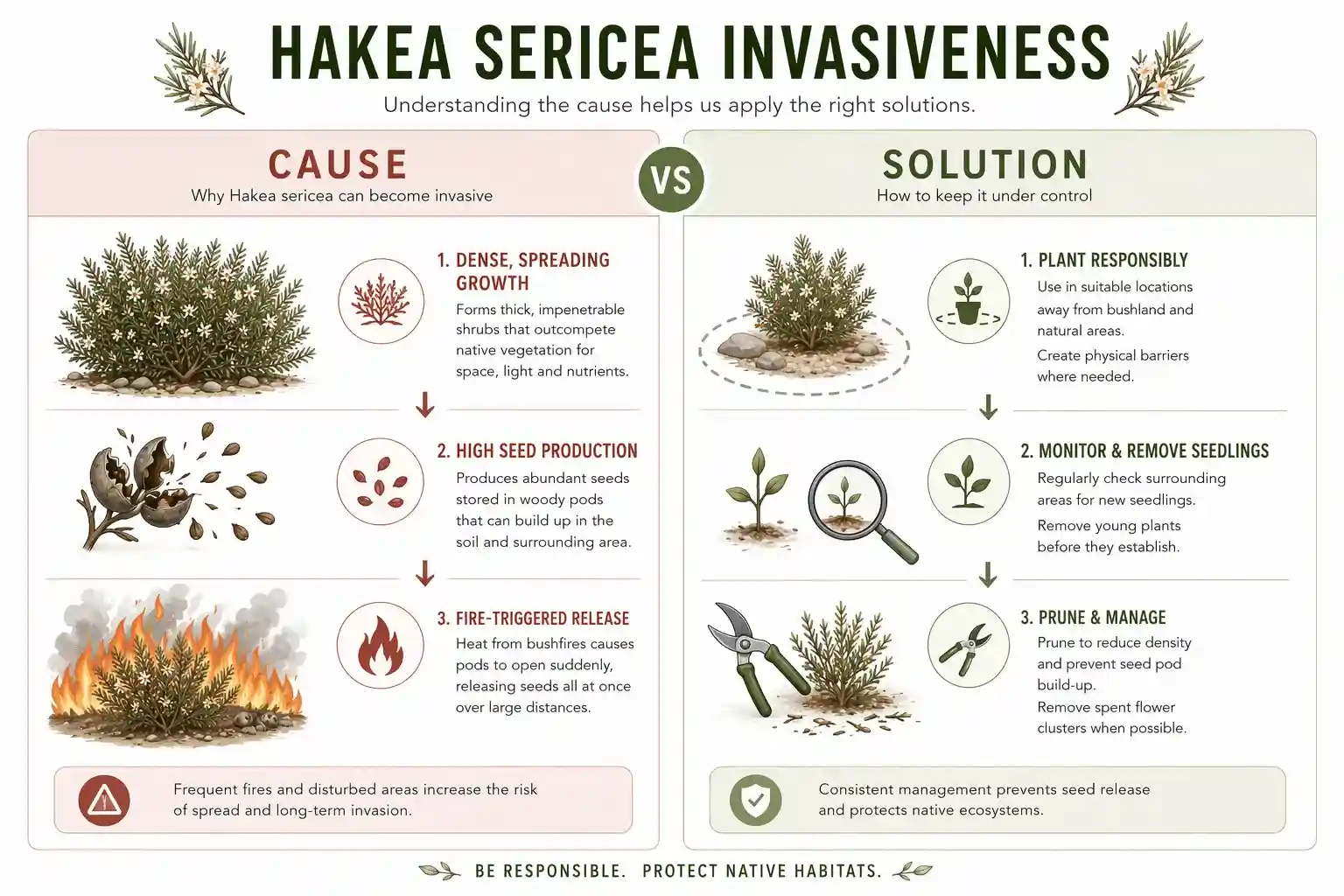
Hakea sericea becomes invasive due to its high seed production and fire-adapted seed release mechanism.
Causes:
- Large number of seeds
- Heat-triggered dispersal
Solutions:
- Controlled planting
- Regular monitoring and removal of seedlings
Poor Growth or Sparse Foliage
Poor growth is usually caused by excess moisture or unsuitable soil conditions.
Causes:
- Overwatering
- Poor drainage
Fix:
- Improve soil drainage
- Reduce watering frequency
Handling Sharp Leaves Safely
The needle-like leaves can cause injury if handled improperly.
Issue:
- Sharp foliage
Prevention:
- Wear protective gloves
- Plant away from walkways and play areas
Beginner Mistakes to Avoid
Common mistakes when growing silky hakea include:
- Overwatering a drought-tolerant plant
- Planting in high-traffic areas despite sharp leaves
- Ignoring its invasive potential
- Using nutrient-rich or phosphorus-heavy fertilizers
Avoiding these mistakes ensures healthier growth and safer garden integration.
Environmental Impact and Limitations
Hakea sericea has both ecological benefits and risks.
Benefits:
- Stabilizes soil in erosion-prone areas
- Provides habitat for wildlife
Risks:
- Can become invasive outside its native range
Climate suitability:
- Performs best in Mediterranean-type climates with dry summers
Propagation Methods
Hakea sericea is primarily propagated from seeds.
Seed propagation:
- Seeds collected from woody follicles
- Heat or fire treatment often required to trigger germination
Alternative method:
- Cuttings (less reliable)
Optimal conditions:
- Warm temperatures
- Well-draining soil
Seasonal Care and Maintenance
Seasonal care helps maintain plant health and structure.
Spring:
- Active growth and flowering
Summer:
- High drought tolerance; minimal watering needed
Winter:
- Requires little care; protect from severe frost
Pruning:
- Best done after flowering to maintain hedge shape
Conclusion
Hakea sericea is a resilient and adaptable shrub widely used for hedging and ecological purposes. Its needle-like leaves and woody fruit make it distinctive and functional, particularly in low-maintenance landscapes. However, its ability to spread rapidly requires careful management. Understanding its growth patterns, care needs, and environmental impact allows for responsible use in both gardens and natural ecosystems.
FAQs
What is hakea sericea commonly known as?
It is commonly called silky hakea or needle bush, referring to its texture and sharp, needle-like leaves.
How tall does hakea sericea grow?
Hakea sericea typically grows between 2 to 5 meters tall, depending on environmental conditions.
What does hakea sericea fruit look like?
The fruit is a woody pod (follicle) that splits open to release seeds, often triggered by heat or fire.
Is hakea sericea invasive?
Yes, in some regions it is considered invasive due to its rapid seed dispersal and fire-adapted reproduction.
Can hakea sericea be used as a hedge?
Yes, it is commonly used as a dense, protective hedge due to its thick growth and sharp foliage.
How do you grow hakea sericea from seeds?
Seeds typically require heat treatment or environmental triggers, such as exposure to fire-like conditions, to germinate successfully.