Introduction
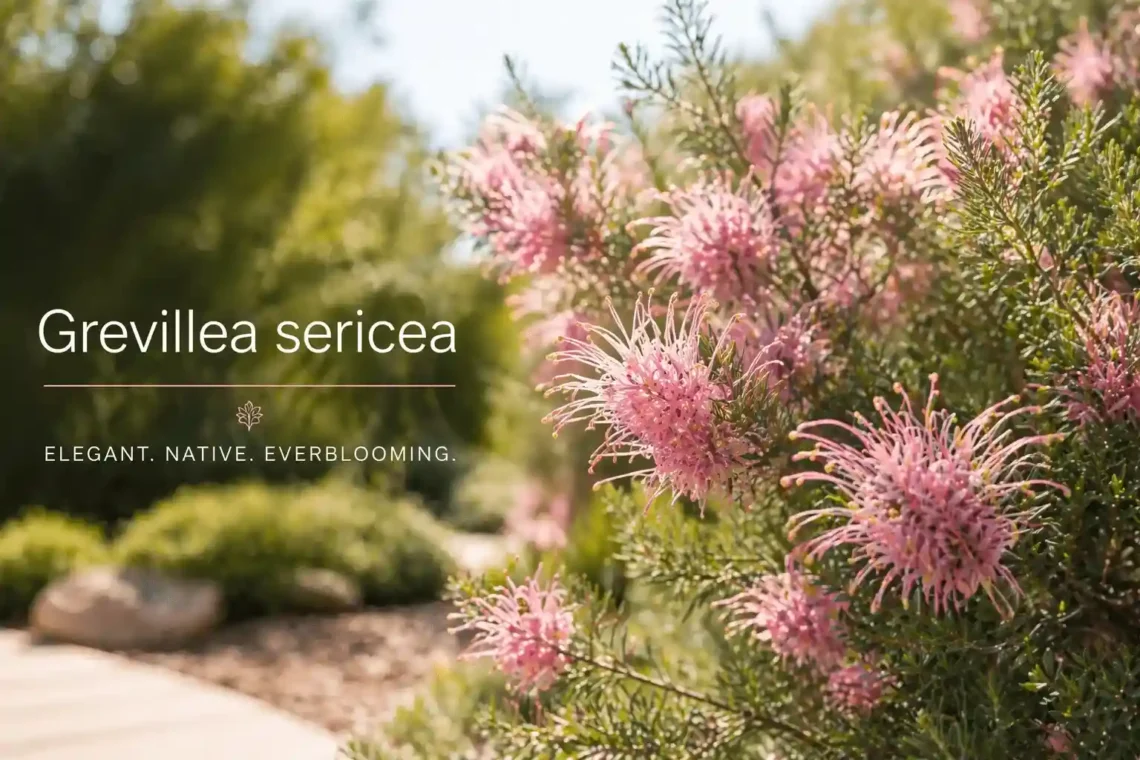
Grevillea sericea is a compact Australian native shrub valued for its fine, silky foliage and striking pink spider-like flowers. Known commonly as spider grevillea or grevillea spider flower, this plant is widely used in ornamental gardening due to its drought tolerance, adaptability, and pollinator-friendly blooms. Grevillea sericea fits well in small gardens, native landscapes, and low-maintenance planting schemes. Its delicate appearance combined with hardy growth makes it a preferred choice for gardeners seeking both aesthetic appeal and resilience in challenging conditions.
Quick Summary
- Grevillea sericea is a flowering shrub with fine foliage and pink spider-shaped blooms
- Commonly called spider grevillea or grevillea spider flower
- Suitable for small gardens, native landscapes, and low-maintenance planting
- Includes multiple forms like grevillea sericea pink and compact varieties
What Is Grevillea sericea? (Definition & Botanical Overview)
Grevillea sericea is a flowering shrub in the Proteaceae family, native to eastern Australia, known for its narrow leaves and spider-like flowers. It belongs to the genus Grevillea, which includes over 300 species adapted to diverse climates.
Grevillea sericea belongs to the Proteaceae family, a diverse group of flowering plants native to the Southern Hemisphere (see Wikipedia).
Common names include spider grevillea, silky grevillea, and grevillea spider flower, all referring to its distinctive floral structure and fine foliage. The term “silky grevillea sericea” reflects the soft texture of its leaves.
There is occasional confusion with names like pink spider plant or pink spider flower, but these are informal descriptors and not botanically accurate. Grevillea sericea is distinct from true spider plants and belongs strictly to native Australian flora.
Key Characteristics of Grevillea sericea
Appearance, Foliage, and Flowers
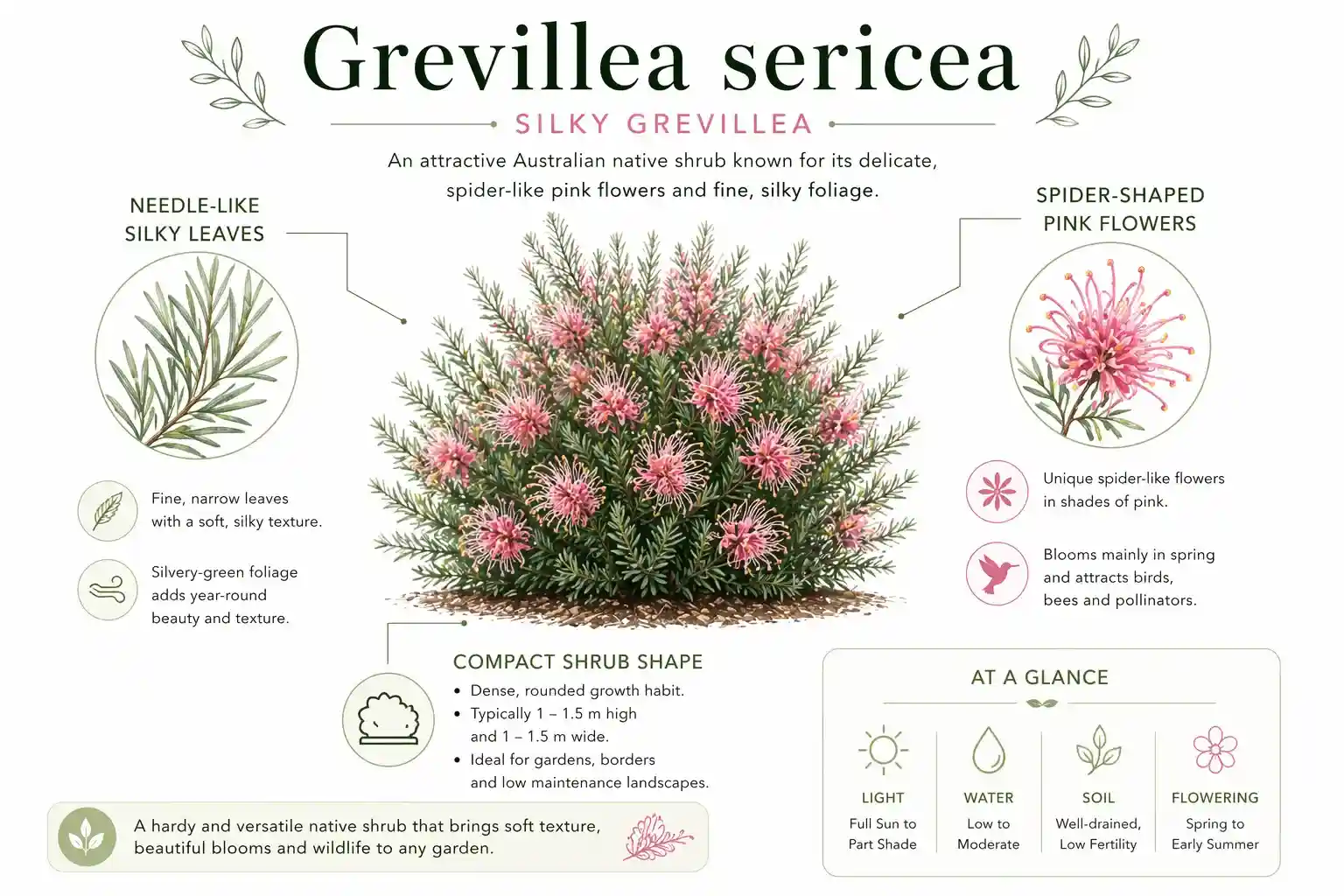
Grevillea sericea features fine, needle-like leaves with a soft, silky texture, giving rise to the name silky grevillea. The foliage is typically dark green and dense, creating a compact shrub form.
The flowers are the plant’s most recognizable feature. They form spider-like clusters with long, curved styles, often described as spider flower grevillea. These blooms appear in shades of:
- Pink (grevillea sericea pink)
- Mauve
- Amethyst
Common descriptive terms include pink grevillea flower, pink spider, and pink flower spider, all highlighting the unique floral structure.
Grevillea sericea features fine, needle-like leaves with a soft, silky texture, making it similar to other species highlighted in 7+ Essential Plants with Velvety Leaves You Can Grow.
Plant Size and Growth Habit
Grevillea sericea typically grows as a compact shrub, making it ideal for small spaces. The grevillea sericea height usually ranges between 1 to 2 meters, with a similar spread.
Plant size can vary depending on:
- Variety or cultivar
- Soil conditions
- Sunlight exposure
- Climate
Its naturally bushy growth habit makes it suitable for borders and low hedging.
Grevillea sericea Varieties and Forms
Several grevillea sericea varieties exist, each with slight differences in color, size, and growth habit.
Notable forms include:
- Grevillea sericea ‘Pink Midget’: A compact variety ideal for small gardens
- Grevillea sericea Mauve Form: Produces softer mauve-toned flowers
- Grevillea sericea ‘Amethyst’: Known for deeper purple-pink hues
- Grevillea sericea ‘Pink Spider’: Emphasizes vivid pink spider-like blooms
- Grevillea sericea riparia: Typically found in specific natural habitats
- Standard grevillea sericea: The typical form with pink flowers
These cultivars differ mainly in flower color intensity and plant size, allowing gardeners to select based on design preferences.
Comparison: Grevillea sericea vs Other Grevillea Types
| Feature | Grevillea sericea | Other Grevillea species |
| Growth size | Compact shrub | Can be large shrubs or trees |
| Flower type | Spider-like flowers | Wide variation |
| Flower color | Pink, mauve, amethyst | Broad color range |
| Foliage | Fine, silky | Varies from coarse to fern-like |
| Garden use | Small gardens, borders | Screening, feature plants |
Grevillea sericea is particularly suited for small gardens and confined spaces, whereas other grevillea species may be used for large-scale landscaping or screening purposes.
Ideal Growing Conditions for Grevillea sericea
Climate and Light Requirements
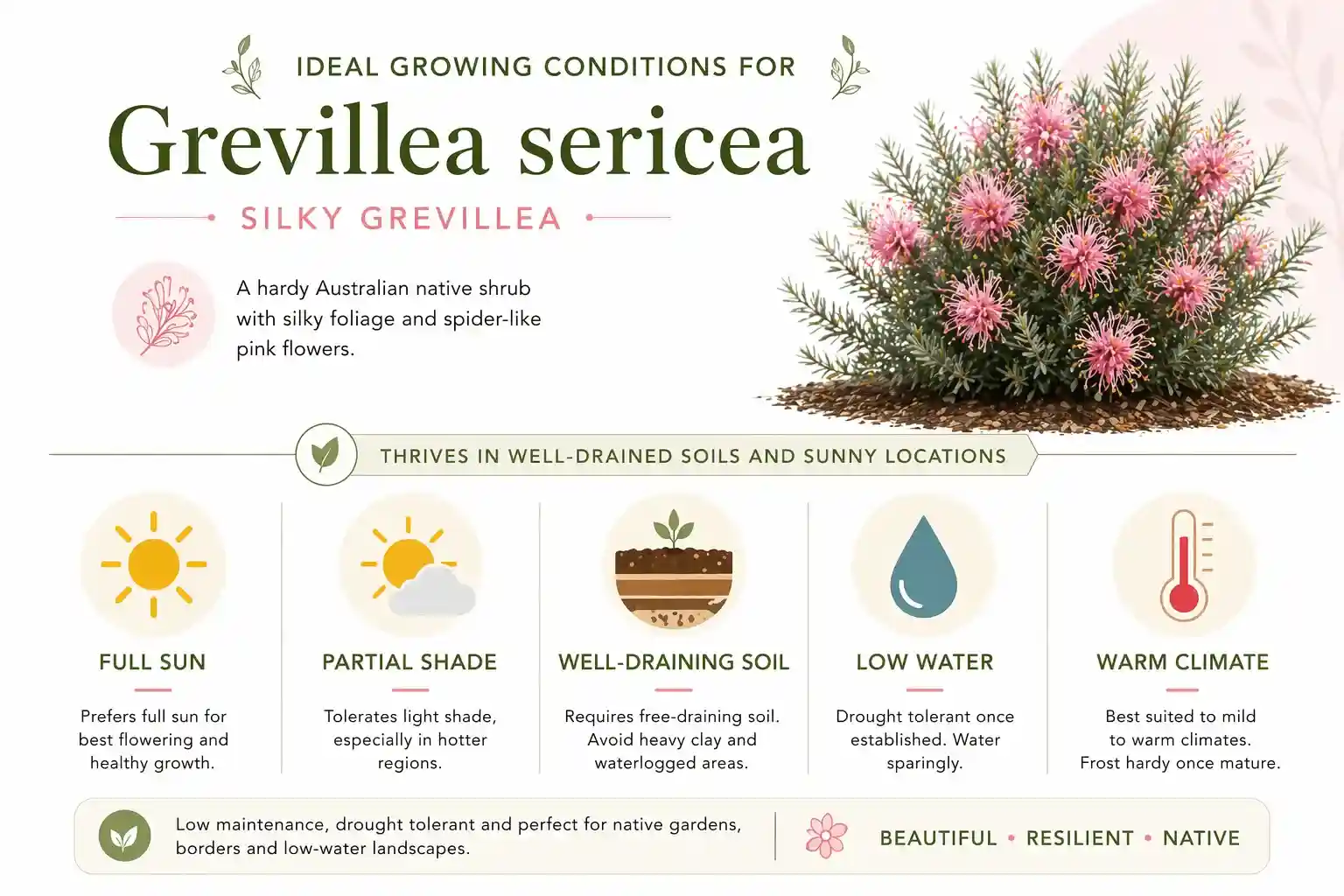
Grevillea sericea thrives in full sun to partial shade, with best flowering occurring in bright, direct sunlight. It is well adapted to warm, temperate climates.
Once established, it demonstrates strong drought tolerance, making it suitable for low-water gardens.
Soil and Drainage Needs
Well-draining soil is essential for healthy growth. Grevillea sericea does not tolerate waterlogged conditions.
Key soil considerations:
- Sandy or loamy soil preferred
- Avoid heavy clay soils
- Ensure proper drainage to prevent root issues
Grevillea sericea Care Guide
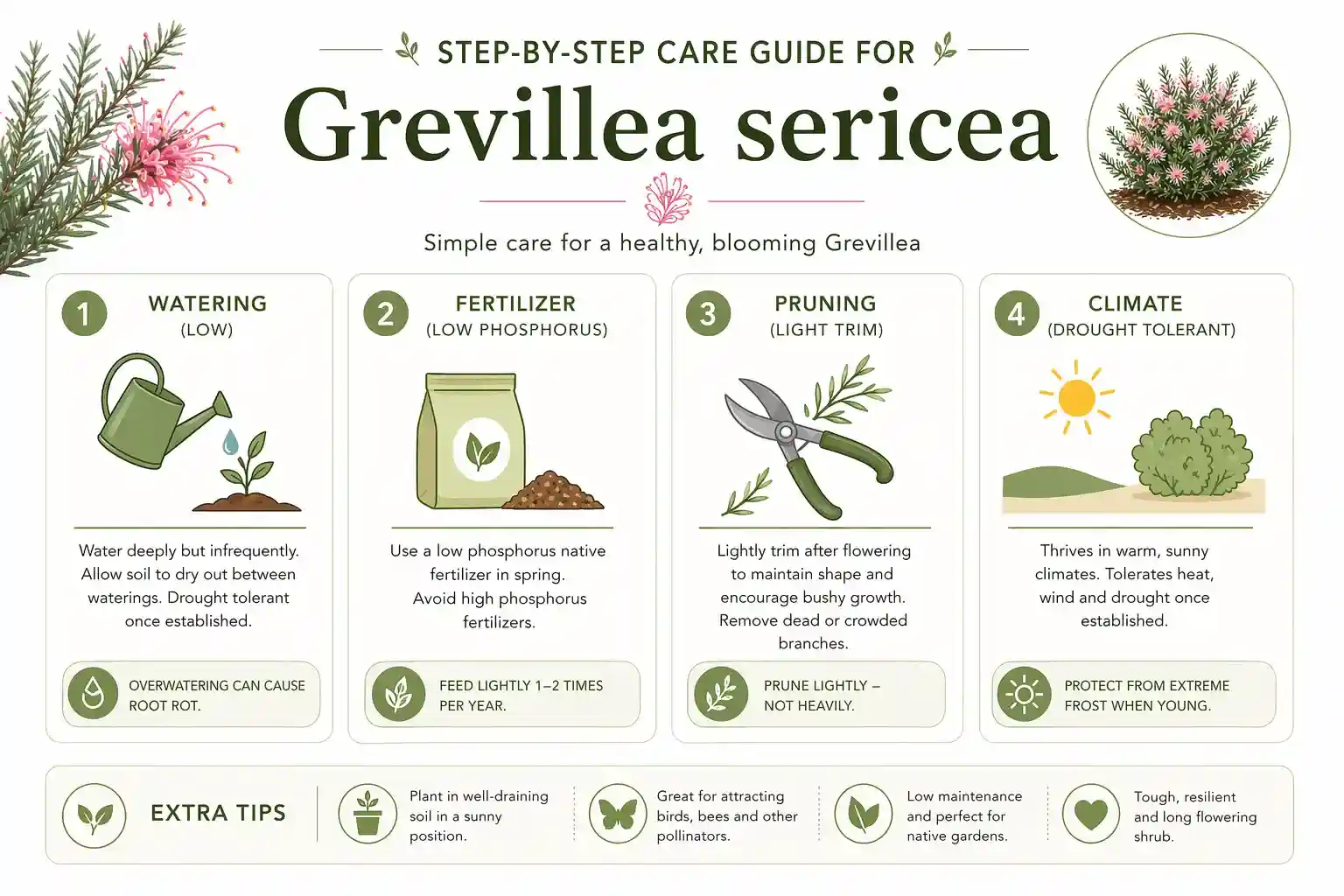
Proper care ensures healthy growth and consistent flowering.
Watering
- Low water needs once established
- Water sparingly; allow soil to dry between watering
- Avoid overwatering, especially in cooler months
Soil & Fertilization
- Use low-phosphorus fertilizers designed for native plants
- Avoid standard fertilizers high in phosphorus
- Native plant soil mixes are recommended
Pruning
- Light pruning helps maintain shape
- Encourages bushier growth and increased flowering
- Best done after flowering
Climate Tolerance
- Performs well in dry conditions
- Tolerates moderate frost but not extreme cold
Growth Rate and Development Patterns
Grevillea sericea has a moderate growth rate, typically establishing steadily under suitable conditions.
Growth is influenced by:
- Sunlight availability
- Soil drainage
- Watering practices
Flowering usually occurs from spring to summer, with occasional blooms outside this period in favorable climates.
Common Problems and Solutions (Troubleshooting Guide)
Yellowing Leaves
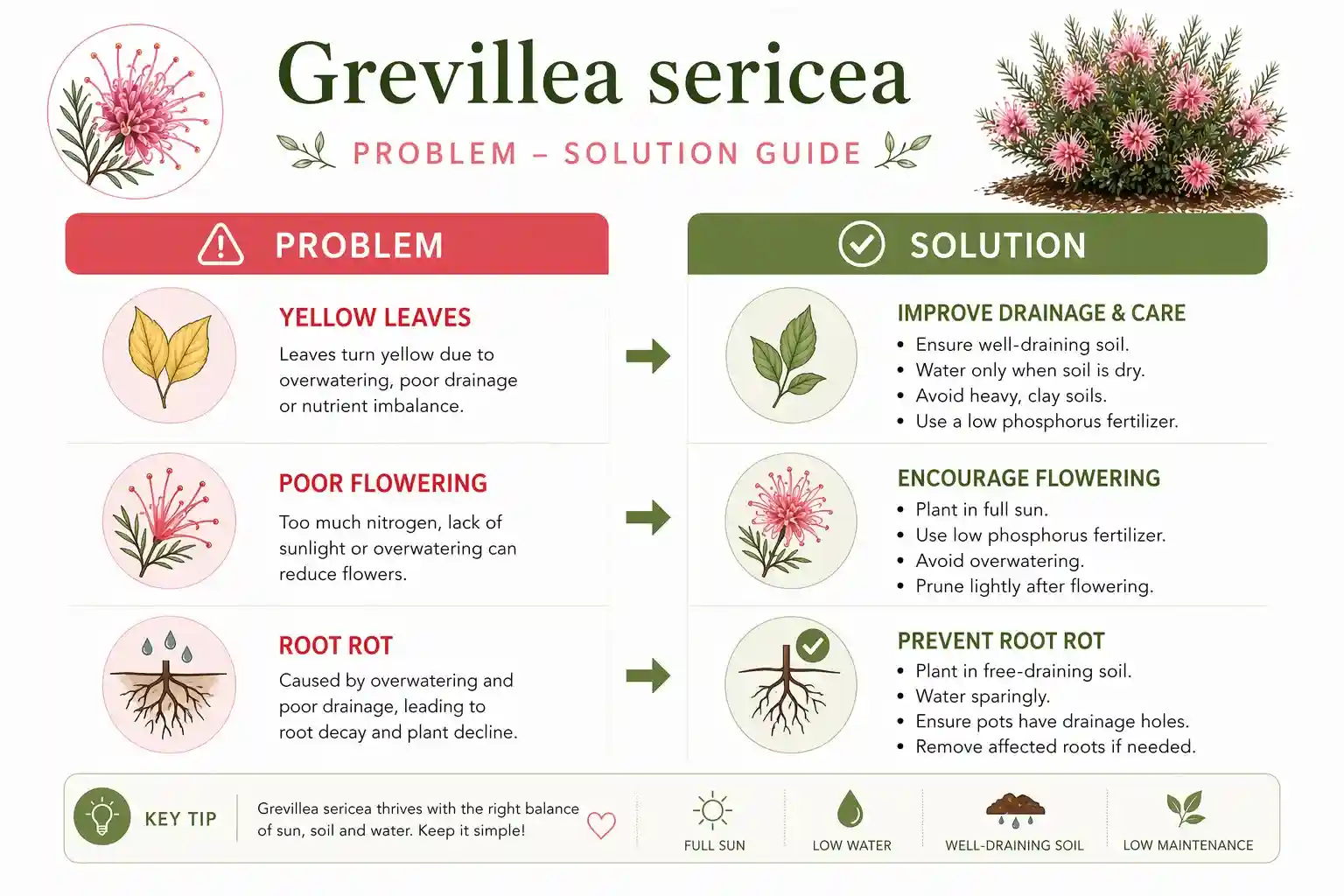
- Cause: Overwatering or poor drainage
- Solution: Improve soil drainage and reduce watering
Poor Flowering
- Cause: Insufficient sunlight or excess fertilizer
- Solution: Increase sun exposure and limit feeding
Root Rot
- Cause: Waterlogged soil
- Prevention: Ensure well-draining soil and avoid standing water
Beginner Mistakes to Avoid with Grevillea sericea
Common mistakes can impact plant health and flowering:
- Overwatering native plants
- Using high-phosphorus fertilizers
- Planting in heavy, poorly draining soil
- Ignoring sunlight requirements
Avoiding these issues improves long-term success.
Landscaping Uses and Garden Design Ideas
Grevillea sericea is versatile in garden design due to its compact size and attractive flowers.
Common uses:
- Borders and edging plants
- Rock gardens
- Native plant landscapes
- Container planting in suitable conditions
It pairs well with other drought-tolerant species and adds color and texture to garden layouts.
Grevillea sericea fits seamlessly into layouts inspired by Modern Australian Native Garden: 10+ Smart Design Ideas Guide, especially in drought-tolerant landscapes.
Environmental Benefits and Pollinator Attraction
Grevillea sericea produces nectar-rich flowers that attract birds, bees, and other pollinators.
Environmental benefits include:
- Supporting biodiversity
- Providing food sources for native wildlife
- Enhancing ecological balance in gardens
Its nectar-rich blooms make it an excellent addition alongside other species featured in Butterfly Attracting Flowers: Best Plants for Pollinator Gardens.
Propagation Methods for Grevillea sericea
Grevillea sericea is most commonly propagated through semi-hardwood cuttings.
Key methods:
- Take cuttings from healthy stems
- Use well-draining propagation mix
- Maintain moderate humidity
Seed propagation is less common due to variability in results. This connects to broader plant propagation practices used in horticulture.
Seasonal Care and Maintenance Tips
Seasonal adjustments help maintain plant health.
- Increase watering slightly during hot summer periods
- Reduce watering in winter
- Prune lightly after flowering
- Monitor for signs of stress or disease
Regular observation ensures timely care.
Conclusion
Grevillea sericea is a compact, drought-tolerant shrub known for its distinctive pink spider-like flowers and fine foliage. It is well suited for small gardens, native landscapes, and pollinator-friendly environments. By understanding its ideal growing conditions, care requirements, and available varieties, gardeners can ensure consistent growth and vibrant seasonal blooms.
For a broader understanding of plant selection and care across indoor and outdoor environments, refer to the Plants for Homes and Gardens Guide.
FAQs
1. What is the common name of Grevillea sericea?
It is commonly known as spider grevillea, grevillea spider flower, or silky grevillea due to its fine foliage and spider-like blooms.
2. How big does Grevillea sericea grow?
It typically grows as a compact shrub, reaching around 1 to 2 meters in height and spread, depending on conditions.
3. What color flowers does Grevillea sericea produce?
It most commonly produces pink flowers, but mauve and amethyst shades are also found in different varieties.
4. Is Grevillea sericea easy to care for?
Yes, it is low-maintenance, drought-tolerant, and suitable for beginners when grown in well-drained soil with proper sunlight.
5. How do you propagate Grevillea sericea?
It is typically propagated using semi-hardwood cuttings, which provide more consistent results than seed propagation.
6. Why is my spider grevillea not flowering?
Common reasons include insufficient sunlight, excessive fertilizer, or poor drainage conditions affecting root health.