Introduction
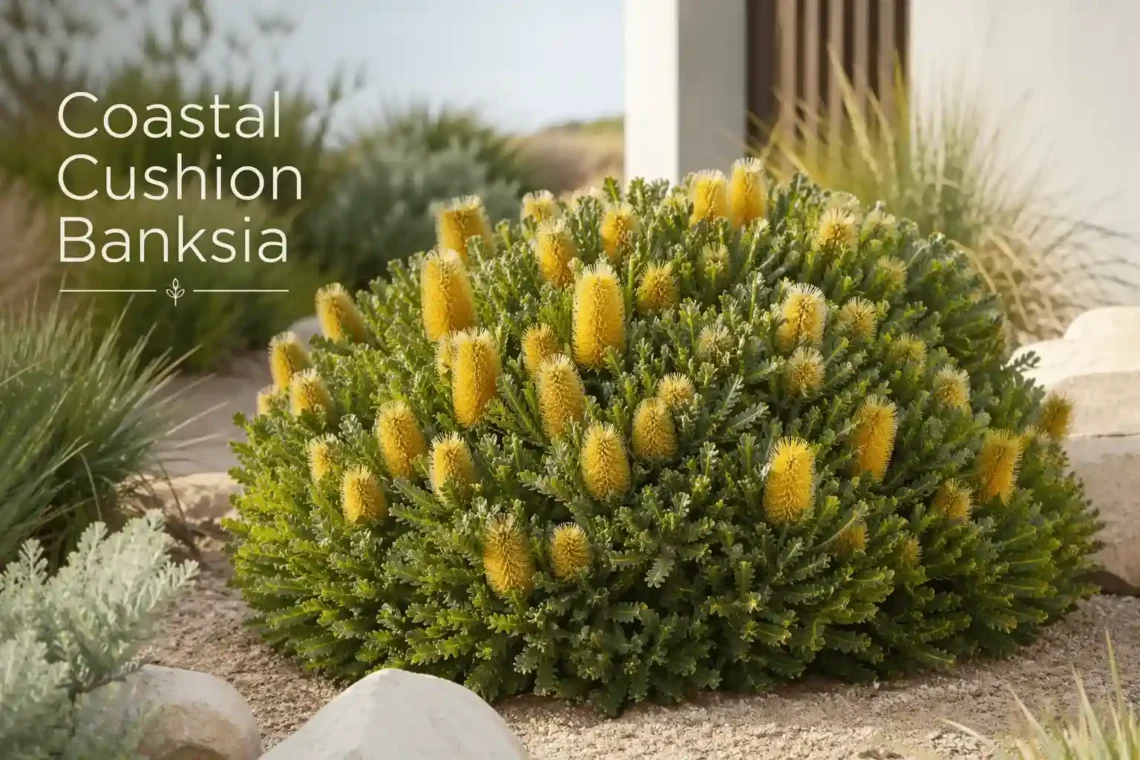
Coastal cushion banksia (banksia spinulosa coastal cushion) is a compact, low-growing Australian native shrub valued for its dense, rounded form and bright yellow flower spikes. As a dwarf cultivar of Banksia spinulosa (hairpin banksia), it provides the characteristic beauty of banksias in a smaller, more manageable size. This plant is widely used in landscaping due to its drought tolerance, adaptability to coastal conditions, and suitability for small gardens. It thrives in well-drained soils and requires minimal maintenance, making it an ideal option for both beginner and experienced gardeners seeking a resilient ornamental shrub. While typically grown outdoors, understanding plants like coastal cushion banksia can complement broader plant care knowledge—especially when following a complete guide to house plants.
Quick Summary
- A dwarf form of Banksia spinulosa with a compact, cushion-like growth habit
- Ideal for small gardens, borders, and coastal landscaping
- Produces yellow flower spikes that attract birds and pollinators
- Requires well-drained soil and low-maintenance care
What Is Coastal Cushion Banksia?
Definition and Botanical Background
Coastal cushion banksia is a cultivated dwarf variety of Banksia spinulosa, commonly known as hairpin banksia. It belongs to the Proteaceae family, a group of Australian native plants known for their unique flower structures and adaptability to nutrient-poor soils. Unlike the standard form, this cultivar has been selected for its compact growth and dense, rounded structure, making it suitable for modern garden designs. Coastal cushion banksia is a dwarf cultivar of Banksia spinulosa, a species well documented in botanical literature (see Banksia spinulosa on Wikipedia).
Coastal cushion banksia is one of many compact forms within the banksia genus, and understanding broader types can help in plant selection—see 7+ Essential Banksia Tree Varieties: Types, Size & Colors.
Key Identifying Features
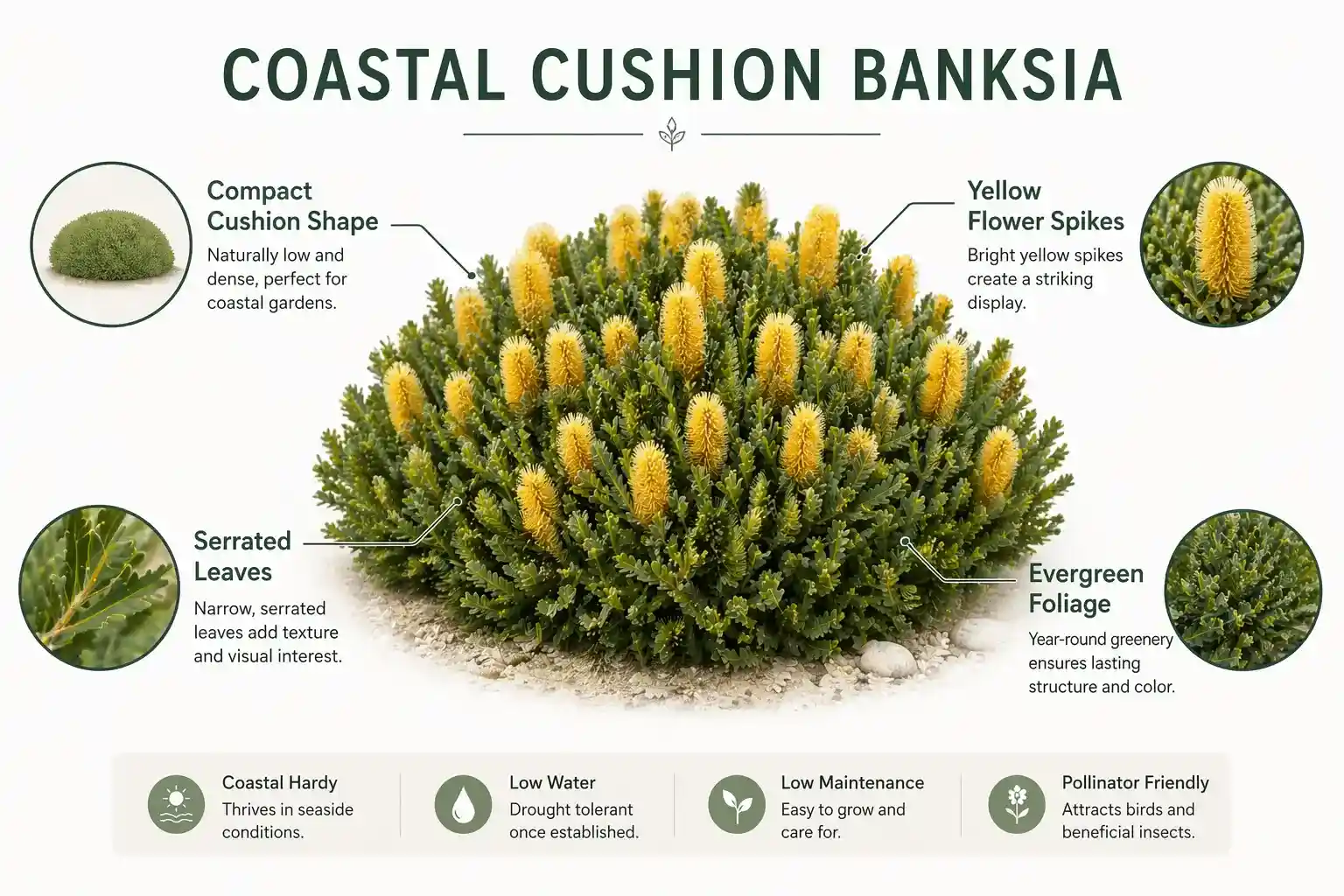
- Compact, rounded “cushion” growth habit
- Narrow, serrated leaves typical of Banksia spinulosa
- Bright yellow, brush-like flower spikes
- Evergreen foliage that maintains year-round visual appeal
Coastal Cushion Banksia Size and Growth Characteristics
Mature Size and Height
Coastal cushion banksia typically grows to about 0.5–1 meter in height and spreads wider than it grows tall, often reaching 1–1.5 meters in width. This low, spreading habit creates a ground-cover-like effect, making it ideal for borders and small spaces.
Growth Rate and Growth Pattern
The growth rate is generally slow to moderate. Growth is most active during warmer months, particularly spring and early summer.
Factors influencing growth include:
- Soil drainage quality
- Sunlight exposure
- Climate conditions (coastal vs inland)
Coastal Cushion Banksia Care Guide
Watering, Soil, and Drainage
Once established, coastal cushion banksia requires minimal watering and is drought tolerant. However, proper soil drainage is critical.
Key care points:
- Use sandy or well-drained soil
- Avoid waterlogged conditions
- Water sparingly after establishment
Light and Climate Requirements
This plant performs best in full sun but can tolerate partial shade. It is highly suited to coastal environments and thrives in Australian climates with good airflow and moderate rainfall.
Fertilization and Pruning
Banksias are sensitive to phosphorus, so only low-phosphorus fertilizers designed for native plants should be used.
Pruning guidelines:
- Light pruning after flowering helps maintain shape
- Avoid cutting into old wood
- Regular trimming encourages denser growth
Table Section — Care Requirements Overview
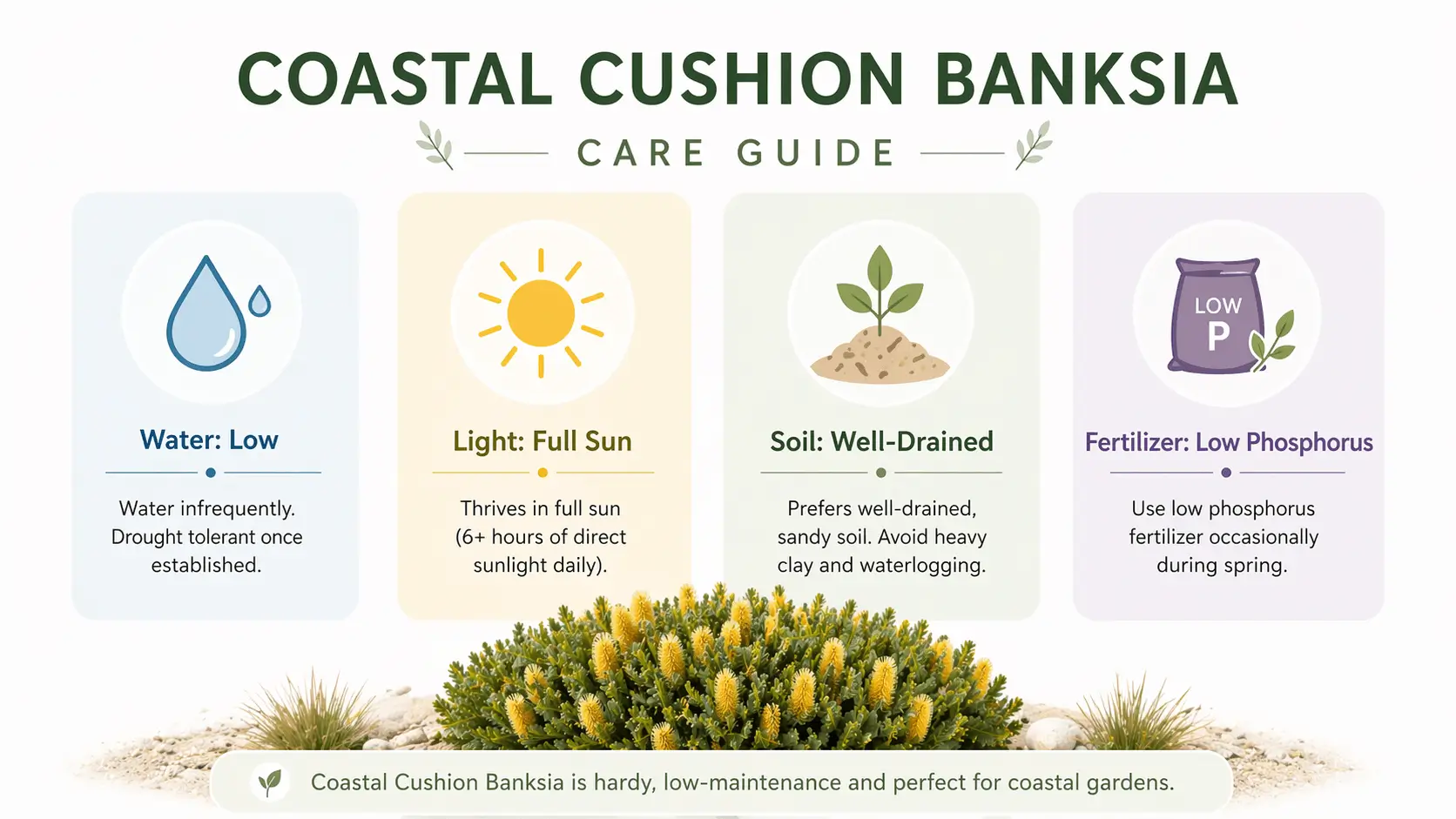
| Factor | Requirement | Notes |
| Water | Low | Avoid overwatering |
| Light | Full sun | Best flowering performance |
| Soil | Well-drained | Sandy soil preferred |
| Fertilizer | Low phosphorus | Use native plant fertilizers |
Coastal Cushion Banksia Varieties and Related Cultivars
Coastal Cushion Banksia vs Other Banksia Spinulosa Dwarf Varieties
Several dwarf forms of Banksia spinulosa exist, including varieties such as dwarf red forms and var. collina. These differ mainly in flower color, leaf density, and growth habit.
For gardeners exploring other dwarf banksias, including similar compact species, refer to 7+ Smart Banksia Ericifolia Dwarf Care Tips for Easy Growth.
Comparison Block — Coastal Cushion vs Birthday Candles
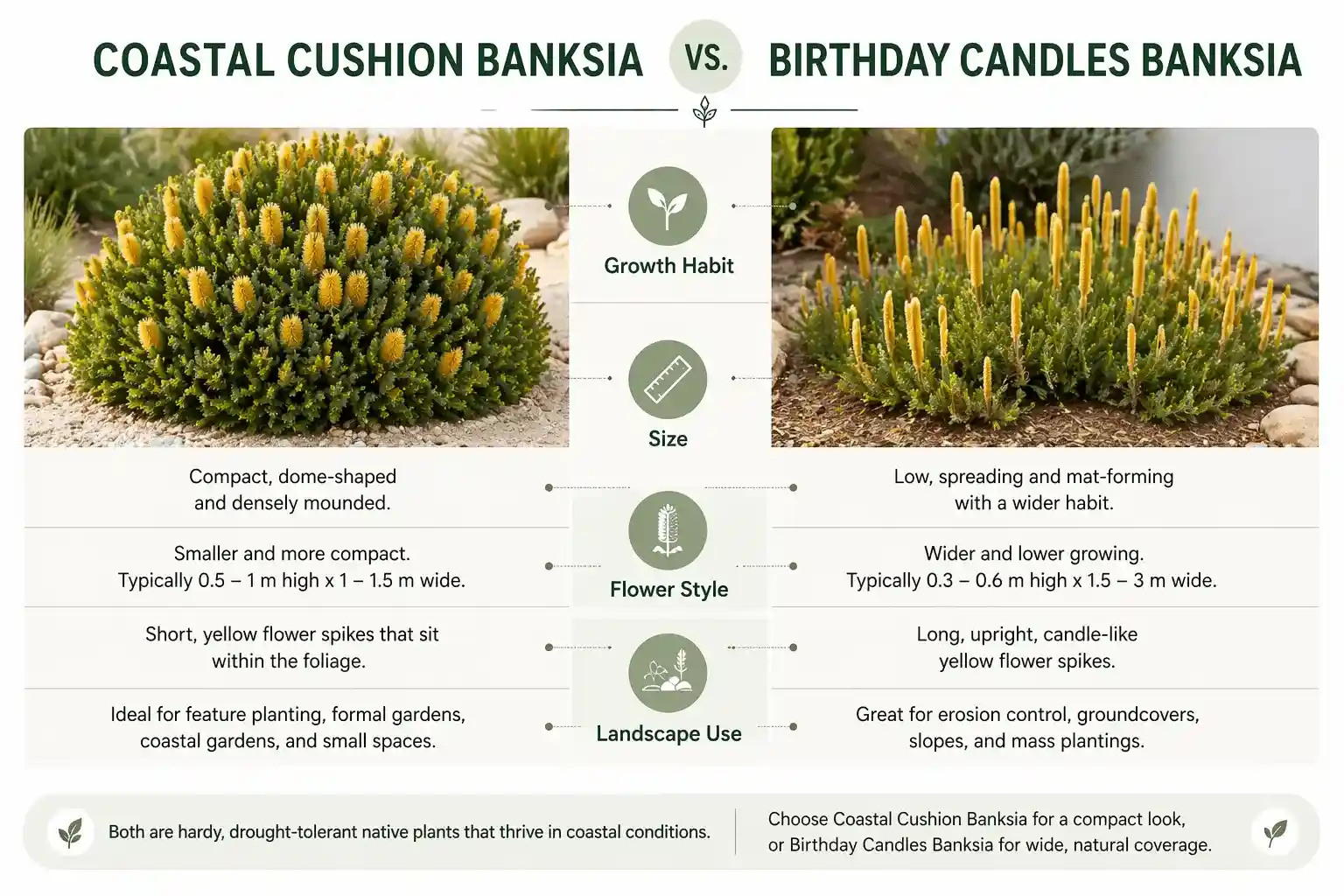
| Feature | Coastal Cushion Banksia | Birthday Candles Banksia |
| Growth Habit | Rounded, compact | Spreading, low |
| Size | Medium dwarf | Smaller, very low |
| Flowers | Yellow spikes | Golden-yellow spikes |
| Landscape Use | Borders, shrubs | Ground cover |
How Coastal Cushion Banksia Compares to Other Banksia Types
Coastal Cushion vs Coastal Banksia (Banksia integrifolia)
Coastal cushion banksia is a small shrub, while Banksia integrifolia (coastal banksia) is a large tree that can reach heights of 10–25 meters. The dwarf form is suited to residential gardens, whereas the tree form is used for larger landscapes and windbreaks.
Other Related Species and Types
- Banksia collina: Upright shrub with different flower structure
- Banksia cunninghamii: Taller and less compact
- Coastal banksia tree: Large, spreading canopy
These species differ significantly in size, structure, and landscape application.
Landscaping Uses and Garden Applications
Best Uses in Garden Design
Coastal cushion banksia is widely used as:
- A small ornamental shrub
- Border planting for structured layouts
- Ground cover alternative in sunny areas
- Coastal and drought-tolerant landscaping
Why It’s Considered One of the Best Banksias for Small Gardens
- Fits within small banksia varieties
- Requires minimal maintenance
- Attracts birds, bees, and pollinators
- Maintains a tidy, compact shape
Common Problems and How to Fix Them
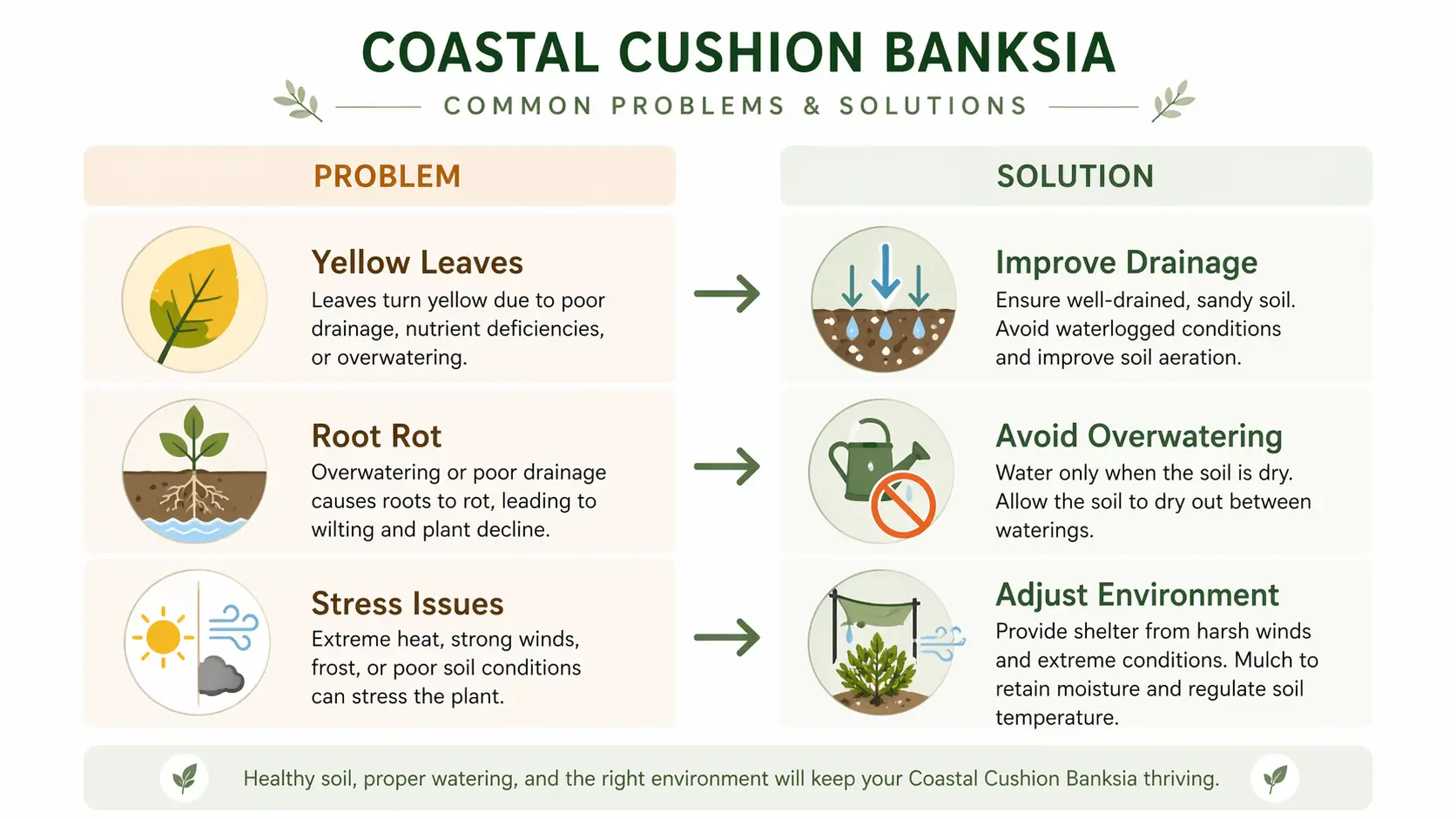
Yellowing Leaves and Poor Growth
Yellowing leaves are usually caused by poor drainage or nutrient imbalance.
Solutions:
- Improve soil drainage
- Use appropriate native fertilizers
Root Rot and Overwatering Issues
Root rot occurs in waterlogged soils.
Prevention:
- Ensure well-drained soil
- Avoid excessive watering
Pest and Environmental Stress Issues
While generally resilient, stress may occur due to:
- High humidity
- Frost exposure
Proper placement and airflow help reduce these risks.
Beginner Mistakes to Avoid When Growing Coastal Cushion Banksia
- Overwatering in heavy or clay soil
- Using high-phosphorus fertilizers
- Planting in shaded areas with insufficient sunlight
- Ignoring spacing despite compact size
Plant Size
Coastal cushion banksia remains a compact shrub, typically reaching under 1 meter in height and spreading wider. Environmental conditions such as soil quality, pruning, and climate can slightly alter its final size.
Growth Rate
This plant exhibits a slow to moderate growth rate. Growth is more active during warmer seasons and slows significantly in cooler months. Proper care conditions can improve growth consistency.
Care Guide (Consolidated Practical Reference)
- Water sparingly once established
- Provide full sun for best results
- Use well-drained, sandy soil
- Apply low-phosphorus fertilizers only
- Prune lightly after flowering
Broader Gardening Context and Plant Selection
Where Coastal Cushion Fits Among Banksias
It belongs to the category of dwarf banksias and small banksia varieties, offering a compact alternative to large banksia trees.
Choosing the Right Banksia for Your Garden
Key factors to consider:
- Available space
- Climate suitability
- Maintenance level
Coastal cushion banksia is often considered one of the best options for small, low-maintenance gardens.
Conclusion
Coastal cushion banksia is a compact, versatile shrub that combines ornamental value with practical resilience. As a dwarf form of Banksia spinulosa, it offers the distinctive beauty of banksias in a manageable size. With proper soil, sunlight, and minimal care, it thrives in a wide range of environments, making it an excellent choice for both beginners and experienced gardeners.
FAQs
1. How big does a coastal cushion banksia grow?
It typically grows to around 0.5–1 meter tall and spreads up to 1.5 meters wide, making it ideal for small garden spaces.
2. Is coastal cushion banksia suitable for coastal environments?
Yes, it is highly tolerant of coastal conditions, including wind, salt exposure, and sandy soils.
3. How do you care for a coastal cushion banksia?
Provide well-drained soil, full sun, minimal watering after establishment, and use low-phosphorus fertilizer designed for native plants.
4. What is the difference between coastal cushion and birthday candles banksia?
Coastal cushion is more compact and rounded, while Birthday Candles has a lower, spreading growth habit with slightly different flowering characteristics.
5. Is coastal cushion banksia fast growing?
No, it has a slow to moderate growth rate depending on environmental conditions such as soil, sunlight, and climate.