Introduction
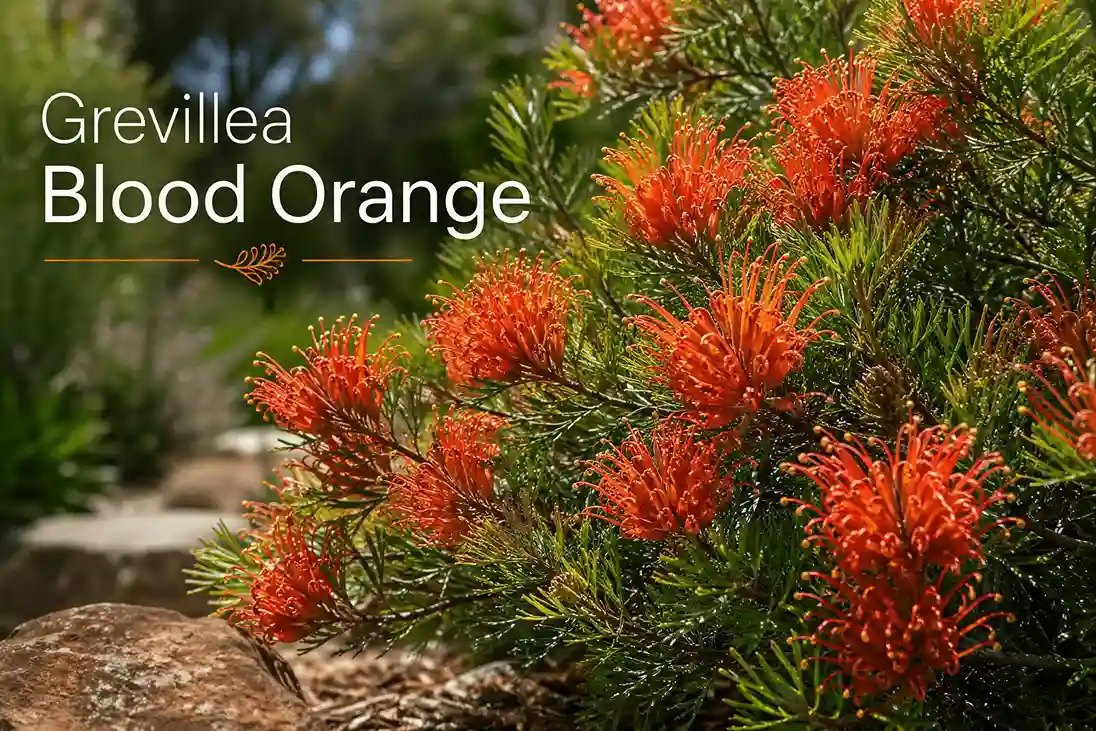
Grevillea Blood Orange is a striking Australian native shrub known for its vibrant orange flowers and adaptability to various garden conditions. This plant belongs to a group of orange grevillea types valued for both ornamental use and ecological benefits. Commonly associated with grevillea olivacea orange and other orange grevillea tree forms, it stands out for its dense growth and nectar-rich blooms. As part of the Proteaceae family, grevilleas are widely cultivated across Australia due to their resilience, drought tolerance, and ability to attract pollinators such as birds and bees.
Often grouped with other orange grevillea types like grevillea olivacea orange, this plant shares similarities with hedging varieties such as Ultimate Grevillea Olivacea Hedge Guide: 7+ Easy Care Tips. It is also a valuable addition to broader plant collections discussed in guides like the Plants for Homes and Gardens Guide, which covers both indoor and outdoor plant selection strategies.
Quick Summary
- Grevillea Blood Orange is an evergreen shrub with vivid orange flowering displays
- It thrives in well-drained soils and sunny environments
- Commonly used in Australian native gardens and landscaping
- Requires minimal care but is sensitive to overwatering and poor drainage
What Is Grevillea Blood Orange?
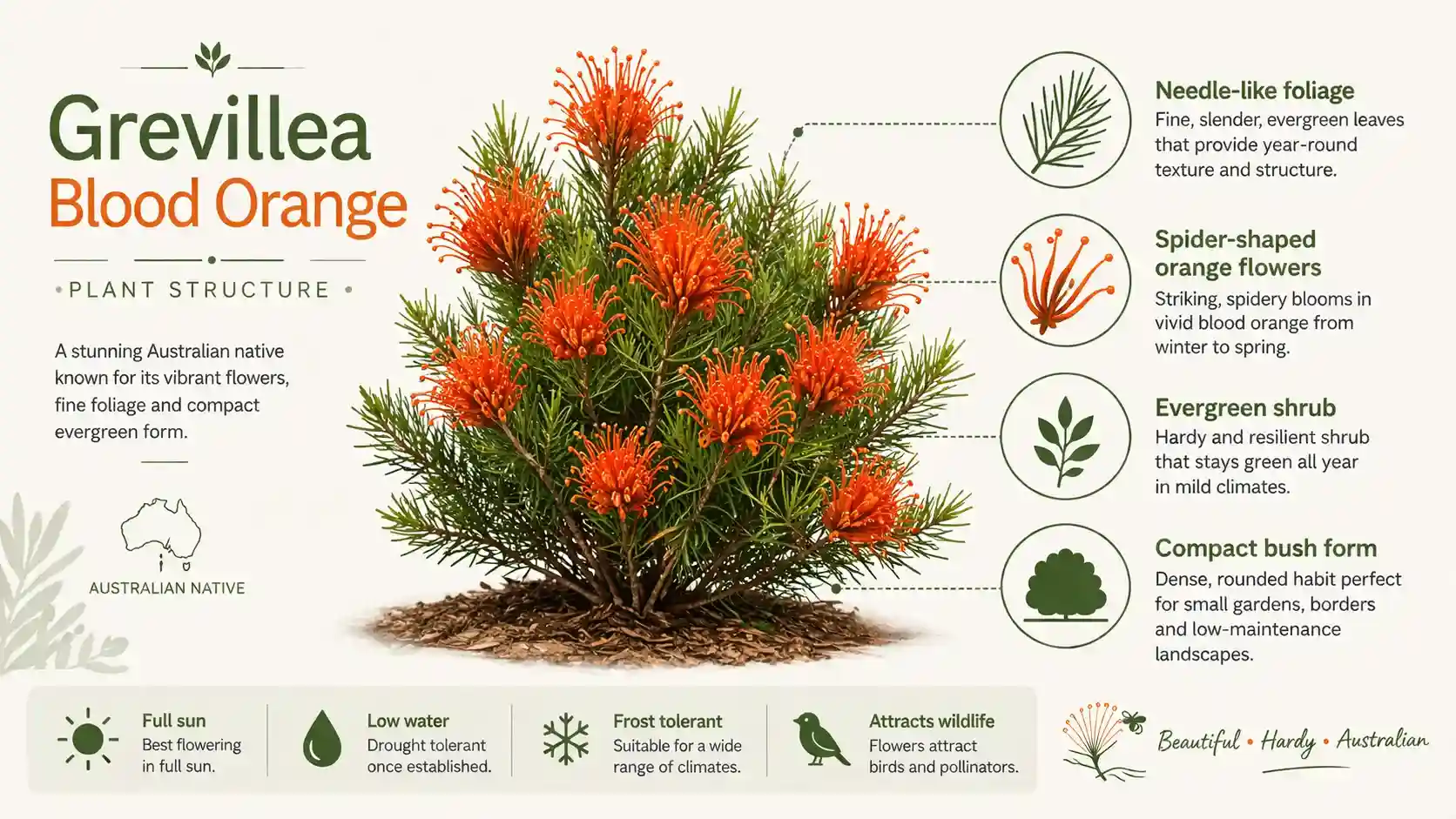
Grevillea Blood Orange is a cultivated variety within the Grevillea genus, a group of flowering plants native to Australia known for their distinctive blooms and hardy nature. It is classified among orange Australian native flowers due to its bright, warm-toned blossoms. Grevillea Blood Orange is a cultivated variety within the Grevillea genus, a group of flowering plants native to Australia (see Grevillea genus on Wikipedia).
This plant is closely related to other grevillea flowering orange types and shares similar structural traits. It typically grows as a shrub, though under certain conditions it may resemble a small orange grevillea tree.
Grevillea plants are easily identified by their:
- Needle-like or finely divided foliage
- Spider-shaped flowers rich in nectar
- Evergreen growth habit
These features make them highly recognizable and valuable in native landscaping.
Key Characteristics of Grevillea Blood Orange
Appearance and Flowering Traits
Grevillea Blood Orange produces vibrant orange flowers that are rich in nectar, making them highly attractive to pollinators. The blooms have a distinctive spider-like shape typical of grevilleas.
Key traits include:
- Bright orange flowering clusters
- Evergreen foliage with fine texture
- Extended flowering periods, often peaking in warmer seasons
Plant Type and Growth Habit
This plant is generally classified as a shrub, although it can develop into a small orange grevillea tree form under optimal conditions.
Its growth habit includes:
- Dense and bushy structure
- Compact form suitable for hedging
- Characteristics similar to grevillea bush varieties
Grevillea Blood Orange Size and Growth Rate
Mature Height and Width
Grevillea Blood Orange typically grows to a moderate size, forming a dense shrub.
- Average height: 1.5 to 3 meters
- Spread: 1.5 to 2.5 meters
Size can vary depending on:
- Soil quality
- Climate conditions
- Water availability
This plant is primarily suited for outdoor environments and does not perform well indoors due to its sunlight requirements.
Growth Speed and Development
Grevillea Blood Orange is considered a moderate to fast-growing shrub.
Growth characteristics include:
- Rapid development during warm seasons
- Slower growth in cooler months
- Responsive to pruning and environmental conditions
Factors influencing growth:
- Full sunlight exposure
- Proper soil drainage
- Occasional pruning to shape structure
Care Guide for Grevillea Blood Orange
Light, Soil, and Water Requirements
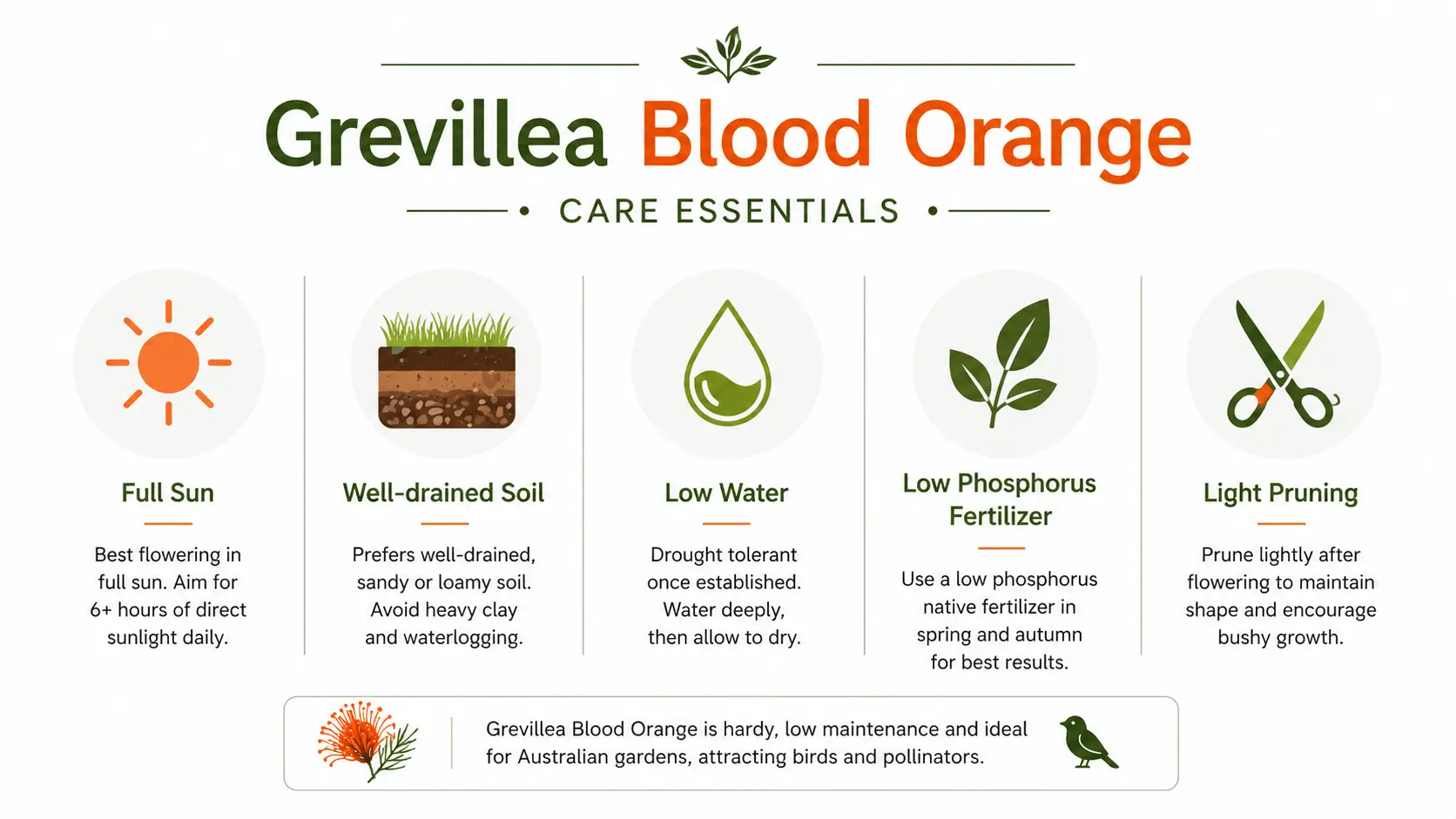
Grevillea Blood Orange thrives in full sun and requires specific soil conditions to remain healthy.
Core requirements:
- Full sun exposure for optimal flowering
- Well-drained, sandy or loamy soil
- Low-phosphorus soil conditions
Watering considerations:
- Drought-tolerant once established
- Highly sensitive to overwatering
- Requires minimal irrigation in most climates
Fertilizing and Feeding
Proper fertilization is essential for healthy growth.
Guidelines:
- Use fertilizers formulated for native plants
- Avoid high-phosphorus products, which can damage roots
- Apply sparingly during active growth periods
Pruning and Maintenance
Pruning helps maintain plant shape and encourages flowering.
Best practices:
- Prune lightly after flowering cycles
- Remove dead or leggy growth
- Encourage bushier structure through regular trimming
Common Problems and Solutions
Why Is My Grevillea Turning Yellow?
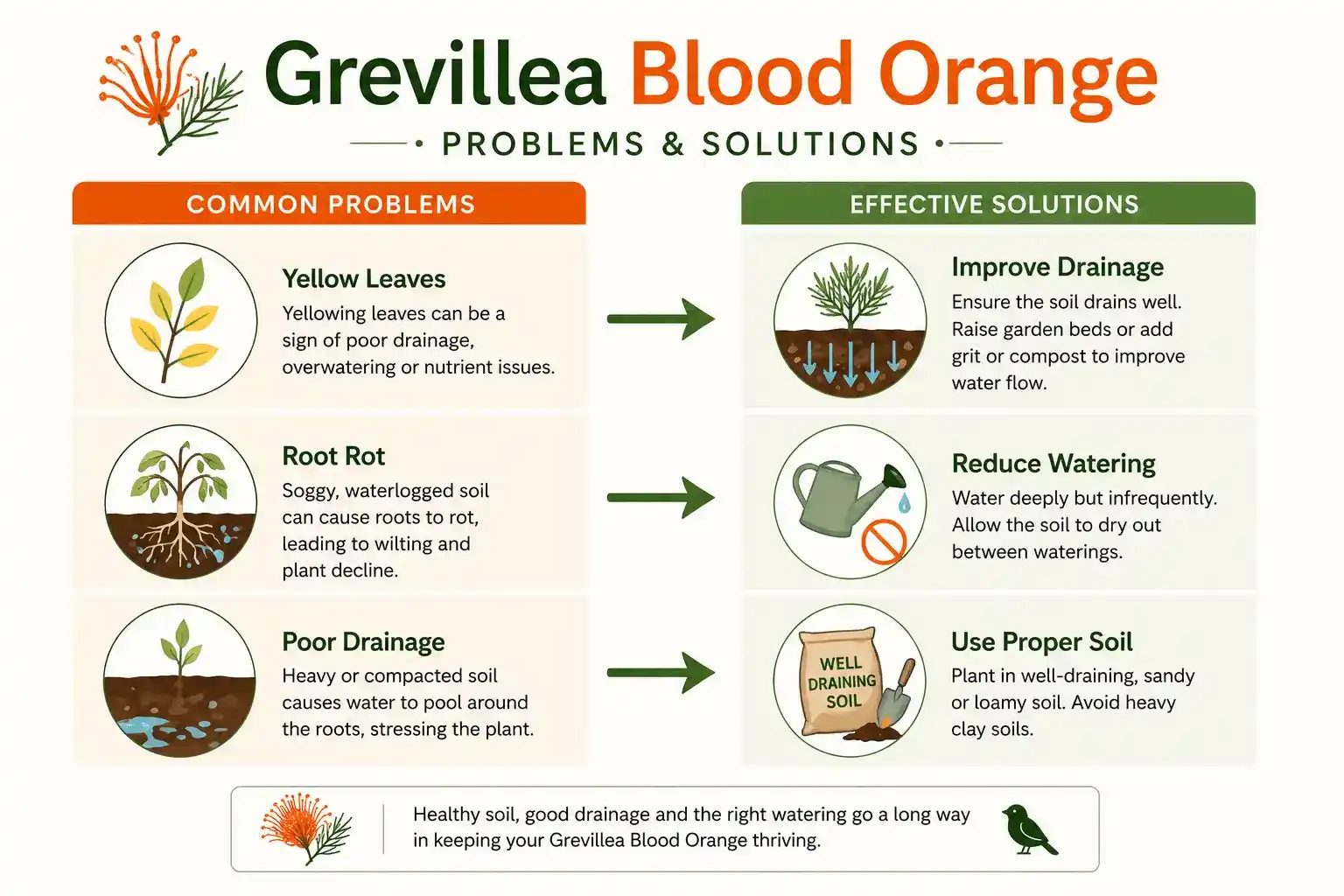
Grevillea leaves turn yellow primarily due to environmental stress or soil issues.
Common causes:
- Poor drainage
- Nutrient imbalance
- Root stress
Solutions:
- Improve soil drainage
- Adjust watering frequency
- Use appropriate native fertilizers
Why Is My Grevillea Dying?
Grevillea decline is often linked to root health and environmental conditions.
Primary causes:
- Root rot from overwatering
- Heavy or compacted soil
- Extreme environmental stress
Preventive steps:
- Ensure free-draining soil
- Avoid excessive watering
- Plant in suitable climate conditions
Do Grevilleas Have Invasive Roots?
Grevilleas generally do not have invasive root systems.
Their roots:
- Are relatively non-aggressive
- Spread moderately for stability
- Are suitable near pathways and structures
Compared to invasive species, grevillea roots are less likely to cause structural damage.
Popular Orange Grevillea Varieties (Comparison Section)
Key Differences Between Varieties
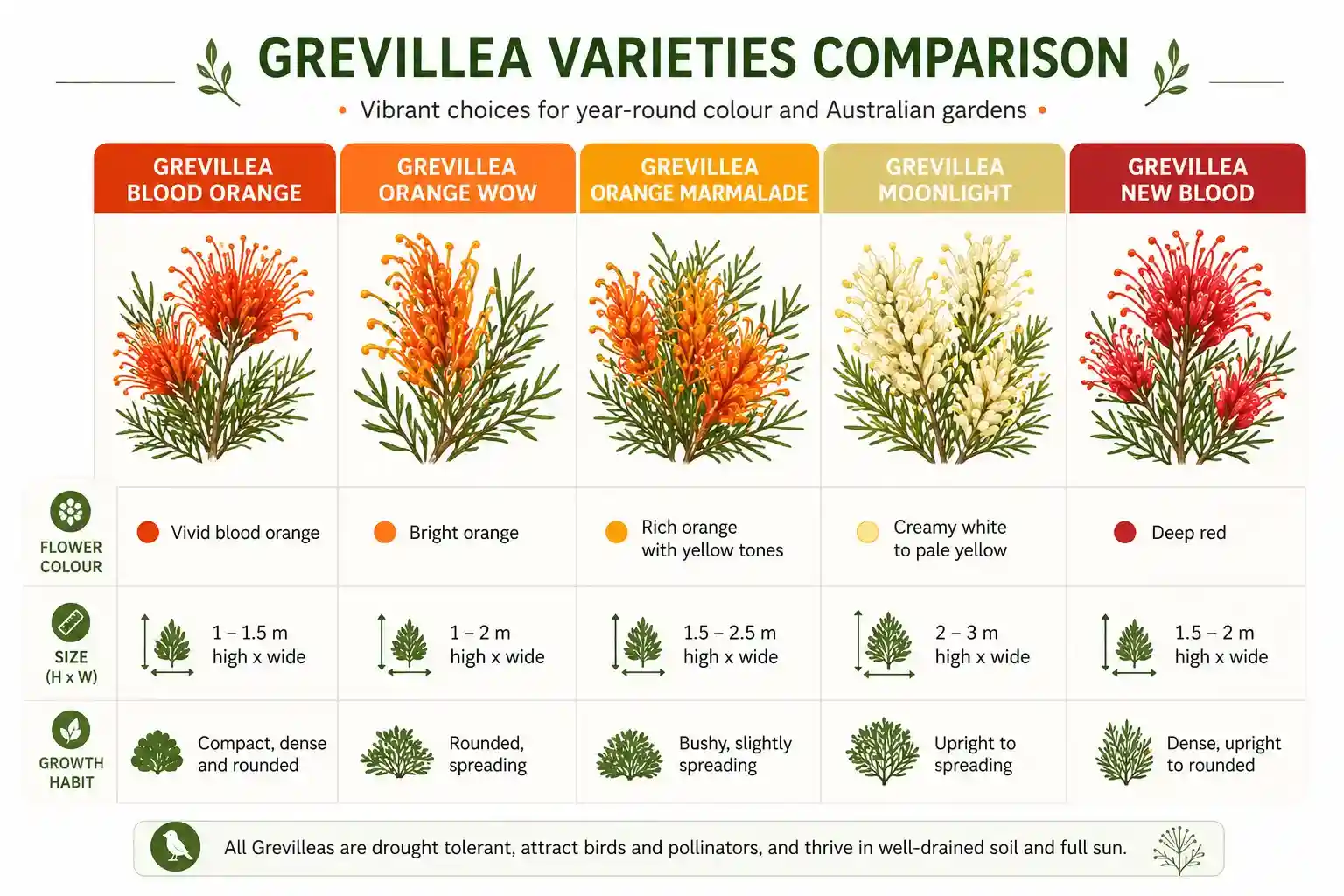
| Variety | Flower Color | Size | Growth Habit | Best Use |
| Grevillea New Blood | Bright red-orange | Compact | Low shrub | Ground cover |
| Grevillea Orange Wow | Deep orange | Medium | Bushy shrub | Feature planting |
| Grevillea Orange Marmalade | Orange-yellow | Medium | Spreading | Borders |
| Grevillea Moonlight | Creamy white | Large | Tall shrub/tree | Screening |
| Grevillea Bulli Princess | Pink-orange | Medium | Dense shrub | Hedging |
Grevillea Blood Orange fits within this group as a vibrant orange-flowering shrub with balanced size and ornamental value.
Grevillea Blood Orange vs Other Grevilleas
Grevillea Blood Orange differs from other grevilleas mainly in flower color, size, and landscape use.
Comparison highlights:
- Compared to grevillea honey gem: Blood Orange is smaller and more compact
- Compared to grevillea moonlight: Blood Orange has orange flowers instead of cream
- Compared to grevillea red salento: Blood Orange features a brighter orange tone rather than deep red
It is best suited for smaller gardens or controlled landscape designs. Similar compact grevillea cultivars, such as Grevillea ‘Dorothy Gordon’: 7+ Essential Care Tips, also offer dense growth and vibrant flowering for smaller gardens.
Landscaping Uses and Garden Design Ideas
Grevillea Blood Orange is widely used in landscaping due to its color and adaptability.
Common uses:
- Feature shrub in garden beds
- Informal hedging plant
- Accent plant in native gardens
Benefits:
- Attracts birds and pollinators
- Complements other orange native flowers in Australia
- Enhances biodiversity in garden spaces
It integrates seamlessly into native landscapes, especially when designed using principles from a Modern Australian Native Garden: 10+ Smart Design Ideas Guide.
Environmental Requirements and Limitations
Grevillea Blood Orange performs best in warm, dry climates similar to Australia.
Environmental needs:
- Prefers low humidity
- Requires good air circulation
- Sensitive to frost
Limitations:
- Struggles in cold climates such as the UK
- Poor tolerance to heavy, waterlogged soils
- May require protection in cooler regions
Beginner Mistakes to Avoid
Common mistakes when growing Grevillea Blood Orange include:
- Overwatering the plant
- Using high-phosphorus fertilizers
- Planting in heavy clay soil
- Neglecting pruning
Avoiding these issues ensures healthier growth and better flowering.
How Grevillea Blood Orange Fits Into a Native Garden Ecosystem
Grevillea Blood Orange plays an important role in native garden ecosystems.
Ecological benefits:
- Provides nectar for birds and insects
- Supports biodiversity
- Integrates well with other grevillea trees and shrubs
It is especially useful in drought-tolerant landscaping due to its low water needs and resilience.
Conclusion
Grevillea Blood Orange is a visually striking and low-maintenance native shrub that thrives in the right conditions. With proper care, well-drained soil, and adequate sunlight, it can become a standout feature in gardens while supporting pollinators and enhancing landscape diversity.
FAQs
What does grevillea blood orange look like?
A compact evergreen shrub with needle-like foliage and bright orange, spider-shaped flowers.
How tall does grevillea blood orange grow?
It typically reaches a moderate height depending on conditions, often forming a dense shrub.
How do you prune grevillea blood orange?
Prune lightly after flowering to maintain shape and encourage new blooms.
Why are my grevillea leaves turning yellow?
Usually due to poor drainage, overwatering, or nutrient imbalance.
Can grevillea blood orange grow in pots?
Yes, if grown in well-draining soil and placed in full sun, though it performs best in the ground.