Introduction
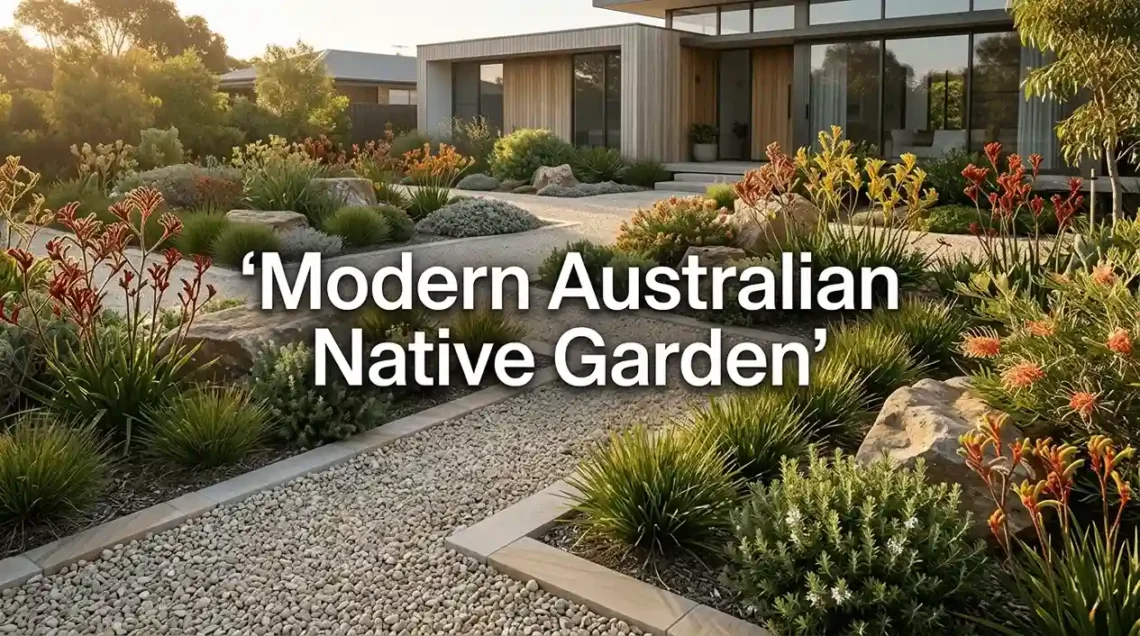
A modern Australian native garden combines contemporary design with resilient, locally adapted plants to create a visually clean, sustainable landscape. This approach focuses on drought-tolerant species, structured layouts, and minimal upkeep, making it ideal for climates across Australia. By integrating native biodiversity with modern aesthetics, these gardens support wildlife while reducing water consumption and maintenance efforts. Whether in coastal Perth or temperate Melbourne, a modern Australian native garden offers a practical and stylish solution for homeowners seeking long-term landscape efficiency and ecological balance.
Quick Summary
- A modern Australian native garden uses structured layouts with drought-tolerant native plants.
- It reduces water usage, maintenance time, and supports local ecosystems.
- Ideal for front yards, small spaces, and decorative garden beds.
- Common plants include kangaroo paw, grevillea, and lomandra.
Core Principles of Modern Australian Native Garden Design
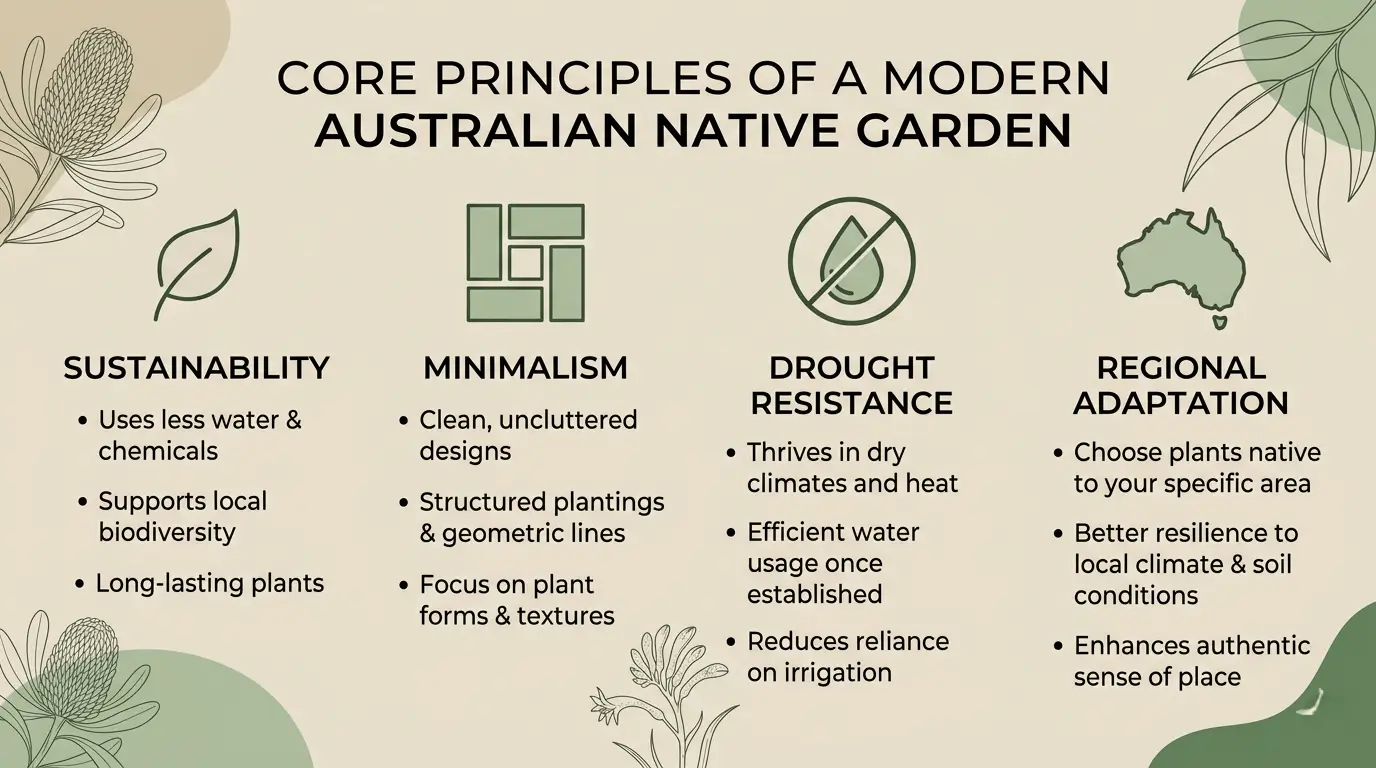
A modern Australian native garden is built on sustainability, minimalism, and regional adaptability.
Sustainability and Water Efficiency
- Uses drought-resistant species suited to local rainfall
- Reduces irrigation needs after plant establishment
- Encourages biodiversity by supporting native wildlife
Many of these principles are also seen in low-maintenance landscaping plants such as 7+ Powerful Reasons to Choose Australian Brush Cherry, 7+ Powerful Reasons Rosemary Prostrate Transforms Any Garden, and 7+ Powerful Benefits of Coastal Rosemary for Stunning Gardens, which are widely used in water-wise Australian garden designs.
These sustainable gardening practices are closely aligned with principles of native plant ecology, which focuses on plants naturally adapted to local environments and ecosystems.
Clean and Structured Design
- Incorporates geometric layouts and defined planting zones
- Uses gravel mulch, stone pathways, and raised beds
- Focuses on visual simplicity and open space
Plant Selection and Balance
- Combines textures (grass-like, woody, flowering)
- Ensures year-round visual appeal through seasonal variation
- Balances color, foliage, and plant form
Site Analysis and Regional Adaptation
- Soil type: sandy soils (Perth) vs. clay soils (Melbourne)
- Sun exposure: full sun vs. partial shade areas
- Rainfall patterns: dry vs. temperate zones
Popular Plants for Modern Australian Native Gardens
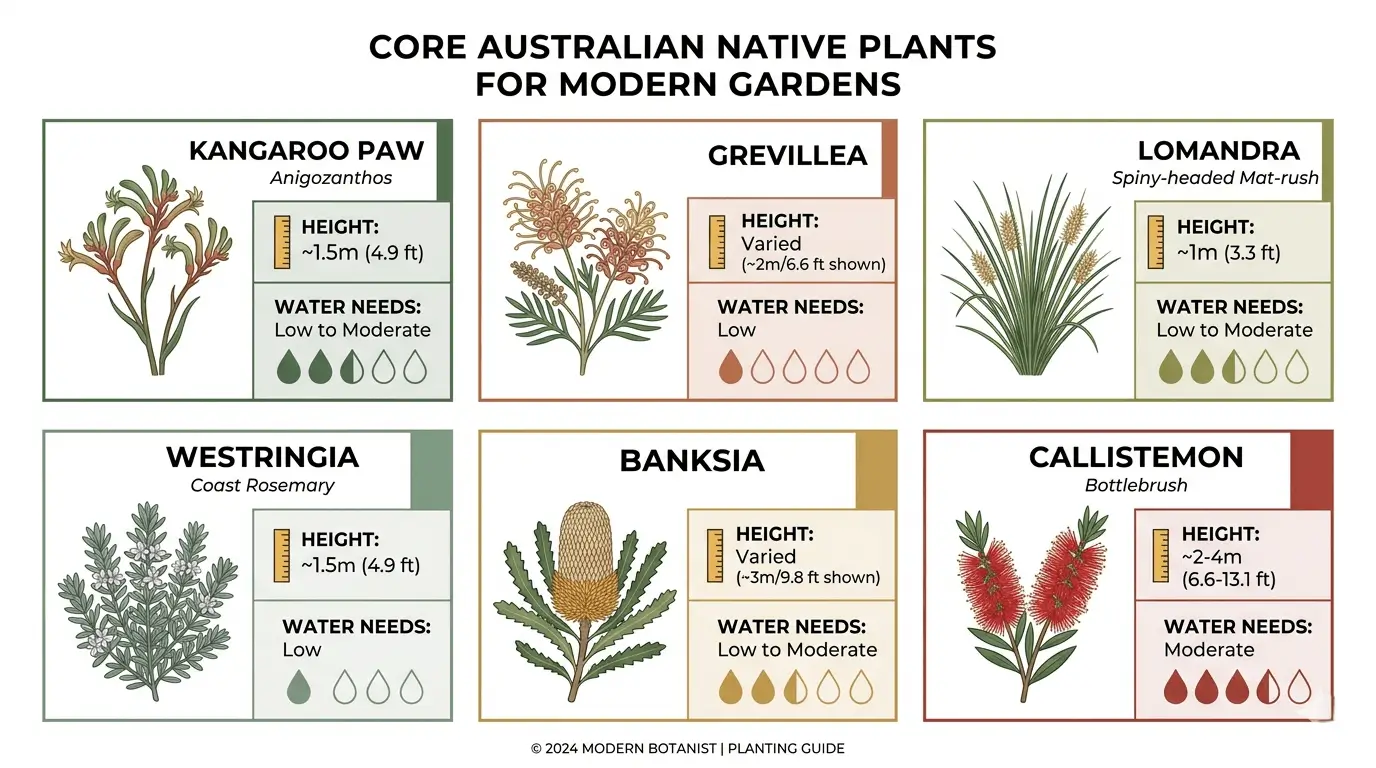
Selecting the right plants ensures long-term success, low maintenance, and strong visual appeal.
Key Native Plant Options
| Plant Name | Mature Height | Key Colors/Textures | Water Needs | Best Regions |
| Kangaroo Paw | 0.5–2m | Vibrant reds/oranges, strappy | Low | WA, SA |
| Grevillea | 1–4m | Spider-like pink/red flowers | Low–Moderate | Nationwide |
| Lomandra | 0.3–1m | Grass-like, lime green | Very Low | All |
| Westringia | 1–2m | Grey foliage, white blooms | Low | Coastal |
| Banksia | 1–6m | Bold flower spikes | Low | Coastal/WA |
| Callistemon | 1–4m | Bottlebrush red blooms | Moderate | Nationwide |
| Dianella | 0.5–1m | Blue berries, strappy leaves | Low | All |
| Correa | 0.5–2m | Bell-shaped flowers | Low | VIC, NSW |
For more drought-tolerant and design-friendly species, explore 10+ Stunning Ways Lomandra Variegated Transforms Your Garden, Flax Lily Plant: 7+ Stunning Benefits & Care Secrets Revealed, and Dwarf Bottlebrush: 7 Stunning Reasons Gardeners Love It, which are commonly used in modern native landscapes across Australia.
Designing Low-Maintenance Front Yard Native Gardens
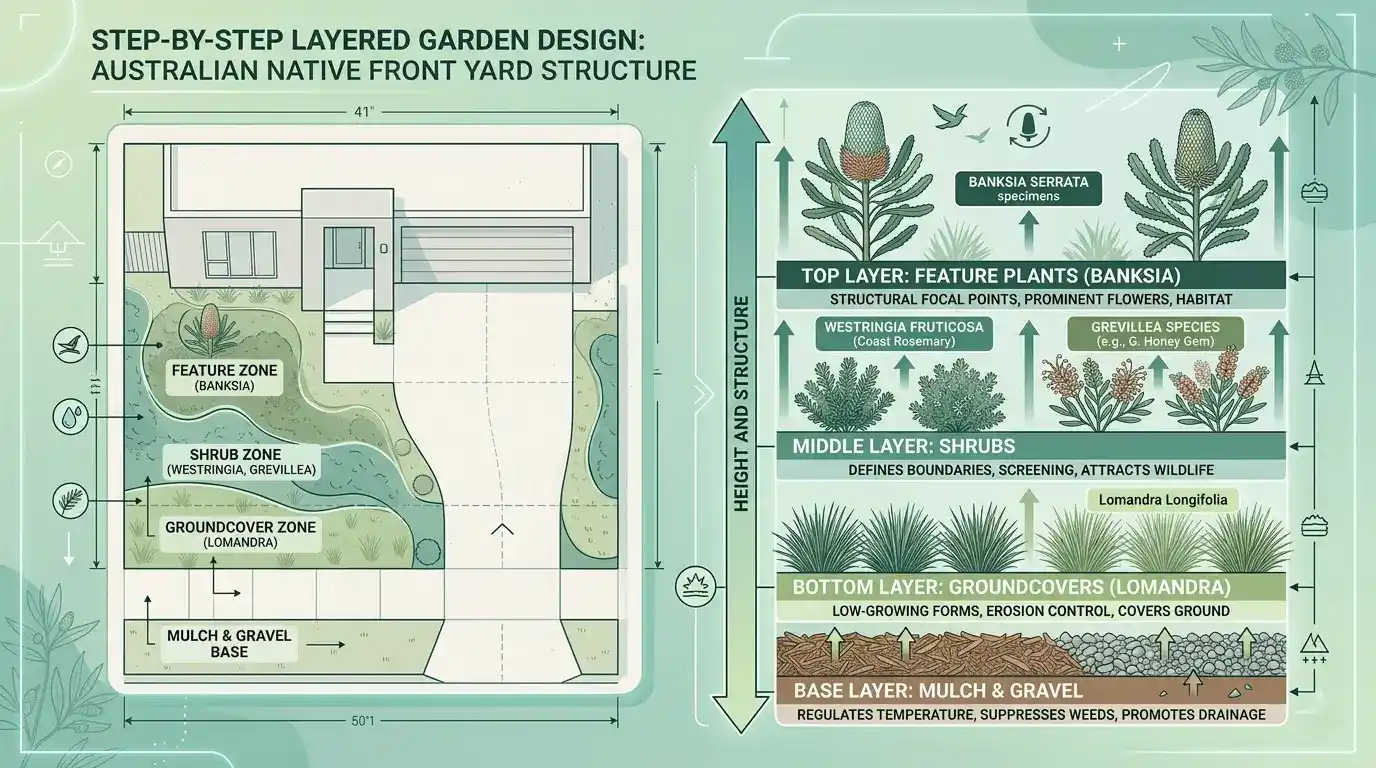
A low-maintenance front yard native garden uses strategic layout and plant grouping to reduce upkeep.
Efficient Layout Strategies
- Use mass planting to reduce gaps and weeds
- Apply mulch layers to conserve moisture
- Limit lawn areas to reduce maintenance
Layering for Visual Structure
- Groundcovers: lomandra, native grasses
- Mid-layer shrubs: grevillea, westringia
- Feature plants: banksia, small trees
Modern Hardscape Elements
- Stone pathways for accessibility
- Boulders for focal points
- Pots for flexible design accents
Comparison: Modern Native vs. Traditional Aussie Gardens
| Feature | Modern Native Garden | Traditional Aussie Garden |
| Design Style | Minimalist, structured | Informal, mixed planting |
| Water Usage | Low | Moderate to high |
| Maintenance | Low | Higher |
| Plant Selection | Native-focused | Mix of native and exotic |
| Biodiversity | High | Moderate |
Colorful Australian Native Garden Beds
Colorful native garden beds create visual impact using flowering species and contrasting foliage.
Plant Selection for Color
- Kangaroo paw for bright reds and oranges
- Grevillea for pink and red tones
- Callistemon for bold seasonal blooms
Similar vibrant planting combinations are also found in 7+ Stunning Red Fountain Grass Ideas for Vibrant Gardens, 6+ Stunning Agapanthus orientalis Tips for Vibrant Blooms, and 7+ Stunning Sundowner Phormium Tips to Transform Your Garden, which enhance color contrast in structured garden designs.
Texture and Contrast
- Combine flowering plants with silvery foliage
- Use grasses to soften edges
- Maintain balance between color and greenery
Design Tips for Small Beds
- Use edging for clean boundaries
- Layer plants by height
- Combine complementary species
Plant Size and Growth Considerations
Plant size varies significantly depending on species and environmental conditions.
Typical Dimensions
- Small plants: 0.3–1m (lomandra, dianella)
- Medium shrubs: 1–3m (grevillea, westringia)
- Large plants: 2–5m (banksia, small trees)
Growth Influencing Factors
- Soil quality and drainage
- Wind exposure and frost levels
- Pruning and maintenance practices
Indoor vs Outdoor Growth
- Most native plants thrive outdoors
- Container planting restricts growth size
Growth Rate and Seasonal Patterns
Most Australian native plants exhibit slow to moderate growth patterns.
Growth Speed
- Slow growers: lomandra
- Moderate growers: grevillea
- Faster growth with proper soil and sunlight
Seasonal Behavior
- Peak growth in spring
- Reduced activity in dry summer conditions
- Dormancy or slower growth in extreme climates
Growth Enhancement
- Apply low-phosphorus fertilizers
- Improve soil conditions
- Maintain consistent but minimal watering
Care Guide for Australian Native Gardens
Proper care ensures long-term plant health and sustainability.
Watering
- Water deeply but infrequently
- Reduce frequency after establishment
Light Requirements
- Full sun is ideal for most natives
- Some tolerate partial shade
Soil Conditions
- Prefer well-draining sandy or loamy soil
- Avoid heavy clay unless amended
Fertilization
- Use low-phosphorus native fertilizers
- Apply twice annually
Proper fertilization practices are especially important for species discussed in Plant Food vs Fertilizer: What’s the Real Difference?, as Australian natives require low-phosphorus nutrients for healthy growth.
Pruning
- Light pruning after flowering
- Encourages bushier growth
Climate Tolerance
- Most tolerate temperatures from -5°C to 40°C
Many care principles used in Australian native gardening are also essential for indoor plants, as explained in the Guide to House Plants, particularly in relation to watering balance and soil health.
Common Beginner Mistakes and Fixes
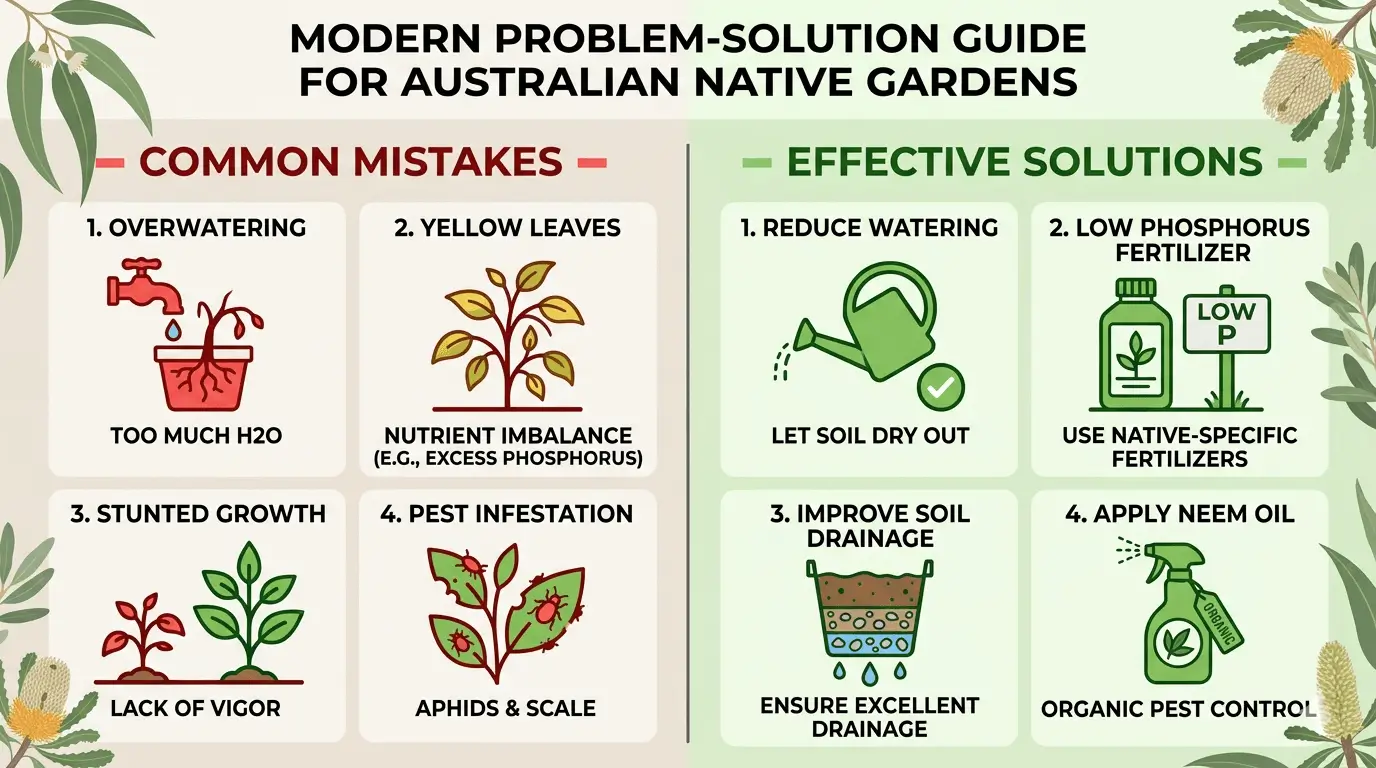
Addressing common mistakes improves plant survival and garden success.
- Overwatering: Leads to root rot → Reduce watering and improve drainage
- Yellow leaves: Caused by incorrect fertilizer → Use native-specific fertilizer
- Slow growth: Poor drainage → Add gypsum or organic matter
- Pests: Use eco-friendly sprays and encourage beneficial insects
Problem-Solution: Troubleshooting Native Garden Issues
Leaves Turning Yellow
Often caused by phosphorus sensitivity. Use low-phosphorus fertilizer and test soil before application.
Overwatering
Plants may wilt despite wet soil. Improve drainage and reduce watering frequency.
Pest Infestations
Scale insects on grevillea can be treated with neem oil and controlled by encouraging birds.
Slow Growth
Caused by shade or plant competition. Ensure proper spacing and sunlight access.
Content Differentiation: Varieties and Regional Adaptations
Regional adaptation and cultivar selection improve garden performance.
Cultivar Comparisons
- Compact varieties like ‘Little Rev’ lomandra suit small spaces
- Standard varieties work for larger landscapes
Regional Considerations
- Melbourne: Frost-tolerant plants like correa
- Perth: Salt-tolerant coastal species
Topical Relevance
- Small gardens benefit from compact natives
- Colorful landscapes use mixed flowering species
Conclusion
A modern Australian native garden offers a practical combination of sustainability, low maintenance, and contemporary design. By selecting drought-tolerant plants, preparing soil properly, and following structured layouts, gardeners can create visually appealing landscapes that thrive in local conditions. The key takeaway is to prioritize water-wise planting and regional suitability for long-term success and ecological benefits.
FAQ
What are the best low-maintenance plants for a modern Australian native front yard?
Lomandra, dianella, and westringia are ideal because they require minimal water, tolerate harsh conditions, and maintain structure throughout the year.
How do I design a small Australian native garden?
Use vertical layering, compact plants, and containers. Combine groundcovers with feature plants and add pathways to maximize space efficiency.
Which colorful natives work in Australian garden beds?
Kangaroo paw, grevillea, and billy buttons provide vibrant colors and attract pollinators while thriving in low-water conditions.
Can modern Australian native gardens handle Melbourne’s climate?
Yes. Choose frost-tolerant plants such as correa and poa, which adapt well to cooler temperatures and seasonal rainfall.
What soil and watering tips apply to Australian native gardens?
Use well-draining soil and water deeply during establishment. Once established, reduce watering frequency to maintain plant health and prevent root issues.