Introduction
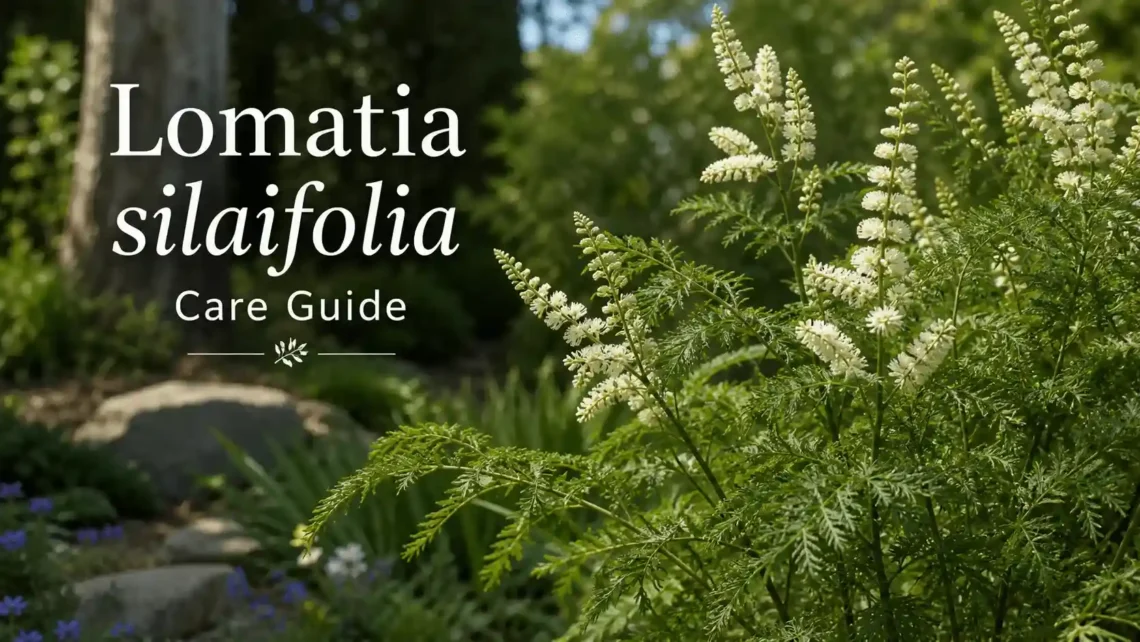
Lomatia silaifolia is a distinctive Australian native shrub known for its finely divided foliage and clusters of creamy-white flowers. Lomatia silaifolia is commonly used in native landscaping due to its textured leaves and adaptability to various garden conditions. Also known as crinkle bush or parsley bush, it adds visual interest and ecological value to outdoor spaces. This guide explains its characteristics, care requirements, growth behavior, and common problems in a clear, structured format designed for accurate understanding and easy reference.
Quick Summary
- Lomatia silaifolia is a medium-sized native shrub with fern-like foliage and white flower spikes.
- It thrives in well-drained soils and sunny to partly shaded environments.
- Common issues include poor drainage sensitivity and pruning mistakes.
- It is non-invasive but requires specific conditions to perform well.
What Is Lomatia silaifolia? (Definition and Plant Identity)
Lomatia silaifolia is an evergreen shrub in the Proteaceae family native to eastern Australia, known for its finely divided foliage and ornamental flowers. It is commonly found in dry forests and woodland ecosystems. Lomatia silaifolia belongs to the Proteaceae family, a diverse group of flowering plants known for their adaptation to low-nutrient soils (learn more on Wikipedia).
Botanical classification:
- Family: Proteaceae
- Genus: Lomatia
- Species: Lomatia silaifolia
Common names include crinkle bush and parsley bush, referencing the leaf shape and texture.
Key identifying traits:
- Deeply divided, parsley-like leaves with a crinkled surface
- Cream to white flower clusters (racemes)
- Upright shrub form with moderate branching
Key Characteristics and Plant Features
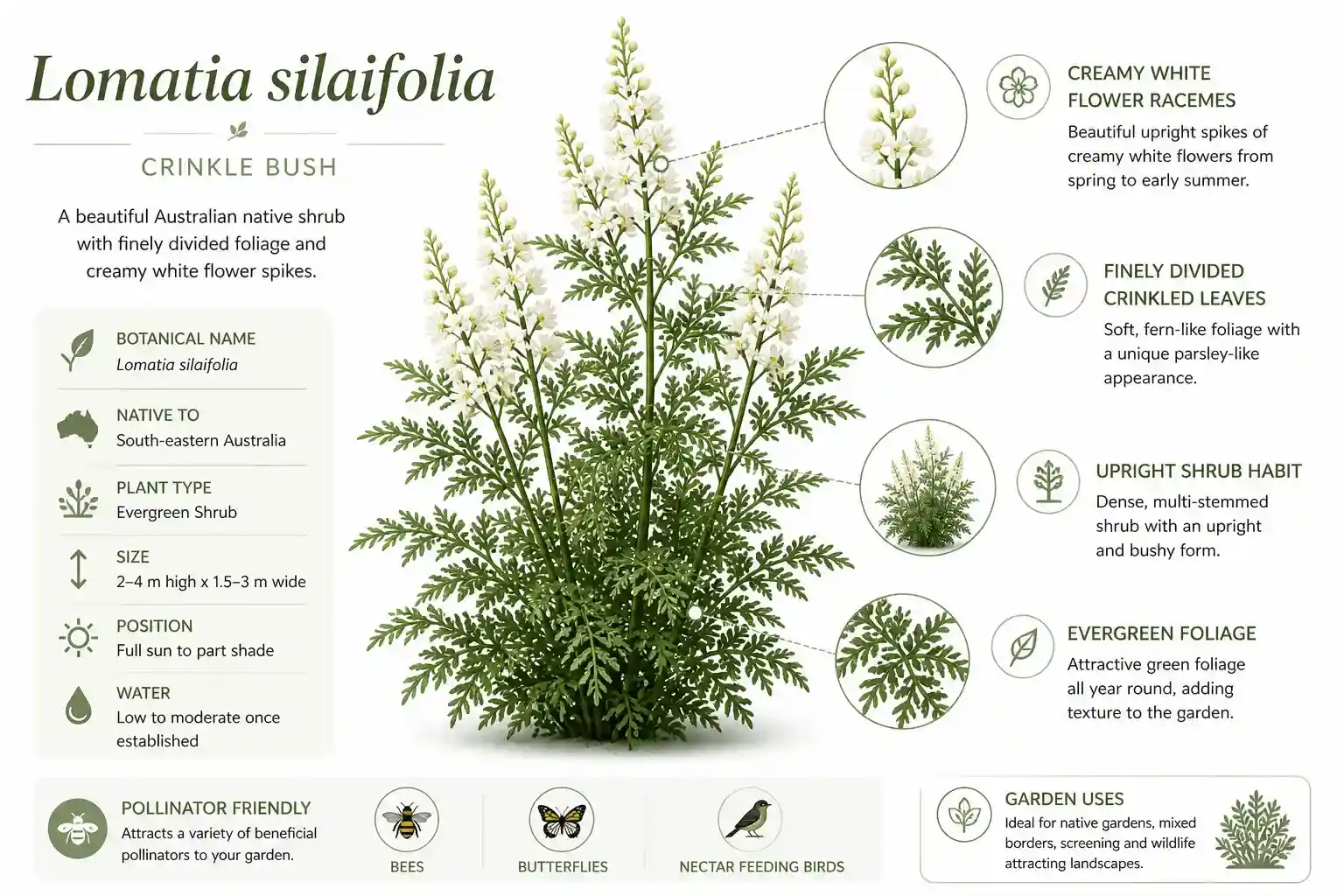
Lomatia silaifolia is characterized by its textured foliage, attractive flowers, and adaptability to native garden settings. Its structure makes it both ornamental and functional in landscaping.
Leaf and flower traits:
- Fine, serrated, parsley-like leaves with a soft texture
- Creamy-white flower racemes that appear seasonally
- Evergreen foliage providing year-round interest
Growth and behavior:
- Upright and slightly spreading shrub habit
- Seasonal flowering typically in spring to early summer
Key features:
- Distinctive crinkled foliage
- Nectar-attracting flowers
- Wildlife-friendly, supporting pollinators such as insects
Size, Height, and Growth Habit
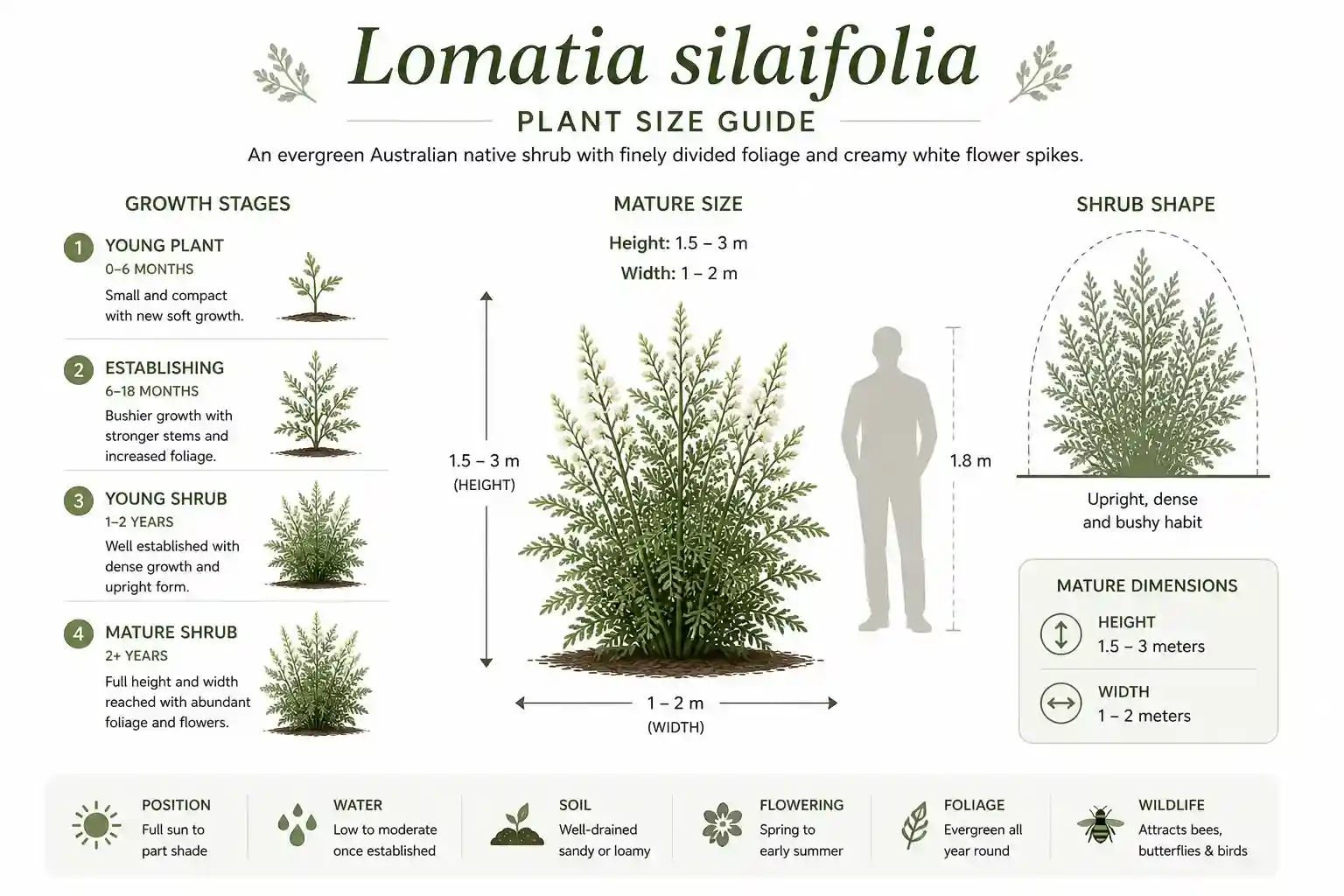
Lomatia silaifolia typically grows to a moderate shrub size, though exact dimensions vary based on environmental conditions. It is primarily suited for outdoor planting rather than indoor cultivation.
Size details:
- Average height range: 1.5 to 3 meters
- Spread: Approximately 1 to 2 meters wide
- Shape: Upright with a slightly open or bushy form
Growth structure:
- Can be dense with regular pruning
- May become more open in low-light conditions
Environmental factors such as soil quality, sunlight, and water availability directly influence its final size.
Growth Rate and Development Stages
Lomatia silaifolia has a moderate growth rate, with noticeable development during favorable growing conditions. Establishment is the most critical stage for long-term health.
Growth stages:
- Early stage: Root establishment and slow above-ground growth
- Mature stage: Steady expansion and consistent flowering
Seasonal patterns:
- Active growth during warmer months
- Reduced growth in cooler periods
Factors affecting growth:
- Soil drainage quality
- Sunlight exposure
- Climate conditions
How to Care for Lomatia silaifolia
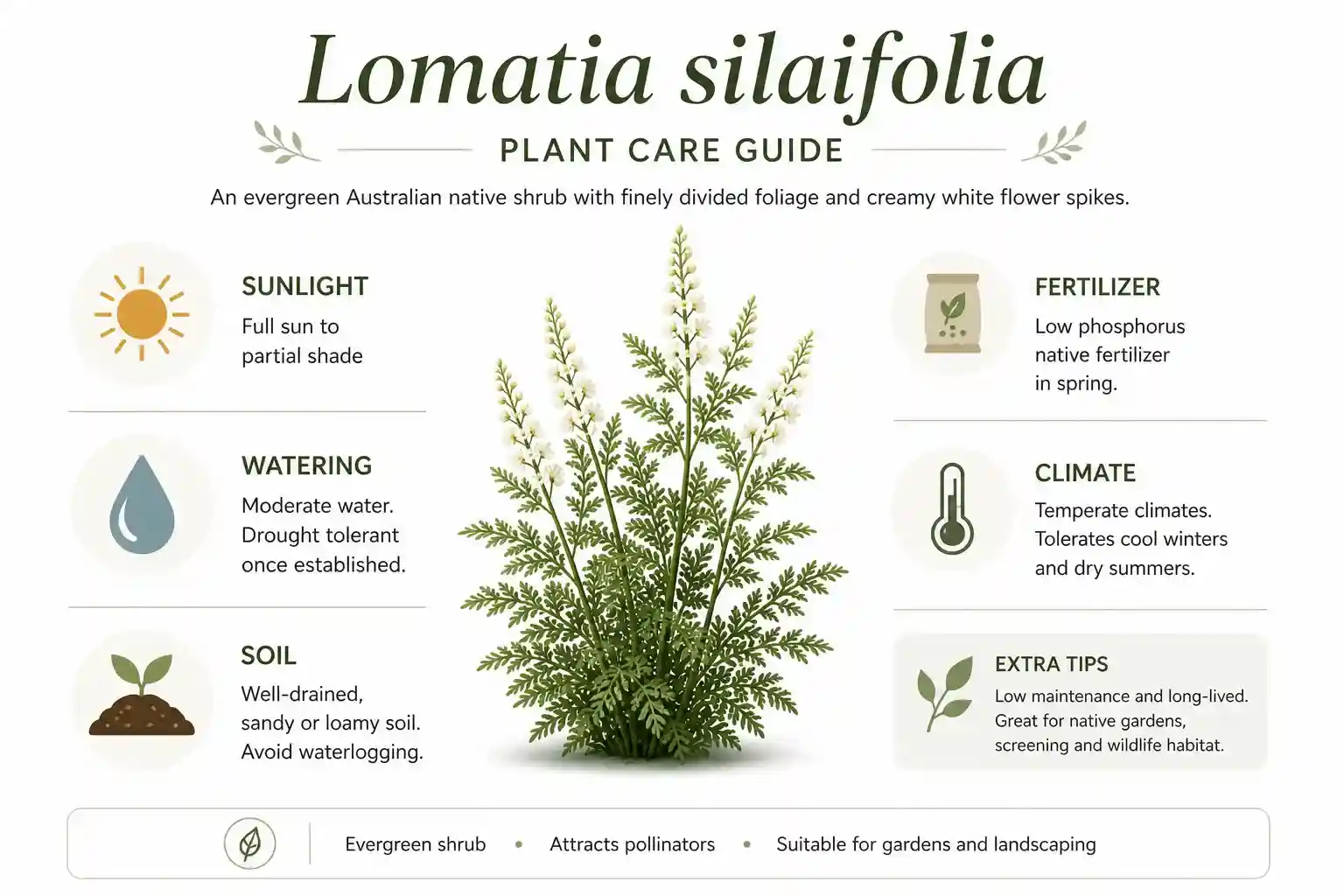
Light Requirements
Lomatia silaifolia grows best in full sun to partial shade, with light levels directly influencing flowering and foliage density. Full sun encourages more compact growth and abundant blooms, while partial shade may result in a slightly looser structure.
Watering Needs
This plant requires moderate watering, especially during establishment. Once mature, it shows some drought tolerance but still benefits from occasional deep watering.
Key points:
- Avoid overwatering
- Allow soil to dry slightly between watering
- Water more frequently in hot weather
Overwatering is a common issue and can lead to root problems.
Soil Preferences
Well-drained soil is essential for Lomatia silaifolia. Poor drainage is one of the main causes of plant failure.
Preferred soil types:
- Sandy soil
- Loamy soil
Avoid:
- Heavy clay
- Waterlogged conditions
Good drainage ensures healthy root development. If your garden has heavy clay soil, improving drainage is essential—refer to How to Improve Clay Soil for Lawns for Better Grass Growth for practical soil improvement methods.
Fertilization
As a member of the Proteaceae family, Lomatia silaifolia requires low-phosphorus fertilizers. High phosphorus levels can damage the plant.
Guidelines:
- Use specialized native plant fertilizer
- Apply sparingly
- Avoid over-fertilizing
Understanding nutrient types is important—see Plant Food vs Fertilizer: What’s the Real Difference? to avoid common fertilization mistakes.
Climate and Hardiness
Lomatia silaifolia performs best in temperate climates and adapts to a range of outdoor conditions within suitable regions.
Climate considerations:
- Tolerates mild frost
- Prefers moderate temperatures
- Sensitive to extreme cold
It is well-suited to regions with seasonal variation but without severe frost.
Pruning and Maintenance Practices
Proper pruning maintains plant shape, improves airflow, and encourages healthy growth. Timing and technique are important.
Best practices:
- Prune after flowering
- Focus on light trimming rather than heavy cutting
- Avoid cutting into old wood
Maintenance tips:
- Use clean, sharp tools
- Remove dead or damaged branches
- Encourage dense growth through regular trimming
Common Problems and How to Fix Them (Troubleshooting Guide)
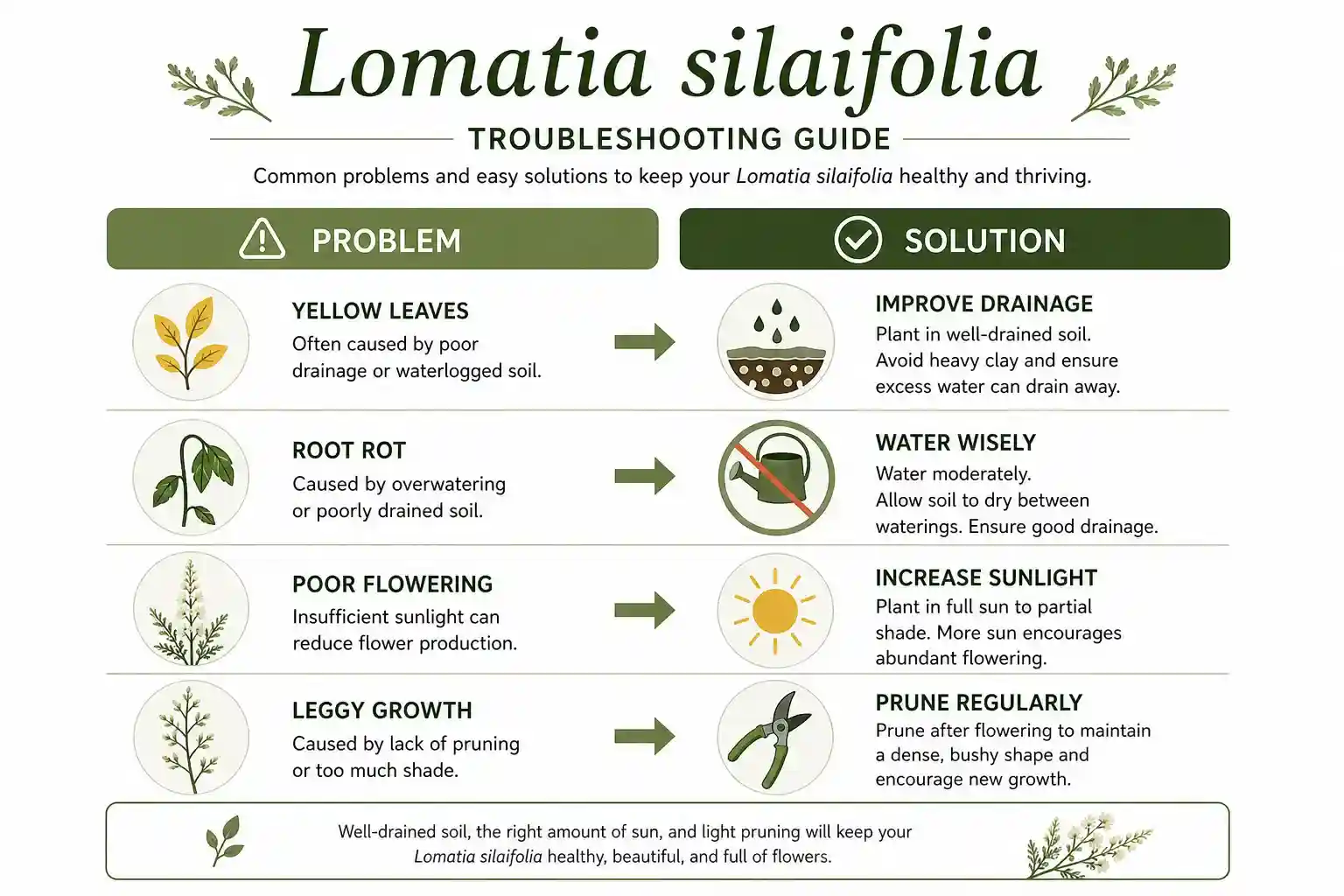
Common issues with Lomatia silaifolia are typically related to environmental conditions or care practices. Identifying symptoms early helps prevent long-term damage.
Common problems:
- Yellowing leaves: Often due to poor drainage or nutrient imbalance
- Root rot: Caused by waterlogged soil
- Poor flowering: Linked to insufficient sunlight or overfeeding
- Leggy growth: Result of low light or lack of pruning
Solutions include improving soil drainage, adjusting watering routines, and ensuring adequate sunlight. If pests appear, especially sap-sucking insects, refer to Aphids on Plants: 7 Proven Fixes to Save Your Plants Fast for targeted solutions.
Is Lomatia silaifolia Invasive or Problematic?
Lomatia silaifolia is not considered invasive and generally behaves well in controlled garden environments. It does not aggressively spread or outcompete surrounding plants.
In native habitats, it integrates naturally into ecosystems. In non-native settings, it remains manageable when planted in appropriate conditions. Regular maintenance ensures it stays within desired boundaries.
Comparison With Related Lomatia Species
Different Lomatia species vary in size, habitat, and leaf structure. Understanding these differences helps in selecting the right plant for specific conditions.
Lomatia Species Comparison
| Feature | Lomatia silaifolia | Lomatia myricoides | Lomatia fraseri |
| Growth Habit | Shrub | Shrub/tree | Small tree |
| Leaf Type | Finely divided | Narrow leaves | Larger leaves |
| Habitat | Dry forests | Riverbanks | Rainforests |
This comparison highlights how Lomatia silaifolia is better suited to drier environments compared to its relatives.
Varieties and Common Forms (Including Ivory Lace)
Lomatia silaifolia includes cultivated forms such as “Ivory Lace,” selected for improved ornamental qualities. These varieties may feature denser foliage or more prominent flowering.
Differences may include:
- Slight variation in leaf density
- Improved shape for landscaping use
- Consistent flowering patterns
These forms are commonly used in designed garden spaces for visual appeal.
Landscaping Uses and Garden Applications
Lomatia silaifolia is widely used in native landscaping due to its structure and adaptability. It functions well as both a feature plant and part of a broader planting scheme.
Common uses:
- Screening or informal hedging
- Feature shrub in native gardens
- Mixed planting with other drought-tolerant species
Applications:
- Wildlife gardens
- Low-maintenance landscapes
- Drought-tolerant planting schemes
Its texture provides contrast when paired with broader-leaf plants.
Environmental Limitations and Growing Conditions
The main limitation of Lomatia silaifolia is its sensitivity to poor drainage. Soil conditions are the most critical factor in successful cultivation.
Limitations include:
- Intolerance to waterlogged soil
- Sensitivity to heavy clay
- Moderate climate requirements
It may also be sensitive to transplanting, especially if roots are disturbed.
Beginner Mistakes to Avoid
New gardeners often encounter problems due to incorrect care practices. Avoiding these mistakes improves plant success.
Common mistakes:
- Overwatering
- Using high-phosphorus fertilizers
- Planting in heavy clay soil
- Improper pruning timing
Understanding these issues helps prevent plant stress and poor growth.
Seasonal Care and Maintenance Tips
Seasonal adjustments improve plant health and performance throughout the year. Care routines should match environmental changes.
Seasonal care:
- Increase watering during hot, dry periods
- Reduce watering in cooler months
- Prune after flowering season
Preparation tips:
- Protect from extreme frost
- Monitor soil drainage during rainy seasons
These adjustments ensure consistent growth.
How Lomatia silaifolia Fits Into Broader Gardening Topics
Lomatia silaifolia plays an important role in native plant gardening and sustainable landscaping. It supports biodiversity and fits into environmentally conscious planting designs.
Key connections:
- Native plant gardening promotes local ecosystems
- Drought-tolerant landscaping reduces water use
- Pollinator-friendly gardens benefit from its nectar-rich flowers
Its use aligns with modern sustainable gardening practices. Lomatia silaifolia plays an important role in native plant gardening and sustainable landscaping. For a broader understanding of native species, see our Ultimate Guide to Native Trees of Australia: Identification & Care.
Conclusion
Lomatia silaifolia is a versatile native shrub valued for its unique foliage and adaptability. With proper soil drainage, moderate watering, and careful pruning, it can thrive in a range of garden settings. Understanding its limitations and care requirements ensures healthy growth and long-term success. For readers expanding into indoor gardening, explore our Guide to House Plants to build a complete plant care foundation.
FAQs
1. What is the common name of Lomatia silaifolia?
It is commonly known as crinkle bush or parsley bush due to its finely divided, textured foliage.
2. How tall does Lomatia silaifolia grow?
It typically grows between 1.5 and 3 meters tall, depending on environmental conditions and maintenance.
3. What are the main problems with Lomatia silaifolia?
Common problems include root rot from poor drainage, yellowing leaves, and reduced flowering caused by improper care.
4. How do you prune Lomatia silaifolia correctly?
Prune lightly after flowering to maintain shape and avoid cutting into older wood, which may not regenerate.
5. Is Lomatia silaifolia invasive?
No, it is generally non-invasive and suitable for controlled garden environments.
6. What type of soil is best for Lomatia silaifolia?
Well-drained sandy or loamy soil is ideal, as it prevents waterlogging and root-related issues.