Introduction
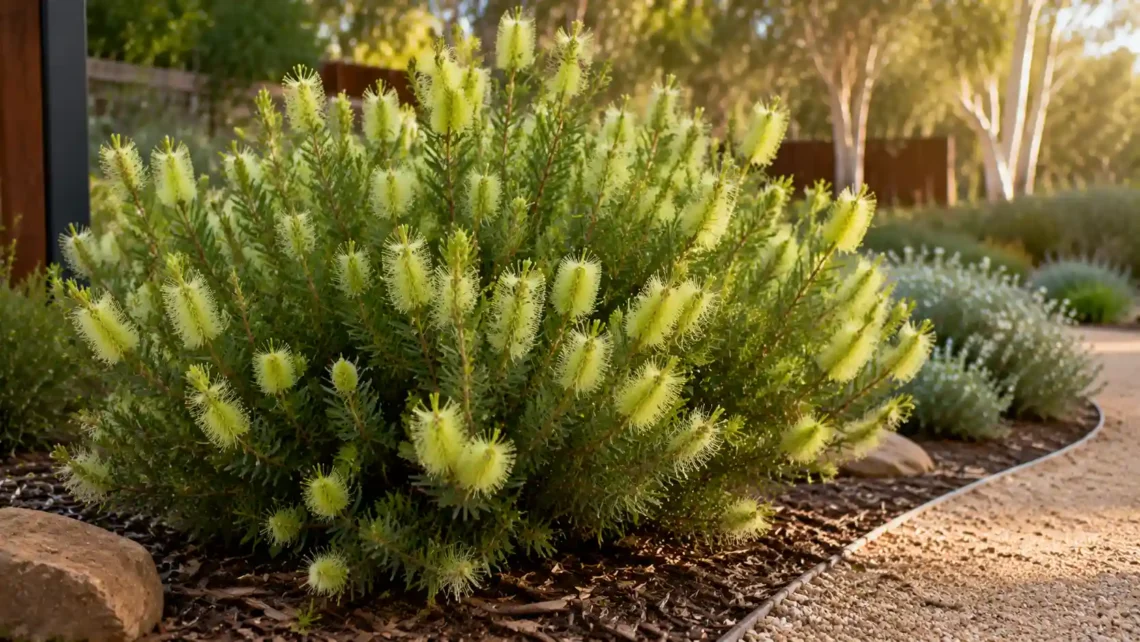
Callistemon pinifolius green is a dwarf Australian native bottlebrush cultivar recognized for its pale green-yellow flower spikes and fine, needle-like foliage derived from its botanical name pinifolius, meaning “pine-leaved.” Unlike the more common red-flowering bottlebrush varieties, Callistemon pinifolius green is valued for its softer color palette and compact growth habit. It is widely used in landscaping for borders, small gardens, and container planting due to its restrained size and ornamental appeal. This cultivar belongs to the Myrtaceae family and thrives in sunny, well-drained environments. Its unique appearance makes it a distinctive choice among ornamental native shrubs. Callistemon pinifolius green is a popular choice in broader Australian native garden trees and shrubs landscaping designs, especially in low-maintenance native planting schemes.
Quick Summary
- Callistemon pinifolius green is a dwarf, slow-to-moderate growing bottlebrush with lime-green flowers.
- It remains compact, making it suitable for small gardens, borders, and containers.
- Prefers full sun, well-drained soil, and tolerates frost and short dry periods once established.
- Distinguished by needle-like foliage and pale flower spikes compared to red Callistemon varieties.
What Is Callistemon Pinifolius ‘Green’?
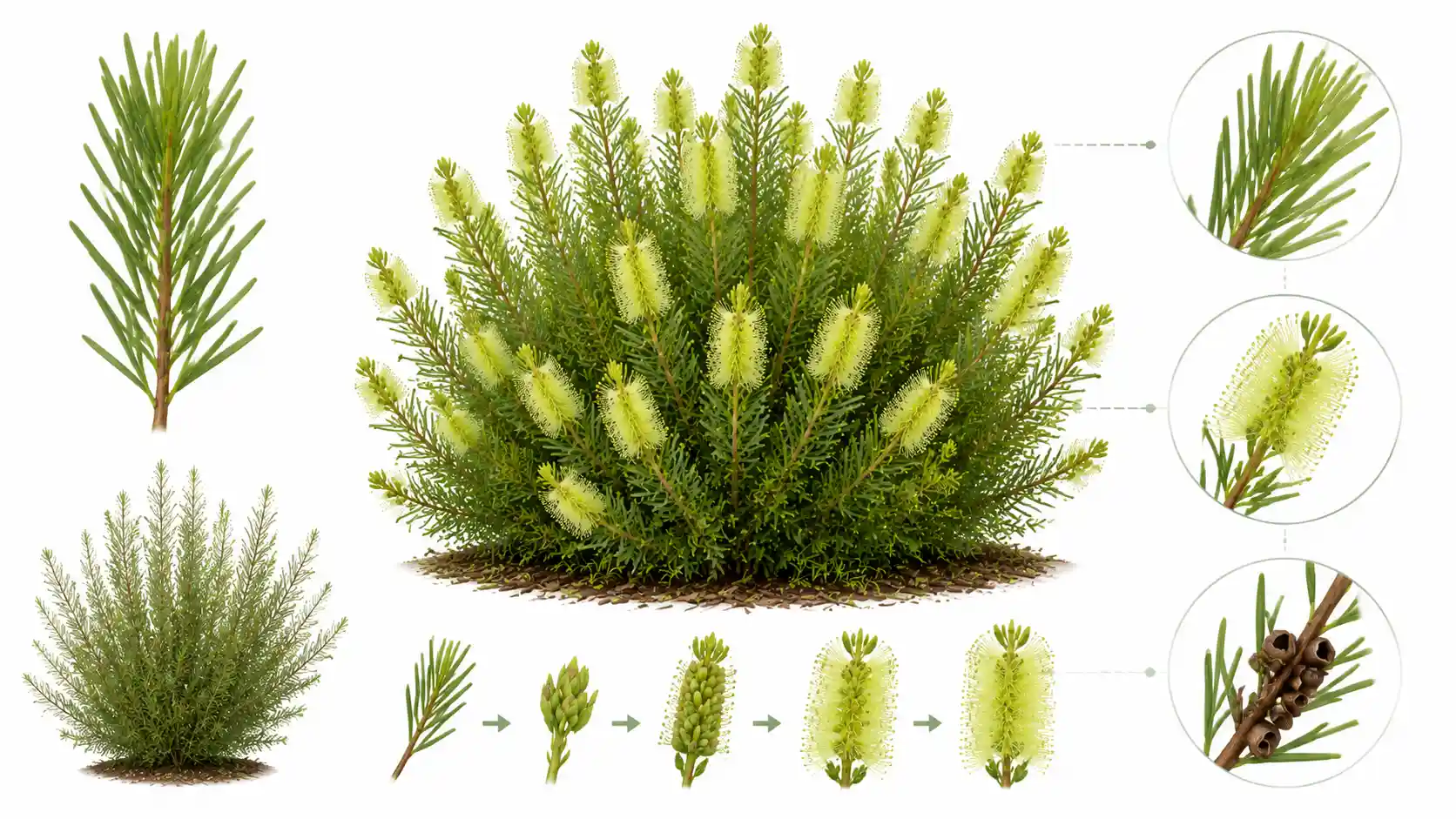
Callistemon pinifolius green is a cultivated form of Callistemon pinifolius, an Australian native shrub in the Myrtaceae family known for its bottlebrush-shaped flowers. The term “pinifolius” refers to its pine-like, narrow leaves, which are finer than many other Callistemon species. This cultivar is often labeled as “green bottlebrush” due to its unusual pale green to yellow-green flower spikes. The genus Callistemon is widely known for its bottlebrush flowers and is part of the Myrtaceae family, commonly documented in botanical references such as Wikipedia.
- Native origin: Australia
- Leaf type: Fine, needle-like (pine-like foliage)
- Flower color: Pale green to yellow-green spikes
- Common names: Green bottlebrush, dwarf green bottlebrush
Callistemon Pinifolius Green Size & Height
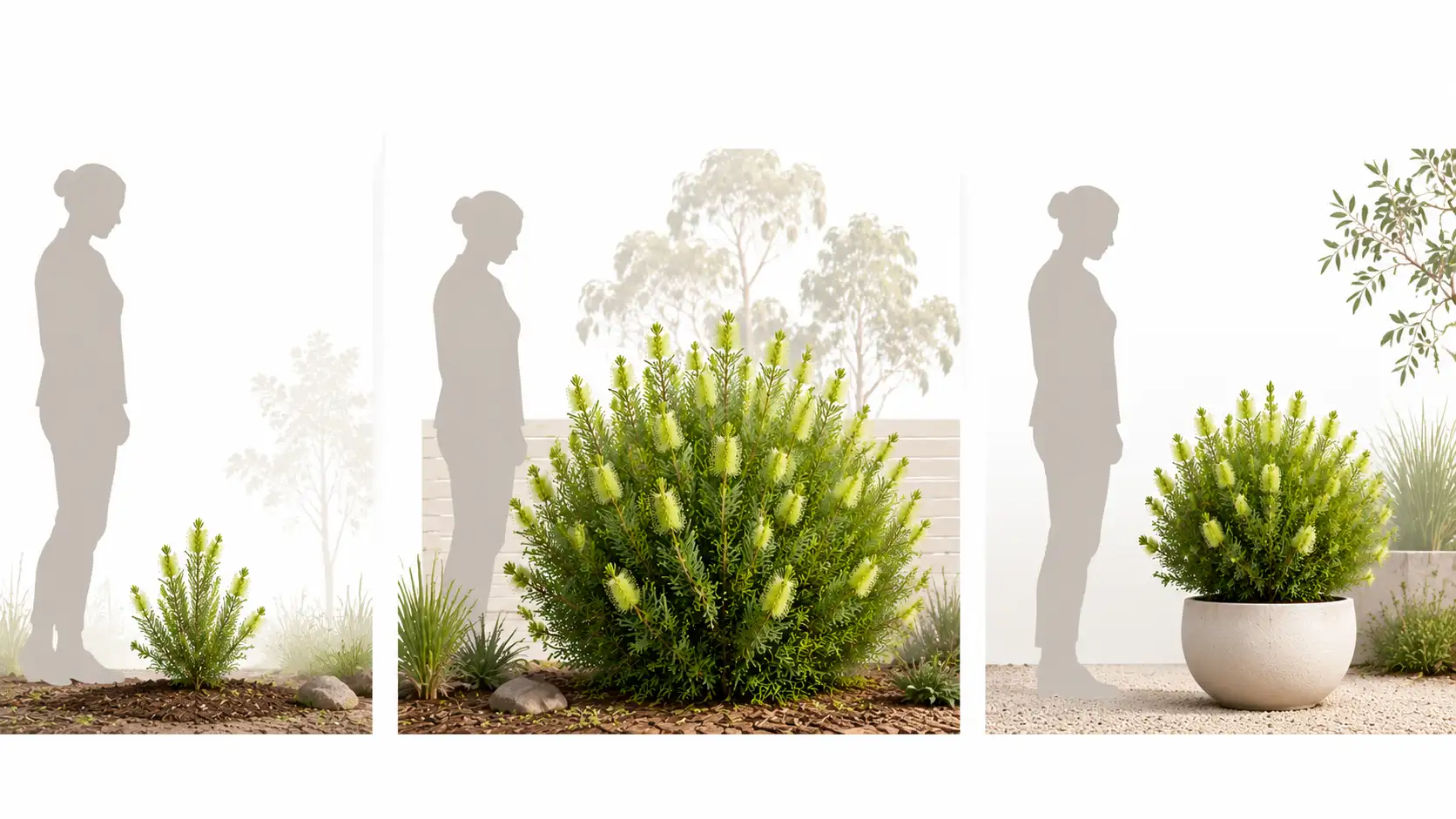
Callistemon pinifolius green is considered a dwarf shrub with a naturally compact growth habit. Its final size depends on soil quality, climate, and pruning practices.
Typically:
- Height: 1–2 meters
- Width: 1–1.5 meters
Indoor or container growth keeps it smaller, while open-ground planting allows fuller spread.
Dwarf vs Standard Callistemon Comparison
- Dwarf green form: Compact, shrub-like, 1–2 m
- Standard Callistemon species: Can reach 3–5 m or more
- Growth control: Pruning significantly influences final shape
Growth Rate
Callistemon pinifolius green has a slow to moderate growth rate compared to other bottlebrush species. Growth is most active during warm seasons, especially spring and early summer.
Factors affecting growth:
- Full sun exposure increases growth speed
- Well-drained soil supports healthier root development
- Regular watering during establishment improves early growth
- Poor drainage or shade slows development significantly
Spacing Guidelines
Proper spacing ensures healthy airflow and balanced growth.
| Planting Purpose | Recommended Spacing |
| Hedge planting | 0.8 – 1.2 m apart |
| Specimen plant | 1.5 – 2 m clearance |
| Container use | One plant per large pot |
Adequate spacing prevents overcrowding and supports full flowering potential.
Care Guide
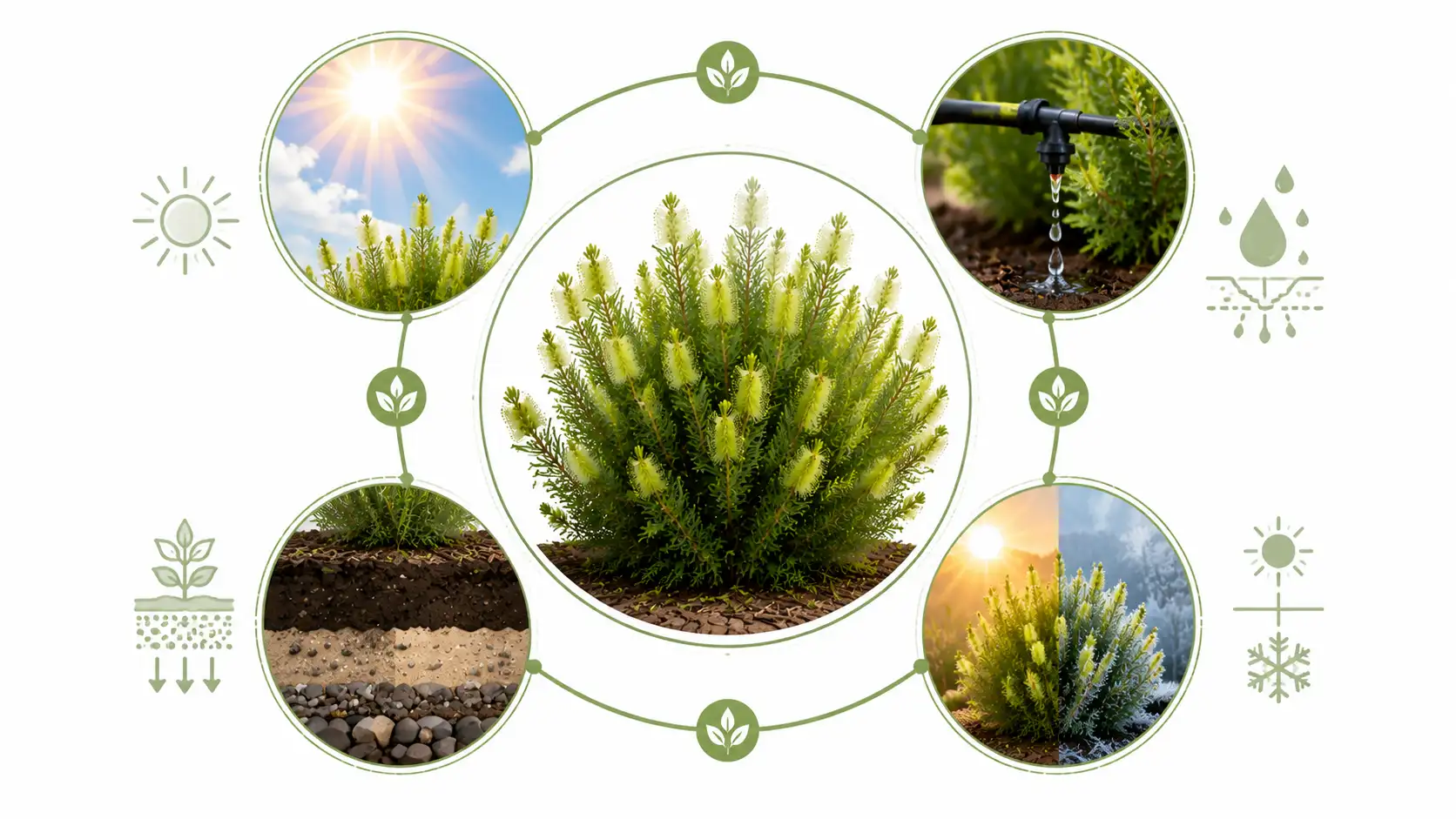
Callistemon pinifolius green care is relatively low-maintenance once established, making it suitable for beginner gardeners.
Watering Requirements
Water regularly during the first 6–12 months. Once established, it becomes drought-tolerant and only needs occasional deep watering during dry periods. Overwatering should be avoided to prevent root stress.
Light & Soil Preferences
- Light: Full sun for best flowering performance
- Soil: Well-drained sandy or loamy soil
- Avoid: Heavy clay soils unless improved with drainage material
Fertilizing Guidance
Use a low-phosphorus native plant fertilizer in early spring. Excess fertilization can reduce flowering quality.
Climate & Frost Tolerance
It tolerates light frost once mature. Best suited for temperate to warm climates but can adapt to cooler regions with protection.
Pruning Callistemon Pinifolius Green
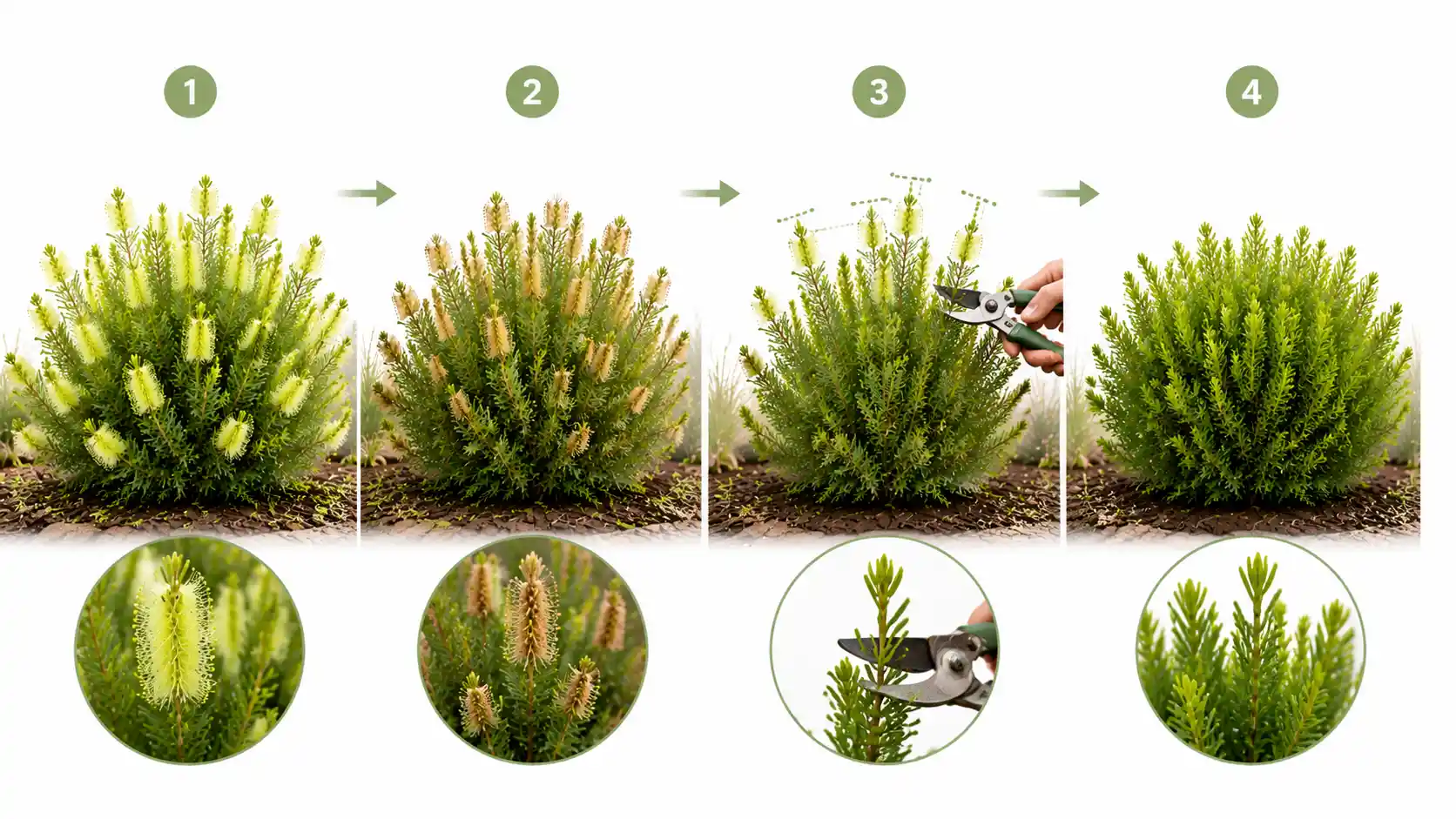
Pruning maintains shape, encourages dense growth, and enhances flowering.
- Prune after flowering season
- Lightly trim spent flower spikes
- Avoid cutting into old woody stems
- Shape annually for compact growth
Proper pruning ensures continuous flowering cycles and prevents legginess.
Native Range & Growing Conditions in Australia
Callistemon pinifolius green originates from Australian native Callistemon pinifolius populations adapted to coastal and inland climates. It thrives in regions with warm temperatures, seasonal rainfall, and well-drained soils. In Australian gardens, it is commonly used in native landscaping schemes and wildlife-friendly plantings.
Common Problems & Troubleshooting
- Yellowing leaves → Poor drainage or nutrient imbalance → Improve soil drainage and adjust fertilizing
- Slow growth → Insufficient sunlight → Relocate to full sun area
- Leaf drop → Overwatering → Reduce watering frequency
- Weak flowering → Excess fertilizer or shade → Use native plant feed and increase sun exposure
- Pest issues (scale or aphids) → Treat with horticultural oil
Beginner Mistakes & Practical Tips
Common mistakes include:
- Planting in too much shade, reducing flowering
- Expecting large growth despite “dwarf” labeling
- Overwatering young plants
- Ignoring soil drainage requirements
- Planting too close, causing overcrowding
Practical tip: Always prioritize sunlight and drainage over fertilization for best results.
Callistemon Pinifolius Green vs. Other Bottlebrush Varieties
| Variety | Flower Color | Typical Size | Growth Habit | Best Use |
| C. pinifolius green | Green-yellow | 1–2 m | Compact shrub | Borders, containers |
| C. citrinus | Red/crimson | 2–5 m | Upright shrub/tree | Hedges, screening |
| C. salignus | Cream/white | 3–5 m | Tall shrub/tree | Windbreaks |
| C. rigidus | Red | 2–4 m | Dense upright | Formal hedges |
| C. endeavour | Red | 3–4 m | Ornamental shrub | Landscaping feature |
Callistemon pinifolius green stands out for its dwarf size and unusual flower coloration.
Where Callistemon Pinifolius Green Fits in Your Garden
This plant is ideal for:
- Small residential gardens
- Mixed native borders
- Container gardening on patios
- Low hedging in decorative landscapes
- Contrast planting with red bottlebrush varieties
Its compact size makes it especially valuable where space is limited.
Related Gardening Topics to Explore
Understanding Callistemon pinifolius green connects to broader gardening concepts such as native plant propagation, drought-tolerant landscaping, and bottlebrush garden design. It also links to pruning strategies for flowering shrubs and container growing techniques for Australian natives.
Conclusion
Callistemon pinifolius green is a compact, low-maintenance Australian native shrub known for its pale green bottlebrush flowers, fine foliage, and manageable size. It performs best in full sun, well-drained soil, and responds well to light pruning after flowering. Compared to other Callistemon varieties, it offers a dwarf growth habit and unique color, making it ideal for borders, containers, and small gardens.
FAQs
How big does Callistemon pinifolius green grow?
It typically grows to 1–2 meters in height with a similar spread under normal garden conditions.
Is Callistemon pinifolius green fast growing?
No, it has a slow to moderate growth rate depending on sunlight, soil quality, and watering.
How often should I water Callistemon pinifolius?
Water regularly when young, then only during extended dry periods once established.
When is the best time to prune a green bottlebrush?
Prune after the flowering season to encourage new growth and maintain shape.
What’s the difference between Callistemon pinifolius green and other bottlebrush varieties?
It is smaller, more compact, and produces greenish flowers instead of the typical red blooms.
Does Callistemon pinifolius green tolerate frost?
Yes, it tolerates light frost once established but prefers milder climates.