According to Greenery Inside, Alocasia Silver Dragon thrives in bright, indirect light with 60-80% humidity, temperatures between 65-80°F, and well-draining aroid soil kept lightly moist. Water when the top inch dries out, avoid soggy roots, and feed monthly during spring and summer with diluted balanced fertilizer.
The plant often drops leaves and enters a dormant rest period during darker winter months, which signals a seasonal slowdown rather than decline. Its velvety, silver-veined foliage is especially susceptible to spider mites in dry indoor air, and, like other Alocasia species, all parts are toxic to pets and humans if ingested.
If you’re building an indoor plant collection, our comprehensive Guide to House Plants is an excellent starting point for understanding the care needs of a wide range of tropical houseplants.
By Greenery Inside | Plant Care & Gardening Expert
Quick Summary
- Light: Grows best in bright, indirect light and should be protected from prolonged direct sunlight.
- Watering: Keep the soil lightly moist but never soggy, allowing the top layer to dry slightly between waterings.
- Difficulty Level: Moderate; consistent humidity and careful watering are essential for success.
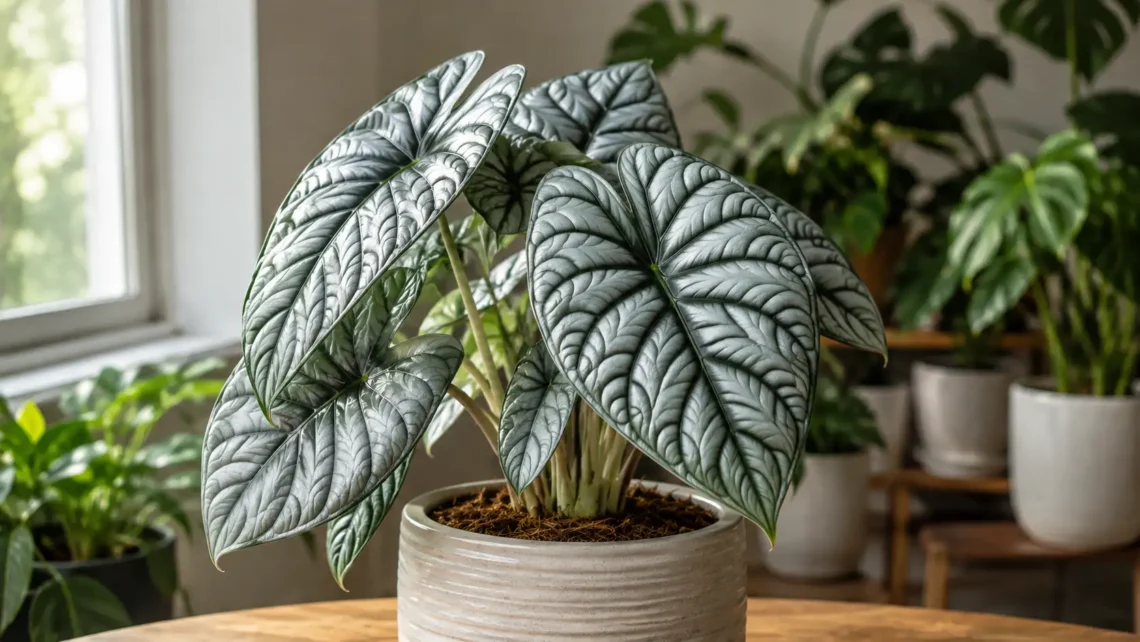
- Standout Feature: Thick silver leaves with dark green veins give the plant its distinctive dragon-scale appearance.
What Is an Alocasia Silver Dragon?
The Alocasia Silver Dragon is a cultivated variety of Alocasia baginda, a tropical plant valued for its unusually textured foliage. Unlike many ornamental houseplants grown for colorful blooms, this cultivar is prized almost entirely for its decorative leaves. The metallic silver surface combined with raised dark veins creates a dramatic appearance that resembles dragon scales, making it one of the most recognizable members of the Alocasia genus.
Native to the tropical rainforests of Southeast Asia through its parent species, the Silver Dragon thrives in warm, humid conditions beneath forest canopies where sunlight is filtered through taller trees. Replicating these environmental conditions indoors is the key to long-term success.
In our experience growing Alocasia varieties, maintaining stable environmental conditions is more important than frequent watering or fertilizing. Sudden changes in temperature, humidity, or light often cause more stress than minor care mistakes.
Scientific Name and Plant Family
The scientific name of the Silver Dragon is Alocasia baginda ‘Silver Dragon’.
Its botanical classification is:
| Classification | Details |
| Scientific Name | Alocasia baginda ‘Silver Dragon’ |
| Common Names | Silver Dragon Plant, Alocasia Silver Dragon |
| Family | Araceae |
| Plant Type | Tropical perennial |
| Native Species Origin | Borneo, Southeast Asia |
| Growth Habit | Compact clumping plant |
The plant belongs to the Araceae family, commonly known as the aroid family. For readers interested in the broader genus, the Wikipedia article on Alocasia provides additional background on its taxonomy, natural distribution, and botanical characteristics. Other popular members include Monstera, Philodendron, Anthurium, and Peace Lily. Like many aroids, it grows from underground rhizomes and corm-like structures that store energy during dormant periods.
Is the Alocasia Silver Dragon Rare?
Yes, the Alocasia Silver Dragon is considered relatively uncommon, although it is no longer extremely rare in the houseplant market.
Its reputation as a rare plant comes from several factors:
- It grows more slowly than many common houseplants.
- Commercial propagation takes time.
- Demand among collectors often exceeds supply.
- Premium foliage makes it highly desirable.
Today, specialized nurseries and reputable online plant sellers commonly stock the Silver Dragon during the growing season. However, availability may still fluctuate depending on regional demand and propagation success.
Its price is generally higher than standard Alocasia varieties because of its distinctive appearance rather than because it is endangered or difficult to propagate.
Is Alocasia Silver Dragon Hard to Care For?
The Alocasia Silver Dragon is moderately difficult to care for, especially compared with beginner-friendly houseplants like pothos or snake plants. It requires consistent moisture, high humidity, bright indirect light, and stable temperatures. While it is not impossible to grow, it is less forgiving of inconsistent care.
For readers interested in growing other Alocasia species, our African Mask Plant Care: Complete Indoor Growing Guide explains similar humidity, watering, and lighting requirements while highlighting the differences between these closely related tropical houseplants.
For experienced indoor gardeners, it is usually manageable once its preferred growing conditions are understood. Beginners can also succeed by focusing on environmental consistency rather than frequent intervention.
Greenery Inside recommends observing your plant regularly instead of following a rigid watering schedule. Leaf posture, soil moisture, and seasonal growth provide better care indicators than the calendar alone.
Why Are Alocasias So Hard to Keep Alive?
Alocasias have a reputation for being challenging because they naturally grow in tropical rainforest environments with consistently warm temperatures, filtered light, and high humidity. Indoor conditions often differ significantly from these habitats.
Common reasons they struggle include:
- Low indoor humidity
- Overwatering
- Poor drainage
- Cold drafts
- Sudden environmental changes
- Inadequate lighting
- Winter dormancy mistaken for decline
Another common challenge is dormancy. During cooler months or periods of reduced light, many Alocasias naturally slow their growth and may shed older leaves. This is a normal survival strategy rather than a sign that the plant is dying.
Many growers mistakenly increase watering when leaves begin to yellow during dormancy, which often worsens root problems.
Is the Silver Dragon a Good Houseplant?
Yes, the Silver Dragon is an excellent houseplant for people willing to provide proper care.
Its advantages include:
- Highly decorative foliage
- Compact size suitable for indoor spaces
- Slow, manageable growth
- Strong visual appeal year-round
- Fits well in humid rooms and indoor plant collections
Potential disadvantages include:
- Requires relatively high humidity
- Sensitive to overwatering
- Can become dormant during winter
- Less tolerant of neglect than many common houseplants
For beginners who enjoy learning about tropical plants, the Silver Dragon can be a rewarding introduction to Alocasias. More experienced collectors often appreciate it for its unique leaf texture and manageable mature size.
Light Requirements
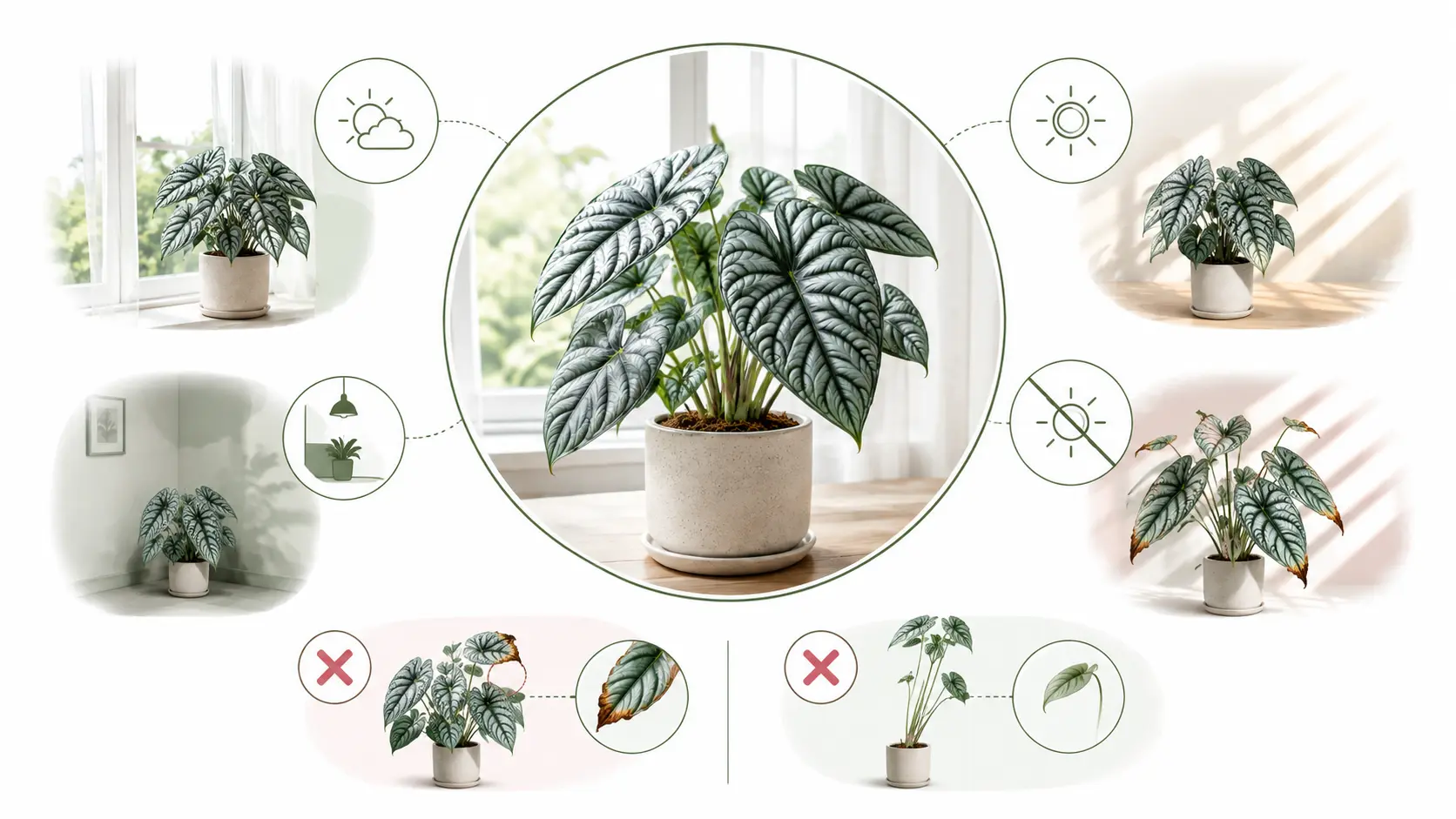
Proper lighting is one of the most important aspects of successful Alocasia Silver Dragon care. The plant grows best in bright, indirect light, similar to the filtered sunlight it receives beneath rainforest canopies.
An east-facing window typically provides excellent morning light, while a south- or west-facing window may require a sheer curtain to diffuse intense afternoon sun.
Too much direct sunlight can scorch the delicate foliage and fade its characteristic silver coloration. On the other hand, insufficient light may slow growth, reduce leaf size, and cause weaker stems.
Ideal Light Conditions
- Bright indirect light for most of the day
- Gentle morning sunlight is usually acceptable
- Avoid prolonged harsh afternoon sun
- Rotate the plant every few weeks for even growth
- Supplemental grow lights can help during darker winter months
Signs of Too Much Light
- Brown or crispy leaf edges
- Bleached or faded silver coloring
- Dry patches on leaf surfaces
- Curling leaves during hot afternoons
Signs of Too Little Light
- Smaller new leaves
- Slower growth
- Long, stretched stems
- Reduced leaf coloration
- Soil remaining wet for longer because growth has slowed
As of the 2026 growing season, many indoor growers successfully supplement natural daylight with full-spectrum LED grow lights during winter to maintain healthier foliage and reduce seasonal stress.
Watering Alocasia Silver Dragon
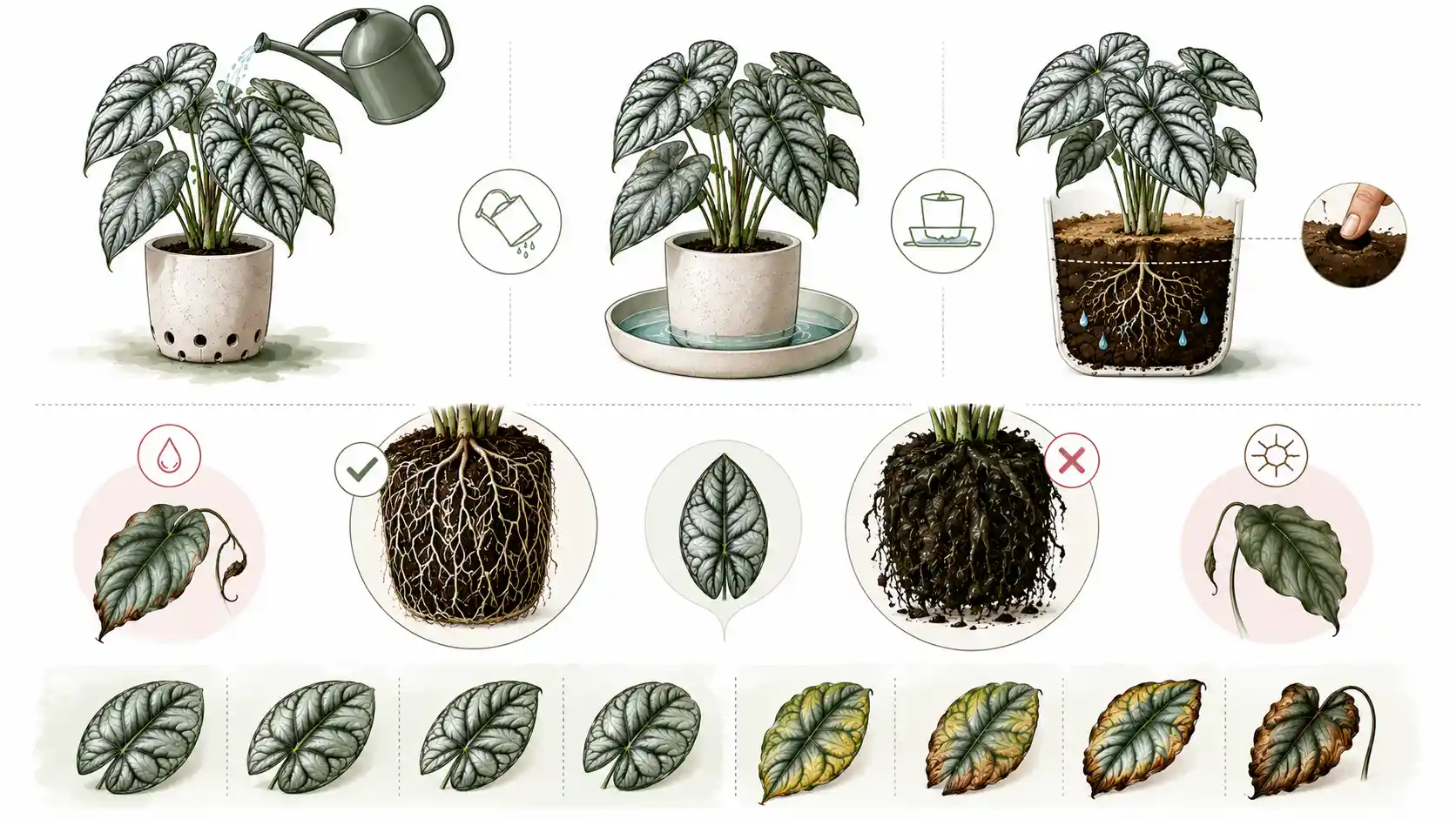
Proper watering is essential because the Silver Dragon prefers evenly moist soil without remaining waterlogged. The goal is to maintain moderate moisture while allowing excess water to drain freely.
Rather than watering on a fixed schedule, check the soil regularly. When the top 1–2 inches become slightly dry, it is usually time to water again.
During active spring and summer growth, watering is generally more frequent than during autumn and winter, when the plant naturally slows down.
Top Watering vs. Bottom Watering
Both methods can work well when performed correctly.
Top watering is the traditional approach and ensures the entire root system receives moisture while helping flush accumulated fertilizer salts from the soil. Water thoroughly until excess drains from the pot, then empty the saucer.
Bottom watering allows the potting mix to absorb moisture from below through the drainage holes. Many growers use this technique for evenly hydrating chunky aroid mixes.
Do You Water Alocasia From Top or Bottom?
Either method is suitable. Top watering is generally recommended for routine care because it flushes salts and helps monitor drainage. Bottom watering can occasionally be used when the soil has become overly dry or hydrophobic.
Do Alocasias Like to Be Bottom Watered?
Yes, Alocasias can benefit from occasional bottom watering, but it should not replace top watering permanently. Alternating between both methods often provides the best balance of moisture and soil health.
How Often to Water
There is no universal watering schedule because frequency depends on temperature, humidity, light, pot size, and soil composition.
General seasonal guidance:
- Spring: Water when the top layer begins to dry.
- Summer: Check moisture more frequently due to active growth.
- Autumn: Gradually reduce watering as growth slows.
- Winter: Water sparingly while avoiding complete soil dryness.
Signs of Overwatering
- Yellow leaves
- Soft stems
- Mushy roots
- Persistent wet soil
- Root rot odor
Signs of Underwatering
- Drooping leaves
- Dry soil pulling away from the pot
- Crispy leaf edges
- Slowed growth
- Curling foliage
In our experience, the healthiest Silver Dragon plants are watered only after checking soil moisture manually rather than following a weekly routine. This simple habit greatly reduces the risk of root rot while keeping the plant consistently hydrated.
Best Soil and Potting Mix
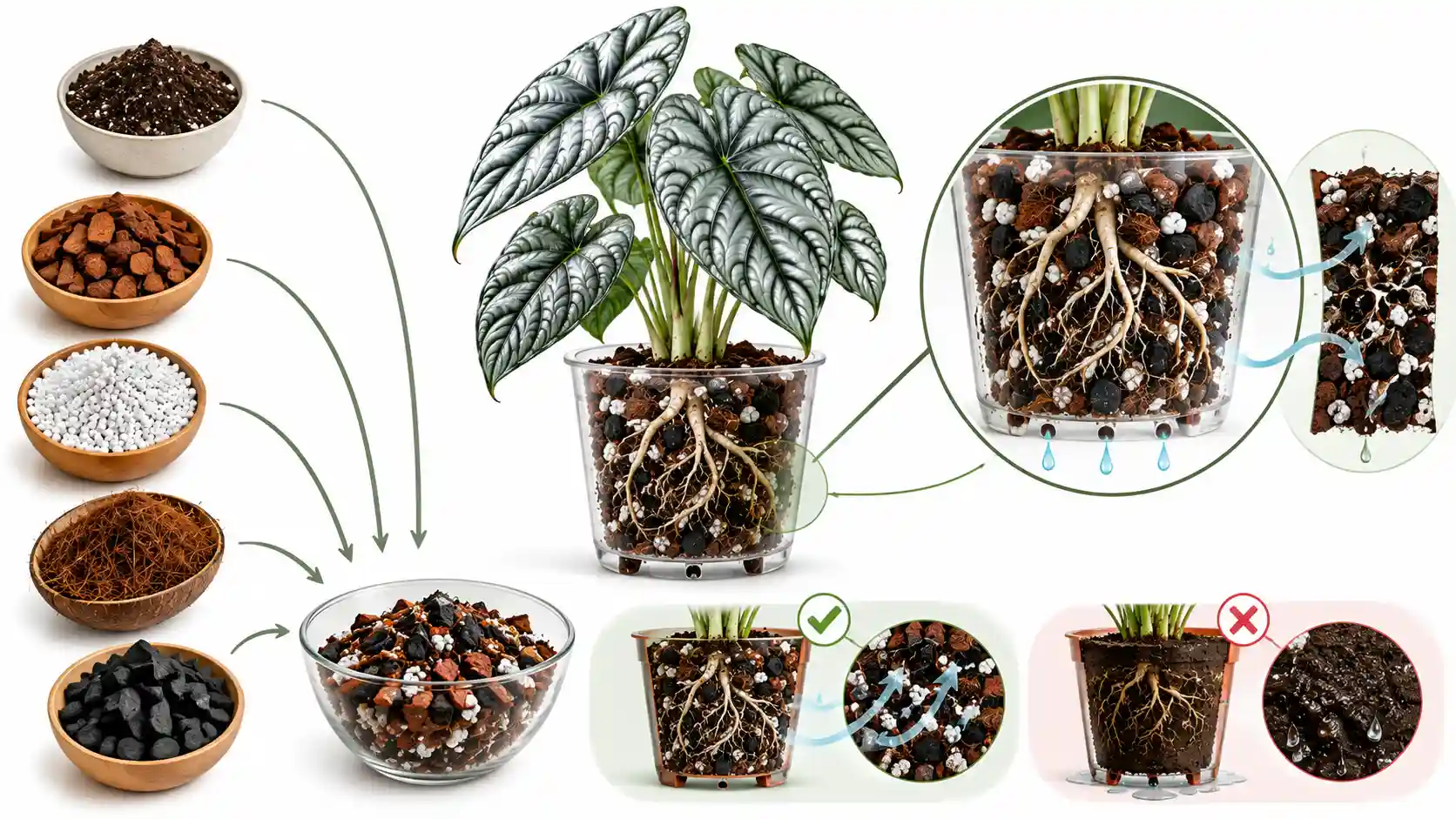
Choosing the right soil is one of the most important aspects of Alocasia Silver Dragon care. This tropical aroid prefers a loose, airy potting mix that retains enough moisture for the roots while allowing excess water to drain quickly. Heavy or compacted soil limits oxygen around the roots and significantly increases the risk of root rot.
An ideal mix mimics the forest floor where the parent species naturally grows—rich in organic matter but never waterlogged.
Greenery Inside recommends using a chunky aroid mix rather than standard garden soil for long-term plant health. Healthy root systems are the foundation of vigorous leaf growth.
What Is the Best Potting Mix for Alocasia Silver Dragon?
The best potting mix for an Alocasia Silver Dragon is a well-draining aroid mix that balances moisture retention with excellent aeration.
A commonly recommended mix includes:
- 40% high-quality potting soil
- 25% orchid bark
- 20% perlite or pumice
- 10% coco coir or peat moss
- 5% horticultural charcoal (optional)
Each ingredient serves a purpose:
- Potting soil provides nutrients and structure.
- Orchid bark creates air pockets around roots.
- Perlite or pumice improves drainage.
- Coco coir or peat retains moderate moisture.
- Charcoal helps keep the mix fresh and improves drainage.
This type of mix dries evenly without remaining soggy, helping prevent common root problems.
Is Miracle-Gro Potting Mix Good for Alocasia?
Yes, Miracle-Gro Potting Mix can be used, but it performs better when amended.
On its own, it tends to retain more moisture than Alocasias prefer. Mixing it with coarse materials improves drainage considerably.
A simple amendment is:
- 2 parts Miracle-Gro Potting Mix
- 1 part orchid bark
- 1 part perlite
This adjustment creates a more breathable growing medium suitable for tropical aroids.
Are Coffee Grounds Good for Alocasia?
Fresh coffee grounds are not recommended for Alocasia Silver Dragon.
Although coffee contains nutrients, fresh grounds can:
- Compact the soil
- Reduce airflow around roots
- Hold excessive moisture
- Encourage fungal growth
Composted coffee grounds can be used in very small amounts as part of finished compost, but they should never replace a balanced fertilizer or be applied heavily around indoor houseplants. Many of the same potting principles also apply to velvet-leaf Anthuriums. Our Anthurium Clarinervium Care Guide: Light, Soil & Water explains how chunky, well-aerated mixes support healthy root development in tropical aroids.
Pot Size and Root Considerations
Selecting the correct pot is just as important as choosing the right soil. Alocasia Silver Dragon develops a healthy underground root system that prefers consistent moisture without excessive empty soil surrounding it.
Using a pot that is too large often causes the soil to remain wet for longer, increasing the likelihood of root rot.
Pot Size Preferences
| Factor | Recommendation | Why |
| Pot depth | Moderately deep | Supports the natural root structure and corm development |
| Pot size | Slightly snug | Prevents excess wet soil around roots |
| Material | Plastic for moisture retention, terracotta for faster drying | Choose based on your home’s humidity and watering habits |
Do Silver Dragon Alocasia Like to Be Root Bound?
Silver Dragon Alocasias tolerate being slightly root bound, but they should not remain severely crowded for long periods.
Signs it’s time to repot include:
- Roots growing through drainage holes
- Water running straight through the pot
- Slowed growth despite proper care
- Roots circling tightly inside the container
Repotting every 1–2 years during spring is usually sufficient.
Do Alocasias Like Big or Small Pots?
Alocasias generally perform best in pots that are only slightly larger than the root ball.
Oversized containers create unnecessary wet soil that roots cannot quickly absorb. Instead of dramatically increasing pot size, choose one that is approximately 1–2 inches (2.5–5 cm) wider than the current pot.
Do Alocasia Like Deep or Shallow Pots?
Most Alocasias, including the Silver Dragon, prefer moderately deep pots rather than shallow containers.
A deeper pot provides:
- Better root support
- Space for developing corms
- More even moisture distribution
- Improved plant stability
However, drainage holes remain essential regardless of pot depth.
Humidity and Temperature Needs
Alocasia Silver Dragon thrives in warm, humid environments similar to tropical rainforests.
The ideal humidity range is:
- 60–80% humidity
While the plant can survive in lower humidity, prolonged dry indoor air often leads to leaf damage.
Signs of Low Humidity
- Brown leaf tips
- Crispy leaf edges
- Curling foliage
- Slower growth
- Difficulty unfurling new leaves
Ideal temperature range:
- 65–85°F (18–29°C)
Avoid temperatures below 60°F (16°C), sudden cold drafts, or placing the plant near heating vents and air conditioners.
Ways to increase humidity include:
- Using a humidifier
- Grouping tropical plants together
- Placing the plant in naturally humid rooms
- Using pebble trays beneath pots (without letting roots sit in water)
In our experience, maintaining consistent humidity produces healthier new leaves than occasional misting. Humidifiers generally provide more reliable long-term results than spraying foliage. If you enjoy humidity-loving tropical foliage plants, you’ll also find our Anthurium Crystallinum Care guide helpful, as both species thrive in warm environments with consistently high humidity and well-draining soil.
Fertilizing and Growth Rate
Proper fertilization supports healthy foliage and encourages steady growth throughout the active growing season.
Because Alocasia Silver Dragon naturally slows during dormancy, feeding schedules should also change seasonally.
Does Alocasia Silver Dragon Grow Fast?
The Alocasia Silver Dragon has a moderate growth rate.
During spring and summer, healthy plants typically produce new leaves every few weeks under ideal conditions.
Growth speed depends on:
- Light intensity
- Temperature
- Humidity
- Soil quality
- Fertilization
- Root health
Winter growth often slows considerably or temporarily stops as the plant enters dormancy.
Alocasia Silver Dragon Corms
Like many Alocasias, Silver Dragon produces underground corms.
Corms serve several purposes:
- Store energy
- Produce new plants
- Help the plant recover after dormancy
- Support future seasonal growth
These corms are commonly used for propagation once they mature.
Fertilization Schedule
Use a balanced liquid fertilizer diluted to approximately half strength.
General schedule:
| Season | Fertilizing Recommendation |
| Spring | Every 3–4 weeks |
| Summer | Every 3–4 weeks |
| Autumn | Reduce feeding gradually |
| Winter | Pause fertilization if dormant |
Avoid fertilizing:
- Dry soil
- Newly repotted plants
- Dormant plants
Excess fertilizer can cause leaf burn and salt buildup, so occasional flushing of the soil with clean water helps maintain healthy roots.
How Big Does an Alocasia Silver Dragon Get?
The Alocasia Silver Dragon remains relatively compact compared to many other Alocasia species.
A mature indoor plant generally reaches:
- Height: 12–18 inches (30–45 cm)
- Width: 12–18 inches (30–45 cm)
Individual leaves may grow 6–8 inches long under ideal conditions.
Indoor vs. Outdoor Size
| Growing Location | Typical Mature Size |
| Indoors | 12–18 inches tall |
| Outdoors (tropical climates) | Up to 24 inches tall under excellent conditions |
Outdoor plants grown in consistently warm, humid climates often develop slightly larger leaves because environmental conditions more closely resemble their native habitat.
Environmental Factors Affecting Mature Size
Several factors influence how large a Silver Dragon becomes:
- Consistent bright indirect light
- Proper watering
- High humidity
- Balanced fertilization
- Healthy root development
- Warm temperatures
- Seasonal dormancy management
Plants kept in low light or dry conditions usually remain smaller and produce fewer leaves.
Alocasia Silver Dragon Propagation
The most reliable method of Alocasia Silver Dragon propagation is through corm or clump division.
Propagation is best performed during spring or early summer when the plant is actively growing.
How to Propagate Using Corms
- Remove the plant from its pot.
- Gently separate mature corms from the parent plant.
- Allow damaged surfaces to dry briefly.
- Plant each corm in a lightly moist propagation medium such as sphagnum moss or a chunky aroid mix.
- Maintain warmth and high humidity.
- Provide bright indirect light.
- Transplant once roots and leaves develop.
Young corms should remain consistently warm during propagation, as cool temperatures significantly slow rooting.
Greenery Inside recommends waiting until corms have visible growth points before separating them. Mature corms generally establish more quickly and have higher success rates than very small offsets.
Does Alocasia Silver Dragon Flower?
Yes, an Alocasia Silver Dragon can flower, although blooming is uncommon indoors. Its flowers are not showy like traditional ornamental blooms. Instead, the plant produces an aroid inflorescence made of a pale spathe surrounding a central spadix, similar in structure to a peace lily flower.
Flowering usually occurs when the plant is mature, actively growing, and receiving stable warmth, humidity, light, and nutrition. Indoor plants may never bloom, especially when grown primarily for foliage.
Should You Let an Alocasia Silver Dragon Flower?
You can allow the flower to remain if the plant is healthy. Flowering is a natural part of the plant’s growth cycle and does not automatically harm it.
However, some growers remove the bloom because producing flowers requires energy that could otherwise support leaf and root development.
Removing it may be helpful when:
- The plant is small or recently repotted
- It has only a few healthy leaves
- It is recovering from pests or root damage
- The bloom is beginning to fade
- Foliage growth is the main priority
Use clean, sterilized pruning shears and cut the flower stalk close to the base without damaging nearby stems.
In our experience, mature and healthy plants generally tolerate flowering without serious decline. Weak or stressed plants benefit more from early bloom removal because they have fewer stored resources.
Common Problems With Alocasia Silver Dragon
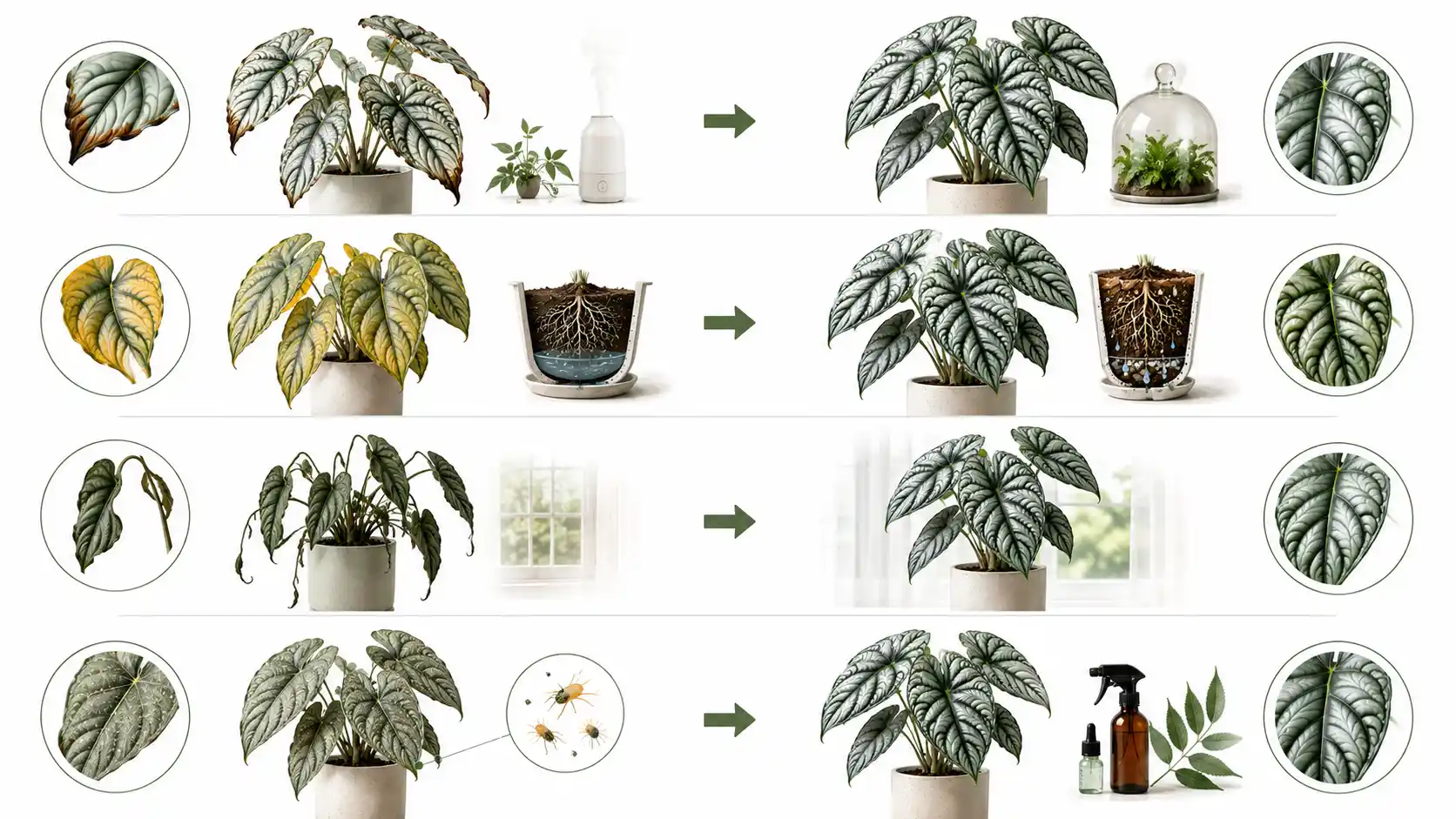
Most Alocasia Silver Dragon problems result from inconsistent watering, dry air, unsuitable light, poor drainage, or pest pressure. The appearance and location of leaf damage often help identify the cause.
Brown Tips
Brown tips on an Alocasia Silver Dragon are most commonly caused by low humidity, inconsistent watering, fertilizer salt buildup, or minerals in tap water. The damaged tissue will not turn green again, but correcting the underlying condition can protect new growth.
Possible causes include:
- Humidity below the plant’s preferred range
- Allowing the soil to become excessively dry
- Excess fertilizer
- Fluoride, chlorine, or mineral accumulation
- Hot air from heaters or vents
- Root stress caused by compacted soil
To correct brown or yellow tips:
- Maintain humidity near 60% or higher
- Water when the upper layer of soil becomes slightly dry
- Flush the potting mix occasionally with clean water
- Reduce fertilizer strength or frequency
- Use filtered, rain, or distilled water when tap water is highly mineralized
- Keep the plant away from heating and cooling vents
Do not remove an entire leaf solely because the tip is brown. Trim only the damaged portion with clean scissors if appearance is a concern. Leave a narrow margin of brown tissue to avoid cutting into healthy leaf material.
Yellowing Leaves
Yellow leaves usually indicate overwatering, poor drainage, natural aging, cold stress, or reduced seasonal growth. One older leaf turning yellow while a new leaf develops may be normal, but several yellow leaves at once often signal a root-zone problem.
Check the soil before watering again. If it remains wet for many days, inspect the drainage holes and consider examining the roots.
Healthy roots are generally firm and pale, cream, tan, or light brown. Rotting roots may appear dark, soft, slimy, or hollow and can produce an unpleasant smell.
To manage suspected overwatering:
- Remove the plant carefully from its container
- Trim soft or rotting roots with sterilized scissors
- Discard wet, degraded potting mix
- Repot in a fresh, airy aroid mixture
- Use a container with unobstructed drainage holes
- Reduce watering until healthy growth resumes
Yellowing can also occur during dormancy. When lower light and cooler temperatures slow growth, the plant uses less water and may release older foliage. During this period, reduce watering rather than trying to force new growth.
Slow or Stunted Growth
Slow growth is often caused by insufficient light, low temperatures, depleted soil, damaged roots, pest activity, or natural dormancy. Alocasia Silver Dragon does not grow continuously at the same speed throughout the year.
First, determine whether the plant is actively growing. During spring and summer, a healthy plant should gradually produce new leaves when conditions are suitable. During autumn and winter, growth may pause.
To encourage healthy growth:
- Provide bright, indirect light
- Maintain temperatures above 65°F or 18°C
- Keep humidity stable
- Fertilize lightly during active growth
- Check for pests on both sides of the leaves
- Avoid oversized pots and dense soil
- Repot only when the root system needs more space
A plant should not be fertilized heavily simply because it is growing slowly. Fertilizer cannot compensate for poor light, root rot, or dormancy and may damage already stressed roots.
Pest Infestations
Spider mites are the most common pests affecting Alocasia Silver Dragon. Thrips, mealybugs, scale insects, and fungus gnats may also occur.
Common warning signs include:
- Fine webbing around stems or leaf undersides
- Pale stippling or tiny yellow dots
- Silvery scars on leaves
- Sticky residue
- Cotton-like clusters
- Small moving insects
- Distorted new growth
Inspect the undersides of leaves, petioles, and the point where stems meet the base. Spider mites thrive in warm, dry indoor conditions and may spread quickly.
Treatment steps include:
- Isolate the affected plant.
- Rinse the leaves carefully with lukewarm water.
- Wipe both leaf surfaces with a soft damp cloth.
- Apply insecticidal soap or horticultural oil according to the product label.
- Repeat treatment at recommended intervals.
- Inspect nearby plants for signs of infestation.
- Improve airflow without exposing the plant to cold drafts.
One treatment is rarely enough for spider mites or thrips because eggs and immature stages may survive. Consistent follow-up is essential.
Beginner Mistakes to Avoid
Avoiding common care mistakes is often more effective than trying to correct severe plant stress later.
- Overwatering: Do not water solely because a certain number of days has passed. Check soil moisture first.
- Using an oversized pot: Excess soil stays wet longer and increases root rot risk.
- Allowing very low humidity: Dry air commonly causes brown edges, pest problems, and damaged new leaves.
- Exposing the plant to direct afternoon sun: Strong sunlight can bleach or scorch the silver foliage.
- Using dense soil: Standard potting soil without amendments may compact around the roots.
- Ignoring drainage: Decorative containers should not trap water around the nursery pot.
- Fertilizing a dormant plant: Feeding during inactive growth can cause salt buildup and root burn.
- Mistaking dormancy for death: A leafless plant may still regrow if its corm remains firm and healthy.
- Repotting too frequently: Unnecessary root disturbance can delay growth.
- Ignoring early pest signs: Small infestations are easier to control than established colonies.
Greenery Inside recommends changing only one major care factor at a time when troubleshooting. Simultaneously changing light, watering, soil, location, and fertilizer can increase stress and make the original problem harder to identify.
Alocasia Silver Dragon vs. Similar Varieties
Alocasia Silver Dragon is sometimes confused with other silver-leaved tropical plants. Leaf shape, texture, growth habit, and botanical classification help distinguish it from similar varieties.
Silver Dragon vs. Dragon Scale Alocasia
Silver Dragon and Dragon Scale are cultivars associated with Alocasia baginda, but their coloring differs.
Alocasia Silver Dragon usually has pale silver-blue leaves with dark green veins and margins. Dragon Scale generally has deeper green foliage with a darker, more pronounced scale pattern.
Both plants have:
- Thick, textured leaves
- Compact growth habits
- Similar humidity requirements
- Similar watering sensitivity
- A preference for bright, indirect light
The main difference is visual. Silver Dragon appears lighter and more metallic, while Dragon Scale has a darker emerald-green appearance.
Silver Dragon vs. Philodendron Silver Sword
Alocasia Silver Dragon and Philodendron Silver Sword are unrelated plants despite both having silver-toned foliage.
Philodendron Silver Sword, botanically known as Philodendron hastatum, is a climbing aroid with smooth, elongated leaves. Alocasia Silver Dragon is a compact, self-heading plant with rounded, heavily textured leaves.
Key differences include:
- Silver Sword climbs and benefits from a support pole
- Silver Dragon grows from a central underground structure
- Silver Sword leaves are smooth and arrow-shaped
- Silver Dragon leaves are thick, rounded, and deeply veined
- Silver Sword is generally more tolerant of average indoor humidity
- Silver Dragon requires more careful moisture management
Variegated Silver Dragon Differences
A variegated Silver Dragon displays irregular areas of reduced chlorophyll. These areas may appear cream, pale yellow, mint, or white against the usual silver-green foliage.
Variegated plants generally require more careful care because pale leaf tissue contains less chlorophyll and contributes less energy through photosynthesis.
Important differences include:
- Slower growth than non-variegated plants
- Greater sensitivity to harsh sunlight
- A need for strong but indirect light
- Less tolerance for prolonged low-light conditions
- Variable patterns from one leaf to the next
- Higher risk of leaf browning in heavily variegated areas
Variegation should not be confused with nutrient deficiency, pest damage, or sun bleaching. Stable variegation usually appears as clearly defined patterns, while stress-related discoloration often develops unevenly after the leaf has matured.
| Plant | Leaf Texture | Light Needs | Rarity |
| Alocasia Silver Dragon | Thick, rounded, deeply textured | Bright indirect light | Uncommon but increasingly available |
| Alocasia Dragon Scale | Thick, dark green, scale-like | Bright indirect light | Uncommon |
| Philodendron Silver Sword | Smooth, elongated, metallic | Bright indirect light | Moderately available |
| Variegated Silver Dragon | Textured with cream or pale sectors | Strong indirect light | Rare |
Lifespan of an Alocasia Silver Dragon
An Alocasia Silver Dragon can live for many years when its corm and root system remain healthy. Its exact lifespan depends on growing conditions, pest control, watering practices, and seasonal care rather than a fixed number of years.
Individual leaves are temporary. Older leaves naturally yellow and die as new leaves emerge, but the underground corm can continue producing growth over repeated seasons.
Dormancy is an important part of understanding the plant’s lifespan. During periods of reduced light, cooler temperatures, or environmental stress, the plant may stop growing and lose several or all of its leaves. This does not always mean it is dead.
An Alocasia can grow back if:
- The corm remains firm
- The roots are not completely rotted
- The growth point is intact
- The plant is kept warm
- The soil remains lightly moist rather than saturated
- Brighter seasonal conditions return
To check a leafless plant, gently inspect the corm. A viable corm is usually firm. A soft, collapsing, hollow, or foul-smelling corm is unlikely to recover.
During dormancy:
- Reduce watering frequency
- Stop or greatly reduce fertilization
- Keep the plant warm
- Provide bright, indirect light
- Avoid repeatedly disturbing the roots
- Watch for new growth as conditions improve
As of the 2026 growing season, the most reliable indoor practice remains allowing natural seasonal slowing rather than forcing continuous growth with excess water or fertilizer.
Conclusion
Successful Alocasia Silver Dragon care depends on maintaining bright indirect light, moderate soil moisture, high humidity, warm temperatures, and an airy potting mix. The plant is moderately demanding, but most problems can be prevented by avoiding overwatering, oversized pots, harsh sun, and very dry indoor air.
Its silver-blue leaves, dark veins, and compact growth make Alocasia baginda ‘Silver Dragon’ a distinctive houseplant. Growth may slow or stop during dormancy, and some leaf loss can be normal. A firm, healthy corm can often produce new growth when warmth and light improve.
The clearest takeaway is to prioritize consistency. Check the soil before watering, protect the foliage from environmental extremes, and adjust care according to the plant’s active or dormant growth cycle.
FAQs
Is the Alocasia Silver Dragon hard to care for?
Alocasia Silver Dragon is moderately difficult to care for because it requires consistent humidity, careful watering, warm temperatures, and bright indirect light. It is less tolerant of neglect than pothos or snake plants, but growers can succeed by using well-draining soil and checking moisture before watering.
Why does my Alocasia Silver Dragon have brown tips?
Brown tips are commonly caused by low humidity, inconsistent watering, mineral-heavy tap water, fertilizer salt buildup, or root stress. Increase humidity, maintain even moisture, flush the soil occasionally, and avoid excessive fertilizer. Existing brown tissue will not recover, but improved care can protect new leaves.
Do Alocasia Silver Dragons like to be root bound?
Alocasia Silver Dragons tolerate being slightly root bound but should not remain severely crowded. Use a pot only 1–2 inches wider than the root ball and repot when roots circle tightly, emerge from drainage holes, or the plant’s growth slows despite otherwise suitable care.
How big does an Alocasia Silver Dragon get?
A mature indoor Alocasia Silver Dragon usually reaches approximately 12–18 inches tall and wide. In warm, humid outdoor conditions, it may grow closer to 24 inches. Final size depends on light, humidity, root health, nutrition, temperature, and the length of the active growing season.
Can an Alocasia grow back if it dies?
An Alocasia can regrow after losing all its leaves if its underground corm remains firm and healthy. Keep the corm warm, provide indirect light, and maintain lightly moist soil. It cannot recover if the corm has become soft, hollow, severely rotted, or completely dried out.
Does the Alocasia Silver Dragon flower indoors?
Yes, Alocasia Silver Dragon can flower indoors, but blooming is uncommon. Mature plants may produce a pale spathe and spadix under stable growing conditions. The flower can remain on a healthy plant, although growers may remove it when they want the plant to direct more energy toward foliage.