Introduction
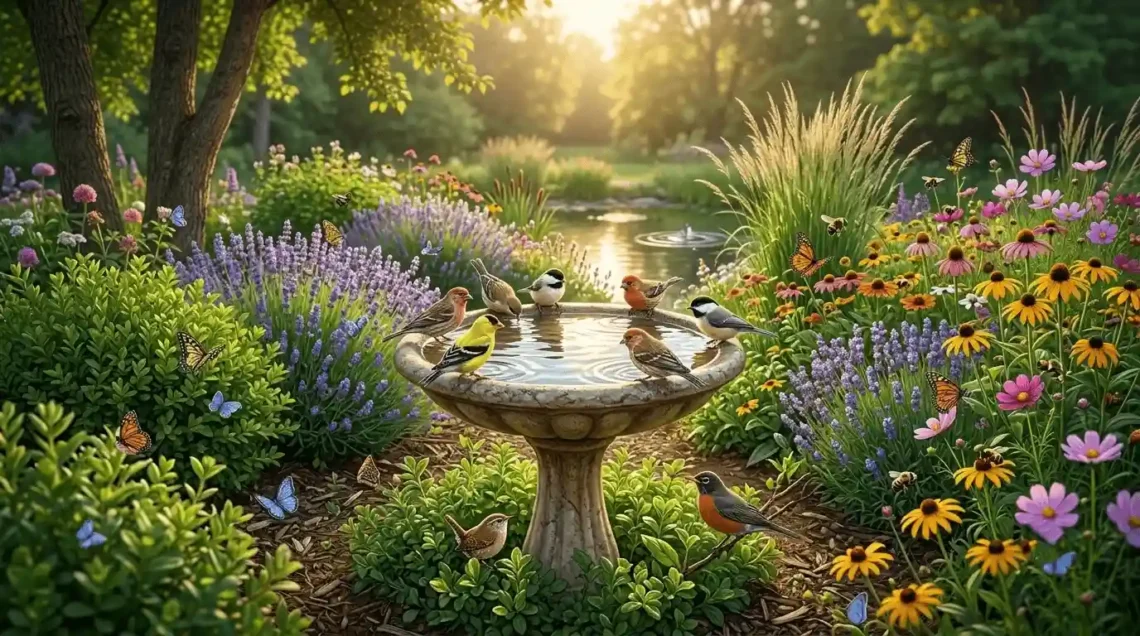
A small bird bath is one of the simplest ways to create a wildlife-friendly outdoor space, whether you have a spacious garden, a compact patio, or a balcony. By providing clean, shallow water, bird baths help local birds drink, bathe, cool themselves, and maintain healthy feathers throughout the year. They also encourage backyard biodiversity by attracting native birds, beneficial insects, and even pollinators that benefit surrounding plants. Choosing the right bird bath involves more than appearance—it requires selecting the proper size, material, placement, and maintenance routine to ensure it remains safe, clean, and attractive to wildlife.
By Greenery Inside | Plant Care & Gardening Expert
Quick Summary
- Small bird baths provide birds with a safe place to drink and bathe while fitting comfortably into limited outdoor spaces.
- The best bird bath depends on its material, stability, depth, location, and ease of maintenance.
- Fresh water and routine cleaning help prevent algae, mosquitoes, and bird diseases.
- Different bird bath designs suit gardens, patios, balconies, and wildlife-friendly landscapes.
- Proper placement and seasonal care significantly improve bird activity.
What Is a Small Bird Bath?
A small bird bath is a shallow water basin designed to provide birds with fresh water for drinking and bathing. Unlike large decorative water features, small bird baths occupy minimal space while still meeting the daily needs of many common garden birds. Bird baths have been used historically in wildlife-friendly gardening and ornamental landscape design across many cultures, as described in the bird bath Wikipedia entry.
Birds rely on accessible water throughout the year. Even in areas with natural ponds or streams, a clean bird bath often becomes a preferred water source because of its shallow depth and predictable availability.
A properly maintained bird bath supports wildlife-friendly gardening by encouraging birds that naturally help control insects, disperse seeds, and contribute to a balanced ecosystem.
Greenery Inside has found that even a simple bird bath placed near shrubs often attracts more bird species than elaborate decorative garden features.
Why Birds Need Bird Baths
Birds require water for much more than drinking. Regular access to fresh water supports their overall health and survival.
Drinking Water
Birds lose moisture throughout the day and need frequent access to clean drinking water, particularly during hot weather.
Feather Cleaning
Bathing removes dust, pollen, and debris from feathers, helping birds maintain efficient insulation and flight.
Temperature Regulation
During warm months, bathing allows birds to cool themselves and reduce heat stress.
Parasite Removal
Regular bathing helps loosen mites, lice, and other parasites that can affect feather condition.
Benefits of Adding a Small Bird Bath to Your Outdoor Space
Installing a bird bath benefits both wildlife and your landscape. Even small outdoor areas can become valuable habitats when water is consistently available.
Key benefits include:
- Supports native bird populations.
- Encourages backyard biodiversity.
- Attracts pollinators and beneficial insects.
- Creates a relaxing natural environment.
- Adds decorative interest to outdoor spaces.
- Requires minimal maintenance.
- Conserves water when managed responsibly.
Many gardeners notice increased bird activity within days of installing a clean bird bath, especially during dry weather when natural water sources become scarce.
Types of Small Bird Baths
Different bird bath designs suit different outdoor spaces. Choosing the right style depends on available space, maintenance preferences, and the bird species you hope to attract.
Ground Bird Baths
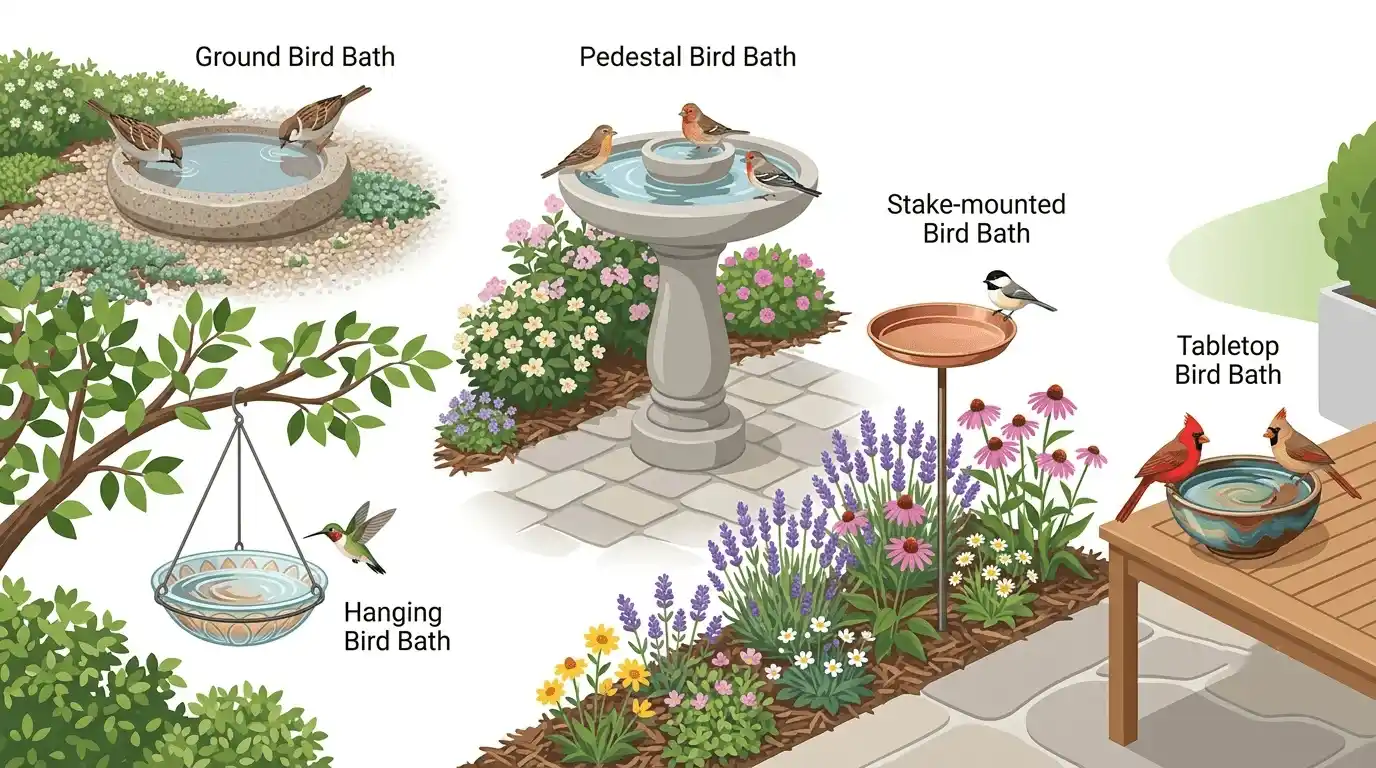
Ground bird baths closely resemble natural puddles, making them attractive to ground-feeding birds such as robins, thrushes, and doves.
Advantages include:
- Easy access
- Natural appearance
- Simple installation
However, they should be positioned where predators cannot easily ambush visiting birds.
Pedestal Bird Baths
Pedestal bird baths elevate the basin above ground level, improving visibility while helping birds monitor their surroundings.
Benefits include:
- Better predator awareness
- Decorative appearance
- Easy maintenance
- Suitable for gardens of all sizes
A pedestal design also reduces contamination from soil and fallen leaves.
Hanging Bird Baths
A hanging bird bath is suspended from tree branches, pergolas, or hooks. Hanging bird baths are excellent choices where ground space is limited.
You may also encounter similar terms such as:
- hanging birdbath
- birdbath hanging
- hanging birdbaths
- hanging basket bird bath
- hanging bird bath bowl
- plastic hanging bird bath
- large hanging bird bath
- small hanging bird bath
The best hanging bird baths include secure chains, stable bowls, and textured surfaces that provide birds with reliable footing.
Greenery Inside recommends installing hanging bird baths where excessive swinging is minimized by choosing sheltered locations.
Stake-Mounted Bird Baths
A small bird bath on stake features a shallow bowl mounted on a metal or plastic stake that pushes directly into the soil.
Advantages include:
- Quick installation
- Easy relocation
- Ideal for flower beds
- Minimal footprint
Stake-mounted designs work especially well in cottage gardens and wildlife borders.
Tabletop Bird Baths
Tabletop bird baths are designed for outdoor tables, walls, decks, or raised platforms.
They are ideal for:
- Small patios
- Courtyards
- Compact gardens
- Apartment terraces
Because they are lightweight, ensure they are placed on stable, level surfaces.
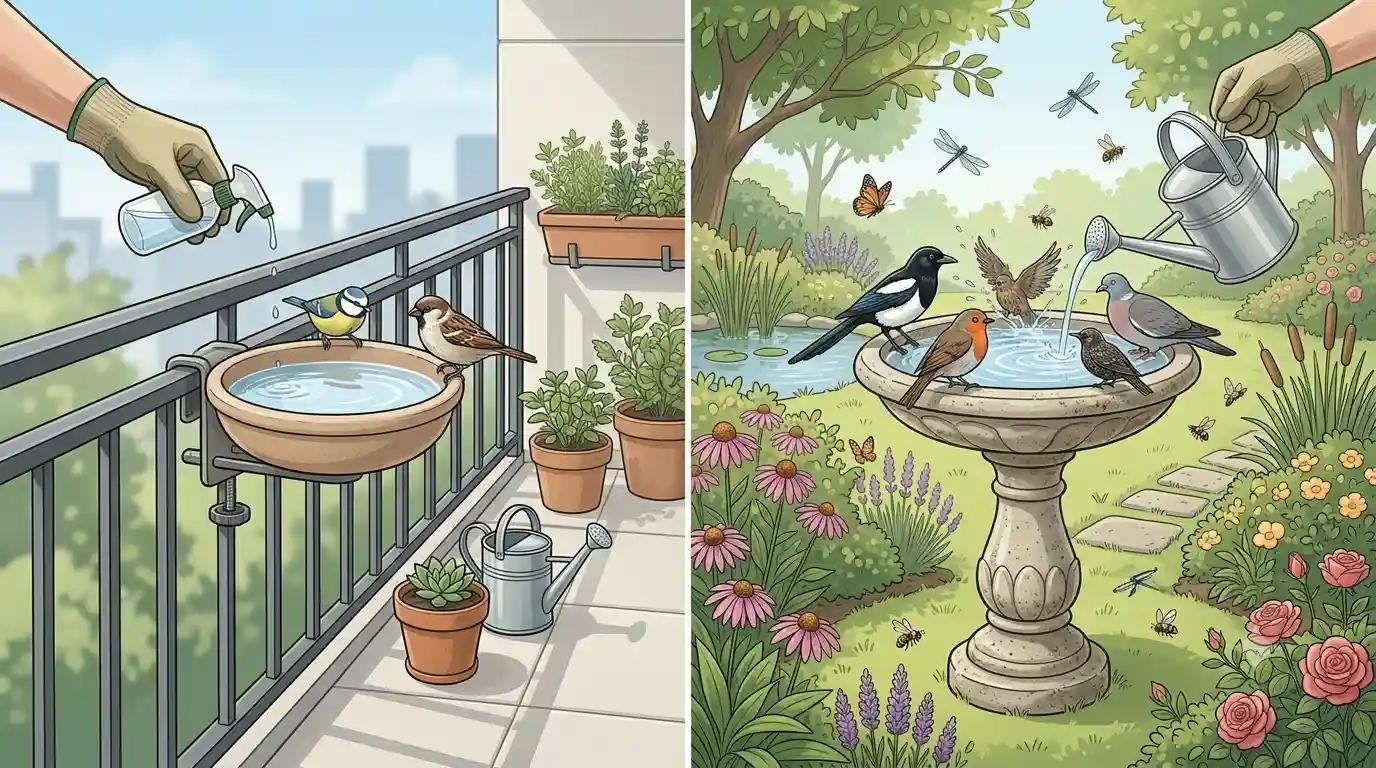
Balcony Bird Baths
A small bird bath for balcony allows apartment residents to support local wildlife without requiring a traditional garden.
Good balcony bird baths typically feature:
- Secure mounting systems
- Lightweight construction
- Shallow basins
- Wind-resistant designs
Position the bath away from busy walkways while ensuring birds have nearby perches such as railing planters or shrubs.
Choosing the Right Material for a Bird Bath
The material affects durability, maintenance requirements, appearance, and bird safety.
| Material | Durability | Weight | Maintenance | Best For |
| Ceramic | Medium | Heavy | Moderate | Decorative gardens |
| Terracotta | Medium | Medium | Moderate | Natural landscapes |
| Concrete | Excellent | Very Heavy | Low | Permanent installations |
| Plastic | Moderate | Light | Easy | Balconies and patios |
| Metal | High | Medium | Moderate | Modern gardens |
Ceramic Bird Baths
Ceramic bird baths offer elegant finishes and decorative glazing.
Advantages include:
- Attractive appearance
- Easy cleaning
- Wide range of colors
- Suitable for ornamental gardens
However, glazed ceramic may crack if exposed to freezing temperatures.
Terracotta Bird Baths
A terracotta bird bath blends naturally into garden settings thanks to its earthy appearance.
Related styles include:
- terracotta bird baths
- terra cotta bird bath
- terra cotta bird baths
- birdbath terracotta
- terra cotta birdbath
- terra cotta birdbaths
- terracotta birdbaths
- bird bath terra cotta pots
- terra cotta pot bird bath
- terracotta pot bird bath
Terracotta provides excellent grip for birds but absorbs water over time, making periodic sealing beneficial in wetter climates.
Concrete Bird Baths
Concrete bird baths are among the most durable options available.
Benefits include:
- Exceptional stability
- Long lifespan
- Weather resistance
- Excellent for larger gardens
Although heavy, this weight prevents tipping during strong winds.
Plastic Bird Baths
Plastic bird baths are lightweight, affordable, and easy to move.
They are well suited for:
- Beginners
- Temporary installations
- Rental properties
- Small patios
- Balconies
Choose UV-resistant plastic to reduce fading and brittleness.
Metal Bird Baths
Metal bird baths offer contemporary styling and impressive durability.
Popular metals include:
- Stainless steel
- Powder-coated steel
- Cast aluminum
- Copper
A copper bird bath Australia style remains popular because copper naturally develops an attractive patina while complementing modern and traditional gardens alike.
Avoid placing dark-colored metal baths in full summer sun, as surfaces may become excessively hot.
Choosing the Best Size and Depth for Birds
The ideal bird bath prioritizes shallow depth rather than large water capacity. Most backyard birds prefer water between 2–5 cm (¾–2 inches) deep, with gently sloping sides that allow easy entry and exit.
While large bird bath, large bird baths, and big bird baths can accommodate more visitors at once, they require more space, hold more water, and often need additional maintenance. A short bird bath or compact design is usually a better fit for patios, balconies, and small gardens.
Recommended Bird Bath Sizes
| Bird Bath Size | Best For | Space Needed | Typical Bird Species |
| Small (25–35 cm) | Balconies, patios | Very little | Finches, wrens, chickadees |
| Medium (35–50 cm) | Most home gardens | Moderate | Sparrows, robins, bluebirds |
| Large (50 cm+) | Spacious landscapes | Large | Doves, jays, multiple birds |
In our experience, birds are more influenced by water depth and cleanliness than by the overall diameter of the bird bath.
Where Should You Place a Small Bird Bath?
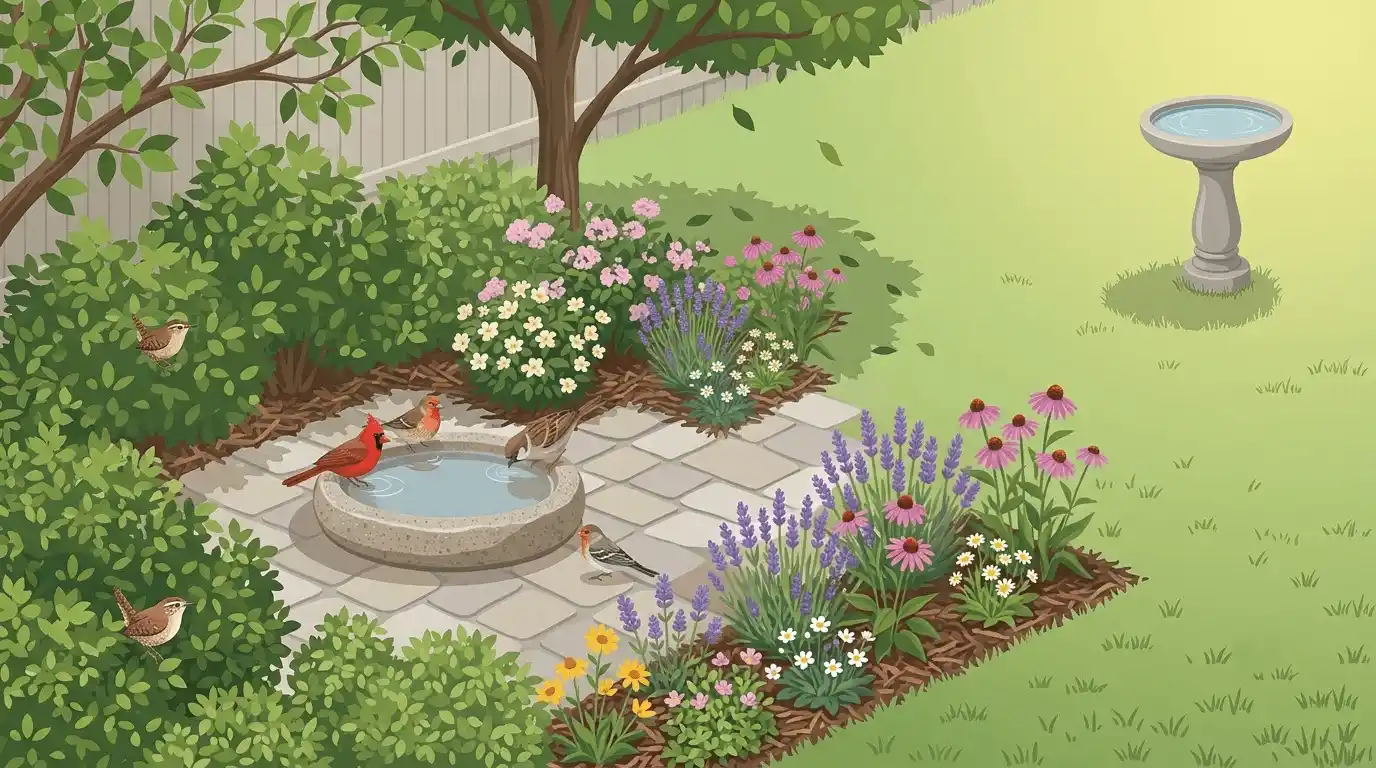
The best location balances bird safety, visibility, and convenience.
Place your bird bath where birds can easily locate it while remaining protected from predators.
Important placement considerations include:
- Partial shade to slow algae growth
- Nearby shrubs for quick escape
- Open visibility to detect predators
- Protection from strong winds
- Easy access for cleaning and refilling
Avoid placing bird baths directly beneath trees that constantly drop leaves, sap, or fruit.
Best Placement for Gardens
A small bird bath for garden works best near shrubs, ornamental grasses, or small trees that provide nearby shelter.
Many garden bird baths perform well when positioned:
- 2–3 metres from dense cover
- In morning sunlight
- With afternoon shade
- On level ground
An outdoor bird bath should also remain visible from indoor windows so you can enjoy bird activity without disturbing visitors.
Best Placement for Patios and Balconies
A small bird bath outdoor installation can thrive on patios and apartment balconies when stability is prioritized.
For a small bird bath for balcony, choose:
- Secure rail-mounted designs
- Heavy tabletop models
- Hanging bird baths attached to sturdy brackets
Avoid windy corners where water evaporates quickly or the bath may sway excessively.
Should You Add a Solar Fountain?
Moving water naturally attracts birds because it appears fresher and produces gentle sounds that birds recognize from natural streams.
Adding a fountain is often one of the easiest ways to increase bird visits.
Benefits of Solar Bird Bath Fountains
A solar bird bath fountain circulates water using sunlight, eliminating the need for electrical wiring.
Benefits include:
- Attracts more birds
- Reduces stagnant water
- Slows mosquito breeding
- Improves oxygenation
- Creates attractive water movement
A small bird bath solar fountain is especially suitable for compact gardens where electrical outlets may be unavailable.
Do Small Bird Baths Need a Pump?
Not necessarily.
A small bird bath pump is optional rather than essential.
Choose a pump if you want:
- Continuous water movement
- Cleaner water
- Improved bird attraction
- Fountain effects
Still water remains perfectly suitable provided it is replaced frequently.
Small Bird Bath Fountain vs Still Water
| Feature | Fountain | Still Water |
| Bird attraction | Excellent | Good |
| Water movement | Continuous | None |
| Mosquito prevention | Better | Requires more frequent changes |
| Maintenance | Moderate | Low |
| Cost | Higher | Lower |
How to Maintain a Small Bird Bath
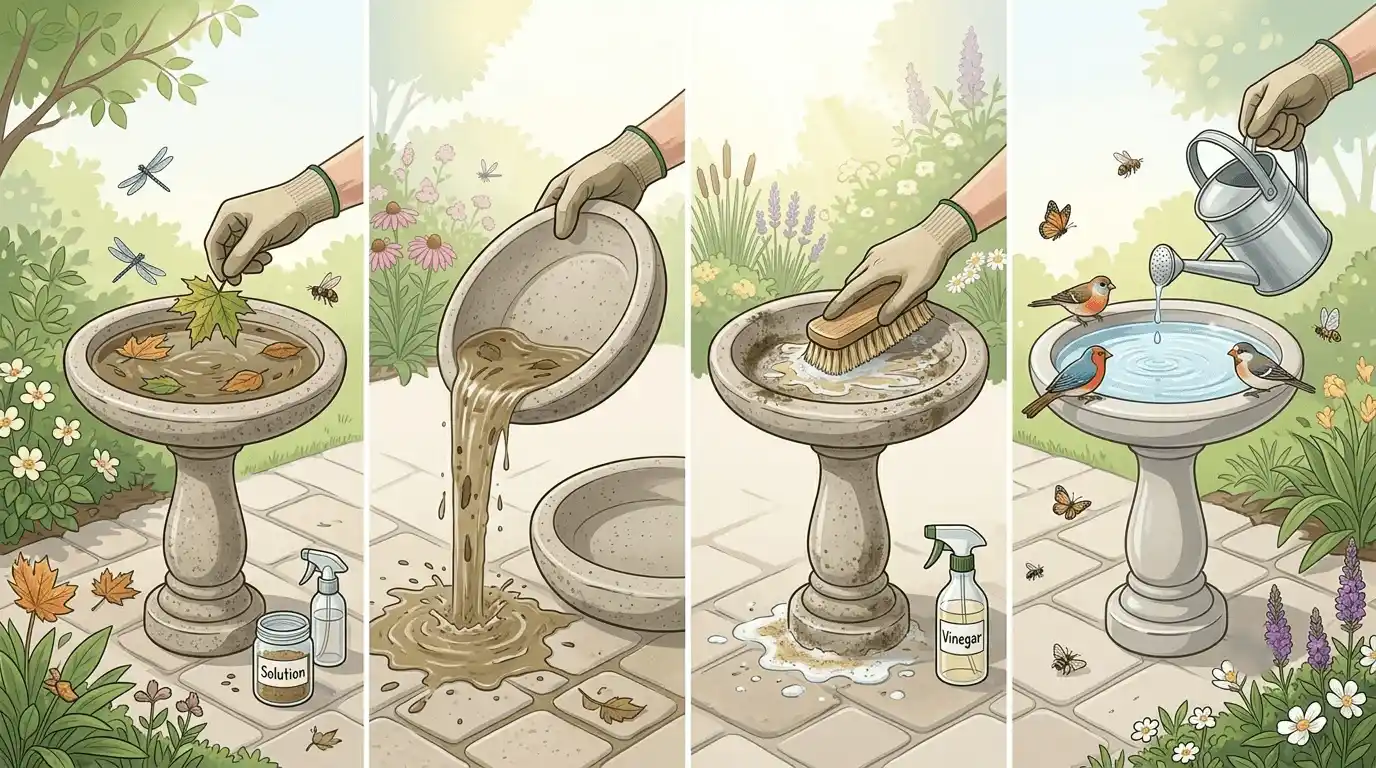
Proper maintenance keeps birds healthy while extending the life of your bird bath.
Greenery Inside recommends establishing a consistent maintenance routine rather than cleaning only when algae becomes visible.
Daily
- Refill with fresh water.
- Remove leaves and debris.
- Check water depth.
Weekly
- Empty completely.
- Scrub using a stiff brush.
- Clean with diluted white vinegar if needed.
- Rinse thoroughly before refilling.
Monthly
- Inspect for cracks.
- Check stability.
- Clean surrounding area.
- Inspect fountain pumps if installed.
Seasonal Care
Summer
- Refill more frequently.
- Provide afternoon shade.
- Monitor evaporation.
Winter
- Prevent freezing where possible.
- Remove ice carefully.
- Store fragile ceramic baths during severe frost.
Common Problems and How to Fix Them
Algae Growth
Why it happens
Warm temperatures, sunlight, and nutrient buildup encourage algae. Algae buildup is especially common in stagnant water systems exposed to sunlight and organic debris, similar to other garden maintenance issues such as aphids on plants infestations.
How to fix it
Scrub the basin weekly and replace water every few days.
Prevention
Place the bird bath in partial shade and avoid overfeeding nearby birds.
Mosquito Breeding
Why it happens
Mosquitoes lay eggs in stagnant water.
How to fix it
Replace water every 2–3 days or install a fountain.
Prevention
Keep water moving whenever possible.
Water Evaporating Too Quickly
Why it happens
Direct sunlight and wind increase evaporation.
How to fix it
Move the bath into partial shade and refill regularly.
Prevention
Choose a slightly deeper basin and avoid exposed locations.
Birds Avoiding the Bird Bath
Why it happens
Poor placement, deep water, or excessive disturbance.
How to fix it
Move the bath near shrubs and maintain shallow water.
Prevention
Provide nearby perches and fresh water consistently.
Bird Bath Becoming Slippery
Why it happens
Algae and mineral buildup.
How to fix it
Scrub thoroughly using a stiff brush.
Prevention
Follow a weekly cleaning schedule.
Common Mistakes When Using a Small Bird Bath
Many beginner issues are easy to avoid.
Common mistakes include:
- Placing the bird bath in direct afternoon sun.
- Filling the basin too deeply.
- Cleaning too infrequently.
- Installing it far from protective vegetation.
- Using slippery decorative surfaces.
- Cleaning with harsh chemical products.
- Ignoring seasonal maintenance.
Following proper placement, routine cleaning, and safe water depth will encourage birds to return throughout the year while reducing disease risks and maintenance challenges.
Small Bird Bath vs Large Bird Bath
A small bird bath is ideal for compact outdoor spaces and is easier to maintain, while a large bird bath offers more room for multiple birds but requires additional space and upkeep. The right choice depends on your available area, maintenance preferences, and the types of birds you want to attract.
| Feature | Small Bird Bath | Large Bird Bath |
| Space Required | Ideal for balconies, patios, and small gardens | Best for spacious gardens and landscapes |
| Bird Species | Small songbirds, finches, wrens, chickadees | Larger birds, doves, jays, multiple birds at once |
| Maintenance | Easier and quicker to clean | Requires more water and longer cleaning time |
| Water Usage | Lower | Higher |
| Portability | Lightweight and easy to relocate | Heavy and often permanent |
| Cost | Usually more affordable | Generally more expensive |
For most homeowners, a small bird bath provides an excellent balance between functionality and ease of maintenance. Larger models are better suited to expansive landscapes where they can serve as decorative focal points.
Decorative Styles for Small Bird Baths
A bird bath should complement your outdoor design while remaining practical for wildlife. Modern manufacturing offers styles that suit almost any landscape.
Modern
Modern bird baths feature clean lines, minimalist shapes, and materials such as concrete, powder-coated metal, and smooth ceramic.
Many modern bird baths Australia collections are designed to withstand harsh outdoor conditions while blending with contemporary landscapes.
Rustic
Rustic designs often use natural stone, aged metal, weathered timber accents, or terracotta finishes that blend seamlessly into cottage gardens and woodland landscapes.
Traditional
Traditional bird baths usually feature classic pedestal designs with decorative detailing, making them popular focal points in formal gardens.
Cottage Gardens
Cottage-style bird baths pair beautifully with flowering perennials, climbing roses, lavender, daisies, and ornamental grasses, encouraging birds and pollinators to visit.
Wildlife Gardens
Wildlife gardens prioritize function over decoration. A simple, shallow bird bath surrounded by native shrubs, grasses, and flowering plants often attracts more birds than highly ornamental designs.
In our experience, birds care far more about clean water, safe placement, and shallow depth than decorative styling.
How Small Bird Baths Support Backyard Wildlife
A small bird bath contributes to a healthier garden ecosystem by providing one of wildlife’s most essential resources: fresh water. Creating a balanced wildlife garden is most effective when water features are combined with suitable plant structure and native greenery, as seen in guides like Australian native garden trees and our broader guide to house plants.
Native Birds
Reliable water sources attract a wide variety of native birds that naturally help control insects and disperse seeds.
Pollinators
Bees, hoverflies, and other pollinators frequently drink from shallow bird baths, particularly during dry periods. Adding a few small stones gives insects safe landing spots.
Butterflies
Butterflies often use damp edges and shallow water to absorb minerals, a behavior known as puddling.
Beneficial Insects
Dragonflies, lacewings, and other beneficial insects also benefit from accessible water, contributing to natural pest control.
Biodiversity
Providing clean water encourages greater biodiversity by supporting multiple species that interact within a balanced garden ecosystem.
Wildlife Gardening
A bird bath becomes even more valuable when combined with:
- Native flowering plants
- Dense shrubs for shelter
- Seed-producing grasses
- Pollinator-friendly flowers
- Chemical-free gardening practices
As of 2026, wildlife gardeners continue to recommend incorporating multiple habitat features—including water, food, and shelter—to support local biodiversity throughout the year.
Seasonal Care for Small Bird Baths
Birds rely on water during every season, although maintenance requirements change throughout the year.
Spring
Spring is an active nesting season.
Recommended tasks:
- Clean thoroughly after winter.
- Refresh water frequently.
- Remove accumulated pollen and debris.
- Check for winter damage.
Summer
Hot weather increases water demand.
Best practices include:
- Refill water daily.
- Place the bath in afternoon shade.
- Monitor evaporation.
- Clean more frequently to control algae.
Greenery Inside has found that shallow baths with partial shade receive noticeably more bird visits during heatwaves.
Autumn
Falling leaves can quickly contaminate water.
Maintenance includes:
- Remove leaves daily.
- Inspect stability after storms.
- Prepare fountains for cooler weather.
Winter
Birds continue needing water during winter.
Recommendations include:
- Remove ice carefully.
- Store delicate ceramic bird baths during severe freezing conditions.
- Use frost-resistant materials outdoors.
- Replace frozen water whenever possible.
Frequently Asked Design Features
Many shoppers compare bird bath designs before making a purchase. Regardless of style, certain features consistently improve usability and bird safety.
Whether selecting a small bird bath bowl, a decorative birdbath, or other birdbaths and small birdbaths, prioritize these characteristics:
- Non-slip surfaces to provide secure footing.
- Shallow basin between 2–5 cm deep.
- Easy drainage for convenient cleaning.
- Stable base that resists tipping.
- Weather-resistant materials suitable for year-round outdoor use.
These features improve safety, simplify maintenance, and encourage birds to visit regularly.
Conclusion
A small bird bath is one of the most effective additions you can make to a garden, patio, or balcony to support local wildlife. By selecting the right material, maintaining a shallow water depth, placing the bath in a safe location, and keeping the water clean, you create an inviting environment for birds throughout the year. Integrating water features with native planting design strengthens long-term ecosystem balance in Australian-style landscapes, as explained in our Australian native garden trees guide.
Regular maintenance, thoughtful placement, and seasonal care are the key factors that determine long-term success. Whether you choose a hanging, pedestal, tabletop, or stake-mounted design, even a compact bird bath can significantly improve backyard biodiversity while adding beauty and movement to your outdoor space.
Frequently Asked Questions
What is the ideal depth for a small bird bath?
The ideal depth is between 2–5 cm (¾–2 inches). Shallow water allows small birds to drink and bathe safely while reducing the risk of drowning.
Where should a small bird bath be placed for the best bird activity?
Place it in partial shade with nearby shrubs or small trees that provide shelter. Birds prefer locations where they can easily watch for predators while having quick access to cover.
How often should a bird bath be cleaned?
Replace the water every one to three days and scrub the basin at least once each week. More frequent cleaning may be necessary during hot weather or periods of heavy bird activity.
Can a solar fountain be added to a small bird bath?
Yes. A solar fountain adds gentle water movement that attracts birds, discourages mosquitoes, and helps keep the water fresher without requiring electrical wiring.
Are hanging bird baths safe for birds?
Yes, provided they are securely mounted, stable, and positioned where excessive swinging is minimized. Birds also benefit from nearby branches or shrubs for resting.
Which material lasts the longest for outdoor bird baths?
Concrete generally offers the longest lifespan because it is highly durable, weather-resistant, and stable. Powder-coated metal and quality stone are also excellent long-term choices.
Do birds prefer moving water or still water?
Most birds are naturally attracted to moving water because it appears fresher and is easier to detect by sound. However, clean still water is also effective when changed regularly.
Can a small bird bath be used on a balcony?
Absolutely. Balcony bird baths are specifically designed for compact spaces and often include railing mounts, tabletop bases, or hanging brackets that make them suitable for apartments.
How can I stop algae from growing in my bird bath?
Keep the bird bath in partial shade, replace the water frequently, and scrub the basin weekly using a stiff brush. Avoid harsh chemical cleaners that may harm wildlife.
What features make a bird bath safe for small birds?
The safest bird baths include a shallow basin, textured non-slip surface, stable base, gently sloping sides, and clean fresh water. Nearby vegetation also helps birds feel secure while using the bath.