Introduction
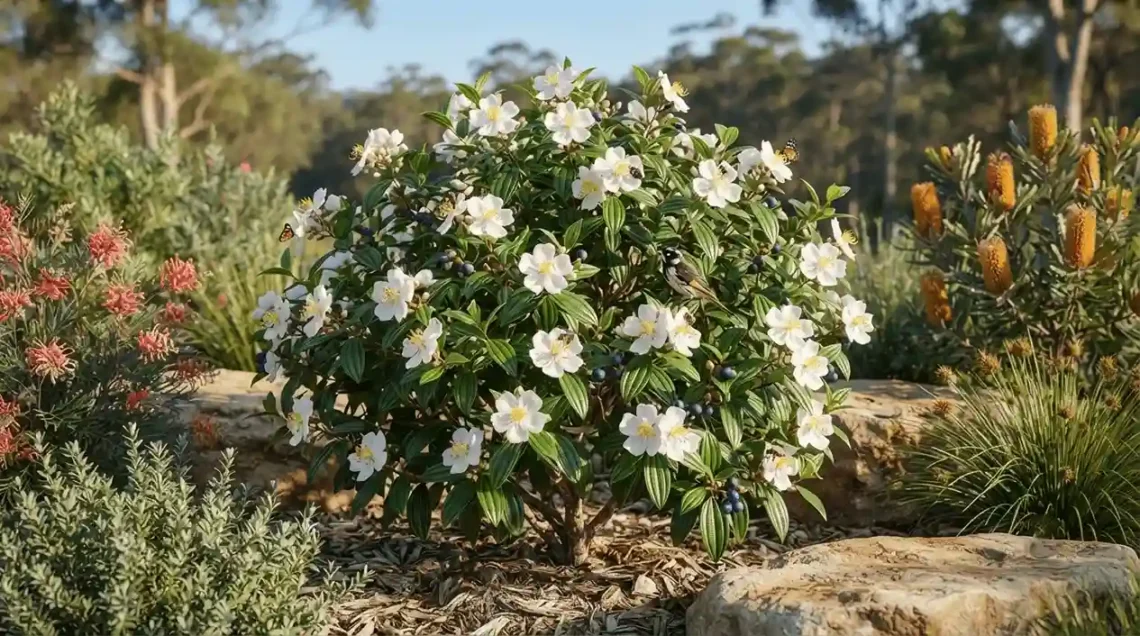
Melastoma affine alba is a beautiful white-flowering form of Australia’s native tibouchina, prized for its elegant blooms, attractive foliage, and wildlife-friendly berries. Unlike the familiar purple-flowering form of Melastoma affine, this selection produces pure white flowers that create a softer, more refined appearance in native and ornamental landscapes. Also known as the Australian native tibouchina, native lasiandra, and blue tongue plant, it is valued for its adaptability, relatively easy care, and ability to attract pollinators and birds. Whether used as a feature shrub, informal hedge, or part of a biodiversity-focused garden, Melastoma affine alba combines ornamental beauty with ecological value.
Melastoma affine alba is widely used in modern landscape design and is often included in guides to Australian native garden trees because of its ornamental flowers, wildlife value, and adaptability to low-maintenance native gardens.
By Greenery Inside | Plant Care & Gardening Expert
Quick Summary
- Melastoma affine alba is a white-flowering selection of Australia’s native tibouchina suitable for native and ornamental gardens.
- It produces attractive white flowers followed by edible blue-purple berries that inspired the common name blue tongue plant.
- The shrub grows best in full sun to partial shade with well-drained soil and consistent moisture while becoming established.
- It supports native bees, insects, and birds, making it an excellent choice for wildlife-friendly landscapes.
- Its compact, adaptable growth habit makes it suitable for coastal gardens, native plantings, and low-maintenance landscapes.
What Is Melastoma Affine Alba?
Melastoma affine alba is the white-flowering form of Melastoma affine, an evergreen shrub native to eastern Australia. It belongs to a group of flowering shrubs admired for their vibrant blossoms, decorative berries, and ability to thrive in a range of Australian climates.
Melastoma affine belongs to the Melastomataceae family, a large group of flowering plants distributed across tropical and subtropical regions.
Learn more here: Melastoma (Wikipedia)
The species naturally occurs in open forests, woodland edges, coastal heath, and rainforest margins, where it contributes to local biodiversity. While the standard species is best known for its rich purple flowers, the alba selection offers the same attractive growth habit but with elegant white blooms that brighten gardens without losing the plant’s ecological benefits.
Because of its ornamental appeal and native heritage, Melastoma affine alba has become increasingly popular in Australian native landscapes, pollinator gardens, and low-maintenance residential gardens.
From our experience growing Australian native shrubs, Melastoma affine alba establishes quickly when planted in well-drained soil and receives regular watering during its first growing season. Once established, it requires relatively little maintenance while flowering reliably each year.
Botanical Classification
Melastoma affine alba shares the same botanical classification as the species Melastoma affine, differing only in flower colour rather than botanical status.
| Feature | Details |
| Botanical name | Melastoma affine (white-flowering form ‘Alba’) |
| Common names | Native tibouchina, native lasiandra, blue tongue plant, Australian native tibouchina |
| Family | Melastomataceae |
| Genus | Melastoma |
| Plant type | Evergreen native shrub |
| Native range | Eastern Australia, including Queensland and New South Wales |
| Growth habit | Rounded, bushy shrub with spreading branches |
The Melastoma affine family, Melastomataceae, contains many flowering shrubs and small trees found throughout tropical and subtropical regions. Members of this family are recognized by their distinctive leaves with prominent parallel veins and showy flowers.
Within the genus Melastoma, Melastoma affine is one of Australia’s best-known native representatives. It naturally grows in warm, humid regions but adapts well to cultivated gardens with suitable drainage and sunlight.
Common Names
The Melastoma affine common name varies depending on region, horticultural tradition, and local usage. Several names refer to the same or closely related plants, which can occasionally create confusion among gardeners.
Common names include:
- Native tibouchina
- Australian native tibouchina
- Native lasiandra
- Blue tongue plant
- White native tibouchina (for the alba form)
The name native tibouchina reflects the plant’s resemblance to ornamental Tibouchina species, although it belongs to the genus Melastoma. Similarly, native lasiandra originated because older botanical classifications once grouped similar plants under Lasiandra, a name no longer accepted.
The common name blue tongue plant comes from the ripe fruit, whose dark blue-purple juice temporarily stains the mouth and tongue after being eaten.
Understanding these common names helps gardeners recognize that different nurseries or regions may use different labels while referring to the same Australian native shrub.
How Melastoma Affine Alba Differs from Standard Melastoma Affine
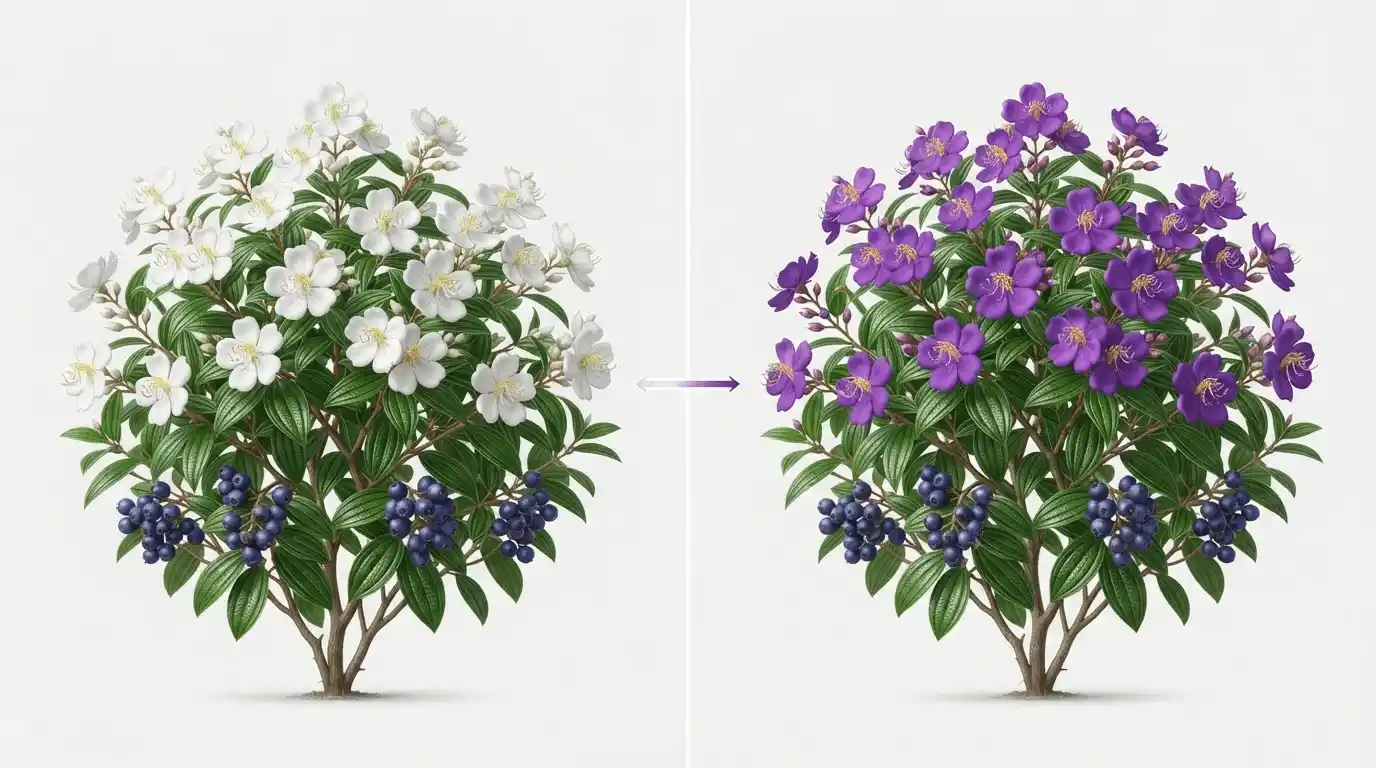
The primary difference between Melastoma affine alba and the standard Melastoma affine is flower colour. However, both plants share similar growth habits, care requirements, and wildlife benefits.
| Feature | Melastoma affine alba | Standard Melastoma affine |
| Flower colour | Pure white | Purple to pink-purple |
| Foliage | Deep green | Deep green |
| Fruit | Blue-purple edible berries | Blue-purple edible berries |
| Wildlife value | Excellent | Excellent |
| Maintenance | Low | Low |
| Landscape appearance | Bright, elegant, soft colour palette | Bold, vibrant colour display |
| Availability | Less common | More widely available |
The alba form is often selected for modern landscapes where white flowers complement contemporary garden designs or blend with mixed native plantings. In contrast, the purple-flowering form creates stronger visual contrast and is frequently used as a colourful feature shrub.
Both selections attract native pollinators, provide fruit for wildlife, and perform similarly under appropriate growing conditions.
Greenery Inside recommends choosing the flower colour that best complements the surrounding planting scheme, as there is little difference in cultivation requirements between the two forms.
Plant Size and Growth Habit
Melastoma affine alba develops into a rounded evergreen shrub with dense branching and an attractive natural form. Its manageable size makes it suitable for home gardens, native borders, and informal screening.
Typical mature dimensions include:
| Characteristic | Average Size |
| Mature height | 1.5–3 metres |
| Mature width | 1.5–2.5 metres |
| Growth habit | Rounded, bushy |
| Foliage | Evergreen |
| Suitable for containers | Compact cultivars only |
The final Melastoma affine alba size depends on several environmental factors, including:
- Sunlight exposure
- Soil fertility
- Water availability
- Local climate
- Pruning frequency
In fertile soils with regular moisture, shrubs may grow toward the upper end of their size range. Plants growing in drier, more exposed sites generally remain smaller and more compact.
Although occasionally grown in large containers, Melastoma affine alba performs best outdoors where its root system has room to develop naturally. Compact forms are more suitable for patios or courtyards than the full-sized species.
Proper spacing is equally important. Allowing sufficient room for mature spread improves airflow, reduces disease risk, and highlights the shrub’s naturally rounded shape.
Growth Rate
Melastoma affine alba has a moderate growth rate, producing steady annual growth under suitable conditions.
Growth is strongest during spring and summer when temperatures are warm and soil moisture is consistent. New shoots emerge rapidly following seasonal rainfall or irrigation, while growth naturally slows during cooler months.
Several factors influence growth speed:
- Warm subtropical or tropical climates encourage faster development.
- Full sun promotes vigorous branching and heavier flowering.
- Fertile, organically enriched soils support healthy growth.
- Consistent watering during establishment improves root development.
- Extended drought or nutrient-poor soils reduce annual growth.
As of the 2026 growing season, Australian native plant growers continue to recommend deep, infrequent watering during establishment rather than frequent shallow irrigation. This practice encourages deeper root systems, improving long-term drought resilience and overall plant health.
In our experience, avoiding excessive nitrogen fertilizer is equally important. While high nitrogen promotes lush foliage, it can reduce flowering performance and produce softer growth that is more susceptible to environmental stress.
Melastoma Affine Alba Care Guide
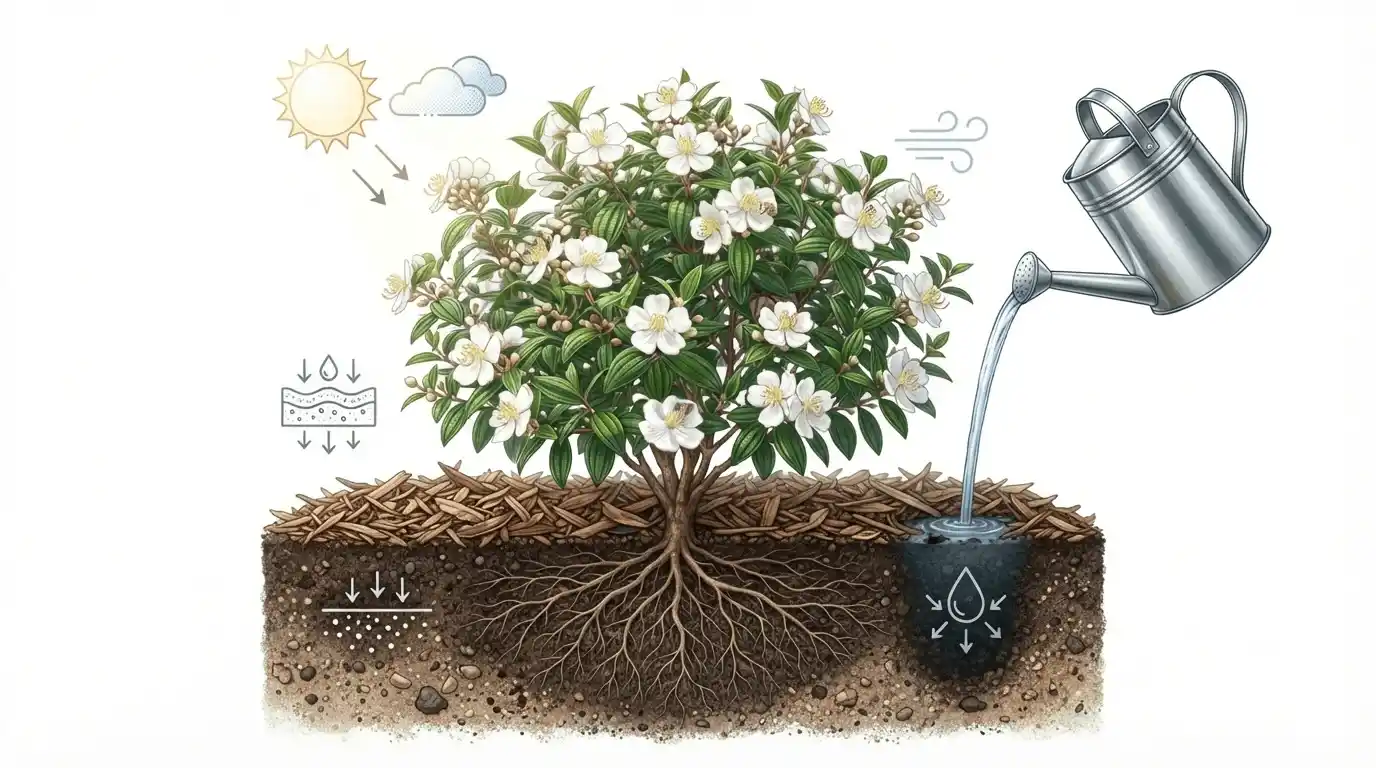
Melastoma affine alba is a relatively low-maintenance Australian native shrub when grown in conditions that closely match its natural habitat. It performs best with plenty of sunlight, well-drained soil, moderate watering during establishment, and occasional pruning to maintain its shape. Once established, it becomes more resilient to short dry periods and requires only routine seasonal care.
From our experience growing Australian native shrubs, the healthiest plants are those that receive consistent care during their first 12–18 months. Developing a strong root system early greatly improves flowering, drought tolerance, and overall longevity.
Light Requirements
Melastoma affine alba grows best in full sun to partial shade.
For the most abundant flowering, provide at least 6 hours of direct sunlight daily. In hotter inland regions, light afternoon shade can help reduce heat stress without significantly affecting flower production.
| Light Condition | Plant Performance |
| Full sun | Best flowering and compact growth |
| Partial shade | Healthy foliage with slightly fewer flowers |
| Dense shade | Reduced flowering and leggy growth |
Plants growing in full sun typically develop:
- Denser branching
- More flower buds
- Stronger stems
- Better berry production
Although partial shade is tolerated, insufficient sunlight often leads to elongated stems and fewer blooms.
Seasonal Update (2026): Native plant specialists continue to recommend planting Melastoma affine alba where it receives morning sun if summers are particularly hot, as this balances flowering with reduced heat stress.
Soil Preferences
Well-drained soil is one of the most important requirements for successfully growing Melastoma affine alba.
The shrub naturally occurs in sandy woodland soils, forest margins, and coastal environments where excess water drains away quickly.
Ideal soil characteristics include:
- Well-drained sandy loam
- Loamy soil enriched with organic matter
- Slightly acidic to neutral pH (approximately 5.5–7.0)
- Moderate fertility
- Good aeration around roots
Adding compost before planting helps improve soil structure while increasing moisture retention without causing waterlogging.
| Soil Factor | Preferred Condition |
| Drainage | Excellent |
| Soil texture | Sandy loam or loam |
| Organic matter | Moderate to high |
| Soil pH | Slightly acidic to neutral |
| Water retention | Even but never saturated |
Heavy clay soils should be improved with coarse organic material or gypsum where appropriate, or the shrub should be planted on a raised mound to improve drainage.
Greenery Inside recommends avoiding sites where water remains after heavy rain, as prolonged saturation increases the risk of root decline.
Watering Needs
Regular watering is essential while Melastoma affine alba establishes, but mature plants require much less supplemental irrigation.
During establishment
For the first year after planting:
- Water deeply once or twice each week.
- Allow the top layer of soil to dry slightly between waterings.
- Apply mulch to conserve moisture.
Mature plants
After establishment:
- Water during extended dry periods.
- Reduce irrigation during cool or rainy weather.
- Avoid constantly wet soil.
Although reasonably drought tolerant once mature, prolonged dry conditions may reduce flowering and fruit production.
Deep watering encourages roots to grow downward, making plants more resilient during future dry spells.
| Growth Stage | Water Requirement |
| Newly planted | Regular deep watering |
| Establishing | Moderate moisture |
| Mature | Occasional deep watering during drought |
A 5–8 cm layer of organic mulch helps stabilize soil moisture, suppress weeds, and regulate soil temperature while keeping mulch clear of the main stem to prevent rot.
Fertilizing
Melastoma affine alba generally performs well without heavy fertilization.
Excess nutrients—particularly nitrogen—encourage vigorous leafy growth at the expense of flowers.
Suitable fertilizer options include:
- Slow-release native plant fertilizer
- Compost
- Well-rotted organic matter
- Controlled-release balanced fertilizer suitable for native shrubs
Apply fertilizer:
- Once in early spring
- Again in midsummer if growth appears weak
Avoid frequent feeding throughout the growing season.
| Fertilizer Type | Recommendation |
| Native slow-release fertilizer | Excellent |
| Organic compost | Excellent |
| High-nitrogen fertilizer | Avoid excessive use |
| Fresh manure | Not recommended |
In our experience, lightly feeding established shrubs once each spring produces healthier flowering than repeated applications throughout the year.
Pruning
Routine pruning keeps Melastoma affine alba dense, healthy, and attractive.
The best time to prune is immediately after flowering, allowing sufficient time for new shoots to mature before the next flowering season.
Pruning objectives include:
- Encouraging bushier growth
- Removing dead or damaged branches
- Improving airflow
- Maintaining plant size
- Shaping informal hedges
Light pruning each year is usually sufficient.
Avoid removing excessive growth late in the season, as this may reduce the following year’s flower production.
For mature shrubs, occasional thinning of older stems improves light penetration and encourages vigorous new growth.
Climate and Hardiness
Melastoma affine alba is naturally adapted to Australia’s warm coastal and subtropical climates.
It performs particularly well in regions with:
- Mild winters
- Warm summers
- Moderate to high humidity
- Reliable seasonal rainfall
| Climate Factor | Suitability |
| Tropical | Excellent |
| Subtropical | Excellent |
| Temperate coastal | Good |
| Dry inland | Fair with irrigation |
| Severe frost | Poor |
The shrub tolerates:
- Coastal winds
- Salt-laden air
- Humid conditions
- Short dry periods once established
However, young plants are sensitive to prolonged frost. In cooler climates:
- Plant in sheltered positions.
- Protect young shrubs during freezing nights.
- Apply mulch before winter.
Established plants often recover from brief light frosts, but repeated freezing temperatures may damage stems and foliage.
Flowers, Fruit, and Wildlife Value
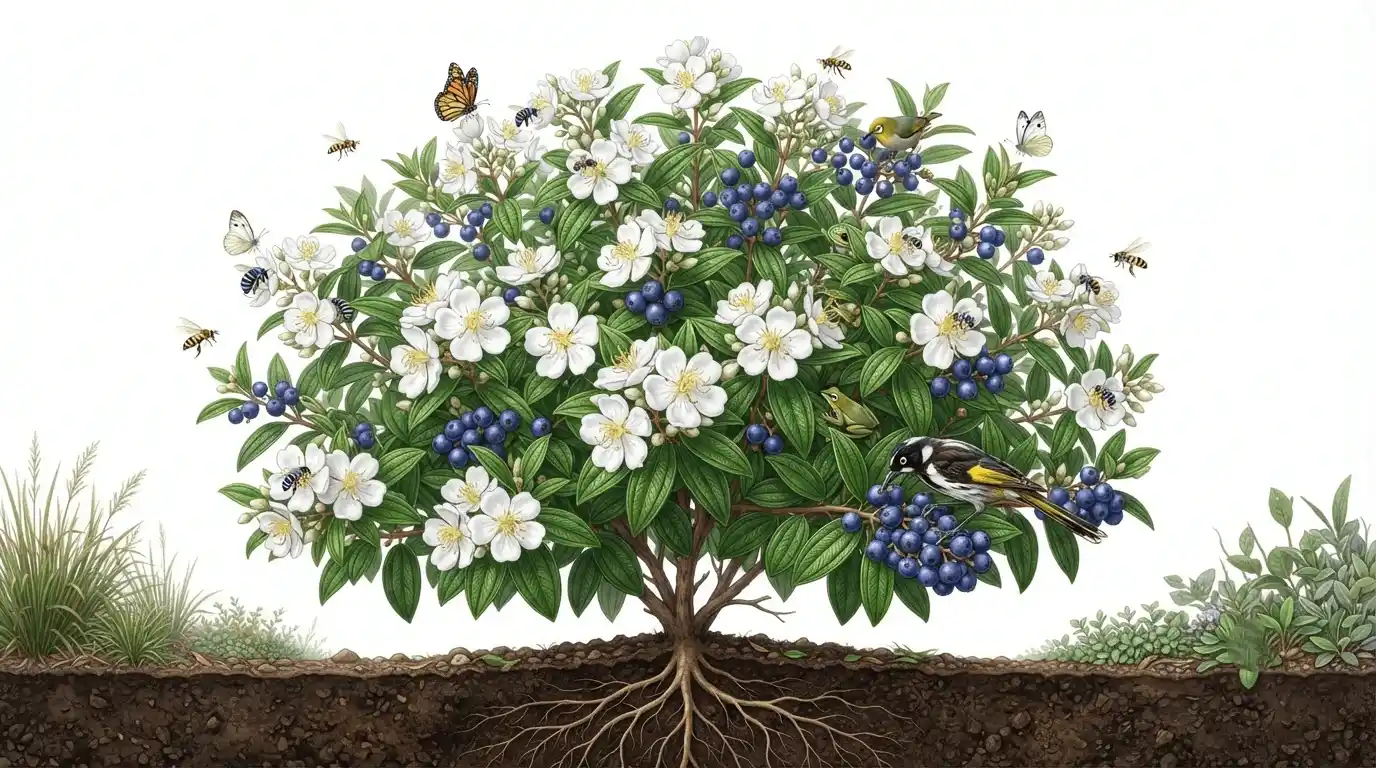
One of the greatest attractions of Melastoma affine alba is its combination of ornamental flowers and wildlife-supporting fruit.
Large white flowers appear over an extended flowering season and provide nectar and pollen for numerous beneficial insects. Following flowering, the shrub develops attractive blue-purple berries that contribute both ornamental interest and ecological value.
The plant supports:
- Native bees
- Hoverflies
- Butterflies
- Small native insects
- Fruit-eating birds
Its dense branching also offers shelter for small birds and beneficial garden wildlife.
The colorful melastoma affine fruit is responsible for the common name blue tongue plant, adding seasonal interest long after flowering has finished.
Because flowering and fruiting often overlap, mature shrubs remain visually attractive for much of the growing season.
Are the Fruits Edible?
Yes. The fruit of Melastoma affine is edible, although it is generally consumed in small quantities rather than as a major food crop.
The berries begin green before ripening to a dark blue-purple color. Inside, they contain soft pulp surrounding numerous tiny seeds.
Fruit characteristics include:
- Small rounded berries
- Dark blue-purple flesh
- Mild, slightly sweet flavor
- Numerous fine seeds
The nickname blue tongue plant comes from the berry juice, which temporarily stains the tongue and mouth a vivid blue-purple after eating.
Historically, Indigenous Australians and local communities have recognized the berries as a minor bush food, although they have never been widely cultivated as a commercial fruit.
The ripe berries are also valuable for wildlife, attracting birds that help disperse seeds throughout natural habitats.
Greenery Inside recommends allowing fruit to ripen fully on the plant before harvesting. This improves flavor while ensuring local wildlife has an opportunity to benefit from part of the crop.
Melastoma Uses in the Garden
The versatility of Melastoma affine alba makes it suitable for a wide variety of landscape styles. Its evergreen foliage, elegant white flowers, and wildlife-friendly fruit allow it to perform both ornamental and ecological roles.
In mixed planting schemes, it pairs especially well with plants commonly featured in native trees of Australia and other drought-tolerant species used in ecological landscaping.
Common melastoma uses include:
- Native Australian gardens
- Wildlife-friendly landscapes
- Informal flowering hedges
- Privacy screening
- Feature shrub plantings
- Coastal gardens
- Rain gardens with well-drained soils
- Pollinator gardens
- Woodland garden edges
- Naturalistic planting schemes
Because of its moderate size, the shrub works well as a transition plant between taller native trees and lower-growing groundcovers.
Its white flowers also provide visual contrast when planted alongside Australian natives with blue, purple, yellow, or red blooms.
Suitable companion plants include:
- Native grevilleas
- Westringias
- Banksias
- Callistemons
- Dianellas
- Lomandras
For smaller gardens, compact selections can be grown in large decorative containers placed in sunny courtyards or patios, provided excellent drainage is maintained.
In wildlife gardens, combining Melastoma affine alba with a diversity of flowering native shrubs creates a continuous food source for pollinators while increasing habitat complexity for beneficial insects and birds.
Melastoma Affine Alba vs Melastoma Malabathricum
Although Melastoma affine and melastoma malabathricum belong to the same genus and share many characteristics, they are different species with distinct natural distributions, growth habits, and ornamental features. Because both produce attractive flowers and blue-purple berries, they are often confused by gardeners and nursery buyers.
Melastoma affine is native to eastern Australia and is commonly grown in Australian native landscapes. Melastoma malabathricum, including melastoma malabathricum subsp. malabathricum, has a much wider natural range across Southeast Asia, South Asia, and northern Australia. It is also found in parts of Queensland, where it occurs naturally or has become established in suitable habitats, leading many gardeners to search for melastoma malabathricum Australia.
While the two species have similar care requirements, they differ in flower colour intensity, leaf texture, habitat preference, and overall landscape use.
Comparison Table
| Feature | Melastoma affine | Melastoma malabathricum |
| Native distribution | Eastern Australia | Southeast Asia, South Asia, and northern Australia |
| Common flowers | Purple; white in the alba form | Bright purple to magenta |
| White-flowering form | Yes (Alba selection) | Rare |
| Mature size | 1.5–3 m | 1–4 m depending on habitat |
| Leaves | Deep green with prominent veins | Slightly larger, often rough-textured leaves |
| Fruit | Blue-purple edible berries | Blue-purple edible berries |
| Wildlife value | Excellent | Excellent |
| Preferred habitat | Coastal forests, woodland edges, heath | Open woodland, grassland, disturbed sites, rainforest margins |
| Garden use | Native landscapes and ornamental gardens | Tropical and subtropical landscapes |
Flowers
The most noticeable difference is flower colour.
- Melastoma affine usually produces rich purple flowers, while Melastoma affine alba bears elegant white blooms.
- Melastoma malabathricum is famous for its vivid purple or magenta flowers, which are often slightly larger and more intensely coloured.
Both species flower over an extended season when growing conditions remain warm.
Fruit
The melastoma malabathricum fruit closely resembles the fruit of Melastoma affine.
Characteristics include:
- Rounded berry
- Dark blue-purple flesh
- Numerous tiny seeds
- Edible pulp
- Blue staining juice
Both fruits temporarily stain the tongue blue, which explains why members of the genus are commonly called blue tongue plants.
Leaves
Although similar at first glance, the foliage shows subtle differences.
Melastoma affine
- Medium-sized leaves
- Glossy green appearance
- Prominent longitudinal veins
- Slightly softer texture
Melastoma malabathricum
- Slightly larger leaves
- Rougher surface
- More pronounced hairs on young growth
- Broader overall appearance
The distinctive parallel leaf veins remain one of the easiest ways to recognize plants within the Melastomataceae family.
Habitat
Melastoma affine naturally grows in:
- Coastal heath
- Woodland margins
- Open forest
- Rainforest edges
- Sandy coastal soils
Melastoma malabathricum occupies a broader range of habitats, including:
- Grasslands
- Tropical woodland
- Disturbed land
- Forest clearings
- Roadsides
- Moist hillsides
Its wider ecological tolerance partly explains its much larger natural distribution throughout Asia and northern Australia.
Which Species Is Better for Australian Gardens?
For gardeners seeking an authentic Australian native shrub, Melastoma affine alba is generally the preferred choice. It supports local biodiversity, adapts well to eastern Australian conditions, and integrates naturally into native planting schemes.
Gardeners interested in tropical collections or botanical diversity may also appreciate Melastoma malabathricum, provided it is suitable for their region and sourced responsibly.
Melastoma Affine Compact Forms and Varieties
Not every garden has space for a full-sized shrub. Fortunately, several melastoma affine compact selections and nursery-grown forms offer the same attractive flowers and evergreen foliage in a more manageable size.
Compact cultivars are especially useful for:
- Small suburban gardens
- Courtyards
- Patio containers
- Native borders
- Low informal hedges
- Entrance plantings
These selections generally retain the dense branching habit of the species while requiring less pruning.
Melastoma Affine Alba Varieties
Although the standard white-flowering form remains the most widely available, specialist native nurseries occasionally offer selections chosen for characteristics such as:
- Improved flowering
- Compact growth
- Denser branching
- Enhanced landscape performance
- Better container suitability
Availability varies between regions, and plant names may differ among growers.
When purchasing plants, always confirm the mature size rather than relying solely on marketing terms such as “compact” or “dwarf.”
Landscape Applications
Compact forms provide excellent flexibility in modern landscapes.
Popular uses include:
- Border planting
- Accent shrub
- Mixed native beds
- Foundation planting
- Poolside gardens
- Decorative containers
Because their root systems remain smaller than full-sized shrubs, compact varieties are easier to maintain in confined spaces.
Growing in Containers
Melastoma affine alba can perform well in large containers when several conditions are met.
Choose:
- A pot at least 45–60 cm wide
- Premium free-draining potting mix
- Containers with generous drainage holes
Container-grown plants require:
- More frequent watering
- Annual top-dressing with compost
- Slow-release fertilizer in spring
- Occasional root pruning after several years
Greenery Inside recommends rotating container plants periodically so all sides receive even sunlight, encouraging balanced growth and flowering.
Common Growing Problems and Solutions
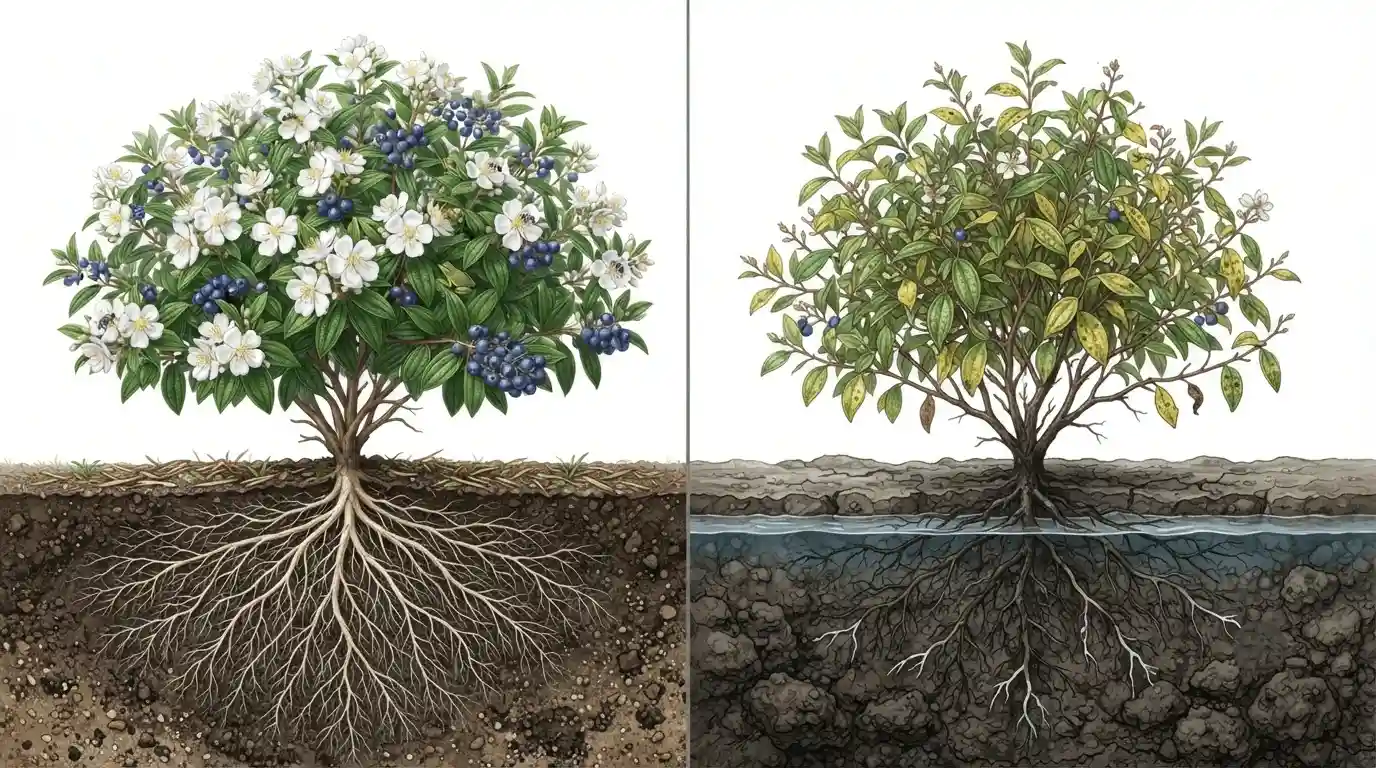
Melastoma affine alba is generally reliable and resilient, but like any ornamental shrub, it may occasionally experience cultural or environmental problems. Most issues can be prevented through proper planting, good drainage, and regular monitoring.
Poor Flowering
Poor flowering is usually caused by environmental conditions rather than disease.
Common Causes
- Too much shade
- Excess nitrogen fertilizer
- Heavy annual pruning
- Drought stress
- Young, newly planted shrubs
Plants receiving insufficient sunlight often produce healthy foliage but relatively few flower buds.
Solutions
- Move container plants into brighter locations.
- Prune only after flowering.
- Use balanced native plant fertilizer.
- Water consistently during prolonged dry periods.
- Allow young shrubs time to mature.
Prevention
To encourage abundant flowering:
- Provide at least six hours of sunlight.
- Avoid overfeeding.
- Maintain moderate soil moisture.
- Remove spent flowers where practical.
In our experience, annual light pruning immediately after flowering consistently produces fuller plants with heavier flowering the following season.
Yellow Leaves
Yellow foliage often indicates stress rather than a serious disease.
Possible Causes
- Waterlogging
- Extended drought
- Poor drainage
- Nutrient deficiencies
- Root damage
- Soil compaction
Older leaves naturally yellow and fall as part of normal growth, but widespread yellowing deserves investigation.
Solutions
Inspect the growing conditions carefully.
Corrective measures include:
- Improving drainage
- Adjusting irrigation frequency
- Applying compost
- Using a balanced slow-release fertilizer
- Checking for root problems
If only lower leaves are affected while new growth remains healthy, the issue may simply be normal seasonal leaf replacement.
Root Problems
Healthy roots are essential for vigorous growth and flowering.
The most common root issue is prolonged waterlogging.
Causes
- Heavy clay soils
- Poor drainage
- Overwatering
- Low-lying planting sites
Waterlogged roots receive insufficient oxygen, increasing the likelihood of root rot.
Symptoms
- Wilting despite moist soil
- Yellow leaves
- Slow growth
- Leaf drop
- Dieback
Prevention
Reduce risk by:
- Planting in well-drained soil.
- Avoiding excessive irrigation.
- Using raised beds where necessary.
- Applying mulch without covering the stem base.
Proper drainage remains one of the single most important factors in successfully growing Melastoma affine alba.
Pest Issues
Melastoma affine alba experiences relatively few serious pest problems, particularly when grown under healthy conditions.
The most common pests include:
Scale Insects
Scale insects attach themselves to stems and leaves while feeding on plant sap.
Symptoms include:
- Sticky honeydew
- Sooty mould
- Reduced plant vigor
Control methods:
- Remove heavily infested stems.
- Encourage ladybirds and parasitic wasps.
- Apply horticultural oil if necessary.
Aphids
Aphids usually attack tender new growth during spring.
Symptoms include:
- Curled leaves
- Sticky foliage
- Distorted shoots
Natural predators such as lacewings, hoverflies, and ladybirds usually provide excellent biological control.
Strong water sprays can also dislodge light infestations without using chemicals.
Caterpillars
Occasional caterpillars may feed on leaves.
Most infestations remain minor and rarely threaten established shrubs.
Hand removal is often sufficient in home gardens.
Encouraging insect-eating birds further reduces caterpillar numbers naturally.
Natural Pest Management
Greenery Inside recommends using integrated pest management (IPM) whenever possible.
Best practices include:
- Inspect plants regularly.
- Encourage beneficial insects.
- Maintain healthy soil.
- Avoid unnecessary pesticide use.
- Prune damaged growth promptly.
- Improve airflow around dense shrubs.
Healthy, well-maintained Melastoma affine alba plants are naturally more resistant to pests, diseases, and environmental stress than neglected specimens.
Beginner Mistakes to Avoid
Growing Melastoma affine alba is straightforward when its basic requirements are met. However, a few common mistakes can reduce flowering, weaken the plant, or shorten its lifespan. Avoiding these issues will help establish a healthy, long-lived shrub.
Planting in Heavy Clay Soil
One of the most common mistakes is planting directly into poorly drained clay.
Heavy soils retain excessive moisture, limiting oxygen around the roots and increasing the risk of root rot.
Better approach:
- Improve the soil with compost and organic matter.
- Plant on a raised mound or in a raised garden bed if drainage is poor.
- Choose a site where water drains freely after rainfall.
Overwatering
Although newly planted shrubs require consistent moisture, mature plants dislike constantly wet soil.
Signs of overwatering include:
- Yellow leaves
- Wilting despite moist soil
- Slow growth
- Root decline
Water deeply but allow the upper soil layer to dry slightly before watering again.
Insufficient Sunlight
Too much shade is a frequent cause of poor flowering.
For the best display, choose a location that receives:
- At least six hours of direct sunlight
- Morning sun in very hot climates
- Light afternoon shade where summer temperatures are extreme
Over-Fertilizing
Applying excessive fertilizer—especially products high in nitrogen—encourages leafy growth instead of flowers.
Use a slow-release fertilizer formulated for Australian native plants and avoid frequent feeding.
Poor Plant Spacing
Planting shrubs too close together reduces airflow and increases competition for water and nutrients.
Allow enough room for the mature width of the plant to develop naturally.
Ignoring Routine Pruning
Leaving damaged, crossing, or overcrowded branches unpruned may reduce flowering and create a less attractive shape.
Light annual pruning immediately after flowering helps maintain a dense, healthy shrub without removing future flower buds.
Seasonal Care Tips
Providing seasonal care helps Melastoma affine alba remain healthy and flower consistently throughout the year.
| Season | Recommended Care |
| Spring | Fertilize lightly, mulch, monitor new growth |
| Summer | Water during prolonged dry periods, inspect for pests |
| Autumn | Light pruning after flowering, remove damaged stems |
| Winter | Protect young plants from frost and reduce watering |
Spring
Spring marks the beginning of active growth.
Recommended tasks include:
- Apply slow-release native fertilizer.
- Refresh organic mulch.
- Check irrigation systems.
- Inspect for new shoots and pests.
This is also the best time to plant new shrubs, allowing roots to establish before summer heat.
Summer
Growth and flowering continue through warm weather.
During summer:
- Water deeply during extended dry periods.
- Remove weeds competing for moisture.
- Monitor for aphids and scale insects.
- Maintain mulch to reduce evaporation.
As of the 2026 growing season, horticultural experts continue to recommend deep, infrequent watering rather than daily light watering, as this promotes stronger and deeper root systems.
Autumn
After the main flowering period:
- Lightly prune to shape the shrub.
- Remove dead or damaged branches.
- Apply compost if soil fertility is low.
- Collect ripe fruit if desired.
Avoid heavy pruning late in autumn if frost is expected soon afterward.
Winter
In frost-prone regions:
- Protect young plants with frost cloth if necessary.
- Reduce watering while growth slows.
- Check drainage after winter rain.
- Remove fallen leaves from around the base to improve airflow.
Established shrubs generally require little winter maintenance in mild coastal climates.
Landscaping Ideas for Melastoma Affine Alba
With its elegant white flowers, evergreen foliage, and attractive berries, Melastoma affine alba suits a wide variety of Australian landscape styles.
Native Gardens
As an Australian native shrub, it combines naturally with other indigenous plants to create diverse, wildlife-friendly gardens.
Its compact form also makes it a strong supporting shrub in designs inspired by broader Australian native garden trees, where layered planting structures improve biodiversity and garden resilience.
Excellent companion plants include:
- Grevillea
- Callistemon
- Banksia
- Westringia
- Dianella
- Lomandra
These combinations provide year-round texture, seasonal flowers, and habitat for native wildlife.
Pollinator Gardens
Melastoma affine alba attracts:
- Native bees
- Butterflies
- Hoverflies
- Beneficial insects
Combining it with a succession of flowering native species extends nectar availability throughout the year.
Coastal Gardens
Its tolerance of salt-laden winds makes it suitable for many coastal landscapes.
Plant alongside other salt-tolerant Australian natives for a durable, low-maintenance planting scheme.
Woodland Gardens
The shrub performs well along woodland edges where filtered light mimics its natural habitat.
Its white flowers brighten partially shaded spaces while maintaining a natural appearance.
Native Cottage Gardens
Melastoma affine alba blends well with informal cottage-style plantings by softening bold flower colours and adding seasonal berries.
Its rounded growth habit works especially well among mixed flowering shrubs and ornamental grasses.
Design Suggestions
Effective landscape uses include:
- Feature shrub near entrances
- Informal flowering hedge
- Wildlife corridor planting
- Mixed native shrub borders
- Rain gardens with free-draining soil
- Courtyard feature planting
- Large decorative containers using compact forms
Greenery Inside recommends grouping three or five shrubs together rather than planting individually. Mass planting creates greater visual impact, improves pollinator attraction, and produces a more natural appearance in Australian native landscapes.
Conclusion
Melastoma affine alba is an attractive white-flowering form of Australia’s native tibouchina that combines ornamental beauty with ecological value. Its evergreen foliage, elegant flowers, edible blue-purple berries, and relatively easy maintenance make it an excellent choice for home gardens and native landscapes.
Whether used as a feature shrub, informal hedge, wildlife planting, or coastal garden specimen, it rewards gardeners with long-lasting seasonal interest while supporting native birds, bees, and other beneficial insects.
With the right growing conditions—including full sun to partial shade, well-drained soil, moderate watering during establishment, and light annual pruning—Melastoma affine alba develops into a healthy, long-lived shrub that requires minimal ongoing care.
For gardeners seeking a distinctive Australian native plant that offers both ornamental appeal and environmental benefits, Melastoma affine alba remains an outstanding choice for pollinator-friendly, low-maintenance, and biodiversity-focused landscapes.
Frequently Asked Questions
Is Melastoma affine alba the same as native tibouchina?
Yes. Melastoma affine alba is the white-flowering form of Melastoma affine, commonly known as native tibouchina or Australian native tibouchina. It shares the same growth habit and care requirements as the standard purple-flowering form.
How tall does Melastoma affine alba grow?
Most mature shrubs grow between 1.5 and 3 metres tall with a similar spread. Growth depends on climate, soil quality, sunlight, and pruning practices.
Is the fruit of Melastoma affine edible?
Yes. The berries are edible and contain soft blue-purple flesh with numerous small seeds. They are generally eaten in small quantities and are also an important food source for birds and other wildlife.
What makes it the blue tongue plant?
The ripe berries contain a dark blue-purple juice that temporarily stains the mouth and tongue when eaten. This characteristic gave rise to the common name blue tongue plant.
What is the difference between Melastoma affine and Melastoma malabathricum?
Although closely related, Melastoma affine is native to eastern Australia, while Melastoma malabathricum has a broader distribution across Asia and northern Australia. They differ in natural range, flower characteristics, leaf texture, and habitat preferences, although both produce edible blue-purple berries.
Can Melastoma affine alba tolerate frost?
It tolerates only light, short-lived frosts once established. Young plants are more sensitive and should be protected in regions that experience regular freezing temperatures.
Does Melastoma affine alba attract birds and pollinators?
Yes. Its flowers attract native bees, butterflies, and other pollinating insects, while the berries provide food for fruit-eating birds, making it an excellent choice for wildlife-friendly gardens.
Is Melastoma affine alba suitable for small gardens?
Yes. Compact forms are well suited to smaller gardens, courtyards, and large containers. Even the standard form can be maintained at a manageable size through light annual pruning after flowering.