Introduction
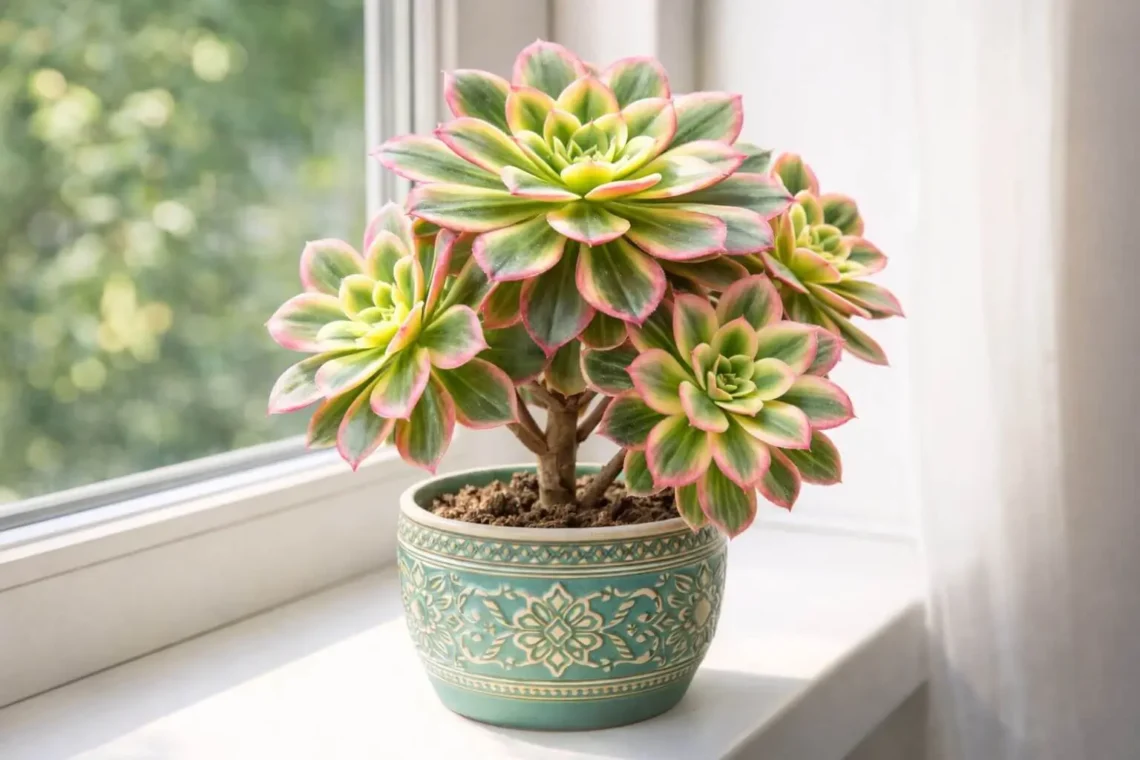
The kiwi aeonium is a striking variegated succulent, renowned for its vibrant rosettes and unique growth habit. This succulent kiwi aeonium adds a colorful accent to any plant collection, displaying green leaves edged with pink and cream tones. Popular among indoor and outdoor gardeners, the kiwi aeonium succulent is appreciated for its easy care, adaptability, and ornamental appeal. Like the Purple Heart Plant, the kiwi aeonium succulent adds vibrant colors and unique textures to any indoor plant collection. Understanding kiwi aeonium care, from sunlight to propagation, allows plant enthusiasts to maintain its lush appearance and enjoy its full potential in home gardens and decorative displays.
What is Kiwi Aeonium?
-
Botanical Classification
The aeonium kiwi botanical name is Aeonium haworthii ‘Kiwi’. This succulent belongs to the Crassulaceae family and has several related varieties and hybrids, including aeonium haworthii kiwi and aeonium decorum variegata kiwi. These varieties share similar growth habits and rosette patterns, making them popular choices for collectors seeking a diverse and colorful succulent garden.
-
Origin and Natural Habitat
Native to the Canary Islands, the kiwi aeonium succulent thrives in Mediterranean climates with mild temperatures and well-draining soil. It adapts well to both aeonium kiwi interior o exterior settings, tolerating indoor conditions with bright indirect light or outdoor locations with partial shade. Its natural habitat includes rocky slopes and coastal regions, where it develops vibrant rosettes under sun exposure while remaining hardy to drought.
-
Unique Features
The kiwi aeonium tricolor is recognized for its rosettes with green centers, pink edges, and cream variegation. Full-grown plants typically reach a compact size suitable for pots or rock gardens. Its growth pattern features clustered rosettes on a single trunk, and kiwi aeonium variegated leaves make it a visually striking addition to succulent collections. The tricolor leaves not only enhance aesthetic appeal but also indicate healthy growth and proper light exposure.
Kiwi Aeonium Care
-
Light Requirements
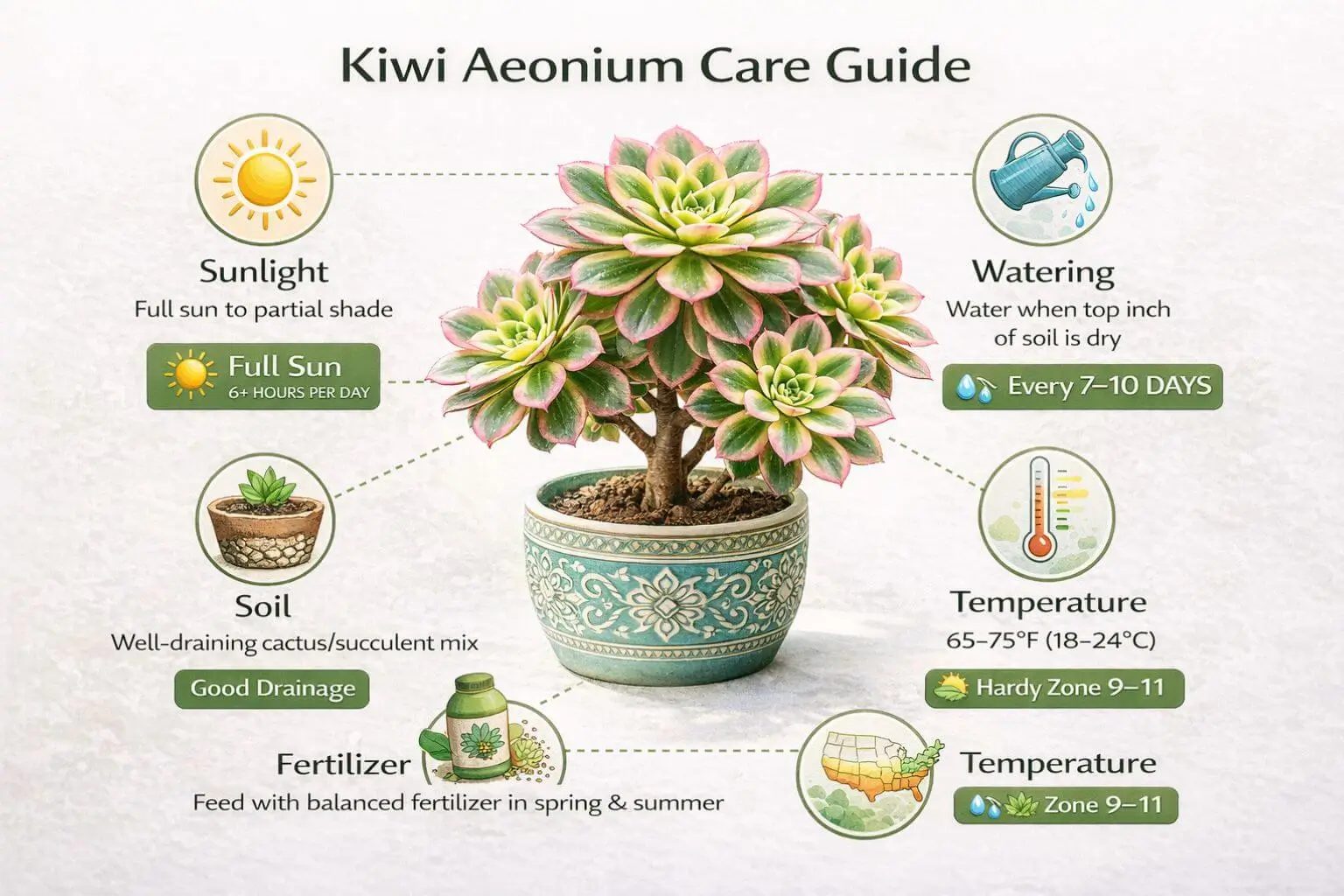
For optimal growth, the aeonium kiwi full sun exposure is ideal, though it tolerates partial shade. Indoor care requires placement near bright windows, ensuring sufficient light to prevent aeonium kiwi leggy growth. For indoor gardeners, pairing kiwi aeonium with plants like the Elephant Ear Plant can create a lush, dynamic display. Outdoors, the plant adapts to aeonium kiwi sol ou sombra, thriving in moderate sunlight while avoiding harsh midday rays. It’s also suitable for aeonium kiwi interior o exterior arrangements, depending on light availability.
-
Watering and Soil
Proper kiwi aeonium watering involves infrequent watering, allowing the soil to dry between sessions. Overwatering can lead to root rot, while under-watering can slow growth. Use well-draining aeonium kiwi soil, preferably cactus or succulent mix. Knowing how to water aeonium kiwi correctly ensures rosettes remain plump and vibrant, particularly during warm growing seasons.
-
Temperature and Hardiness
The aeonium kiwi temperature preference ranges from 65–75°F (18–24°C), with moderate frost tolerance in kiwi aeonium hardiness zones 9–11. For colder regions, bring the plant indoors to maintain health. Its aeonium kiwi rusticité allows survival in mild frost, but prolonged freezing can damage leaves and stems.
-
Fertilization
Light fertilization during spring and summer promotes healthy growth. Use a balanced succulent fertilizer every 4–6 weeks. Avoid over-fertilizing, as this can lead to excessive leggy growth and reduce color vibrancy.
Kiwi Aeonium Propagation
Methods of Propagation
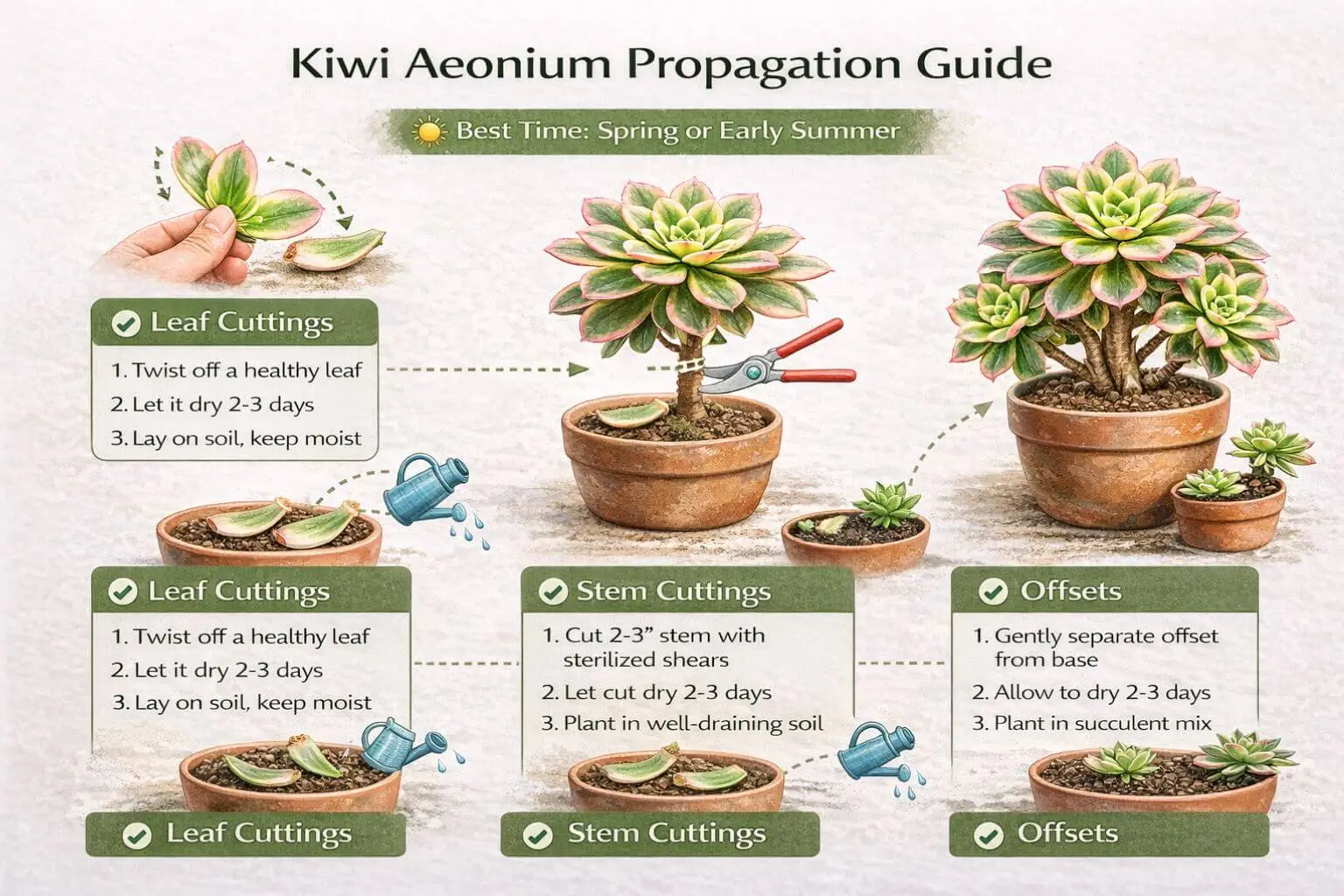
Propagation can be done through leaf cuttings, stem cuttings, or offsets. To propagate, remove healthy leaves or stems, allow them to callus for a few days, and plant in well-draining soil. Kiwi aeonium propagation is straightforward, and learning how to propagate kiwi aeonium ensures new rosettes grow successfully. For added color contrast, consider pairing your kiwi aeonium with Purple Jew Plant, another vibrant succulent suitable for indoor arrangements.
Seasonal Considerations
Spring or early summer is the best time for propagation. Use aeonium kiwi esquejes to maximize rooting success. Propagating aeonium kiwi during active growth encourages robust plant development and faster establishment of new plants.
Common Problems and Solutions
-
Leaf Issues
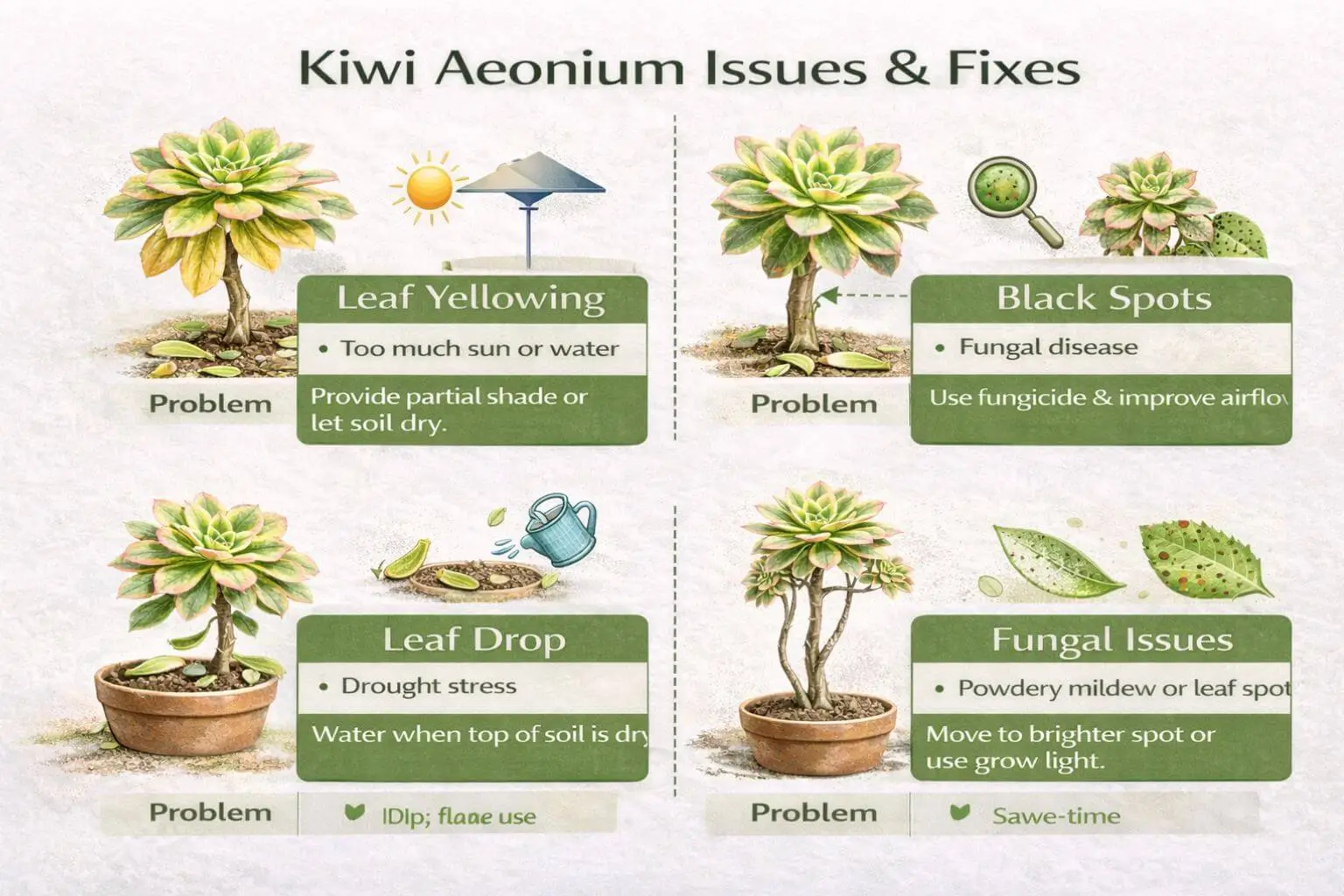
Yellowing leaves, known as kiwi aeonium turning yellow, often indicate overwatering or nutrient deficiency. Leaves falling off (aeonium kiwi leaves falling off) can be a natural process or a response to environmental stress.
-
Pests and Diseases
Watch for black spots or fungal infections (kiwi aeonium black spots, aeonium kiwi manchas negras) caused by excess moisture or poor air circulation. Treat with appropriate fungicides and adjust watering schedules.
-
Indoor Care Challenges
Leggy growth (aeonium kiwi leggy) and insufficient light (aeonium kiwi indoor care) are common when plants are kept indoors. Rotate the plant regularly and provide supplemental lighting if natural light is limited.
Kiwi Aeonium Flowering
Blooming Cycle
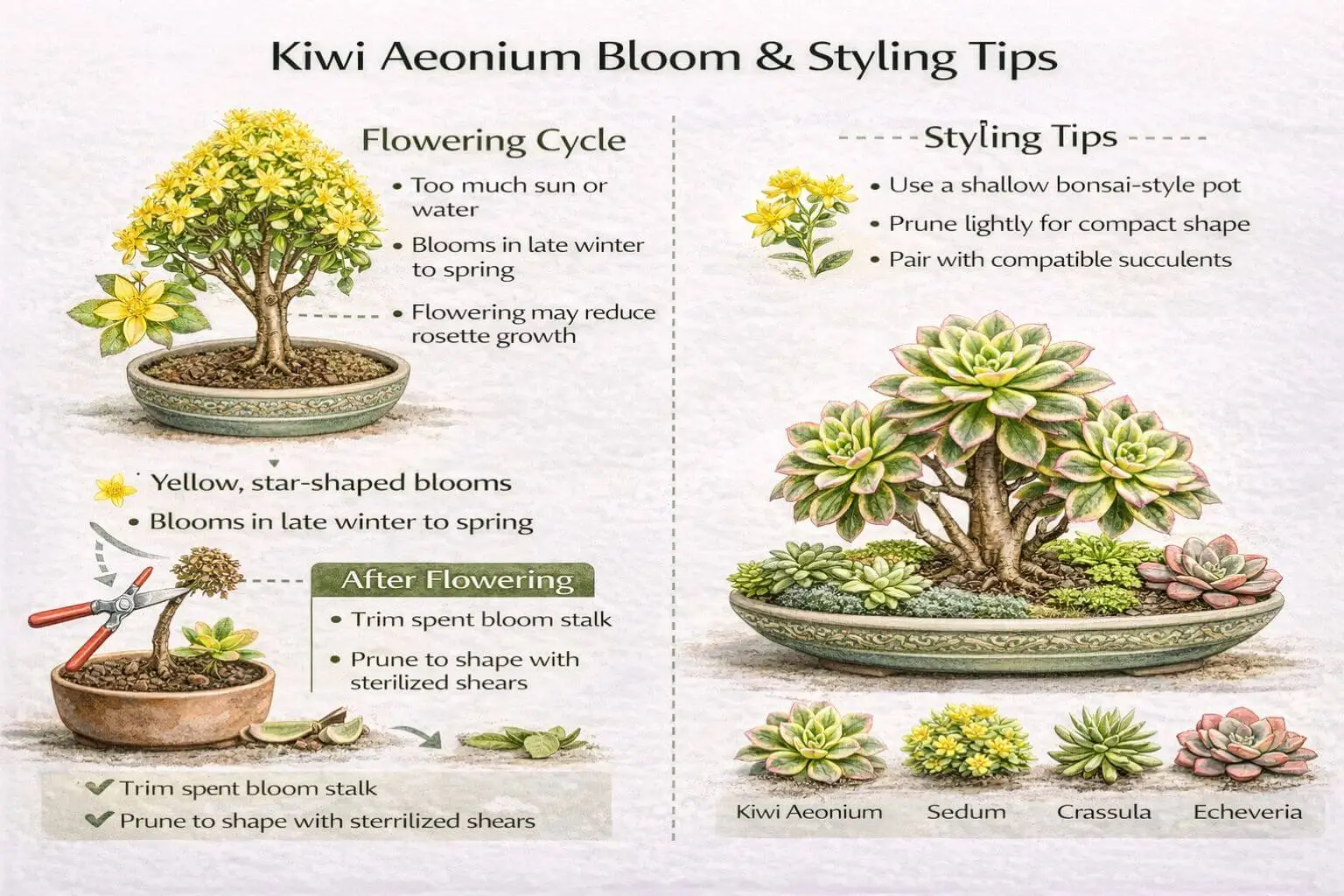
The aeonium kiwi flower blooms typically in late spring to summer. The kiwi aeonium bloom produces small, star-shaped yellow flowers, enhancing its ornamental value. Understanding aeonium kiwi floracion helps plan care and ensures the plant is healthy during flowering.
Flower Appearance and Color
Flowers are small, yellow, and arranged in clusters above the rosettes. The aeonium kiwi flor complements the variegated leaves, creating an appealing contrast and attracting pollinators in outdoor gardens.
Advanced Care and Styling
-
Bonsai and Decorative Uses
The kiwi aeonium succulent bonsai is popular for decorative displays. Its single trunk and compact rosettes make it ideal for bonsai-style pots and indoor arrangements. Styling tips include rotating for even growth and combining with complementary succulents.
-
Pruning and Maintenance
Prune dead or damaged leaves to maintain compact rosettes (aeonium kiwi pruning, how to prune aeonium kiwi). Regular maintenance promotes healthy growth and prevents overcrowding.
-
Companion Plants and Arrangements
Pair the succulent kiwi aeonium with other drought-tolerant plants to create visually appealing indoor gardens. Companion plants such as Japanese Sweet Flag Grass complement the kiwi aeonium’s colorful rosettes and enhance indoor garden aesthetics. Use contrasting leaf shapes and colors to highlight the variegated rosettes.
Safety and Pet Considerations
The aeonium kiwi is generally considered safe for cats and pets (aeonium kiwi toxic to cats, aeonium kiwi cat safe, aeonium kiwi pet safe). While ingestion is uncommon, it’s still advisable to keep young pets from nibbling on leaves.
Conclusion
The succulent kiwi aeonium is a versatile and visually striking plant, perfect for both indoor and outdoor gardens. By following proper aeonium kiwi care and propagation techniques, gardeners can enjoy healthy growth, vibrant colors, and even bonsai displays. Track plant health, explore different varieties, and experiment with decorative arrangements to maximize your enjoyment of this variegated succulent.
Learn more: 7+ Must-Know Facts About Tuscarora Crape Myrtle Single Trunk
FAQs About Kiwi Aeonium
- What is a kiwi aeonium?
A variegated succulent, Aeonium haworthii ‘Kiwi’, known for its colorful rosettes and easy care. - How do I care for a kiwi aeonium?
Place in bright indirect sunlight, water sparingly, and use well-draining soil. - How can I propagate kiwi aeonium?
Use leaf or stem cuttings, preferably in spring or early summer. - Why are my kiwi aeonium leaves falling off?
Often due to overwatering, insufficient light, or natural seasonal leaf drop. - Is kiwi aeonium safe for cats?
Yes, this succulent is generally considered non-toxic to cats. - When does kiwi aeonium bloom?
Blooming occurs in late spring to summer, producing small yellow star-shaped flowers.