Introduction: What Is a Blue Fescue Plant?
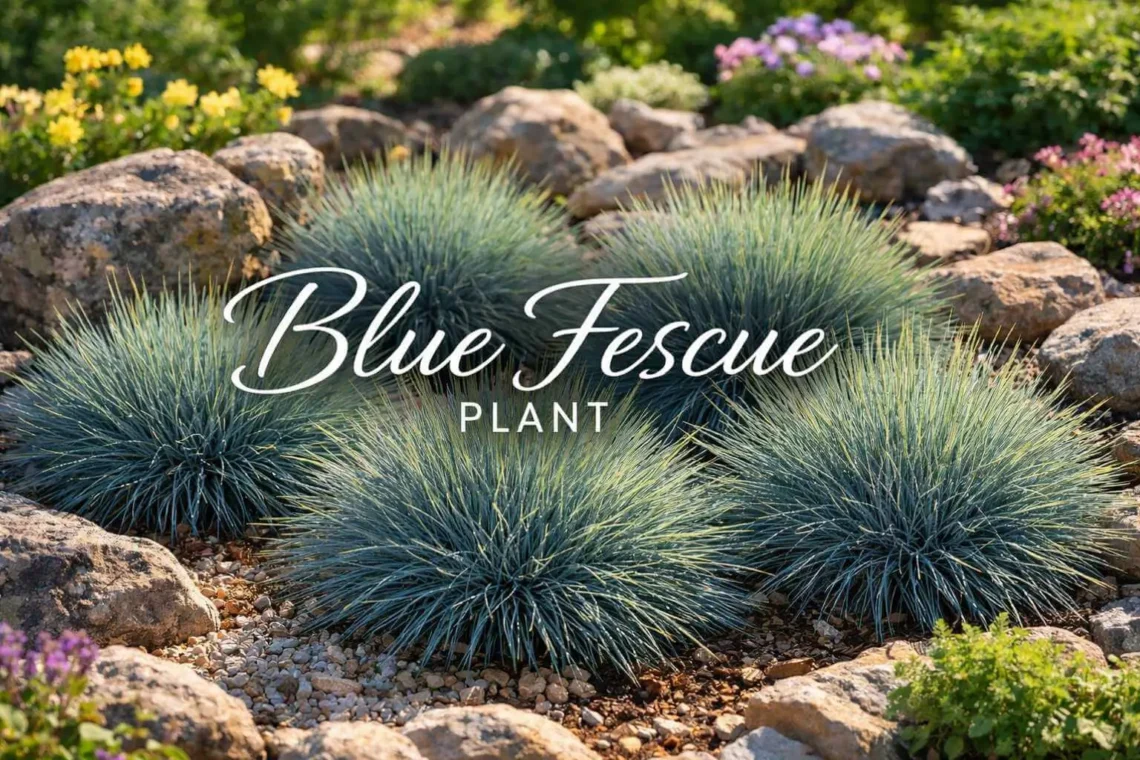
The blue fescue plant (Festuca glauca) is a compact ornamental grass valued for its blue-gray foliage and tidy, mounded shape. It is primarily used in landscapes as an accent, border, or groundcover due to its unique color and low-maintenance growth habit. Blue fescue adds visual contrast in gardens, rockeries, and container plantings while remaining resilient under diverse environmental conditions. This article covers the plant’s growth patterns, care requirements, optimal placement, and key characteristics. Understanding these details allows gardeners to incorporate blue fescue effectively into their landscape designs while maximizing its aesthetic and functional benefits. The blue fescue plant (Festuca glauca) is a compact ornamental grass valued for its blue-gray foliage and tidy, mounded shape (source).
Botanical Classification and Plant Identity
Blue fescue is a perennial, cool-season ornamental grass within the Poaceae family. Unlike turf grasses, which are cultivated primarily for lawns, blue fescue is selected for its compact habit and decorative appeal. It forms dense clumps rather than spreading aggressively, distinguishing it from other fescues.
-
Is Blue Fescue a Native Plant?
Blue fescue originates from Europe and North Africa. Its natural habitat includes dry, rocky soils and open meadows, which contribute to its drought tolerance and adaptability. Classified as a compact ornamental type, it differs from common bluegrass and turf fescues. Its native range and growth characteristics make it suitable for low-maintenance garden use while providing distinct color and texture.
Physical Characteristics and Growth Habit
Blue fescue exhibits fine-textured, narrow leaves with a blue-gray hue. Its foliage forms dense, rounded clumps, typically 6–12 inches tall and 6–12 inches wide, depending on cultivar. The plant maintains an attractive shape throughout the growing season.
-
Blue Fescue Plant Size and Height
Mature blue fescue plants usually reach 6–12 inches in height with a similar spread. Some cultivars, like ‘Elijah Blue,’ may grow slightly taller or denser. Size variation allows for flexibility in landscape design, including borders, rock gardens, and container arrangements.
-
Blue Fescue Plant Attributes and Adaptations
Blue fescue is drought-tolerant and withstands cold and heat when established. It adapts to well-draining soils and shows moderate tolerance to nutrient-poor conditions. Its blue foliage results from a waxy coating that reduces water loss and enhances ornamental appeal. As a perennial, it maintains long-term presence in landscapes, often living 5–10 years under proper care.
Blue Fescue Plant Annual or Perennial?
Blue fescue is a perennial grass, meaning it survives multiple growing seasons. During winter, the foliage may go dormant and appear brown, but it typically regrows in spring. Its perennial nature ensures consistent landscape performance over time, making it a reliable choice for long-term garden planning.
Best Place and Conditions to Grow Blue Fescue
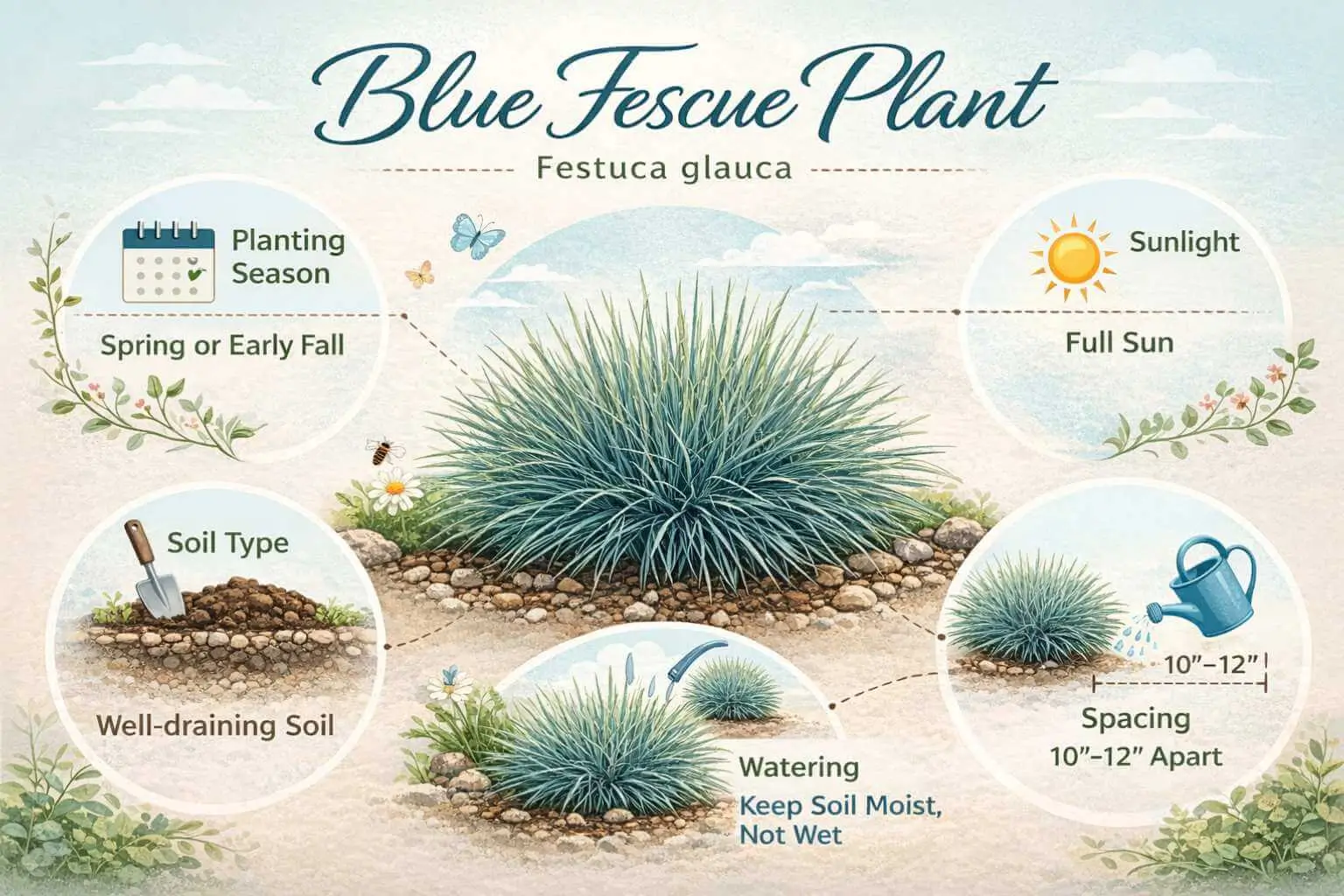
Blue fescue thrives in environments that mimic its natural habitat: full sun, well-draining soil, and moderate watering. Optimal placement enhances color intensity and reduces stress-related foliage changes.
-
Soil Requirements for Blue Fescue Plant
Well-draining soil is essential. Sandy, loamy, or gravelly soils are preferred. Heavy clay or waterlogged soils may cause root rot and poor growth.
-
Sun or Shade Requirements
Full sun promotes vibrant blue coloration and dense growth. Partial shade is tolerable but may result in lighter color and less compact foliage. Insufficient light can cause stretching and weak clumps.
When to Plant Blue Fescue
Planting timing affects root establishment and overall health. Proper scheduling ensures successful growth and long-term survival.
-
Best Time to Plant Blue Fescue
Spring and early fall are ideal. Spring planting allows active growth, while early fall ensures root development before winter dormancy.
-
Can You Plant Blue Fescue in the Fall?
Fall planting is possible in mild climates. Sufficient time for roots to establish before cold weather is necessary. In colder zones, spring planting is safer.
How to Plant Blue Fescue
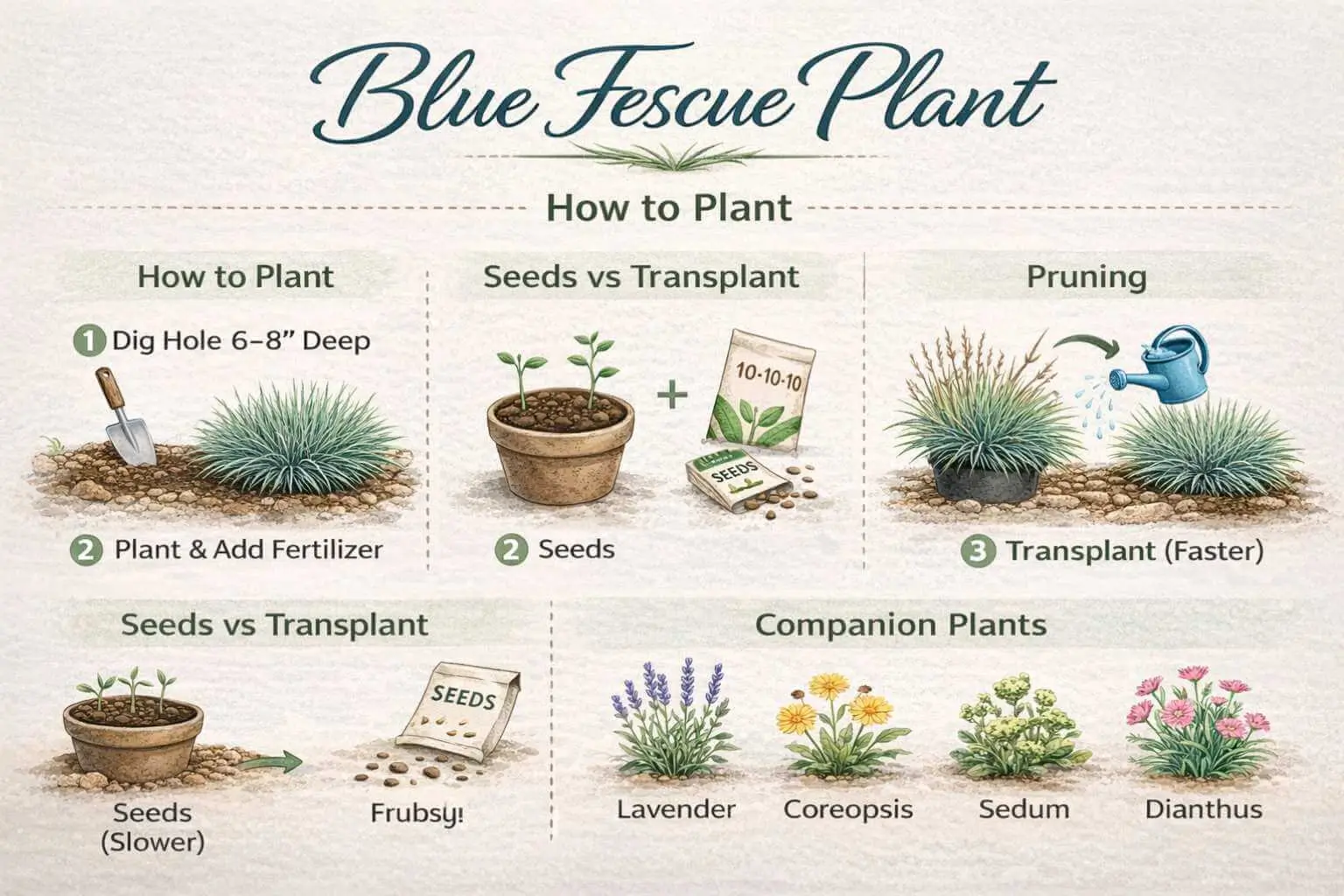
Planting involves site preparation, spacing, and careful placement to maintain clump integrity.
-
How Far Apart to Plant Blue Fescue
Spacing of 6–12 inches between plants allows airflow, reduces disease risk, and preserves rounded shapes.
-
Blue Fescue Plant Spacing for Landscape Design
For borders or clusters, closer spacing creates visual impact. For mass plantings, standard spacing prevents overcrowding while maintaining uniform appearance.
Growing Blue Fescue From Seed
Seed propagation is an alternative to transplants but requires patience and careful handling.
-
How to Plant Blue Fescue Seeds
Sow seeds on well-draining soil surface or lightly cover with fine soil. Maintain consistent moisture until germination, usually 10–21 days.
-
Blue Fescue Grass From Seed vs Transplants
Seeds are slower to establish and less uniform, while transplants provide immediate clumps and predictable growth. Seed propagation is practical for large areas where long-term spacing can be managed.
Blue Fescue Plant Care and Maintenance
Blue fescue is low-maintenance but benefits from occasional care.
-
Watering and Feeding Needs
Water moderately; established plants tolerate drought. Fertilize sparingly to avoid excessive growth that compromises compact form.
-
Blue Fescue Pruning and Cutting Back
Prune in early spring to remove dead or brown foliage. Cutting back refreshes appearance and encourages dense growth.
Companion Plants and Landscape Use
Blue fescue complements many garden plants due to its color and texture contrast. Blue fescue plants pair well with other ornamental grasses, such as sweet flag grass, which also adds texture and seasonal interest to garden designs.
-
Blue Fescue Companion Plants
Pair with flowering perennials like lavender, sedum, or ornamental alliums for visual interest. Avoid aggressive groundcovers that may overshadow it.
-
Blue Fescue in Landscaping and Borders
Ideal for rock gardens, edging, and containers. Maintain spacing for visual balance and allow foliage color to stand out.
Common Problems and Visual Changes
Monitoring plant health ensures blue fescue maintains ornamental value.
-
Why Blue Fescue Looks Yellow or Dead
Yellowing often results from overwatering, poor drainage, or insufficient sunlight. Nutrient deficiencies may also contribute.
-
Blue Fescue Deer Resistance
Blue fescue is generally deer-resistant due to its texture and low palatability, reducing pest damage in gardens.
Popular Blue Fescue Varieties
Several cultivars are favored for color, growth habit, and climate adaptability.
-
Elijah Blue Fescue
Noted for bright blue foliage and compact, rounded shape. Performs well in full sun and well-drained soils.
-
Boulder Blue and Beyond Blue Fescue
‘Boulder Blue’ exhibits a gray-blue hue with moderate growth, while ‘Beyond Blue’ shows enhanced vigor and denser clumps. Cultivar selection depends on garden design and local climate.
Conclusion: Understanding the Blue Fescue Plant
Blue fescue combines ornamental appeal, low maintenance, and adaptability. Proper site selection, spacing, and seasonal care ensure healthy growth. Understanding its characteristics allows gardeners to plan landscapes effectively, enhancing color, texture, and long-term performance.
FAQs
- How big does a blue fescue plant get?
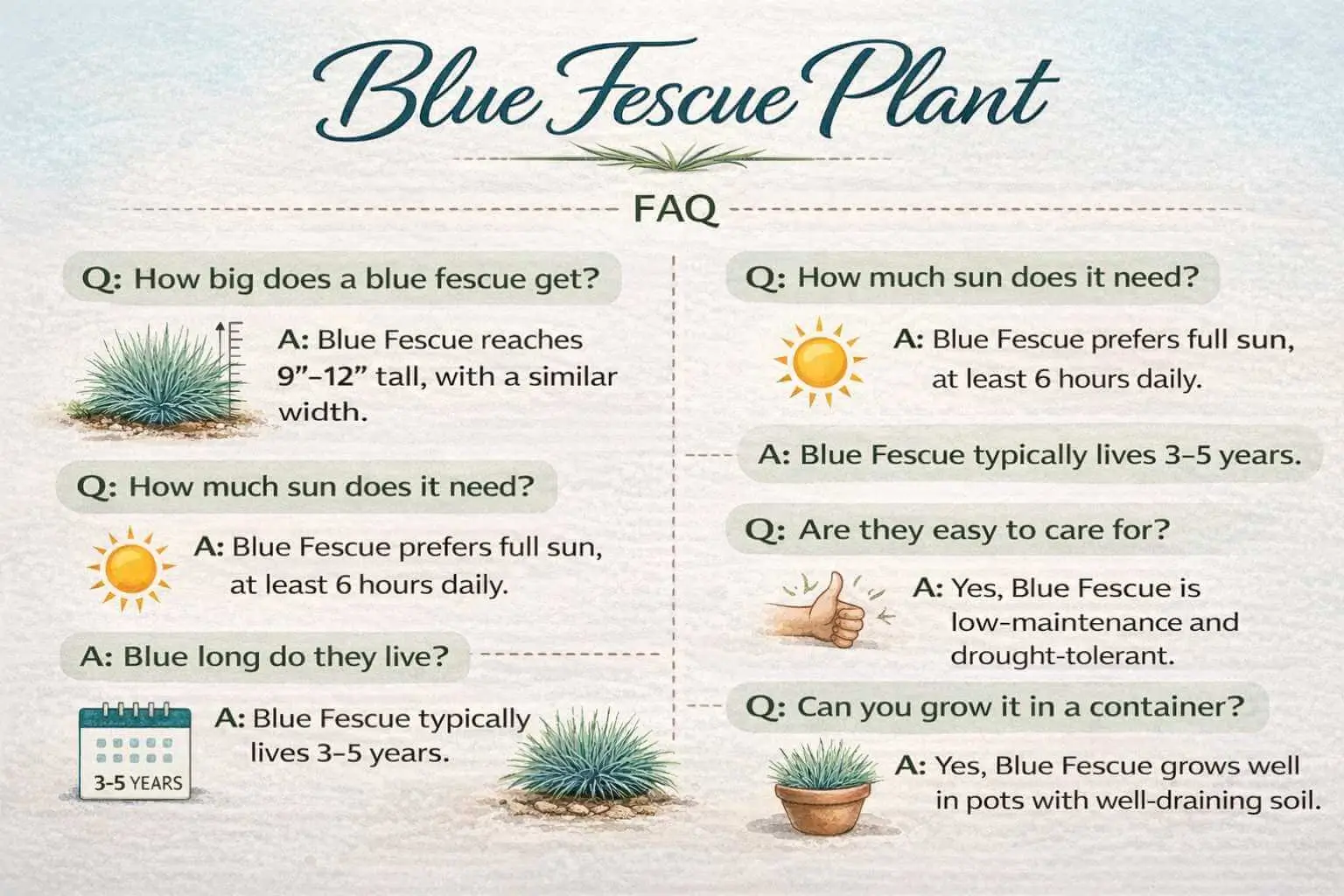
Blue fescue typically reaches 6–12 inches in height and spread, depending on the cultivar. Some varieties may grow slightly taller. - Is blue fescue grass easy to care for?
Yes, it is low-maintenance. Minimal watering, moderate sunlight, and occasional pruning are sufficient. - How far apart should I plant blue fescue?
Space plants 6–12 inches apart for proper airflow, healthy clump shape, and optimal growth. - Does blue fescue need full sun?
Yes. Full sun enhances blue-gray coloration. Partial shade is tolerable but reduces vibrancy. - How long does a blue fescue plant live?
Under proper conditions, it is perennial and can live 5–10 years. - Can blue fescue grow in containers?
Yes. Use well-draining soil and moderate watering. Container growth may require pruning to maintain compact form. For indoor container displays, blue fescue can complement other potted plants like spider plants, enhancing both color and air-purifying benefits.